
云计算

Search documents
周观点:OpenClaw高热度持续,继续重视AIInfra投资机会-20260308
KAIYUAN SECURITIES· 2026-03-08 12:33
Investment Rating - The investment rating for the industry is "Positive" (首次) [8] Core Insights - The OpenClaw application continues to generate high demand for computing power, with significant interest from major cloud service providers in China [4][11] - The Seedance 2.0 model, launched by ByteDance, has entered the commercialization phase, which is expected to further drive the demand for computing power [5][12] - Domestic and international cloud service providers have raised prices, indicating strong downstream demand for computing resources [6][13] Summary by Sections Investment Opportunities - OpenClaw's popularity has led to a surge in computing power demand, with various cloud providers announcing support for the application [4][11] - Seedance 2.0's pricing structure has been established, with costs set at 28 RMB per million tokens for video input and 46 RMB per million tokens without video input, indicating a move towards commercialization [5][12] - Price increases from major cloud providers like AWS and Google Cloud reflect robust downstream demand [6][13] Market Review - The market review for the week of March 2 to March 6, 2026, shows a decline in the CSI 300 index by 1.07% and a drop in the computer index by 5.29% [15] Investment Recommendations - The report suggests focusing on the AI infrastructure supply chain, recommending companies such as Deepin Technology and Haiguang Information, with beneficiaries including Borui Data, Dongfang Guoxin, and others [7][14]
人工智能行业专题:2025年度海外大厂CapEx和ROIC总结梳理
Guoxin Securities· 2026-03-08 02:45
Investment Rating - The investment rating for the artificial intelligence industry is "Outperform" [1] Core Insights - The capital expenditures (CapEx) and return on invested capital (ROIC) of major cloud companies have shown significant growth, indicating an acceleration in downstream cloud demand. Companies like Microsoft, Meta, Amazon, and Google have all reported year-on-year and quarter-on-quarter increases in CapEx and revenue growth [2][57] - The overall ROIC for major players has increased due to revenue and profit growth, although net profit growth has slowed down, affecting the quarter-on-quarter ROIC performance [2][58] Summary by Sections Capital Expenditures and Performance Review - In Q4 2025, Microsoft reported a CapEx of $37.5 billion, a year-on-year increase of 65.9% and a quarter-on-quarter increase of 7.5%, primarily for GPU and CPU purchases to meet AI infrastructure needs [8][6] - Meta's Q4 2025 CapEx reached $22.1 billion, up 49.17% year-on-year and 14.26% quarter-on-quarter, mainly for server and data center investments [21][19] - Google's Q4 2025 CapEx was $27.85 billion, reflecting a 95.1% year-on-year increase and a 16.3% quarter-on-quarter increase, with significant investments in servers and data centers [32][30] - Amazon's Q4 2025 CapEx was $39.5 billion, a 50.2% year-on-year increase and a 12.9% quarter-on-quarter increase, focusing on AWS-related investments [46][43] Revenue and Profit Analysis - Microsoft achieved revenue of $81.27 billion in Q4 2025, a 16.7% year-on-year increase, with Azure cloud revenue growing by 39% [15][9] - Meta's Q4 2025 revenue was $59.893 billion, up 23.78% year-on-year, driven by advertising revenue growth [25][22] - Google's Q4 2025 revenue reached $113.83 billion, a 16.0% year-on-year increase, with Google Cloud revenue growing by 47.8% [37][34] - Amazon reported Q4 2025 revenue of $213.49 billion, a 13.63% year-on-year increase, with AWS revenue growing by 24% [49][47] Profitability Metrics - Microsoft reported a net profit of $38.46 billion in Q4 2025, a 59.5% year-on-year increase, with a significant contribution from its cloud services [15][12] - Meta's net profit for Q4 2025 was $22.768 billion, a 9.26% year-on-year increase, with advertising revenue driving profitability [25][24] - Google's net profit in Q4 2025 was $34.46 billion, a 29.8% year-on-year increase, supported by strong performance in its cloud and advertising segments [37][36] - Amazon's net profit for Q4 2025 was $21.2 billion, a 5.94% year-on-year increase, with AWS and advertising business contributing significantly [49][50]




人工智能行业专题:2025年度海外大厂CapEx和ROIC总结梳理-20260308
Guoxin Securities· 2026-03-08 02:29
Investment Rating - The report maintains an "Outperform" rating for the AI industry [1] Core Insights - The capital expenditures (CapEx) and return on invested capital (ROIC) of major cloud companies are on the rise, reflecting accelerated demand for cloud services driven by AI applications [2] - Major companies like Microsoft, Meta, Amazon, and Google have shown significant growth in both CapEx and revenue, indicating a robust market outlook for AI and cloud services [2] - The overall ROIC for these companies has increased, driven by revenue and profit growth, although there are fluctuations in quarterly performance [2][58] Summary by Sections Capital Expenditures and Performance Review - In Q4 2025, Microsoft reported a CapEx of $37.5 billion, a year-on-year increase of 65.9% and a quarter-on-quarter increase of 7.5%, primarily for AI infrastructure [8][15] - Meta's Q4 2025 CapEx reached $22.1 billion, up 49.17% year-on-year, reflecting investments in servers and data centers [21][25] - Google's Q4 2025 CapEx was $27.85 billion, a 95.1% increase year-on-year, with significant investments in servers and data centers [32][36] - Amazon's Q4 2025 CapEx was $39.5 billion, a 50.2% increase year-on-year, focusing on AWS and customized chips [46][49] Revenue and Profit Analysis - Microsoft achieved revenue of $81.27 billion in Q4 2025, a 16.7% year-on-year increase, with Azure cloud revenue growing by 39% [15][57] - Meta's Q4 2025 revenue was $59.893 billion, a 23.78% increase year-on-year, driven by advertising revenue growth [25][26] - Google's Q4 2025 revenue reached $113.83 billion, a 16.0% increase year-on-year, with Google Cloud revenue growing by 47.8% [37][57] - Amazon reported Q4 2025 revenue of $213.49 billion, a 13.63% increase year-on-year, with AWS revenue growing by 24% [47][49] Profitability Metrics - Microsoft reported a net profit of $38.46 billion in Q4 2025, a 59.5% year-on-year increase [15] - Meta's net profit for Q4 2025 was $22.768 billion, a 9.26% increase year-on-year [25] - Google's net profit reached $34.46 billion in Q4 2025, a 29.8% increase year-on-year [37] - Amazon's net profit was $21.2 billion in Q4 2025, a 5.94% increase year-on-year [49] ROIC Trends - The overall ROIC for major cloud companies has increased, with Microsoft and Meta showing significant year-on-year growth in Q4 2025 [58]
北京一寿司郎曝寄生虫卵风波,日本母公司股价一度大跌14%;蜜雪冰城正试水现磨咖啡;知情人士回应泡泡玛特新IP遇冷丨邦早报
创业邦· 2026-03-07 01:12
Group 1 - A consumer in Beijing reported finding parasite eggs in fish slices at the sushi chain Sushi Lang, leading to a significant drop in the stock price of its parent company, Food & Life Companies, by nearly 14% initially and approximately 7% at the time of reporting [2] - Xibei's founder, Dong Junyi, has been appointed as CEO with the primary goal of ensuring the company's survival amid financial difficulties, including a salary delay for most staff and a 30% pay cut for management [4] - Mixue Ice City is testing a new fresh coffee business, planning to upgrade its coffee product line while maintaining a high-quality and affordable strategy [4] Group 2 - Apple announced a major management reshuffle, including the appointment of Jennifer Newstead as Senior Vice President and General Counsel, reflecting a strategic shift in its executive team [9] - IKEA China has successfully implemented autonomous transport vehicles in its Hefei store, reducing customer pickup wait times by approximately two-thirds [11] - Zeekr has completed its first user deliveries in Germany and is expanding sales into Italy, Spain, and Portugal, with plans to further extend its presence in over 10 European countries [11] Group 3 - Berkshire Hathaway has restarted its stock buyback program, with new CEO Greg Abel committing to invest his entire salary in company stock, following a nearly 10% decline in stock price since last May [15] - Oracle is facing financial pressure due to high costs associated with AI data center expansions, leading to plans for significant layoffs across the company [15] - Google has updated its Play Store developer settlement system, reducing the service fee from 30% to 20%, with further reductions for participating developers [15] Group 4 - SoftBank is reportedly seeking up to $40 billion in loans to fund its investment in OpenAI, marking a significant financial maneuver for the company [16] - Meta's smart glasses have raised privacy concerns as some user videos are being reviewed by third-party data annotators, although the company claims to anonymize sensitive content [16] - Nexperia China has faced operational disruptions due to the disabling of employee accounts, but most business operations have since resumed [16] Group 5 - The China Academy of Information and Communications Technology reported that by June 2025, China's computing power is expected to reach 782 EFlops, a 96% year-on-year increase, with intelligent computing power dominating the market [19] - In February 2026, 35 Chinese companies made it to the global mobile game publisher revenue list, collectively earning $2.18 billion, accounting for 41% of the total revenue of the top 100 publishers [19]


HALO交易席卷美股、港股
21世纪经济报道· 2026-03-06 15:59
Core Viewpoint - The recent outage of Anthropic's AI assistant Claude, which lasted nearly 15 hours, highlights the vulnerability of AI systems to physical disruptions, prompting a shift in investment focus towards "HALO" assets, characterized by heavy assets and low obsolescence [1][10][11]. Group 1: HALO Concept and Market Reaction - HALO stands for "Heavy Assets, Low Obsolescence," focusing on sectors that are difficult to disrupt by AI, such as large aircraft, oil refining equipment, and copper cables [1]. - The market consensus is shifting towards heavy asset sectors as software stocks face significant sell-offs due to fears of AI disruption, with Morgan Stanley's HALO basket rising 28% over the past year, while AI-affected stocks plummeted 43%, a difference of 71 percentage points [3][4]. - Goldman Sachs has redefined capital-intensive and light capital portfolios, indicating a growing preference for sectors with low obsolescence, including utilities and certain consumer goods [3][4]. Group 2: Performance of Related Sectors - In the Hong Kong market, sectors aligned with HALO logic, such as communication equipment, oil and gas, and railway transportation, have shown strong performance, with significant gains reported from January 1 to March 3, 2026 [5][6]. - The Hang Seng Technology Index has declined over 13% since the beginning of 2026, reflecting the pressure on internet companies perceived as vulnerable to AI disruption [5][11]. Group 3: Global Implications and Future Outlook - The HALO trading strategy is gaining traction globally, with similar trends observed in South Korea and Japan, where sectors with high barriers to AI replacement are attracting investment [6][11]. - Analysts suggest that HALO represents a long-term investment logic rather than a short-term speculative trend, as it reflects a revaluation of asset scarcity in the AI era [12][14]. - The ongoing geopolitical tensions, particularly in the Middle East, are reinforcing the appeal of HALO assets, which are seen as strategic and less susceptible to disruption [11][12]. Group 4: Investment Strategies and Market Sentiment - Investment strategies are evolving, with a focus on sectors that provide certainty and scarcity, as evidenced by the performance of traditional industries in the Hong Kong market [15][16]. - The sentiment around HALO trading remains high, with expectations that it will continue to influence market dynamics, particularly in the context of China's robust manufacturing capabilities [15][16].

英伟达云服务合作伙伴Together AI拟以75亿美元估值融资
Xin Lang Cai Jing· 2026-03-06 09:15
Core Insights - Together AI, an emerging cloud service provider renting NVIDIA chip servers to AI developers, is in talks to raise approximately $1 billion, with a pre-funding valuation of $7.5 billion, more than doubling its valuation from a year ago [2][7] - The funding is expected to help diversify NVIDIA's customer base amid concerns over its reliance on a few large traditional cloud service providers [2][7] - Saudi Aramco's venture capital arm, Prosperity7 Ventures, is reportedly negotiating a significant investment in Together AI [2][7] Company Overview - Together AI has previously raised $537 million from investors including General Catalyst, Khosla Ventures, NVIDIA, and Lux Capital [2][7] - The company initially rented NVIDIA chip servers from established cloud service providers and then subleased them to developers, but is increasingly purchasing servers directly for its own data centers [2][7] - Together AI also offers services for running and tuning open-source models for developers [2][7] Financial Performance - Together AI's annual revenue is approximately $1 billion, projected to grow over threefold by mid-2025 [8] - The company has secured a multi-year, multi-billion dollar agreement with an undisclosed cloud service provider or large AI company [8][9] - Together AI plans to have 250 megawatts of proprietary data center capacity by the end of this year, equating to over 100,000 NVIDIA GPUs, which is about one-third of its main competitor CoreWeave's capacity [9] Industry Context - NVIDIA has invested in and supplied chips to companies like Together AI to build barriers against traditional cloud giants such as Microsoft, Amazon, and Google, which are developing their own AI chips to reduce dependency on NVIDIA hardware [8] - The GPU cloud service market is competitive, with companies like CoreWeave and Lambda also engaging in similar rental agreements with major cloud providers [8][9] - CoreWeave, the largest GPU cloud service provider, has seen its revenue double but continues to face investor concerns due to increasing losses [9]

甲骨文裁员数千人,AI数据中心扩张引发现金流危机
硬AI· 2026-03-06 06:37
Core Viewpoint - Oracle is planning to lay off thousands of employees, with some positions being directly replaced by AI, reflecting significant capital pressure as the company bets on AI data centers. The cash flow is expected to remain negative until 2030, and the stock price has halved from its peak, with credit default swap spreads reaching their highest level since the 2008 financial crisis [2][3][4]. Group 1: Layoffs and AI Impact - Oracle is set to implement layoffs across multiple business units, with some job categories specifically targeted due to anticipated reduced demand from AI [5][6]. - The company is reviewing numerous vacancies in its cloud computing department, effectively slowing or freezing the hiring process [6]. - The total number of employees at Oracle is approximately 162,000 as of May 2025, but specific layoff numbers have not yet been disclosed [6]. Group 2: Financial Strain and Market Reaction - Oracle announced plans to raise up to $50 billion through debt and equity issuance to address cash flow pressures [4]. - The company's stock price has dropped 54% from its peak in September 2025, following a previous rise of 61% in 2024 and 20% in 2025, indicating a significant shift in market sentiment [10]. - The high initial investments in AI are causing a ripple effect across the tech industry, with other companies like Microsoft and Block also announcing layoffs due to rising costs associated with AI and data centers [10].


英伟达加码算力生态,供需缺口持续扩大,云计算 ETF (159890) 盘中一度涨超2%
Jin Rong Jie· 2026-03-05 06:41
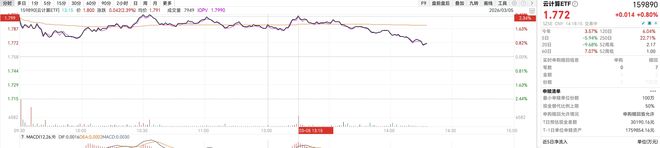
Core Insights - A-shares experienced a strong opening and upward trend, particularly in the technology sector, driven by positive overseas market sentiment and exceeding domestic and international orders and usage [1] Group 1: Market Performance - The cloud computing ETF (159890) showed significant activity, with a midday increase of over 2% before settling at a 0.80% gain [1] - Key stocks within the cloud computing sector saw substantial gains, including ShenZhou Information hitting the daily limit, NewEase rising over 10%, and others like Zhongji Xuchuang and ShenZhou Taiyue increasing by over 4% [1] Group 2: Investment Drivers - Nvidia announced a $2 billion investment in optical technology companies Lumentum and Coherent, which includes procurement commitments and support for R&D and future capacity [2] - Major cloud service providers like AWS and Google Cloud have begun raising prices, breaking a decade-long trend of price decreases due to surging AI computing demand [2] - The demand for AI computing continues to exceed expectations, with significant growth in token consumption and an expanding supply-demand gap in computing power [2] Group 3: Industry Outlook - CITIC Securities suggests that the focus in March will be on the inflation of the computing chain, with sustained demand for computing power expected to drive up upstream sector performance and pricing certainty [2] - Huatai Securities anticipates that by 2026, the computer industry will be at a critical point for AI penetration, with global AI applications scaling up and continued demand exceeding market expectations [2] - The cloud computing ETF (159890) tracks the CSI Cloud Computing and Big Data Theme Index, balancing investments in AI computing (41%) and AI applications (32%), positioning it to benefit from the restructuring of the computing ecosystem [3]
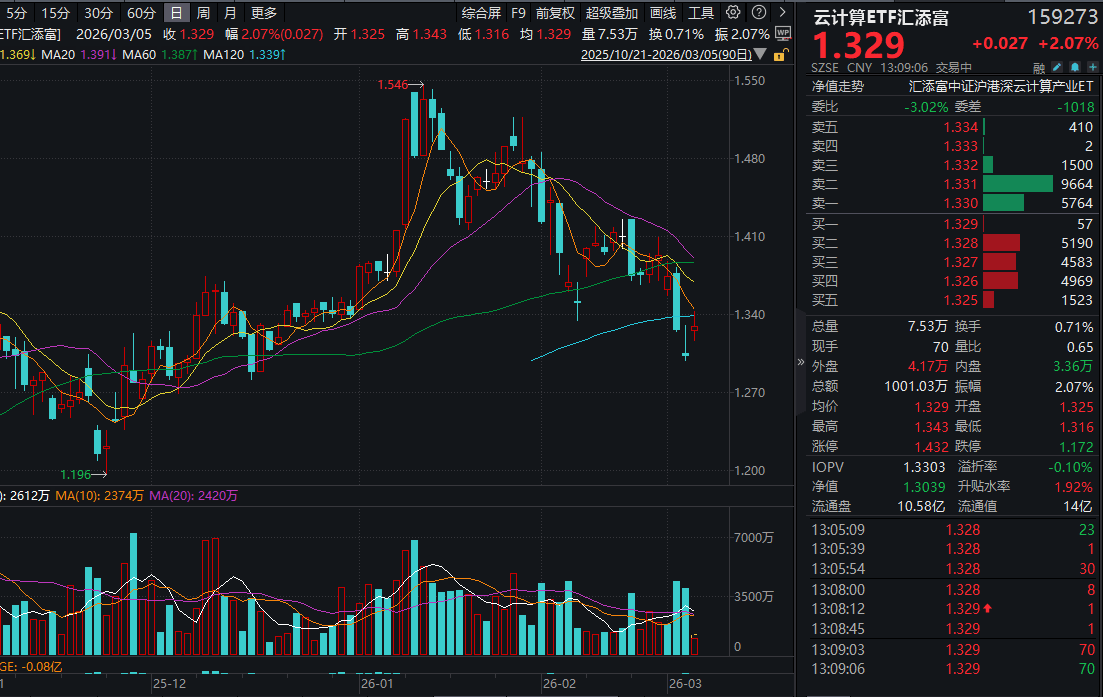
加码40亿,英伟达布局光通信!新易盛大涨超10%,云计算ETF汇添富(159273)大涨超2%!算力需求超预期,如何理解云需求“通胀”逻辑?
Sou Hu Cai Jing· 2026-03-05 06:01
Group 1 - The core viewpoint of the news highlights a strong rebound in the Asia-Pacific stock market, driven by a comprehensive rebound in US stocks and a significant increase in AI computing power, with the "computing power ETF" gaining over 2% [1][3] - Nvidia is increasing its investment in the computing power ecosystem, committing $2 billion to optical technology companies Lumentum and Coherent, which are key suppliers in the AI data center infrastructure [3][5] - The cloud computing ETF Huatai (159273) saw most of its weighted index stocks rise, with notable gains from companies like Xinyi and Zhongji [3][4] Group 2 - Citic Securities notes that the technology sector is experiencing upward pressure on capital expenditure (Capex) due to concerns over capital return rates and cash flow, leading to a shift in focus towards computing power and advanced processes [5][6] - The demand for computing power is expected to continue exceeding expectations in both overseas and domestic markets, with upstream sectors likely to maintain high profitability and price increases [6][8] - The recent iterations of large models from major companies like Google and Alibaba are driving AI inference demand, leading to a price increase in cloud services, marking a shift from price competition to premium monetization [8][9]

中信证券:聚焦算力链通胀主线,关注GTC新技术趋势与国产算力进展
Xin Lang Cai Jing· 2026-03-05 00:56
Core Viewpoint - The report from CITIC Securities indicates that while U.S. cloud vendors have collectively increased their capital expenditures (Capex), concerns regarding capital return rates and cash flow have intensified, putting pressure on certain cloud services and SaaS sectors. The focus of narratives and valuations is shifting towards computing power, advanced processes, equipment, storage, CPO, and liquid cooling [1] Group 1 - The demand for computing power is expected to continue exceeding expectations both overseas and domestically, leading to sustained prosperity and price increases in upstream sectors, which is seen as the most certain mainline for "growth" in the current technology sector [1] - Recent developments from overseas companies like OpenAI and Anthropic are driving demand for cloud computing power and tokens beyond expectations, with competition in large models leading to growth in both inference and training, while CSPs continue to revise their investments [1] - Despite the positive outlook for upstream performance growth, there remain variables concerning ROI and cash flow [1] Group 2 - Domestic large models are rapidly iterating, with models such as GLM-5, KIMI K2.5, and Seedance 2.0 gradually closing the gap with overseas counterparts, with some models achieving usability and price increases in coding and video generation applications, reflecting extreme tightness in computing power [1] - Prices across the entire industry chain, from cloud services, tokens/APIs, to storage, advanced manufacturing, optical communication, liquid cooling, and electricity, are generally on the rise [1]
