
商业火箭

Search documents
中金:国内复用火箭有望逐步成熟 可复用开启低成本航天时代
Zhi Tong Cai Jing· 2025-12-05 01:49
Group 1 - The global commercial space industry is experiencing significant growth, driving demand for rocket launches, with domestic reusable rockets expected to mature gradually [1][2] - The number of global space launches is projected to increase from 112 in 2020 to 263 in 2024, with commercial rockets becoming the main force in global launches [2] - Domestic commercial rocket companies have rapidly developed since 2014, with multiple rocket types achieving consecutive successful launches, and reusable models like Zhuque-3 and Tianlong-3 expected to have intensive maiden flights in 2025-2026 [2] Group 2 - The cost of launching is estimated to account for 30%-40% of the total cost of satellite constellation construction, with the commercial model Falcon 9's unit launch cost at only $3,000 per kilogram, significantly lower than traditional launch vehicles [2] - The turnaround time for commercial rockets like Falcon 9 can be reduced to under 100 days, compared to the 20-month cycle of traditional rockets, making them more suitable for dense launch schedules [2] - Scalable and reusable commercial rockets are anticipated to provide ample low-cost capacity support for space infrastructure development, further solidifying the foundation of the commercial space industry [2][3] Group 3 - Reusability is a key factor in reducing costs for commercial rockets, with the airframe and propulsion system accounting for 60%-80% of rocket costs; under ten reuse scenarios, Falcon 9's launch cost could drop to $1,270 per kilogram [3] - New technologies are further driving down manufacturing costs, with many large-thrust commercial rockets adopting variable thrust liquid engines, and liquid oxygen-methane expected to become a mainstream fuel due to its low cost and reduced carbon buildup [3] - The airframe structure is shifting from aluminum alloy to stainless steel, and complex structures are being produced using 3D printing techniques to achieve weight reduction and cost savings [3]
中金 | 卫星互联网#05:商业火箭——航天发射新力量,可复用开启低成本航天时代
中金点睛· 2025-12-04 23:38
Core Viewpoint - The report emphasizes the critical role of commercial rockets in achieving low-cost and large-scale access to space, highlighting the development status, technological pathways, and cost-reduction strategies in the commercial rocket sector [5][10]. Group 1: Global and Domestic Development of Commercial Rockets - The global demand for rocket launches is driven by the booming commercial space industry, with the number of launches expected to grow from 112 in 2020 to 263 in 2024, making commercial rockets the primary launch vehicles [5][7]. - Since 2014, domestic commercial rocket companies have rapidly developed, with several models achieving consecutive successful launches. Reusable rockets like Zhuque-3 and Tianlong-3 are expected to have their maiden flights in 2025-2026, significantly enhancing domestic launch capacity [5][16]. Group 2: Cost Reduction and Efficiency - Launch costs account for approximately 30%-40% of the total cost of satellite constellation construction. The commercial model has significantly reduced costs, with SpaceX's Falcon 9 achieving a unit launch cost of $3,000 per kilogram [5][20]. - The turnaround time for commercial rockets has been reduced to under 100 days, compared to the traditional 20-month cycle, making them more suitable for rapid and frequent launches [5][20]. Group 3: Reusability and Technological Advancements - Reusability is key to reducing costs, with the structure and propulsion system accounting for 60%-80% of rocket costs. Falcon 9's launch cost could drop to $1,270 per kilogram with ten reuses [6][27]. - New technologies, such as variable thrust liquid engines and the use of stainless steel instead of aluminum alloys, are being adopted to further lower manufacturing costs [6][35]. Group 4: Policy Support and Market Growth - The U.S. has established a robust legal framework for commercial space, fostering the growth of commercial rockets since 1984. Similarly, China's policies since 2014 have encouraged private investment in commercial space ventures [10][15]. - The commercial launch service market is projected to reach $9.3 billion in 2024, with the U.S. market alone expected to grow to $6.1 billion, more than doubling since 2021 [15][20]. Group 5: Future Prospects and Industry Dynamics - The domestic commercial rocket sector is expected to accelerate growth, with major models entering regular launch phases and reusable rockets set for intensive launches in 2025-2026 [16][20]. - The increasing number of satellite launches, driven by large-scale constellation projects, positions commercial rockets as the mainstay for low Earth orbit (LEO) launches, with Falcon 9 capable of providing over 2,000 tons of LEO capacity in 2024 [25][26].


商业火箭:航天发射新力量,可复用开启低成本航天时代
2025-12-04 15:36
Summary of Key Points from the Conference Call Industry Overview - The commercial space industry is transitioning from the introduction phase to the early growth phase, with significant growth expected in satellite orders and launch numbers by 2026, potentially driven by the advancement of the second-generation satellite network system [1][2] - The global demand for space launches has significantly increased since 2020, with commercial rockets gradually replacing state-led rockets, particularly highlighted by SpaceX's Falcon 9 becoming a major launch force [1][5] Technological Advancements - Breakthroughs in reusable rocket technology, such as the successful launch of the Zhuque-3 rocket, have drastically reduced launch costs to below 10,000 RMB per kilogram, narrowing the gap with SpaceX's Falcon 9 [1][3] - Liquid engines are crucial for reusable rockets due to their re-fuelability and adjustable thrust, with liquid oxygen-methane being particularly suitable for commercial rocket development [3][19] Investment Opportunities - Investors should focus on the satellite internet operation and application segments, which are expected to drive future satellite launch quantities and industry scale, with market potential significantly exceeding that of rocket launches and satellite manufacturing [1][4] - The satellite communication application market is projected to be ten times larger than the rocket launch and satellite manufacturing markets, indicating substantial growth potential [4] Market Dynamics - In 2024, the commercial space launch market reached a size of $9.3 billion, with the U.S. market tripling to $6.1 billion, highlighting the rapid growth and potential of the commercial space sector [9] - China's commercial space sector is developing rapidly under policy support, but there remains room for optimization in payload capacity and launch costs compared to the U.S. [1][12] Competitive Landscape - The U.S. has established a supportive environment for commercial rocket companies through policies and funding, such as NASA's significant investments in commercial crew and cargo projects [6][7] - China has also implemented various policies since 2014 to support the development of commercial space, creating a favorable environment for emerging companies [8] Cost Structure and Economic Advantages - Commercial rockets offer significant economic advantages, with launch costs constituting 30% to 40% of total costs in typical low Earth orbit constellations. Reducing these costs is critical for enhancing economic viability [13] - The cost of launching with SpaceX's Falcon 9 has been reduced to below $3,000 per kilogram, while traditional rockets remain significantly more expensive [12][13] Future Trends - The shift from customized to industrialized satellite production is shortening development cycles, necessitating alignment between launch schedules and satellite production timelines [14] - Reusable technology is expected to significantly reduce operational costs, with methods like SpaceX's vertical recovery becoming widely adopted [15][18] Material and Manufacturing Innovations - The use of stainless steel and composite materials is increasing in the commercial space sector to lower costs and improve performance, with 3D printing technology also being utilized to reduce production cycles [22] Monitoring and Control Systems - The evolution of monitoring and control systems has transitioned to a more integrated approach, with commercial companies increasingly taking on overflow launch demands, benefiting from the growth in domestic space launch needs [23][24] Key Focus Areas for Investors - Investors should pay attention to high-value component suppliers, monitoring and control systems, and operational segments within the satellite internet industry, as these areas present significant investment potential [25]
【研报行业+公司】机构强势安利:锂电上游材料迎大周期拐点!附精选赛道清单
第一财经· 2025-12-04 11:09
Group 1 - The core viewpoint emphasizes the importance of timely and relevant research reports in identifying investment opportunities, particularly in the commercial aerospace and rocket industry [1] - The report highlights a significant increase in the commercial rocket industry, with a 5% overall increase in the sector and individual stocks like Aerospace Power and Aerospace Electronics rising approximately 20% [1] Group 2 - Institutions are strongly recommending investments in upstream lithium battery materials, indicating a major cyclical turning point in this sector [2] - A specific company is identified as a promising investment within a hundred billion market, focusing on stable home appliance sliding rails and targeting a 63 billion AI server market, with plans to expand production by 27.5 million units, expected to release capacity by 2026 [2]

申万宏源:可复用技术引领变革 商业火箭开启千亿蓝海市场
Zhi Tong Cai Jing· 2025-11-26 08:37
Core Viewpoint - The reusable rocket technology is a major direction for the future development of commercial launch vehicle technology, which will gradually become the mainstay of the international space launch market [1][2]. Group 1: Commercial Rocket Industry Overview - The commercial space sector is becoming dominant in the global aerospace industry, marking the beginning of a golden era for commercial launch vehicles [2]. - Various types of launch vehicles can be classified based on energy types, payload sizes, and launch methods, consisting mainly of structural systems, propulsion systems, and control systems [2]. Group 2: Competitive Landscape and Technological Advancements - The global competition in commercial launch vehicles is intense, with the U.S. leading the industry due to the reusable technology of Falcon 9 and Glenn 1 rockets, significantly reducing launch costs [3]. - China's commercial launch development is accelerating, supported by policies that promote rapid growth in the commercial space sector, with breakthroughs in both solid and liquid rocket engines [3]. Group 3: Market Potential and Projections - The demand for satellite constellation construction is driving the rapid deployment of launch plans, with a total of 51,300 low-orbit satellites applied for, leading to an expected increase in launch frequency [4]. - By 2030, it is projected that China will exceed 900 launch missions, with an estimated market space of $63.2 billion, based on an average launch cost of $69.75 million per mission [4]. Group 4: Industry Chain Structure - The domestic launch vehicle industry chain consists of upstream, midstream, and downstream segments, with a collaborative structure in place [5]. - Upstream includes basic raw materials and electronic components; midstream is divided into rocket body structure, propulsion system, and control system; downstream focuses on the final assembly of launch vehicles [5].


申万宏源证券晨会报告-20251126
Shenwan Hongyuan Securities· 2025-11-26 00:41
Group 1: Higher Education Industry - The core idea is that the higher education sector is expected to see a turnaround due to improved quality standards and supportive policies, particularly with the reintroduction of for-profit classification management in Hunan Province, which may serve as a pilot for national implementation [3][4][14] - The report anticipates that after five years of continuous investment, key indicators of educational quality such as student-to-teacher ratios and per-student funding have met the required standards, suggesting that the investment cycle has peaked and operational efficiency in higher education companies is likely to recover [4][14] - Companies to watch in this sector include Yuhua Education, Zhongjiao Holdings, New Higher Education, and others, as they are positioned to benefit from the expected recovery and valuation increase [4][14] Group 2: Vocational Education Industry - There is a significant surge in demand for vocational training driven by the increasing number of university graduates and high school leavers entering the labor market, leading to a projected market size of 80 billion yuan in 2025 with a low penetration rate of 5% [4][14] - The report highlights that the youth unemployment rate is higher than the urban average, indicating a growing need for skill training among the 16 to 24 age group, which is expected to further boost the vocational training market [4][14] - Recommended companies in this space include China Oriental Education and Fenbi, which are well-positioned to capitalize on the growing demand for vocational training [4][14] Group 3: Education Training Industry - The education training sector is undergoing a transformation with a shift towards "franchise operations" after a significant reduction in capacity due to regulatory changes, leading to a supply shortage that has not yet improved [4][14] - The report notes that institutions with strong research capabilities and operational experience are likely to dominate the market, as they are the ones receiving operational licenses [4][14] - Companies such as Good Future, New Oriental, and Excellence Education are expected to expand their capacity and achieve high revenue and profit growth as the industry moves towards a more structured operational model [4][14]
金风科技:持有蓝箭航天部分股权;永太科技:锂电添加剂新项目将试生产
Mei Ri Jing Ji Xin Wen· 2025-11-17 23:17
Group 1 - Goldwind Technology holds over 10% equity in Blue Arrow Aerospace, classified as non-current financial assets, indicating a strategic investment in the aerospace sector [1] - Blue Arrow Aerospace, established in 2015, is a leading private commercial rocket company in China, having successfully launched the world's first liquid methane rocket in 2023 [1] - This investment not only represents a financial stake but also extends Goldwind's reach into new productive forces, potentially enhancing its valuation and showcasing its forward-looking capabilities beyond renewable energy [1] Group 2 - Yongtai Technology's wholly-owned subsidiary has received approval for a 5,000 tons/year lithium battery additive project, which will begin trial production, increasing the company's VC production capacity to 10,000 tons/year [2] - The new production capacity is expected to alleviate short-term supply constraints and strengthen Yongtai's market position in lithium battery materials amid rising VC prices [2] - While the trial production phase may take time to reach full capacity, the company is positioned to benefit from price increases and must maintain cost and quality advantages in a potentially competitive landscape [2] Group 3 - Yinglian Co., Ltd. has signed a strategic procurement contract for composite aluminum foil with a new energy technology company, planning to supply over 50 million square meters of materials for quasi-solid-state batteries from 2026 to 2027 [3] - Although the contract will not significantly impact the company's current financial performance, it provides a positive outlook for the company's operations in the coming years [3] - The collaboration positions Yinglian to capitalize on the expected surge in demand for composite current collectors as solid-state battery commercialization accelerates, marking a strategic shift from traditional packaging to high-end lithium battery materials [3]



金风科技:持有蓝箭航天股权并作为金融资产核算
2 1 Shi Ji Jing Ji Bao Dao· 2025-11-17 09:41
Core Viewpoint - The company, Jin Feng Technology, confirmed its ownership of over 10% shares in Blue Arrow Aerospace, which is classified as other non-current financial assets [1] Group 1: Company Information - Jin Feng Technology holds shares in Blue Arrow Aerospace, a private commercial rocket company established in 2015 [1] - Blue Arrow Aerospace successfully launched the Zhuque-2 remote rocket in 2023, becoming the world's first liquid methane rocket to reach orbit [1] Group 2: Industry Developments - Blue Arrow Aerospace is recognized as one of the earliest private commercial rocket enterprises in China [1] - The Zhuque-3 remote rocket is scheduled to complete its first flight phase, including fueling and static ignition tests, from October 18 to 20, 2025 [1]
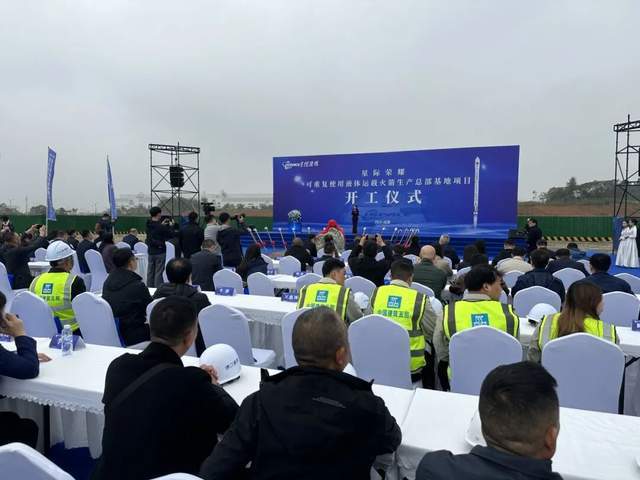
投资33亿元!成都要造火箭了!
Sou Hu Cai Jing· 2025-11-05 09:05
Core Insights - The project of the reusable liquid launch vehicle production headquarters by Galactic Glory officially commenced construction in Chengdu, with a total investment of 3.3 billion yuan [1][3]. Investment and Infrastructure - The project is located in the Chengdu High-tech Comprehensive Bonded Zone, covering an industrial area of 200 acres and a total construction area of 92,266.74 square meters [1][3]. - The first phase includes the construction of intelligent manufacturing production lines for liquid rockets, featuring six digital production lines, including four intelligent assembly lines and two digital testing lines [3][5]. Production Capacity and Economic Impact - Upon reaching full production, the facility is expected to have an annual capacity of 20 reusable liquid launch vehicles, filling a gap in the rocket assembly sector in Chengdu [5][8]. - The project is projected to generate an annual output value and tax revenue of approximately 4 billion yuan, directly creating around 1,200 jobs [7][8]. Technological Advancements - The project will utilize advanced digital intelligent manufacturing technologies, integrating product digital models with digital production management systems, significantly reducing the production time from several days to 4-5 hours per vehicle [8]. Industry Development - The establishment of this project is anticipated to foster the commercial aerospace industry in the Shuangliu District, creating an industrial ecosystem around rocket assembly and testing, thereby enhancing the attractiveness for downstream satellite development and operations [8].
星河动力,加入IPO梯队
Shang Hai Zheng Quan Bao· 2025-10-23 08:45
Core Viewpoint - Beijing Xinghe Power Aerospace Technology Co., Ltd. has completed its IPO guidance filing, marking a significant step in the commercial rocket industry in China, where it stands out as a leader in launch frequency and success rate [1][2] Company Overview - Xinghe Power was established in 2018 and is the first private commercial rocket company in China to achieve mass production and high-density launches [1] - The company has successfully launched its "Vulcan-1" rocket 20 times, delivering 85 commercial satellites for 27 clients, accounting for 51.3% of the total successful launches in the domestic private rocket sector [1][2] Product Development - Xinghe Power has developed a comprehensive product matrix covering various launch service scenarios, including micro and small satellite launches, medium-sized network launches, and large constellation launches [2] - The "Vulcan-2" rocket is set for its maiden flight this year, targeting medium-sized network needs, while the "Zhishen" series, a new generation of reusable rockets, aims to reduce launch costs to below 50% of traditional models [2][3] Funding and Financials - In September, Xinghe Power announced the completion of a D-round financing totaling 2.4 billion yuan, making it the highest single-round financing for a private rocket company in China to date [3][4] - Cumulatively, the company has raised over 5 billion yuan across multiple financing rounds [4] Technological Capabilities - Xinghe Power has established a full-chain technical capability from design to launch, with all core systems and components developed in-house [3] - The company has built a robust quality management and safety control system covering the entire process from design to launch [3]