机械

Search documents
我国装备工业“压舱石”作用持续提升
Yang Shi Wang· 2026-01-29 11:51
央视网消息(新闻联播):2025年,我国实施了新一轮机械、汽车行业稳增长工作方案,通过供需两端 协同发力,深化科技创新和产业创新深度融合,增强优质装备供给能力,装备工业对工业经济支撑作用 更加突出。 2025年,我国装备制造业基础领域创新成果持续涌现:4000吨级轮式起重机在山地大型风电机组吊装工 程中投入应用,世界最大直径24米竖井掘进机成功下线。一系列关键核心技术突破,让装备制造业"压 舱石"作用更加凸显。2025年,我国规模以上装备制造业增加值占全部规模以上工业比重为36.8%,较 2024年提高2.2个百分点。 同时,新兴产业正加快培育壮大。截至目前,我国已累计培育汽车行业国家级专精特新"小巨人"企业数 百家;人形机器人整机生产企业已超140家。 2025年,我国汽车、电子行业增加值同比增长分别为11.5%、10.6%,位居工业所有大类行业的前两 位;风力发电机组、水轮发电机组等绿色产品产量显著增长。 此外,智能制造水平显著提升。截至2025年底,装备制造业已累计建成卓越级智能工厂197家,占全国 总量的比重为39%。在首批公布的15家领航级智能工厂中,有6家来自装备制造业,占比40%。 下一步,我国 ...
涉及石墨烯/电池级磷酸二氢锂等!101项行业标准公开征求意见
仪器信息网· 2026-01-29 09:02
Core Viewpoint - The Ministry of Industry and Information Technology (MIIT) has publicly solicited opinions on 101 industry standards, including those related to black metallurgy, non-ferrous metals, and building materials, such as "Determination of Weight Loss Rate of Graphene Oxide Powder by Thermogravimetric Analysis" and "Battery-grade Lithium Dihydrogen Phosphate" [2][5]. Group 1: Industry Standards Overview - The MIIT has completed the drafting of 23 standards for the black metallurgy industry, 9 standards for the non-ferrous metals industry, 54 standards for the building materials industry, 1 standard for the rare earth industry, and 14 standards for the machinery industry [5]. - The "Determination of Weight Loss Rate of Graphene Oxide Powder by Thermogravimetric Analysis" specifies the method for measuring the weight loss rate of graphene oxide powder, including principles, instruments, reagents, testing environment, sample preparation, experimental steps, data analysis, precision, and reporting [5]. - The "Battery-grade Lithium Dihydrogen Phosphate" outlines product classification, technical requirements, testing methods, inspection rules, labeling, packaging, transportation, storage, accompanying documents, and order content applicable to battery-grade lithium dihydrogen phosphate products [6]. Group 2: Analytical Methods - The "Chemical Analysis Method for Nickel Cobalt Manganese Lithium Part 2: Determination of Multi-element Content by Inductively Coupled Plasma Atomic Emission Spectroscopy" describes the method for determining the content of lithium, nickel, cobalt, manganese, sodium, calcium, iron, copper, zinc, magnesium, potassium, aluminum, boron, sulfur, silicon, strontium, yttrium, niobium, tantalum, tungsten, zirconium, and titanium in nickel cobalt manganese lithium [6].


机械行业周报:低空发展稳健,看好工程机械增长
Guoyuan Securities· 2026-01-29 02:55
Investment Rating - The report maintains a "Recommended" investment rating for the industry [7] Core Insights - The low-altitude economy is experiencing steady development, with significant policy advancements in vertical industry empowerment and new tourism scenarios [3] - The engineering machinery sector is expected to maintain a steady growth trend, supported by strong competitive advantages of domestic leading enterprises in both supply and demand [4] Weekly Market Review - From January 18 to January 23, 2026, the Shanghai Composite Index rose by 0.84%, and the Shenzhen Component Index increased by 1.11%. The machinery equipment sector outperformed, rising by 2.57%, which is 3.19 percentage points higher than the CSI 300 Index, ranking 13th among 31 primary industries [12] - Sub-sectors such as general equipment, specialized equipment, rail transit equipment II, engineering machinery, and automation equipment saw increases of 3.33%, 2.55%, 2.59%, 1.33%, and 2.29% respectively [12][15] Key Sector Tracking - The low-altitude economy is projected to promote over 10,000 agricultural drones and train over 10,000 operators by 2030 in Fujian Province, with a target operational service area of 25 million acres annually [3] - The tower crane rental industry’s utilization rates were reported at 55.1% and 56.8% for tower crane days and maximum lifting moment respectively, indicating a slight decrease from the previous month [4] Investment Recommendations - For the low-altitude economy, recommended companies include Shen Cheng Jiao, Su Jiao Ke, Hua She Group, and Na Rui Radar. In the complete machine sector, focus on Wan Feng Ao Wei, Yi Hang Intelligent, Zong Heng Co., and Green Energy Hui Chong. Key component manufacturers to watch include Zong Shen Power, Wo Long Electric Drive, Ying Liu Co., and Ying Bo Er. In air traffic management and operations, consider CITIC Heli, Zhong Ke Xing Tu, and Sichuan Jiu Zhou [5] - In the machinery equipment sector, recommended companies include Ju Xing Technology, Quan Feng Holdings, and Jiu Hao Company for the export chain. For engineering machinery, focus on Sany Heavy Industry, Xugong Machinery, and Anhui He Li. In the industrial mother machine sector, watch Hua Zhong CNC, Ke De CNC, and Heng Li Hydraulic [5]
A股年度业绩预告盘点丨1550家上市公司已披露 411家预计净利润最大增幅超100%
Di Yi Cai Jing· 2026-01-29 01:04
此外,有201家预减,665家预亏,合计866家公司全年业绩报忧。业绩报忧公司中,有394家预计净亏损 超亿元,505家预计净利润最大降幅超50%。从行业分布来看,业绩报忧公司主要分布在化工、机械、 半导体产品与半导体设备行业,报忧公司数量分别为83家、77家、61家。 责任编辑:江钰涵 1月29日,A股共302家上市公司披露2025年年度业绩预告78家预增,12家略增,50家扭亏,其中报喜公 司数量达140家,占比46.36%,162家公司全年业绩报忧,其中41家预减,121家预亏。 1月29日,A股共302家上市公司披露2025年年度业绩预告78家预增,12家略增,50家扭亏,其中报喜公 司数量达140家,占比46.36%,162家公司全年业绩报忧,其中41家预减,121家预亏。 从预告净利润金额来看,75家公司预计全年净利润超1亿元。其中,工业富联、京能电力、华新建材排 名居前,预计净利润分别为351.00亿元、33.07亿元、27.00亿元。从预告净利润增幅来看,159家公司预 计全年净利润最大增幅超50%。其中,海峡创新、华丰科技、*ST凯鑫排名居前,预计净利润最大增幅 分别为2540.85%、22 ...
长跑20年欧盟印度达成“世纪大协定” 可抵御美关税逆风?
2 1 Shi Ji Jing Ji Bao Dao· 2026-01-28 15:54
Core Viewpoint - The European Union (EU) and India have reached a significant free trade agreement (FTA) aimed at countering the impact of U.S. tariffs, creating a trade zone covering 20 billion people and accounting for 25% of global GDP and one-third of global trade [1][2]. Trade Agreement Details - The FTA will eliminate or reduce tariffs on over 90% of EU goods exported to India, significantly improving market access for EU products [1][6]. - Key tariff reductions include a decrease in India's automotive tariffs from 110% to 10%, and reductions in machinery, chemicals, and pharmaceuticals tariffs [1][6]. - The agreement is expected to save EU exporters up to €4 billion annually in tariffs and double EU exports to India [6][10]. Historical Context - The negotiations for the FTA have spanned approximately 20 years, with significant interruptions due to a lack of political urgency from both sides [2][4]. - Recent geopolitical pressures, particularly from U.S. tariffs, have accelerated the urgency for both parties to finalize the agreement [4][5]. Economic Implications - India is currently the EU's ninth-largest trading partner, with bilateral trade projected to reach $136 billion in the 2024-2025 fiscal year, showing a trade surplus for India of approximately $16 billion [2][6]. - The FTA is seen as a strategic move for both the EU and India to diversify their trade relationships and reduce dependency on the U.S. market [7][12]. Challenges Ahead - Despite the agreement, there are concerns regarding the balance of benefits, with some analysts suggesting it may favor the EU more than India [10][11]. - Potential barriers include India's complex regulatory environment and the need for compliance with EU standards, which may hinder the effectiveness of the FTA [11][12].
机械行业2026年度投资策略:AI重塑制造业需求,成熟制造走向全球
Guolian Minsheng Securities· 2026-01-28 15:33
Group 1 - The core view of the report emphasizes that AI is reshaping manufacturing demand, with mature manufacturing moving towards global markets, and the mechanical industry is expected to benefit significantly from technology and export growth in 2026 [1][9][10] - The mechanical industry index outperformed the CSI 300 by 23.25 percentage points in 2025, with a 40.91% increase in the mechanical industry index compared to a 17.66% increase in the CSI 300 [9][10] - AI technology is expected to have a profound impact on the manufacturing industry, with AI infrastructure reshaping demand patterns and applications driving hardware manufacturing equipment demand [9][11] Group 2 - The report predicts that 2026 will see a significant increase in demand for equipment driven by AI infrastructure, including semiconductor equipment, liquid cooling equipment, and gas turbines [13] - The demand for AI hardware manufacturing equipment and components, such as humanoid robots and 3C automation equipment, is expected to rise [13] - Export-oriented equipment, particularly in the engineering machinery sector, is anticipated to show strong growth in 2026 [13] Group 3 - The semiconductor equipment market is projected to grow, with global sales expected to reach $125.5 billion in 2025, a 7.4% increase, and further growth to $138.1 billion in 2026 [34][40] - The report highlights that the domestic semiconductor equipment market in China is expected to reach approximately 230 billion yuan in 2025, indicating strong growth potential [41] - The PCB industry is entering a new development cycle driven by AI demand, with a projected global PCB market value of approximately $73.57 billion in 2024, reflecting a 5.8% year-on-year increase [54][56] Group 4 - Liquid cooling technology is becoming essential due to the increasing power consumption of AI servers, with the global liquid cooling component market expected to reach $5-10 billion in 2025 and $25 billion by 2030 [84][86] - The report indicates that the demand for liquid cooling solutions will significantly increase as AI processing power continues to rise, making traditional cooling methods inadequate [70][84] - The introduction of advanced liquid cooling systems, such as NVIDIA's GB200 and GB300, is expected to drive market growth and innovation in cooling technologies [84][86]





招商策略2月行业配置关注:景气修复的线索和春季行情的演绎
Xin Lang Cai Jing· 2026-01-28 14:43
格隆汇1月28日|招商策略研报指出,过去一个月市场总体小幅震荡上行,部分涨价资源品、AI景气催 化的TMT板块表现较好。展望2月份,行业配置重点关注景气修复的线索和春季行情的演绎,聚焦顺周 期+科技领域,同时随着春节临近,增加对部分可选消费的关注。结合中观景气、盈利能力、筹码分 布、估值、交易、周期阶段和赛道价值等多个维度,本期推荐关注电子(半导体)、传媒(广告营销、 游戏、影视)、机械(自动化设备、工程机械)、电力设备(电池、电网设备、光伏设备)、基础化 工、社会服务等。 ...
受益于周期资产行情,自由现金流800ETF万家(563580)涨近3%创上市以来新高
Sou Hu Cai Jing· 2026-01-28 13:08
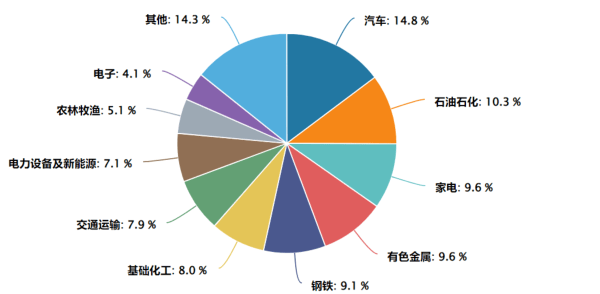
Group 1 - Major stock indices showed mixed performance, with cyclical sectors such as non-ferrous metals, precious metals, oil, and chemicals leading the gains [1] - The Wanjiasheng Zhongzheng 800 Free Cash Flow ETF (563580) rose by 2.85%, reaching a new high since its listing, focusing on companies with strong cash flow capabilities [1] - The index includes sectors like automotive, oil and petrochemicals, home appliances, non-ferrous metals, steel, and basic chemicals, which together account for over 60% of the index weight [1] Group 2 - Cyclical sectors are sensitive to economic conditions, commodity prices, and capacity utilization, covering upstream resource industries like oil and gas, midstream manufacturing, and downstream consumer sectors [3] - Recent strong performance in cyclical sectors, particularly in non-ferrous metals and oil and gas, is expected to be a key theme in the upcoming spring market rally [3] - From a global macro perspective, the expansion of dollar credit cracks during the Kondratiev depression, along with frequent geopolitical conflicts, enhances the monetary and safe-haven attributes of commodities, signaling the start of a super cycle [3]
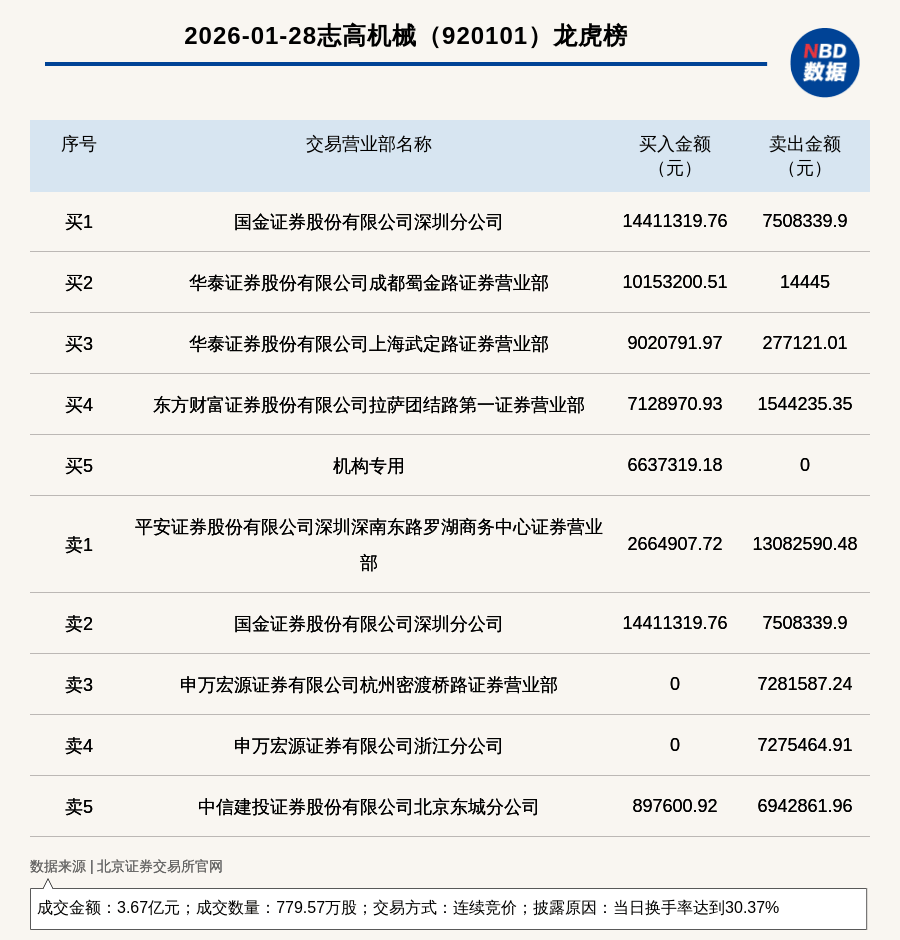
机构席位买入663.73万 北交所上市公司志高机械登龙虎榜
Sou Hu Cai Jing· 2026-01-28 10:33
Group 1 - The core point of the news is that Zhigao Machinery (920101) experienced significant trading activity on January 28, 2026, with a turnover rate of 30.37% and a total transaction amount of 367 million yuan [1][3] - The stock closed at 47.5 yuan, with a total trading volume of 7.7957 million shares on that day [1] - The top buying seat was from Guojin Securities Co., Ltd. Shenzhen Branch, which purchased approximately 14.41 million yuan worth of shares, while the top selling seat was from Ping An Securities Co., Ltd. Shenzhen [1][2] Group 2 - The trading data shows that the buying amounts from various securities firms included 10.15 million yuan from Huatai Securities Chengdu Branch and 9.02 million yuan from Huatai Securities Shanghai Branch [2] - The selling amounts included 13.08 million yuan from Ping An Securities Shenzhen and significant sales from other firms, indicating active trading interest [2] - The overall trading dynamics suggest a high level of investor engagement with Zhigao Machinery's stock on that date [1][2]
2025年报业绩预告开箱(三):一批龙头正在验证高成长逻辑
市值风云· 2026-01-28 10:13
Core Viewpoint - The report highlights the performance forecasts of various A-share listed companies, indicating significant growth in sectors driven by AI computing power, resource prices, and financial market activity, while also noting challenges faced by traditional industries [4][26][30]. Group 1: Companies with Notable Performance Growth - State Grid Yingda (600517.SH) expects a net profit of 2.3 billion to 2.75 billion yuan, a year-on-year increase of 46.10% to 74.69%, driven by stable growth in its main business and significant investment returns from its financial sector [6]. - Zhongjin Gold (600489.SH) anticipates a net profit of 4.8 billion to 5.4 billion yuan, reflecting a growth of 41.76% to 59.48%, benefiting from higher gold sales prices and improved profitability in its mining operations [6]. - Shenzhen South Circuit (002916.SZ) projects a net profit of 3.154 billion to 3.342 billion yuan, with a growth of 68% to 78%, capitalizing on AI computing upgrades and increased demand in the storage market [6]. - Dongfang Securities (600958.SH) forecasts a net profit of 5.62 billion yuan, a 67.8% increase, supported by a vibrant capital market and strong performance in its wealth management and institutional business [6]. - Chengdu Xian Dao (688222.SH) expects a net profit of 104 million to 127 million yuan, a growth of 102.50% to 147.29%, driven by stable revenue growth and improved gross margins [6]. Group 2: Companies Facing Challenges - Jinjia Co. (002191.SZ) anticipates a loss of 251.95 million to 503.90 million yuan, transitioning from profit to loss due to client structure adjustments and expected impairment provisions [20]. - Mulin Sen (002745.SZ) projects a loss of 1.5 billion to 1.1 billion yuan, also moving from profit to loss due to weak demand in the European market and increased operational costs [21]. - Tianwei Vision (002238.SZ) expects a loss of 160 million to 220 million yuan, influenced by declining rental prices in the data center market and reduced revenue from traditional cable services [23]. Group 3: Industry Trends - The technology growth narrative is clear, with companies like Shenzhen South Circuit and Huadian Co. benefiting from AI computing upgrades and high-end manufacturing demands [26]. - Resource price sensitivity is evident, with companies like Zhongjin Gold and Xiamen Tungsten experiencing performance recovery due to rising prices of strategic resources [26]. - The financial sector shows resilience and transformation, with firms like Dongfang Securities and Guotai Junan benefiting from increased market activity and strategic shifts [27]. - The recovery in consumer and service industries is highlighted by Wanda Film's return to profitability, showcasing the importance of content and experiential consumption [28]. - The pharmaceutical sector is experiencing significant differentiation, with companies like Chengdu Xian Dao achieving high growth through innovation, while others face competitive pressures [29].