
啤酒

Search documents
燕京啤酒(000729):2025年三季报点评:U8逆势高增,弹性持续释放
Huachuang Securities· 2025-10-21 06:04
Investment Rating - The report maintains a "Strong Buy" rating for Yanjing Beer (000729) with a target price of 15.5 CNY [2][9]. Core Insights - Yanjing Beer reported a total revenue of 13.43 billion CNY for the first three quarters of 2025, representing a year-on-year increase of 4.6%. The net profit attributable to shareholders reached 1.77 billion CNY, up 37.4% year-on-year [2]. - The company's U8 product line continues to show strong growth, with sales volume for Q3 slightly increasing to 1.1435 million kiloliters, driven by improved market conditions in September [9]. - Cost optimization has led to a decrease in unit costs by 2.8% to 2,125 CNY per kiloliter, contributing to a gross margin increase of 2.2 percentage points to 50.2% [9]. - The report highlights that the company is on track to meet its annual sales target of 900,000 tons for the U8 product, with a year-on-year growth of approximately 30% as of September [9]. Financial Performance Summary - For 2024A, total revenue is projected at 14.667 billion CNY, with a growth rate of 3.2%. The net profit is expected to be 1.056 billion CNY, reflecting a significant growth rate of 63.7% [5]. - The earnings per share (EPS) forecast for 2025E is 0.55 CNY, with a price-to-earnings (P/E) ratio of 23 [5][9]. - The company maintains a healthy balance sheet with a debt-to-asset ratio of 32.55% and a net asset value per share of 5.62 CNY [6].

燕京啤酒(000729):U8势能延续 利润持续提升 季度分红回报股东
Xin Lang Cai Jing· 2025-10-21 04:31
事件:公司发布2025 年三季度报告,25Q1-3 实现营业收入134.3 亿元,同比+4.6%,实现归母净利润 17.7 亿元,同比+37.4%,实现扣非归母净利润16.9 亿元,同比+33.6%。对应单25Q3 实现营业收入48.7 亿元,同比+1.5%,实现归母净利润6.7 亿元,同比+26.0%,实现扣非归母净利润6.5 亿元,同比 +24.6%。 盈利预测:我们预计公司25-27 年分别实现收入153.4/159.7/165.6 亿元,分别同比+4.6%/+4.1%/+3.7%, 分别实现归母净利润15.0/17.6/20.3 亿元,分别同比+42.0%/+17.6%/+14.9%,维持"推荐"评级。 风险提示:消费环境承压,行业竞争加剧,U8增长不及预期。 销量基本持平,ASP 在结构升级带动下有所提升。25Q3 公司收入同比+1.5%,拆分量/价看,分别同比 +0.1%/+1.4%。我们预计,销量表现持平主要系25Q3外部消费环境表现较弱。预计ASP 提升主要系:大 单品U8 增长势能延续,带动产品结构升级。 25Q3 成本红利下,吨成本有所下降,叠加ASP 提升,毛利率提升。公司深化改革,持续 ...
燕京啤酒(000729)2025年三季报点评:Q3量价增速有所放缓 利润率持续改善
Xin Lang Cai Jing· 2025-10-21 02:29
Core Insights - Yanjing Beer achieved a revenue of 13.43 billion yuan in the first three quarters of 2025, representing a year-on-year increase of 4.6%, with a net profit attributable to shareholders of 1.77 billion yuan, up 37.4% year-on-year [1] - The company has seen significant improvements in profit margins due to product structure upgrades and cost optimization [1][2] Financial Performance - In Q3 2025, Yanjing Beer reported a revenue of 4.87 billion yuan, a year-on-year increase of 1.5%, and a net profit of 670 million yuan, up 26% year-on-year [1] - The gross profit margin for the first three quarters of 2025 was 47.19%, and for Q3 it was 50.15%, both showing an increase compared to the previous year [1] - The net profit margin for the first three quarters reached 15.32%, and for Q3 it was 16.17%, reflecting a year-on-year increase of 3.53 and 2.79 percentage points respectively [1] Sales and Market Strategy - The company sold 3.4952 million kiloliters of beer in the first three quarters of 2025, a year-on-year increase of 1.4%, with an average price of 3,843 yuan per kiloliter, up 3.1% year-on-year [2] - Yanjing Beer is expanding its market presence through initiatives like the "Hundred Cities Project," focusing on 16 high-tier cities to enhance product visibility [2] - The company is also embracing new retail channels, partnering with platforms like Yima and JD Wine World to penetrate non-base markets [2] Future Outlook - The company expects to continue benefiting from reform dividends, with plans to further develop its core product, Yanjing U8, and enhance its product matrix [2] - Cost management remains a focus, with expectations of low industry procurement costs in 2025, allowing for further cost and expense optimization [2] Profit Forecast and Valuation - The net profit forecasts for 2025-2027 have been raised to 1.596 billion, 1.886 billion, and 2.178 billion yuan respectively, reflecting increases of 7%, 5%, and 5% [3] - The price-to-earnings ratios are projected to be 22x, 19x, and 16x for the respective years, indicating a positive outlook for sustained growth driven by the U8 product line [3]
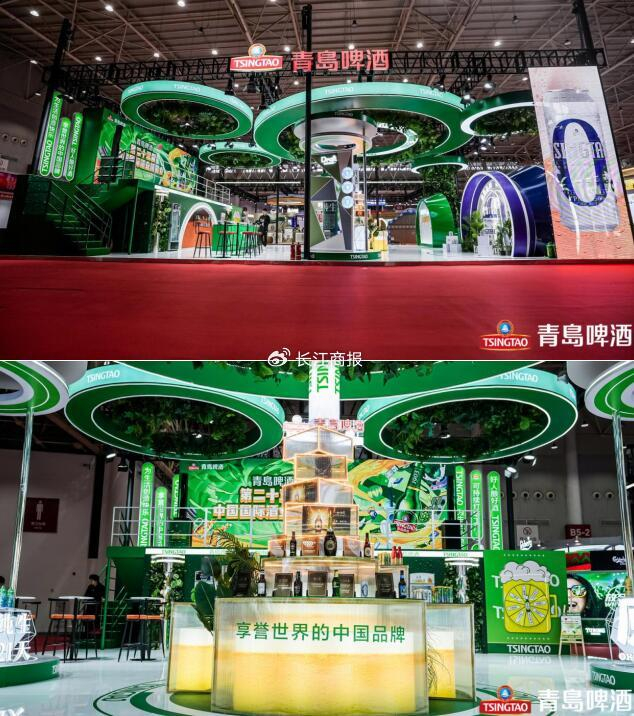
青岛啤酒闪耀酒博会 金奖矩阵实力“吸睛”,多款新品“轻盈”登场
Chang Jiang Shang Bao· 2025-10-21 02:21
Core Viewpoint - The 23rd China International Wine Expo was successfully held from October 17 to 19, showcasing a variety of Qingdao Beer products and new offerings, emphasizing a health-conscious approach to beer consumption [1] Product Highlights - Qingdao Beer introduced key products aligned with modern consumer trends, particularly highlighting "Qingdao Beer Light Dry," which focuses on low calories, low sugar, and high quality to cater to health-conscious consumers [2] - The "Qingdao Beer Light Dry" contains only 29 calories per 100ml and has a sugar content as low as 0.1g, promoting a lighter drinking experience [4] - The 0.0% alcohol white beer from Qingdao Beer won a gold medal at the 2025 Beer World Cup, utilizing advanced vacuum distillation technology to maintain the original flavor while reducing alcohol content to less than 0.05% [6] Awards and Recognition - Qingdao Beer showcased a full array of products at the expo, including award-winning items such as classic 1903, pure draft, white beer, and various high-end specialty beers, all of which have received gold medals in domestic and international competitions [10] Consumer Engagement - The expo featured interactive activities that combined "wine experience" with "fun interaction," enhancing audience participation and adding joy to consumers' quality of life [12]


燕京啤酒(000729):Q3量价增速有所放缓,利润率持续改善:——燕京啤酒(000729.SZ)2025年三季报点评
EBSCN· 2025-10-21 02:08
2025 年 10 月 21 日 公司研究 Q3 量价增速有所放缓,利润率持续改善 ——燕京啤酒(000729.SZ)2025 年三季报点评 要点 事件:燕京啤酒 25 年前三季度实现营业收入 134.3 亿元,同比+4.6%;归母净 利润 17.7 亿元,同比+37.4%;扣非归母净利润 16.9 亿元,同比+33.6%。其中, 25Q3 实现营业收入 48.7 亿元,同比+1.5%;归母净利润 6.7 亿元,同比+26%; 扣非归母净利润 6.5 亿元,同比+24.6%。 结构升级叠加费用优化,利润率显著改善。1)25 年前三季度/25Q3 公司毛利率 分别为 47.19%/50.15%,同比+2.1/+2.16pcts,主要受益于以 U8 为代表的中高 档产品销量占比提升带来的产品结构优化,以及部分原材料成本红利释放。2) 25 年前三季度/25Q3 公司销售费用率分别为 11.59%/13.8%,同比-0.4/ -0.06pcts,主要系规模效应释放。3)25 年前三季度/25Q3 管理费用率分别为 10.24%/10.06%,同比-0.98/-0.85pcts。公司持续推进卓越管理体系建设,深 化改 ...
华泰证券今日早参-20251021
HTSC· 2025-10-21 01:30
Macro Insights - Policy financial tools are being rapidly deployed, with Agricultural Development Bank and China Development Bank announcing a total of CNY 2,895 billion in funding as of October 17, which is expected to support short-term credit and infrastructure investment growth [2][4] - The third quarter GDP growth rate for China was reported at 4.8%, matching expectations but down from 5.2% in the previous quarter, while the industrial value-added growth for September was 6.5%, exceeding the forecast of 5% [5][11] Fixed Income - The construction and building materials sector is seeing a gradual improvement in funding, with infrastructure investment showing a cumulative year-on-year increase of 1.1% for the first nine months of 2025, while real estate investment has decreased by 13.9% [10] - The establishment of a new debt management department by the Ministry of Finance indicates a shift towards a long-term debt management mechanism, moving away from emergency measures [6] Real Estate - The real estate sector is stabilizing, with a marginal improvement in construction and sales figures, although housing prices continue to face downward pressure [7][8] - Recommendations for real estate stocks focus on companies with strong credit ratings and resources in core cities, including China Resources Land and China Overseas Development [7] Power Equipment and New Energy - The release of the "Wind Energy Beijing Declaration 2.0" at the Beijing International Wind Energy Conference sets a target for annual new wind power installations of no less than 120GW during the 14th and 15th Five-Year Plans, reinforcing industry confidence [8] - The wind power industry is expected to enter a recovery phase, with recommendations for leading wind turbine manufacturers [8] Consumer Goods - The retail sales growth for September was reported at 3.0%, with expectations for continued moderate growth in October due to the upcoming Double Eleven shopping festival [9] - Structural opportunities in consumer sectors such as emotional consumption and domestic brands are highlighted as areas for investment [9] Industrial and Machinery - The domestic multi-directional forging market is expanding, with sales expected to grow from USD 1.205 billion in 2024 to USD 1.576 billion by 2031, driven by demand in high-end manufacturing sectors [14] - Recommendations include companies that have achieved key technological breakthroughs and are expanding internationally, such as Diwei [14] Key Companies - China Life Insurance is expected to see a 50%-70% year-on-year increase in net profit for the first three quarters of 2025, driven by strong investment returns [19] - Sinomach Electric reported a 32.86% year-on-year increase in revenue for the first three quarters of 2025, with significant growth in overseas orders [19]
燕京啤酒(000729):以稳为主,改革成果仍在兑现
HTSC· 2025-10-21 01:30
Investment Rating - The investment rating for the company is "Buy" with a target price of RMB 16.75 [1][10]. Core Views - The report indicates that the company has shown steady performance despite external pressures, with a focus on cost control and inventory management. The anticipated recovery in consumption and the completion of the "14th Five-Year Plan" are expected to enhance profit elasticity [7][10]. Financial Performance - For the first three quarters of 2025, the company reported revenue of RMB 13.43 billion, a year-on-year increase of 4.6%, and a net profit attributable to the parent company of RMB 1.77 billion, up 37.4% year-on-year. The third quarter alone saw revenue of RMB 4.87 billion, a 1.5% increase year-on-year, and a net profit of RMB 670 million, up 26.0% year-on-year [7][8]. - The company's gross margin for the first three quarters was 47.2%, an increase of 2.1 percentage points year-on-year, with the third quarter gross margin reaching 50.2% [9]. Sales and Market Dynamics - The company's beer sales volume increased by 1.4% year-on-year for the first three quarters, with a slower growth rate in the third quarter due to external factors such as weather and consumption pressures. However, the U8 product line continued to grow healthily [8][9]. Profitability and Cost Management - The report highlights that cost reductions and structural optimization have led to a continuous improvement in profit margins. The company has managed to reduce its sales and management expense ratios, contributing to a net profit margin of 13.2% for the first three quarters [9][10]. Earnings Forecast - The earnings per share (EPS) forecast for 2025 is RMB 0.56, with a projected compound annual growth rate (CAGR) of 27% for net profit from 2025 to 2027, which is higher than the average of comparable companies [10][12].
燕京啤酒(000729):U8高增对冲消费弱Β 多次分红强化安全边际
Xin Lang Cai Jing· 2025-10-21 00:32
Core Viewpoint - The company has demonstrated resilience in revenue growth and profitability despite a weak overall consumption environment, particularly through its flagship product U8, which continues to show strong growth potential [1][3]. Financial Performance - For the first three quarters of 2025, the company reported revenue of 13.433 billion yuan, a year-on-year increase of 4.57%, and a net profit attributable to shareholders of 1.770 billion yuan, up 37.45% year-on-year [1]. - In Q3 2025, revenue reached 4.875 billion yuan, reflecting a 1.55% year-on-year growth, while net profit attributable to shareholders was 668 million yuan, a 26.00% increase year-on-year [1]. - The sales net profit margin in Q3 2025 improved by 2.79 percentage points to 16.17%, with the sales gross margin increasing by 2.16 percentage points to 50.15% [2]. Product Performance - The U8 product line has maintained a growth rate of 25%-30%, showcasing strong volume and price resilience despite a generally weak consumption environment [1]. - Sales volume for U8 in the first three quarters of 2025 increased by 1.39% to 3.4952 million tons, with revenue per ton rising by 3.13% to 3,843.22 yuan/ton [1]. Strategic Initiatives - The company has implemented a series of strategic reforms under the leadership of Chairman Geng since 2022, focusing on revitalizing the brand and enhancing competitive strength [3]. - The company has initiated multiple dividend distributions, returning 282 million yuan to investors in the first three quarters, with expectations for a steady increase in cumulative dividend rates in 2025 and beyond [3]. Future Outlook - The company is positioned as a quality investment opportunity with both offensive and defensive characteristics, driven by product resilience and anticipated increases in dividend yield [3]. - Profit forecasts for net profit attributable to shareholders for 2025-2027 are updated to 1.602 billion, 1.911 billion, and 2.262 billion yuan, respectively, maintaining a "buy" rating [3].
燕京啤酒前三季度净利增近四成:啤酒销量增1.39%,拟分红2.82亿元
Xin Lang Cai Jing· 2025-10-21 00:04
Core Viewpoint - Yanjing Beer reported a significant increase in net profit for the first three quarters of 2025, with a nearly 40% year-on-year growth, indicating strong financial performance despite a competitive market environment [2][4]. Financial Performance - In Q3 2025, Yanjing Beer achieved revenue of 4.875 billion yuan, a year-on-year increase of 1.55%, and a net profit of 668 million yuan, up 26% [3]. - For the first three quarters of 2025, the company reported total revenue of 13.433 billion yuan, reflecting a 4.57% increase, and a net profit of 1.770 billion yuan, which is a 37.45% increase [3]. - The beer sales volume for the first nine months was 3.495 million kiloliters, showing a growth of 1.39% year-on-year [2]. Profit Distribution - Yanjing Beer announced a cash dividend distribution plan for the first three quarters of 2025, proposing a payout of 1.00 yuan per 10 shares, totaling 282 million yuan [6]. Strategic Initiatives - The company emphasized its commitment to a major product strategy, with the Yanjing U8 brand continuing to perform well, contributing to product structure upgrades and market rejuvenation [6]. - Yanjing Beer is focusing on enhancing its management systems and accelerating digital transformation to improve operational efficiency [6]. Shareholder Changes - Among the top ten circulating shareholders, one increased their holdings, three new shareholders entered, and two reduced their stakes, indicating active market participation [6][7]. Industry Context - The overall beer industry in China is experiencing a period of structural adjustment and transformation, with a slight decline in production reported [8]. - Yanjing Beer is also diversifying its product offerings by introducing beverages like Baisite soda, aiming to create a dual growth model of "beer + beverages" [9].
万亿巨头,拟分红超65亿元
Zhong Guo Zheng Quan Bao· 2025-10-20 23:28
Group 1: Company News - Industrial Fulian plans to distribute a cash dividend of 3.3 yuan per 10 shares, totaling 6.551 billion yuan (before tax) for the first half of 2025 [7] - Ningde Times reported a revenue of 283.072 billion yuan for the first three quarters, a year-on-year increase of 9.28%, and a net profit of 49.034 billion yuan, up 36.20% [5] - DiAo Micro plans to acquire 100% equity of Rongpai Semiconductor, with shares resuming trading on October 21 [7] - China Mobile's third-quarter revenue reached 250.9 billion yuan, a year-on-year increase of 2.5%, with a net profit of 31.1 billion yuan, up 1.4% [6] - Keda Xunfei reported a third-quarter revenue of 6.078 billion yuan, a year-on-year increase of 10.02%, and a net profit of 172 million yuan, up 202.4% [6] - Yanjing Beer achieved a third-quarter revenue of 4.875 billion yuan, a year-on-year increase of 1.55%, with a net profit of 668 million yuan, up 26% [6] - China Shipbuilding expects a net profit of 5.55 billion to 6.15 billion yuan for the first three quarters, a year-on-year increase of 104.30% to 126.39% [6] - Dazhu CNC reported a revenue of 3.903 billion yuan for the first three quarters, a year-on-year increase of 66.53%, and a net profit of 492 million yuan, up 142.19% [6] Group 2: Economic Indicators - The National Bureau of Statistics reported that the GDP for the first three quarters reached 10,150.36 billion yuan, with a year-on-year growth of 5.2% [1] - The GDP growth by industry showed the primary industry increased by 3.8%, the secondary industry by 4.9%, and the tertiary industry by 5.4% [1] - The quarterly GDP growth rates were 5.4% in Q1, 5.2% in Q2, and 4.8% in Q3, with a quarter-on-quarter growth of 1.1% in Q3 [1] - The People's Bank of China announced that the one-year Loan Prime Rate (LPR) remains at 3.0% and the five-year LPR at 3.5%, unchanged for five consecutive months [1] Group 3: Industry Developments - The Ministry of Industry and Information Technology held a meeting addressing the cement industry's supply-demand imbalance, emphasizing the need for capacity replacement and regulation [3] - The Dalian Commodity Exchange announced an expansion of trading varieties for qualified foreign institutional investors, adding new futures contracts [5] - The China Futures Market Monitoring Center reported that the total funds in the futures market exceeded 2 trillion yuan, marking a 24% increase from the end of 2024 [4]





