投资银行

Search documents
8月美股IPO活跃度倍增:新股需求强劲!企业抢抓窗口期
智通财经网· 2025-08-18 00:20
智通财经APP获悉,对于投资银行家而言,夏季末本是一年中最清闲的时段之一,但今年市场却打破了 惯例。8月中旬,IPO市场已呈现爆发态势:共有12家新公司完成发行(单笔融资至少5000万美元),总筹 资规模约29亿美元,活动量较往年同期增长约一倍。对比过去十年的数据,8月IPO平均家数为9家,总 融资额约15亿美元,今年的活跃度显著提升。 IPO研究公司Renaissance Capital的投资策略总监艾弗里·马克斯指出:"市场对新股的需求非常明确,这 些企业正在抓住窗口期推进上市。"他提到,尽管过去几年IPO市场基本处于停滞状态,但当前的需求 激增并不意外,"若没有如此强劲的市场需求,这些公司可能不会选择此时上市"。 科技与加密货币领域成为今年IPO市场的核心驱动力。稳定币发行商Circle(CRCL.US)、金融科技公司 Chime(CHYM.US)及人工智能数据中心企业CoreWeave(CRWV.US)等均在首日交易中获得良好反馈。展 望2025年底,Klarna、StubHub等公司也可能加入上市队列,渠道储备充足。 第二季度,摩根大通、高盛、花旗集团和摩根士丹利的股票承销费收入均实现季度环比增长( ...
美股Q2捷报难掩隐忧?高盛警告2026利润率预测恐过于乐观
Zhi Tong Cai Jing· 2025-08-17 23:53
尽管美国企业第二季度盈利表现超出预期,但高盛警告称,市场对2026年利润率的普遍预测可能过于乐 观。 高盛首席美股策略师David Kostin在8月15日给客户的报告中指出,标普500指数每股收益同比增长 11%,几乎是分析师此前预测4%增幅的三倍。 这一优异表现主要源于分析师今年早些时候大幅下调了预期。约60%的上市公司盈利超出预期一个标准 差以上,反映出此前的盈利预期门槛设置过低。 企业展望也明显转向乐观。58%的公司上调了2025年业绩指引,比例是一季度的两倍。分析师随之调高 了多数行业2025年末和2026年的盈利预测,不过,他们仍预计标普500指数盈利增速将从二季度的11% 放缓至今年下半年的7%。 利润率成为关键隐忧。Kostin表示,尽管关税影响迄今弱于预期,但2026年利润率预测中隐含的"大幅 扩张"看起来并不现实——即使企业能持续抵消成本上升压力。他预计未来几个季度分析师将下调预 测,但幅度不会超过长期趋势水平。 美元走弱带来额外助力,推动大型企业当季名义销售额增长。但按固定汇率计算,标普500指数实际销 售增速放缓,中小型企业则出现萎缩。分析师目前预测,2025年下半年各市值板块销售趋势 ...
年内国有控股上市公司重大资产重组数量同比增68.42%
Zheng Quan Ri Bao· 2025-08-17 23:21
Core Viewpoint - China Shenhua Energy Co., Ltd. is planning a significant asset restructuring by acquiring 13 companies from its controlling shareholder, State Energy Investment Group, to enhance its core business capabilities and address industry competition issues [1][2][3]. Group 1: Restructuring Details - The restructuring involves the issuance of A-shares and cash payments to acquire stakes in 13 companies, with total assets amounting to 258.36 billion yuan and net assets of 93.89 billion yuan as of the end of 2024 [1]. - The targeted assets are expected to generate a total revenue of 125.996 billion yuan in 2024 [1]. - This move is part of a broader trend, with 636 state-controlled listed companies disclosing merger plans in 2023, marking a 10.29% increase year-on-year [1]. Group 2: Industry Context - The coal sector remains a cornerstone of China's energy system, and the acquisition aims to streamline operations across coal mining, power generation, and related logistics [2]. - The restructuring is seen as a strategic response to reduce overlapping business operations between China Shenhua and State Energy Group, thereby enhancing operational efficiency [2][3]. - The integration of resources is expected to foster innovation and improve the overall competitiveness of the energy sector [2][3]. Group 3: Policy and Market Dynamics - Recent policy changes, including the "New National Guidelines" and "Merger Six Guidelines," have stimulated the merger and acquisition market, allowing for more flexible regulatory conditions [4]. - The focus on mergers and acquisitions is driven by the need for state-owned enterprises to optimize resource allocation and enhance their core competencies [4][5]. - The trend indicates a shift towards full industry chain integration, moving beyond single asset acquisitions to comprehensive resource consolidation [6]. Group 4: Future Outlook - The efficiency of merger approvals has improved, with major asset restructuring projects averaging only 141 days from acceptance to registration [7]. - The anticipated acceleration of state-owned enterprise integration is expected to create larger, more competitive groups in key industries such as energy and chemicals [7]. - Future mergers are likely to focus on emerging strategic sectors, including renewable energy and advanced manufacturing, reflecting a shift towards high-quality economic development [7].

你不知道的美国(20)华尔街一极集中在瓦解
日经中文网· 2025-08-17 00:34
Core Viewpoint - The article discusses the significant expansion of financial institutions, particularly Goldman Sachs, in Dallas, Texas, indicating a shift in the financial landscape away from New York City as the primary global financial center [2][4][10]. Group 1: Expansion of Goldman Sachs - Goldman Sachs has increased its workforce in Dallas from approximately 900 employees in 2017 to 4,700, marking a fivefold growth and making it the second-largest office in the U.S. after New York [4][6]. - The firm is investing $500 million in a new office building in Dallas, expected to accommodate about 10% of its global workforce by 2028 [6][10]. Group 2: Broader Trends in Financial Institutions - Other financial giants, such as Wells Fargo and Charles Schwab, are also expanding in Dallas, with Wells Fargo constructing a new office for 3,000 employees and Schwab having moved its headquarters from San Francisco to Dallas in 2020 [7][8]. - The competition among stock exchanges is intensifying, with plans for a Texas Stock Exchange and existing exchanges like NYSE and NASDAQ establishing a presence in Dallas [7][8]. Group 3: Economic Factors Driving Migration - The economic scale of Texas and Florida is comparable to that of developed countries, with Texas projected to have a GDP of $2.7 trillion in 2024, ranking second in the U.S. and eighth globally [10]. - Texas and Florida's lack of state income tax is attracting wealthy individuals and businesses, leading to increased trading opportunities for financial institutions [10][12]. Group 4: Changing Employment Landscape - Over the past five years, while New York has seen the highest absolute growth in securities industry employment, its growth rate has been outpaced by Texas and Florida by 2-3 times [13]. - The share of U.S. securities industry employees in New York has halved from 33% in 1990 to 18% today, indicating a decline in its dominance [14]. Group 5: Cultural and Political Considerations - The rise of financial centers in the South is accompanied by concerns over the increasingly conservative and right-leaning political climate, which may affect corporate diversity policies and operational stability [19][20].



大摩预言:下周杰克逊霍尔央行年会上,鲍威尔会“放鹰”,抵制市场降息预期
华尔街见闻· 2025-08-16 10:27
Core Viewpoint - Morgan Stanley warns that contrary to market expectations of a September rate cut by the Federal Reserve, persistent service sector inflation may lead to a more hawkish stance from Chairman Powell at the upcoming Jackson Hole meeting [1][2][3]. Group 1: Market Sentiment and Predictions - Market traders have locked in a 93% probability of a 25 basis point rate cut in September, driven by a weak July employment report and downward revisions of historical data [5][6]. - The prevailing narrative suggests that as long as inflation data does not show a catastrophic spike, a preventive rate cut is likely, leading to a "one-way street" towards a September cut [6][4]. Group 2: Service Sector Inflation Concerns - Morgan Stanley identifies service sector inflation as the real issue, overshadowing external factors like tariffs, with core CPI rising from 2.9% to 3.1% year-on-year in July [7][8]. - Service prices, excluding energy, increased by 0.4% month-on-month, while goods prices rose only 0.2%, indicating a more persistent inflationary trend driven by domestic factors [8]. Group 3: Federal Reserve's Dilemma - Powell faces the challenge of managing market expectations without being cornered into a rate cut, as failing to cut rates could lead to significant market turmoil [9][10]. - The Fed's goal is to retain flexibility, especially before the complete release of employment and inflation data, to avoid being forced into a decision by market pricing [9][10]. Group 4: Implications for Future Policy - The upcoming Jackson Hole meeting is expected to be a critical moment for Powell to signal that inflation concerns are more pressing than employment issues, aiming to break the market's certainty about a rate cut [12]. - Investors should prepare for potential market corrections due to discrepancies in expectations, as Powell's message may emphasize patience until more data is available [12].


看对“4月大反弹”的高盛交易员:“喊顶”很难,预计美股仍将缓慢上涨
Hua Er Jie Jian Wen· 2025-08-16 09:13
Group 1: Market Outlook - Goldman Sachs' top trader Josh Schiffrin believes that despite some bubbles in certain sectors, the upward trend of the U.S. stock market is not over [1] - Schiffrin advises investors to follow the slow upward trend of the market while considering hedging or "insurance" measures due to high valuations and low volatility [1][7] - He emphasizes that predicting market tops is very difficult and suggests waiting for a confirmed downturn before taking action [1][7] Group 2: Federal Reserve Policy - Schiffrin asserts that a 25 basis point rate cut by the Federal Reserve in September is almost certain, while the likelihood of a 50 basis point cut is very low [2] - He notes that the current federal funds rate is closer to the Fed's perceived "neutral rate" compared to last year, and inflation risks remain due to tariffs and survey-based inflation expectations [2] Group 3: Bond Market - Schiffrin has shifted his strategy to favoring 5-year U.S. Treasury bonds, predicting that the average federal funds rate over the next five years will be below 3% [3] - He finds 5-year Treasuries attractive in the 3.75% to 4% yield range and believes that short-term Treasuries can effectively hedge risk assets if the economy weakens [3] Group 4: Japanese Central Bank - Schiffrin believes that the market has significantly underestimated the likelihood of the Bank of Japan raising rates in October [4] - He argues that current global risk markets are high, trade uncertainties have decreased, and Japan's real interest rates are deeply negative, creating a "window" for the BOJ to act [4] Group 5: U.S. Dollar Outlook - Schiffrin continues to view the U.S. dollar as being on a path of structural depreciation, despite recent stagnation [5] - He cites the need for the U.S. to finance a large fiscal deficit, high valuations of dollar assets, and an expected narrowing of interest rate differentials with other economies as reasons for his outlook [5] Group 6: Stock Market Sentiment - Schiffrin expresses cautious optimism regarding the U.S. stock market, driven by good economic performance, reduced trade policy uncertainty, and ongoing enthusiasm for AI [6][7] - He warns of high overall valuations and potential bubbles in some market areas, suggesting that purchasing insurance is reasonable given the current low implied volatility [7]
摩根士丹利预测:鲍威尔将会抵制市场降息预期,夺回政策主动权
Sou Hu Cai Jing· 2025-08-16 08:30
Group 1 - Morgan Stanley warns that the anticipated interest rate cut by the Federal Reserve in September may not occur, suggesting a "hawkish" stance instead [1][3] - Market consensus indicates a 93% probability of a 25 basis point rate cut, driven by a weak July employment report and significant downward revisions in historical data [1][2] - The report highlights that core inflation is being driven by service sector inflation rather than goods, with July's core CPI year-on-year growth accelerating from 2.9% to 3.1% [2] Group 2 - Service sector inflation is more persistent and challenging than goods inflation, primarily influenced by domestic labor costs and rents, making it harder to reverse once an upward trend is established [2] - Federal Reserve Chairman Jerome Powell faces the challenge of managing market expectations while addressing inflation concerns, indicating that inflation issues are more pressing than employment issues [3] - Powell's upcoming speech is expected to signal that it is premature to assess the final impact of tariffs, and his main task will be to counter the market's assumption of an inevitable rate cut [3]
一线投行经验:港股上市尽调怎么避坑、怎么通关
梧桐树下V· 2025-08-16 00:54
Core Viewpoint - The article emphasizes the importance of thorough due diligence in the Hong Kong IPO process, highlighting key operational points to avoid pitfalls during the due diligence phase. Group 1: Third-Party Interviews - Third-party interviews are a crucial part of investment banking due diligence, typically led by investment banks in collaboration with auditors, sponsors, and legal advisors to conduct face-to-face interviews with clients, suppliers, and banks [2] - Client interviews should cover major clients across different sales models to ensure a comprehensive coverage rate [3] - Supplier interviews should be stratified to ensure coverage across different supplier categories [4] - Bank interviews should be selected based on a certain proportion of banks according to their deposit and loan balances [5] Group 2: Management and Internal Control Due Diligence - Management due diligence involves interviews with company management to understand business models, operational status, and internal control management [7] - Internal control assessments are conducted by third-party consultants who provide reports on internal control risks, which investment banks follow up on to ensure all major deficiencies are rectified before listing [7] Group 3: Financial Due Diligence - Financial due diligence involves discussions on performance indicators to analyze the reasons behind financial metric changes during the reporting period [9] - The process includes verifying company data against audit reports to ensure consistency [10] - Building financial models is essential for understanding business operations and future growth drivers, requiring historical performance as a baseline [11] - Valuation analysis is a key component, often using discounted cash flow models and comparable company metrics for comprehensive evaluation [11] Group 4: Legal Due Diligence - Legal due diligence focuses on identifying non-compliance issues that could impact the IPO, such as safety incidents or incomplete business licenses [18] - Independent background checks are conducted on the company, shareholders, and major clients to uncover any significant litigation or penalties [18] - Compliance letters from relevant authorities are required during the IPO process to confirm adherence to regulations [18] Group 5: Course and Learning Opportunities - The article promotes a course titled "Hong Kong IPO Investment Banking Due Diligence and Review Practices," which reviews seven classic failed IPO cases and shares practical due diligence techniques [16] - The course covers various aspects of due diligence, including legal, financial, and business investigations, and emphasizes the importance of collaboration among different parties involved [17]

特朗普炮轰高盛遭硬刚!美联储降息才看到希望,又被泼了冷水!
Sou Hu Cai Jing· 2025-08-15 19:48
Core Viewpoint - The escalating tariff conflict between the Trump administration and Wall Street has raised concerns about the economic impact, particularly following unexpected PPI data that dampened expectations for a significant Fed rate cut in September [1][5]. Group 1: Tariff Policy and Economic Impact - Trump's tariff policy has sparked a fierce debate, with the President publicly criticizing Goldman Sachs for its assessment of tariff impacts, claiming that tariffs are borne by foreign entities and will not lead to inflation [1][3]. - Goldman Sachs' data indicates that U.S. companies currently bear 64% of the tariff costs, with consumers responsible for 22% and foreign exporters only 14%. This consumer burden is projected to rise to 67% by October [3][5]. - Historical data supports the notion that tariffs often lead to increased costs for U.S. manufacturers and consumers, as seen in past instances like the steel tariffs under the Bush administration [5][9]. Group 2: Market Reactions and Predictions - The unexpected rise in PPI, which increased by 3.3% year-over-year, has shifted market sentiment away from anticipated Fed rate cuts, with previous expectations of a 90% chance of a September cut now in doubt [5][7]. - Analysts have noted that the sectors most affected by tariffs, such as industrial metals and machinery, have seen significant price increases, contributing to inflationary pressures [7][9]. - Financial institutions are warning of potential market corrections, with UBS highlighting overvaluation in U.S. equities and Stifel predicting a possible 14% drop in the S&P 500 by year-end [7][9].

高盛最新宏观研判:美国通胀、中国通缩引关注,这些大事或影响市场
Zhi Tong Cai Jing· 2025-08-15 14:49
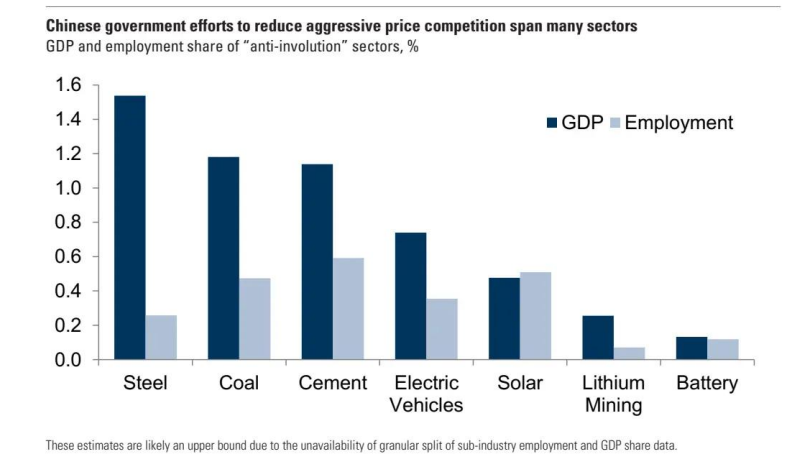
Group 1: Inflation Trends - In the US, the core Consumer Price Index (CPI) rose by 0.32% in July, aligning with expectations, with forecasts suggesting a monthly increase of 0.3%-0.4% in the coming months due to tariffs affecting core goods prices, particularly in electronics, automobiles, and clothing [1][2] - The forecast for core CPI/PCE inflation rates is projected to reach 3.2% by December, with expectations of a decline towards target levels next year as tariff impacts diminish and the labor market cools [1][2] Group 2: China's Economic Situation - In contrast to the US, China's Producer Price Index (PPI) fell into deep deflation, with a forecasted PPI inflation rate of -2.8% for this year and -1.0% for next year, attributed to severe overcapacity issues [2][3] Group 3: Economic Data Reliability - Concerns have been raised regarding the reliability of US economic data, with evidence of a slight decline in data quality over the long term, potentially impacting the information value of economic indicators [6] Group 4: Geopolitical Events - The upcoming meeting between Trump and Putin has generated skepticism in the market regarding its potential to significantly alter Russian gas supplies or lead to a lasting peace agreement in Ukraine, with natural gas prices remaining stable [7] - The meeting is not expected to result in substantial changes to Russian oil supply, as constraints are primarily due to OPEC+ quotas and investment levels rather than US sanctions [7] Group 5: UK Monetary Policy - Following hawkish signals from the Bank of England, the expected timeline for interest rate adjustments has been pushed back, with forecasts for the terminal rate now anticipated to be reached in April instead of March [8] - The GBP is expected to face depreciation risks, leading to revised forecasts for EUR/GBP and GBP/USD exchange rates [8] Group 6: Tariff Impacts - The US has announced higher tariffs on India and Switzerland, which are expected to negatively impact economic growth in these countries [9] Group 7: Economic and Market Predictions - Global GDP growth is projected at 2.5% for 2025, with specific forecasts for major economies including the US (1.7%), China (4.7%), and the Euro area (1.2%) [10] - Policy rates are expected to adjust, with the US rate forecasted at 3.13% for 2026 [10] Group 8: Commodity and Currency Markets - Predictions for commodity prices include Brent crude oil at $111 per barrel and natural gas prices at $3.90 per million British thermal units for 2025 [12] - Currency forecasts indicate a potential increase in the EUR/GBP exchange rate to 0.87 over the next three months [8]