
芯片

Search documents
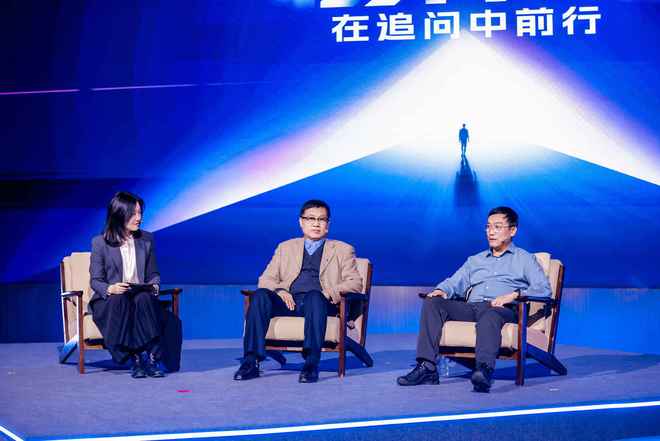
以前我们总是会问“美国人做了吗”,现在我们开始走自己的路
Guan Cha Zhe Wang· 2026-01-26 05:25
Core Viewpoint - The discussion emphasizes the importance of institutional innovation in empowering new productive forces in China, particularly in emerging industries like low-altitude economy, chips, artificial intelligence, and large aircraft. It highlights the need for a better alignment between institutional design and the development of new productive forces [1]. Group 1: Institutional Innovation and Its Value - Institutional innovation can either "unbind" or "navigate" the innovation process, with a focus on how it can accelerate and stabilize innovation [2]. - The low-altitude economy in China is hindered by insufficient policy openness, particularly in airspace management, which has seen recent reforms to clarify flight zones [4][5]. - In the field of basic research, the current institutional design often pressures researchers to focus on existing topics rather than fostering original "0 to 1" innovations [7][8]. Group 2: Pain Points in Institutional Design - Major institutional pain points include the need for more flexible regulations that allow for creative exploration and a more equitable distribution of research resources [9][10]. - The current talent evaluation system in research institutions often prioritizes publication quantity over genuine innovation, which can stifle creativity [10][11]. - The disconnect between research institutions and industry leads to challenges in the commercialization of research outcomes, as many projects do not translate into marketable products [11][12]. Group 3: Balancing Exploration and Risk Control - The discussion highlights the necessity of balancing the encouragement of exploration with risk control, particularly in engineering projects where risks must be managed carefully [17][20]. - The importance of having a structured process for evaluating new ideas and ensuring that they are feasible before significant resources are committed is emphasized [21][22]. Group 4: International Comparisons and Lessons - The need for a clearer understanding of the roles of science, technology, design, and engineering is crucial for effective policy-making and project success [15][16]. - The comparison with international practices reveals that China's industry collaboration is often limited, which hinders collective advancements in sectors like semiconductor technology [28][29]. - The potential for adopting collaborative models similar to those in Japan and the U.S. is discussed, emphasizing the need for shared investment in research and development [28][29].

每日投资策略-20260126
Zhao Yin Guo Ji· 2026-01-26 04:53
Market Overview - Global markets showed mixed performance, with the Hang Seng Index closing at 26,750, up 0.45% year-to-date, while the US Dow Jones fell by 0.58% [1][3] - The Chinese stock market saw gains, particularly in materials, consumer discretionary, and healthcare sectors, while energy and real estate lagged [3] Industry Insights - The Chinese pharmaceutical sector is experiencing a significant upward trend, with the MSCI China Healthcare Index rising 9.2% since early 2026, outperforming the MSCI China Index by 5.6% [4] - The trend of Chinese innovative drugs going overseas continues to gain momentum, with multiple business development (BD) transactions occurring in early 2026, indicating a strong market for overseas licensing [5] - Key transactions include the overseas rights granted by Rongchang Biopharma to AbbVie for RC148 and by Haisika for HSK39004, showcasing the clinical progress of these drugs [5] Company Analysis - China Ping An is projected to see a 12% increase in operating profit to RMB 135.9 billion in 2025, driven by improvements in life and health insurance segments [7] - The new business value (NBV) is expected to grow by 42% year-on-year to RMB 40.4 billion, with a strong performance anticipated in the first quarter of 2026, particularly in the bancassurance channel [8] - The target price for China Ping An has been raised to HKD 90, reflecting adjustments in profit and NBV growth forecasts, with the company currently trading at 0.71 times FY26E P/EV [8]
黄仁勋:无知是一种超能力,“没有终极目标” 成就了英伟达
Ge Long Hui· 2026-01-26 04:31
Core Insights - Huang Renxun, CEO of Nvidia, reflects on his 30+ years leading the AI chip giant, emphasizing the company's growth from adversity to becoming one of the most valuable tech companies globally [1] Group 1: Personal Reflections and Leadership Philosophy - Huang views "ignorance" as a superpower that allowed him to pursue entrepreneurship without being deterred by the challenges ahead [3][4] - He believes that the current generation of young people is overly exposed to information, leading to increased cynicism compared to his own generation [5] - Huang emphasizes that Nvidia's lack of a definitive long-term goal has been a strength, with the primary focus being on survival and operational continuity [6][7] Group 2: Company Culture and Resilience - The character of a company is forged in times of hardship, and Huang shares that he distributes the burden of challenges among his team rather than shielding them from difficulties [8] - He describes the role of a CEO as one filled with vulnerability, stating that they are often the most fragile members of the organization [9][11] - Huang highlights that Nvidia's decisive advantage lies not in technological superiority but in the culture developed through enduring challenges [13] Group 3: Market Position and Future Outlook - Nvidia has officially become TSMC's largest customer, surpassing Apple, which is a significant milestone for the company [15][17] - Huang asserts that the investments in AI will fundamentally change how computers operate, transitioning from human-programmed to self-learning systems guided by humans [18] - He predicts that while all job roles will evolve due to AI, the overall workload will increase rather than decrease, suggesting that AI could provide new opportunities for those currently unemployed [19][21] Group 4: Importance of the Chinese Market - Huang's recent visit to China underscores the significance of the Chinese market for Nvidia, especially in the context of AI and high-performance computing [27] - The U.S. government has allowed Nvidia to sell its H200 AI chips to China, subject to a 25% fee, highlighting the complexities of international trade and the importance of the Chinese market for Nvidia's growth [25][26][27]

三星电子HBM4芯片获英伟达(NVDA.US)认证,下月启动量产 5月开始大规模出货
智通财经网· 2026-01-26 04:13
Core Viewpoint - Samsung Electronics plans to start production of its next-generation High Bandwidth Memory (HBM) chips, HBM4, next month, supplying them to Nvidia, aiming to catch up with competitor SK Hynix after previous supply delays impacted earnings and stock prices [1]. Group 1: Samsung Electronics - Samsung has passed qualification tests for HBM4 from Nvidia and AMD and will begin shipments to Nvidia next month [1]. - The Samsung DS division has decided to start wafer production of 12-layer stacked HBM4 for Nvidia from February [1]. - If the 12-layer stacked HBM4 passes certification without design modifications, Samsung expects to complete process optimization in about three months, with mass production conditions potentially being met by mid-May [1]. Group 2: SK Hynix - SK Hynix plans to begin deploying silicon wafers for HBM chip production at its new M15X factory in Cheongju, South Korea, next month, although it has not specified if HBM4 will be part of the initial production [2]. - SK Hynix announced in October that it had completed negotiations with major customers regarding HBM supply for the following year [1]. Group 3: Market Context - Both Samsung and SK Hynix are set to release their fourth-quarter financial reports on Thursday, where they are expected to share detailed information about HBM4 orders [3]. - Nvidia's CEO Jensen Huang stated that the company is preparing to launch its next-generation chips compatible with HBM4 later this year, with the Vera Rubin platform entering "full production" [3].
俄各界高度肯定中国经济发展成就
Jing Ji Ri Bao· 2026-01-26 03:44
Economic Performance - In 2025, China's GDP reached 140 trillion yuan, marking a 5.0% increase from the previous year, showcasing strong economic resilience and growth [1] - The trade volume between China and Russia reached 228.1 billion USD in 2025, with Russia maintaining its position as China's fifth-largest trading partner [1] - Russia's trade surplus with China grew by 50%, increasing from 14 billion USD in 2024 to 21.5 billion USD in 2025 [1] Innovation and Technology - China has emerged as a leader in global innovation, ranking among the top ten most innovative economies, with significant growth in publications, patent applications, and technology exports [2] - The country is recognized as a global leader in energy transition, particularly in solar and wind energy [2] - Investment bank Finam highlights China's shift towards advanced manufacturing and future industries, positioning itself as a technology center with significant advancements in sectors like chips, robotics, and electric vehicles [3] Future Outlook - The economic outlook for China in 2026 is positive, with expectations of stable and sustainable growth driven by domestic consumption and macroeconomic measures [2] - The International Monetary Fund projects that China's contribution to global economic growth will remain around 30% in 2026 [2] - Finam anticipates that China will prioritize technological leadership and self-sufficiency over mere growth, with economic growth expected to exceed the global average in the next decade [3]
大厂芯片进展展望
2026-01-26 02:50
Summary of Conference Call Company and Industry Involved - **Company**: Alibaba Group (specifically focusing on Alibaba Cloud and its subsidiary, Pingtouge) - **Industry**: Cloud Computing and Semiconductor Industry Key Points and Arguments Pingtouge's Upcoming IPO - Pingtouge is expected to finalize its IPO by early February 2024, with preparations already underway [3][4] - The IPO aims to capitalize on Pingtouge's established market position and product competitiveness, particularly in the semiconductor space [4][9] Revenue Projections - Pingtouge's revenue for 2025 is projected to be around 20 million units, with an estimated 60 million units for 2026 [10][12] - The majority of these units (approximately 40 million) are expected to be sold externally, indicating a shift towards external commercialization [22][15] Product Competitiveness - Pingtouge's chips are reported to be highly competitive, with performance metrics comparable to leading products in the market [4][46] - The company is focusing on enhancing its product offerings, including the next-generation PPU (Processing Power Unit), which is expected to launch by the end of 2023 [23][24] Capital Expenditure - Capital expenditure for 2026 is projected to rise to between 1800 billion to 2000 billion RMB, driven by increased procurement costs and component price inflation [62][64] - The rising costs of components, such as memory and HBM (High Bandwidth Memory), are significant factors influencing the capital expenditure increase [65][66] Market Position and Strategy - Pingtouge is positioned as a leading player in the domestic semiconductor market, with expectations to rank among the top three in terms of production capacity [57][46] - The company plans to leverage its established customer base and internal resources to expand its market reach post-IPO [49][50] Organizational Structure - Pingtouge employs approximately 1500 people, with around 400 dedicated to R&D for the PPU [36][38] - The team comprises experienced professionals from major tech companies, enhancing its competitive edge in the semiconductor industry [53][52] Future Outlook - The company is expected to continue its growth trajectory, focusing on AI and cloud services, which are integral to its long-term strategy [8][6] - Pingtouge's ability to scale its operations and maintain a robust supply chain will be crucial for its success in the competitive semiconductor landscape [52][51] Other Important but Overlooked Content - The discussion highlighted the importance of AI integration across all business units, indicating a strategic shift towards AI-driven solutions [6][8] - The potential for partnerships with other semiconductor manufacturers, such as Zhongxin International, was mentioned as a way to enhance production capabilities [52][57] - The call also touched on the competitive landscape, noting that Pingtouge's unique position in the market could provide significant advantages over competitors [46][50]

美国和中国,终于把牌摊开了。不是一时的气话,而是一种冰冷的对视,双方都看懂了对方的底牌。美国那 38.5 万亿美元的债务窟窿正越撕越大,美联储的印钞机都快转得发烫,可就在这自顾不暇的当口,它居然还主动找上门来,要跟中国摊牌叫板。2025年下半年,双方通过一系列谈判达成了"脆弱的休战...
Sou Hu Cai Jing· 2026-01-26 01:53
Group 1 - The core viewpoint of the article highlights the escalating tensions between the US and China, with both countries revealing their strategies in a high-stakes economic confrontation [1][7] - The US is attempting to isolate China through trade agreements that include "poison pill clauses," which aim to restrict China's trade partnerships and impose severe penalties for non-compliance [2][6] - The US is facing a significant debt crisis, with a debt of $38.5 trillion, leading to reliance on dollar printing to manage its financial issues, which is increasingly ineffective against China's stable economic strategies [3][5] Group 2 - China is responding to external pressures by strengthening its internal economy, focusing on its vast domestic market and industrial capabilities to mitigate the impact of external shocks [4][6] - The country is actively reducing its holdings of US debt and increasing its gold reserves, while also expanding its cross-border payment systems to bypass US-controlled financial channels [5][6] - China is investing in key industries such as artificial intelligence and advanced manufacturing, aiming for self-sufficiency and resilience against external technological pressures [6][7] Group 3 - The article emphasizes that China's exports, particularly in sectors like electric vehicles and solar products, are increasingly directed towards emerging markets in Latin America, Africa, and Southeast Asia, indicating a shift in global trade dynamics [7] - The ongoing US-China rivalry is characterized by a struggle for long-term economic stability and resource control, with both nations adapting their strategies in response to each other's moves [7]
快讯:恒指高开0.35% 科指涨0.05% 黄金股普涨 芯片股高开 美佳音控股涨超166%
Xin Lang Cai Jing· 2026-01-26 01:23
Core Viewpoint - US stock market showed mixed performance last Friday, with technology stocks performing well and the Nasdaq index showing strong movement, while the three major indices closed with varied results [1][4]. Group 1: US Market Performance - The US dollar continued to be under pressure, with the yield on the 10-year Treasury note falling to 4.23% [1][4]. - Gold prices reached a new high, and oil prices also showed upward movement [1][4]. Group 2: Hong Kong Market Performance - The three major indices in Hong Kong opened higher, with the Hang Seng Index rising by 0.35% to 26,844.04 points, the Hang Seng Tech Index increasing by 0.05%, and the National Enterprises Index up by 0.3% [2][5]. - In the market, technology stocks showed mixed results, with JD.com rising over 1% and Baidu falling over 1% [1][4]. - Chip stocks opened high, with Meijia Audio Holdings surging over 166% [1][4]. - Gold stocks generally rose, with Zijin Mining International increasing over 3% [1][4]. - New consumption concepts saw some gains, with Pop Mart rising over 4% [1][4]. - Oil stocks were active, with CNOOC rising over 2% [1][4]. - Automotive stocks weakened, with Xpeng Motors dropping over 1% [1][4].
白银价格年内飙涨近32%,银行投资银条被买空 |财富周历 动态前瞻
Sou Hu Cai Jing· 2026-01-26 00:16
A股市场 - The overall equity position of public funds has slightly decreased compared to the end of Q3 last year, with average positions for stock funds and mixed funds at 89.06% and 81.05% respectively [2] - The "CPU concept stocks" have surged, with Longxin Zhongke rising over 8%, Chipsea Technology up 12.77%, and Guoxin Technology increasing by over 3% as of January 22 [3] - As of January 20, 177 companies in the A-share market have announced performance forecasts, with 55 companies showing a net profit growth rate exceeding 100% after excluding those that turned losses into profits [3] - More than 500 A-share companies have disclosed performance forecasts or quick reports for 2025 as of January 20 [3] - Jing Shan Light Machine's stock was suspended for one day on January 19 and was subsequently placed under other risk warnings, changing its stock name to "ST Jingji" due to a recent administrative penalty notice revealing past financial fraud [3] 理财市场 - The People's Bank of China will conduct a 900 billion yuan medium-term lending facility (MLF) operation on January 23, 2026, to maintain ample liquidity in the banking system [4] - The scale of public funds continues to rise, approaching 38 trillion yuan by the end of Q4 2025, highlighting the growing importance of public funds in wealth management [4] - As of January 21, the spot silver price in London reached a peak of 95.42 USD/ounce, with a year-to-date increase of nearly 32%, significantly outpacing gold's growth [4] - The digital RMB has processed 3.48 billion transactions with a total transaction amount of 16.7 trillion yuan by the end of November 2025 [4] - Quantitative index enhancement strategies have performed exceptionally well in the recovering A-share market, with an average annual return of 45.08% for 2025 [4] QDII基金 - The total scale of QDII funds reached 970 billion yuan, nearing 1 trillion yuan, representing a 59% increase compared to 610 billion yuan in the same period last year [5] 其他行业动态 - The Ministry of Commerce and eight other departments released 18 specific measures to promote the high-quality development of the pharmaceutical retail industry [6] - In 2025, the sales volume of new energy commercial vehicles in China reached 954,000 units, a year-on-year increase of 65.5%, with market penetration exceeding 30% for four consecutive months [6] - China's seed export volume reached 62,000 tons in 2025, achieving a trade surplus of 7.5 million USD, marking the second consecutive year of surplus in crop seed trade [6] - The National Bureau of Statistics reported that China's GDP for 2025 reached 140.1879 trillion yuan, growing by 5.0% year-on-year, with per capita GDP exceeding 13,000 USD for three consecutive years [6] 消费贷政策 - The personal consumption loan interest subsidy policy has been upgraded, with major state-owned banks actively implementing the new requirements, extending the policy until the end of 2026 and including credit card installment business in the subsidy scope [7]

炬芯科技股份有限公司2025年年度业绩预告
Zhong Guo Zheng Quan Bao - Zhong Zheng Wang· 2026-01-25 23:10
Core Viewpoint - The company forecasts significant growth in revenue and net profit for the year 2025, driven by its focus on AI transformation and product innovation [2][5]. Performance Forecast - The company expects to achieve an operating revenue of 922 million yuan in 2025, an increase of 270.12 million yuan, representing a year-on-year growth of 41.44% [2]. - The projected net profit attributable to the parent company is 204 million yuan, an increase of 97.42 million yuan, reflecting a year-on-year growth of 91.40% [2]. - The net profit after deducting non-recurring gains and losses is expected to be 192 million yuan, an increase of 113.45 million yuan, indicating a year-on-year growth of 144.42% [2]. Financial Metrics - The estimated net profit margin for 2025 is 22.13%, an increase of 5.78 percentage points compared to the net profit margin of 16.35% in 2024 [3]. Previous Year Performance - In 2024, the company reported an operating revenue of 651.88 million yuan, with a total profit of 108.19 million yuan and a net profit attributable to the parent company of 106.58 million yuan [4]. Reasons for Performance Changes - The company has focused on AI transformation for edge products, increasing R&D investment and accelerating new product iterations, resulting in significant operational achievements [5]. - The successful promotion of edge AI audio chips based on first-generation in-memory computing technology has led to multiple projects being launched and mass-produced [5]. - The company has seen a substantial increase in market penetration and sales revenue for its edge AI processor chips and low-latency high-quality wireless audio products [5]. - R&D expenses totaled approximately 240 million yuan, reflecting an increase of 11.56% year-on-year, supporting the iterative upgrade of chip products [6]. - The company aims to enhance its competitive edge by focusing on downstream market demands and deepening AI technology R&D and market promotion [6].
