
房地产

Search documents
消费焕新提质 激活市场澎湃动力
Xin Lang Cai Jing· 2026-01-20 17:50
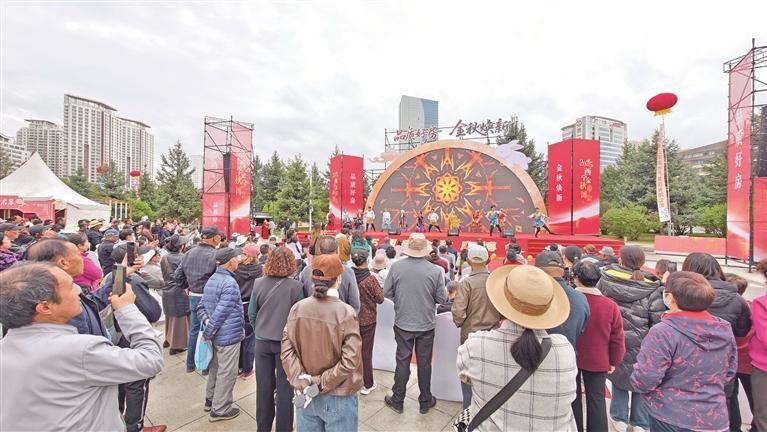
Core Insights - The 2025 Qinghai consumption market is experiencing robust growth driven by various innovative measures and diverse business formats, contributing to high-quality development in the region [14][15][20]. Consumption Upgrade - Qinghai has implemented a "trade-in" policy across three major sectors, providing subsidies that have led to a total investment of 1.69 billion yuan, benefiting over 1.52 million people and stimulating consumption by 19.7 billion yuan [15]. - The province has seen significant participation in the trade-in activities, resulting in the purchase of 92,000 new vehicles, 496,000 home appliances, and 615,000 digital products [15]. Cultural and Tourism Integration - The "Cultural Tourism +" model has been effective in enhancing consumer engagement, with events like the "Xihai 2261 Cultural Fair" attracting over 500,000 visitors and generating a transaction volume of 1.79 million yuan [16][17]. - The integration of cultural and tourism activities has led to a 2.3% increase in revenue for the accommodation and dining sectors during the peak tourism season [17]. E-commerce Growth - E-commerce in Qinghai has shown remarkable growth, with a 103.8% year-on-year increase in retail sales through public networks, marking four consecutive months of over 100% growth [18]. - The number of online retail enterprises has increased from 1,088 to 2,031, indicating a significant expansion in the e-commerce sector [19]. Real Estate Development - The 2025 Autumn Housing Expo in Xining featured 24 real estate brands and over 5,000 quality housing units, marking a significant event in the local real estate market [20]. - The expo aims to transition from "housing for all" to "quality housing," showcasing a variety of housing options and services [21]. Brand Economy and Commercial Vitality - The introduction of high-end brands like Sony and Tesla in Qinghai is part of a broader strategy to stimulate consumption and enhance commercial vitality [22][23]. - The provincial government has implemented measures to support the establishment of brand stores, which has led to a significant increase in local commercial activity [23]. Restaurant Industry Transformation - The restaurant sector in Qinghai has reported a 12% increase in revenue, with a focus on innovation and quality in dining experiences [24]. - The introduction of the "Qinghai Family Banquet" brand aims to enhance the attractiveness of local dining options and integrate with various sectors [24].

晚报 | 1月21日主题前瞻
Xuan Gu Bao· 2026-01-20 14:43
Urban Renewal - The Ministry of Natural Resources and the Ministry of Housing and Urban-Rural Development issued a notice to support urban renewal actions, allowing the use of existing land and property resources for national-supported industries with a transitional policy period of up to 5 years [1] - Galaxy Securities believes that with the implementation of policies and gradual reduction of housing inventory, the real estate market supply and demand will achieve balance, leading to a narrowing of the decline in new construction and completion [1] - Urban renewal is expected to become the main theme of future urban construction, with current expansion to 35 cities and potential for further pilot expansion [1] Gold Market - International gold prices reached a historic high, with futures and spot prices exceeding $4,700 per ounce due to tensions in US-EU trade relations [2] - Global geopolitical uncertainties and continued central bank purchases of gold are expected to support long-term gold price stability [2] - Silver prices also hit record highs, driven by demand from photovoltaic and new energy sectors, indicating a solid long-term support for silver prices [2] Agricultural Modernization - The agricultural sector in China still has room for improvement, with low crop output efficiency and declining agricultural production benefits for farmers [3] - The core direction of the 15th Five-Year Plan is to accelerate agricultural modernization and enhance overall production capacity and quality [3] - Biotechnology is identified as a key technology to empower agricultural modernization and achieve the goal of becoming an agricultural powerhouse [3] Inspection and Testing Instruments - The State Administration for Market Regulation announced plans to promote the domestic verification and evaluation of inspection and testing instruments by 2026, focusing on breaking foreign market monopolies [4] - The market for inspection and testing instruments in China is projected to grow at a compound annual growth rate of 12.3%, potentially exceeding 480 billion yuan by 2030 [4] - The industry is expected to undergo a paradigm shift towards an ecological platform, driven by the integration of AI, IoT, and other advanced technologies [4] AI in Healthcare - Ant Group's AI health management application, Antifufu, has upgraded its PC version and launched the DeepSearch feature, providing professional services to medical professionals [7] - The application has over 30 million monthly active users and has established deep cooperation with 300,000 doctors and over 5,000 medical institutions [7] - The integration of AI capabilities is expected to significantly reduce the daily workload of healthcare professionals [7] Surgical Robots - The National Healthcare Security Administration issued guidelines for pricing surgical and treatment assistance services, covering various innovative medical technologies [8] - The surgical robot industry is experiencing rapid growth due to strong policy support and technological advancements, with the market expected to reach 9.59 billion yuan in 2024, a 33.8% increase [8] - The industry is projected to maintain a compound annual growth rate of over 16% from 2025 to 2030, with domestic penetration rates expected to rise from below 20% to over 40% [8]
黑天鹅又来
Sou Hu Cai Jing· 2026-01-20 14:27
Group 1 - The A-share market is experiencing a significant decline, particularly in the previously overheated sectors, with the ChiNext index showing substantial losses [1] - Since January 15, the selling amount by institutional investors in major ETFs has reached approximately 390 billion yuan, indicating a strong sell-off trend [1] - Despite the sell-off, market sentiment remains stable with a trading volume of 2.8 trillion yuan, suggesting that investor interest is still present [1] Group 2 - Recent regulatory actions have targeted market manipulation, with the China Securities Regulatory Commission (CSRC) penalizing prominent financial influencers and tightening control over financial content [2] - The introduction of the "Dragon and Tiger List" has led to increased transparency but has also resulted in unintended consequences, such as encouraging retail investors to follow large traders, which can distort market pricing [2] - The CSRC's ongoing crackdown on irregular trading practices indicates a shift towards stricter market oversight [2] Group 3 - Global markets are reacting to unexpected events, including a sharp decline in Japanese government bonds and trade tensions initiated by former President Trump, leading to increased risk aversion [3] - The gold futures market has surged by 3%, reaching 4,735 USD, while the US dollar index has seen a consecutive decline, reflecting a shift in investor sentiment [3] - The People's Bank of China has maintained the Loan Prime Rate (LPR), while the National Development and Reform Commission emphasizes the need for proactive fiscal policies, which could benefit cyclical sectors as consumer expectations rise ahead of the Spring Festival [3]
国泰海通 · 晨报260121|宏观、地产、商业航天
国泰海通证券研究· 2026-01-20 14:03
Macro - The Chinese economy achieved its annual target for 2025, with a GDP growth of 5.0% for the year and a quarterly growth rate of 4.5% in Q4, slightly down due to base effects [3] - Economic characteristics in Q4 showed continued dual differentiation: strong industrial production but structural mismatches in capacity and demand, and a divergence between external and internal demand, with external demand supported by optimized export structures while internal demand lagged due to slow recovery in consumption and investment [3] - The production side showed bright spots, with industrial growth in December reversing previous slowdowns, driven by high-end manufacturing and green transformation, while the service sector's production index grew by 5.0% year-on-year [3] - Consumption showed structural optimization but faced year-end pressure, with rural consumption, online shopping, and upgraded goods performing well, while major consumption sectors like automobiles and real estate showed average performance [3] - Investment continued to face pressure due to funding constraints, insufficient project reserves, and weak demand, leading to a policy focus on expanding domestic demand and promoting new infrastructure and equipment updates to counter external uncertainties and internal weaknesses [3] Real Estate - The rental yield for residential properties has increased from 1.5% to 1.9% from 2020 to 2025, but remains low compared to international standards, with inflation-adjusted yields being a more effective comparison metric [7][8] - In Q4 2025, rental yields plus CPI in second-tier cities began to stabilize and improve, with projections indicating a recovery from 2.3% in 2023 to 2.6% in 2024 and maintaining that level in 2025 [9] - The proportion of residents willing to buy homes increased to about 16% by the end of December, reflecting improved market confidence, although the proportion of declining listing prices rose to about 19% [10] - Real estate investment is expected to decrease further in 2026, focusing on quality over quantity, with a shift in attention from financial risks to economic contributions from the real estate sector [15][16][17] Aerospace - The launch cadence of the Long March 12 rocket has accelerated, indicating a steady growth in China's commercial space industry, with a record 92 launches in 2025 [22][23] - The commercial space sector is expected to experience rapid development in 2026, with new rocket types set to debut and increased capabilities for satellite internet constellation deployment [23]

金融工程日报:沪指震荡调整,化工、贵金属、房地产板块领涨-20260120
Guoxin Securities· 2026-01-20 13:51
- The report discusses the market performance of various indices, including the Shanghai Composite Index, which performed relatively well, and the CSI 300 Value Index, which also showed positive performance[2][6] - The report highlights the performance of different industry indices, with the petroleum and petrochemical, building materials, real estate, construction, and transportation industries performing well, while the defense, communications, computer, comprehensive finance, and electrical industries performed poorly[7] - The report provides data on market sentiment, including the number of stocks that hit their daily limit up or down, and the performance of these stocks the following day[13][14] - The report includes information on market capital flows, such as the balance of margin financing and securities lending, and the proportion of these balances relative to the total market capitalization[19][22] - The report discusses the premium and discount rates of ETFs, highlighting the ETFs with the highest premiums and discounts on a specific day[23][25] - The report provides data on block trading, including the average daily transaction amount and discount rate over the past six months[26][28] - The report includes information on the annualized discount rates of the main contracts of stock index futures for various indices, such as the Shanghai 50, CSI 300, CSI 500, and CSI 1000[28][30] - The report highlights the stocks that received the most institutional attention over the past week, with specific stocks being mentioned[30][32] - The report provides data on the top ten stocks with the highest net inflows and outflows from institutional seats and the Shanghai-Hong Kong Stock Connect[36][37][38][40]
绿地集团在海南落地一批战略合作项目
Zheng Quan Ri Bao Wang· 2026-01-20 13:47
Core Viewpoint - Greenland Group has signed strategic cooperation agreements with key enterprises in Hainan to boost its business scale in the region to over 10 billion yuan by 2026 [1][2] Group 1: Strategic Partnerships - Greenland Group will leverage its strengths in commerce, finance, health tourism, urban renewal, and infrastructure to enhance its presence in Hainan [1] - The cooperation with Hainan Agricultural Reclamation Group focuses on urban renewal, asset optimization, agricultural product trade, and import-export trade [2] - Collaboration with Hainan Tourism Investment Group will advance electric vehicle export business and high-quality hotel tourism operations [2] Group 2: Project Implementation - The agreements signify the official launch of Greenland Group's deep integration into the Hainan Free Trade Port construction strategy [1] - The partnership with Dongfang City will promote urban infrastructure development and cultural tourism integration [2]

资金涌入,行业主题ETF
Xin Lang Cai Jing· 2026-01-20 13:39
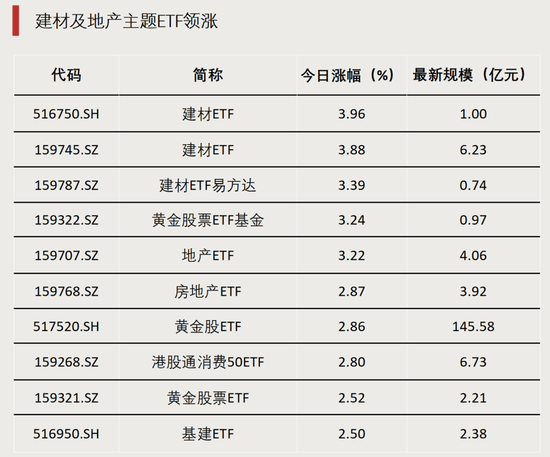
Group 1 - The real estate and building materials sectors showed strength on January 20, with multiple related ETFs rising over 3% [1][4][15] - The precious metals sector, represented by gold stocks, also gained momentum in the afternoon, with several gold-themed ETFs increasing by over 2% [1][4][15] - The commercial aerospace sector has recently entered a high volatility range, with several satellite-themed ETFs dropping over 4% [2][16] Group 2 - There has been a noticeable trend of capital flowing out of broad-based ETFs and into industry-specific ETFs, with significant net inflows into semiconductor materials and non-ferrous metals ETFs exceeding 10 billion yuan [3][17] - On January 19, the electric grid-themed ETF saw a net inflow of over 2.5 billion yuan, while gold ETFs and semiconductor materials equipment also attracted over 1 billion yuan each [10][24] - The broad-based ETFs continued to experience net outflows, with the CSI 300 ETF seeing a net outflow of over 30 billion yuan on January 19, although this was a decrease from over 58 billion yuan on January 16 [10][24] Group 3 - The leading broad-based ETFs remain highly active in trading, with several ETFs achieving transaction volumes exceeding 10 billion yuan [8][22] - The A500 ETF, which is the first to "go abroad" under the mutual market access mechanism, was listed on the Singapore Exchange on January 20, marking a significant milestone for cross-border ETF investment [13][27] - Analysts suggest that the domestic equity market remains active, with a focus on sectors supported by performance, as the market prepares for upcoming earnings reports [12][26]
行业数据 | 2025房地产供求关系持续改善,多重动能筑牢2026稳市场基础
克而瑞地产研究· 2026-01-20 12:57
Core Viewpoint - The real estate industry is entering a new phase of stabilization, supported by proactive adjustments in investment and new construction, leading to improved supply-demand dynamics and a gradual recovery from previous downturns [1][3]. Group 1: New Construction, Investment, and Transaction Dynamics - The balance among new construction, investment, and transaction volumes is crucial for the long-term stability of the real estate sector. In 2025, new construction area decreased by 20.4% to 590 million square meters, with residential new construction down by 19.8% to 430 million square meters, marking a historical low where new construction only accounted for 67% of new home sales [3][6]. - The proactive adjustment in new construction has alleviated inventory pressure, with major cities seeing a decline in narrow inventory levels, and new supply generally falling below transaction volumes. This dynamic adaptation has prevented exacerbation of supply-demand imbalances and ensured the competitiveness of quality new projects [3][6]. - In 2025, total real estate development investment reached 8.3 trillion yuan, down 17.2% year-on-year, with its share of new home sales dropping to 98.6%. This indicates a return to positive cash flow for the industry, reflecting a sales-driven investment model that supports project operations and profit realization [6][8]. Group 2: Financing Environment and Economic Support - The national economy showed resilience in 2025, with GDP reaching 140.2 trillion yuan, growing by 5.0% year-on-year. This economic backdrop, along with rising urbanization rates at 67.89%, provides a supportive environment for the real estate market [8]. - Financial indicators improved, with M2 money supply growing by 8.5% year-on-year. The recovery in resident long-term loans, which increased by 10.6 billion yuan in December, reflects effective market stabilization measures [8]. - Continued policy support from financial authorities, including adjustments to monetary policy tools and loan extensions for "white list" projects, aims to enhance the financing environment and reduce burdens on existing projects, allowing for a more extended adjustment period for the industry [8]. Group 3: Sales and Price Trends - In 2025, new residential sales area totaled 880 million square meters, down 8.7% year-on-year, with sales value declining by 12.6% to 840 billion yuan. The cumulative decline was exacerbated by a high base from the previous year, although monthly data showed signs of marginal improvement [9][12]. - The average price of new homes in December 2025 saw a year-on-year decline of 3.0%, with first-tier cities down 1.7%. However, the number of cities experiencing price stabilization increased to 12, indicating a potential structural recovery in certain markets [12][14]. - The People's Bank of China emphasized the need for a moderately loose monetary policy to support economic growth and stabilize prices, which may provide new support for housing prices in 2026, particularly in areas with high population density and proximity to industrial clusters [12][14]. Group 4: Future Outlook - The real estate market is expected to stabilize in 2026, with sales volume and value declines anticipated to narrow. The proactive adjustments in supply and demand indicators since 2025 are expected to yield positive results, with improved buyer confidence [14][15]. - Inventory reduction remains a priority, with new construction expected to decrease by around 10% in 2026. Policies aimed at acquiring existing properties for affordable housing and adjusting land supply dynamically will facilitate inventory clearance [15]. - The industry is transitioning towards a healthier ecosystem, with a widening gap between investment and sales volumes. The focus is shifting from expansion to optimization of existing assets, which is expected to create a more sustainable operational environment [15].

学会“不操作”,是投资赚钱的开始
Sou Hu Cai Jing· 2026-01-20 12:54
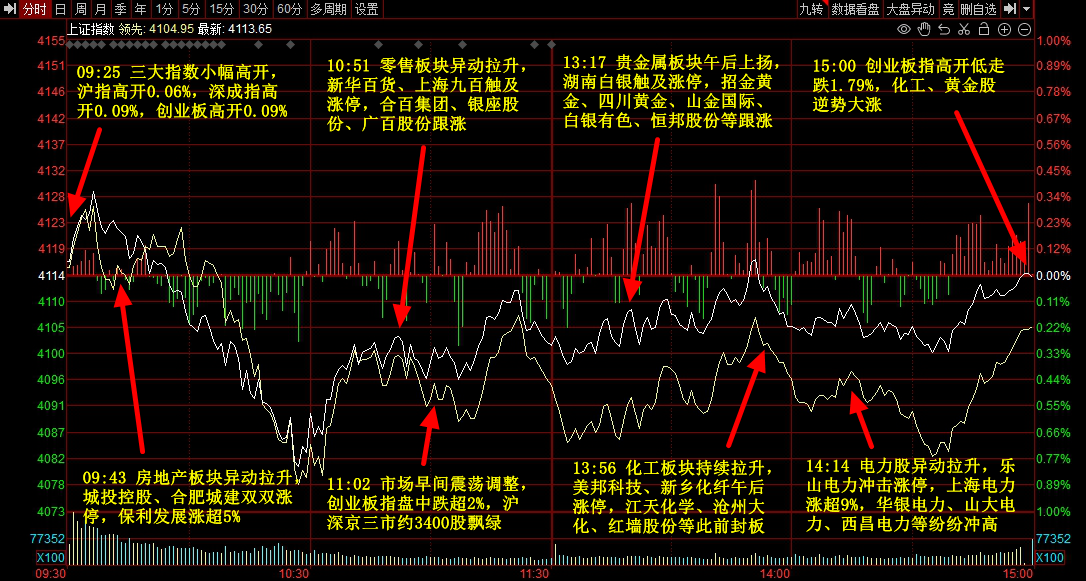
Market Overview - The A-share market showed significant divergence on January 20, 2026, with the Shanghai Composite Index slightly declining by 0.01% to close at 4113.65 points, while the growth indices, including the ChiNext Index and the Sci-Tech Innovation 50 Index, fell by 1.79% and 1.58% respectively [1] - The total trading volume in both markets increased to 2.78 trillion yuan, indicating a large-scale migration of funds from previously high-performing sectors like AI and new energy to undervalued traditional sectors such as real estate, infrastructure, and oil and petrochemicals [1] - This shift in market style was driven by clear policy signals from financial regulatory authorities aimed at stabilizing the real estate market and the Ministry of Finance's push for investment recovery, which collectively boosted market confidence in traditional sectors and guided a change in risk appetite [1] Investment Philosophy - The art of "doing nothing" in investing is highlighted as a crucial discipline, contrasting with the common perception that action equates to diligence and opportunity [2] - Investment is compared to horse racing, where the key is to identify moments when the odds are clearly in favor, emphasizing that betting should only occur when the probability of success exceeds 50% [2] - The concept of "shame" in investing is redefined; true shame lies in overpaying for assets without a clear advantage, rather than missing out on opportunities [3] - Investors are encouraged to hold cash until a significant price misalignment occurs, which requires patience and a deep understanding of one's own investment capabilities [3] - The current A-share market, characterized by macro predictions and sector rotations, underscores the importance of maintaining a long-term perspective focused on cash flow generation rather than chasing short-term trends [3] Investment Strategy - "Sitting and waiting" is presented as an active choice that reflects confidence in one's judgment and respect for the power of compounding [4] - The true winners in investing are those who remain calm amidst market frenzy and act decisively only when they have a high level of confidence [4] - The investment philosophy emphasizes deep-rooted value, seeking companies with wide economic moats and trustworthy management, and investing during market panic when prices are significantly below intrinsic value [5]
证券研究报告、晨会聚焦:地产由子沛:美国次贷危机下的房地产市场-20260120
ZHONGTAI SECURITIES· 2026-01-20 12:47
Core Insights - The report discusses the causes of the U.S. subprime mortgage crisis, highlighting factors such as the issuance of subprime loans due to low interest rates, rapid home price increases, and the role of financial innovation in spreading debt through securitization [3] - It outlines the U.S. government's response to the crisis, emphasizing the effectiveness of fiscal policies over traditional monetary policies, and the shift in leverage from households to the government [3] - The report indicates that U.S. housing prices are expected to stabilize and recover over time, with a projected timeline of approximately 5-10 years for full recovery from the crisis [3] Summary by Sections Causes of the Subprime Mortgage Crisis - The crisis was driven by increased household leverage due to low interest rates, rapid home price appreciation beyond actual value, speculative behavior in certain cities, and the impact of rising interest rates that burst the housing bubble [3] Government Response - Traditional monetary policy measures, such as interest rate cuts, were less effective compared to substantial fiscal policies that directly stimulated demand and unconventional monetary policies like quantitative easing (QE) that intervened in troubled assets [3] Housing Market Recovery - Long-term interest rates in the U.S. are on a downward trend, providing support for housing prices. The report notes that when the rental-to-price ratio exceeds the mortgage rate, housing price growth is expected to stabilize, with a recovery timeline of about 4.5 years post-crisis [3]