房地产

Search documents
黄金价格持续新高
Tebon Securities· 2026-01-20 12:33
Market Analysis - The A-share market experienced adjustments with a slight increase in trading volume, indicating a shift from high-valuation growth sectors to value sectors. The Shanghai Composite Index closed down 0.01% at 4113.65 points, while the Shenzhen Component fell 0.97% and the ChiNext Index dropped 1.79% [6][7]. - The real estate sector showed resilience, with the Real Estate II sector leading gains at 1.54%. The Guangzhou Housing Bureau announced plans to stabilize the real estate market, which may attract funds into the previously undervalued real estate sector [7][8]. - Despite market adjustments, there remains a preference for profitable sectors, with some technology sub-sectors, like robotics, showing significant price increases [7][8]. Bond Market - The government bond futures market saw an overall increase, with the 30-year main contract rising by 0.52% to 111.490 yuan. The 10-year contract increased by 0.13% to 108.180 yuan [11]. - The People's Bank of China (PBOC) conducted a 324 billion yuan reverse repurchase operation, indicating a net withdrawal of 34.6 billion yuan for the day. Short-term interest rates, such as the overnight Shibor, rose by 5.50 basis points to 1.3740% [11]. - The January LPR remained stable for the eighth consecutive month, with the one-year LPR at 3% and the five-year LPR at 3.5%. There is potential for future rate cuts, which could support bond market sentiment [11]. Commodity Market - The commodity market showed mixed results, with lithium carbonate prices hitting a ceiling, closing at 160,500 yuan per ton, a 9% increase. This surge is attributed to the government's focus on green transition and energy transformation [11][13]. - Precious metals continued to perform strongly, with silver rising nearly 4% and gold prices reaching new highs. The geopolitical tensions, particularly related to U.S. tariffs on imports from several countries, are driving demand for safe-haven assets [11][13]. Investment Opportunities - Key sectors to watch include AI applications, commercial aerospace, nuclear fusion, quantum technology, brain-computer interfaces, and robotics, all supported by government policies and technological advancements [13][15]. - The consumer sector is expected to benefit from policy-driven consumption upgrades, while brokerage firms may see increased activity as A-share market volumes stabilize around 30 trillion yuan [13][15]. - The precious metals sector is likely to remain strong due to ongoing central bank purchases and expectations of further interest rate cuts by the Federal Reserve [13][15].
【20日资金路线图】建筑装饰板块净流入近28亿元居首 龙虎榜机构抢筹多股
Zheng Quan Shi Bao· 2026-01-20 11:47
Market Overview - The A-share market experienced an overall decline on January 20, with the Shanghai Composite Index closing at 4113.65 points, down 0.01%, the Shenzhen Component Index at 14155.63 points, down 0.97%, and the ChiNext Index at 3277.98 points, down 1.79% [1] - The North Stock 50 Index also fell by 2% [1] Capital Flow - The main capital outflow from the A-share market reached 764.07 billion yuan, with a net outflow of 221.93 billion yuan at the opening and 61.61 billion yuan at the close [2] - The CSI 300 index saw a net outflow of 199.71 billion yuan, while the ChiNext experienced a net outflow of 388.98 billion yuan, and the Sci-Tech Innovation Board had a slight net inflow of 1.17 billion yuan [4] Sector Performance - Among the 8 sectors that saw capital inflows, the construction and decoration industry led with a net inflow of 27.91 billion yuan [6] - The top five sectors with net inflows included: - Construction and Decoration: 27.91 billion yuan, up 0.27% - Banking: 18.88 billion yuan, up 1.19% - Real Estate: 16.88 billion yuan, up 1.40% - Public Utilities: 15.06 billion yuan, up 0.72% - Transportation: 12.43 billion yuan, up 0.48% [7] - Conversely, the sectors with the largest net outflows included: - Electronics: -305.40 billion yuan, down 0.79% - Power Equipment: -268.40 billion yuan, down 1.47% - Computers: -198.78 billion yuan, down 1.55% - Machinery: -165.45 billion yuan, down 1.22% - Telecommunications: -160.92 billion yuan, down 2.61% [7] Stock Highlights - Zhejiang Wenhu Internet saw the highest net inflow of 5.1 billion yuan [8] - Institutions showed significant interest in several stocks, with Hunan Baiyin (002716) experiencing a net institutional buy of 80.83 million yuan, while Sanwei Communication (002115) faced a net institutional sell of 193.59 million yuan [10][11] Institutional Focus - Recent institutional ratings and target prices for selected stocks include: - Xingyu Co., Ltd.: Buy rating with a target price of 222.42 yuan, current price 121.24 yuan, indicating a potential upside of 83.45% - Dongyangguang: Buy rating with a target price of 35.28 yuan, current price 28.26 yuan, indicating a potential upside of 24.84% - Shuijingfang: Buy rating with a target price of 47.84 yuan, current price 40.35 yuan, indicating a potential upside of 18.56% [12]

12月经济数据快报
Guo Tou Qi Huo· 2026-01-20 11:47
1. Report Industry Investment Rating - No relevant information provided 2. Core Viewpoints - In 2025, China's GDP was 1,401,879 billion yuan, a 5.0% increase from the previous year. The added value of the primary, secondary, and tertiary industries increased by 3.9%, 4.5%, and 5.4% respectively. Quarterly GDP growth rates were 5.4% in Q1, 5.2% in Q2, 4.8% in Q3, and 4.5% in Q4. The Q4 GDP had a 1.2% quarter - on - quarter growth [1] - In December 2025, the year - on - year growth of industrial added value above designated size was 5.2%, 0.4 percentage points higher than the previous value, and the month - on - month growth was 0.49%, 0.05 percentage points higher than the previous value. The growth rates of mining and production and supply of electricity, gas, and water declined, while the manufacturing growth rate accelerated [1] - From January to December 2025, the year - on - year decline of national fixed - asset investment was 3.8 percentage points, with a month - on - month decline of 1.13%. Manufacturing investment increased by 0.6%, narrow - sense infrastructure investment had a growth rate of - 1.48%, and real estate development investment decreased by 17.20% [1] - In December 2025, the year - on - year growth of total retail sales of consumer goods was 0.9%, lower than the previous value of 1.3%, and the month - on - month decline was 0.40% [1] 3. Summary by Relevant Indicators GDP - The GDP quarterly year - on - year growth rates in 2025 were 5.4% in Q1, 5.2% in Q2, 4.8% in Q3, and 4.5% in Q4. The quarterly GDP growth rates were 1.0% in Q2, 1.1% in Q3, and 1.2% in Q4. The cumulative year - on - year growth rates were 5.3% in Q2, 5.2% in Q3, and 5.0% in Q4 [1] Industrial Added Value - In December 2025, the year - on - year growth of industrial added value above designated size was 5.2%, and the month - on - month growth was 0.49%. The cumulative year - on - year growth from January to December was 5.9%. Among the three major sectors, the growth rates of mining and production and supply of electricity, gas, and water declined, while the manufacturing growth rate accelerated [1] Fixed - Asset Investment - From January to December 2025, the year - on - year decline of national fixed - asset investment was 3.8 percentage points, and the month - on - month decline was 1.13%. Manufacturing investment increased by 0.6%, narrow - sense infrastructure investment had a growth rate of - 1.48%, and real estate development investment decreased by 17.20% [1] Real Estate - The cumulative year - on - year decline of real estate development investment from January to December 2025 was 17.20%. The cumulative year - on - year decline of commercial housing sales area was 8.7%. The year - on - year declines of new housing starts, housing construction, housing completion, and real estate development funds in December were 19.3%, 47.14%, 18.36%, and 28.09% respectively [1] Social Retail Sales - In December 2025, the year - on - year growth of total retail sales of consumer goods was 0.9%, lower than the previous value of 1.3%, and the month - on - month decline was 0.40%. The cumulative year - on - year growth from January to December was 3.7% [1]
【20日资金路线图】建筑装饰板块净流入近28亿元居首 龙虎榜机构抢筹多股
证券时报· 2026-01-20 11:43
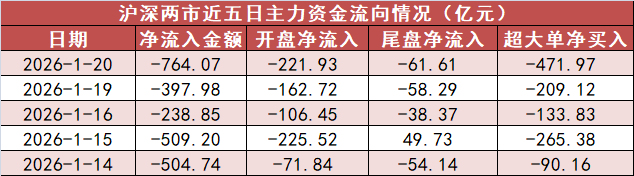
Market Overview - The A-share market experienced an overall decline on January 20, with the Shanghai Composite Index closing at 4113.65 points, down 0.01%, the Shenzhen Component Index at 14155.63 points, down 0.97%, and the ChiNext Index at 3277.98 points, down 1.79% [2] - The North Star 50 Index also fell by 2% [2] Capital Flow - The main capital outflow from the A-share market reached 764.07 billion yuan, with an opening net outflow of 221.93 billion yuan and a closing net outflow of 61.61 billion yuan [3] - Over the past five trading days, the main capital flow has shown a consistent trend of outflow, with the highest outflow recorded on January 20 [4] Sector Performance - The CSI 300 index saw a net capital outflow of 199.71 billion yuan, while the ChiNext experienced a net outflow of 388.98 billion yuan, and the Sci-Tech Innovation Board had a slight net inflow of 1.17 billion yuan [5] - Among the primary sectors, the construction and decoration industry led with a net inflow of 27.91 billion yuan, while the electronics sector faced the largest outflow of 305.40 billion yuan [7][8] Individual Stocks - Zhejiang Wenlian saw the highest net inflow of 5.1 billion yuan among individual stocks [9] - The top stocks with institutional net buying included Hunan Baiyin with a 10.03% increase and a net buying amount of 80.82 million yuan, while Sanwei Communication faced significant net selling with a decrease of 9.98% and a net selling amount of 193.59 million yuan [11][12] Institutional Focus - Recent institutional interest has been noted in several stocks, with notable ratings and target prices provided by various securities firms, indicating potential upside for stocks like Xingyu Co. and Dongyangguang [13]

银川公积金新政落地 提取覆盖适老适幼改造
Xin Lang Cai Jing· 2026-01-20 11:41
Core Viewpoint - The new housing provident fund policy in Yinchuan aims to support housing demand and promote high-quality development in the real estate market through expanded withdrawal options and optimized loan rules [1][2] Group 1: Policy Adjustments - The new policy expands the scenarios for provident fund withdrawals, including home renovations for the elderly and disabled, with multiple support measures effective until December 31, 2027 [1] - Homeowners can withdraw up to 100,000 yuan for structural reinforcement, self-renovation, or rebuilding, with rental support available during renovation periods [1] - For energy efficiency upgrades and heating improvements in homes built before the end of 2005, withdrawals are capped at 50,000 yuan [1] Group 2: Loan Optimization - The policy allows couples to apply for a second provident fund loan after marriage if they have each used one loan before [2] - Veterans can apply for loans with a 20% increase over the maximum limit, while families with multiple children can receive additional loan amounts based on the number of children [2] - Families with a continuous contribution of 10 years or a cumulative contribution of 15 years without using a loan are exempt from withdrawal limits, with this policy becoming a permanent feature [2]
谨慎加仓?
第一财经· 2026-01-20 10:40
Market Overview - The A-share market shows a differentiated adjustment pattern, with the Shanghai Composite Index demonstrating resilience, regaining the 4100-point level, primarily driven by the real estate, banking, and oil sectors [4] - A total of 2231 stocks experienced an increase [5] - The market exhibited a clear divergence, with the real estate sector leading gains, while the TMT (Technology, Media, Telecommunications) sector and power equipment faced significant adjustments [6] Trading Activity - The total trading volume of both markets reached 1 trillion yuan, an increase of 2.56%, indicating a moderate increase in trading activity as funds shifted from previously popular sectors to those with lower valuations or solid fundamentals [7] - Institutional investors are reallocating their portfolios, selling off previously popular sectors like power equipment and telecommunications, and moving towards defensive sectors such as banking, construction, insurance, and real estate [9] Fund Flows - There was a net outflow of 68.4 billion yuan from major funds, while retail investors saw a net inflow [8] - Retail investors are absorbing the selling pressure and speculating on themes, with some funds flowing into short-term overbought stocks, partially offsetting the outflow from popular sectors like semiconductors and commercial aerospace [9] Investor Sentiment - As of January 20, 32.96% of investors increased their positions, while 20.13% reduced their holdings, with 46.91% remaining unchanged [12] - Retail investor sentiment is currently at 75.85% [10]

龙虎榜复盘丨高标股持续“A字杀”,化工、地产等迎来局部回暖
Xuan Gu Bao· 2026-01-20 10:36
Group 1 - Institutional trading today featured 44 stocks, with 24 seeing net purchases and 20 experiencing net sales [1] - The top three stocks with the highest institutional purchases were Vision China (CNY 112 million), Cangzhou Dahua (CNY 104 million), and Hunan Silver (CNY 80.82 million) [1] - Vision China saw a price decline of 5.77%, while Cangzhou Dahua experienced a price increase of 10% [2] Group 2 - Hunan Silver had a net purchase of CNY 80.82 million from four institutions [3] - On January 20, silver prices reached a new historical high of USD 94.726 per ounce, marking a year-to-date increase of over 31% [3] - In the chemical sector, prices for certain products, such as epoxy propylene, increased by 7.9% week-over-week [3]
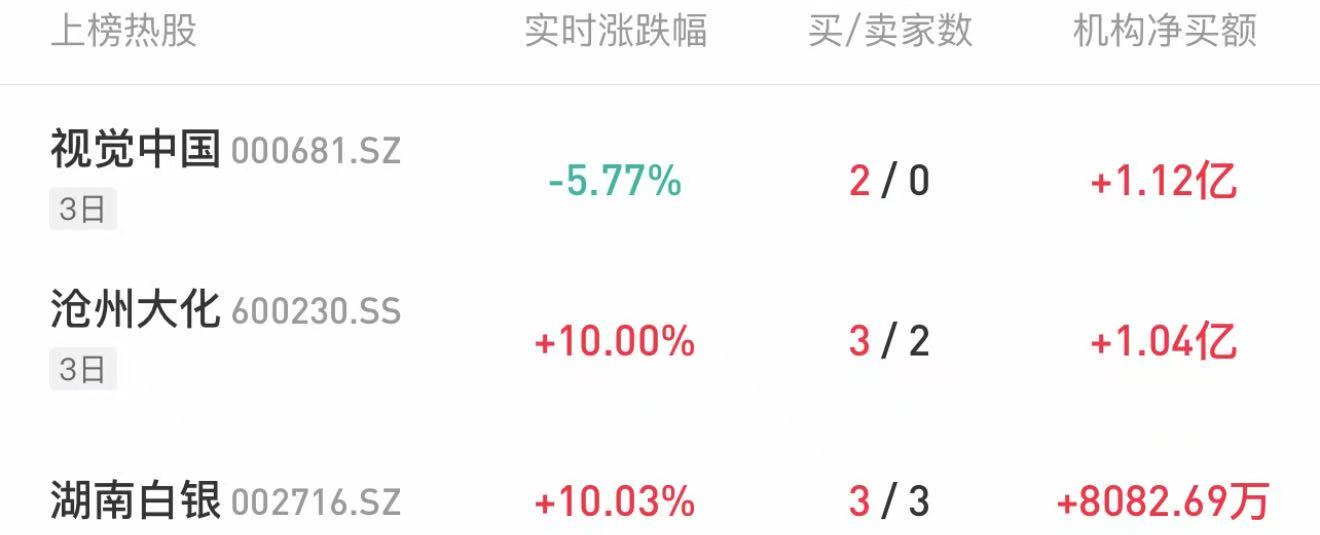
2025年12月统计局房地产数据点评:全年销售延续调整态势,房价环比降幅小幅收窄
Tai Ping Yang Zheng Quan· 2026-01-20 10:35
Investment Rating - The industry rating is neutral, indicating that the overall return is expected to be between -5% and 5% relative to the CSI 300 index over the next six months [40] Core Insights - The real estate market continues to experience a downward adjustment in sales, with a year-on-year decline in sales area and sales amount expanding in 2025 [11] - New and second-hand housing prices are both experiencing an increased year-on-year decline, with the price index for new homes in 70 major cities dropping by 3.0% year-on-year in December [19][25] - Real estate development investment is weakening, with a cumulative investment of 82,788 billion yuan in 2025, reflecting a year-on-year decline of 17.2% [30] - The market is characterized by a strong wait-and-see sentiment, with significant inventory levels and expectations for supportive policies to stabilize the market [38] Sales Summary - In 2025, the cumulative sales area of commercial housing reached 88,101 million square meters, a year-on-year decrease of 8.7%, with December alone seeing a 15.6% decline [11] - The cumulative sales amount for commercial housing was 83,937 billion yuan, down 12.6% year-on-year, with December's sales amount dropping by 23.6% [11] Price Summary - The price index for new homes in 70 major cities fell by 0.4% month-on-month in December, with a year-on-year decline of 3.0% [19] - The second-hand housing price index also saw a month-on-month decline of 0.7% and a year-on-year decrease of 6.1% [25][26] Development Investment Summary - Cumulative development investment in 2025 was 82,788 billion yuan, with a significant year-on-year decline of 17.2% [30] - The cumulative new construction area was 58,770 million square meters, down 20.4% year-on-year, indicating a continued downward trend in new construction [31] Investment Recommendations - The report suggests focusing on local state-owned enterprises and developers, as supportive policies are expected to be implemented to improve market conditions [38]
主力资金|9股遭主力大幅出逃
Zheng Quan Shi Bao· 2026-01-20 10:18
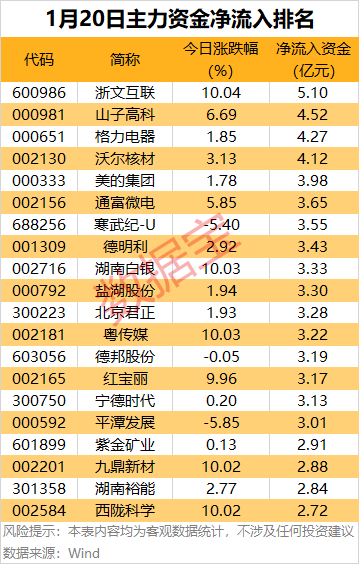
Group 1 - The A-share market showed mixed performance on January 20, with major indices diverging and most industry sectors experiencing declines, while precious metals, chemical raw materials, cement and building materials, and chemical fiber industries saw gains [1] - The net outflow of main funds from the Shanghai and Shenzhen markets reached 76.407 billion yuan, with six industries experiencing net inflows, including real estate, food and beverage, and retail, each exceeding 200 million yuan [1] - Among the 25 industries with net outflows, power equipment, electronics, and communications had the largest outflows, each exceeding 10 billion yuan [1] Group 2 - From individual stocks, 29 stocks saw net inflows exceeding 200 million yuan, with 16 stocks receiving over 300 million yuan in net inflows [2] - Zhejiang Wenlian led with a net inflow of 510 million yuan, attributed to its collaboration with ByteDance's Douyin in developing a digital marketing application [2] - Gree Electric Appliances announced a cash dividend distribution of 5.585 billion yuan to shareholders, with a payout of 10 yuan per 10 shares [3] Group 3 - The top five stocks with the highest net inflows included Zhejiang Wenlian, Shanzi High-Tech, Gree Electric Appliances, and Wolong Nuclear Materials, with inflows ranging from 412 million to 510 million yuan [4] - Conversely, nine stocks experienced net outflows exceeding 900 million yuan, with New Yisheng and Zhongji Xuchuang leading the outflows at 2.194 billion yuan and 2.122 billion yuan, respectively [5] - In the tail-end trading session, the market saw a net outflow of 6.161 billion yuan, with significant inflows in the non-ferrous metals and defense industries [6] Group 4 - Notable individual stocks with significant tail-end inflows included Xinwei Communication and Aerospace Development, each exceeding 300 million yuan [6] - The top five stocks with the highest tail-end net inflows were Xinwei Communication, Aerospace Development, and Wolong Nuclear Materials, with inflows ranging from 154 million to 395 million yuan [7] - Conversely, stocks like Shenghong Technology and TBEA experienced substantial tail-end net outflows, exceeding 300 million yuan [8]
“十四五”没达成3.5万亿GDP的广州,提出10年后要突破6万亿
Sou Hu Cai Jing· 2026-01-20 10:18
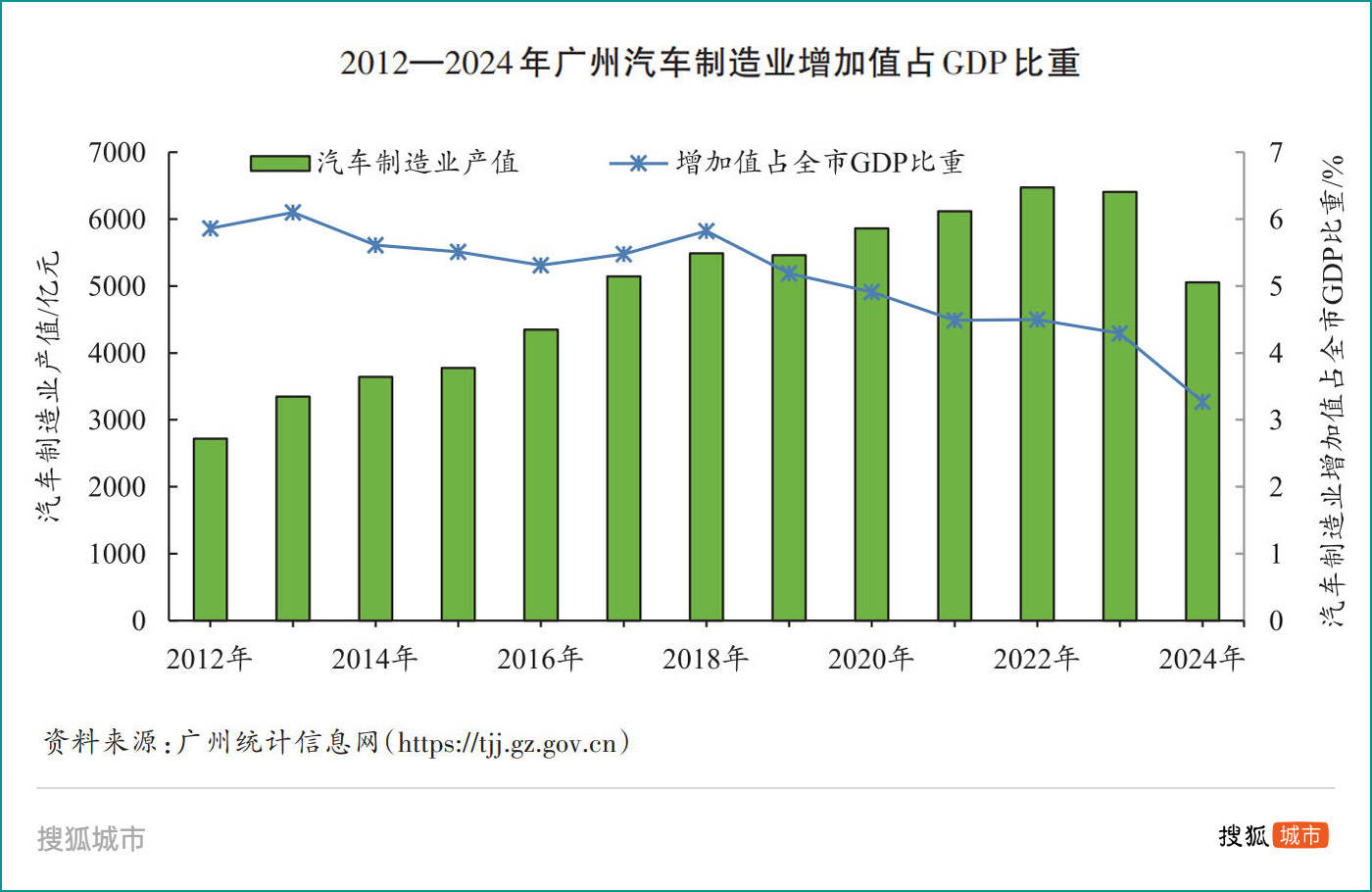
Core Viewpoint - Guangzhou's government work report projects a GDP growth of around 5% for 2026, with a long-term goal of reaching 6 trillion yuan by 2035, necessitating an average annual growth rate of 6.5% over the next decade [1][10]. Economic Growth and Projections - The GDP increment for Guangzhou during the "14th Five-Year Plan" is approximately 700 billion yuan, with a projected GDP of 3.2 trillion yuan by 2025, falling short of the 3.5 trillion yuan target by about 300 billion yuan [1]. - The economic trajectory of Guangzhou over the past five years can be described as a "U-shape," with GDP growth peaking at 8.1% in 2021, dropping to 1% in 2022, and recovering to 4.1% by the third quarter of 2025 [2]. Industrial Investment - Industrial investment in Guangzhou has increased from 103 billion yuan in 2020 to 171.1 billion yuan in 2024, marking a 66% growth over four years [3]. - During the "14th Five-Year Plan," Guangzhou achieved over 730 billion yuan in industrial investment, a 64.6% increase compared to the "13th Five-Year Plan" [3]. Manufacturing Sector Challenges and Developments - The automotive sector, which has been a stronghold for Guangzhou, faced a production decline to 2.54 million units in 2024, with a value-added decrease of 18.2% [5]. - However, the production of new energy vehicles surged by 20.6% in the first three quarters of 2025, indicating a shift towards more sustainable automotive solutions [5]. - The city has established six advanced manufacturing clusters, with strategic emerging industries contributing 35.2% to GDP growth, reflecting a gradual adjustment in industrial structure [6]. Trade and Consumption - Guangzhou has become the third city in China to surpass 1 trillion yuan in both consumption and foreign trade, with retail sales exceeding 1.1 trillion yuan and total import-export value surpassing 1.2 trillion yuan [7]. - The city's logistics and trade infrastructure, including Baiyun Airport and Guangzhou Port, supports its resilience in consumption, despite challenges in the industrial sector [9]. Future Growth Strategies - To achieve the ambitious GDP target of 6 trillion yuan by 2035, Guangzhou must enhance its growth rate from 5% to 6.5%, necessitating investments in advanced industries such as high-end integrated circuits and AI [10][11]. - The city aims to transform its integrated circuit manufacturing from downstream assembly to core manufacturing, with a reported 37.4% increase in the value-added of the integrated circuit sector in the first three quarters of 2025 [11].