电子

Search documents
128只股收盘价创历史新高
Zheng Quan Shi Bao Wang· 2026-01-14 14:48
Group 1 - The Shanghai Composite Index fell by 0.31%, while 128 stocks reached all-time highs in closing prices [1] - Among the tradable A-shares today, 2,747 stocks rose, accounting for 50.37%, and 2,592 stocks fell, accounting for 47.52% [1] - The average closing price of stocks that reached all-time highs was 65.74 yuan, with 22 stocks priced over 100 yuan and 40 stocks priced between 50 and 100 yuan [1] Group 2 - The average total market capitalization of stocks that reached all-time highs was 453.93 billion yuan, with the highest market capitalizations belonging to Zijin Mining, Luoyang Molybdenum, and Hongchuang Holdings [2] - The stocks with the highest net inflow of funds included Yanshan Technology, Zhaochi Shares, and Guangxun Technology, with net inflows of 9.82 billion yuan, 6.34 billion yuan, and 5.45 billion yuan respectively [2] - New锐股份 had the highest number of all-time highs in the past month, achieving 13 new highs, followed by Shanghai Hanyun and Zhongke Xingtai with 12 and 11 new highs respectively [2] Group 3 - Notable stocks that reached all-time highs include Meideng Technology at 115.76 yuan with a daily increase of 29.99%, and Liujin Technology at 13.57 yuan with a daily increase of 29.98% [3][4] - Other significant performers include Hanbo High-tech at 23.03 yuan with a 20.01% increase, and Green Island Wind at 76.74 yuan also with a 20.00% increase [3][4] - The highest closing price was achieved by Dameng Data at 315.29 yuan, which rose by 4.40% [5]

广州:培育壮大低空经济、智能驾驶、人工智能等新增长点
Jin Rong Jie· 2026-01-14 14:24
1月14日,广州市委财经委员会召开会议。市委书记、市委财经委员会主任冯忠华强调,要推动工业稳 盘挖潜,坚持生产、销售两端协同发力,全力服务重点企业扩大生产、抢占市场,推动汽车、电子、医 药等重点行业平稳增长,培育壮大 低空经济、智能驾驶、 人工智能等新增长点,筑牢经济稳增长底 盘。要推动服务业扩能提质,分类施策支持平台企业发展,促进金融业稳健增长,以"好房子"建设推动 房地产市场平稳健康发展,推动批发业稳存量拓增量,更好发挥服务业重要支撑作用。要推动投资扩量 增效,发挥好专项债、新型政策性金融工具等作用,持续推动工业、城市更新、基础设施等领域投资加 力扩量,大力激发民间投资活力,推动项目建设加快形成更多实物工作量。 ...
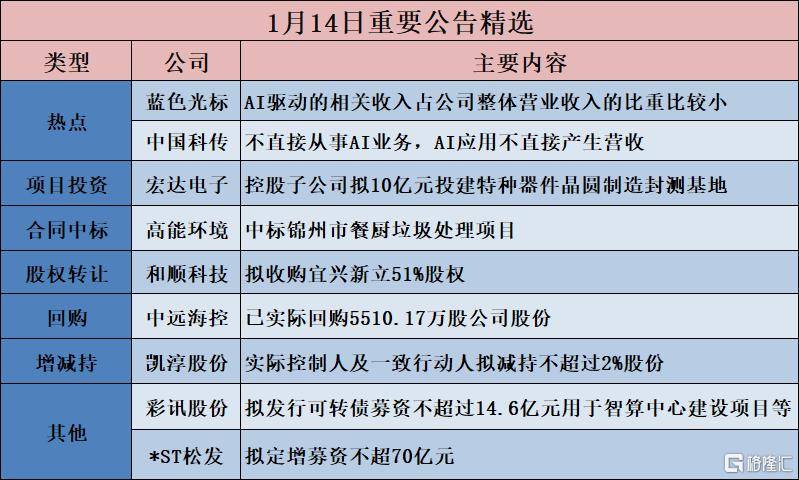
公告精选︱宏达电子:控股子公司拟10亿元投建特种器件晶圆制造封测基地;中国科传:不直接从事AI业务,AI应用不直接产生营收
Sou Hu Cai Jing· 2026-01-14 13:54
【回购 】 | | | 1月14日重要公告精选 | | --- | --- | --- | | 类型 | 公司 | 主要内容 | | 热点 | 蓝色光标 | AI驱动的相关收入占公司整体营业收入的比重比较小 | | | 中国科传 | 不直接从事AI业务,AI应用不直接产生营收 | | 项目投资 | 宏达电子 | 控股子公司拟10亿元投建特种器件晶圆制造封测基地 | | 合同中标 | 高能环境 | 中标锦州市餐厨垃圾处理项目 | | 股权转让 | 和顺科技 | 拟收购宜兴新立51%股权 | | 回购 | 中远海控 | 已实际回购5510.17万股公司股份 | | 增减持 | 凯淳股份 | 实际控制人及一致行动人拟减持不超过2%股份 | | 其他 | 彩讯股份 | 拟发行可转债募资不超过14.6亿元用于智算中心建设项目等 | | | *ST松发 | 拟定增募资不超70亿元 庁 簡隆に | 【热点】 蓝色光标(300058.SZ):AI驱动的相关收入占公司整体营业收入的比重比较小 佳缘科技(301117.SZ):为航天航空领 域客户提供相关产品及技术服务支持,而非整体卫星制造 天龙集团(300063.SZ):不直接 ...


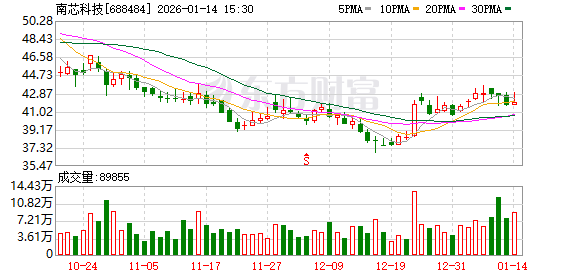
南芯科技:二级市场股价短期波动受多重因素影响
Zheng Quan Ri Bao· 2026-01-14 13:38
Core Viewpoint - Nanchip Technology emphasizes that short-term stock price fluctuations are influenced by multiple factors, including industry cycles, market sentiment, and macroeconomic conditions [2] Group 1: Company Performance - The company has seen continuous revenue growth in recent years, with revenue for the first three quarters of 2025 nearing the total revenue of the previous year [2] - Nanchip Technology is accelerating its efforts in AI computing power supply, smart automotive electronics, and AI edge computing [2] Group 2: Future Outlook - The company is committed to enhancing its revenue scale as it enters the new year [2] - Management and employees are focused on improving core competitiveness through technological innovation and deepening customer relationships [2] - The company believes that sustained business growth and market share expansion will lead to long-term value recognition by the market [2]

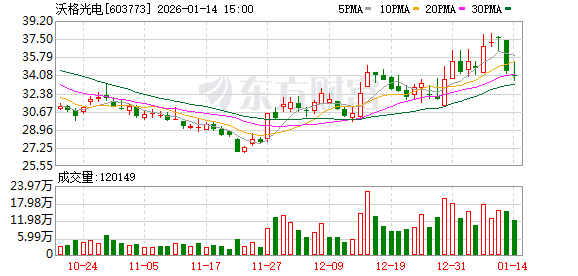
沃格光电:公司持续关注全球商业航天领域的发展机遇
Zheng Quan Ri Bao· 2026-01-14 13:19
证券日报网讯 1月14日,沃格光电在互动平台回答投资者提问时表示,公司持续关注全球商业航天领域 的发展机遇。公司在CPI膜材领域拥有深厚的技术储备,相关技术为自主研发,具备自主知识产权,公 司已形成CPI浆料-制膜-镀膜的全产业链生产能力,技术水平处于行业领先地位,公司配合头部商业航 天客户提供的CPI膜材及防护镀膜产品,已实现在轨应用。后续公司将持续拓展商业航天领域的国内外 合作。 (文章来源:证券日报) ...

沃格光电:公司正积极探索CPI在柔性显示等领域的应用可能性
Zheng Quan Ri Bao Wang· 2026-01-14 13:12
Core Viewpoint - The company has successfully developed CPI film materials combined with special protective coatings, which have been applied in the on-orbit operation of flexible solar wings for leading commercial aerospace clients [1] Group 1: Product Development - The company is actively exploring the application possibilities of CPI in flexible displays within the consumer electronics sector [1] - Future expansion of CPI product applications will be based on industry demand and technological maturity [1]
景旺电子:公司将低轨卫星通信定位为重点关注的新兴领域
Zheng Quan Ri Bao Zhi Sheng· 2026-01-14 13:11
Core Viewpoint - The company, Jingwang Electronics, is focusing on the low Earth orbit (LEO) satellite and commercial aerospace sectors, leveraging its substantial patent reserves and technological advantages to prepare for rapid industry growth and accelerated mass production of related products [1]. Group 1 - The company has identified low Earth orbit satellite communication as a key emerging area of focus [1]. - The company plans to actively invest in this sector to seize market opportunities [1].

振华科技:公司主营产品可应用于脑机接口的基础电路等,目前暂未形成应用配套
Zheng Quan Ri Bao Zhi Sheng· 2026-01-14 13:09
Core Viewpoint - The company, Zhenhua Technology, is exploring applications of its main products in brain-computer interfaces and related systems, while currently lacking established applications [1] Group 1: Company Developments - Zhenhua Technology's main products can be applied in foundational circuits, signal transmission systems, and power management systems for brain-computer interfaces [1] - The company has not yet formed application support for these technologies [1] - Zhenhua Technology plans to closely monitor market demand and development opportunities in related industries [1] Group 2: Future Prospects - The company aims to continuously promote the civilian expansion of its advanced electronic technologies [1] - Zhenhua Technology is exploring the potential for high-end civilian technology applications, including brain-computer interfaces [1]

融资杠杆从1.25倍降至1倍,2.68万亿两融市场迎降温
Di Yi Cai Jing· 2026-01-14 12:39
Group 1 - The core viewpoint of the news is the adjustment of the financing margin ratio by the exchanges, increasing it from 80% to 100% to lower leverage levels in the market as the Shanghai Composite Index approaches 4200 points [1][2][5] - The adjustment applies only to new financing contracts, while existing contracts will continue under previous regulations [1][2] - The increase in financing margin ratio is aimed at reducing market leverage and protecting investors' rights, promoting long-term market stability [2][4] Group 2 - The financing balance reached a historical high of 2.683 trillion yuan as of January 13, 2026, with a financing balance of 2.6654 trillion yuan, accounting for 2.58% of the circulating market value [1][4] - The A-share market has shown significant growth, with the Shanghai Composite Index increasing by 23.10% and the Shenzhen Component Index by 36.81% over the past year [4] - The financing margin ratio has undergone several changes since its introduction, with the last increase occurring in 2015 when it was raised to 100% [6][7] Group 3 - The number of new margin trading accounts reached a recent high of 1.5421 million in 2025, reflecting a 52.91% year-on-year increase [8] - The total number of margin trading accounts exceeded 15.64 million by the end of 2025, a 98% increase compared to the end of 2015 [8] - The sectors attracting financing funds have shifted, with technology industries like electronics and power equipment receiving significant net inflows, contrasting with traditional sectors like real estate and finance [9][10]
“以前哪能想到,都是中国的…”
Xin Lang Cai Jing· 2026-01-14 12:36
Core Insights - Chinese brands are increasingly establishing a presence in global markets, with a focus on building local operations and brand recognition rather than merely exporting cheap products or making large-scale acquisitions [1][2] - The global expansion of Chinese companies is marked by a significant increase in overseas sales, with projections indicating that overseas sales for Chinese listed companies will reach 15 trillion RMB in 2024, up from 11.6 trillion RMB in 2021 [2] - The shift in Chinese companies' strategies is driven by rising domestic labor costs and geopolitical tensions, prompting a move towards establishing manufacturing bases abroad, particularly in developing countries [5][7] Group 1 - Chinese electric vehicle manufacturer BYD surpassed Tesla in sales, with over 20% of its sales coming from overseas, doubling from 10% in 2024 [2] - The transformation of Chinese enterprises from imitation to innovation is evident, as they now produce high-end products and are sought after by Western companies for their expertise [4] - The establishment of local distribution and supply chain systems is becoming a priority, with companies like Mengniu successfully launching products in local markets [7] Group 2 - The historical context of Chinese companies' global expansion reveals a journey marked by challenges, including initial perceptions of low-quality products and failed acquisitions due to increasing Western scrutiny [3][4] - A shift in human resource strategies is occurring, with Chinese companies increasingly hiring local employees to reduce cultural friction and enhance local engagement [7] - Professional service firms are now actively supporting Chinese companies in their global expansion efforts, reflecting a change in focus from assisting Western firms entering China [8] Group 3 - Despite the strong momentum of expansion, Chinese multinational companies face complex pressures, including Western regulatory challenges and geopolitical risks [8] - The Chinese government is expected to relax strict overseas investment approval processes, which may lead to a greater presence of vibrant Chinese brands in the global market [9]