汽车

Search documents
1750亿美元败仗刚签字,白宫反手全球加税10%:这不是贸易,是战争!
Sou Hu Cai Jing· 2026-02-23 17:05
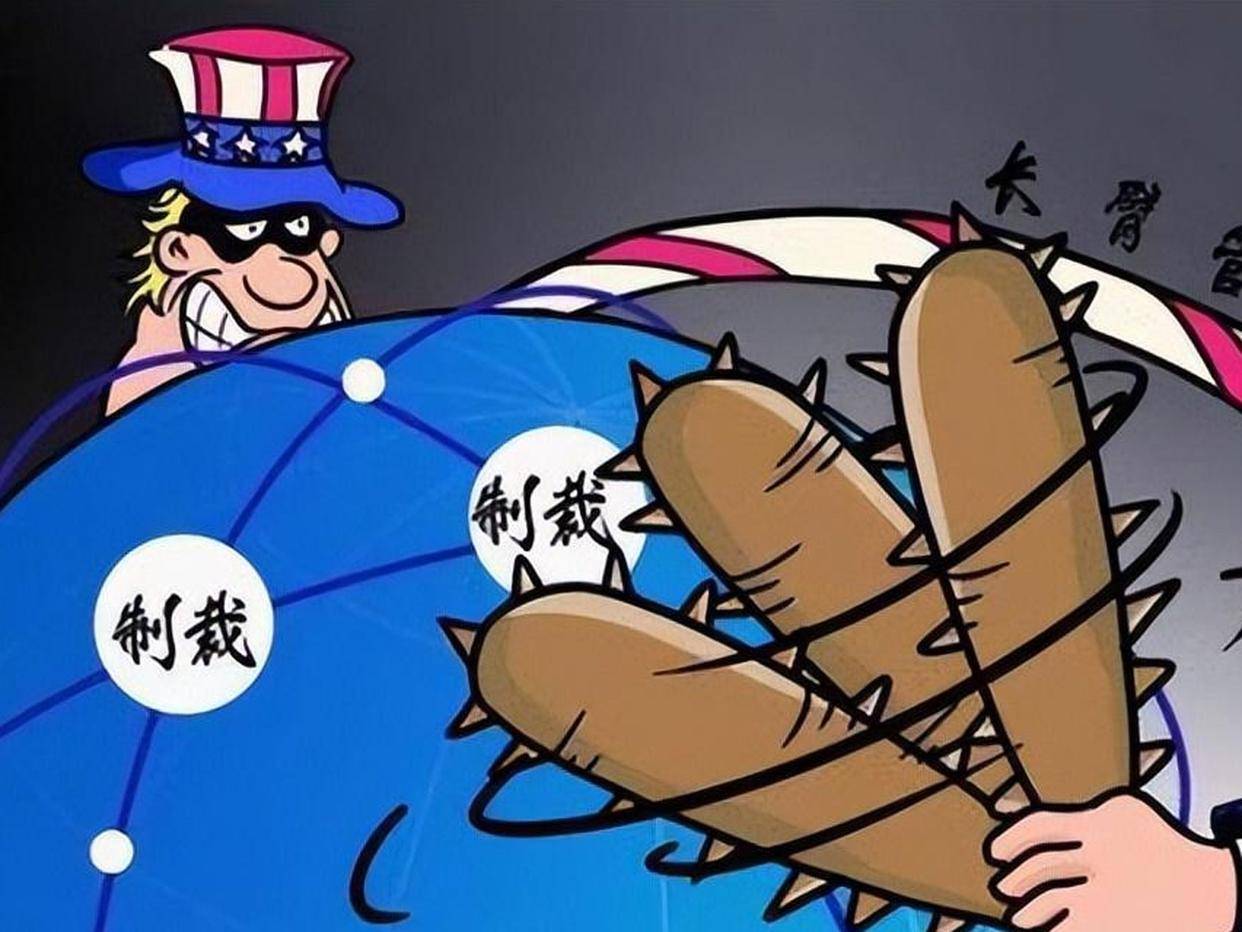
Core Viewpoint - The article discusses the U.S. government's decision to impose a 10% "defensive tariff" on nearly all imported goods, excluding Canada and Mexico, following a WTO ruling that required the U.S. to refund $175 billion due to unlawful tariffs on Chinese products. This move is seen as a retaliatory measure and a shift in global trade dynamics, leading to significant market reactions and potential conflicts with other nations [1][3][5]. Group 1 - The U.S. is imposing a 10% tariff on almost all imports, which covers approximately 96% of imported goods, as a response to a WTO ruling that mandated the return of $175 billion due to previous tariffs deemed illegal [1][3]. - The immediate market reaction included a 700-point drop in Tokyo stock futures and a 1.8% decline in the euro against the dollar, indicating a significant global market impact [3][5]. - The U.S. is using the additional tariff revenue, estimated at $120 billion annually, to fund military initiatives in the Indo-Pacific region, including the deployment of anti-ship missiles and unmanned underwater vehicles [7][9]. Group 2 - Countries such as the EU and Japan have quickly responded with their own lists of retaliatory tariffs, targeting U.S. products like Harley-Davidson motorcycles and bourbon whiskey, indicating a rapid escalation in trade tensions [5][9]. - China has initiated its own countermeasures, including applying for "cross-retaliation" at the WTO and extending export approval times for critical minerals, which could significantly impact U.S. industries reliant on these materials [9][11]. - The average tariff rate on Chinese goods entering the U.S. has now reached 31%, with similar high rates for other countries, suggesting a broadening of the trade conflict that could involve multiple global players [13][15]. Group 3 - The article highlights that the U.S. decision to impose tariffs is not just a trade issue but also a strategic maneuver to compel countries to choose sides in a global conflict, with military implications tied to economic actions [7][9]. - The U.S. faces potential backlash from its own citizens, as the new tariffs could lead to an increase of $820 in annual expenses for American households, negating previous tax cuts [15]. - The article concludes that the U.S. is in a precarious position, with its economic and military strategies facing significant challenges, and the potential for increased litigation against it in the coming months [15][17].

关税重击被最高法院按下暂停键,特朗普又找出了一条新路
Sou Hu Cai Jing· 2026-02-23 16:49
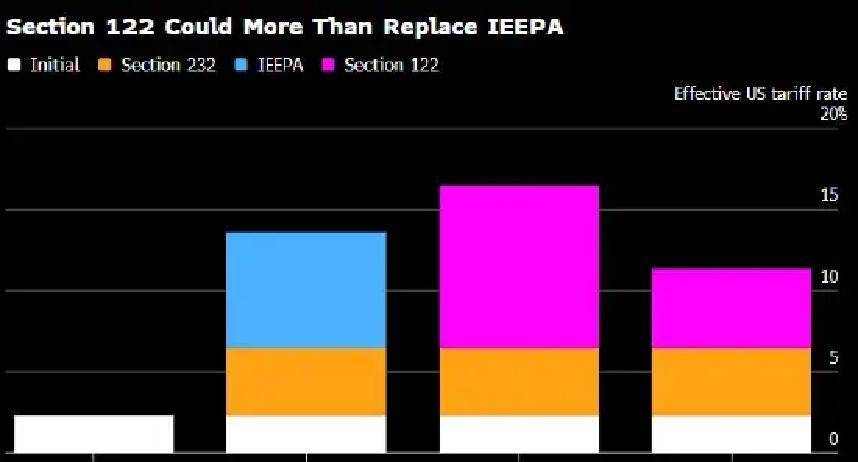
Group 1 - The U.S. Supreme Court's recent ruling has invalidated a series of tariff arrangements introduced by Trump, impacting his ability to use tariffs as a tool for foreign trade and domestic economic policy [3][6] - Trump responded to the ruling by announcing a new 10% tariff on global goods, which was later increased to 15%, indicating a shift in his approach to tariffs [3][6] - The ruling imposes strict procedural and legal constraints on Trump's ability to implement tariffs, requiring a comprehensive process of investigation, assessment, and hearings [6][19] Group 2 - The White House believes that most agreements Trump has made with other countries, including a recent one with Indonesia, will remain effective due to the court's relatively moderate handling of existing arrangements [11] - The ruling has diminished Trump's leverage in negotiations with world leaders and multinational executives, as he can no longer freely use tariff threats as pressure tools [14][19] - Legal scholars view this ruling as part of a broader trend to limit presidential unilateral power in economic matters, emphasizing checks and balances from Congress [16][18] Group 3 - The overall economic situation in the U.S. is concerning, with a slowdown in growth expected in the fourth quarter, and tariffs have not significantly reduced the trade deficit, which remains a core issue for Trump [19][20] - Many voters perceive import tariffs as contributing to their financial pressures, leading Trump to adjust his strategy to mitigate the direct impact of tariffs on daily life [19][20] - The Republican Party is showing signs of division over tariff policies, with some members expressing concerns about the negative effects of tariffs on voters [20] Group 4 - The Supreme Court's ruling has created uncertainty for businesses and financial markets, as the future direction of tariff policies remains unpredictable [21][23] - Companies are cautious about making significant investments due to the volatile trade environment, preferring a stable and predictable tariff system [21][22] - Global business sentiment is generally welcoming of the ruling, but there is a strong demand for predictable trade conditions rather than sudden tariff changes [23] Group 5 - Despite the limitations imposed by the ruling, Trump still has legal avenues to continue using tariffs, including provisions from the Trade Act of 1974 and the national security clause from the Trade Expansion Act of 1962 [24][25] - The adjustment of tariff policies may lead to significant refunds amounting to billions, complicating the Federal Reserve's ability to manage inflation and economic growth [25][26] - The Trump administration has been expanding tariff exemptions, covering over a third of U.S. imports, indicating a shift towards a more nuanced approach to tariffs [27][28] Group 6 - The future of tariff policies will largely depend on the performance of the U.S. economy, with current voter skepticism about Trump's economic promises [29][30] - While there are signs of economic resilience, concerns remain about underlying vulnerabilities and the delayed impact of tariffs on the economy [31] - The Supreme Court's ruling has not eliminated tariffs from the policy toolbox but has changed how Trump can utilize them, introducing more checks and balances [31]
深夜突发,美股全线跳水,近4000只个股下跌,道指跌超800点,特斯拉超3000亿元市值蒸发!金价拉升,涨幅再扩大
Mei Ri Jing Ji Xin Wen· 2026-02-23 16:44
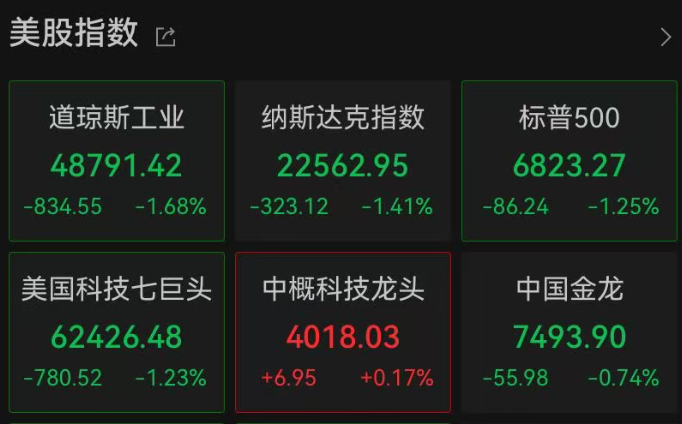
Market Overview - US stock market experienced a sudden drop, with the Dow Jones falling by 1.68%, losing over 800 points, while the S&P 500 and Nasdaq dropped by 1.25% and 1.41% respectively [1][2] - Nearly 4,000 stocks declined, with over 1,000 stocks rising [1] Sector Performance - Significant declines were observed in the textile and apparel, software services, and financial sectors, with the textile and apparel sector down by 4.85% and software services down by 4.14% [3][4] - Other sectors such as consumer services, banks, and non-bank financials also saw declines ranging from 2.33% to 3.19% [4] Technology Sector - Among the major US tech giants, only Apple saw a slight increase of 0.25%, while Tesla experienced a drop of over 3%, resulting in a market value loss of approximately $50 billion [5][6] - The Nasdaq China Golden Dragon Index declined, with notable drops in companies like Kingsoft Cloud, which fell over 7% [6][8] Notable Company Movements - Novo Nordisk's stock plummeted over 15% due to disappointing trial results for its next-generation weight loss drug compared to Eli Lilly's leading product, which saw a nearly 4% increase [9] - Gold and silver prices surged, with spot gold rising above $5,200 per ounce, gaining over 2% [9] International Trade and Political Developments - The European Parliament's International Trade Committee decided to suspend the approval process for the EU-US trade agreement, delaying a scheduled vote [11] - Israeli Prime Minister Netanyahu emphasized the country's preparedness for regional challenges and reaffirmed the strength of US-Israel relations [12]
汽车消费购租两旺
Bei Jing Shang Bao· 2026-02-23 16:20
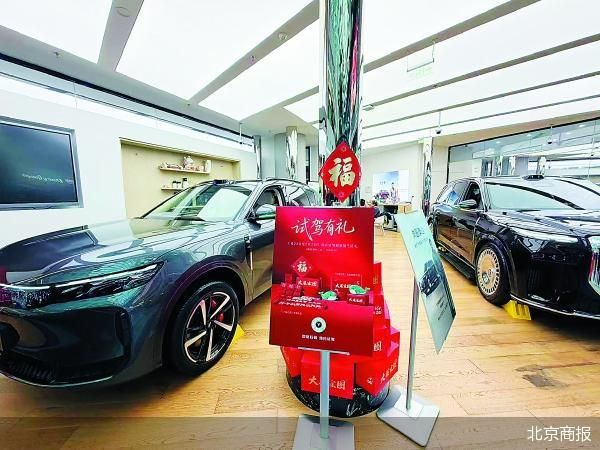
Group 1: Market Dynamics - The domestic automotive consumption and travel market experienced a significant surge during the Spring Festival, driven by a multi-layered subsidy system including national, regional, and manufacturer incentives [1][3] - The new round of vehicle trade-in subsidies has been implemented, allowing for substantial discounts on new energy vehicles, which has led to a notable increase in consumer inquiries and test drives [3][4] - As of February 19, 2023, the nationwide vehicle trade-in program resulted in 612,000 vehicles being traded in, generating over 100.5 billion yuan in new car sales [3] Group 2: Consumer Behavior - Consumers are increasingly focused on intelligent driving configurations and battery life, alongside price discounts, when considering new energy vehicles [5] - The "00s" generation has emerged as the primary demographic for car rentals, with a 63% increase in orders, reflecting a growing demand for personalized and technologically advanced vehicles [6] Group 3: Rental Market Growth - The rental market for new energy vehicles saw a historic high during the Spring Festival, with a sixfold increase in bookings compared to the previous year, accounting for 42.3% of total rental orders [6] - The improvement of charging infrastructure has facilitated the adoption of new energy vehicles in various travel scenarios, including long-distance trips to scenic destinations [6][7] Group 4: Industry Trends - The penetration rate of new energy vehicles in China is steadily increasing, with sales reaching 47.9% of total new car sales last year, and an expected rise to approximately 54.68% this year [8] - The automotive market is transitioning towards high-quality development, with new energy vehicles becoming the primary growth driver, shifting the competitive focus from price wars to value differentiation [9] - Companies are expected to enhance their investments in infrastructure and service quality to attract consumers, as the importance of price competition diminishes [9]
德国汽车工业协会VDA:从德国汽车工业的角度来看,贸易和关税政策的稳定性至关重要。
Jin Rong Jie· 2026-02-23 15:56
德国汽车工业协会VDA:从德国汽车工业的角度来看,贸易和关税政策的稳定性至关重要。 ...
小字营销再现,大厂自卑拉满?
Sou Hu Cai Jing· 2026-02-23 15:44
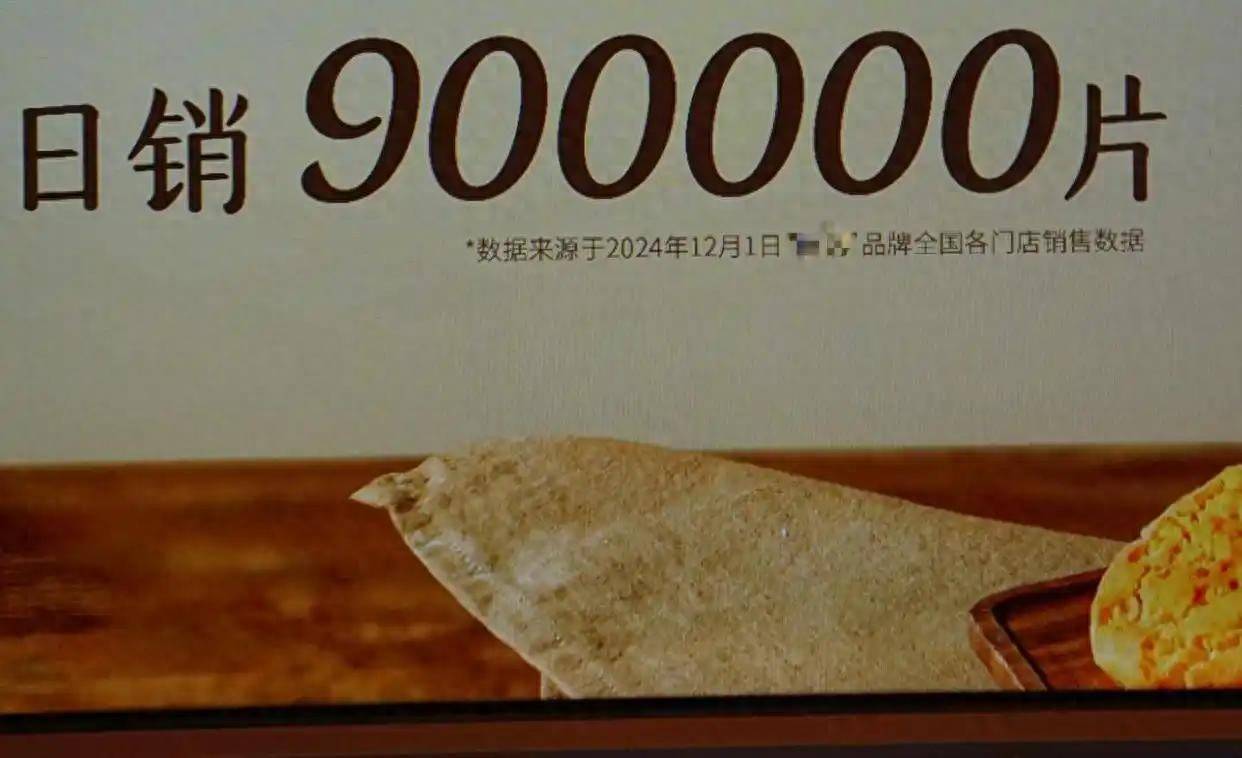
Core Viewpoint - The article discusses the issue of "small print marketing," highlighting how companies mislead consumers through deceptive advertising practices, particularly in the context of gift boxes during the Spring Festival [3][5]. Group 1: Misleading Marketing Practices - A specific example involves a "nut gift box" that claims to weigh 958 grams, but only 33 grams are actual nuts, with the majority being drinks and snacks, raising concerns about consumer deception [3]. - The marketing strategy emphasizes "nuts" and "dried fruits" while downplaying the presence of drinks and snacks, which are only revealed in the detailed product description [3][5]. - This practice of "small print marketing" is not new and has been criticized in various industries, including electronics, where misleading claims are often made [5][7]. Group 2: Industry Implications - The prevalence of small print marketing reflects a lack of confidence among major brands, leading to a reliance on misleading tactics to avoid accountability [7][8]. - Such marketing strategies not only harm consumer trust but also diminish the overall brand value, as they prioritize short-term sales over genuine product quality [8]. - The article suggests that this trend has become an industry norm, allowing companies to engage in false marketing and exaggerate product benefits without facing repercussions [7][8].
纳指小幅低开,诺和诺德大跌15%
Xin Lang Cai Jing· 2026-02-23 15:32
Group 1 - The unclear outlook of U.S. trade policy is putting pressure on market sentiment, leading to a collective decline in the three major U.S. stock indices [1] - The Nasdaq Composite Index fell by 0.03%, the Dow Jones Industrial Average decreased by 0.31%, and the S&P 500 Index dropped by 0.03% [1] - Technology stocks experienced widespread declines, with Tesla and Oracle both falling by over 1% [1] Group 2 - Novo Nordisk's stock plummeted by 15% due to the disappointing trial results of its new generation weight loss drug CagriSema, which underperformed compared to Eli Lilly's Zepbound [1]

222.42亿元!这个春节,长沙夯爆了!丨海报
Xin Lang Cai Jing· 2026-02-23 15:32
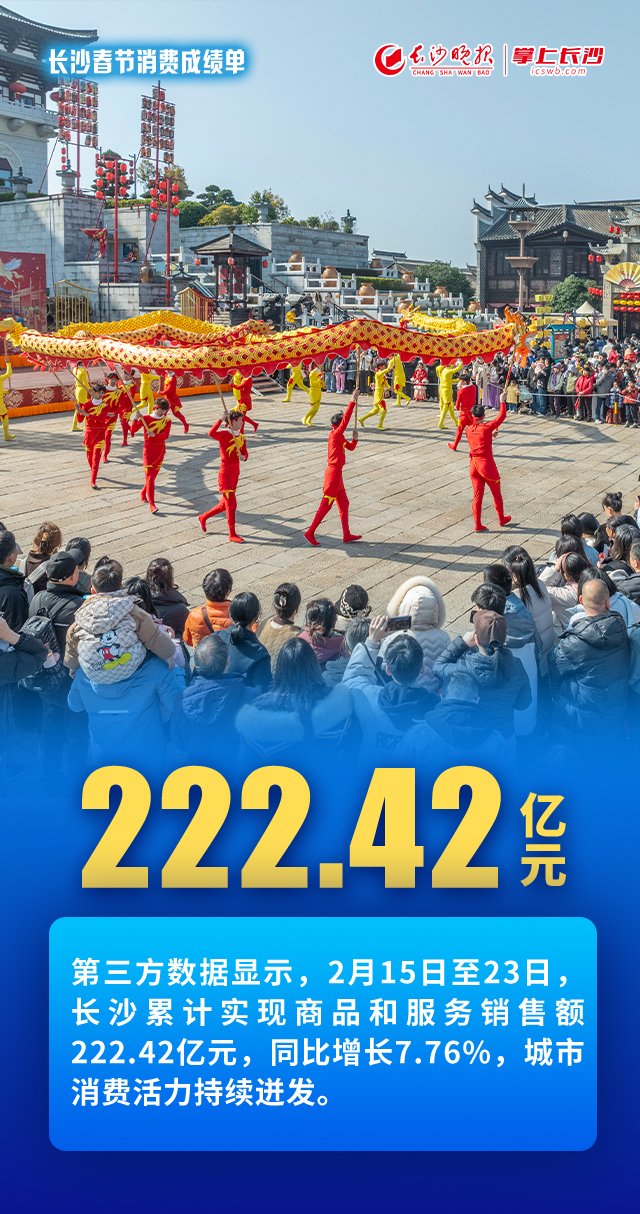
Group 1 - The core consumption performance during the Spring Festival in Changsha shows a vibrant tourism market and bustling shopping areas, indicating strong consumer activity [1] - The total sales of goods and services in Changsha reached 22.242 billion yuan, representing a year-on-year increase of 7.76%, reflecting sustained urban consumption vitality [4] - The core area of the Wuyi business district recorded a total foot traffic of 4.5697 million people from February 15 to 23, marking a 15% increase compared to the same period last year [6] Group 2 - The peak foot traffic on the fourth day of the holiday reached 704,300 people, a year-on-year increase of 28.23%, with dining, retail, and entertainment sectors performing strongly [6] - During the Spring Festival, a promotional invoice activity led to the submission of 227,000 invoices, totaling 84.2654 million yuan, with a winning rate of 74.8% and 4.2905 million yuan in red envelopes distributed [8] - The "Old for New" program saw participation from 83,200 people, with subsidies of 60.07 million yuan directly driving sales of 5.85 billion yuan [9]
消费金额同比增长17.1%,马年新春,南京人更舍得花钱了
Xin Lang Cai Jing· 2026-02-23 15:31
Core Insights - Nanjing has emerged as a popular tourist destination during the Spring Festival, with significant growth in consumer spending driven by cultural activities and promotional policies [1][6] Consumer Spending Trends - Total consumer spending in Nanjing during the holiday reached 33.0 billion yuan, marking an 11.1% year-on-year increase, with shopping malls and complexes seeing a 14.4% rise in sales [1] - The number of consumers increased by 25.1% compared to the previous year, indicating a strong recovery in consumer confidence [1] Retail and Dining Activities - Various shopping centers in Nanjing organized unique events, such as the "Dream Horse" mascot at Deji Plaza and the "Love at First Sight" campaign at Central Plaza, enhancing the festive atmosphere [2] - Major dining brands maintained operations throughout the holiday, offering special New Year's Eve meal packages and promoting services like live streaming and delivery to meet consumer demand [2] Cultural and Tourism Integration - The newly opened Jinling Changlefang combines cultural experiences with shopping, featuring over 200 brands, with more than 50% being new to Nanjing, attracting significant foot traffic [3] - The 40th Qinhuai Lantern Festival and other cultural events have drawn large crowds, contributing to increased tourism and spending in the area [4][6] International Visitor Engagement - Nanjing welcomed approximately 76,000 inbound and outbound travelers during the Spring Festival, including over 5,000 foreign visitors, highlighting the city's appeal to international tourists [5] - The city's duty-free shops and tax refund stores provided a variety of local products, enhancing the shopping experience for foreign guests [5] Policy-Driven Consumption Boost - The local government implemented various consumption vouchers and subsidies, including up to 150 yuan off dining expenses and significant discounts for automotive purchases, stimulating consumer spending [7][8] - The "Lucky Invoice" campaign encouraged participation in retail and dining sectors, with over 519,000 participants and nearly 2.77 million invoices submitted [9] Stable Supply of Essential Goods - The supply of essential goods, including vegetables and meat, remained stable during the holiday, with a notable increase in vegetable arrivals compared to the previous year [10] - Wholesale prices for key food items showed a decline, indicating a stable market environment for consumers [10]
中概股深夜拉升,美股减肥药巨头狂泻14%,黄金重回5200美元,国际油价走强
2 1 Shi Ji Jing Ji Bao Dao· 2026-02-23 15:15
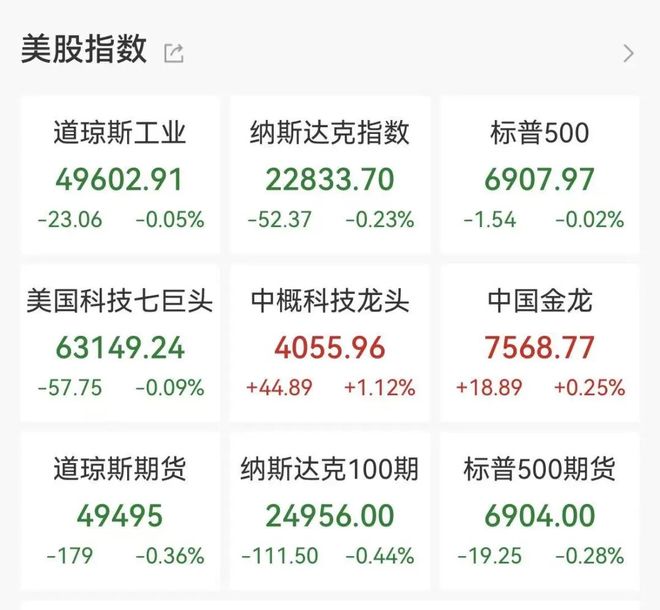
Market Overview - US stock markets opened lower due to uncertainty in trade policies, with the Nasdaq down 0.23%, Dow Jones down 0.05%, and S&P 500 down 0.02% [1] - Major tech stocks experienced declines, with Tesla dropping over 2%, Amazon and Microsoft nearly 2%, and Facebook close to 1% [2] Company Performance - Novo Nordisk's stock fell nearly 14% after its next-generation weight loss drug CagriSema showed a weight loss effect of 20.2% over 84 weeks, compared to Eli Lilly's Tirzepatide, which achieved 23.6% [2][3] - Chinese concept stocks mostly rose, with Atour, NIO, and Hesai Technology increasing over 3%, while Li Auto and Weibo rose over 2% [4] Commodity Market - Gold prices surged, with spot gold nearing $5,200 per ounce, and NYMEX gold rising 2.67% to surpass this threshold [5] - Silver also saw significant gains, with spot silver increasing over 3% [6] - Both Brent and WTI crude oil prices rose by over 0.6% [7] Economic Indicators - The US January CPI rose 2.4% year-on-year, below the expected 2.5%, and core CPI increased by 2.5%, aligning with expectations [8] - The Federal Reserve's January meeting minutes revealed significant internal divisions among committee members regarding inflation persistence [8] - Recent changes in US trade policy include a Supreme Court ruling against large-scale tariffs, followed by an announcement of a 10% import tariff on global goods, which was later increased to 15% [8][9]