大模型

Search documents
每经热评︱内地科创企业与香港双向奔赴 共筑中国科技创新出海黄金组合
Mei Ri Jing Ji Xin Wen· 2025-07-15 09:15
Group 1 - The inclusion of new members in the Hong Kong Chief Executive's advisory group reflects the region's urgent demand for technological innovation and a commitment to integrating cutting-edge technology from mainland China [1][2] - The rapid development of frontier technologies, exemplified by companies like Yushutech, has gained significant recognition both domestically and internationally, as evidenced by Yushutech winning a global award from the World Intellectual Property Organization [2] - The transition from research and development to commercialization in frontier technology is critical, requiring companies to overcome challenges related to productization, scalability, cost control, and market education [2][3] Group 2 - The introduction of companies like Qiangnao Technology and Yushutech into the advisory group is expected to inject essential technological momentum into Hong Kong, leveraging the region's status as an international financial center to facilitate cross-border financing and international certification [3] - The Hong Kong government aims to enhance multi-level interactions and cooperation with different economies in the region, which will foster deeper collaboration between mainland and Hong Kong tech resources, creating more commercial opportunities [3] - The synergy between mainland and Hong Kong tech resources is anticipated to pave a "fast track" for the development of frontier technologies, enhancing China's position in the global value chain [3]
汽车圈有水军恶意抹黑小米和华为?微博CEO:或有第三方暗中撺掇;曝阿里将推出「超级星期六」外卖计划;MiniMax获3亿美元融资
雷峰网· 2025-07-15 00:31
Key Points - The article discusses various developments in the automotive and technology sectors, highlighting significant events and trends affecting companies like Xiaomi, Huawei, and NIO [4][6][16]. Group 1: Automotive Developments - MiniMax has secured $300 million in financing, raising its post-money valuation to over $4 billion, indicating strong investor confidence despite a cooling market for AI models [6][7]. - Li Auto has established a new computing resources department to enhance its self-developed models, aiming for L3 autonomous driving by 2025 [9][10]. - NIO's stock surged by 10.6% following the announcement of its new model, the L90, which is priced competitively in the electric SUV market [14][20]. Group 2: Technology and Market Strategies - Huawei's automotive brand, 尚界, is targeting the mainstream market with its H5 model, attracting over 1,000 dealers, emphasizing high cost-performance and advanced driving systems [16][17]. - Alibaba plans to launch a "Super Saturday" promotion for food delivery, offering significant discounts to boost consumer engagement [12][13]. - ByteDance's subsidiary, Mu Tong Technology, has acquired part of the team from Hangzhou Xin Guang Liu Mei, indicating a strategic move into the gaming sector [17][18]. Group 3: Industry Insights and Predictions - Elon Musk predicts that AI will surpass human intelligence collectively within five years, reflecting the rapid advancements in AI technology [28][31]. - The article notes that Huawei's wearable products have shipped over 200 million units, with the GT series alone exceeding 52 million units, showcasing the brand's strong market presence [23][24].




8点1氪:青岛大学回应宿管离世事件并公示采购7217台空调;特朗普宣布征收日韩25%关税;猫眼回应周杰伦演唱会500元只能看大屏
36氪· 2025-07-08 00:04
Group 1 - Qingdao University announced the procurement of 7217 air conditioners for student dormitories, following the unfortunate death of a dormitory staff member, which was suspected to be due to heatstroke [3] - The procurement project includes the installation of over 7300 air conditioners with 1st-level energy efficiency and remote control features, as per the announcement made in March [3] - The contract for the air conditioner procurement was signed on June 23, 2025, with Qingdao Haiyuan He Commercial Trading Co., Ltd. as the supplier [3] Group 2 - Star Material announced on July 7 that it has submitted an application for the public issuance of H-shares and listing on the Hong Kong Stock Exchange [2] Group 3 - Romoss, a well-known power bank brand, announced a shutdown due to a recall of 491,700 units, resulting in estimated direct losses exceeding 40 million yuan, with monthly losses potentially reaching 200 million yuan [5] - The official flagship store of Romoss on various platforms has been closed, indicating significant operational challenges [5] Group 4 - Xiaomi reported a surge in air conditioner sales in Northeast China and Inner Mongolia, with sales reaching up to 20 times that of the same period last year due to high temperatures [8][9] Group 5 - Huayou Cobalt expects a net profit increase of 55.62% to 67.59% for the first half of 2025, driven by integrated operations and rising cobalt prices [18] - Guoli Co., Ltd. anticipates a net profit increase of 130.91% to 158.08% for the same period, attributed to the booming electric vehicle industry and effective cost management [19] - Yanjing Beer forecasts a net profit growth of 40% to 50% for the first half of 2025, supported by systemic reforms and enhanced market vitality [20]
“百模大战”生变 巨头集体转向开源
Zhong Guo Jing Ying Bao· 2025-07-04 20:46
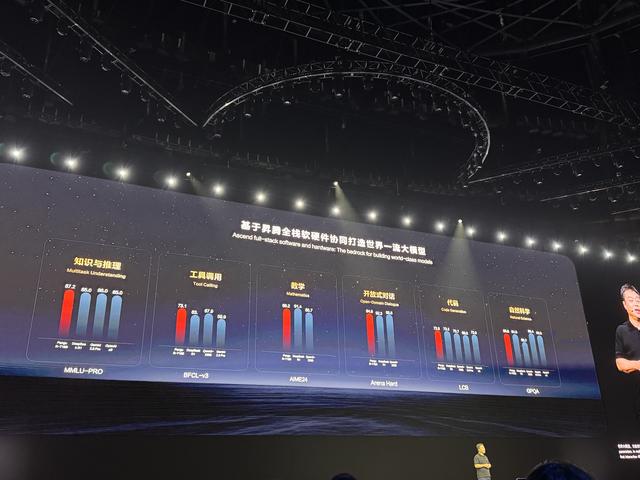
Core Insights - The large model industry is shifting from a "parameter competition" to an "ecosystem co-construction" approach, with major companies like Huawei and Baidu announcing open-source initiatives for their models [2][4] - Open-sourcing models is seen as a strategic move to build ecosystems rather than just offering free resources, as companies aim to establish a comprehensive model system that enhances their bargaining power [2][5] - The recent wave of open-source models is driven by multiple factors, including international trends and the success of models like DeepSeek, which have pressured closed-source companies to adapt [4][5] Group 1: Open Source Initiatives - Huawei has open-sourced its Pangu Pro MoE model, which has 720 billion parameters and is optimized for specific platforms, while Baidu has released its Wenxin model series, marking a significant shift in their strategies [3][4] - Other companies like Alibaba and Tencent have also joined the open-source movement, creating a more robust ecosystem and responding to the competitive landscape [4][5] Group 2: Market Dynamics - The open-source trend is expected to lower technical barriers, allowing new players to enter the market and intensifying competition among existing firms [7][8] - Companies that can quickly adapt to the open-source trend and enhance their technical capabilities will likely emerge as leaders, while those lagging behind may face obsolescence [7][8] Group 3: Long-term Strategy - Open-sourcing is viewed as a long-term strategic decision that sacrifices some immediate profits for greater control over the ecosystem [6][8] - The future winners in the open-source race will be those with strong foundational capabilities and open ecosystem strategies, where model capabilities become entry points rather than barriers [8]

★科创"长跑"遇"长钱"! AIC、险资、国资多元助力科技创新
Shang Hai Zheng Quan Bao· 2025-07-03 01:56
Core Insights - The article emphasizes the importance of diverse financial tools in supporting technology enterprises throughout their lifecycle, highlighting the role of long-term equity investment in fostering technological innovation [1] Group 1: Long-term Equity Investment - Long-term equity investment is crucial for supporting technological innovation, as evidenced by various funding rounds for quantum technology and AI companies [1][2] - The Ministry of Science and Technology and other departments have issued policies to encourage long-term capital to support technological innovation through initiatives like AIC equity investment pilots and the development of secondary market funds [1][2] Group 2: AIC Equity Investment Funds - AIC equity investment funds have been expanding their pilot programs since 2021, with characteristics such as large amounts, long cycles, and high risk tolerance, which are essential for technology enterprises [2][3] - As of now, at least 74 AIC equity investment funds have been established nationwide, with signed intention amounts exceeding 380 billion yuan [3] Group 3: Role of Local State Capital - Local state capital's involvement in AIC funds enhances the integration of these funds with the technology industry, allowing for better identification of emerging industry opportunities [3] - The collaboration between local state capital and AIC funds creates a closed-loop ecosystem that accelerates the commercialization of technology [3] Group 4: Insurance Capital's Innovative Investment Strategies - Insurance capital has been participating in equity investments for 15 years, with recent investments in AI companies demonstrating this trend [4][5] - To address risk management challenges in early-stage investments, insurance funds are adopting innovative strategies such as investing in S funds, which focus on hard technology [5] Group 5: National Venture Capital's Role - National venture capital funds are recognized as key players in the equity investment market, often entering earlier in the technology development process compared to financial institutions [6] - National venture capital institutions are encouraged to establish sustainable support mechanisms and connect with social capital to foster long-term investments [6][7] Group 6: Patience in Investment - The article highlights the need for various capital sources to exhibit patience in supporting technology enterprises, as the nature of technological projects requires time for development and returns [7]
21专访|中科创星米磊:科学家创业仍是大势所趋,创投要有能力帮助补短板
2 1 Shi Ji Jing Ji Bao Dao· 2025-06-25 08:38
Group 1 - The investment focus of institutions is shifting towards technology innovation, particularly hard technology, with professors from universities and research institutes becoming targets for capital [1][2] - The challenges faced by scientists in entrepreneurship include a lack of business acumen and management experience, leading to increased uncertainty in investment outcomes [1][2] - The establishment of the "Hard Technology Champion Enterprise Entrepreneurship Camp" by Zhongke Chuangxing aims to help scientists transition into entrepreneurs by providing resources and training [2][3][6] Group 2 - The camp has successfully held nine sessions, serving 580 hard technology entrepreneurs and fostering a network of alumni and industry experts [2][3] - The demand for hard technology entrepreneurship training is significant, as traditional entrepreneurial training does not adequately address the unique needs of hard technology enterprises [4][6] - Zhongke Chuangxing has no plans for commercialization of the camp, focusing instead on filling the gaps in the hard technology entrepreneurial ecosystem [7][8] Group 3 - Zhongke Chuangxing has successfully issued 400 million yuan in science and technology bonds, becoming the first private equity investment institution to do so, reflecting strong government support for technological innovation [9][10] - The firm is expanding its operations internationally by establishing an office in Hong Kong to leverage local scientific resources and enhance its global presence [11] - Investment focus areas include photonics, quantum technology, controllable nuclear fusion, AI, aerospace, synthetic biology, and life sciences, with a particular emphasis on foundational AI projects [13][15] Group 4 - Younger entrepreneurs are increasingly entering the hard technology space, benefiting from lower trial and error costs, making them well-suited for disruptive innovation [16] - The competitive landscape in humanoid robotics is intense, leading Zhongke Chuangxing to adopt a cautious investment approach while still exploring upstream technology components [15][16]

自主可控大模型建设见实效,央国企与头部厂商交出亮眼答卷
Di Yi Cai Jing· 2025-06-23 07:26
Core Insights - The article emphasizes the importance of artificial intelligence (AI) in the oil and gas industry, particularly through the development of the Kunlun large model by China National Petroleum Corporation (CNPC) and iFlytek, which aims to enhance operational efficiency and competitiveness in the sector [3][18] - The Kunlun model is recognized as the first industry-specific large model in China's energy and chemical sector, showcasing significant advancements in AI capabilities and applications [5][13] Group 1: Project Development and Achievements - The Kunlun large model project includes four main product lines and 100 application scenarios, with iFlytek responsible for 32 of these scenarios, marking a significant milestone in AI application within the oil and gas industry [2][5] - By May 2025, the Kunlun model achieved a major milestone by passing the evaluation by the China Academy of Information and Communications Technology, demonstrating superior performance in industry-specific tasks compared to mainstream models [7][12] - The model's parameters have significantly increased, with language model parameters rising from 70 billion to 300 billion, indicating a substantial enhancement in its capabilities [5][12] Group 2: Strategic Importance and Market Position - The oil and gas industry is highlighted as a strategic foundation for the national economy, with AI expected to bring transformative impacts to the sector [3][18] - The article notes that state-owned enterprises (SOEs) are becoming leaders in the application of large models, with a projected digital market size of approximately 593.1 billion RMB in 2024, growing at a compound annual growth rate (CAGR) of 10.7% from 2025 to 2027 [18] - iFlytek's approach includes a fully domestic and controllable large model, which is crucial for SOEs, ensuring that they can leverage advanced AI technologies while maintaining national security [15][17] Group 3: Collaborative Efforts and Industry Impact - The collaboration between iFlytek and CNPC is framed as a model for how SOEs can effectively integrate AI into their operations, with a focus on high-quality data sets and tailored applications [13][16] - iFlytek has supported multiple SOEs in building representative industry large models, indicating a strong market presence and expertise in AI solutions across various sectors [12][14] - The article concludes that the current state of large model technology and applications is a result of collaborative efforts among SOEs, large model vendors, and industry enterprises, positioning China as a significant player in the global AI landscape [18]



聊聊4个出海中最常见误解
3 6 Ke· 2025-06-20 03:08
Core Insights - The traditional cost strategy for Chinese companies going global is becoming less effective as labor and raw material costs rise, necessitating a shift towards automation and smarter technologies [1] - Structural opportunities arise from supply-demand mismatches in foreign markets, which can be addressed by leveraging domestic capabilities to fill gaps in those markets [2][3] Group 1: Supply-Demand Mismatch - Supply-demand mismatch refers to a market situation where there is a clear supply shortage or unmet demand, allowing efficient solutions to gain market share [3] - Successful examples include Insta360, which identified a niche in the action camera market by addressing specific user needs rather than competing on price [2] - DeepSeek capitalized on the need for low-cost AI solutions in the developer community, filling a gap left by higher-cost competitors [5] Group 2: Technology and Differentiation - Companies like Shein have succeeded by integrating technology, user understanding, and ecosystem development to meet the fast-paced consumption needs of Gen Z [10][12] - The combination of technology, market understanding, and a robust operational ecosystem creates a differentiated advantage that goes beyond mere product offerings [15] Group 3: Localization and Cultural Understanding - Effective localization involves understanding local consumer preferences and cultural nuances rather than simply translating products or marketing strategies [16][24] - Shein's experience in Brazil illustrates the importance of adapting product offerings to local tastes, leading to significant sales growth [18][20] - Xiaomi's strategy in India, which includes local manufacturing and cultural adaptation, demonstrates the benefits of a tailored approach to market entry [25] Group 4: Compliance and Regulatory Understanding - Compliance with local regulations can become a competitive advantage, as seen with CATL's proactive approach in Germany, which helped secure production permits and government support [29] - Transsion's focus on data privacy compliance in Africa has built consumer trust and expanded its market presence [31] - Understanding and leveraging local policies can enhance operational efficiency, as demonstrated by Shenzhen's streamlined services for businesses [32] Group 5: Strategic Recommendations - Companies must recognize that succeeding in international markets requires a multifaceted approach that includes addressing supply-demand mismatches, leveraging technology, understanding local cultures, and ensuring compliance with regulations [33][34]
火山引擎发布豆包1.6大模型;速卖通AliExpress上线卖车业务|未来商业早参
Mei Ri Jing Ji Xin Wen· 2025-06-12 00:00
Group 1 - Doubao-Seed-1.6 model was officially launched, supporting 256k long context, with a daily average token usage of 16.4 trillion by the end of May [1] - The launch reflects the extensive application of Doubao in a competitive large model industry, necessitating continuous performance optimization and innovation in multimodal fields [1] Group 2 - Qianxun launched a mini-program named "Qianxun Super Member," which sparked speculation about its connection to the return of influencer Viya, but the company denied any such link [2] - The mini-program aims to promote consumption and serve merchants while adhering to national laws and regulations, indicating a shift in the live e-commerce industry towards private domain operations [2] Group 3 - AliExpress, a cross-border e-commerce platform under Alibaba, launched a car sales business, initially offering Chinese electric vehicles during the overseas "618" shopping festival [3] - This move is seen as a strategic expansion into vehicle sales, leveraging its existing user base in auto parts, but faces challenges related to after-sales and logistics [3] Group 4 - 3D model company VAST secured tens of millions of dollars in Pre-A+ round financing, led by Beijing AI Industry Investment Fund, with previous investors including various venture capital firms [4] - VAST launched the world's first AI-driven one-stop 3D workspace, Tripo Studio, and is set to introduce a new algorithm, Tripo 3.0, enhancing its competitive edge in the 3D modeling market [4]
对话创世伙伴创投周炜:未来大模型巨头最多不超过3家 | 科创100人
Xin Lang Ke Ji· 2025-06-11 00:58
Core Insights - The AI and robotics sector is undergoing a critical transition from foundational technology breakthroughs to practical applications [2] - The large model industry is experiencing a brutal reshuffle, with only 1-3 major players likely to survive, while others will pivot to vertical markets [5] - Investors are urged to focus on AI application layers rather than blindly chasing foundational technology trends [2][5] Investment Focus - The investment strategy of the company has shifted towards three main areas: smart technology, green technology, and internationalization, termed "Go Smart, Go Green, Go Global" [3] - The company prioritizes projects that integrate AI and robotics, emphasizing that robotics encompasses all advanced manufacturing and mobile intelligent devices [3] Challenges in Investment - Non-technical investors face significant challenges in evaluating complex projects in robotics and semiconductors compared to internet applications [4] - The traditional exit mechanisms for venture capital, primarily through mergers and acquisitions, are under pressure due to a decrease in IPOs, leading to a "bottleneck" in the capital market [4] Industry Dynamics - The large model industry is witnessing a "Matthew effect," where capital is concentrating on leading firms, further squeezing the survival space for smaller companies [5] - The year 2025 is anticipated to be a pivotal moment for AI agents, with a call for a focus on practical problem-solving capabilities of technologies [5][6] Market Predictions - A potential "frozen period" in the AI industry may occur in the second half of 2025, following a typical cycle of technological hype and adjustment [6] - Unlike previous tech cycles, the current AI revolution may avoid traditional downturns due to its self-evolving capabilities and rapid advancement [6]