
核聚变

Search documents
A股早评:创业板指高开0.89%,可控核聚变板块盘初活跃
Ge Long Hui· 2025-12-19 01:32
Core Viewpoint - The A-share market opened with all three major indices rising, indicating a positive market sentiment at the start of the trading session [1] Group 1: Market Performance - The Shanghai Composite Index increased by 0.05%, reaching 3878.23 points [1] - The Shenzhen Component Index rose by 0.48% [1] - The ChiNext Index saw a gain of 0.89% [1] Group 2: Sector Movements - Trump Media Technology Group's involvement in nuclear fusion led to a significant surge of nearly 42%, energizing the controllable nuclear fusion sector [1] - Other sectors such as copper cable high-speed connections, storage chips, and CPO also opened high [1] - Conversely, gold and coal stocks experienced adjustments [1]

摩根士丹利邢自强:未来五年中国前沿行业将“再拔头筹”
Zhong Guo Xin Wen Wang· 2025-12-18 17:38
Core Viewpoint - The next five years will see China leading in advanced industries such as 6G networks, quantum technology, brain-computer integration, nuclear fusion, and next-generation biomanufacturing, driven by significant advantages in industrial capabilities, talent, and domestic market utilization [1][2] Group 1: Industrial Advantages - China has a first-mover advantage in electric vehicles, lithium batteries, next-generation smart cars, and future nuclear fusion technologies, attributed to three main advantages [1] - The first advantage is the industrial chain clustering capability, where regions like the Yangtze River Delta and Pearl River Delta can quickly access various components and engineers within a few dozen kilometers, a unique advantage not replicable by any other economy [1] - The second advantage is the talent reserve, with China producing a large number of graduates in artificial intelligence each year, providing a foundational talent pool for industrial and innovative development [1] Group 2: Market Utilization - The third advantage is the effective use of the domestic market, where most Chinese companies start locally, leveraging strong domestic demand to enhance product competitiveness before expanding internationally [1] - These three advantages are expected to continue to evolve and be leveraged during the 14th Five-Year Plan period [2]
马斯克一句“愚蠢至极”,又得罪了整个硅谷
虎嗅APP· 2025-12-18 13:57
Core Viewpoint - Elon Musk criticized the pursuit of small nuclear fusion reactors on Earth, arguing that the sun serves as a free and efficient nuclear fusion reactor, and called for a halt to investments in such projects unless they are purely for scientific experimentation [5][7]. Group 1: Investment Landscape in Nuclear Fusion - In Silicon Valley, nuclear fusion is viewed as a long-term infrastructure investment rather than a fleeting trend, with nearly $10 billion in private capital expected to flow into the sector by July 2025 [9]. - Major tech figures, including Bill Gates and Jeff Bezos, have made significant investments in nuclear fusion, with Gates' Breakthrough Energy Ventures focusing on long-term clean energy strategies [9][10]. - Commonwealth Fusion Systems (CFS) has raised nearly $3 billion, emerging as a leading contender in the fusion startup space due to its high-temperature superconducting tokamak technology [10][11]. Group 2: The Narrative of Nuclear Fusion - Nuclear fusion is often framed as an "infinite energy" solution, promising abundant fuel sources and minimal carbon emissions, which is particularly appealing in the context of rising energy demands from AI [16]. - The International Energy Agency (IEA) projects that global data center electricity demand will approach 945 terawatt-hours (TWh) by 2030, with AI-specific loads increasing fourfold [16]. - 84% of fusion companies believe they can achieve grid connection by the 2030s, with over half targeting completion by 2035, driven by technological advancements like high-temperature superconductors [16]. Group 3: Challenges and Criticism of Nuclear Fusion - Musk highlighted significant engineering challenges facing terrestrial nuclear fusion, including the need for reactors to produce more energy than they consume, which remains unproven [18][19]. - The cost of building the first commercial fusion reactors is projected to be in the hundreds of billions, with construction timelines exceeding ten years, raising questions about economic viability [19]. - Musk argues that solar energy, which has seen a cost reduction of over 89% in the past decade, is a more practical and cost-effective solution compared to the uncertain future of nuclear fusion [19]. Group 4: Alternative Energy Strategies - Musk advocates for solar energy and storage technologies as the most viable and economically sound energy solutions, proposing that a solar panel area of 100 miles by 100 miles could power the entire United States [20]. - Tesla is actively working on solar products and energy storage systems to address the intermittency issues of traditional solar energy [20][21]. - Musk's vision includes deploying solar energy satellites in space, which would provide continuous power without atmospheric interference, further enhancing energy reliability for AI applications [21][22]. Group 5: Conclusion on Energy Transition - The debate between Musk and other tech leaders reflects differing philosophies on risk and return in energy technology, with fusion representing high-risk, high-reward potential, while solar energy offers more immediate and certain returns [25]. - The future of energy will require balancing the uncertainties of emerging technologies like nuclear fusion with the pressing need for reliable energy sources in the AI era [25].

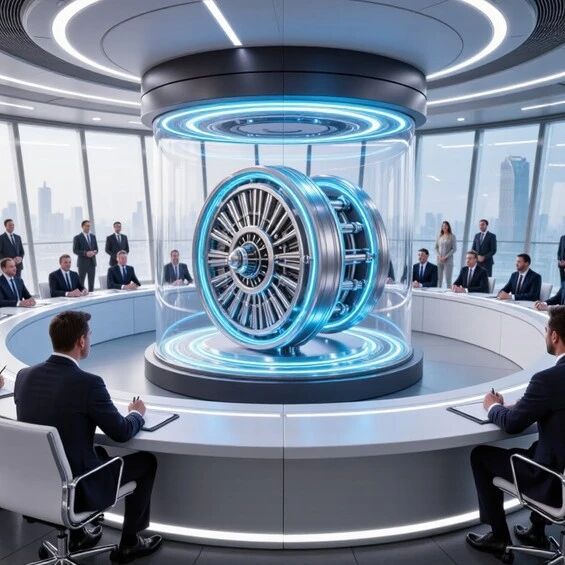
特朗普媒体科技集团盘前大涨逾30%,公司将与核聚变公司TAE以全股票交易方式合并,将于2026年开始选址并建造聚变电站
Hua Er Jie Jian Wen· 2025-12-18 11:50
风险提示及免责条款 特朗普媒体科技集团盘前大涨逾30%,公司将与核聚变公司TAE以全股票交易方式合并,将于2026年开 始选址并建造聚变电站。 市场有风险,投资需谨慎。本文不构成个人投资建议,也未考虑到个别用户特殊的投资目标、财务状况或需要。用户应考虑本文中的任何 意见、观点或结论是否符合其特定状况。据此投资,责任自负。 ...

可控核聚变概念震荡走高 国机重装、王子新材双双涨停
Xin Lang Cai Jing· 2025-12-17 02:06
Core Viewpoint - The controlled nuclear fusion sector is experiencing a significant surge, with companies like Guojin Heavy Industry and Prince New Materials hitting their daily price limits, driven by a wave of project awards in December [1] Industry Summary - The nuclear fusion industry is witnessing an accelerated bidding process, with a concentration of project awards occurring in December [1] - From December 1 to December 12, the total value of projects announced by the Hefei Institute of Plasma Physics and Fusion New Energy in Anhui exceeded 2.4 billion yuan, with nine projects having a budget exceeding 50 million yuan [1]


“制造强国”实干系列周报(12、14期)-20251217
Shenwan Hongyuan Securities· 2025-12-17 01:46
Group 1: Aluminum vs. Copper in Air Conditioning - The shift from copper to aluminum in air conditioning systems is driven by the copper-aluminum price gap, energy efficiency standards upgrades, and refrigerant replacements, with microchannel technology becoming increasingly prevalent[3] - The competitive landscape for microchannel heat exchangers is dominated by three players: Sanhua, Mahler/Delphi, and Danfoss[3] - Sanhua's revenue growth has slowed, indicating a need for innovation and adaptation in the market[14] Group 2: Nuclear Fusion Developments - The nuclear fusion sector is expected to accelerate due to continuous technological breakthroughs and policy support, with significant project milestones achieved in 2025[19] - The global nuclear fusion market is projected to reach approximately $479.5 billion by 2029, with a total of 196 fusion devices expected by 2035[40][42] - Key investment opportunities in nuclear fusion include core supporting entities and high-value segments within the supply chain, such as superconducting magnets and power systems[46] Group 3: Commercial Aerospace - The commercial aerospace sector is witnessing stable or potentially increasing core players due to cost reduction trends, with a focus on satellite manufacturing and launch services[3] - The domestic satellite constellation projects, such as G60 and GW, are set to significantly increase satellite launches, with G60 planning to deploy 1,296 satellites by the end of 2027 and 15,000 by 2030[60] - The market for satellite services and ground equipment is expected to dominate, accounting for over 90% of the commercial aerospace value chain[52]
资金涌入,持续加仓!
Zhong Guo Zheng Quan Bao· 2025-12-16 14:08
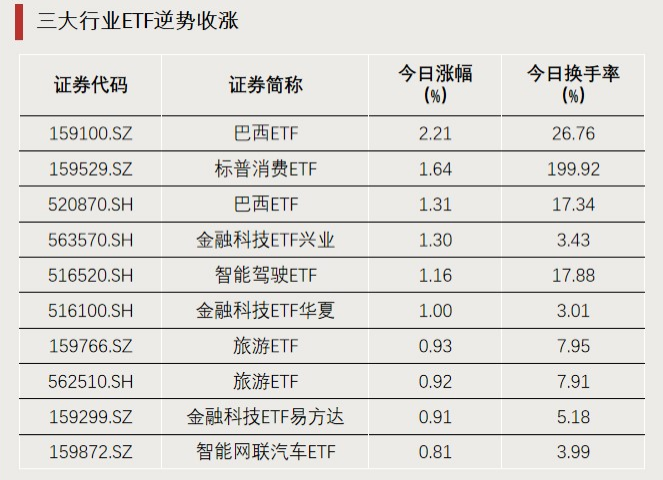
Market Overview - On December 16, A-shares and Hong Kong stocks experienced a pullback, with only about 50 out of over 1300 ETFs closing higher, and 6 of these ETFs rising by 1% or more. Financial technology, tourism, and automotive sector ETFs showed relative resilience [1] - In the cross-border ETF segment, two Brazilian ETFs and one S&P Consumer ETF led the market in terms of gains [1] ETF Performance - Notably, several ETFs that rose against the market trend saw significant increases in trading volume. The S&P Consumer ETF (159529) had a turnover rate of 199.92%, with a trading volume nearing 2 billion yuan, four times that of the previous day. The Smart Driving ETF (516520) also saw its trading volume increase to approximately seven times that of the previous day [2] - On December 16, financial technology, tourism, and automotive sector ETFs performed well, with multiple products ranking among the top gainers. The financial technology ETFs linked to the CSI Financial Technology Index saw over half of their constituent stocks close in the green, with notable gains from companies like Chuangshi Technology (300941) and Cuiwei Co. (603123) [4] Fund Flows - On December 15, despite the market pullback, ETFs experienced a net inflow of approximately 6.7 billion yuan, with broad-based ETFs attracting significant capital. Several ETFs linked to the CSI A500 Index ranked among the top for net inflows, with three A500 ETFs collectively receiving over 13.5 billion yuan in net inflows over the past five trading days [3][9] - The A500 ETF from Southern Fund (159352) led with a net inflow of 3.915 billion yuan on December 15, significantly outpacing other products [11] Sector-Specific Insights - The gold stock ETFs faced a sharp decline on December 16, with the largest drop exceeding 4%. Six out of the top ten ETFs with the largest declines were gold-related, reflecting a cautious market sentiment ahead of key economic data releases [7] - The CSI A500 Index has over 280 public funds linked to it, with more than 80 asset management firms involved, totaling over 240 billion yuan in assets. Over 80% of this is held in ETF products, with 40 ETFs exceeding 210 billion yuan in total assets [10] Upcoming Products - On December 19, Huatai-PB Fund will launch the Sci-Tech Entrepreneurship Artificial Intelligence ETF, adding to the growing list of innovative ETF products in the market [13]
AI沦为暗线?从商业航天入手“十五五”投资机会!
Ge Long Hui A P P· 2025-12-16 10:24
Core Viewpoint - The article discusses the ongoing AI bubble concerns and the impact of various negative news on the AI technology sector, while emphasizing that the fundamental logic and trends of the global AI industry remain unchanged in the long term [2][5]. Group 1: Investment Opportunities in Key Technology Directions - Commercial Space: The "strong nation in space" goal in the 14th Five-Year Plan, along with policies, demand, and technology, creates a robust investment opportunity in commercial space [2][3]. - Demand for low-orbit satellite resources is urgent, with China's GW and Qianfan constellations planning over 10,000 satellites, of which less than 1% are currently in orbit [3]. - The successful launch of the Zhuque-3 and the upcoming Long March 12 rocket are expected to significantly reduce launch costs, which is crucial for satellite networking [3]. Group 2: Specific Technology Areas - Autonomous Driving: The recent approval of L3 autonomous vehicle licenses marks a critical transition from testing to commercialization, with a projected market size of 270 billion for Robotaxi by 2030 [5]. - Nuclear Fusion: While still in the experimental phase, nuclear fusion is recognized as a future key industry, with significant investment opportunities tied to technological breakthroughs [6]. - Artificial Intelligence: The focus has shifted from speculative investments to practical applications, with the 14th Five-Year Plan promoting AI integration across various industries [6][7]. Group 3: Market Dynamics and Trends - The commercial space sector has shown resilience despite recent launch delays, indicating strong market recognition and investment potential [9][11]. - The core logic of commercial space revolves around the urgent need for satellite networking and decreasing costs, with various companies positioned to benefit from this trend [11]. - The article highlights the importance of selecting the right sectors and companies for sustained investment, particularly in the context of the 14th Five-Year Plan's long-term technological focus [15].





AI沦为暗线?从商业航天入手“十五五”投资机会!
格隆汇APP· 2025-12-16 09:44
Core Viewpoint - The article discusses the ongoing trends in various technology sectors, particularly focusing on the AI industry, commercial aerospace, autonomous driving, nuclear fusion, and quantum technology, emphasizing the long-term potential despite short-term market fluctuations [5][6][10][13][16]. Group 1: Commercial Aerospace - The Chinese government has prioritized commercial aerospace in its strategic goals, establishing a dedicated department and action plans, indicating strong policy support [8]. - The demand for low-orbit satellite resources is urgent, with plans for thousands of satellites, and recent technological advancements in reusable rockets are expected to significantly reduce launch costs [8][20]. - Key players in the commercial aerospace sector include China Satellite, which leads in satellite manufacturing, and various companies involved in rocket manufacturing and satellite components [20][22]. Group 2: Autonomous Driving - The autonomous driving sector is entering a critical commercialization phase, supported by government policies and technological advancements, with a projected market size of 2.7 trillion by 2030 for Robotaxi services [10]. - The recent approval of L3 autonomous vehicle models marks a significant step towards commercial deployment [10]. Group 3: Nuclear Fusion - Nuclear fusion is recognized as a future clean energy source, but it remains in the experimental stage, with significant breakthroughs needed before commercialization [11][12]. - Current investments are focused on technological milestones, making it a long-term investment opportunity [12]. Group 4: Artificial Intelligence - The AI sector is transitioning from speculative investments to practical applications, with a focus on real-world implementations that enhance efficiency and reduce costs [13]. - The emphasis is on AI applications across various industries, including manufacturing and healthcare, rather than on speculative infrastructure investments [13]. Group 5: Robotics - The development of embodied intelligence and humanoid robots is a key focus area, with increasing demand in manufacturing due to labor shortages and rising costs [14]. - Companies like Tesla are advancing humanoid robot production, while domestic firms are achieving significant progress in core components [14]. Group 6: Semiconductor Industry - The semiconductor sector is a priority for domestic self-sufficiency, with a focus on overcoming key technological challenges [15]. - Domestic wafer manufacturers are expanding production, and there is a growing demand for domestic semiconductor components [15]. Group 7: Quantum Technology - Quantum communication is positioned as a strategic priority for national security, with ongoing efforts in standardization and pilot projects in financial and governmental applications [16]. - Companies in the quantum sector are beginning to secure significant contracts, indicating a move towards commercialization [16][24]. Group 8: Market Trends and Investment Strategy - The article suggests that commercial aerospace is currently the most promising sector for investment, driven by policy, demand, and technological advancements [26]. - It also highlights the importance of focusing on sectors with clear policy support and performance validation, such as AI applications and robotics, while recognizing the long-term potential of quantum technology and semiconductor advancements [26].

A股开盘|沪指跌0.17% 智能驾驶题材活跃
Di Yi Cai Jing· 2025-12-16 03:44
Market Overview - The three major stock indices opened lower, with the Shanghai Composite Index down by 0.17%, the Shenzhen Component Index down by 0.21%, and the ChiNext Index down by 0.23% [1] Sector Performance - E-commerce, photolithography, nuclear fusion, superconductors, CPO, and memory concept stocks experienced a pullback [1] - Intelligent driving themes remained active during this trading session [1]