量子计算

Search documents
2026:26个关键词里的未来
第一财经网· 2025-12-30 13:27
Group 1: Domestic Chip Substitution - The rise of domestic AI chip manufacturers is marked by significant stock price increases, with companies like Cambrian Technology surpassing major firms like Kweichow Moutai [1] - The market anticipates more AI chip companies to go public, with notable performances from companies like Moer Technology and Muxi Co., which saw stock prices increase over four times on their debut [1] - The domestic market for intelligent computing chips is expected to grow from approximately 20% in 2024 to around 60% by 2029, indicating a strong trend towards domestic chip substitution [2] Group 2: AI Application Growth - The demand for AI inference is projected to continue growing as more AI applications are deployed, leading to increased procurement of domestic AI chips by data centers and cloud providers [2] - The shift in AI computing demand from training to inference presents opportunities for domestic chips, which can meet the lower performance requirements of inference tasks [1][2] Group 3: Quantum Computing Developments - Quantum technology is recognized as a strategic frontier technology, with significant breakthroughs expected in the coming years, although widespread application may still be 20 years away [6] - China's advancements in quantum communication and computing are noteworthy, with the "Zu Chongzhi No. 3" quantum computer expected to maintain a significant speed advantage over traditional supercomputers [6][7] Group 4: Commercial Space Acceleration - The commercial space sector is entering a new phase of rapid evolution, supported by government policies and increased capital investment [8] - The global commercial space market is projected to grow at a compound annual growth rate of 10.5% over the next five years, indicating strong demand and investment potential [8][9] Group 5: Solid-State Battery Innovations - Solid-state batteries are gaining attention as a transformative technology for electric vehicles, with several major automakers announcing plans for testing and production by 2026 [10][11] - Despite the excitement in the market, challenges remain in terms of cost, manufacturing processes, and achieving large-scale production [10][11] Group 6: L3 Autonomous Driving Advancements - The introduction of L3 autonomous driving technology is accelerating, with regulatory frameworks being established to support its commercial application [12][13] - The next few years are critical for the development of L3 technology, with expectations for increased vehicle production and improved algorithms [12][13] Group 7: Real Estate Debt Restructuring - Major real estate companies in China, such as Country Garden and Sunac, are successfully completing debt restructuring processes, which are crucial for their long-term recovery [14][15] - The restructuring methods include debt-to-equity swaps and extending repayment periods, aimed at reducing debt burdens and improving financial health [14]
上证指数明天能否站上4000点?2026“慢牛”有望延续?|前瞻2026
清华金融评论· 2025-12-30 10:42
Core Viewpoint - The article emphasizes that if the Shanghai Composite Index can close above 4000 points by the end of 2025, it will instill strong confidence in the market, encouraging more incremental capital to enter in the future. The market is expected to continue a slow bull trend in 2026, with a focus on technology growth, cyclical stocks, and resource stocks [2][3]. Economic Dimension - The economic landscape is characterized by accelerated structural transformation and the rise of new productive forces. Manufacturing PMI is stabilizing, and retail consumption is recovering. High-end manufacturing sectors like smart devices and new energy vehicles are growing significantly faster than the overall economy, becoming key drivers of new productive forces [5]. Financial Dimension - Valuations are aligning with performance, showing significant horizontal space. Non-financial sectors' net profit grew by 1.04% year-on-year in the first half of 2025, with technology sectors like AI (up 19.24%) and semiconductors (up 32.41%) showing remarkable profitability. A-shares are undervalued compared to U.S. stocks, with financial and infrastructure sectors still having safety margins [5]. Policy Dimension - The policy environment is focused on stabilizing expectations and increasing incremental capital. Reforms in the capital market, such as raising the equity investment cap for insurance funds to 50%, and optimizing delisting and dividend mechanisms, are enhancing investment functionality. The "15th Five-Year Plan" emphasizes support for new industries like AI and commercial aerospace [5]. Capital Dimension - Continuous inflow of capital is observed, with insurance funds increasing their equity investments to over 4.7 trillion yuan, adding more than 600 billion yuan in 2025. There is ample room for growth, as evidenced by a reduction of 1.11 trillion yuan in household deposits and a 2.14 trillion yuan increase in non-bank deposits, with funds entering the market through ETFs and mutual funds [6]. Industry Dimension - The dual focus on technology and cyclical sectors is evident. In technology growth, there is a surge in demand for AI computing power, storage, and commercial aerospace driven by policy support. In cyclical sectors, the supply-demand gap for industrial metals like copper and aluminum is widening, with expectations of a 150,000-ton shortfall in refined copper in 2026 [6]. Company Dimension - Overall profitability is improving, showcasing resilience. Leading companies in innovation-driven sectors, such as CATL, are achieving high capacity utilization rates close to 90%, with technological breakthroughs driving down costs [7]. Outlook for 2026 - Multiple brokerages express optimism for the A-share market in 2026, predicting a continuation of the slow bull market. The core driving logic is expected to shift from valuation recovery to profit support, with anticipated earnings growth of 5% to 12% [9][10]. The recovery of PPI is seen as a key factor that will drive nominal GDP growth and improve overall profitability in the market [11]. Key Investment Themes - Key investment themes include technology growth led by AI and hard technology, with a focus on areas like optical modules and computing chips. The cyclical and resource sectors are also expected to benefit from improved supply-demand dynamics, with industrial metals and energy sectors showing potential for cash flow improvement and high dividend yields [12].


超燃!2025科技十大热词出炉!
Zhong Guo Ji Jin Bao· 2025-12-30 08:17
Core Insights - The year 2025 is marked by significant technological advancements, particularly in artificial intelligence and commercial aerospace, reshaping economic and social development [1] - The technological wave is not only generating new productivity but also driving structural market trends, providing key coordinates for future investment directions [2] Group 1: Key Technological Trends - AI agents are evolving into autonomous partners, significantly lowering the barriers for AI technology development and application, leading to a surge in market expectations for Chinese tech innovation [3] - The supernode architecture is emerging as a critical breakthrough, integrating hundreds of chips into efficient computing units, paving a differentiated development path in global computing power competition [4] - The PCB industry is experiencing a technological leap, evolving towards higher layers, density, and reliability, marking China's transition from a manufacturing center to an innovation source in high-end manufacturing [5] Group 2: Strategic Developments in Computing and Energy - AI computing power is becoming a strategic digital foundation in international tech competition, with China's "East Data West Computing" strategy accelerating the construction of a green computing network [6] - Co-packaged optics (CPO) technology is crucial for enhancing computing efficiency, reshaping value distribution in the optical communication supply chain [7] - Controlled nuclear fusion is on the verge of breakthroughs, with significant advancements in China's "artificial sun" projects, attracting capital market attention [10] Group 3: Commercial Aerospace and Robotics - The commercial aerospace sector is entering a phase of intensive launches, with satellite internet constellations rapidly expanding, marking the beginning of a trillion-dollar space economy [11] - The humanoid robotics industry is reaching a turning point, with significant events indicating a shift towards mass production and application expansion [12] Group 4: Future Outlook and Investment Opportunities - The digital economy is transitioning to a strategic phase, integrating AI and data as core drivers, reshaping production and consumption efficiency [9] - Investment opportunities are expected to arise from the structural changes in flow logic due to the rise of AI, as well as innovations aimed at enhancing overall productivity [15] - The focus for 2026 will include AI deepening integration, autonomous innovation acceleration, and future industry trends, with specific attention to model iteration and cost-effective computing solutions [14][17]
【人民日报海外版】2025年创新领域盘点——创新活力持续迸发
Ren Min Ri Bao Hai Wai Ban· 2025-12-30 02:27
Core Insights - In 2025, China has made significant advancements in various fields such as artificial intelligence, quantum information, life sciences, and clean energy, contributing to high-quality development and improving the quality of life for its citizens [4][9]. Group 1: Basic Research Achievements - China has achieved new heights in basic scientific research, with multiple results breaking international records and filling gaps in various fields [5]. - As of August 2025, China produced 2,342 hot papers, accounting for 53.2% of the global total, maintaining the top position worldwide [8]. Group 2: Breakthroughs in Frontier Technologies - In quantum computing, the "Zuchongzhi 3" superconducting quantum computing prototype was released, outperforming the fastest supercomputers in processing quantum random circuit sampling [9]. - The AI model DeepSeek-R1 was launched, achieving performance comparable to top global models with fewer computational resources, marking a shift in AI development strategies [9]. Group 3: Innovations in Robotics and Aerospace - The humanoid robot industry is rapidly emerging, with significant achievements showcased during major public events, highlighting China's capabilities in this sector [10]. - The Tianwen-2 probe was successfully launched, marking China's first asteroid sampling and comet flyby mission, filling a technological gap in small celestial body exploration [10]. Group 4: Energy and Communication Advances - The EAST nuclear fusion experiment achieved a world record of 1 million degrees Celsius for 1,066 seconds, validating the feasibility of controlled nuclear fusion energy [11]. - A new adaptive full-bandwidth high-speed communication chip was developed, capable of data transmission rates exceeding 120 Gbps, laying the hardware foundation for 6G technology [12]. Group 5: Enhancements in Quality of Life - In life sciences, breakthroughs in pest control and cancer treatment strategies have been developed, promoting green and precise pest management and improving cancer treatment protocols [13]. - Major engineering projects like the South-to-North Water Diversion have benefited millions, addressing water scarcity issues in northern China [14]. Group 6: Global Collaboration and Contributions - China has led global renewable energy growth, with solar and wind power surpassing fossil fuels in new electricity generation, contributing to climate change mitigation efforts [15]. - The DeepSeek model has been made available globally, demonstrating China's commitment to sharing technological advancements and solutions for public health and agricultural safety [15].
创新活力持续迸发
Ren Min Wang· 2025-12-29 22:24
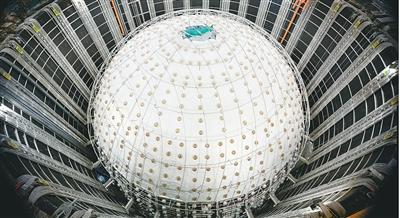
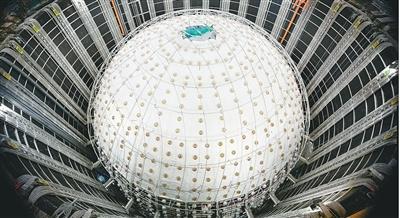
Core Insights - China has made significant advancements in various fields of technology and innovation, achieving notable breakthroughs in artificial intelligence, quantum information, life sciences, and clean energy, contributing to high-quality development and improved living standards [8][11][15]. Group 1: Fundamental Research - The Jiangmen Underground Neutrino Observatory (JUNO) has commenced operations, achieving a measurement precision of key neutrino oscillation parameters that is 1.5 to 1.8 times better than previous international standards, aiding in understanding the origins of neutrino mass [9]. - A team from the Chinese Academy of Sciences has successfully created five types of two-dimensional metals with single-atom thickness, filling a 20-year gap in the field and paving the way for low-power electronic devices and new quantum phenomena [9]. - As of August 2025, China has produced 2,342 hot papers, accounting for 53.2% of the global total, and ranks first in international citations across nine disciplines, indicating a significant increase in the quality of foundational research [10]. Group 2: Cutting-edge Technologies - The "Zuchongzhi 3" superconducting quantum computing prototype has been released, featuring 105 readable qubits and 182 coupled qubits, outperforming the fastest supercomputers in quantum random circuit sampling [11]. - The AI model DeepSeek-R1 has been launched, achieving performance comparable to top global models with fewer computational resources, marking a shift in AI development strategies [11]. - The humanoid robot industry is rapidly developing, with significant achievements in mass production and performance, showcasing China's capabilities in this field [12]. Group 3: Energy and Communication - The EAST nuclear fusion experiment has achieved a world record of 1 million degrees Celsius for 1,066 seconds, validating the feasibility of steady-state operation for fusion reactors [13]. - A team from Peking University has developed a compact optical-electronic integrated adaptive high-speed communication chip, capable of handling full-band resources with data transmission rates exceeding 120 Gbps, laying the groundwork for 6G technology [14]. Group 4: Technological Breakthroughs for Quality of Life - Research on locust pheromones has led to the development of specific small-molecule inhibitors, transitioning pest control from chemical reliance to a greener, more precise approach [15]. - The South-to-North Water Diversion Project has delivered over 80 billion cubic meters of water, benefiting 185 million people and addressing groundwater over-extraction issues in North China [16]. - China's high-speed rail technology has set new records, achieving a single-column speed of 453 km/h, enhancing travel convenience and comfort for the public [16]. Group 5: Open Cooperation and Global Contribution - China has led the global renewable energy sector, with solar and wind energy surpassing fossil fuels in new electricity generation, contributing significantly to climate change mitigation efforts [17]. - The DeepSeek model has been made available globally in an open-source format, gaining widespread adoption and recognition [17]. - China's advancements in high-speed rail and water management technologies are being shared internationally, providing solutions for global transportation and resource allocation challenges [17].
玻色量子马寅:量子计算与AI融合 开启产业新纪元
Zhong Guo Zheng Quan Bao· 2025-12-29 21:13
Core Insights - Quantum computing is transitioning from laboratory research to industrial applications, with the integration of quantum computing and artificial intelligence (AI) seen as a key path to overcoming computational limitations and accelerating commercialization [1][2] Group 1: Technological Breakthroughs - The integration of quantum computing and AI has achieved significant technological breakthroughs, particularly in fields like biopharmaceuticals, with a future product form expected to combine quantum computing infrastructure, quantum algorithm frameworks, and AI products [1][2] - The global quantum computing landscape is diversifying, with three main technical routes: superconducting, photonic, and ion trap technologies, leading to two core directions: gate-based universal quantum computers and non-gate-based specialized quantum computers [1][2] Group 2: Commercialization Acceleration - The "quantum + AI" technological advancements are driving quantum computing towards industrial applications, with quantum computing not reliant on high-quality big data, allowing for precise calculations in drug development [2][3] - Boson Quantum has developed a Python-based compiler to lower the algorithm development barrier, enabling developers without quantum computing expertise to utilize quantum algorithms [2][3] Group 3: Supply and Demand Challenges - A significant challenge in the quantum computing industry is the insufficient supply of computational power to meet growing demand, prompting Boson Quantum to establish the first large-scale dedicated photonic quantum computer manufacturing facility in Shenzhen, with an expected annual production capacity of 30 to 50 units [3] - Boson Quantum has established three business models: complete machine sales, cloud services, and "quantum computing + industry solutions," collaborating with various partners to expand application boundaries [3] Group 4: Future Outlook - The global quantum computing industry is currently characterized by diverse development paths, with both universal and specialized routes progressing simultaneously; specialized quantum computers are expected to achieve commercialization first [3][4] - Over the next five years, significant breakthroughs are anticipated in quantum computing, including standardized industrial production, an explosion in quantum AI, and deep integration of quantum and classical computing systems [4]
玻色量子马寅: 量子计算与AI融合 开启产业新纪元
Zhong Guo Zheng Quan Bao· 2025-12-29 21:08
Core Insights - Quantum computing is emerging as a key driver of the new technological revolution and industrial transformation, particularly through its integration with artificial intelligence (AI) [1] - The combination of quantum computing and AI is seen as a critical path to overcoming computational limitations and accelerating commercialization [1] Technological Breakthroughs - The global quantum computing landscape is diversifying, with three main technical routes: superconducting, photonic, and ion trap [2] - Two core directions in quantum computing are identified: gate-based universal quantum computers and non-gate-based specialized quantum computers, with D-Wave and Boson Quantum as representatives [2] - The integration of quantum computing and AI is a mutually empowering process, where AI aids in the development of quantum computers and quantum computing enhances AI's computational capabilities [2] Commercialization Acceleration - The technological breakthroughs in "quantum + AI" are driving the accelerated industrial application of quantum computing [3] - Unlike AI, which relies on high-quality data, quantum computing can operate independently of data quality, particularly in drug development [3] - Boson Quantum has developed a Python-based compiler to lower the algorithm development barrier for users without a quantum computing background [3] - A new specialized photonic quantum computer manufacturing facility in Shenzhen is expected to produce 30 to 50 units annually to address the supply shortage [3] Business Models - Boson Quantum has established three main business models: complete machine sales, cloud services, and "quantum computing + industry solutions" [4] - Collaborations with companies like Weid Information and Electronic City are expanding the application boundaries of quantum computing in sectors like power scheduling and chip design [4] Ecosystem Development - The global quantum computing industry is currently in a phase of diverse development, with both universal and specialized routes progressing [5] - It is predicted that universal quantum computers will take about ten years to achieve practical application, while specialized quantum computers will see earlier industrialization [5] - Future quantum computing products are expected to combine quantum computing bases, quantum algorithm frameworks, and AI products, leading to advanced applications similar to DeepSeek and Tongyi Qianwen [5] Future Outlook - Boson Quantum recently completed a financing round of several hundred million yuan to support the development of specialized and universal quantum computers, as well as to expand the commercial ecosystem of "quantum computing + AI" [6] - Over the next five years, three major breakthroughs in quantum computing are anticipated: standardized industrial production, an explosion in quantum AI, and deep integration with classical computing systems [6]
在结构性机遇中迎接新年新篇章
Sou Hu Cai Jing· 2025-12-29 07:02
Core Insights - The capital market in 2025 experienced structural fluctuations, with non-ferrous metals, TMT, and power equipment being market highlights, while dividend sectors and real estate faced pressure. As 2026 approaches, structural opportunities are emerging supported by policy stabilization, corporate profit recovery, and liquidity influx [4] Group 1: Global Liquidity Improvement - The global macro environment in 2026 is expected to release positive signals, with the U.S. fiscal and monetary policies likely to trend towards easing. The "Great Beautiful Act" could lead to a long-term tax cut, potentially increasing the federal deficit by approximately $3.4 trillion over the next decade, and the debt ceiling may rise by $5 trillion (a 12% increase) [5] - A low-interest-rate environment is expected to ease global liquidity constraints, alleviating capital outflow pressures in emerging markets and creating a relatively stable external environment for A-shares [5] Group 2: Domestic Economic Recovery - Domestic policies are aligning with micro signals to create a warming effect. The Central Economic Work Conference at the end of 2025 and the 2026 Two Sessions will emphasize "seeking progress while maintaining stability and improving quality and efficiency" [6] - Industrial enterprises are currently at the bottom of the inventory cycle, with a narrowing decline in PPI indicating an approaching replenishment cycle. The cumulative year-on-year growth of net profit excluding non-recurring gains for all A-shares in Q3 2025 was 3.2%, and asset turnover rates are stabilizing [6] - The "anti-involution" policy is expected to drive price recovery, leading to a positive cycle in corporate profits. Institutional investors such as insurance funds and bank wealth management are anticipated to become significant sources of incremental funds in 2026, further solidifying market liquidity [6] Group 3: Key Investment Areas for 2026 - Focus on the AI supercycle, with continued prosperity in domestic and international computing power chains. Attention should be given to new technology iterations and inflation-related sectors, particularly the gaming industry and the gradual development of smart terminals and AI applications [7] - High-end manufacturing going overseas should be monitored, especially in sectors like energy storage-lithium batteries and AI-related high-demand segments. Sustainable growth potential exists in domestic and overseas markets for heavy trucks, passenger vehicles, and construction machinery [8] - Long-term attention should be given to the revaluation of strategic resources, including precious and industrial metals. Energy and lithium carbonate show signs of bottoming out, while the chemical sector's resource products and significantly rebounding blue-chip varieties are also worth investing in [8] - Continuous monitoring of breakthroughs in frontier technologies such as robotics, solid-state batteries, controlled nuclear fusion, aerospace, and quantum computing is recommended [9] - New consumption trends and innovative pharmaceuticals are areas of interest, with solid fundamentals in emotional, service, and technology consumption. The innovative drug sector remains a long-term trend, with improved cost-effectiveness following recent declines [9] Conclusion - The equity market outlook for 2026, while facing challenges, is supported by a "triple support" system of policy stabilization, profit recovery, and liquidity influx, which may solidify the foundation for structural market trends. Investors are encouraged to align with industry trends and core logic while capturing opportunities from a long-term perspective [10]

【人民日报】科学有答案 创新无止境——八位院士眼中的二〇二五
Ren Min Ri Bao· 2025-12-29 03:02
Core Insights - China's technological innovation is expanding into various fields, including quantum technology and lunar research, with significant breakthroughs expected by 2025 [4][6] - The "14th Five-Year Plan" emphasizes the importance of technology and innovation, highlighting a commitment to advancing scientific research and applications [4] - The development of deep space exploration and quantum computing is seen as crucial for China's strategic technological autonomy and future economic growth [8][17] Group 1: Deep Space Exploration - Major breakthroughs in lunar research are anticipated, including the discovery of new mineral types from samples returned by the Chang'e 6 mission, which will enhance understanding of lunar oxidation mechanisms [5] - The Tianwen-2 probe is set to conduct close-range exploration of a near-Earth asteroid, with sample return expected by the end of 2027 [5] - Future projects include the construction of a lunar research station, manned lunar missions, and exploration of Mars and Jupiter, aiming to enhance capabilities in deep space science and resource utilization [5][6] Group 2: Quantum Computing - Quantum computing is identified as a key technology for future strategic autonomy, requiring advancements in hardware and software integration [8] - China's third-generation superconducting quantum computer, "Benyuan Wukong," has been successfully deployed, participating in numerous collaborations across various sectors [9] - The development of quantum computing is likened to building a rocket, emphasizing the need for a comprehensive approach from hardware to software [8] Group 3: Brain-Computer Interfaces - Brain-computer interface technology is evolving to connect biological and machine intelligence, with advancements in decoding and encoding neural signals [10] - Clinical applications of brain-computer interfaces are emerging, with significant progress in invasive and non-invasive technologies [12] - The technology aims to redefine the boundaries of intelligence by integrating carbon-based and silicon-based systems [11] Group 4: Hydrogen Energy - Hydrogen energy is positioned as a vital component of the renewable energy revolution, complementing electricity and addressing sustainability challenges [17] - The development of hydrogen fuel cells is expanding into various sectors, including transportation and machinery, with China making significant strides in related technologies [18] - The strategic importance of hydrogen energy is underscored by its potential to facilitate a low-carbon energy transition [17] Group 5: Talent Development in Research - The cultivation of research talent is critical for supporting high-level technological independence, with a focus on aligning educational programs with national strategic needs [20] - Young researchers are increasingly prominent in key national projects, indicating a shift towards a younger demographic in scientific achievements [21] - A supportive environment for basic research is essential, requiring stable funding and a culture that encourages innovation and tolerates failure [22][23]
量子计算商用破冰!2025 十大科技突破重塑未来
Sou Hu Cai Jing· 2025-12-28 17:13
Core Insights - The year 2025 is designated as the "International Year of Quantum Science and Technology," marking a paradigm shift in the tech sector with ten breakthroughs redefining human understanding of the world [1] Quantum Computing - Quantinuum launched the third-generation universal quantum computer Helios, featuring 98 physical qubits and a single-qubit gate fidelity of 99.9975%, achieving the highest precision in commercial computing globally [1] - Helios combines 48 logical qubits with the Guppy programming language, enabling quantum computing to address real-world business problems for the first time [1] - The Nobel Prize in Physics recognized superconducting quantum circuit technology, laying the groundwork for macroscopic quantum control and advancing quantum computing from theory to application [1] Brain-Computer Interfaces and Communication Technologies - Columbia University developed the BISC chip, integrating 65,536 electrodes into a 3mm³ flexible chip, with a thickness of 50µm, capable of sliding into the brain cortex, supporting epilepsy monitoring and neural prosthetics with a data transmission rate of 100Mbps [1] - A new type of hollow-core optical fiber, supported by Microsoft, achieved a record low loss of 0.091dB/km and a bandwidth window of 66THz, opening new avenues for long-distance communication [1] Energy and Material Science - China's "artificial sun" EAST achieved a steady-state operation at 100 million degrees Celsius for 1066 seconds, representing a significant advancement in fusion energy research [1] - Breakthroughs in the fabrication of emi-level two-dimensional metals push the limits of material science, creating opportunities in energy, healthcare, and electronics sectors, potentially generating trillion-dollar markets [1]