
银行业

Search documents
避险资产异动!黄金暴跌、原油跳涨:一个被误读的"危机信号"
Sou Hu Cai Jing· 2026-02-06 10:25
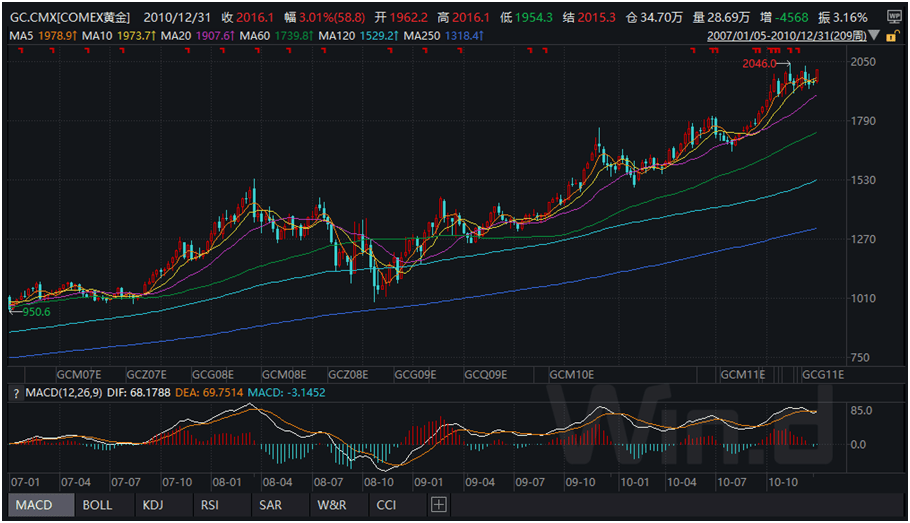
Core Viewpoint - The recent sharp decline in gold and silver prices after a rapid increase has raised concerns among investors about a potential liquidity crisis in the U.S. [1] Group 1: Historical Context and Market Behavior - Precious metals like gold and silver are traditionally viewed as safe-haven assets, particularly during geopolitical conflicts or negative external shocks, leading to price increases [1] - Historical data shows that during the 2008 financial crisis, gold prices fell by one-third before recovering due to government intervention through monetary policy [1][4] - The relationship between gold prices and financial crises is evident, as seen during the 2008 crisis when investor panic led to increased cash holdings and a subsequent drop in gold prices [4][6] Group 2: Current Market Dynamics - The recent price drop in gold and silver is attributed to three main factors: profit-taking after a high volatility period, adjustments in margin requirements by CME, and the nomination of a hawkish Federal Reserve chair candidate [7][8][9] - The adjustment in margin requirements increased pressure on high-leverage speculators, contributing to the price correction [8] - The nomination of Kevin Walsh, who advocates for "rate cuts and balance sheet reduction," may influence market sentiment and asset prices, particularly in relation to oil prices [9] Group 3: Investment Strategies and Future Outlook - The significant price correction in precious metals does not necessarily indicate an imminent liquidity crisis, and current investment strategies can continue to be executed [11] - Investors holding positions in gold and silver futures should prepare for volatility and consider reducing leverage while maintaining a safety margin [11] - Monitoring oil prices is recommended, as they may exhibit an inverse relationship with precious metal prices leading up to the new Federal Reserve chair's official appointment [11]

欧洲央行关注欧元汇率 但多名官员表示无需警觉
Xin Lang Cai Jing· 2026-02-06 10:20
Core Viewpoint - The European Central Bank (ECB) is monitoring the recent rise of the euro, but officials, including Yannis Stournaras, believe there is no need for alarm as the euro's performance has been factored into the ECB's forecasts [1][3]. Group 1: Euro Performance - Stournaras emphasized that the euro's strong performance since March 2025 has been included in the ECB's predictions, and the euro to dollar exchange rate remains within historical trading ranges [1][3]. - Francois Villeroy de Galhau noted that the recent fluctuations of the dollar have stabilized, with the euro trading around 1.18 dollars, which coincidentally aligns with the historical average since the euro's inception [1][3]. - Martins Kazaks pointed out that the euro has been fluctuating within a relatively narrow range in recent months, and these movements have been incorporated into the ECB's baseline scenario [1][3]. Group 2: Inflation and Economic Outlook - Stournaras believes that the risks related to inflation and economic growth are broadly balanced, expressing confidence among officials [2][5]. - He stated that there is no perceived need to change the current policy direction, emphasizing a data-driven approach that has proven effective so far [3][6]. Group 3: Potential Risks - Kazaks warned that a significant and rapid appreciation of the euro could lower inflation expectations, potentially triggering a policy response from the ECB [4].
金堂县工商联(总商会)2025年度工作总结大会暨“金商大讲堂”启动仪式顺利举行
Sou Hu Cai Jing· 2026-02-06 10:18
2月5日,金堂县工商联(总商会)2025年度工作总结大会暨"金商大讲堂"启动仪式顺利举行。成都市工商联党组成员、秘书长胡红彬,县人大常委会副主 任、县工商联(总商会)主席(会长)陈丽莎,县政府党组成员朱建军,县政协副主席颜仁福出席,县工商联领导班子、常执委企业及新闻媒体代表共约 120人参会。 随后,参会领导共同为"金商大讲堂"揭牌,标志着金堂县民营经济人士学习提升平台正式启动。朱建军、胡红彬先后讲话,围绕凝聚民营经济共识、激发 创新活力、助力金堂阔步"十五五"、决胜"双千亿"目标提出要求与市工商联的指导建议。 此次活动有效凝聚了民营经济人士思想共识,进一步增强了发展信心,持续激发了市场创新活力与内生动力,为奋力谱写中国式现代化金堂新篇章汇聚磅 礴的民营经济力量。 会场外,雅乐鲜、田岭涧、川盟酒业、冲洞子酒业、工商银行等11家会员企业设置展台,围绕本地特产、乡村名品、融资产品等向与会来宾进行展示推 介。 会上,陈丽莎作《金堂县工商联(总商会)2025年度工作报告》,全面系统地回顾了过去一年各项工作所取得的显著成效,深入总结经验,并对下一步的 重点任务和发展方向进行了周密部署和安排。 会议对"万企兴万村·示范先 ...

Sterling Declines as the BoE Appears More Dovish
Yahoo Finance· 2026-02-06 10:17
The meeting of the Bank of England (‘the BoE’) on 5 February brought traders a significant surprise in the form of greater dovishness than predicted among the Monetary Policy Committee (‘the MPC’). The aftermath saw the pound decline, in some cases sharply, against most other currencies. This article summarises the reaction to the BoE’s statement and press conference, then looks briefly at the charts of GBPUSD and GBPJPY. As widely expected, the BoE held its bank rate at 3.75% on Thursday, 5 February. Ho ...
ETF午评 | 金价盘中大跳水,黄金股ETF跌6%
Ge Long Hui· 2026-02-06 09:56
Market Performance - The three major A-share indices opened lower and continued to decline, with the Shanghai Composite Index down 1.03%, the Shenzhen Component Index down 1.81%, and the ChiNext Index down 1.94% [1] - Over 1,600 stocks in the market experienced an increase [1] Sector Performance - Short drama game concept stocks rose against the trend, with Zhejiang Wenying and Hengdian Film & Television reaching the daily limit [1] - The banking sector showed active performance, with Xiamen Bank rising over 6% [1] - Forestry and medical beauty sectors had notable gains [1] - Precious metals sector experienced a significant pullback, with stocks like Hunan Silver hitting the daily limit [1] - The photovoltaic equipment, semiconductor, and glass fiber sectors saw the largest declines [1] ETF Performance - In the Hong Kong stock market, the consumer sector was active, with the Hong Kong Stock Connect Consumer ETF from Huitianfu and the Hong Kong Stock Connect Consumer ETF both rising by 2.27% and 1.83% respectively [1] - The film and television sector continued to rise, with two film and television ETFs increasing by 2% [1] - International crude oil prices rose, leading to a more than 2% increase in the S&P Oil and Gas ETF from Jiashi [1] International Market Impact - International gold prices experienced a sharp decline, resulting in gold stock ETFs and non-ferrous mining ETFs dropping by 6% and 5.98% respectively [2] - The photovoltaic sector also faced a pullback, with the Jiashi and Huaxia photovoltaic ETFs falling by 5.81% and 5.63% respectively [2]
春节促消费提质加力,贵金属价格大幅波动
Southwest Securities· 2026-02-06 09:49
Domestic Developments - The Ministry of Finance and the State Administration of Taxation issued a temporary measure for input tax deductions on long-term assets, establishing a threshold of 5 million yuan for differentiated deductions, aimed at supporting high-quality economic development[1] - The "2026 Spring Festival Consumption Promotion Plan" was launched, focusing on six areas to stimulate consumer activity during the holiday, with 62.5 billion yuan allocated for subsidies to enhance consumption[1] - The Central Committee's No. 1 Document for 2026 emphasizes long-term agricultural modernization, marking a shift towards sustainable rural development and food security[1] International Market Trends - International gold prices plummeted to approximately $4,404.57 per ounce, with silver prices dropping over 12%, driven by policy expectations and profit-taking[2] - The U.S. ISM Manufacturing PMI rose to 52.6 in January, indicating a return to expansion, while ADP employment data showed a disappointing increase of only 22,000 jobs, below expectations[2] - Geopolitical tensions escalated between the U.S. and Iran, impacting oil prices, with Brent crude rising nearly 2.4% due to increased regional risks[2] Commodity Price Movements - Brent crude oil, iron ore, and copper prices decreased by 1.46%, 1.16%, and 1.76% respectively week-on-week[4] - Domestic prices for polysilicon increased by 0.31%, while lithium iron phosphate and lithium carbonate prices fell by 3.14% and 11.38% respectively[4] - The DXI index for storage DRAM prices rose by 2.19%, indicating a positive trend in the midstream sector[4]
加息也难救多头?澳元八年最高看涨头寸遭金价暴跌“定点爆破”
Sou Hu Cai Jing· 2026-02-06 08:30
Group 1 - The Reserve Bank of Australia (RBA) unexpectedly resumed its interest rate hike cycle, raising the official cash rate by 25 basis points to 3.85%, breaking a two-year period of policy inaction to address persistent inflation pressures [1] - The Australian dollar (AUD), which should benefit from narrowing interest rate differentials, faced resistance after reaching a near three-year high, primarily due to significant fluctuations in the global precious metals market [1][2] - The decline in gold and silver prices, which fell nearly 12% from historical peaks, has undermined the bullish sentiment surrounding the AUD, pushing it into a challenging downward trajectory [1][2] Group 2 - Hedge funds have increased their long positions in the AUD to the highest level since December 2017, raising questions about whether they misjudged the market dynamics [1] - Despite the RBA's hawkish stance, the AUD's future performance will depend on the resilience of domestic economic growth and the external financial environment, with the RBA lowering its economic growth forecast for the coming year [2][3] - International investors are closely monitoring potential changes in U.S. monetary policy, as any unexpected hawkish signals could negate the benefits of the RBA's rate hike [3]
在贪婪与恐惧中轮回:金银暴跌背后,如何避免成为市场叙事切换时的代价?
对冲研投· 2026-02-06 08:20
Core Viewpoint - The recent volatility in gold and silver markets serves as a lesson on the risks associated with asset price movements driven by narratives and emotions rather than fundamentals [2][29]. Group 1: Market Dynamics - The recent sharp decline in gold and silver prices was triggered by the nomination of a new Federal Reserve chairman, but it represents a delayed stress test of market conditions [3][4]. - Gold prices surged by 25% in January 2025, driven by a narrative of "de-dollarization" and geopolitical tensions, indicating a detachment from traditional valuation metrics [5][6]. - The correlation between the largest gold ETF holdings and gold prices reached 0.98, suggesting that rising prices became a self-fulfilling prophecy fueled by investor sentiment [5]. Group 2: Asset Characteristics - Gold is primarily viewed as a "currency" and "store of wealth," with over 90% of its demand coming from investment and reserve needs, while silver is seen as an "industrial raw material" and a "miniature version of gold" [8][9]. - The total market value of gold now matches that of U.S. Treasury securities, indicating a potential shift in the global monetary system [11]. - Silver's price is influenced by both financial sentiment and industrial demand, with nearly half of its demand coming from industrial uses [12][20]. Group 3: Market Reactions Post-Volatility - Following the recent market turmoil, gold prices rebounded to around $5,000 per ounce, while silver prices fell sharply from a peak of $121 to approximately $90, highlighting their differing market dynamics [16][18]. - Institutional views on gold remain bullish despite the recent downturn, citing ongoing geopolitical uncertainties and strong central bank purchases as key support factors [19]. - In contrast, silver's recent price surge was largely driven by retail investors and momentum trading, with a significant decline in industrial and jewelry demand observed [20][25]. Group 4: Lessons Learned - The recent market fluctuations highlight the importance of maintaining discipline in investment strategies, emphasizing the need to avoid speculative narratives and focus on asset fundamentals [29][30]. - Investors are encouraged to assess their portfolios critically, considering the potential impact of market downturns on their investments and adjusting positions accordingly [31][32]. - A balanced mindset is crucial, as market volatility can lead to overconfidence; recognizing the inherent risks and historical volatility of precious metals is essential for sound investment decisions [34][38].

提名沃什能否修补美联储独立性
Sou Hu Cai Jing· 2026-02-06 08:16
Core Viewpoint - The nomination of Kevin Warsh as the next Federal Reserve Chairman by President Trump is seen as a symbolic move to reassure the market about the Fed's independence amidst political and economic pressures [1][2]. Group 1: Political and Economic Pressures - The Federal Reserve faces dual pressures: economic pressures from falling inflation and slowing growth, and political pressures related to investigations surrounding current Chairman Jerome Powell [1]. - The independence of the Federal Reserve has been increasingly undermined since Trump's return to the White House, with the Justice Department's criminal investigation into Powell viewed as an escalation of pressure from the White House [1][3]. Group 2: Market Perception and Trust - Warsh's background as a former Fed governor may enhance market trust, as he understands the central bank's operations and the financial market's policy responses [2]. - Concerns about the potential nomination of Hassett, a White House economic advisor, stem from fears that he may prioritize White House interests over market stability, leading to greater uncertainty and potential financial risks [2]. Group 3: Future Policy Directions - Warsh's leadership is expected to result in a policy combination of more flexible interest rates and disciplined asset balance sheet management, focusing on timing and communication [3]. - The Fed may struggle to maintain its independence, as it could be compelled to align with the White House's low-interest rate demands amidst rising fiscal deficits and debt pressures [3]. Group 4: Global Implications - Warsh's leadership could lead to increased volatility in global capital flows and commodity prices, as market interpretations of Fed policies may shift rapidly [5]. - The Fed's policy communication will have significant spillover effects, as global central banks reassess the predictability of U.S. macro governance, potentially leading to higher risk premiums in global markets [5]. Group 5: Long-term Outlook - While the nomination of Warsh may provide short-term improvements in the perception of Fed independence, the long-term effectiveness will depend on his ability to withstand political pressures and the resolution of domestic political conflicts [5].
人民银行上海总部:2025年上海人民币跨境收付金额同比增长9%,继续保持全国第一
Xin Hua Cai Jing· 2026-02-06 08:11
Core Insights - The People's Bank of China (PBOC) Shanghai Headquarters held a meeting to summarize the cross-border RMB business in Shanghai for 2025 and outline key tasks for 2026, emphasizing the importance of enhancing cross-border RMB financial services to support high-quality economic development in Shanghai [1][2]. Group 1: Cross-Border RMB Business Performance - In 2025, Shanghai's cross-border RMB business achieved a total payment amount of 32.4 trillion yuan, marking a year-on-year increase of 9%, maintaining its position as the leader in the country [1]. - Significant progress was made in the use of RMB by key enterprises, sectors, and regions, with successful implementation of reforms such as the offshore trade finance service pilot in the Lingang New Area and the upgrade of free trade account functions [1]. Group 2: Strategic Focus for 2026 - The meeting emphasized the need to adhere to the principle of prioritizing the local currency, aiming to enhance the convenience of cross-border RMB settlements and promote its use in trade, investment, and financing [2]. - There is a commitment to enriching the supply of cross-border RMB financial products to better meet the market demands for transaction settlements, investment financing, and risk management, thereby supporting stable foreign trade and investment [2]. - The meeting highlighted the importance of reform and innovation, advocating for the expansion of the offshore trade finance service pilot and supporting quality enterprises in the upgrade of free trade account functions to fully leverage policy benefits [2]. - Financial risk prevention was underscored, with a focus on strengthening compliance management and balancing development with safety, innovation with compliance, to enhance the management and risk control capabilities of cross-border capital flows [2].