农产品

Search documents
美国专家感叹“中国彻底赢了”,一万亿美元让他们心服口服
Sou Hu Cai Jing· 2025-12-12 23:13
Core Insights - China's trade surplus reached an unprecedented $1.08 trillion from January to November, indicating a significant shift in global economic dynamics, challenging U.S. hardline policies [1][3] - The U.S. strategy of imposing tariffs to weaken China's economy has backfired, as China has successfully diversified its export markets and supply chains [3][5] Trade Dynamics - The structure of China's exports has changed, with the U.S. share dropping from nearly 20% to below 15% by 2025, while exports to the EU and ASEAN have surged to $508 billion and $599 billion respectively [5][7] - Latin America has also shown strong demand, compensating for any losses in the U.S. market, demonstrating China's ability to adapt and expand its trade relationships [7] Strategic Moves - In December 2024, China announced zero-tariff treatment for all least developed countries, a strategic move to secure resource supply chains and enhance mutual trade [8][10] - This approach not only stabilizes China's raw material supply but also strengthens economic ties with resource-rich nations lacking infrastructure [10] Resource Management - China's advancements in critical materials have diminished U.S. leverage, as U.S. agricultural exports are losing competitiveness against alternatives from countries like Argentina and Australia [12][14] - The competition for the Chinese market has intensified among these countries, while the U.S. struggles to find substitutes for Chinese industrial goods [14] U.S. Economic Strategy - The U.S. faces a dilemma: continue escalating tariffs or opt for a soft landing by reducing tariffs to stabilize its economy and address inflation [19][21] - The ongoing trade war has not destabilized China but has instead prompted it to seek new partnerships and enhance its industrial layout, while the U.S. risks losing its influence [21][23]


11月马来西亚超预期累库背景下,12月棕榈油价格上行空间或有限
Xin Hua Cai Jing· 2025-12-12 15:25
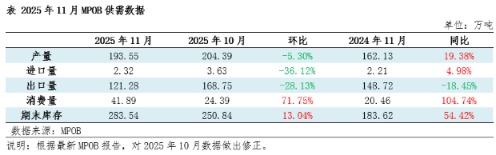
Core Viewpoint - The Malaysian Palm Oil Board (MPOB) released the supply and demand data for palm oil in November 2025, indicating a bearish outlook due to a significant drop in exports and higher-than-expected ending stocks, despite production remaining historically high [1][2]. Group 1: Supply and Demand Data - November palm oil production was reported at 1.9355 million tons, a decrease of 5.30% month-on-month, but an increase of 19.38% year-on-year [2]. - Exports fell sharply to 1.2128 million tons, down 28.13% from the previous month and down 18.45% year-on-year [2]. - Domestic consumption rose significantly to 418,900 tons, an increase of 71.75% month-on-month and 104.74% year-on-year [2]. - Ending stocks increased to 2.8354 million tons, up 13.04% month-on-month and 54.42% year-on-year, which was much higher than market expectations [1][2]. Group 2: Market Dynamics - The report suggests that the palm oil market may continue to experience a loose supply-demand balance in December, with potential for further inventory accumulation due to weak domestic demand [1][4]. - Despite recent increases in domestic consumption, the sustainability of this trend is questionable, as it may be influenced by hidden exports [4]. - The price of palm oil is expected to remain under pressure, with projections indicating that domestic prices will range between 8,600 and 8,900 yuan per ton in December [5].
外贸成绩单,向新向绿向智
Xin Lang Cai Jing· 2025-12-12 14:13
Core Insights - Zhejiang's total import and export value reached 5.06 trillion yuan from January to November, growing by 5.3% year-on-year, surpassing the national average by 1.7% [1] - Exports amounted to 3.83 trillion yuan, increasing by 7.1%, while imports were 1.23 trillion yuan, with a marginal growth of 0.1% [1] Trade Market Performance - ASEAN solidified its position as Zhejiang's largest trade market with a total trade value of 786.81 billion yuan, growing by 15.4%, contributing 40.9% to the province's overall import and export growth [4] - The EU ranked as the second-largest trade market for Zhejiang, with a trade value of 770.14 billion yuan, increasing by 8.3% [4] - Exports to emerging markets such as ASEAN, Latin America, the Middle East, and Africa grew by 16.1%, 10.0%, 12.0%, and 15.4% respectively [4] Private Sector Performance - Private enterprises accounted for 4.16 trillion yuan in import and export value, growing by 7.0% and representing 82.1% of the province's total [2][4] - Exports from private enterprises reached 3.30 trillion yuan, increasing by 8.4%, while imports were 858.61 billion yuan, growing by 1.7% [2][4] - Foreign-invested enterprises reported a total import and export value of 619.78 billion yuan, with exports at 394.41 billion yuan and imports at 225.37 billion yuan, reflecting growth rates of 2.3% and 3.8% respectively [2][4] Product Export Trends - The export of electromechanical products reached 1.79 trillion yuan, growing by 8.8%, with "new three samples" products (solar products, electric vehicles, lithium-ion batteries) seeing a significant increase of 23.3% [5] - Labor-intensive products exported amounted to 1.13 trillion yuan, growing by 3.9%, capturing 30.5% of the national market share [5] - High-tech product exports totaled 324.35 billion yuan, increasing by 10.7%, with high-end equipment exports growing by 16.8% to 129.73 billion yuan [5] Import Trends - The import of electromechanical products grew significantly, reaching 218.42 billion yuan, with notable increases in aircraft and other aviation equipment (122.9%) and computers and components (43.1%) [6] - Consumer goods imports totaled 143.46 billion yuan, growing by 8.7%, while agricultural product imports reached 112.04 billion yuan, increasing by 10.6% [6] Industry Transformation - Many Zhejiang companies are transitioning towards new markets, particularly in the electric vehicle sector, with significant advancements in air suspension technology [3][6] - A specific company, Xigema Co., has developed air suspension systems that achieve 90% of the performance of top international brands at a fraction of the cost [6]
建信期货农产品周度报告-20251212
Jian Xin Qi Huo· 2025-12-12 12:57
Report Summary 1. Report Information - **Industry**: Agricultural products - **Date**: December 12, 2025 - **Researcher Team**: Yulanlan, Linzhenlei, Wanghaifeng, Hongchenliang, Liuyouran [3][4] 2. Core Views - **Oils and Fats**: The three major oils are showing divergent trends. Palm oil lacks driving forces, continuing its weak and volatile trend and is expected to continue to bottom out, with a focus on short - term short positions; rapeseed oil is policy - driven, and currently, with inventory depletion and tight spot supply, it is advisable to take light long positions; soybean oil is fluctuating in the range of 8,000 - 8,400 yuan/ton, with limited upside due to high inventory [9]. - **Hogs**: In terms of spot, supply and demand are both increasing, but the enthusiasm for second - round fattening is weak, and prices may fluctuate slightly upward. In the futures market, the supply of hogs is expected to increase slightly, but there is double supply pressure from second - round fattening and capacity release, putting pressure on the 01 and 03 contracts. However, due to the large price decline compared to last year and the increase in the northern epidemic, the bottom - shock frequency has increased. It is recommended that futures investors wait and see, and breeding enterprises reduce hedging short positions as they sell [103]. - **Corn**: On the supply side, the willingness of farmers in the Northeast to hold back sales has decreased, and the sales progress is over 30%, with port inventories slightly increasing. On the demand side, feed demand is good, and the operating rate of deep - processing enterprises has rebounded. Spot prices may fluctuate, while futures prices may fluctuate upward, especially for contracts after 2605. It is recommended that spot enterprises replenish inventory appropriately, and futures investors hold long positions [144][145][146]. - **Soybean Meal**: The short - term rebound of soybean meal is short - cycle, and considering the abundant supply in most areas and the lack of obvious external bullish factors, it is advisable to try short positions on rallies in the short - term, and expect narrow - range fluctuations in the medium - term [151]. - **Eggs**: Spot prices are expected to fluctuate slightly. Futures prices of near - term contracts are dominated by bears, and new short positions can focus on the 02 contract. Long positions can focus on entering the market for far - term contracts after the correction [191]. - **Cotton**: In the short - term, cotton prices will maintain a relatively strong trend, and the pressure level will gradually move upward. The supply side has limited changes, and the demand side has improved slightly, with downstream spinning mills having acceptable profits and cash flows [215]. - **Sugar**: The raw sugar index is in a sideways shock, and the Zhengzhou sugar index has fallen significantly. Indian and Thai production increases are suppressing sugar prices. In the domestic market, new sugar is on the market in large quantities, with increased production, import volume, and weak consumption. It is recommended to pay attention to the changes in supply and demand and policies [241][242]. 3. Summary by Industry Oils and Fats - **Market Review**: Palm oil is in a volatile adjustment, with Malaysian inventories reaching a six - and - a - half - year high in November. Soybean oil futures are in a narrow - range shock, and rapeseed oil has large fluctuations [8][9]. - **Core Points**: - **Domestic Spot Changes**: As of December 12, 2025, the price of East China Grade I soybean oil remained unchanged at 8,600 yuan/ton, the price of East China Grade III rapeseed oil increased by 30 yuan/ton to 10,020 yuan/ton, and the price of South China 24 - degree palm oil decreased by 160 yuan/ton to 8,580 yuan/ton [10]. - **Domestic Three - Major Oils Inventory**: As of the end of the 49th week of 2025, the total inventory of the three major edible oils in China was 2.4294 million tons, a weekly decrease of 16,000 tons, a month - on - month decrease of 0.65%, and a year - on - year increase of 15.06% [22]. - **Domestic Oilseeds Supply**: The soybean processing volume and operating rate of domestic oil mills decreased this week. The inventory of imported soybeans in ports increased slightly, and it is estimated that the inventory will decrease next week. The operating rate of imported rapeseed processing enterprises was almost zero, and the inventory of imported rapeseed in ports remained unchanged [25][26][33]. - **Palm Oil Dynamics**: The production and export of Malaysian palm oil decreased in November, and the inventory increased. It is expected that the inventory will increase in December. The production of Brazilian palm oil is expected to break through 20 million tons for the first time this year [35][36]. - **CFTC Positions**: Speculative funds continued to go long on Chicago soybeans and short on Chicago soybean oil in early November [48]. Hogs - **Market Review**: Spot prices first weakened slightly and then strengthened. Futures prices of the main contract LH2603 fluctuated upward after rising and falling [50][51]. - **Fundamental Overview**: - **Long - Term Supply**: The inventory of breeding sows is relatively stable, and the market's enthusiasm for replenishing binary sows is average. According to different data sources, the theoretical pig slaughter volume will show different trends in the future [60][61][62]. - **Medium - Term Supply**: The price of piglets has increased slightly, and the inventory of sample enterprises' piglets decreased in November. The theoretical pig slaughter volume will increase slightly in the medium - term [74]. - **Short - Term Supply**: The inventory of large pigs in sample enterprises decreased in November. The proportion of large pigs over 140 kg increased, and the enthusiasm for second - round fattening decreased in November [76][77]. - **Current Supply**: The actual slaughter volume of sample enterprises in November was 26.49 million heads, and the planned slaughter volume in December is 27.72 million heads, a monthly increase of 4.64%. The average slaughter weight decreased slightly this week [84][85]. - **Import Supply**: In October, China's pork imports were 70,000 tons, a month - on - month decrease of 10,000 tons and a year - on - year decrease of 20,000 tons [90]. - **Second - Round Fattening Demand**: The enthusiasm for second - round fattening replenishment is generally low, and the cost has increased [92][94]. - **Slaughter Demand**: The operating rate of slaughtering enterprises increased this week, and the slaughter volume in October increased significantly year - on - year [97]. Corn - **Market Review**: Spot prices generally moved upward. Futures prices of the main contract 2603 fell by 1.5% [105]. - **Fundamental Analysis**: - **Corn Supply**: The sales progress has accelerated, and the overall is faster than the same period last year. The inventory in northern ports decreased by 110,000 tons, and the inventory in southern ports decreased by 202,000 tons [108][109][111]. - **Domestic Substitutes**: Wheat prices fluctuated weakly this week, and the price difference between wheat and corn is 205 yuan/ton [112]. - **Import Substitute Grains**: In October, the import of most grains increased year - on - year. The import of corn was 360,000 tons, a year - on - year increase of 43.1%. The import of other grains showed different trends [113]. - **Feed Demand**: In October, the national industrial feed production was 29.07 million tons, a month - on - month decrease of 4.2% and a year - on - year increase of 3.6%. The inventory days of feed enterprises increased [128][134]. - **Deep - Processing Demand**: The operating rate of corn starch enterprises increased slightly, and the inventory of deep - processing enterprises increased [137][138]. - **Supply - Demand Balance Sheet**: In the 2025/26 season, China's corn production is expected to increase by 1.72% to 300 million tons, and consumption is expected to increase by 116 tons to 299.02 million tons [141][143]. Soybean Meal - **Weekly Review and Operation Suggestion**: Spot prices rose slightly. Futures prices of US soybeans fell after a high - level shock, and domestic soybean meal was stronger than the external market. It is advisable to try short positions on rallies in the short - term and expect narrow - range fluctuations in the medium - term [149][150][151]. - **Core Points**: - **Soybean Planting**: The USDA December report made few changes to US soybeans. The planting area decreased, the yield per unit increased, and the ending inventory decreased slightly. The estimated production of Brazilian and Argentine soybeans is high. The planting progress in Brazil is normal, and the weather is favorable; the planting in Argentina is in the middle and late stages, and the weather is relatively dry [152][153][154]. - **US Soybean Exports**: As of the week of November 13, the export shipments and net sales of US soybeans decreased year - on - year. China's procurement of US soybeans has not yet reached the expected level [162]. - **Domestic Soybean Import and Pressing**: The pressing profit is negative. The operating rate and pressing volume are expected to decline. The import of soybeans in November decreased month - on - month and increased year - on - year, and the port inventory is expected to decrease [167][168]. - **Soybean Meal Transaction and Inventory**: The inventory of domestic main oil mills decreased this week. The high - volume transactions in the past were mainly due to hedging against trade uncertainties [177]. - **Basis and Inter - Month Spread**: The basis of the 01 contract is at a relatively low level, and the 1 - 5 spread has widened [184]. - **Domestic Registered Warehouse Receipts**: As of December 11, 2025, the number of domestic soybean meal registered warehouse receipts was 23,830 lots, at a relatively high level in the same period of history [188]. Eggs - **Weekly Review and Operation Suggestion**: Spot prices stabilized and rebounded slightly. Futures prices were relatively weak, especially for the near - term 01 contract. New short positions can focus on the 02 contract, and long positions can focus on far - term contracts [191]. - **Data Summary**: - **Inventory and Replenishment**: The inventory of laying hens is at a high level in the same period of history, and the replenishment momentum is weak. The proportion of different - age laying hens and egg sizes has changed [192][193][194]. - **Cost, Income, and Breeding Profit**: Egg prices increased slightly, feed costs remained stable, and breeding profits were at a very low level [198]. - **Culled Hens**: The number of culled hens decreased, the culling age advanced, and the price was at a low level in the same period of history [202]. - **Demand, Inventory, and Hog Prices**: Egg sales are at a low level in the same period of history, inventory is slightly higher than normal, and hog prices are at a low level in the same period of history [206]. Cotton - **Weekly Review and Operation Suggestion**: The USDA monthly report was slightly bearish, and Zhengzhou cotton prices moved upward after adjustment. The spot market was warming up, and the downstream market was generally trading [213][214]. - **Core Points**: - **Main Cotton - Producing Countries**: The USDA December report adjusted the global cotton supply - demand situation. The beginning inventory increased slightly, the production and consumption decreased slightly, and the ending inventory increased slightly [216]. - **US Cotton Exports**: As of the week of November 13, the net signing and shipment of US cotton decreased week - on - week, and the cumulative signing decreased year - on - year, while the cumulative shipment increased year - on - year [223]. - **Textile Enterprises Operation**: The cotton inventory and yarn inventory of spinning enterprises increased slightly, and the inventory of weaving enterprises remained stable. The load indexes of yarn and grey cloth remained unchanged [225]. - **Basis and Inter - Month Spread**: The basis of the 01 contract decreased, and the 1 - 5 spread decreased [236]. - **CFTC Positions and Domestic Registered Warehouse Receipts**: As of November 10, the non - commercial net long position of cotton decreased. As of December 11, the number of domestic cotton registered warehouse receipts increased [238]. Sugar - **Market Review**: The raw sugar index was in a sideways shock, and the Zhengzhou sugar index fell significantly. Domestic spot prices generally decreased, and the basis and inter - month spread changed [241][242][244]. - **Core Points**: - **Brazilian Sugar Production**: In the first half of November 2025, the sugar production in the central - southern region of Brazil increased year - on - year, and the proportion of sugar production decreased. The cumulative production and ethanol sales in the current season showed different trends [249][250]. - **Price Relationship and Import Profit**: The ethanol - to - sugar price in Brazil is higher than the ICE raw sugar price. The inter - month spread of London white sugar and New York raw sugar is at a level that causes a slight loss for processing enterprises. The import processing profit has declined [254][256][257]. - **CFTC Positions**: As of November 10, 2025, the non - commercial net short position of raw sugar increased [257].
助力湾区“菜篮子”建设!“媒体+”助力龙岩多款地标产品亮相大湾区农交会
Nan Fang Nong Cun Bao· 2025-12-12 12:35
Group 1 - The 2025 Greater Bay Area Agricultural Products Trade Fair and Specialty Products Expo officially opened in Guangzhou, attracting a large number of visitors [2][5] - The "Red Gutian" public brand was prominently featured at the Longyan exhibition, representing a combination of red culture and green products [3][4] - Longyan has been integrating high-quality agricultural resources under the "Red Gutian" brand, promoting standardization, branding, and industrialization of specialty agricultural products [9][10] Group 2 - The trade fair showcased a series of products from the "Red Gutian" public brand, including notable items like the Huitian chicken, Liancheng white duck, and Zhangping Oolong tea [12][13] - Huitian chicken, known for its rich flavor and firm texture, has gained market popularity and offers various product lines, including fresh chicken and prepared meals [17][18] - Liancheng white duck, recognized for its medicinal properties and low cholesterol, has a history of over 700 years and was featured as a key ingredient during the BRICS summit in 2017 [21][22][24] Group 3 - Longyan's Oolong tea is well-regarded both domestically and internationally, with the Red Gutian Wuyi cinnamon tea being highlighted for its cultural significance [27][28] - Longyan Agricultural Development Company has become a distribution center for high-quality agricultural products in the Greater Bay Area, enhancing its cold chain logistics and standardized supply chain [29][30] - As the construction of the Greater Bay Area "vegetable basket" initiative progresses, Longyan is leveraging its geographical advantages and improving logistics networks to integrate into the agricultural supply system [32][33]

紫金天风期货油油油
Zi Jin Tian Feng Qi Huo· 2025-12-12 12:08
1. Report Industry Investment Rating No information provided. 2. Core Viewpoints of the Report - In the 25/26 period, most oils are expected to increase in production. However, in 2025, the production and consumption growth rates of major biodiesel - producing countries globally slowed down, and the demand growth rates of various raw materials declined, except for palm oil, which maintained a relatively high growth rate. The market is still waiting for the US to announce the compliance obligation volumes for 2026 and 2027 and Indonesia's biodiesel policy. The low price of US crude oil limits the imagination space for biodiesel demand, unless the government is willing to provide substantial subsidies [207]. - Due to previous improvements in rainfall and fertilizers, as well as an increase in labor, Malaysia's production exceeded expectations this year, and Indonesia also had a significant increase in production, resulting in a divergence between expectations and reality. Although the replanting rate of oil palms is at a low level, it has improved compared to the low point in early 2020, but it started to decline in December 2021. After 2021, the use of fertilizer raw materials in Malaysia and Indonesia decreased rapidly, and considering the lagged impact of weather, the production performance in the next few months may not be as good as before [207]. - Currently, the soybean crushing profit in Argentina is relatively low, and the global new - crop sunflower oil production is lower than expected. Palm oil has cost - effectiveness, but Brazil has not decided whether to implement the B16 biodiesel policy at the beginning of 2026. Under the overall expectation of a bumper harvest in South America, the price of far - month South American soybean oil is low [207]. - Different from the downward adjustment of global sunflower seed and sunflower oil production, the global rapeseed production is gradually increasing. As Australian and Canadian rapeseed purchases are restricted, short - selling rapeseed in the domestic market may not be smooth. The impact is more likely to be indirectly transmitted to the domestic market through rapeseed oil and rapeseed meal from Dubai and Russia. However, opportunities to narrow the price spread at high levels should be noted [207]. - Before there is stronger positive news for biodiesel, the price advantage will still support the palm oil price. But if there is no speculation on the supply side and no expectation of inventory reduction, the price rebound will be limited [207]. 3. Summary by Relevant Catalogs 3.1 Market Review - **Price Movements**: The prices of domestic three major oils and US crude oil fluctuated in 2025. There were several rounds of price drops and rebounds. Drops were mainly due to factors such as the delay in Indonesia's biodiesel policy, unclear US biodiesel policy, increased South American soybean production, higher - than - expected imports of rapeseed oil and rapeseed, and official clarifications on non - restriction of palm oil exports. Rebounds were caused by factors like floods in palm oil - producing areas, rebounds in US and Brazilian soybean premiums, insufficient near - month imports of soybeans, expected pre - Ramadan purchases in India, and rumors of Indonesia's palm oil export ban [4]. 3.2 25/26 Global Oilseeds Situation - **Production and Export**: The total global oilseed production in the 25/26 period was gradually adjusted downward, with significant decreases in soybean and sunflower seed production, but significant increases in rapeseed and cottonseed production. The total export volume changed little, with significant increases in soybean and sunflower seed exports and a decrease in rapeseed exports [5]. - **Consumption and Stock - to - Use Ratio**: Global oilseed crushing was slightly adjusted downward, with a significant increase in rapeseed crushing but decreases in soybean and sunflower seed crushing. The stock - to - use ratio of rapeseed increased significantly, while those of soybeans and sunflowers decreased slightly [12][17]. 3.3 25/26 Global Oils Situation - **Production and Export**: The total global oil production in the 25/26 period was adjusted slightly. Rapeseed oil production was increased significantly, while soybean oil and sunflower oil production were decreased significantly. Rapeseed oil exports increased significantly, palm oil exports changed little, and soybean oil and sunflower oil exports decreased significantly [19]. - **Consumption**: The total global oil consumption decreased slightly. The consumption of soybean oil and rapeseed oil increased significantly, while that of sunflower oil decreased significantly [21]. - **Stock - to - Use Ratio**: The stock - to - use ratios of different oils showed different trends [30]. 3.4 Rapeseed Situation - **International Rapeseed Price and Spread**: The price of Canadian rapeseed was weak [32]. - **Canadian Rapeseed**: In the 25/26 period, Canadian rapeseed production increased by 789,000 tons. Exports were expected to increase by nearly 400,000 tons, and the ending inventory would rise from 1.597 million tons to 2.5 million tons. The export was slow, domestic consumption was high, and the commercial inventory was close to that of the previous year [38][40][42][45]. - **EU Rapeseed**: In the EU's November agricultural crop announcement for the 24/25 period, the rapeseed yield was adjusted upward to 3.34 tons per hectare, the planting area remained unchanged, and the production was adjusted upward to 2.0206 million tons. Rapeseed imports were high, exports increased, and the monthly crushing volume decreased [51][53][55][57]. - **Other Regions**: Australian new - crop rapeseed production was increased, Ukrainian rapeseed exports decreased, and Russian rapeseed production increased [61][66][71]. 3.5 Palm Oil Situation - **Malaysia**: In October, Malaysia's palm oil production increased more than expected, with a 11.02% month - on - month increase to 2.04 million tons. The export situation was complex, with a decrease in exports to India during the festival. As of the end of November, the inventory was expected to continue to increase [92][96][102]. - **Indonesia**: In September, Indonesia's palm oil production decreased significantly, and exports decreased due to the increase in export tariffs. The inventory remained basically stable at the end of September [121][128]. 3.6 Soybean Oil Situation - **North and South America**: The export of soybean oil in North and South America slowed down. Argentina's soybean oil export slowed, and Brazil's soybean oil export also decreased [132][134][141]. 3.7 Sunflower Oil Situation - **European Sunflower Seeds**: The production of European sunflower seeds was adjusted downward [151]. - **Ukraine**: Ukraine's sunflower oil exports were at a low level, with a decrease in exports to India and an increase in exports to the EU [158]. - **Other Regions**: Russia's sunflower oil export slowed, and Argentina's sunflower oil exports to India increased. The total sunflower seed production of four countries (Argentina, Ukraine, Russia, and the EU) increased [160][163][170]. 3.8 Biodiesel Situation - **Indonesia**: The distribution of biodiesel in Indonesia was slow, and as of November 10, the biodiesel distribution volume reached 12.25 billion liters, while the annual target was 15.6 billion liters [172][173]. - **EU**: The EU's imports of Malaysian POME, UCO, and UCOME increased, and the import of UCO was at a high level. The export of UCOME to the US decreased significantly, and the import of Chinese UCO remained at a high level [174][177][179][181][183]. - **US**: The proportion of soybean oil in US biodiesel feedstock generally rebounded, but the biodiesel production was lower than that of the previous year [185][187]. - **Brazil**: The consumption of soybean oil in Brazilian biodiesel was at a high level, and the growth rate of biodiesel raw material consumption slowed down in 2025 [195][197].
农产品日报-20251212
Guo Tou Qi Huo· 2025-12-12 11:10
| | | | | 操作评级 | 2025年12月12日 | | --- | --- | --- | | 显一 | なな☆ | 杨蕊霞 农产品组长 | | | | F0285733 Z0011333 | | 豆粕 | ★☆☆ | 吴小明 首席分析师 | | 豆油 | ななな | F3078401 Z0015853 | | 棕榈油 | ななな | 董甜甜 高级分析师 | | 薬粕 | ☆☆☆ | F0302203 Z0012037 | | 薬油 | な☆☆ | 宋腾 高级分析师 | | 五米 | ななな | F03135787 Z0021166 | | 生猪 | ななな | | | 鸡蛋 | ★☆☆ | 010-58747784 | | | | gtaxinstitute@essence.com.cn | 【豆一】 国产大豆从高位回落,盘面也在进行移仓。本周进口大豆方面市场担心通过进度放缓带动豆类价格走强,国产 大豆也被带动,价格冲高之后高位出现获利了结。本周政策端购销双向全部成交,成交均价在4110元/吨。国产 大豆现货端坚挺稳定,市场参与主体也在收购大豆。短期持续关注政策和现货端的表现。 【大豆&豆粕】 国 ...
“媒体+”助力生态好货南下湾区!山西安泽优品亮相农交会
Nan Fang Nong Cun Bao· 2025-12-12 10:32
Core Viewpoint - Shanxi Anze County is promoting its ecological agricultural products to broader markets, particularly targeting the Greater Bay Area through participation in agricultural trade fairs [2][23]. Group 1: Event Overview - The Agricultural Products Trade Fair and Specialty Products Expo was held in Guangzhou to facilitate the entry of Shanxi Anze County's agricultural products into new markets [3]. - A promotional event for Anze County's agricultural specialties took place concurrently with the trade fair [4]. Group 2: Regional Characteristics - Shanxi Anze County is located in the eastern part of Shanxi Province, known for its ecological advantages and as a major production area for traditional medicinal materials [6][7]. - The region has developed a distinctive agricultural system focusing on products like forsythia, small grains, ecological livestock, and honey [8]. Group 3: Product Highlights - Two local enterprises showcased their unique products at the promotional event, attracting significant interest from buyers and attendees [11]. - Anze Songpo Agricultural and Animal Husbandry Co. emphasizes organic farming without preservatives, offering fresh products with a shelf life of 180 days [12][13]. - Yuekang Pharmaceutical Group is leveraging technology to enhance traditional medicinal materials, creating a complete industry chain from cultivation to product development [17][18]. Group 4: Market Expansion Efforts - The "Rural E-Town" project is instrumental in promoting Anze agricultural products, having previously participated in national exhibitions in major cities [23]. - The project aims to establish a sales network in the Greater Bay Area, seeking potential channel partners during the trade fair [25].
柬埔寨20种本土产品获国家身份认证,推动特色产业品牌化升级
Shang Wu Bu Wang Zhan· 2025-12-12 08:23
Core Viewpoint - Cambodia has successfully registered 20 local specialty products as national identity products, aiming to enhance the recognition and competitiveness of local products in the market and assist specialty industries in reaching international markets [1][2]. Group 1: Product Registration Details - The approved 20 products include 11 collective trademark registered products, 8 geographical indication registered products, and 1 certified brand product [2]. - The 11 collective trademark products focus on Cambodia's advantageous agricultural products and handicrafts, including items such as Kampot coconuts, Siem Reap rice noodles, and Cambodian tobacco, showcasing the diversity of local industries [2]. - The 8 geographical indication products leverage Cambodia's unique geographical environment and traditional craftsmanship, including Kampot pepper and Mondulkiri wild honey, which will enhance their rarity and brand value [2]. Group 2: Impact on Local Industries - The certification of these 20 local products is a significant step in Cambodia's efforts to standardize and brand its specialty industries, providing quality assurance for consumers and protecting traditional crafts and quality resources [2]. - The certified brand product, Malysangkor jasmine rice, is expected to improve its recognition and market share in the international high-end rice market [2].
“土特产”变“金招牌”撬动农文旅消费 书写乡村振兴“特色答卷”
Yang Shi Wang· 2025-12-12 06:17
Group 1 - The core idea of the news is the launch of the "Special Products and New Year Flavor" consumption promotion activity by the Ministry of Agriculture and Rural Affairs, aimed at boosting agricultural product consumption during the peak holiday season [1] - The activity includes the release of a directory of "local specialty" brand New Year goods and supports the establishment of dedicated sections for these products in fresh supermarkets and live e-commerce platforms [3][7] - Various local specialty agricultural products were showcased at the National Agricultural Exhibition, with notable examples including the Liangping pomelo from Chongqing, which has an annual output value of around 3 billion yuan, and fresh corn from Heilongjiang with an output of over 3,000 ears per mu [3] Group 2 - The initiative emphasizes the integration of agriculture, culture, and tourism, promoting traditional customs and intangible cultural heritage through the display and sale of specialty agricultural products [5] - The Ministry of Agriculture and Rural Affairs has proposed five categories of consumption promotion activities to enhance agricultural product consumption, including organizing themed consumption events and increasing the supply of quality products [7]