
家电

Search documents
2026“两新”政策落地 各地消费热度持续攀升
Sou Hu Cai Jing· 2026-01-10 07:20
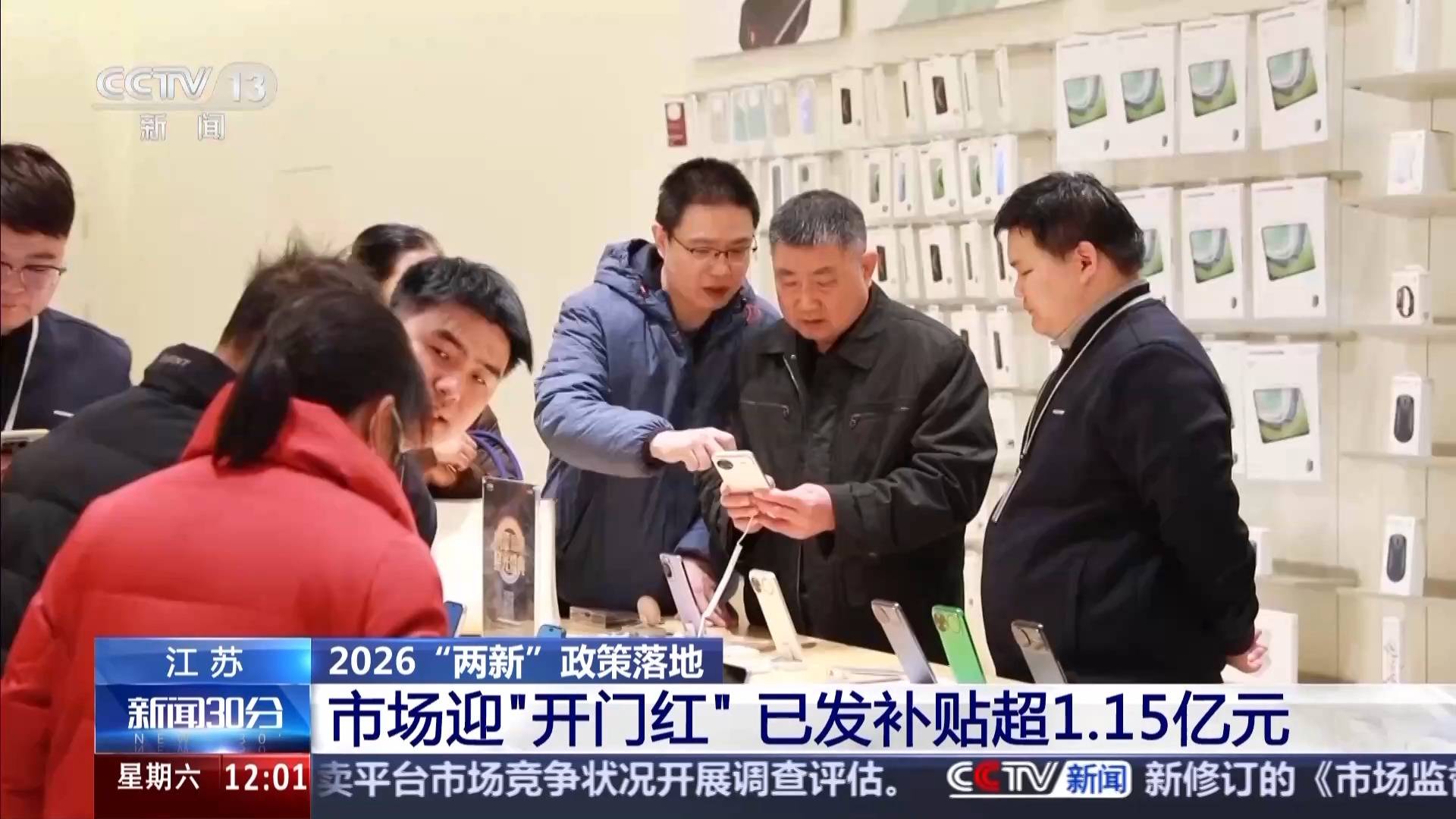
Group 1 - The new large-scale equipment update and trade-in policy officially launched in 2026, covering multiple sectors including automobiles, home appliances, and digital smart products [1][3] - Since the New Year, various regions have been actively leveraging the new policy to stimulate the consumer market, with smartwatches and smart glasses included in the subsidy range for the first time [1][3] - In Jiangsu, the government has issued over 115 million yuan in subsidies, driving sales to 890 million yuan [3] Group 2 - The trade-in policy has significantly boosted consumer interest in the automotive market, with many residents looking to purchase new energy vehicles due to substantial national subsidies [5] - In Hebei, consumers are actively inquiring about trade-in services as the national subsidy program kicks off [6] - Essential items like air conditioners and refrigerators are seeing high sales volumes, with over 600 units sold on New Year's Day alone, which is more than ten times the usual weekend sales [8]

CES 2026「最烂」产品大赏
机器之心· 2026-01-10 07:00
Core Viewpoint - The article discusses the absurdity of certain AI innovations showcased at CES 2026, highlighting products that have received "worst product" awards due to their impracticality and privacy concerns [2][18][20]. Group 1: Smart Appliances - Samsung's Bespoke AI Family Hub refrigerator won the "worst product" award for its ineffective voice control feature, which fails in noisy environments [2][4][6]. - The refrigerator's additional features, such as food inventory tracking and recommendations, are deemed unnecessary and overly complicated [7][12]. - Other appliances, like the Wan AIChef microwave, are criticized for being over-engineered, offering features that do not enhance basic functionality [14][16]. Group 2: Privacy Concerns - Amazon's Ring doorbell camera received the "worst privacy product" award for its AI features that invade privacy, including facial recognition and third-party app integration [18][19]. - The Merach connected treadmill was criticized for its privacy policy, which does not guarantee the safety of personal data collected during use [20][23]. - The Ami AI companion, designed for emotional interaction, raised concerns about privacy despite having a physical camera cover [24][26]. Group 3: Environmental Issues - The Lollipop Star, a singing lollipop, was awarded the "worst environmental product" for creating non-recyclable electronic waste after a short usage period [34][37]. - Bosch received two "worst product" awards for adding unnecessary subscription services to its coffee machines and complicating maintenance for electric bicycles [38][41]. Group 4: Miscellaneous Innovations - The Glyde smart hair clipper claims to be the first truly intelligent hair clipper, featuring an automatic blade adjustment system based on user movement [42][44].

中国 - 经济-开年靠基建,实体需求弱
2026-01-10 06:38
Summary of Key Points from the Conference Call Industry Overview - The report focuses on the Chinese economy, particularly the infrastructure and consumer sectors, highlighting the current economic conditions and projections for 2026 [2][3][11]. Core Insights and Arguments - **Infrastructure Investment**: - Public infrastructure spending is expected to support a GDP growth of approximately 5% in the first quarter of 2026, driven by early fiscal support and increased local government bond issuance [3][9]. - Central budget investment for infrastructure has been set at 2,950 billion RMB, up from 2,000 billion RMB the previous year [9][12]. - Local government bond issuance plans for the first quarter have increased to 6,650 billion RMB from 4,220 billion RMB in the previous year, indicating a more aggressive approach to funding infrastructure projects [9][12]. - **Weak Consumer Demand**: - Consumer spending remains weak, particularly in the real estate sector, with expectations of further declines in consumption growth due to a lack of strong incentives and ongoing property price declines [3][11][25]. - The core Consumer Price Index (CPI) is expected to remain weak, reflecting insufficient demand in the market [10][11]. - **Government Subsidy Policies**: - The government plans to maintain a similar scale of subsidies for consumer goods in 2026, estimated at around 300 billion RMB, but with a smoother distribution throughout the year [3][11][25]. - Changes in subsidy policies include a reduction in the number of categories eligible for subsidies in the home appliance sector, from 12 to 6, and adjustments in the maximum subsidy amounts for vehicles and appliances [25][9]. Additional Important Insights - **Economic Activity Trends**: - Economic activity showed signs of rebound at the end of 2025, but growth is expected to slow down in the second quarter of 2026 due to persistent weaknesses in the housing market and consumer spending [3][11]. - The report indicates that inflationary pressures are expected to remain subdued, with a cautious outlook on recent CPI and PPI data reflecting ongoing supply-demand imbalances [10][11]. - **Future Monitoring Points**: - Key areas to watch in the coming months include the pace of local government bond issuance for infrastructure, the implementation of subsidy policies, and the performance of consumer spending during the Spring Festival [11][12]. This summary encapsulates the critical aspects of the conference call, providing insights into the current state and future outlook of the Chinese economy, particularly in infrastructure investment and consumer behavior.
2025年深圳以旧换新“成绩单”出炉!
Shen Zhen Shang Bao· 2026-01-10 04:23
Core Insights - In 2025, Shenzhen's old-for-new consumption policy achieved significant results, with a total sales volume of 87.5 billion yuan, benefiting 17.8 million consumers [1] Group 1: Policy Implementation - Shenzhen fully promoted the old-for-new program for automobiles, smart home appliances, home renovation, and electric bicycles in 2025 [1] - The program included the replacement of 190,000 cars, 7.97 million home appliances, 4.32 million digital products, 5.23 million home renovation items, and 90,000 electric bicycles [1] Group 2: Market Participation - Over 1,000 offline merchants participated in the old-for-new program in the home appliance, digital, and home renovation sectors, with more than 11,000 stores involved [1] - The policy also extended to cover residents from Hong Kong, Macau, Taiwan, and foreign nationals, with over 20,000 individuals benefiting from subsidies [1] Group 3: Market Response - The new consumption policy was launched on January 1, 2026, covering automobiles, six categories of home appliances, and four categories of digital products, providing substantial discounts to citizens [1] - The market response was rapid, with some stores experiencing a more than 150% increase in foot traffic and over 200% increase in transaction rates during the New Year period compared to the previous week [1]
政府补、企业让,百姓乐享“焕”新!“真金白银”实惠助推跨场景消费再掀热潮
Yang Shi Wang· 2026-01-10 04:09
Core Viewpoint - The implementation of the "old-for-new" policy in Anhui has sparked a consumption boom across various sectors, including automobiles, home appliances, and digital products, providing consumers with significant savings [1] Group 1: Policy Impact - The "old-for-new" policy has led to a surge in consumer activity, with many residents actively seeking to replace old vehicles and appliances [1][11] - The policy has resulted in a total sales volume of 3.92 trillion yuan, benefiting approximately 494 million people [16] - The automotive sector has seen over 18.3 million vehicles replaced under the "old-for-new" initiative, with nearly 60% being new energy vehicles [18][20] Group 2: Consumer Savings - Consumers like Hu Jing have reported savings of over 20,000 yuan when factoring in government subsidies and manufacturer discounts for new energy vehicles [5] - Another consumer, Ou Panpan, anticipates savings of around 15,000 yuan through various subsidies for replacing her old vehicle [9] Group 3: Market Trends - The shift towards new energy vehicles has contributed to a doubling of sales in the domestic market for these vehicles [20] - The trend of replacing old appliances has also seen a significant increase, with over 1.92 billion home appliances replaced [18] - The sales of high-efficiency products in the home appliance sector have reached over 90% [20] Group 4: Economic and Environmental Benefits - The "old-for-new" policy is promoting a green economic transition, with an average increase of over 45% in the recycling of scrapped vehicles and a reduction of approximately 44 million tons of carbon emissions [23] - The policy has also stimulated cross-industry consumption, with areas around appliance replacement stores seeing a more than 30% increase in consumer spending [24]

山西省2026年家电以旧换新、数码和智能产品购新补贴通告
Xin Lang Cai Jing· 2026-01-10 02:12
Core Points - The subsidy program for replacing old appliances and purchasing new digital and smart products in Shanxi Province will start on January 9, 2026 [1] - Consumers who purchased subsidized products in 2025 can continue to enjoy subsidies for similar products in 2026 [1] Appliance Subsidy Details - The subsidy applies to six categories of home appliances: refrigerators (including freezers), washing machines (including washer-dryer combos), televisions, air conditioners (including home central air conditioning and air source heat pumps), water heaters, and computers (including desktops and laptops, excluding self-assembled compatible machines) [1] - The subsidy standard is set at 15% of the final sales price after all discounts, with a maximum subsidy of 1500 yuan per appliance [1] Digital and Smart Product Subsidy Details - The subsidy also covers four categories of digital and smart products: mobile phones, tablets (including smart education tablets), smartwatches (and bands), and smart glasses (including AR/VR headsets), with a sales price limit of 6000 yuan per item [1] - Each consumer can receive a subsidy for one item per category during the policy execution period, with a maximum subsidy of 500 yuan per digital and smart product [1]
港股IPO放量的影响与高效打新策略-华泰证券
Sou Hu Cai Jing· 2026-01-10 01:35
Group 1 - The Hong Kong IPO market has significantly rebounded in 2025, with 99 companies listed by December 12, raising over 250 billion HKD, accounting for 67% of the total fundraising for Chinese stocks, marking a 10-year high [1][18][20] - The IPO success rate in Hong Kong reached 73% in 2025, with an apparent return rate of 34%, both significantly higher than previous years, although the average one-hand winning rate dropped to 20%, the lowest in nearly a decade [1][20][22] - Looking ahead to 2026, the IPO financing in Hong Kong is expected to remain active, with 314 listing applications currently in processing, and the Hang Seng Index having increased by over 30% in 2025, which historically correlates with a more than 30% explanation of the following year's IPO activity [1][23][28] Group 2 - Key characteristics of the Hong Kong IPO market include a low listing rate of 37% since 2016 despite the registration system, no market capitalization requirements for IPO participation, and a significantly higher winning rate compared to A-shares [2][41][45] - The relationship between primary market financing and secondary market performance is weakly positive, driven by common factors such as a weak US dollar and low Hibor rates, with IPO financing typically representing a small proportion of market capitalization and trading volume, limiting the "liquidity extraction effect" [2][8][72] - Historical data shows that large IPOs tend to have a 56% probability of strengthening the Hang Seng Index post-listing, with consumer discretionary and technology sector IPOs providing some uplift to their respective sectors [9][77][79] Group 3 - A multi-dimensional screening model for selecting IPOs can enhance returns, with a scoring system based on market sentiment, company fundamentals, and issuance characteristics, indicating that selecting stocks with scores above 2.5 can improve returns by approximately 15 percentage points [10][31][41] - The performance of IPOs varies significantly across sectors, with consumer goods, non-ferrous metals, and pharmaceuticals showing strong performance, while sectors like home appliances and oil and petrochemicals lag behind [10][49]


扩内需促消费政策显效 2025年物价呈温和回升态势
Shang Hai Zheng Quan Bao· 2026-01-09 18:39
Group 1 - The core viewpoint of the articles indicates that the Consumer Price Index (CPI) has shown a moderate recovery, with a year-on-year increase of 0.8% in December 2025, marking the highest level since March 2023 [2][6][7] - The increase in CPI is significantly driven by food prices, particularly fresh vegetables and fruits, which saw year-on-year price increases of 18.2% and 4.4%, respectively [2][3] - The Producer Price Index (PPI) has shown a narrowing year-on-year decline of 1.9% in December, indicating positive changes in certain industries due to improved market competition [4][5] Group 2 - The core CPI, excluding food and energy, rose by 1.2%, maintaining a growth rate above 1% for four consecutive months, reflecting a stable recovery in demand [3][6] - The overall price stability in 2025, with CPI remaining flat year-on-year and PPI declining by 2.6%, suggests that market supply and demand relationships are improving [6][7] - Experts predict that in 2026, with more proactive macroeconomic policies, CPI is expected to rise steadily, supported by recovering consumer demand and structural adjustments in the economy [7][8]
2025年宝盈基金旗下4只基金跌超9%?2只基金跌幅达15%
Zhong Guo Jing Ji Wang· 2026-01-09 14:34
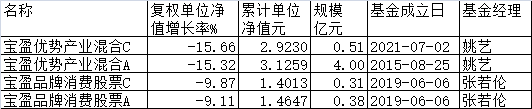
Group 1 - The core point of the article highlights that four funds under Baoying Fund experienced a decline of over 9% in 2025, with specific funds managed by Yao Yi and Zhang Ruolun showing significant losses [1][2] - Baoying Advantage Industry Mixed C and A funds reported declines of 15.66% and 15.32% respectively, with Yao Yi managing these funds since March 2021 after a tenure at Huatai Securities [1][2] - The top ten holdings of Baoying Advantage Industry Mixed fund include companies such as Bai Li Tianheng, Heng Rui Pharmaceutical, and WuXi AppTec, indicating a focus on the pharmaceutical sector [1] Group 2 - Baoying Brand Consumption Stock C and A funds recorded declines of 9.87% and 9.11% respectively, managed by Zhang Ruolun since August 2025 [1][2] - The Baoying Brand Consumption fund maintains a diversified portfolio across major consumer sectors, with top holdings including Kweichow Moutai, Tencent Holdings, and Haidilao [1][2] - The funds have been operational since 2019, with the Brand Consumption funds focusing on sectors like liquor, home appliances, and leisure food [1][2]
美的集团:截至2025年6月30日公司在全球设有63个主要制造基地
Zheng Quan Ri Bao Wang· 2026-01-09 14:13
Core Viewpoint - Midea Group is a globally operating enterprise with manufacturing bases both domestically and internationally, indicating a strong global presence and operational strategy [1] Group 1 - As of June 30, 2025, Midea Group will have a total of 63 major manufacturing bases worldwide [1] - Out of the 63 manufacturing bases, 41 will be located overseas, highlighting the company's significant international footprint [1]
