AI

Search documents
市场增量流动性持续注入 A股新稳态有望进一步确立
Shang Hai Zheng Quan Bao· 2025-08-17 23:56
Market Overview - The A-share market has seen increased activity, with the ChiNext Index rising by 8.58% in a week and the Shanghai Composite Index up by 1.7%, surpassing 3700 points for the first time in nearly four years [1][2] - Since April, the A-share market has entered a four-month trend, with institutions predicting that the short-term sentiment will remain strong due to the accumulation of profit-making effects [1][2] Liquidity Trends - Recent data indicates a positive trend in A-share market liquidity, with daily trading volumes exceeding 2 trillion yuan for three consecutive days [2] - The margin trading balance has also returned to the 2 trillion yuan mark, reflecting increased investor participation [2] - In July, new A-share accounts opened on the Shanghai Stock Exchange reached 1.9636 million, a 19% month-on-month increase and a 71% year-on-year increase, indicating a shift of household wealth towards financial assets [2] External Influences - A-shares are seen as attractive to foreign investors, especially in the context of non-USD assets outperforming USD assets [3] - The narrowing of the China-US interest rate differential is expected to facilitate capital inflows into the Chinese market, providing further monetary policy space [3] Market Characteristics - The current market is characterized by a steady upward trend, supported by capital market reforms aimed at increasing investor returns [4] - The market is experiencing a "healthy" upward trend, with volatility decreasing and many sectors remaining at moderate levels of crowding [4] Investment Focus - Short-term investment recommendations include focusing on sectors with strong industrial trends such as innovative pharmaceuticals, resources, communications, and gaming [5] - Long-term investment should consider industries with sustainable pricing power, including rare earths, cobalt, phosphorous chemicals, pesticides, fluorochemicals, and photovoltaic inverters [5] Foreign Investment Preferences - If the Federal Reserve lowers interest rates in the second half of the year, foreign investment is expected to flow into the Chinese market, with a focus on industries with stable performance and sustainability [6] - Key sectors for foreign investment include innovative pharmaceuticals, leading internet companies in Hong Kong, the Nvidia supply chain, and new energy sectors [6]
天风证券:A股破新高后资金加速进场 关注科技、消费和红利三条主线
智通财经网· 2025-08-17 23:56
Core Viewpoint - The report from Tianfeng Securities indicates that after the market reached new highs, there is an accelerated entry of sidelined funds, emphasizing a cautious and steady approach to investment [1][3]. Investment Themes - Investment themes can be categorized into three main directions: 1) Breakthroughs in Deepseek and leadership in open-source technology AI+ 2) Valuation recovery in consumer stocks and gradual recovery in consumer segmentation 3) Continued rise of undervalued dividends [1][3]. Market Dynamics - The report analyzes the logic behind the A-share market's volume increase and new highs, noting that weak returns in the real economy may lead private sector asset allocation to shift towards financial assets. Historical patterns show that during previous bull markets, non-bank deposits significantly increased when real estate and economic returns were weak [1][2]. Consumer Sector Insights - The core factor for investment in the consumer sector is valuation. Given the current low valuations, declining interest rates, and policy catalysts, the consumer recovery cycle is expected to gain momentum. Being overly pessimistic about future consumer performance may be excessively conservative [1][3]. International Context - The report highlights international developments, including the U.S. core CPI growth exceeding expectations, with July's core CPI year-on-year at 3.1%, up from a previous 2.9% [2].

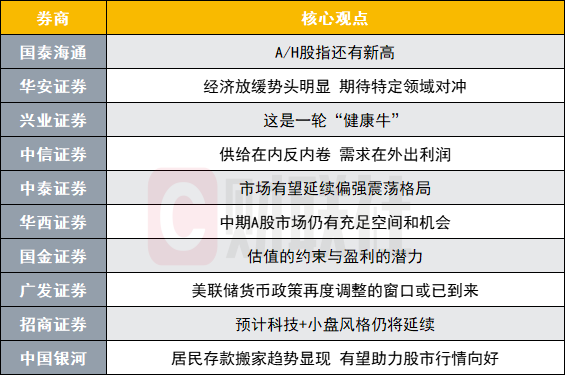
【十大券商一周策略】这是一轮“健康牛”!A股仍有充足空间和机会
券商中国· 2025-08-17 15:05
Group 1 - The core viewpoint is that the combination of "anti-involution" and overseas profit-seeking strategies may provide significant investment clues, particularly in industries like rare earths, cobalt, phosphate fertilizers, and refrigerants, which have seen profit contributions surge due to export controls or quotas [2] - China's manufacturing value-added share globally has exceeded 30%, but profit margins are declining year by year, indicating that the focus should shift from market share to profit realization [2] - Short-term investment recommendations include focusing on innovative pharmaceuticals, resources, communications, military industry, and gaming sectors while avoiding excessive high-low trading [2] Group 2 - The current market is experiencing a "healthy bull" phase, driven by policy support and the emergence of new growth momentum, with a need for a "slow bull" market to stabilize [5] - The market is in the second phase of a bull market, characterized by risk preference recovery, which is expected to lead to a rebalancing of valuation [7] - Key sectors to focus on include AI, pharmaceuticals, non-bank financials, semiconductors, and military industry, as they present significant investment opportunities [7][9] Group 3 - The market is expected to continue favoring technology and small-cap styles, with increasing participation from retail investors and private equity funds [8] - There is a strong potential for profit recovery in cyclical assets, particularly in upstream resource products and capital goods, as well as in sectors benefiting from liquidity easing [12] - The focus on structural rotation among sectors is crucial, with an emphasis on maintaining a diversified portfolio across various industries [10][12]


牛市的再思考
Tianfeng Securities· 2025-08-17 13:45
Group 1: Market Insights - The report indicates that the upcoming bull market is influenced by weak returns in the real economy, leading private sector investments to shift towards financial assets, particularly during periods of low returns in real estate and the economy [1][10][11] - Historical data shows that during previous major bull markets, such as 2006-2007 and 2013-2015, the proportion of non-bank deposits significantly increased, indicating a shift in asset allocation towards financial markets [11][15] - The report highlights that the current economic environment, characterized by low returns in the real estate market and a decline in the Producer Price Index (PPI), suggests that the return rates in the real economy remain insufficient [18][14] Group 2: Economic Data Trends - Recent economic data from July shows a decline in growth rates across three major indicators: industrial production, investment, and retail sales, all falling below expectations [2][36] - Industrial production year-on-year growth was reported at 5.7%, below the expected 5.82%, while retail sales growth was at 3.7%, compared to an expected 4.87% [36] - The report notes that the financing pulse continues to recover, with new RMB loans turning negative year-on-year, indicating a tightening in credit conditions [2][36] Group 3: International Economic Context - The report tracks international developments, noting that the U.S. core CPI growth in July exceeded market expectations, which may influence global economic conditions [3][20] - The geopolitical landscape, including the ongoing Russia-Ukraine conflict and tensions in the Middle East, is also highlighted as a factor that could impact market stability and investor sentiment [3][20] Group 4: Industry Allocation Recommendations - The report suggests focusing on three main investment themes: advancements in technology AI, recovery in consumer stock valuations, and the resurgence of undervalued dividend stocks [4][10] - It emphasizes the importance of a cautious approach in the current market environment, particularly in the context of the ongoing bull market and the influx of capital from previously sidelined investors [4][10] - The report also points out that the performance of undervalued dividend stocks is closely tied to the progress of the AI industry trend [4][10]
A股分析师前瞻:风险偏好明显提升,中期A股仍有充足空间和机会
Xuan Gu Bao· 2025-08-17 13:37
Group 1 - The core viewpoint is that the current A-share market is in the second phase of a bull market, characterized by risk preference recovery, and any market pullback presents a buying opportunity [2][4] - The second phase of a bull market typically sees funds from other asset classes flowing into the stock market, indicating a rebalancing of valuations between stocks and bonds [2][4] - The overall market sentiment is improving, with significant capital inflows from institutional channels such as insurance and bank wealth management products [2][4] Group 2 - The market is expected to have ample space and opportunities in the medium term, with indicators showing that household deposits are still in the early stages of moving into the stock market [2][4] - The total market value of A-shares relative to household deposits is at a historically low level, suggesting potential for further capital inflow as market vitality increases [2][4] - The focus for investment should include sectors like AI, pharmaceuticals, non-bank financials, and military industries, which are expected to benefit from the current market dynamics [3][4] Group 3 - The "healthy bull" market trend is characterized by a stable upward movement of indices and a decline in volatility, indicating a positive market environment [5] - Key sectors to watch include brokerage firms, AI expansion, military, and "anti-involution" strategies, which are expected to perform well in the current market context [3][5] - The market is experiencing a shift towards larger-cap stocks driven by profitability, as smaller-cap stocks face challenges in the current economic environment [5][6]
A股股指还有新高?投资主线有哪些?十大券商策略来了
Xin Lang Cai Jing· 2025-08-17 13:10
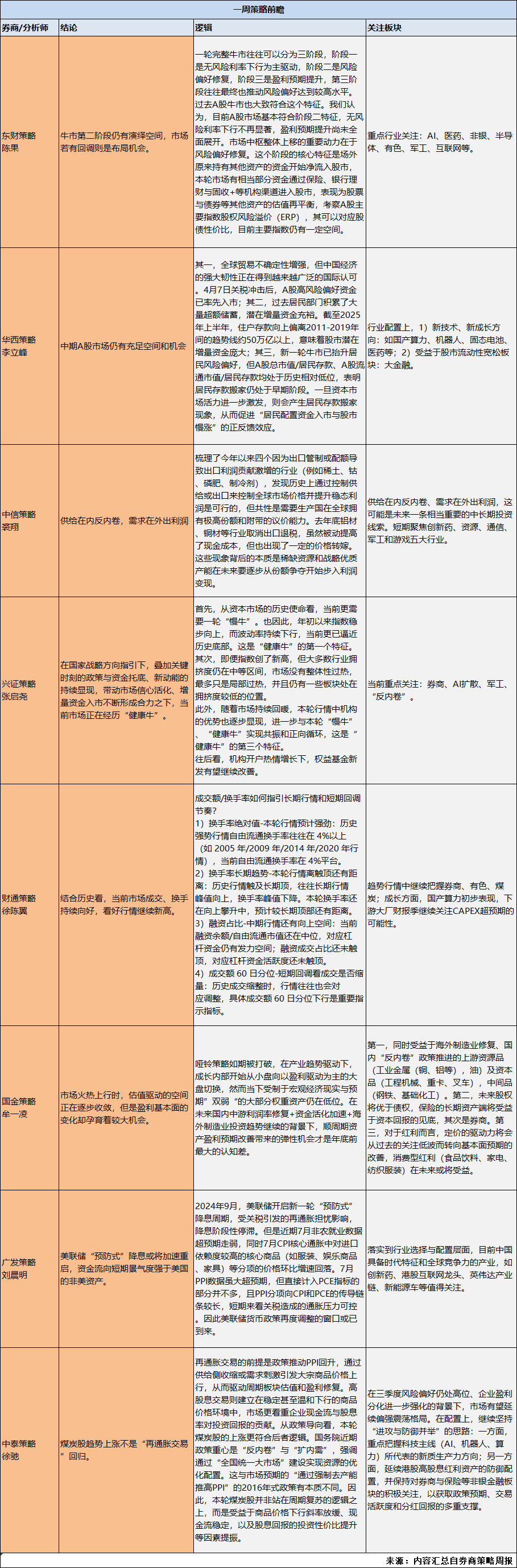
Core Viewpoints - The latest strategies from top brokerages indicate a bullish outlook for the A/H stock indices, with expectations for new highs driven by changes in valuation logic and capital market reforms [1][4][7] - Economic slowdown is evident, particularly in investment and consumption, prompting expectations for policy interventions to support specific sectors [2][11] - A "healthy bull market" is emerging, characterized by steady index growth and low volatility, with opportunities across various sectors [4][6] Group 1: Market Outlook - The A/H stock indices are expected to reach new highs, supported by a shift in valuation logic and capital market reforms aimed at improving investor returns [1] - The market is anticipated to maintain a strong oscillating pattern, with coal stocks offering attractive dividend yields, making them appealing in a low-risk environment [6] - The mid-term outlook for the A-share market remains positive, with significant potential for growth driven by strong household savings and a shift in investment preferences [7][13] Group 2: Investment Themes - Key investment themes include high-growth technology sectors such as AI, robotics, and military industries, which are expected to outperform in the current market environment [3][10] - Areas with strong performance support or exceeding earnings expectations include rare earths, precious metals, and engineering machinery [3] - The focus on sectors benefiting from liquidity easing, such as large financial institutions and high-dividend stocks, is expected to continue [8][12] Group 3: Economic Indicators - Recent economic data shows a noticeable slowdown, particularly in investment and consumption, with July GDP growth estimated at around 4.98%, down from the previous quarter [2] - The trend of "deposit migration" among residents is becoming apparent, indicating a shift towards equity investments, which could positively impact the stock market [13][14] - The financial sector is seeing increased inflows, with non-bank deposits significantly rising, suggesting a growing appetite for market participation [11][13]




兴证策略:这是一轮“健康牛”
Sou Hu Cai Jing· 2025-08-17 12:08
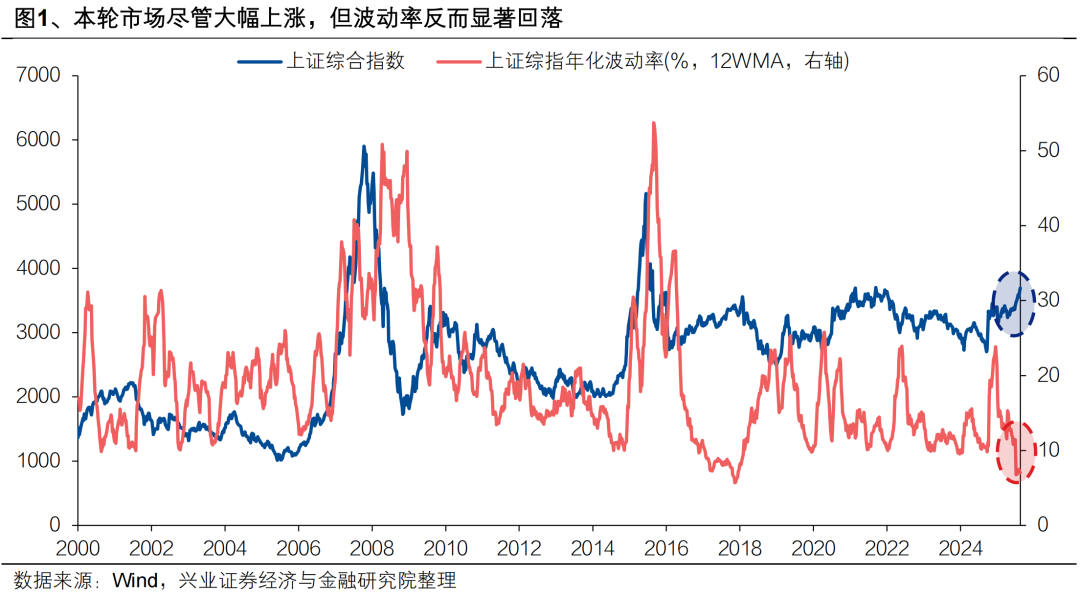
Core Viewpoint - The current market is experiencing a "healthy bull" phase, characterized by steady upward movement and a gradual increase in investor confidence, supported by government policies and capital market strategies [1][2][5]. Group 1: Market Characteristics - The current market is defined as a "slow bull," with indices rising steadily and volatility decreasing, indicating a healthy market environment [2]. - Despite new highs in indices, most industries remain at moderate levels of crowding, suggesting no overall overheating in the market, allowing for a "multi-point blooming" phenomenon where various sectors and themes take turns in attracting investment [5]. - The market is witnessing a rotation of opportunities across different sectors, driven by the release of new economic trends and the transition from old to new growth drivers [5][25]. Group 2: Institutional Participation - Institutions are becoming the main source of incremental capital in the current market, with a significant increase in new institutional accounts since June, reaching historical highs [11][14]. - The performance of actively managed funds has improved, with average returns for stock and mixed funds rising by 20.62% and 20.48% respectively since the beginning of the year [7]. - The emergence of "doubling funds" indicates strong institutional investment capabilities, with historical patterns suggesting that such funds often lead to better performance in the following year [7]. Group 3: Sector Focus - The brokerage sector is highlighted as a direct vehicle for the "healthy bull," with expectations of increased trading activity and potential for excess returns as market conditions improve [15]. - The AI sector has emerged as a strong market leader, showing no signs of overheating despite its rapid ascent, indicating a sustainable growth trajectory [17][25]. - The military industry is expected to benefit from upcoming events and strategic planning, with historical precedents suggesting significant price movements in response to military parades and policy meetings [31][34]. Group 4: Long-term Trends - The "anti-involution" theme is identified as a long-term focus for the market, with policies aimed at breaking negative cycles and promoting healthy competition across various industries [41][43]. - Key industries such as steel, glass fiber, and new energy chains are positioned to benefit from anti-involution policies, with strong participation intentions and potential for positive changes in profitability [43].
兴业证券:这是一轮“健康牛”
智通财经网· 2025-08-17 10:46
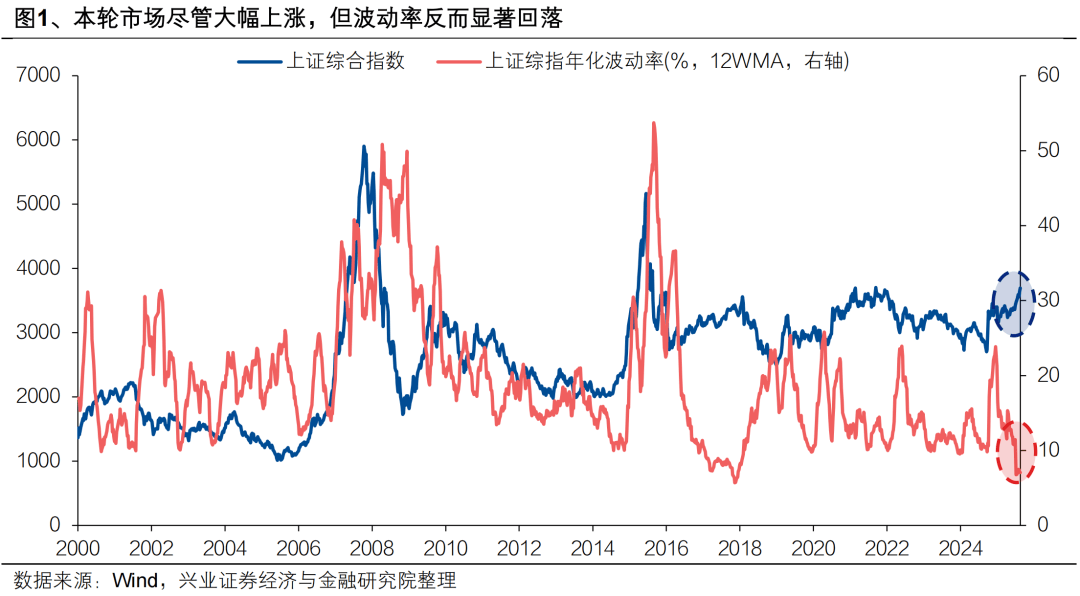
Group 1 - The current market is experiencing a "healthy bull" phase, characterized by a steady upward trend in A-shares and a consensus on the bull market's continuation [1][2] - The market is expected to serve the real economy, focusing on high-quality development and wealth effect to boost market confidence, indicating a gradual and stable market rather than volatile fluctuations [2][5] - Despite new index highs, most industries remain at moderate levels of crowding, allowing for a "multi-point blooming" market where various sectors and themes take turns in gaining attention [5][7] Group 2 - Institutional advantages are becoming more apparent as the market warms up, with active public funds showing significant performance gains, indicating a potential "institutional bull" market [7][11] - The number of new institutional accounts has surged to historical highs, suggesting a positive correlation with the issuance of equity funds [11][14] Group 3 - The brokerage sector is highlighted as a direct vehicle for the "healthy bull," with expected strong performance due to market activity and relatively low current valuations [15][16] - The AI sector has emerged as a strong market leader, showing no signs of overheating despite previous rapid gains, indicating a sustainable upward trend [18][24] Group 4 - The military industry is poised for growth due to upcoming events like military parades and the "Five-Year Plan" meeting, which historically catalyze stock performance [30][33] - The military sector is expected to benefit from both domestic strategic planning and increased global competitiveness, with significant order releases anticipated [36][37][38] Group 5 - The "anti-involution" theme is becoming a long-term focus, with policies aimed at breaking negative cycles and improving industry profitability, particularly in sectors like steel and glass [40][42] - Key industries involved in "anti-involution" are currently at historical lows in profitability and capital expenditure, indicating a strong willingness to participate in positive changes [42]

「陪伴」不是个好赛道,但却是个至关重要的「技术栈」
Founder Park· 2025-08-17 01:33
Core Viewpoint - The article argues that while the demand for "companionship" in AI exists, it is not a strong enough need to support a standalone market, as users are likely to seek alternative, cheaper distractions [4][6]. Group 1: Challenges of the Companionship Market - The companionship market faces a significant challenge with user retention, as initial novelty quickly fades, leading to steep declines in user engagement and fragile business models [4][6]. - Companionship is a non-essential need that can easily be substituted by various entertainment options, such as short videos or games, which are often free or low-cost [6]. Group 2: Technology Stack vs. Standalone Products - The article emphasizes that while companionship as a standalone product may not succeed, the underlying technology of "effective proactivity" is crucial and will become a foundational capability for future products [10][11]. - The comparison is made to GPS technology, which initially struggled as a standalone product but later became integral to many applications, highlighting that companionship technology can similarly enhance existing products rather than exist independently [8][9][10]. Group 3: Future Implications - The ability to establish a proactive relationship with users, where products can anticipate needs and deliver value, is seen as a transformative capability in the AI era [11][12]. - Companies should focus on integrating companionship as a technological capability within existing solutions to enhance user engagement and build long-term relationships, rather than trying to market it as a separate product [12].

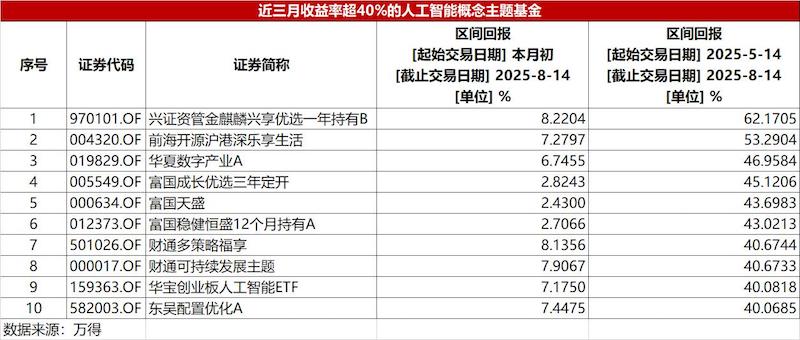
沪指创近四年新高,5只基金近乎翻倍,头部“押注”这一赛道
Hua Xia Shi Bao· 2025-08-16 14:48
Market Performance - The Shanghai Composite Index (SSE) broke through the 3700-point mark, reaching a nearly four-year high, with a closing value of 3696.77 on August 15 [1][2] - Since hitting a low of 3040 points on April 7, the SSE has seen a rise of over 10%, and a cumulative increase of 34% since the "924 market" last year [1][2] Fund Performance - Approximately 96.6% of the 12,963 public funds recorded positive returns, highlighting a strong profit effect in the market [2][3] - Five funds have nearly doubled their net value, with 92 funds showing a net value increase of over 50% [3][4] - The top-performing funds are heavily focused on the AI computing power sector, with significant returns from funds like E Fund Rui Xiang and Yongying Technology [3][4] AI Sector Insights - The AI-related industry chain has become a core market theme, with significant performance in sectors such as communications (32.88% increase), electronics (17% increase), media (16.38% increase), and computers (10.8% increase) over the past three months [4][7] - The demand for AI hardware is expected to grow due to model iterations, capital expenditure increases, and policy relaxations, indicating a favorable outlook for AI hardware [1][7] Future AI Applications - AI is anticipated to revolutionize productivity across various sectors, with applications in healthcare, finance, education, and manufacturing [8][9] - The ongoing advancements in AI technology, including reduced training costs and enhanced capabilities, are expected to expand the potential applications of AI [9]