
智能手机

Search documents
全文|小米Q3业绩会实录:本周应可提前完成“超35万台汽车交付”的目标
Xin Lang Cai Jing· 2025-11-19 00:48
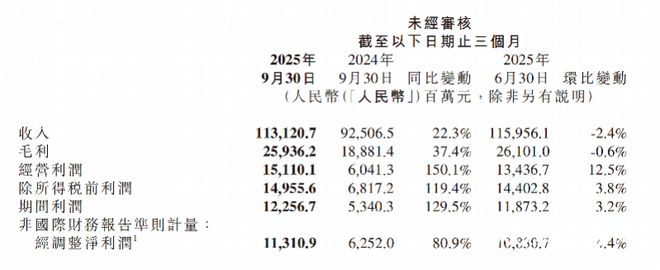
Core Viewpoint - Xiaomi Group reported a record high revenue of 113.1 billion yuan for Q3 2025, representing a year-on-year growth of 22.3%, and a net profit of 12.3 billion yuan, up 129.5% year-on-year [1] Financial Performance - Total revenue reached 113.1 billion yuan, a 22.3% increase year-on-year [1] - Net profit was 12.3 billion yuan, reflecting a 129.5% year-on-year growth [1] - Adjusted net profit was 11.3 billion yuan, with an 80.9% year-on-year increase [1] Mobile Business Insights - The rising memory prices are expected to have a long-term impact on mobile phone gross margins, driven by increased demand from AI high-performance computing [2][3] - The current memory cost cycle is characterized by a significant demand increase while supply remains insufficient, leading to a prolonged period of rising costs [3] - Xiaomi's strategy includes potential price increases, cost absorption, and product structure optimization to mitigate the impact of rising memory costs on gross margins [4] Automotive Business Developments - Xiaomi's automotive delivery volume has been steadily increasing, with over 400,000 units delivered in 18 months since product launch [5][6] - The delivery cycle for models like the SU7 Pro and SU7 Pro Max has been significantly shortened due to efficiency improvements [6] - The company aims to exceed its target of 350,000 vehicle deliveries for the year, indicating strong operational capabilities [6] IoT and AI Integration - Xiaomi's IoT connections have surpassed 1 billion, with a year-on-year growth rate of over 20% [10] - The introduction of the Pengpai OS aims to unify various systems and enhance the user experience through deep integration of AI and IoT devices [10] - The Miloco initiative represents a significant step towards integrating AI capabilities into smart home applications, moving away from traditional coding limitations [10][11] Supply Chain and Inventory Management - The company maintains a strong relationship with key memory suppliers, ensuring a good supply rate and prioritization in the domestic market [20] - Xiaomi's inventory management strategy involves reducing inventory during cost declines and increasing it during cost rises, indicating proactive supply chain management [20] Retail Expansion Strategy - Xiaomi aims to expand its retail presence, with a target of 30,000 stores in China, having already opened around 20,000 [27][28] - The company plans to focus on operational efficiency in existing stores before accelerating new store openings [28] - The overseas retail strategy is expected to replicate the success of domestic operations, with significant growth potential in various international markets [29]
苹果(AAPL.US)在华销量单月飙升37%!果链有望迎来新一轮景气周期(附概念股)
Zhi Tong Cai Jing· 2025-11-19 00:21
Core Insights - Apple's iPhone 17 series has achieved a strong start in China, capturing 25% of the smartphone market share in October, with a year-on-year sales increase of 37% [1] - The overall smartphone sales in China grew by 8% in October, driven by Apple's performance and local brands [1] - The iPhone 17 series is expected to continue its strong sales momentum, especially with the upcoming holiday season [1] Production and Supply Chain - Apple has planned sufficient production capacity for the iPhone 17 series, with an estimated production of 54 million units in Q3 and an increase to 79 million units in Q4, totaling 133 million units for the year [2] - The production assembly of the iPhone 17 series is split between China (84%) and India (14%), highlighting China's critical role in the supply chain [2] - Over 50% of the 187 core companies in Apple's 2024 supply chain list are based in China, indicating the importance of Chinese suppliers [2] Financial Performance - Apple's Q4 2025 revenue reached $102.466 billion, an 8% increase from $94.930 billion in the same period last year, with net profit soaring by 86% to $27.466 billion [2] - CEO Tim Cook anticipates record revenue for the quarter ending in December, marking the best performance since the iPhone's launch [2] Market Performance - The iPhone 17 series has also seen a 14% increase in sales in the U.S. market compared to the previous generation within the first ten days of launch [3] - The base model of the iPhone 17 has become a significant growth driver in China, with sales nearly doubling compared to the previous model [3] - The success of the iPhone 17 series is expected to lead to a new cycle of growth for Apple's supply chain in China, with more new products anticipated in 2026-2027 [3] Related Stocks - Lens Technology (蓝思科技) has been rated "outperform" with a target price of HKD 36.5, benefiting from the innovation cycle of major clients [4] - GoerTek (高伟电子) derives 98.1% of its revenue from Apple, showcasing strong customer loyalty and collaboration within the supply chain [4] - BYD Electronics (比亚迪电子) is positioned to benefit from increased production for Apple products, including potential battery supply [4] Future Outlook - Companies like AAC Technologies (瑞声科技) and Sunny Optical (舜宇光学科技) are expected to see profit margin improvements and increased demand for components due to the new iPhone series and a recovering Android market [5]

港股概念追踪 | 苹果(AAPL.US)在华销量单月飙升37%!果链有望迎来新一轮景气周期(附概念股)
智通财经网· 2025-11-18 23:33
Core Insights - Apple's iPhone 17 series has achieved significant sales success in China, capturing 25% of the smartphone market share in October, with a year-on-year sales increase of 37% [1] - The overall smartphone market in China saw an 8% year-on-year growth in October, primarily driven by Apple and local brands [1] - The iPhone 17 series is expected to continue its strong performance, with production capacity planned at 54 million units for Q3 and an increase to 79 million units for Q4 [2] Industry Performance - The iPhone 17 series has contributed to a positive outlook for Apple's revenue, with CEO Tim Cook anticipating record earnings for the quarter ending in December [3] - Apple's Q4 2023 revenue reached $102.47 billion, an 8% increase from the previous year, with net profit soaring by 86% to $27.47 billion [3] - The iPhone 17 series has also seen a 14% increase in sales in the U.S. market compared to the previous generation within the first ten days of launch [3] Supply Chain Dynamics - Apple's supply chain for the iPhone 17 series is heavily centered in China, with 84% of production occurring there, while India accounts for 14% [2] - The robust performance of the iPhone 17 series is expected to benefit the entire supply chain, with companies like Lens Technology and AAC Technologies poised for growth due to their strong ties with Apple [5][6] - The successful launch of the iPhone 17 series is anticipated to initiate a new cycle of growth for the supply chain in China, as Apple plans to introduce more products in 2026-2027 [4]
夸克将发布全新AI浏览器;微博发布首个自研开源大模型|数智早参
Mei Ri Jing Ji Xin Wen· 2025-11-18 23:16
Group 1 - Quark will launch a new AI browser that integrates with the Qianwen app, marking a strategic collaboration aimed at reshaping the internet access logic [1] - The new AI browser is expected to undergo a significant upgrade on the PC side, enhancing user experience and privacy considerations [1] Group 2 - Weibo has released its first self-developed open-source large model, VibeThinker, which focuses on enhancing capabilities in complex mathematics and competitive programming [2] - The current version of VibeThinker is experimental and not optimized for daily chat interactions, indicating its targeted application in high-intelligence scenarios [2] Group 3 - Several smartphone manufacturers, including Xiaomi, OPPO, and vivo, have paused their procurement of storage chips due to low inventory levels and rising prices from suppliers [3] - The inventory for some manufacturers is reported to be below two months, with certain DRAM stocks dropping to less than three weeks, prompting a reevaluation of procurement strategies [3]

陆家嘴财经早餐2025年11月19日星期三
Wind万得· 2025-11-18 22:52
Group 1 - The Chinese Ministry of Foreign Affairs expressed dissatisfaction with the recent consultations with Japan, emphasizing the need for Japan to retract erroneous statements and provide a clear explanation to the Chinese people [2] - The U.S. Department of Commerce has modified transparency rules for patent invalidation applications, particularly scrutinizing applications from foreign companies, which has drawn criticism from China for being discriminatory [2] Group 2 - Chinese Premier Li Qiang called for a reduction in trade barriers and emphasized the importance of free trade during the Shanghai Cooperation Organization meeting [3] - Li Qiang reaffirmed China's commitment to strengthening cooperation with Russia and enhancing bilateral relations [3] - Hainan Free Trade Port is set to commence full island closure operations, with necessary preparations completed [3] Group 3 - The Ministry of Industry and Information Technology released guidelines for building high-standard digital parks, aiming to establish around 200 such parks by 2027 [4] - The National Bureau of Statistics reported that the unemployment rate for urban youth aged 16-24 reached 17.3% in October [4] - The Ministry of Finance issued a statement warning against fraudulent information regarding policy benefits in the Guangdong-Hong Kong-Macao Greater Bay Area [4] Group 4 - The A-share market experienced a decline, with over 4,100 stocks falling, particularly in the lithium battery sector [5] - The Hong Kong Hang Seng Index closed down 1.72%, with significant declines in new energy vehicle stocks [6] - UBS's research team projected a positive outlook for the Chinese stock market in 2026, driven by corporate profit improvements [6] Group 5 - Xiaomi reported a third-quarter revenue of 113.12 billion yuan, a year-on-year increase of 22.3%, with a record net profit growth of 80.9% [6] - Baidu's third-quarter revenue decreased by 7% to 31.2 billion yuan, with a net loss of 11.23 billion yuan [7] - Weibo's third-quarter net income was approximately $442 million, a decrease of 4.77% year-on-year [7] Group 6 - The domestic bond market showed narrow fluctuations, with the central bank conducting a reverse repurchase operation of 407.5 billion yuan [17] - U.S. Treasury yields collectively fell, with the 10-year yield at 4.113% [17] - Japan's long-term government bonds faced increased selling pressure, with the 40-year yield reaching its highest level since 2007 [17] Group 7 - The carbon lithium futures trading fee will be adjusted starting November 20, with a new standard set at 0.0012% of the transaction amount [18] - International precious metal futures generally declined, with COMEX gold futures down 0.17% [18] - Brent crude oil futures rose by 0.93% amid supply concerns following an attack on a Russian refinery [18]


小米汽车业务首次单季盈利 预计本周完成全年交付目标
Zheng Quan Shi Bao· 2025-11-18 18:11
Core Insights - Xiaomi achieved its first quarterly profit in the automotive sector, amounting to approximately 700 million yuan [1] - The company reported a third-quarter revenue of 113.1 billion yuan, a year-on-year increase of 22.3%, marking the fourth consecutive quarter of exceeding 100 billion yuan [1] - Adjusted net profit for the third quarter reached 11.3 billion yuan, a significant year-on-year increase of 80.9%, setting a new historical high [1] Financial Performance - Total revenue for the first three quarters reached 340.4 billion yuan, nearing last year's total, with adjusted net profit of 32.8 billion yuan, surpassing last year's total [1] - The automotive and AI innovation segment generated revenue of 29 billion yuan, a year-on-year increase of over 199%, with smart electric vehicle revenue at 28.3 billion yuan [1] - The smartphone and AIoT segment generated revenue of 84.1 billion yuan, with smartphone revenue at 46 billion yuan, showing continuous growth for nine consecutive quarters [2] Automotive Business - Xiaomi's automotive division achieved a quarterly operating profit of 700 million yuan for the first time [1] - The company expects to meet its annual delivery target of 350,000 vehicles this week, with over 100,000 vehicles delivered in the third quarter and cumulative deliveries exceeding 260,000 for the year [1] Market Position - Xiaomi's global smartphone shipments reached 43.3 million units in the third quarter, marking nine consecutive quarters of year-on-year growth [2] - In the domestic market, Xiaomi maintained a top-two position in smartphone sales for six consecutive quarters, while ranking in the top three in 57 countries and regions internationally [2] IoT and AIoT Growth - The IoT and consumer products segment reported revenue of 27.6 billion yuan, a year-on-year increase of 5.6% [2] - As of September 30, the number of connected IoT devices on Xiaomi's AIoT platform surpassed 1 billion, a historical high, with users connecting five or more devices increasing by 26.1% year-on-year [2] High-End Strategy - Xiaomi is accelerating its high-end strategy across smartphones, automobiles, and major appliances, achieving market share growth even during traditional sales downturns [2] - In the high-end smartphone segment (priced between 4,000 and 6,000 yuan), Xiaomi's market share reached 18.9%, an increase of 5.6 percentage points year-on-year [2] R&D Investment - Xiaomi's R&D investment for the first three quarters totaled 23.5 billion yuan, nearing the full-year target of over 30 billion yuan, with third-quarter investment at 9.1 billion yuan, a year-on-year increase of 52.1% [3] - The company aims to transition from an "internet company" to a "hardcore technology company" through substantial investments in foundational technology [3]
小米今年研发投入将超300亿元
Zheng Quan Ri Bao Zhi Sheng· 2025-11-18 16:13
Core Insights - Xiaomi Group reported a revenue of 113.12 billion yuan for Q3 2025, representing a year-on-year growth of 22.3%, and an adjusted net profit of 11.31 billion yuan, up 80.9% [1] Business Segments Summary - The revenue from the mobile and AIoT business segment was 84.1 billion yuan, showing a year-on-year increase of 1.6%, while the smart electric vehicle and AI innovation business segment generated 29 billion yuan, a significant growth of 199.2% [1] - The smart electric vehicle segment alone contributed 28.3 billion yuan, with other related businesses accounting for 700 million yuan [1] - For the first time, the smart electric vehicle and AI innovation segment achieved a quarterly operating profit of 700 million yuan, with a gross margin increase from 17.1% in Q3 2024 to 25.5% in Q3 2025, attributed to lower core component costs and improved manufacturing efficiency [1] Automotive Business Insights - In Q3, Xiaomi delivered 108,796 new vehicles, bringing the total deliveries for the first three quarters of the year to over 260,000 units, with September and October seeing monthly deliveries exceeding 40,000 units [2] - The gross margin level for Xiaomi's automotive business is considered normal within the industry, particularly following the launch of the higher-priced SUV model YU7, which has positively impacted profitability [2] - The automotive industry benefits from significant economies of scale, meaning that as production and sales increase, the per-vehicle costs decrease, which supports sustained profitability for Xiaomi's automotive segment [2] Smartphone Business Summary - In Q3, Xiaomi's smartphone shipments reached 43.3 million units, a slight increase of 0.5%, primarily driven by growth in overseas markets [3] - Smartphone revenue was 46 billion yuan, reflecting a year-on-year decline of 3.1%, mainly due to a decrease in average selling prices [3] - The gross margin for smartphones fell from 11.5% in Q2 to 11.1% in Q3, impacted by rising core component prices [3] - Xiaomi's R&D investment for the first three quarters reached 23.5 billion yuan, with an expectation to exceed 30 billion yuan for the entire year, and Q3 R&D spending was 9.1 billion yuan, up 52.1% year-on-year [3]

小米汽车首次单季盈利,卢伟冰:即将完成35万台年交付目标
Nan Fang Du Shi Bao· 2025-11-18 16:04
Core Viewpoint - Xiaomi's automotive division has finally turned profitable after more than a year of selling cars, achieving a significant milestone in its business development [1][6]. Financial Performance - In Q3 2025, Xiaomi reported total revenue of RMB 113.1 billion, a year-on-year increase of 22.3% but a quarter-on-quarter decrease of 2.4% [2][4]. - Adjusted net profit for the same period was RMB 11.3 billion, reflecting an 80.9% year-on-year growth and a 4.4% quarter-on-quarter increase [2][3]. - The gross profit margin for the overall business was 22.9%, with a notable increase in operating profit by 150.1% year-on-year [2][3]. Automotive Business - The automotive segment generated RMB 29 billion in revenue, marking a historical high with a year-on-year growth of 199.2%, and accounted for 25.6% of total revenue [6][8]. - For the first time, the automotive division achieved an operating profit of RMB 700 million in Q3 [1][6]. - Xiaomi delivered 108,796 vehicles in Q3, and is on track to meet its annual delivery target of 350,000 vehicles [1][8]. Smartphone and AIoT Business - The smartphone and AIoT segment generated RMB 84.1 billion in revenue, representing 74.4% of total revenue, with a slight year-on-year increase of 1.6% [3][4]. - The gross margin for the smartphone and AIoT business was 22.1%, up 1.3% year-on-year [3][4]. - Xiaomi's smartphone sales ranked second in the domestic market, with a market share of 18.9% in the RMB 4,000-6,000 price range, an increase of 5.6% year-on-year [4][5]. Research and Development - Xiaomi's R&D investment reached RMB 235 billion in the first three quarters, with a record high of 24,871 R&D personnel [8][10]. - The company is focusing on AI development, with significant outputs from its AI team within a year of formation [8][10]. Future Outlook - The company anticipates challenges in 2026, particularly regarding automotive gross margins due to potential changes in tax policies and increased competition in the automotive sector [1][8]. - Xiaomi aims to expand its presence in the high-end smartphone market, particularly in the RMB 6,000+ segment, leveraging the success of its Xiaomi 17 series [5][8].
小米的快车道与岔路口
Bei Jing Shang Bao· 2025-11-18 16:01
Core Insights - Xiaomi reported strong growth in its Q3 2025 earnings, with revenue increasing by 22.3% year-on-year to 113.1 billion yuan and adjusted net profit soaring by 80.9% to 11.3 billion yuan [1] - The company's total revenue for the first three quarters reached 340.4 billion yuan, a 32.5% increase year-on-year, while net profit grew by 73.5% to 32.8 billion yuan [1] - The "smart electric vehicle and AI innovation business" was the standout segment, generating 29 billion yuan in Q3, a staggering 199.2% increase year-on-year, and accounting for 25.6% of total revenue [1] Revenue Breakdown - The "mobile and AIoT" business generated 84.1 billion yuan, making up 74.4% of total revenue, but showed only a slight year-on-year increase of 1.6% due to a decline in smartphone shipments [2] - In contrast, the automotive segment achieved its first quarterly operating profit of 700 million yuan, with a significant contribution from vehicle sales, which surpassed 100,000 units [1][2] - Cumulatively, Xiaomi delivered over 260,000 vehicles in the first three quarters, with a target of 350,000 units for the year [2] Challenges and Public Relations - Despite the strong financial performance, Xiaomi faces challenges including product lawsuits and safety controversies, which have diverted attention from its growth trajectory [3] - Recent incidents, such as the delayed lawsuit regarding the Xiaomi SU7 Ultra and safety concerns following accidents, have raised questions about the company's product safety and public perception [3][4] - The departure of a key public relations executive amid these controversies highlights the need for a robust response strategy to manage public sentiment as the company expands into new markets [4]
小米集团Q3营收1131亿元,卢伟冰回应存储成本上涨问题
Guo Ji Jin Rong Bao· 2025-11-18 15:48
Financial Performance - Xiaomi Group reported Q3 revenue of 113.1 billion yuan, a year-on-year increase of 22.3%, marking the fourth consecutive quarter of revenue exceeding 100 billion yuan [1] - Adjusted net profit reached 11.3 billion yuan, a significant increase of 80.9%, setting a new historical high [1] Business Segments - The mobile and AIoT segment generated revenue of 84.1 billion yuan, with a year-on-year growth of 1.6%, including smartphone, IoT, consumer products, and internet services [1] - Smartphone revenue was 46 billion yuan, with global smartphone shipments reaching 43.3 million units, achieving year-on-year growth for nine consecutive quarters [1] - IoT and consumer products revenue was 27.6 billion yuan, up 5.6% year-on-year, with a high approval rating for the newly launched washing machine [2] - Internet services revenue was 9.4 billion yuan, a year-on-year increase of 10.8%, with overseas internet revenue reaching 3.3 billion yuan, a historical high [2] Strategic Initiatives - Xiaomi is adopting a high-end strategy in response to rising memory costs, with the Xiaomi 17 series achieving approximately 30% higher sales compared to the previous generation [1][2] - The company has signed supply agreements with partners for the entire year of 2026 to mitigate supply issues related to rising memory prices [2] - Xiaomi's electric vehicle and AI innovation segment reported revenue of 29 billion yuan, with a year-on-year increase of over 199%, and the segment achieved operational profitability for the first time [3] R&D Investment - Xiaomi increased its R&D investment to 9.1 billion yuan in Q3, a year-on-year growth of 52.1%, setting a new historical high [3] - Cumulative R&D investment for the first three quarters reached 23.5 billion yuan, nearing the total planned for the entire year of 2024 [3]