茶饮

Search documents
蜜雪出天山!落子哈萨克斯坦是好方向吗?
Guan Cha Zhe Wang· 2025-07-03 13:46
Core Viewpoint - The entry of Mixue Ice City into Kazakhstan marks a significant expansion of the Chinese tea and ice cream brand into Central Asia, leveraging a high-value pricing strategy to attract local consumers [1][4][5]. Group 1: Market Entry and Performance - Mixue Ice City opened its first store in Almaty, Kazakhstan, with ice cream priced at 200 tenge (approximately 2.8 RMB) and pearl milk tea at 900 tenge, significantly lower than local competitors [1][4]. - The store experienced overwhelming initial success, with local customers accounting for 70% of the clientele, particularly among young consumers such as university students [1][5]. - The first day of operations generated over 30,000 RMB in revenue, and the first month saw earnings exceed 430,000 RMB, doubling initial expectations [5][7]. Group 2: Pricing Strategy and Consumer Response - Mixue's pricing strategy, which offers products at 20%-30% lower prices than local brands, has been a key factor in attracting customers [7]. - The brand's marketing efforts, including social media presence and relatable branding, have contributed to its rapid acceptance in the local market [7][8]. - Social media buzz has significantly increased brand visibility, with over 90,000 views on Xiaohongshu and 49,000 likes on TikTok for related content [8].



河南F4,没有人能逃得过
华尔街见闻· 2025-07-03 10:25
Core Viewpoint - The article discusses the rise of a new wave of consumer brands from Henan, highlighting how entrepreneurs like Zhang Hongchao, Zhang Hongfu, and Wang Ning have reshaped the commercial landscape in China by tapping into consumer emotions and innovating supply chains [4][6][7]. Group 1: Rise of Henan Entrepreneurs - The new "wealthy class" in Henan is represented by entrepreneurs like Zhang Hongchao and Zhang Hongfu of Mixue Ice City, who topped the Henan rich list with a net worth of 117.94 billion yuan [4]. - This group of entrepreneurs, including Wang Ning of Pop Mart, has surpassed traditional industry giants, indicating a significant shift in the business landscape [5][6]. - The emergence of these brands signifies a broader trend in Chinese commerce towards diversity, efficiency, and a focus on humanistic values [7]. Group 2: Consumer Insights and Brand Strategies - Mixue Ice City has successfully captured the budget-conscious consumer market, becoming known for its affordable products like ice cream priced at 2 yuan and lemon tea at 4 yuan, appealing to the "poor economy" sentiment [9]. - Pop Mart targets global middle-class consumers, leveraging social media and pop culture to create a strong brand presence, with its LABUBU toy becoming a trendy symbol [10][12]. - Fat Donglai emphasizes exceptional customer service and employee welfare, creating a unique shopping experience that resonates with consumers [13][14]. Group 3: Business Models and Supply Chain Innovations - Mixue Ice City operates primarily as a supply chain company, with 97.6% of its revenue coming from selling raw materials and equipment to franchisees, allowing for efficient expansion [18][20]. - Fat Donglai has integrated its supply chain by producing its own products, ensuring quality control and enhancing customer trust [22]. - Pop Mart benefits from a robust supply chain in the toy industry, enabling rapid global distribution of its products [22]. Group 4: Market Performance and Future Outlook - As of July 2, Mixue Ice City's stock price reached 533 HKD per share, with a market capitalization exceeding 200 billion HKD, while Pop Mart's stock was at 258.2 HKD, with a market cap nearing 350 billion HKD [23]. - Despite high valuations, there are concerns about the sustainability of Pop Mart's business model, particularly regarding the lifecycle of its IPs [25]. - The article concludes that Henan's entrepreneurs are redefining the narrative of traditional agriculture, showcasing a diverse and rich commercial landscape that offers new possibilities for ordinary people [25].

IPO半年图谱:A股、港股“揽金”1350亿元,券商最新排位“放榜”
Jing Ji Guan Cha Wang· 2025-07-03 07:34
Group 1 - The IPO market in China has seen significant activity in the first half of 2025, with a total of 51 new stocks listed on the A-share market, raising a total of 37.355 billion yuan, a year-on-year increase of 14.96% [2] - The Hong Kong IPO market has also experienced a surge, with 43 companies successfully listed, raising 1,067.13 million HKD (approximately 974.25 million yuan), a staggering increase of 688.56% year-on-year [2][4] - The top five IPO projects in Hong Kong by financing amount include major companies such as CATL and Hengrui Medicine, with CATL raising 410.06 million HKD (approximately 374.39 million yuan), making it the highest globally [4][5] Group 2 - Seven A-share companies have successfully listed in Hong Kong, raising a total of 770.17 million HKD (approximately 703.39 million yuan), accounting for 72.17% of the total IPO financing in Hong Kong for the first half of the year [5] - The A-share market has seen a competitive landscape with 26 brokers assisting in 51 IPOs, with CITIC Securities leading with six projects [10][12] - The number of IPO applications received by the three major exchanges in China has expanded significantly, with a total of 177 applications in the first half of 2025, surpassing the total for the entire year of 2024 [10] Group 3 - The performance of the stock market has been closely linked to the warming of the IPO market, with the Shanghai Composite Index rising by 2.76% in the first half of 2025 [4] - The trend of A-share companies listing in Hong Kong reflects a new characteristic, with leading companies adopting a dual-platform strategy and focusing on hard technology and new consumption sectors [6][7] - The leading brokers in the Hong Kong IPO market include CICC, Huatai Securities, and CITIC Securities, with notable growth in business volume compared to foreign investment banks [8][9]


产业兴、消费热、活力澎湃!诸多利好积聚发力为经济发展注入强劲动力
Yang Shi Wang· 2025-07-03 02:51
Group 1: Logistics Industry - In June, China's logistics industry prosperity index rose to 50.8%, an increase of 0.2 percentage points from the previous month, indicating further improvement in logistics business volume and demand [3][9] - A total of 117 new international air cargo routes were opened in the first half of 2025, with over 233 round-trip flights added weekly [3][9] - The opening of a specialized container terminal in Dongying, Shandong, is expected to save logistics costs for enterprises by 300 to 500 million yuan annually [12] Group 2: Light Industry - In the first five months of 2025, the revenue of large-scale light industry reached 9.27 trillion yuan, with a year-on-year increase of 7.0% in added value [7] - The light industry has shown steady production growth, continuing the positive trend observed since the fourth quarter of 2024 [7] Group 3: New Tea Beverage Market - The new tea beverage market is experiencing growth, with an increasing number of tea shops incorporating ingredients like kale and bitter melon, creating new opportunities for local farmers [17][19] - The rapid expansion of tea brands in overseas markets, particularly in Indonesia, Vietnam, and Malaysia, has led to a significant increase in store numbers [26][28] - The tea beverage industry has created approximately 12,800 jobs directly through store openings [28] Group 4: Agricultural Development - In Lu County, Henan, a company focused on exporting mushroom extracts recently received a 20 million yuan export order, highlighting the region's agricultural potential [29] - The standardized production and deep processing of mushrooms in Lu County led to an export value of 790 million yuan in the first half of 2025, a sixfold increase year-on-year [30] - In Shaanxi, the annual cultural tourism consumption season for buckwheat noodles has begun, promoting local heritage and boosting the economy [31][33]

财经观察:从消费到科技,中企靠创新“突围”
Huan Qiu Wang· 2025-07-02 22:48
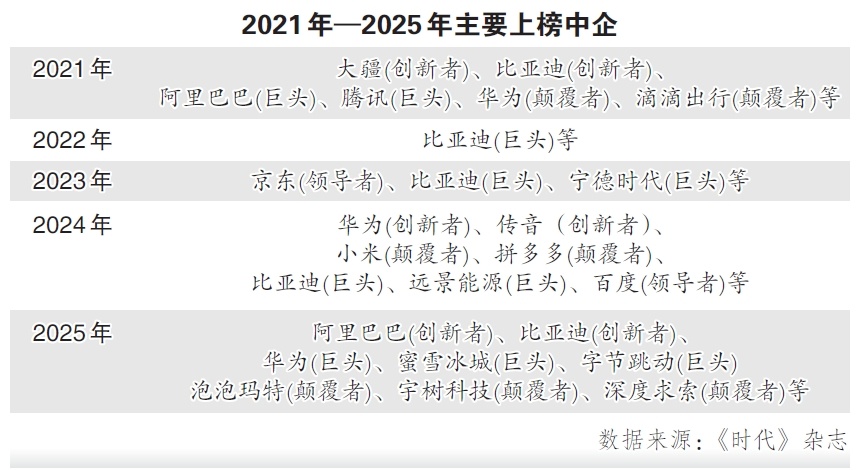
Core Insights - The "Global 100 Most Influential Companies" list for 2025 by Time magazine highlights several Chinese companies, indicating their significant impact across various sectors including consumption, AI, and robotics [1][2] - The selection criteria for the list emphasize a multi-dimensional evaluation of companies based on influence, innovation, strategic foresight, and business achievements rather than solely on financial metrics [1] Group 1: Company Highlights - Notable Chinese companies on the list include Alibaba, Huawei, ByteDance, BYD, and emerging tech firms like DeepSeek and Yushutech, showcasing a diverse representation across industries [2][3] - DeepSeek's AI model is noted for its competitive performance against OpenAI's latest products while significantly reducing costs, marking a pivotal moment in the global AI landscape [2][6] - Pop Mart, recognized as a "disruptor," has gained popularity with its IP "Labubu," leading to a surge in collectible toy sales and establishing 530 themed stores globally [3][6] - The tea brand Mixue Ice City, categorized as a "giant," has rapidly expanded to over 45,000 stores, becoming one of the largest restaurant chains worldwide [3][6] Group 2: Industry Trends - The list reflects a shift in the global business landscape, with Chinese companies transitioning from followers to innovators and leaders in various sectors, particularly in new consumption and AI [6][9] - The automotive sector, exemplified by BYD, is highlighted for its advancements in electric vehicle technology and solid-state battery development, positioning it as a key player in the global market [6][10] - The rise of companies from global South countries, such as those from China and the UAE, indicates a growing influence in the global market, particularly in AI and new energy sectors [9][11] Group 3: Future Outlook - The next 5 to 10 years may see a continued rise of companies from global South nations, especially in emerging fields like AI and renewable energy, while Western firms may face challenges in adapting to these changes [11] - The potential for innovation in consumption, AI applications, and the pharmaceutical sector is significant, with Chinese companies expected to lead in creating new business models and applications [10][11]


港股上半年风生水起 引领中国资产价值重估
Zheng Quan Shi Bao· 2025-07-02 18:20
Market Performance - The Hong Kong stock market experienced a significant bull run in the first half of 2025, with the Hang Seng Index rising by 20% since the beginning of the year [1] - The Hang Seng Tech Index and the Hang Seng China Enterprises Index increased by 18.68% and 19.05% respectively, indicating a strong market trend [1] Capital Inflow - Southbound capital inflow exceeded 730 billion HKD in the first half of 2025, setting a historical record for the same period [1][4] - The total net purchase of southbound funds reached approximately 7311.93 billion HKD, nearly matching the total for the entire year of 2024 [4] Stock Performance - A total of 173 stocks doubled in price during the first half of 2025, with notable performers including Yue Gang Wan Holdings and HSSP INTL, which saw increases exceeding 20 times [2] - Technology stocks emerged as stars, with companies like Hong Kong Robot and Meitu experiencing price increases of 500% and 214% respectively [2] - New consumption stocks also performed exceptionally well, with Lao Pu Gold rising by 321.53% and Pop Mart by 198.60% [2] IPO Market - The Hong Kong IPO market raised 107.1 billion HKD in the first half of 2025, a sevenfold increase compared to the same period last year, making it the top global market for IPOs [3] Policy Support - A series of favorable policies contributed to the strong performance of the Hong Kong stock market, including the expansion of the Stock Connect program and the introduction of a streamlined listing process for tech companies [4] - The approval of the "Stablecoin Bill" and the allowance for companies from the Greater Bay Area to list in Shenzhen further enhanced market attractiveness [4] Future Outlook - Analysts predict that the upward trend in the Hong Kong stock market will continue, driven by the ongoing influx of southbound capital and the recovery of valuations in various sectors [6] - The technology sector, particularly represented by DeepSeek, is expected to attract more foreign investment, reshaping international perceptions of Chinese assets [6]

野村东方国际:寻求出海增量,新茶饮企业路在何方
野村· 2025-07-02 15:49
Investment Rating - The report indicates a strong investment potential in the new tea beverage industry, particularly in overseas markets, highlighting the rapid growth of companies like Mixue Ice City and BaWangChaJi [1][2]. Core Insights - The tea beverage industry has evolved through three main stages: industrialized products, gradual diversification of raw materials, and a mature phase where consumers demand high-quality ingredients [4]. - The overseas market presents significant growth opportunities, with Mixue Ice City achieving a staggering 900% and 175% year-on-year revenue growth in 2022 and 2023, respectively [2][3]. - Different regions exhibit varying acceptance levels for Chinese tea brands, necessitating tailored strategies for market entry and expansion [5][6]. Summary by Sections Industry Development Stages - The tea beverage industry has undergone three key phases over the past 30 years: dominance of industrialized products, slow diversification of raw materials, and a current phase characterized by high consumer expectations for quality [4]. Regional Market Dynamics - Southeast Asia offers vast potential due to its tropical climate and youthful demographic, while Japan and South Korea require adaptations to cater to aging populations and seasonal preferences [5][11]. - The North American and European markets present both challenges and opportunities, with a need to expand consumer awareness beyond the Asian demographic [13]. Strategic Approaches for Expansion - Companies are adopting three main strategies: large-scale expansion in Southeast Asia, refined operations in Japan and South Korea, and premium positioning in North America and Europe [6][9]. - The supply chain is crucial for successful overseas expansion, requiring local sourcing and global procurement strategies [14][15]. Local Adaptation Strategies - Chinese tea brands are implementing localization strategies, including partnerships with local firms and adjusting pricing to fit local income levels [17][18]. - The pricing strategy varies significantly across regions, with brands like Mixue Ice City focusing on affordability in Southeast Asia while premium brands target higher-income consumers in Japan and South Korea [18]. Future Trends - The future of the tea beverage industry is expected to be driven by health-conscious trends and global expansion, with a focus on diverse consumer demands and supply chain efficiency [19][20].

茶咖日报|停牌风波后澜沧古茶补交“答卷”:2024年亏损逾3亿元
Guan Cha Zhe Wang· 2025-07-02 12:42
Group 1: 澜沧古茶 - 澜沧古茶's H-shares resumed trading after a suspension due to management and operational adjustments, with a reported loss of over 300 million yuan for 2024 [1] - The company's revenue for 2024 was 361 million yuan, a year-on-year decline of 31.5%, while gross profit fell to 188 million yuan, down 46.8% [1] - The shift from a profit of 80 million yuan in 2023 to a loss of 308 million yuan in 2024 was attributed to slow market recovery and challenges faced by physical stores due to the rise of e-commerce and private label products [1] Group 2: 元气森林 - 元气森林's iced tea series has entered the Indonesian market, marking its second product line to launch in the country after sparkling water [2] - The brand has achieved coverage of over 30,000 retail outlets in Indonesia and has also entered 591 Costco stores in the US and 109 in Canada, indicating steady global expansion [2] Group 3: 港股茶饮股 - Hong Kong's tea beverage stocks saw significant gains, with 奈雪的茶 rising by 33.33%, 古茗 by 4.31%, and others also showing positive performance [3] - A report from 中泰证券 highlighted that the beverage sector maintained strong growth in the fast-moving consumer goods category, with soft drinks outperforming other categories [3] - The upcoming peak season for the soft drink industry is expected to drive further growth, with companies increasing promotional activities [3] Group 4: 猫屎咖啡控股 - 猫屎咖啡控股 announced the resignation of chairman 梁乃铭, effective June 30, 2025, while appointing 梁嘉慧 as the new chairman and executive director [4] - The new chairman, aged 27, holds a business degree and is currently the CEO of another company, with an annual director's remuneration of 148,800 HKD [4] - Other board appointments included 崔志强 as an executive director and major shareholder, and 冯伟嬋 as a non-executive director, with respective annual remunerations [4] Group 5: Mosska - Coffee retail brand Mosska has completed a 30 million yuan Series A financing round led by 深圳市晟商创展投资有限责任公司 [5] - Mosska, established in September 2022, focuses on a differentiated approach combining premium coffee, creative flavors, and a multi-store model [5] - The financing will be used to accelerate the expansion of physical stores, enhancing its competitive edge in the premium coffee market [5]
茶饮店跨界卖“菜”一杯难求成新宠 解码“以茶会友”具象化“新”表达
Yang Shi Wang· 2025-07-02 05:44
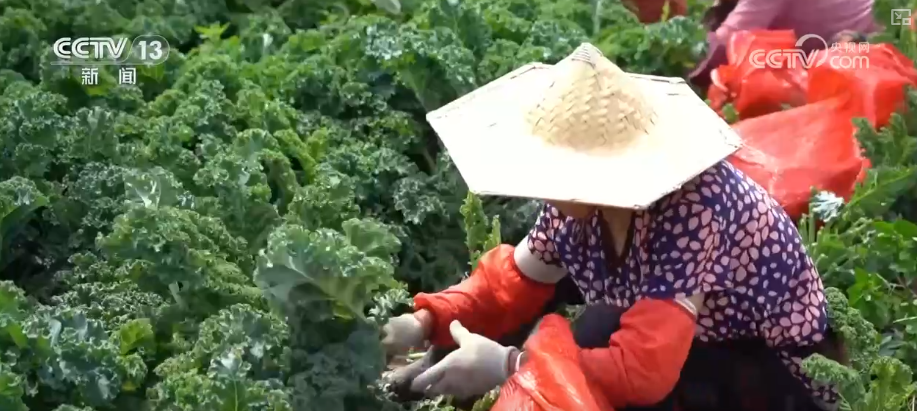
Core Viewpoint - The tea beverage market is experiencing a surge in demand for green vegetables like kale and bitter melon, leading to increased prices and new opportunities for growers [1][4]. Group 1: Market Trends - The tea beverage market is incorporating more vegetable ingredients, with kale becoming a popular choice among consumers [1]. - The market's growth has led to a significant increase in the planting and harvesting of kale, with a farm in Shandong producing over 8,000 tons annually [3]. - Major tea brands are directly partnering with farms to secure supplies, indicating a shift towards more integrated supply chains [4]. Group 2: Agricultural Innovations - To meet rising demand, local farms are enhancing their planting techniques, focusing on mechanization and standardization to improve quality and yield [5]. - In Yunnan, smart farming systems are being utilized for precise management of soil and resources, showcasing advancements in agricultural technology [7]. Group 3: Industry Development - The booming tea beverage market is fostering the growth of related industries, including packaging and equipment manufacturing, with a production capacity of around 20 million sets annually [8]. - The establishment of a tea beverage industrial park in Henan has attracted over 20 related enterprises, creating more than 4,000 jobs [10]. Group 4: International Expansion - Chinese tea brands are rapidly expanding in Southeast Asia, with significant growth in countries like Indonesia, Vietnam, and Malaysia [10][12]. - A Chinese milk tea brand in Indonesia has opened over 2,000 stores since its entry four years ago, reflecting the strong demand for these products [12]. - The successful entry of Chinese tea brands into international markets highlights the cultural appeal of tea and its role in enhancing China's soft power [19].
霸王茶姬“无声门店”入选信息无障碍优秀案例
Xin Lang Cai Jing· 2025-07-02 03:53
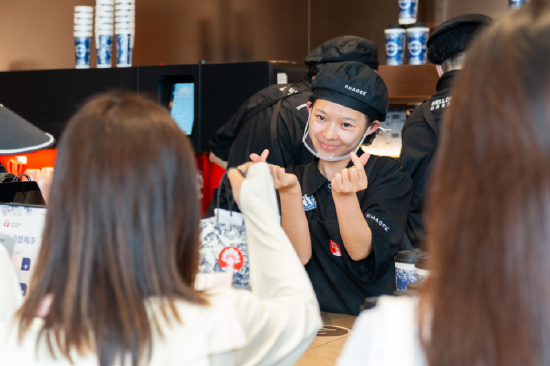
Core Viewpoint - The 2025 Technology Accessibility Development Conference recognized outstanding cases in the field of accessibility, highlighting the importance of inclusive practices for special populations and the elderly in the economy [1][3]. Group 1: Company Initiatives - The "Silent Store" project by Bawang Chaji was launched in 2024, focusing on creating a fully accessible environment for hearing-impaired individuals [3]. - The first global "Silent Store" opened in January 2024 in Hangzhou, followed by expansions to cities like Guangzhou, Shanghai, Changsha, and Lanzhou [3]. - As of May 2025, Bawang Chaji has established over 10 Silent Stores in mainland China and opened its first Southeast Asian store in Singapore in June 2025 [3]. Group 2: Accessibility Features - Bawang Chaji's Silent Stores employ hearing-impaired individuals, referred to as "silent partners," who engage directly with customers [3]. - The company is also enhancing its online platforms, including WeChat and Alipay, to improve accessibility for disabled and elderly users, with upgrades such as enlarging button sizes and simplifying ordering processes [3]. - These online upgrades are expected to be completed within the year [3]. Group 3: Recognition and Awards - Bawang Chaji was the only new tea brand to receive the "2025 'Accessible' Information Accessibility Outstanding Case" award, recognizing its impact on the economy for special populations [1][3]. - Other recognized cases included accessibility improvements by Southern Airlines, Didi, JD.com, and Vivo [1].