汽车

Search documents
史诗级裁决!黄金冲破5100,白银狂飙9%!
Sou Hu Cai Jing· 2026-02-21 10:22
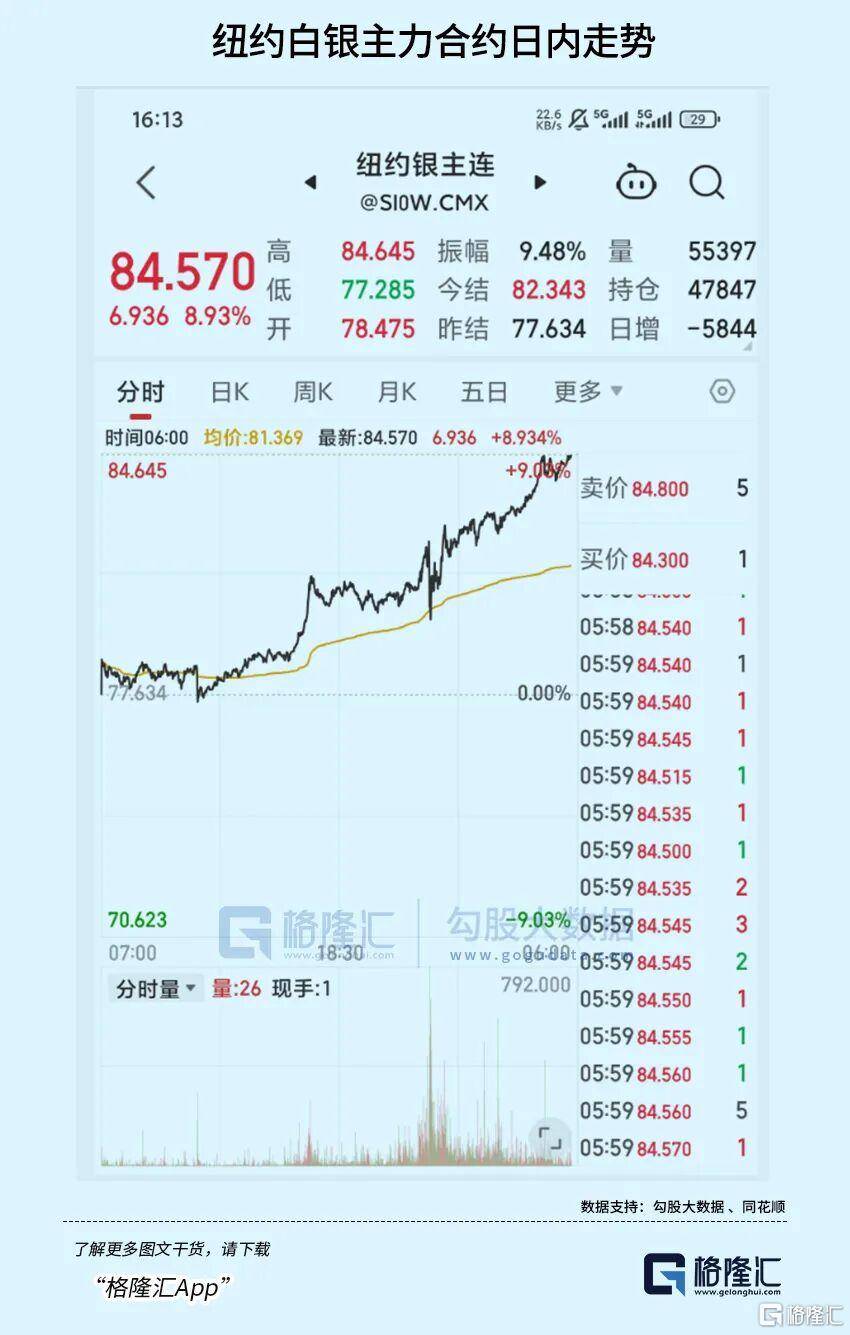
马年春节,全球市场最大"黑天鹅"落地,炸出了贵金属的"超级大红包"! 当地时间2月20日,美国联邦最高法院以6:3的关键投票,作出里程碑式裁决:正式认定特朗普政府实施的大规模全球关 税,超出总统法定权限,相关政策自始无效! 这一裁决,堪称美国贸易政策的"分水岭"。它不仅封死了总统"绕开国会、任性加税"的捷径,更瞬间点燃了市场热情: 美股三大指数集体上演"低开高走",道琼斯指数收涨0.47%,站稳49625点;标普500指数涨0.69%,报6909点;纳斯达克 收涨0.90%,收报22886点。 贵金属更是迎来狂欢,黄金大涨2.66%,一举冲破5100美元大关,COMEX白银期货更疯狂,单日飙升8.9%,报85.19美 元/盎司。 01"无序加税"终于剧终了 回溯过往,特朗普政府自2025年1月上台后,便援引IEEPA法案,以行政令形式绕过国会,多次单方面推出一系列大规模 全球关税措施,此举不仅遭到美国12个州及上千家企业联合起诉,更因其无明确期限、反复多变的变更、无税率上限的 无序性,持续困扰企业经营决策、压制市场风险偏好,成为美股震荡走弱的核心症结之一。 此次最高法院的裁决,强有力封杀了总统无序加税的路径, ...

突发特讯!美国通告全球:白宫确认终止部分关税措施,引发全球高度关注
Sou Hu Cai Jing· 2026-02-21 09:48
Group 1 - The U.S. Supreme Court's ruling has caused significant turmoil in international trade, with the termination of nine tariff measures under the International Emergency Economic Powers Act, affecting goods worth 17% of the U.S. annual import total [1][3] - Following the ruling, President Trump announced a new temporary 10% tariff on all imports under Section 301 of the Trade Act of 1974, which, while lower than previous tariffs, applies broadly to all trading partners [3][5] - The transition period between the old and new policies has created confusion in supply chains, with companies facing decisions on whether to declare goods under old or new tax rates, impacting at least $370 million worth of goods in transit [5] Group 2 - Trump's announcement of potential Section 301 investigations targeting countries accused of technology theft raises concerns about future tariffs, which could escalate to as high as 100% for specific industries [7] - The European Union is preparing for both the immediate 10% global tariff and potential investigations that could target strategic sectors like pharmaceuticals and aerospace, indicating a dual defensive strategy [7] - The current situation highlights vulnerabilities in the global trade system, where sudden policy changes can disrupt finely-tuned supply chains, yet the market has reacted positively to the lower 10% tariff compared to the previous 25% punitive tariffs [7]
比亚迪股份股价下跌,受市场环境与业绩压力影响
Jing Ji Guan Cha Wang· 2026-02-21 09:48
Core Viewpoint - BYD's stock price decline on February 20, 2026, is attributed to a combination of overall market conditions, industry performance, and recent fundamental factors affecting the company [1]. Market Environment - The Hong Kong stock market weakened on that day, with the Hang Seng Index dropping by 1.10% and the Hang Seng Tech Index falling by 2.91%. The automotive sector showed overall weakness, declining by 2.24%, which negatively impacted BYD as a key component stock in the sector [2]. Performance and Operating Conditions - According to a report from Guolian Minsheng Securities published on February 3, 2026, BYD's wholesale sales of new energy passenger vehicles in January 2026 were 205,000 units, representing a year-on-year decline of 30.7% and a month-on-month decrease of 50.5%, indicating significant short-term sales pressure. Additionally, the Q3 2025 financial report showed a revenue decrease of 3.05% year-on-year and a net profit decline of 32.6%, raising ongoing concerns about the company's profitability [3]. Financial and Technical Aspects - In terms of capital flow, despite a net inflow of HKD 56.736 million from major funds on that day, the stock price remained under selling pressure. Technically, the stock price was below key moving averages such as the 5-day and 30-day averages, with the Bollinger Band middle line (HKD 96.51) acting as resistance. Although the MACD histogram was positive, the momentum was limited, reflecting short-term adjustment pressure [4]. Company Status - The decline in BYD's stock price is a result of market sentiment, weak industry performance, and short-term pressures on sales and earnings [5].

假期发生十件大事,机会都在这里
Sou Hu Cai Jing· 2026-02-21 08:54
Group 1 - The U.S. Supreme Court's ruling against tariffs imposed by the Trump administration is expected to lower global tariff levels, boosting global economic and market confidence [1] - The consideration of limited military action against Iran by the U.S. has led to significant increases in oil and gold prices, benefiting the military-industrial sector [2] - International precious metal futures have rebounded significantly due to rising risk aversion, expectations of interest rate cuts by the Federal Reserve, and increased purchases by central banks [3] Group 2 - Capital markets in Europe, the U.S., and Asia have surged, driven by global interest rate cut expectations and advancements in AI technology [2] - The London base metals market has seen a comprehensive rise, marking a significant year for commodities [3] - The International Monetary Fund has indicated that AI could potentially increase global economic growth by nearly 1%, with recent PMI indices in the Eurozone, India, and Japan showing improvement [3] Group 3 - The acceleration of autonomous driving technology is exemplified by Tesla's production of the Cybercab, a driverless taxi model, which has no steering wheel or pedals [4] - The integration of AI and robotics is expected to lead to a market worth $10 trillion in the next decade, highlighting the growth potential of the AI robotics sector [4] - Seven major trends are anticipated for 2026, including significant interest rate cuts in the U.S. and China, a surge in AI applications, and increased geopolitical tensions [4]

特朗普始料未及,默茨在访华之前,德国对美国发出了强硬警告
Sou Hu Cai Jing· 2026-02-21 08:52
Group 1 - German Chancellor Merz has taken a firm stance against the U.S., indicating that Europe will retaliate if unreasonable tariffs are imposed [1][3] - The U.S. plan to impose tariffs on European goods as leverage for Greenland has backfired, uniting the EU rather than intimidating it [3][10] - Merz's upcoming visit to China with a large delegation signifies Germany's shift towards strengthening economic ties with China amidst U.S. pressure [6][8] Group 2 - The trend of European countries looking towards China for economic cooperation has been growing, influenced by U.S. tariff policies [8] - Germany's economic reliance on the U.S. is being reassessed, with a focus on diversifying partnerships to mitigate risks [8][10] - The transatlantic relationship is undergoing significant changes, with Europe increasingly seeking autonomy in economic matters while still relying on the U.S. for security [10]
都认为中国会赢:美国以为手中的牌比中国多,但它错了
Sou Hu Cai Jing· 2026-02-21 08:52
Group 1 - The trade friction between the US and China, which began in 2018, has led to significant global attention, with many experts suggesting that the US underestimated China's economic resilience and supply chain strength [1][3] - The US initially imposed tariffs on steel and aluminum, followed by additional tariffs on Chinese goods, but these measures resulted in increased costs for American consumers and farmers, while China successfully found alternative markets [3][4] - China's trade surplus with the US is projected to reach a new high of $1 trillion by 2025, indicating that the US's strategy to reshape its manufacturing base through tariffs has not been effective [4][6] Group 2 - Experts argue that the US's inconsistent policies have led to a perception that China is a more reliable partner, causing other countries to shift their trade relationships towards China [6][9] - The trade war has prompted China to enhance its technological self-sufficiency, particularly in sectors like semiconductors, as the US's restrictions have spurred increased domestic investment [3][11] - The global trade landscape has shifted, with countries initially aligning with the US now adopting a more cautious approach, recognizing China's strength and resilience in the face of trade pressures [9][11] Group 3 - The US's talent outflow, particularly in fields like artificial intelligence, has been exacerbated by policies that inadvertently push skilled professionals back to China [7] - China's strategic response to the trade war includes diversifying its markets and strengthening economic ties with emerging markets, which enhances its global influence [11] - The ongoing trade tensions have highlighted the vulnerabilities in the US economy, particularly its reliance on Chinese manufacturing, as the US struggles to find alternatives for many Chinese imports [6][11]
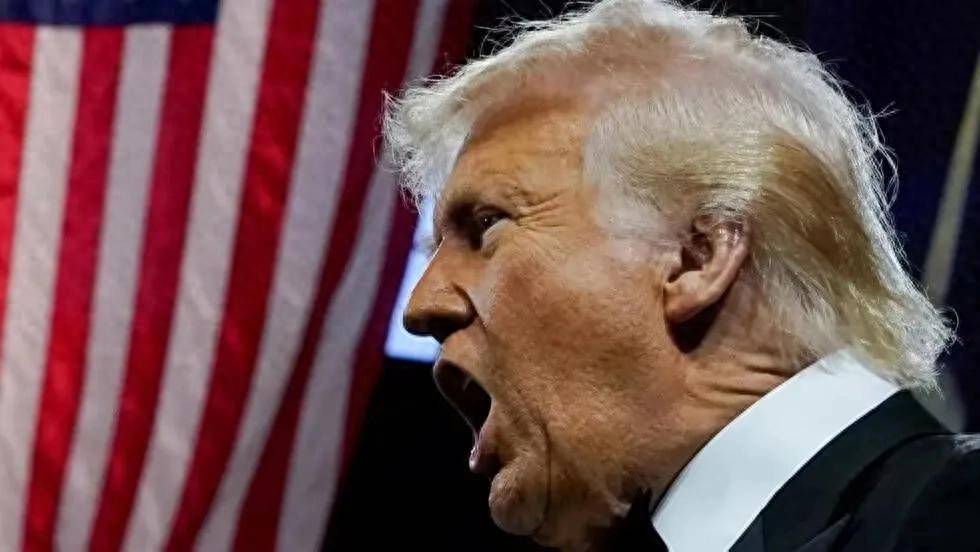
泰国工业联合会:特朗普10%的全球关税将重创泰国电子产品和汽车行业出口
Ge Long Hui· 2026-02-21 08:26
Group 1 - The Thai Industrial Federation (FTI) reports that following the U.S. Supreme Court's limitation on "countervailing duties," Trump has invoked Section 122 of the Trade Act of 1974 to impose a 10% tariff on global imports, referred to as "global tariffs" [1] - This tariff policy will impact Thailand's exports of electronic products such as hard disk drives (HDD), printed circuit boards (PCB), and integrated circuits (IC), as Thailand is a major manufacturing base for these products [1] - The automotive and parts industry, particularly the tire sector, will face severe consequences as the new 10% tariff will compound existing anti-dumping duties, significantly increasing costs [1] Group 2 - Exports of household appliances, such as air conditioners and refrigerators, will also be adversely affected, given that the U.S. is a primary market for these products [1] - Thailand, being one of the major exporters of gems and jewelry, has substantial export volumes to the U.S. that will be impacted [1] - Conversely, Thai agricultural products and fisheries, including rice, durian, mangosteen, and various tropical fruits, have received tariff exemptions [1]
骗了全世界几十年!欧洲高福利耗尽,8亿件衬衫换飞机已成历史
Sou Hu Cai Jing· 2026-02-21 08:07
Group 1 - The core argument suggests that Europe's economic decline is not due to high welfare systems fostering laziness, but rather a result of structural issues in the economy and the loss of external advantages that previously supported welfare funding [3][5][36] - The first source of wealth for Europe, referred to as "global scissors difference," is based on the exploitation of cheaper labor in developing countries, allowing European companies to reap excessive profits [9][12][14] - The second source of wealth, termed "anti-rebellion insurance," was a political strategy to appease the working class during the Cold War, ensuring social stability through welfare and higher wages [15][17][19] Group 2 - The decline of the "global scissors difference" is attributed to emerging economies like China and Vietnam moving up the value chain, reducing Europe's competitive edge in manufacturing [21][23] - The end of the Cold War has diminished the need for capitalists to maintain high welfare standards, leading to a shift in wealth distribution away from workers [23][26] - The narrative blaming high welfare for economic issues is criticized as a diversion from the real problems of low wages and the hollowing out of industries [24][28][30] Group 3 - The sustainability of Europe's welfare system is questioned, with predictions of gradual reductions in benefits and increasing costs for healthcare and education [32][34] - Social unrest in various European countries is seen as a manifestation of the underlying economic crisis, with elites failing to address the root causes [32][36] - The current crisis is framed as a result of a welfare system built on external exploitation and internal compromises, which is now collapsing as external resources dwindle [36][37]

美国加征关税之际,德国总理急了,下周访华求建战略伙伴关系
Sou Hu Cai Jing· 2026-02-21 08:06
Group 1 - The core message of the news is that German Chancellor Merz plans to visit China to establish a strategic partnership, aiming to explore future cooperation between China and Europe amidst the challenges posed by U.S. tariff policies [1][6][8] - Merz's visit is a response to the adverse effects of U.S. tariffs on Germany's export-driven economy, particularly impacting key industries such as automotive, machinery, and chemicals [1][3][6] - The strategic partnership with China is seen as crucial for Germany's economic recovery, as the country seeks to diversify its markets and reduce reliance on the U.S. [3][6][8] Group 2 - The concept of a strategic partnership involves long-term cooperation in political, economic, and diplomatic fields, indicating Germany's recognition of China's key role in its future strategy [3][6] - There is a growing consensus among German businesses and the public that deepening cooperation with China is essential for economic growth and job creation [6][8] - Despite existing cooperation, challenges remain, including differing attitudes within Europe towards China and the need for dialogue to resolve any disputes [6][8] Group 3 - The U.S. tariff policy, while intended to protect domestic industries, is seen as damaging to global trade and allies like Germany, prompting a rational response through seeking partnerships with China [8] - Merz's upcoming visit is anticipated to be a focal point for global attention, with expectations for substantial cooperation outcomes and advancements in China-Europe relations [8] - The collaboration between China and Germany is positioned as a significant driver for global economic recovery and a counter to U.S. protectionism [8]
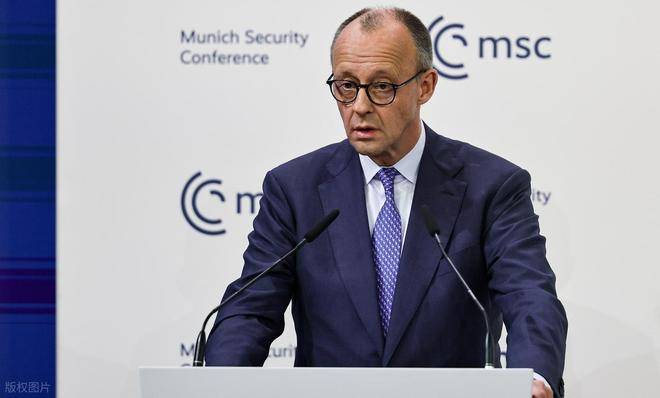
德国官方数据:2025年,中国再次成为德国最大贸易伙伴
Xin Lang Cai Jing· 2026-02-21 07:58
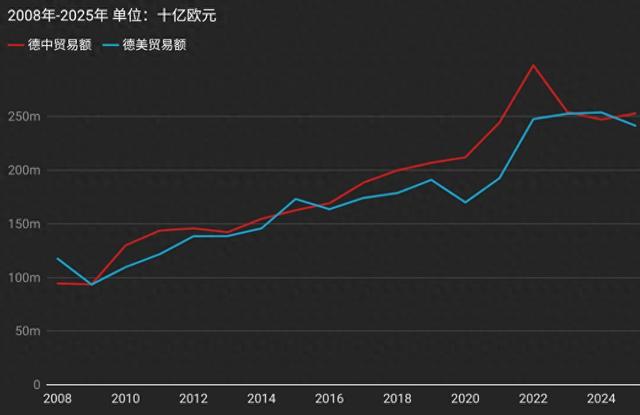
Core Insights - By 2025, China is projected to surpass the United States as Germany's most important trading partner, with bilateral trade reaching €251.8 billion, a 2.1% increase from the previous year [1] - In contrast, trade with the U.S. is expected to decline by 5% to €240.5 billion due to tariff disputes [1] - China has been Germany's largest import supplier since 2015, with imports from China valued at €170.6 billion in 2025, marking an 8.8% increase [1] Trade Dynamics - Germany's imports from China include machinery worth €13.9 billion (up 11.6%), electrical equipment at €32.8 billion (up 14.8%), and data processing, electronic, and optical products totaling €50.9 billion (up 4.9%) [1] - Conversely, Germany's exports to China are projected to decrease to €81.3 billion, a 9.7% decline [1] - The trade surplus for China with Germany is expected to increase by one-third to approximately €89.3 billion, with imports from China exceeding exports for the first time [1] Economic Implications - The importance of both China and the U.S. as export markets for Germany is declining, with exports to the U.S. dropping over 9% last year [4] - The automotive sector, a stronghold for German exports, has been significantly impacted by U.S. tariffs, leading to a 17.8% decrease in exports to the U.S. [4] - Experts are urging the German government to diversify supply chains and explore new markets to enhance competitiveness [4] Political Engagement - German Chancellor Merz is set to visit China from February 24 to 27, marking his first visit since taking office [5] - The visit aims to strengthen economic ties and explore cooperation opportunities, with discussions expected to cover security, geopolitics, trade, and human rights [5] - Merz has expressed interest in finding like-minded partners to ensure Germany's continued prosperity and social security [5]