电商

Search documents
拼多多20251222
2025-12-22 15:47
拼多多 20251222 摘要 拼多多估值极具吸引力,2025 年市盈率低于 8 倍,2026 年或低于 7 倍, 远低于电商行业平均水平,管理层加大投入推动增长,提升了低估值的 吸引力。 拼多多国内市场依赖原厂电商业务,GMV 增速保持在 10%-15%,核心 竞争力在于低价和消费者体验,受经济环境影响较小,国家对 3C 类目 补贴政策影响有限。 拼多多跨境电商平台 Temu 迅速扩张至欧美、拉美、东南亚等地,欧美 市场贡献超 60%GMV,但面临地缘政治风险和关税问题,通过调整物 流模式降低关税风险,海外业务增速仍保持 20%以上。 美国合规问题借鉴 TikTok 经验,通过数据本地化解决,关税问题通过 半托管模式提高时效性并降低风险,预计今年 Temu 的 GMV 将达到 750 亿美元,同比增长约 25%。 国内电商投流抵扣政策对拼多多影响有限,但平台代替商家报税的新规 增加了平台责任,拼多多已采取措施维护商家生态,并推出减免和补贴 措施应对合规成本。 Q&A 拼多多近期在管理层和公司战略上有哪些重要变化? 拼多多在最近的股东大会上进行了高管任命,赵佳臻被提升为联席董事长。此 外,管理层对公司未来前景 ...

阿里巴巴员工数“锐减”后再次增长
首席商业评论· 2025-12-22 13:56
Core Viewpoint - Alibaba's employee count has significantly decreased, primarily due to the divestiture of its retail businesses, but this does not indicate mass layoffs as many employees transitioned to the acquiring companies [1][2]. Group 1: Employee Count and Financial Performance - As of March 31, 2025, Alibaba had 124,320 full-time employees, down from 204,891 the previous year, marking a reduction of 80,571 employees [1]. - By September 30, 2025, the employee count slightly increased to 126,661, indicating a net inflow of talent in the first half of the 2026 fiscal year [2]. - The data shows that revenue per employee has improved significantly, with the average revenue per employee rising from 3.35 million RMB in 2022 to 8.01 million RMB in 2025 [3]. Group 2: Strategic Shift and Market Position - Alibaba is transitioning from a traditional e-commerce platform to a technology-driven enterprise, aiming to enhance operational efficiency and profitability [4]. - The divestiture of traditional retail businesses is intended to lighten the financial burden and free up cash flow for investments in AI and cloud infrastructure, with a commitment of 380 billion RMB for AI and cloud initiatives [4]. - The competitive landscape is evolving, with Alibaba needing to establish new competitive advantages against rivals like Pinduoduo and Douyin, focusing on AI as a key area for growth and innovation [4]. Group 3: Stock Performance and Market Outlook - In 2025, Alibaba's stock experienced a recovery after a challenging period, characterized by a "W" shaped bottom formation [6]. - The outlook for 2026 suggests that Alibaba's restructured e-commerce group will maintain a significant market share, with expectations of robust growth in its cloud business [7]. - The stock price is anticipated to benefit from policy support for platform economies and successful AI applications, leading to improved overall profit structure [8]. Group 4: Comparative Analysis with Competitors - A comparison with JD.com and Pinduoduo reveals that while JD.com has a much larger employee base, Pinduoduo demonstrates exceptional efficiency with high revenue per employee [12][13]. - Pinduoduo's operational model, which leverages low pricing and efficient algorithms, has resulted in impressive profit margins despite a smaller workforce [13]. - The future of the e-commerce landscape remains uncertain, influenced by the rise of video commerce and the strategic use of AI [15].



万里马:公司控股子公司杭州宇岛科技有限公司业务范围以直播电商、品牌代运营为主
Zheng Quan Ri Bao Zhi Sheng· 2025-12-22 13:14
Core Viewpoint - The company is focusing on expanding its e-commerce capabilities and enhancing its competitive edge through live streaming and brand operation, particularly in the military and health sectors [1] Group 1: Business Focus - The company's subsidiary, Hangzhou Yudao Technology Co., Ltd., primarily engages in live e-commerce and brand operation [1] - Guangzhou Chaoqi Information Technology Co., Ltd. focuses on the maternal and child health and outdoor sports sectors, utilizing platforms like Tmall and JD for e-commerce [1] Group 2: Strategic Initiatives - The company aims to strengthen its competitive capabilities by integrating military products with live e-commerce [1] - Future plans include increasing investment in group buying and e-commerce channels, while cultivating high-quality brands [1] - The company intends to collaborate with well-known international brands through its Hong Kong subsidiary, expanding into cross-border e-commerce [1] Group 3: Market Trends - The company is targeting the middle-class consumer demand and is poised to capitalize on the trend of consumption recovery [1]

当亚马逊被“围猎”,谁在瓜分新的万亿蛋糕?
3 6 Ke· 2025-12-22 11:44
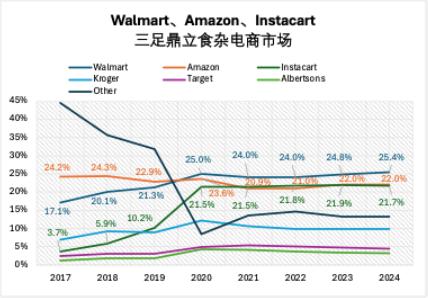
Group 1: Core Insights - The disparity in online retail penetration between China (30%) and the U.S. (16%) is significant, indicating different market dynamics and maturity levels [1][2] - U.S. e-commerce is not merely lagging behind but is in a mature market with strong offline competitors like Walmart and Costco, leading to structural differentiation rather than total growth [2][3] - The U.S. retail landscape is characterized by a robust offline infrastructure that complicates the growth of e-commerce, as traditional retailers provide high efficiency and experience [4][5] Group 2: Market Dynamics - The U.S. e-commerce market, valued at over $1.1 trillion, is supported by a $7 trillion retail base, despite a lower penetration rate [4] - The competition in the U.S. e-commerce space is shifting towards specific niches where traditional retailers cannot compete, such as extreme low pricing, traffic stimulation, and fresh food delivery [4][10] - Amazon, while still a leader, faces challenges from low-cost competitors and content-driven e-commerce platforms like TikTok Shop, which leverage social media for sales [5][9] Group 3: Competitive Landscape - Companies like Temu and Shein are disrupting the U.S. market by utilizing Chinese supply chains to offer low prices without the burden of high logistics costs [7][8] - TikTok Shop is transforming its video content into e-commerce opportunities, presenting a new avenue for merchants seeking alternatives to Amazon [9] - Walmart has successfully adapted to the e-commerce landscape by utilizing its extensive store network for efficient fresh food delivery, surpassing Amazon in this segment [12] Group 4: Key Companies - **Amazon (AMZN)**: Despite facing competition, Amazon maintains a strong retail market share of approximately 37% and continues to perform well in core categories like consumer electronics [13][14] - **Walmart (WMT)**: Walmart is evolving into a full-channel giant, with its e-commerce business growing over 20% for seven consecutive quarters, driven by its fresh food offerings [15] - **PDD Holdings (PDD)**: Temu is transitioning to a model that enhances its pricing power and logistics efficiency, targeting Amazon's mid-tier merchant ecosystem [16] - **Shopify (SHOP)**: Shopify is leveraging AI to enhance traffic distribution and improve monetization rates, moving beyond its initial role as a platform provider [17] - **Instacart (CART)**: Instacart dominates the U.S. third-party fresh food delivery market, with a significant portion of its revenue coming from high-margin advertising [18]


抖店动销:小店逆袭,就靠这一把钥匙
Sou Hu Cai Jing· 2025-12-22 11:13
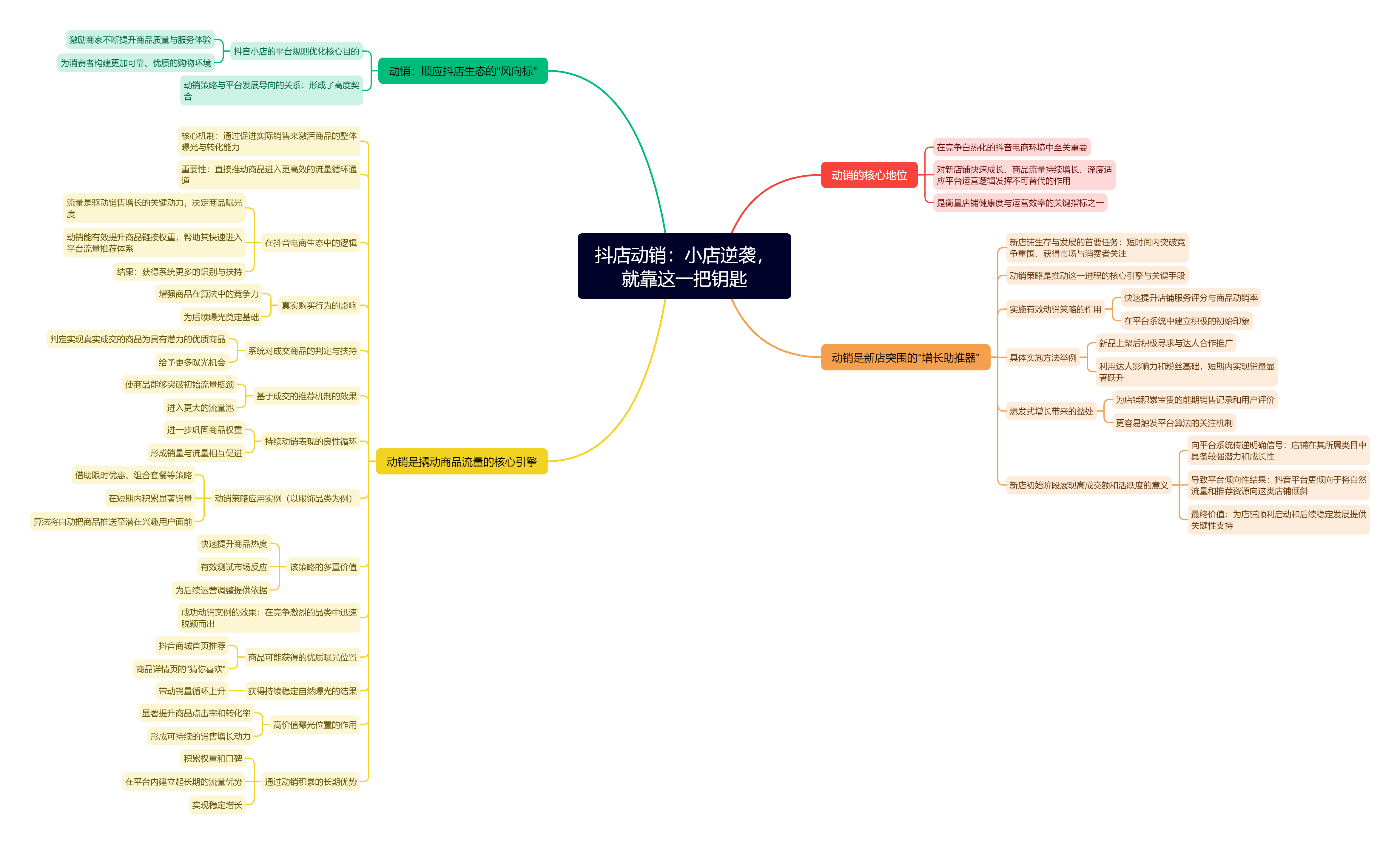
Core Insights - The optimization of Douyin Xiaodian's platform rules aims to encourage merchants to continuously improve product quality and service experience, thereby creating a more reliable and high-quality shopping environment for consumers [7] - The sales activation strategy is crucial for new stores to achieve rapid growth and adapt to the platform's operational logic, serving as a key indicator of store health and operational efficiency [4][8] Group 1: Sales Activation Strategy - Sales activation is a core engine that drives product flow by promoting actual sales, enhancing overall exposure and conversion capabilities [5][6] - Effective sales activation strategies allow new stores to quickly improve service ratings and sales rates, establishing a positive initial impression within the platform system [4] - The platform's algorithm favors stores that demonstrate high transaction volumes and activity, directing valuable natural traffic and recommendation resources towards them [4][6] Group 2: Platform Rule Adjustments - Douyin Xiaodian has lowered the entry threshold for products into the traffic pool, reducing the merchant experience score requirement from 65 to 60, and adjusting the good review rate standard for products with sales records from ≥80% to ≥70% [7] - These adjustments facilitate products with actual sales and user feedback to more easily enter key traffic recommendation pools, enhancing store visibility and stability [7] - The platform emphasizes that "quality GMV is core," pushing merchants to focus on product quality and the health of the sales process, which is essential for sustained traffic acquisition and long-term revenue growth [7] Group 3: Long-term Growth Strategies - Sales activation is a critical operational strategy that spans the entire lifecycle of a new store, from launch to traffic growth and adaptation to platform rule changes [8] - Merchants should prioritize sales activation and apply strategies flexibly based on their specific circumstances to promote steady and sustainable development [8]
当亚马逊被“围猎”,谁在瓜分新的万亿蛋糕?
格隆汇APP· 2025-12-22 11:12
Core Viewpoint - The article discusses the significant disparity in online retail penetration between China and the U.S., with China's online retail sales approaching 30% while the U.S. remains around 16%. This difference is attributed to the maturity of the U.S. retail market, which is dominated by strong offline players like Walmart and Costco, leading to a more complex competitive landscape for e-commerce in the U.S. [4][5][6] Group 1: Market Dynamics - The U.S. e-commerce market is not simply lagging behind China but is characterized by a mature offline retail system that provides high efficiency and experience, making it difficult for e-commerce to replace traditional retail. Instead, e-commerce serves as a supplement to offline shopping [5][6]. - The U.S. retail market, valued at $7 trillion, supports a substantial e-commerce sector worth over $1.1 trillion, despite a lower penetration rate [6]. - The competitive landscape in the U.S. is shifting from total growth to structural differentiation, focusing on specific niches where traditional retailers cannot compete effectively, such as extreme low prices, traffic stimulation, and fresh food delivery [6][13]. Group 2: Competitive Challenges - Amazon, while still a leader in infrastructure, faces significant challenges from low-cost competitors and new traffic sources, particularly from companies like Temu and Shein, which leverage Chinese supply chains to offer lower prices without the need for expensive logistics in the U.S. [8][10][11]. - TikTok Shop is emerging as a powerful player in the e-commerce space, converting its vast short video traffic into purchasing power, contrasting with Amazon's traditional search-based model [12]. - In the fresh grocery segment, Walmart has overtaken Amazon with a 25% market share compared to Amazon's 22%, due to Walmart's effective use of its extensive store network to reduce delivery costs and enhance customer experience [15]. Group 3: Key Companies - **Amazon (AMZN)**: Despite facing competition, Amazon maintains a strong retail market share of around 37% and continues to perform well in core categories, such as consumer electronics [17]. - **Walmart (WMT)**: Walmart is transforming from a traditional supermarket to a full-channel giant, with its e-commerce business growing over 20% for seven consecutive quarters, now accounting for 20% of its total retail sales [20]. - **PDD Holdings (PDD)**: Temu is evolving from a fully managed model to a semi-managed one, enhancing its supply chain capabilities and integrating local inventory to compete with Amazon [21]. - **Shopify (SHOP)**: Shopify is shifting its growth narrative, focusing on AI-driven traffic distribution and financial services to enhance its revenue model [22]. - **Instacart (CART)**: Instacart dominates over 70% of the U.S. third-party grocery delivery market, with a growing high-margin advertising business contributing to its revenue [23].

【行业资讯】上周俄罗斯电商圈发生了哪些大事?(1213-1219)
Sou Hu Cai Jing· 2025-12-22 11:08
Group 1: Ozon's Initiatives - Ozon has launched the FBO (Fulfillment by Ozon) model in Kazakhstan, transitioning from a "traffic entry" to a "complete e-commerce infrastructure service provider" [1] - Sellers using Ozon's warehouses in Almaty and Astana will enjoy full storage fee waivers until July 1, 2026, and the sales commission has been reduced by approximately 50% to a range of 5%-13% [1] - Ozon has integrated logistics costs into a transparent price range (212-3050 tenge), covering the entire process from warehousing to last-mile delivery [1] - The platform has enhanced local operational support, allowing sellers to sign contracts directly with local entities and settle in tenge with no minimum withdrawal limit [1] Group 2: Ozon's Offline Expansion - Ozon will charge a deposit of 30,000 rubles (approximately 2400 RMB) for new offline pickup points (PВЗ) starting December 15 [2] - These pickup points are designed to be located in residential areas and are part of Ozon's focus on developing offline retail formats [2] - The deposit will be refunded within 10 working days after the pickup point becomes operational, provided the seller meets all requirements [2] Group 3: Regional Product Promotion - Ozon has established a dedicated sales area for products from the Karachay-Cherkess region, showcasing around 2700 items from local manufacturers [3] - The number of such regional specialty areas has rapidly increased, nearing 8500 by September 2025, doubling from the previous year [3] Group 4: E-commerce Trends in Russia - Over 82% of Russians hold at least one e-commerce platform card, with 73% citing discounts as the main reason for obtaining it [8] - A significant trend of "emotional shopping" has emerged, with 58% of Russians shopping to improve their mood, leading to an 80% increase in order volume on Ozon [9] - E-commerce platforms are becoming the preferred channel for holiday gift purchases, with over 54% of consumers planning to buy gifts online [10] Group 5: Market Dynamics and Competition - The Russian E-commerce Market Participants Association has raised concerns about unfair competition from foreign sellers, particularly those from China, and has proposed measures to level the playing field [7] - Wildberries has responded to proposals for unified tax burdens on online and offline retail, emphasizing its role as a significant taxpayer and supporter of small businesses [6] Group 6: Advertising and Sales Growth - The Russian e-commerce advertising market is projected to exceed 900 billion rubles by 2025, with e-commerce expected to account for 63% of the advertising market [13] - There has been a notable surge in graphics card sales in Russia, particularly in St. Petersburg, with sales increasing ninefold year-on-year due to rising demand driven by AI developments [14]
冒犯式营销:广告界的“流量渣女”为何屡教不改?
3 6 Ke· 2025-12-22 10:35
Core Viewpoint - The article discusses the rise of "toxic marketing" in the advertising industry, particularly targeting women, and questions whether such strategies are beneficial for brands or detrimental to their reputation [2] Group 1: Toxic Marketing Tactics - Tactic One: Using stereotypes to undermine women's value by portraying them as "inept" or "dependent" [3] - Tactic Two: Binding women's aesthetics to their life value, creating anxiety through a singular beauty standard [5] - Tactic Three: Using derogatory portrayals of women to generate controversy and attention [6] - Tactic Four: Objectifying women by reducing them to mere marketing tools, ignoring their individuality [9] Group 2: Reasons for the Proliferation of Toxic Ads - The repeated emergence of such ads is driven by short-term profit motives, low penalties for violations, and exploitable platform mechanisms [10] - Advertisers exploit the emotional response of anger, which leads to higher content sharing rates compared to positive emotions [10][11] - The ambiguity in legal definitions regarding gender discrimination allows companies to take risks with controversial ads [11] Group 3: Consequences of Toxic Marketing - The primary cost of toxic marketing is the long-term damage to brand reputation, as seen in the case of brands like 全棉时代 [12] - Women's awareness and activism against such marketing tactics are increasing, leading to a shift in consumer behavior [13] - The prevalence of offensive advertising is harming the overall health of the advertising industry, leading to a "race to the bottom" in creative quality [14] Group 4: Moving Towards Respectful Advertising - The advertising industry is urged to abandon toxic marketing strategies and embrace ethical practices that respect women as equal consumers [16] - Successful brands are beginning to shift their marketing strategies to reflect genuine respect for women, as evidenced by珀莱雅's campaign [16] - A healthy advertising ecosystem requires both industry accountability and consumer vigilance against offensive content [16] Group 5: Final Thoughts - The article emphasizes that advertising should focus on building value consensus rather than perpetuating gender conflict [17] - The ultimate goal is for advertising to recognize and celebrate women's independence and intelligence, fostering a win-win situation for brands and audiences [18]


顺丰不接抖音退货了
Hua Er Jie Jian Wen· 2025-12-22 09:52
Core Viewpoint - SF Express has voluntarily exited the return service market for Douyin e-commerce, indicating a strategic shift in its business operations [3][4]. Group 1: Business Changes - SF Express did not participate in the 2026 Douyin e-commerce return service, which is seen as a voluntary withdrawal from the market [3]. - The contract for SF Express's collaboration with Douyin for return services naturally expired, marking a normal business decision [3]. - Starting mid-December, Douyin began a large-scale re-tendering for return service suppliers, redistributing orders previously handled by SF Express to multiple logistics companies [4]. Group 2: Market Dynamics - The logistics companies now involved in Douyin's return services include JD Logistics, Zhongtong, Yuantong, Yunda, and the postal service, with JD Logistics positioned as the fallback service provider [4]. - The return rate for Douyin e-commerce is notably high, with industry data indicating that live e-commerce return rates range from 30% to 60%, and can reach up to 80% for certain categories during peak periods [9][10]. - The e-commerce return logistics market has seen significant growth, with the volume of return shipments increasing from 3.6 billion in 2019 to 8.2 billion in 2023, and projected to reach 20.9 billion by 2028 [11]. Group 3: Operational Challenges - The high return rates present logistical challenges, requiring service providers to maintain high responsiveness and flexibility, which can disrupt low-cost operational models [10]. - New logistics providers taking over Douyin's return services face significant challenges in meeting the high service standards required, particularly in non-core commercial areas and lower-tier markets [11]. - The transition to new logistics providers will test their capabilities in handling millions of return shipments daily, reshaping the market dynamics of e-commerce reverse logistics [12].


刺激,2025!| 年终特刊,如约而至
Di Yi Cai Jing Zi Xun· 2025-12-22 04:12
Group 1 - The theme of "stimulation" has returned as a key concept for the annual planning of "First Financial" magazine, marking its second occurrence in ten years, with the last being in 2015 [1] - The stock market experienced significant volatility in 2015, with the Shanghai Composite Index rising from 3,234 points to 5,178 points within six months, followed by a sharp decline to 2,850 points in just two and a half months [1] - The current level of "stimulation" is perceived to be at least ten times higher than it was a decade ago, indicating a substantial shift in the economic landscape [2] Group 2 - In 2025, various stimulating events are expected to unfold in the business world, including record-breaking box office performances and intense competition in the delivery service sector [3] - The year 2025 is anticipated to be a watershed moment for the Chinese automotive industry, with comprehensive updates expected in product quality, marketing strategies, and supply chain operations for new energy vehicles [12] - The impact of AI on the labor market and capital is a central theme for 2025, with discussions on whether it serves as a helper or a threat to workers [3][11] Group 3 - The concept of "stimulation" in Chinese carries dual meanings, representing both positive and negative experiences that exceed previous thresholds [4][5] - The year 2025 is characterized by significant changes in global operational rules, surpassing the experiential limits of a generation [5] - The magazine's annual issue includes insights from experts on investment trends and consumer behavior, highlighting the evolving definitions of a "good life" among Chinese consumers [21][15]