科技

Search documents
A股:周五跳水别慌!盘后迎来2大利好,不管你现在几成仓,下周开盘请听我一句
Sou Hu Cai Jing· 2025-10-19 00:41
Group 1 - The sudden drop in A-shares to 3839 points is seen as an emotional release rather than a fundamental shift in the market, indicating potential for a rebound [1][3][4] - Positive news from the brokerage sector includes a significant increase in securities transaction stamp duty revenue, reaching 144.8 billion yuan, reflecting high market trading activity [1] - The technology sector received a boost from Cambricon's strong Q3 performance, with revenue surpassing 1.7 billion yuan and net profit reaching 560 million yuan, which may enhance overall market sentiment towards tech stocks [1] Group 2 - The sharp decline was influenced by multiple short-term factors, including overseas banking risks, fluctuating US-China tariff news, technical volatility from futures settlement, and institutional preemptive selling due to upcoming meetings [3] - The recovery of overseas markets, with US stocks rising and significant gains in Hong Kong and A50 futures, provides support for A-shares in the upcoming week [3] - Focus on two main lines: brokerage stocks showing strength could uplift market sentiment, while tech stocks stabilizing near key moving averages could restore investor participation [3][4]


新华鲜报·“十四五”亮点丨新增170万亿元!金融“活水”激发实体经济活力
Xin Hua Wang· 2025-10-19 00:39
Core Insights - The total new funding provided by China's banking and insurance sectors to the real economy over the past five years amounts to 170 trillion yuan, significantly stimulating economic vitality during the "14th Five-Year Plan" period [1][3]. Financial Overview - The total social financing scale in China exceeds 430 trillion yuan, with broad money (M2) balance over 330 trillion yuan and RMB loan balance surpassing 270 trillion yuan, indicating reasonable growth in financial totals [3]. - The loan growth in key areas of the financial sector accounts for about 70% of the total, with infrastructure loan balances increasing by 62% compared to the end of the "13th Five-Year Plan," supporting 102 major projects outlined in the "14th Five-Year Plan" [3][4]. Financial Structure and Innovation - Loans to high-tech enterprises and technology-based small and medium-sized enterprises (SMEs) have an annual growth rate exceeding 20%, while loans for research and technology have an annual growth rate of 27.2% [3]. - Over 90% of newly listed companies in recent years are technology firms or have high technological content, with the market capitalization of the A-share technology sector exceeding 25% [3]. Financial Inclusion and Consumer Support - The number of inclusive micro and small enterprise credit accounts has surpassed 60 million, covering about one-third of operating entities, with the balance of inclusive loans reaching 36 trillion yuan, 2.3 times that of the end of the "13th Five-Year Plan" [4]. - The loan balance for the wholesale, retail, accommodation, and catering sectors has increased by 80%, with the balance of loans in key service consumption areas reaching 2.78 trillion yuan, a year-on-year growth of 5.12% [4]. Economic Development and Resilience - The banking and insurance sectors' total assets exceed 500 trillion yuan, with stock and bond market sizes ranking second globally, enhancing the resilience and foundational strength to face various challenges [6]. - The continuous improvement in financial service efficiency and the accelerated flow of financial "活水" inject vitality into China's economic landscape [6].
我市人民法庭守护助力乡村振兴 服务直达田间 绘就更美“枫”景
Zhen Jiang Ri Bao· 2025-10-18 23:28
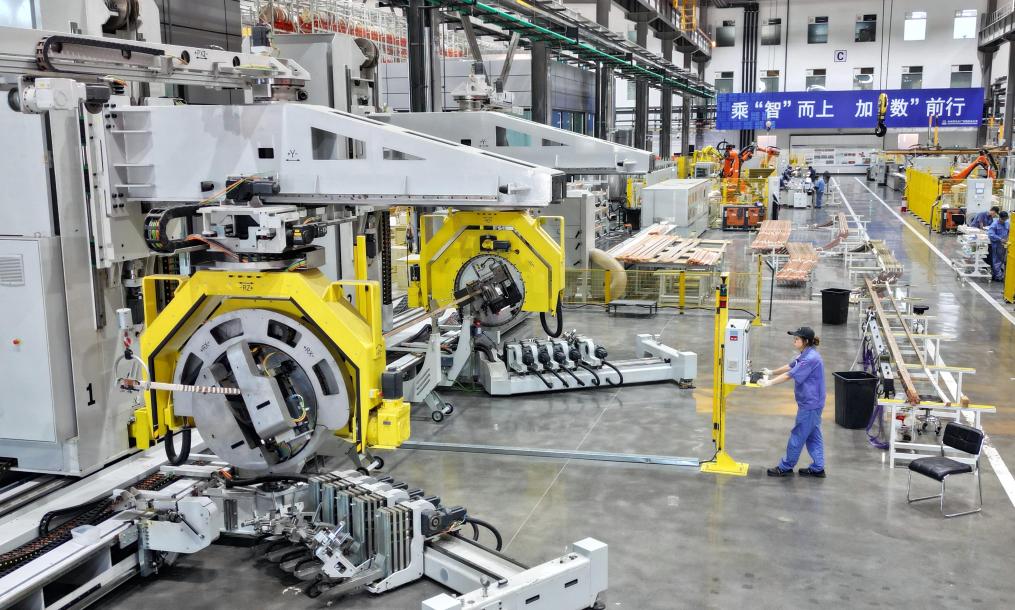
Group 1 - The core viewpoint emphasizes the role of local courts in supporting rural revitalization through conflict resolution and legal assistance [1][2][4] - The establishment of a "no litigation village" initiative is highlighted, with local courts adapting their strategies to promote harmony and resolve disputes effectively [2][3] - The integration of environmental protection and legal enforcement is showcased, with specific cases demonstrating the courts' commitment to ecological justice [4][5] Group 2 - The courts have implemented innovative mechanisms, such as involving local representatives in judicial processes, to enhance community engagement and transparency [6][7] - Data indicates that over the past three years, local courts have received a significant volume of civil and commercial cases, reflecting their active role in maintaining social stability [8]
美联储十月降息重大转折!10月19日,今日凌晨的三大消息冲击股市!
Sou Hu Cai Jing· 2025-10-18 19:55
Group 1: Immigration and Employment Policy - The ongoing dispute over H-1B visa application fees has escalated, with costs rising from thousands of dollars to $100,000, significantly impacting the U.S. tech industry that relies on foreign talent [1] - Large companies may absorb the increased costs, but startups and small businesses are likely to struggle, potentially weakening their competitiveness in R&D and product innovation [1] - The rising costs may push some tech talent to other countries, threatening the U.S.'s attractiveness in the global high-skilled talent market [1] Group 2: Resource Security - The U.S. Department of Defense has halted a $500 million cobalt procurement bid, which was intended to build strategic reserves for the renewable energy and military sectors [2] - The global cobalt supply is heavily concentrated in the Democratic Republic of Congo, and previous export policy tightening has caused prices to double, complicating U.S. procurement efforts [2] - The lack of domestic refining and processing capabilities indicates that the U.S. will need more international cooperation and long-term investment to address raw material security weaknesses [2] Group 3: Monetary Policy - Ahead of the October Federal Reserve meeting, there is a surprising shift in internal positions, with most officials leaning towards a 25 basis point rate cut, and some suggesting a possibility of 50 basis points [4] - Current signs of economic slowdown and labor market risks make a rate cut almost certain, with the probability of a 25 basis point cut nearing 100% [4] - The potential for a shift in liquidity management, including halting balance sheet reduction, may provide a supportive signal for both the bond and stock markets [4] Group 4: Market Implications - The intersection of immigration policy barriers, resource reserve bottlenecks, and monetary easing creates a complex environment for the U.S. market [4] - While short-term liquidity signals may dominate market behavior, long-term attention should be given to changes in industry competitiveness and supply chain security [4] - If the anticipated rate cut occurs, combined with improved liquidity by year-end, it could enhance global risk appetite, although underlying issues in talent and resource availability may continue to drive market volatility [4]

美联储十月降息重大转折!10月19日,今日凌晨的四大消息正式来袭!
Sou Hu Cai Jing· 2025-10-18 18:30
Group 1: Impact of Trump's H-1B Visa Policy - The new H-1B visa regulation increases application fees for high-skilled foreign workers to $100,000 from a few thousand dollars, significantly raising employment costs for companies, particularly small businesses and startups [1] - The policy contradicts the goal of boosting U.S. manufacturing, which requires more high-skilled workers, thus potentially leading to a talent drain to competing countries [1] Group 2: U.S. Defense Department's Cobalt Procurement Cancellation - The U.S. Defense Department canceled a $500 million cobalt procurement tender, which was intended to secure over 7,000 tons of alloy-grade cobalt for strategic reserves, marking the largest scale since the 1990s [3] - The cancellation highlights vulnerabilities in the U.S. supply chain for critical resources, as the country relies heavily on overseas suppliers, particularly from the Democratic Republic of Congo [3] Group 3: Federal Reserve's Interest Rate Decision - Ahead of the October 28-29 meeting, Federal Reserve officials are discussing potential interest rate cuts, with a consensus leaning towards a 25 basis point reduction, while some suggest a more aggressive 50 basis point cut [4] - The possibility of halting balance sheet reduction could signal increased liquidity in the market, positively impacting risk assets [4] Group 4: Overall Market Implications - The combination of these three developments suggests a reassessment of investment strategies in technology and resource sectors, as investors may reposition their portfolios in response to the changing landscape [4] - The uncertainty in U.S. policies and resource procurement may accelerate competition among global economies for talent and resources, potentially reshaping global supply chains [4]
利好来了!刚刚宣布:上调!
券商中国· 2025-10-18 15:04
Core Viewpoint - UBS has upgraded its global stock rating to "attractive," citing stronger-than-expected economic growth, easing tariff pressures, and a robust investment cycle driven by artificial intelligence [1][3]. Group 1: Global Stock Market Outlook - UBS has raised the ratings for global, U.S., Chinese, emerging markets, and Asian stocks (excluding Japan) to "attractive" [3]. - The firm emphasizes that structural trends remain solid, with strategic collaborations among AI-leading companies enhancing confidence in sustainable capital expenditure cycles and higher revenue visibility [3]. - UBS has increased its global earnings growth forecast for 2025 from 6.5% to 8%, expecting high single-digit growth next year [4]. Group 2: Focus on Chinese Technology Stocks - UBS has upgraded the rating for Chinese technology stocks to the most attractive, driven by increasing confidence in the ability of leading Chinese tech firms to monetize artificial intelligence [6]. - The MSCI Emerging Markets Index target for June 2026 has been raised to 1470 points due to improved corporate earnings expectations [6]. - Recent data shows a rebound in foreign capital inflow into the Chinese stock market, with $4.6 billion in net inflows in September, the highest since November 2024 [6]. Group 3: Investor Sentiment and Market Dynamics - Investor interest in Chinese stocks is growing, with many recognizing the diversification benefits and the expanding range of investable companies [7]. - A recent survey indicates that over 60% of global institutional investors believe emerging market stocks will outperform developed markets, up from 49% in June [7]. - More than half of the surveyed investors expressed optimism about the Chinese stock market, significantly higher than the one-third reported in June [7].


从创业,到上市:企业生命周期6阶段,投资机会都在哪? | 螺丝钉带你读书
银行螺丝钉· 2025-10-18 13:58
Core Viewpoint - The article introduces the concept of corporate life cycles and their relationship with investment strategies and valuation methods, emphasizing the importance of understanding these stages for making informed investment decisions [7][74]. Group 1: Corporate Life Cycle Stages - The corporate life cycle is divided into six stages: startup, business model refinement, IPO, growth, growth value, and deep value [10][74]. - The first stage, startup, involves transforming an idea into a product prototype, often requiring angel investment [15][18]. - The second stage focuses on refining the business model, necessitating various talents and resources, often through multiple rounds of financing (A, B, C rounds) [20][26]. - The third stage is the IPO, where companies become publicly traded, gaining access to more capital and resources [35][40]. - The fourth stage is growth, characterized by significant revenue increases and market share expansion, often reinvesting profits for further growth [42][48]. - The fifth stage, growth value, sees revenue growth slow down while profitability increases through cost management [54][62]. - The final stage, deep value, involves stable profits with limited growth potential, often leading to dividends or share buybacks for shareholders [64][68]. Group 2: Investment Strategies - Investors typically engage with companies in the later stages of the life cycle, particularly after the IPO [75]. - Different investment styles correspond to various life cycle stages, with notable investors like Warren Buffett focusing on growth value companies [78]. - Understanding these stages helps investors align their strategies with the appropriate corporate life cycle phase, enhancing investment decision-making [79].

ESG中国·创新年会(2025)10月24日至26日在京举办
Sou Hu Cai Jing· 2025-10-18 08:05
Core Viewpoint - The ESG China Innovation Annual Conference (2025) and the first ESG International Expo will be held in Beijing from October 24 to 26, aiming to stimulate ESG innovation among Chinese enterprises and promote the construction of a Chinese-style ESG system [2][3]. Group 1: Event Overview - The annual conference is co-hosted by the China Enterprise Reform and Development Research Association and Shougang Group, focusing on "full-chain innovation leading green transformation for the future" [2]. - The event aligns with national strategies such as Chinese-style modernization and green low-carbon development, serving as a key practice to advance China's ESG initiatives [2]. Group 2: Conference Structure - The main forum will include leadership speeches, the release of seven core outcomes, industry leader presentations, and roundtable discussions, featuring the "2025 Annual ESG Practice Report" and China's first ESG large model [3]. - Fifteen parallel sessions will cover topics like "theoretical innovation driving development in Chinese-style ESG" and "ESG innovation and new opportunities in green finance," creating a comprehensive logical chain from concept to practice [3]. Group 3: International Expo - The first ESG International Expo is the world's first international expo focusing on Chinese-style ESG practices, featuring three innovations: bilateral exchange of local achievements and international experiences, precise zoning by state-owned enterprises, local state-owned enterprises, private enterprises, and financial sectors, and interactive formats like VR experiences [3][4]. - The expo has attracted over 70 participating organizations, including 15 central enterprises, 14 local state-owned enterprises, 10 private enterprises, 18 foreign enterprises, one local government, nine international organizations, and four public welfare organizations, showcasing diversity, internationalization, and public welfare characteristics [4].

中欧资管合作提速,中国银行助力全球资管枢纽建设
Di Yi Cai Jing· 2025-10-18 07:54
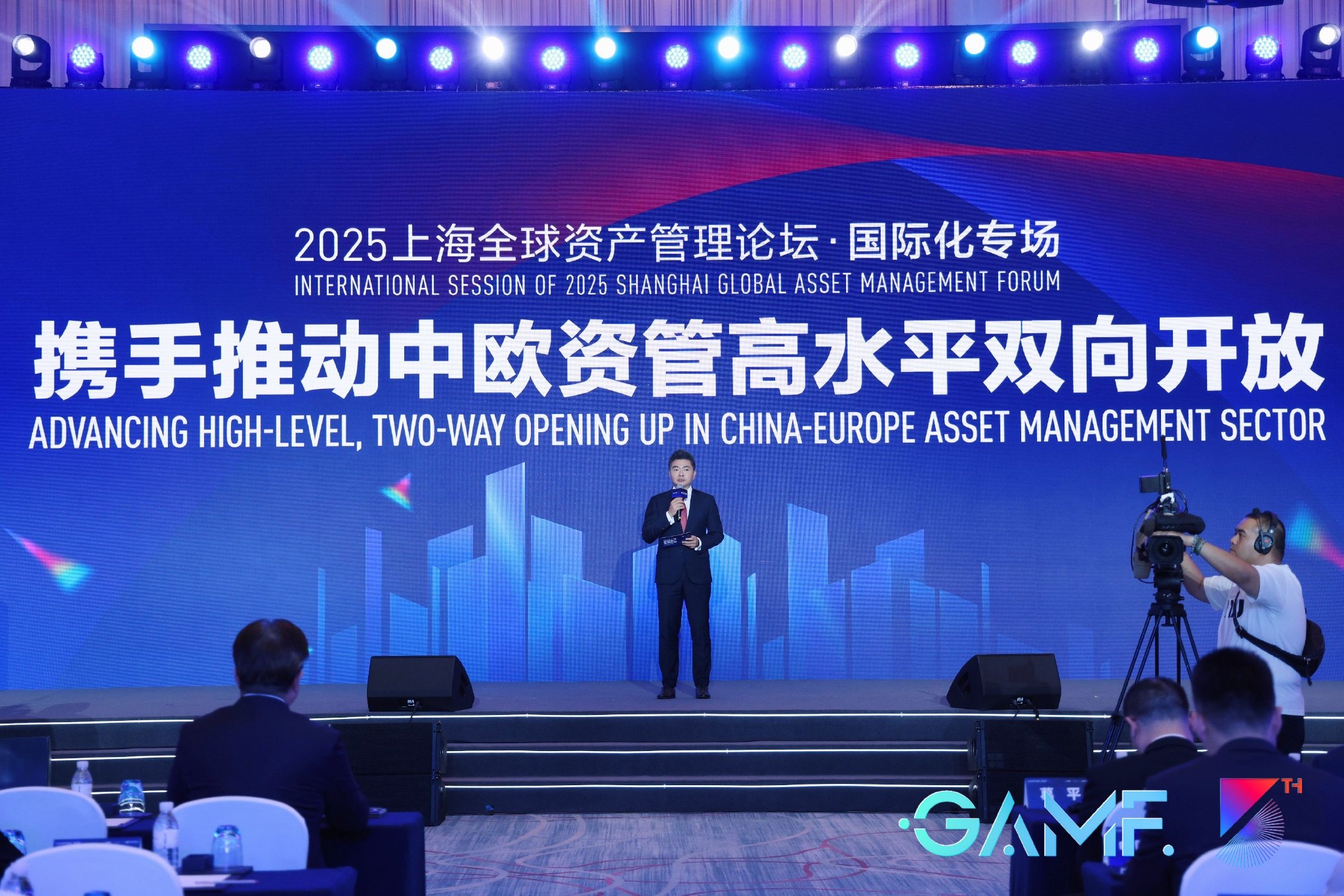
Core Insights - The "2025 Shanghai Global Asset Management Forum" emphasizes the importance of promoting high-level bilateral openness in the asset management sector between China and Europe amidst a complex international economic landscape [1][2] - China is enhancing its financial market and asset management openness, with the RMB gaining global attention as an investment and reserve currency, leading to increased interest from European institutions in China's stock and bond markets [3][4] Group 1: Economic and Financial Performance - Shanghai's GDP reached 2.6 trillion yuan in the first half of 2025, growing by 5.1% year-on-year, with the financial sector contributing 250 billion yuan, an 8.8% increase, accounting for 17.2% of the city's GDP [3] - The three leading industries in Shanghai—artificial intelligence, integrated circuits, and biomedicine—saw a combined output growth of 9.1%, supporting the city's competitiveness as an international financial center [3] Group 2: Policy and Institutional Developments - Shanghai is actively promoting the aggregation of financial institutions and enhancing financial service functions, currently hosting over one-third of the nation's foreign banks and nearly half of foreign insurance institutions [4] - The Shanghai Stock Exchange signed a memorandum of cooperation with the Swiss Exchange to advance cross-border openness, while also improving cross-border financial services and the internationalization of financial institutions [4] Group 3: Investment Trends and Opportunities - International investors are increasingly favoring Chinese assets due to supportive policies, technological innovations, and market performance, with net inflows exceeding 60% of the total for 2024 by mid-2025 [5] - The Chinese market is seen as having significant potential in areas like institutional openness, green finance, and pension markets, with suggestions to gradually relax restrictions on overseas investments in pensions [6] Group 4: Sector Performance and Investment Focus - From 2022 to 2024, energy and financial sectors showed resilience, while 2025 is expected to highlight sectors related to artificial intelligence and leading companies in pharmaceuticals and materials [7] - China is emerging as a leader in innovative drug development, with clinical-stage innovations accounting for 50% of global totals, and is also making strides in electric vehicles and robotics [7] Group 5: Financial Cooperation and Market Integration - The cooperation between China and Europe is characterized by accelerated infrastructure connectivity and deepening policy communication, with the RMB's role in bilateral cooperation becoming increasingly diverse [8] - The London Stock Exchange is implementing reforms to enhance its competitiveness, while also exploring opportunities for collaboration in green economy and energy sectors with Chinese firms [9] Group 6: Strategic Initiatives and Future Outlook - China Bank is positioned as a key player in facilitating China-Europe financial cooperation, with a global custody scale of 4.7 trillion yuan, serving over 100 countries [10] - Future initiatives will focus on enhancing collaboration in green finance, technology empowerment, product innovation, and risk management, aiming to leverage historical opportunities for high-quality development in China and green transitions in Europe [14]

不出意外,信号已明确,A股迎来最后调整
Sou Hu Cai Jing· 2025-10-18 06:45
Core Viewpoint - The recent decline in A-shares is seen as a signal of the market entering its final adjustment phase, with limited downside potential and a shift of funds from crowded sectors to undervalued areas [1][3]. Market Adjustment - Market adjustments are viewed as a healthy mechanism, necessary for releasing pressure and correcting overvalued assets, similar to how the human body requires breathing [3][5]. - Historical examples illustrate that significant adjustments have previously helped to re-anchor values, such as the 2015 and 2021 market corrections [3]. Investor Sentiment - Market adjustments test investor psychology, highlighting the tendency for individuals to panic sell during downturns and chase prices during upswings [5][9]. - The distinction between price and value is crucial; true investment opportunities arise when stock prices fall significantly below their intrinsic value [5]. Sector Rotation - Recent market behavior shows a rotation from high-growth technology stocks to traditional sectors like banking and insurance, reflecting cyclical patterns [7][9]. - Historical trends indicate that no sector remains perpetually bullish, emphasizing the importance of timing and sector awareness in investment strategies [7]. Investment Strategies - Two recommended strategies in volatile markets include left-side trading during low interest and dollar-cost averaging into index funds to mitigate timing risks [9][11]. - Investors should maintain a consistent investment logic, avoiding contradictory strategies that can lead to confusion and missed opportunities [9]. Market Environment Challenges - The A-share market faces challenges such as misinformation and emotional trading among retail investors, which can lead to erratic price movements [11][13]. - The need for a more robust credit system and improved information filtering capabilities for ordinary investors is highlighted, as they are often swayed by market noise [11]. Current Market Position - Indicators suggest that the market is nearing the end of its adjustment phase, with key sectors like finance and consumer goods at historically low valuations, providing a foundation for potential rebounds [13]. - Prepared investors who maintain cash reserves and are willing to act against the prevailing market sentiment are likely to emerge as winners in the next phase [13].