农产品

Search documents
降息预期已基本定价商品短期或震荡运行:大宗商品周度报告2025年12月8日-20251208
Guo Tou Qi Huo· 2025-12-08 12:57
1. Report Industry Investment Rating - Not mentioned in the provided content 2. Core Viewpoints of the Report - The commodity market as a whole rose 0.97% last week, with precious metals leading the gain at 3.43%, non - ferrous and black metals rising 2.37% and 0.78% respectively, while agricultural products and energy - chemicals declined 0.32% and 1.08% respectively. The short - term commodity market may fluctuate as the expectation of interest rate cuts has been basically priced in [2][6]. - The short - term precious metals sector may experience high - level fluctuations, the non - ferrous sector may operate stably, the black sector may fluctuate weakly, the energy sector's price center has a downward pressure, the chemical sector may adjust with fluctuations, and the agricultural products and oilseeds sector may fluctuate weakly in the short term [2][3][4]. 3. Summary by Relevant Catalogs 3.1 Market Review - **Overall Market Performance**: The overall commodity market rose 0.97% last week. Precious metals led the gain at 3.43%, non - ferrous metals rose 2.37%, black metals rose 0.78%, while agricultural products and energy - chemicals fell 0.32% and 1.08% respectively [2][6]. - **Top - performing and Bottom - performing Varieties**: The top - performing varieties were silver, copper, and pulp, with increases of 7.54%, 6.12%, and 4.85% respectively; the bottom - performing varieties were glass, eggs, and ethylene glycol, with decreases of 5.6%, 5.34%, and 4.17% respectively [2][6]. - **Volatility**: The 20 - day average volatility of the commodity market continued to decline, and the volatility - reducing varieties were mainly concentrated in the agricultural products and energy - chemicals sectors [2][6]. - **Fund Flow**: The overall market scale increased last week. Only the agricultural products sector had a small net outflow of funds, and most of the inflows were concentrated in the Shanghai copper contract [2][6]. 3.2 Outlook - **General Outlook**: The recent strengthening of the Japanese yen has suppressed the US dollar index. The US core PCE in September was slightly lower than expected, laying a foundation for the Fed to cut interest rates, which is also beneficial to US dollar liquidity. However, the Russia - Ukraine situation has reached a stalemate, bringing uncertainty to the continuous improvement of liquidity. The short - term commodity market may fluctuate [2]. - **Precious Metals**: The weekly initial jobless claims dropped to 191,000, far lower than expected, hitting a new low since September 2022, alleviating market concerns about the sharp deterioration of the labor market. Interest rate cuts have been basically priced in. After silver hit a new high, its upward momentum has slowed down. The short - term sector may experience high - level fluctuations [2]. - **Non - ferrous Metals**: The expectation of the US interest rate cut is gradually increasing, and the pressure of the US dollar index on the sector is weakening. The preliminary value of the University of Michigan Consumer Sentiment Index in December has improved, and the overall macro - environment is neutral to warm. Fundamentally, the inventory continued to decline last week, and the raw material supply remained tight, supporting the sector. However, as the price reached a high level, the support weakened. The short - term sector may operate stably [3]. - **Black Metals**: Last week, the apparent demand for rebar continued to decline, production dropped significantly, and inventory continued to decrease. Steel mills' profits were still poor, and pig iron production continued to fall. There are many maintenance plans for steel mills in December, and pig iron production may further decline in the future. In terms of raw materials, the global iron ore shipment was relatively strong, and the port inventory continued to increase last week; the domestic coking coal supply was relatively stable, but the import volume increased significantly, suppressing coal prices. With the cost moving down, the short - term sector may fluctuate weakly [3]. - **Energy**: Last week, the geopolitical situation further heated up, and the progress of the Russia - Ukraine peace plan stalled, weakening the market's expectation of restoring Russian oil exports after reaching an agreement. EIA weekly data showed that US crude oil inventories increased, and gasoline inventories increased significantly more than expected. The news boosted oil prices in the short term, and the increasing probability of the Fed's interest rate cut also had a positive impact on oil prices. However, the expanding supply - demand surplus in the fundamentals still determines that the oil price center has a downward pressure [3]. - **Chemicals**: The polyester terminal weaving load continued to decline, and the supply - demand drive of the industrial chain was limited. There was insufficient drive for short - term price increases, and relevant varieties may adjust with fluctuations. For building materials, PVC continued to accumulate inventory, and the profit of chlor - alkali integration was compressed. The pattern of using alkali to supplement chlorine is not expected to last long. It is possible that PVC enterprises will increase maintenance in the future, alleviating the supply pressure; the glass production capacity continued to be compressed, but some glass factories postponed cold - repair plans, and the actual progress needs to be monitored [4]. - **Agricultural Products**: In the new South American season, the sowing progress of Brazilian soybeans is normal, while the sowing progress of Argentine soybeans is slow due to weather conditions. The domestic soybean meal spot supply remains loose, suppressing prices. The market currently estimates that Malaysian palm oil inventories will continue to increase in November, with high inventory pressure. The short - term oilseeds sector may fluctuate weakly, and attention should be paid to the data verification of the USDA and MPOB reports [4]. 3.3 Commodity Fund Overview - Most gold ETFs had positive weekly returns, with returns ranging from 0.78% - 0.87%. The total scale of gold ETFs was 23.4263 billion yuan, with a growth of 0.38%, and the total trading volume was 756,101,805, with a growth of 15.76% [39]. - The energy - chemicals ETF had a weekly return of - 0.67%, with a scale of 16.99 billion yuan and a decrease of 3.47% [39]. - The soybean meal ETF had a weekly return of - 0.59%, with a scale of 26.28 billion yuan and an increase of 0.45% [39]. - The non - ferrous metals ETF had a weekly return of 4.30%, with a scale of 30.11 billion yuan and an increase of 8.10% [39]. - The silver fund had a weekly return of 7.33%, with a scale of 43.47 billion yuan and no change in scale [39]. - The total scale of commodity ETFs was 24.5947 billion yuan, with a growth of 0.52%, and the total trading volume was 1,467,321,985, with a growth of 18.70% [39].
不许中国赚钱,刚回法国,马克龙威胁中方解决逆差,否则就加税
Sou Hu Cai Jing· 2025-12-08 11:50
Core Viewpoint - The trade deficit between the EU and China, amounting to $310 billion, has become a contentious issue, with French President Macron threatening tariffs if the situation is not addressed. However, the complexity of trade relationships suggests that a simple deficit does not equate to a loss for Europe [2][4][6]. Trade Structure - The EU's trade structure with China shows a significant reliance on Chinese manufacturing due to its efficiency and cost-effectiveness, with many European households using Chinese products [4]. - French products, including aircraft, wine, cosmetics, and luxury goods, are thriving in the Chinese market, indicating a mutually beneficial relationship [4][12]. - European companies benefit from investments in China, often earning more than what is reflected in export figures, which is frequently overlooked in discussions about trade deficits [4][6]. Economic Context - The economic pressures in Europe, including high inflation and an ongoing energy crisis, have led to increased scrutiny of trade relationships, with Macron's statements reflecting domestic political pressures rather than a genuine desire to disrupt trade [8][10]. - The concept of "strategic autonomy" in Europe aims to reduce reliance on external markets, but the reality is that Europe remains heavily dependent on international supply chains [10][16]. Cooperation Beyond Trade - The depth of cooperation between China and France extends beyond trade, encompassing technology partnerships, cultural exchanges, and educational collaborations, which are vital for both economies [12][14]. - France's agricultural and luxury sectors have seen consistent growth in China, highlighting the importance of this market for French economic stability [14][16]. Political Dynamics - Macron's tough stance on trade appears to be more of a political maneuver aimed at addressing domestic concerns rather than a reflection of the actual economic relationship between the EU and China [8][18]. - The potential for tariffs could harm European businesses and consumers, as they rely on Chinese goods and materials, suggesting that a cooperative approach would be more beneficial [16][18].


【BOYAR监测】饲料原料市场每日简评【12.8】
Xin Lang Cai Jing· 2025-12-08 11:15
来源:市场资讯 (来源:博亚和讯) 期货大幅下跌 豆粕现货稳中有跌 2025年12月8日大连玉米期货市场 1、CBOT豆类合约行情 周五CBOT大豆期货下跌,八周以来首次周线跌幅,市场对美国大豆的需求规模存在不确定性。 CBOT 1月大豆期货收跌14-1/4美分,结算价报每蒲式耳11.05-1/4美元。1月大豆期货周线累计下滑 2.8%,此前连续七周周线上涨。 CBOT 1月豆粕期货收跌3.80美元,结算价报每短吨307.40美元。 CBOT 1月豆油期货收跌0.10美分,结算价报每磅51.69美分。 2、大连豆粕期货市场 大连豆粕期货市场大幅下跌,主力合约2605价格低开收跌,收阴线,放量增仓。开盘价2821元,收盘价 2778元,跌45元,最高价2826元,最低价2770元,结算2793元,成交量1089811,持仓量1890767。 3、豆粕现货市场 今日国内豆粕现货价格稳中有跌,局部下跌10元/吨。中美经贸牵头人举行视频通话,双方围绕落实好 中美两国元首釜山会晤和11月24日通话重要共识,就下一步开展务实合作和妥善解决经贸领域彼此关 切,进行了深入、建设性的交流。周五,民间部门向中国出售46.2万吨美 ...

软商品日报-20251208
Dong Ya Qi Huo· 2025-12-08 10:52
咨询业务资格:沪证监许可【2012】1515号 研报作者:许亮 Z0002220 审核:唐韵 Z0002422 【免责声明 】 本报告基于本公司认为可靠的、已公开的信息编制,但本公司对该等信息的准确性及完整性不作任何保证。本报告所载的意见、结论及预测仅反映报告发布时的观点、结论和 建议。在不同时期,本公司可能会发出与本报告所载意见、评估及预测不一致的研究报告。本公司不保证本报告所含信息保持在最新状态。本公司对本报告所含信息可在不发出通知的情形 下做出修改, 交易者(您)应当自行关注相应的更新或修改。本公司力求报告内容客观、公正,但本报告所载的观点、结论和建议仅供参考,交易者(您)并不能依靠本报告以取代行使 独立判断。对交易者(您)依据或者使用本报告所造成的一切后果,本公司及作者均不承担任何法律责任。本报告版权仅为本公司所有。未经本公司书面许可,任何机构或个人不得以翻 版、复制、发表、引用或再次分发他人等任何形式侵犯本公司版权。如征得本公司同意进行引用、刊发的,需在允许的范围内使用,并注明出处为"东亚期货",且不得对本报告进行任何有 悖原意的引用、删节和修改。本公司保留追究相关责任的权力。所有本报告中使用的商标 ...
倒计时4天!大湾区农交会即将“粤”聚广州,“媒体+”农产品更出圈
Nan Fang Nong Cun Bao· 2025-12-08 10:30
Core Insights - The 2025 Greater Bay Area Agricultural Products Trade Fair will be held from December 12 to December 14, focusing on promoting agricultural products and supporting rural revitalization [4][10]. Group 1: Event Overview - The trade fair will feature four core exhibition areas and showcase over 10,000 high-quality agricultural products, ranging from specialty products to processed foods [11][12]. - The event aims to present a comprehensive view of high-quality agricultural development and facilitate the integration of agricultural products into international markets [10][12]. Group 2: Exhibition Areas - The Original Agricultural Products Brand Exhibition Area will display regional public brands and quality agricultural product brands, providing a one-stop understanding of premium agricultural brands [15][16]. - The Rural Revitalization and Prosperity Industry Exhibition Area will showcase rural revitalization achievements and local specialty products, promoting market access for quality rural agricultural products [22][24]. - The Green Organic Landmark Exhibition Area will focus on geographical indications and organic products, catering to consumer demand for healthy and high-quality agricultural goods [29][32]. - The Consumption Assistance Exhibition Area will highlight the results of poverty alleviation efforts and regional specialty products, emphasizing the impact of consumption assistance on rural revitalization [37][39]. Group 3: Highlights of the Fair - The event is backed by three authoritative organizations, gathering over 600 exhibitors and 5,000 global buyers, providing real-time updates on industry trends [46][47]. - A diverse range of agricultural products will be showcased, including fresh fruits and vegetables, quality grains and oils, ecological meat and eggs, and processed foods, meeting various consumer needs [48][52]. - The fair will facilitate precise connections between producers and buyers through dedicated matchmaking areas and specialized product promotion sessions [53][55]. - Over 30 concurrent activities will be held, including signing ceremonies and industry forums, providing platforms for networking and collaboration [58][62]. - A robust media presence will enhance brand exposure for exhibitors, leveraging a wide array of media channels [63][66]. - Comprehensive support services will be provided to address challenges faced by exhibitors in production, sales, and branding [67][73]. - The fair aims to expand international markets by attracting international buyers and facilitating the global reach of quality agricultural products [75][78]. - Efficient visitor services will be implemented to enhance the exhibition experience, including clear navigation and quick entry options [79][83].


名人宿松行:电商直播新引擎赋能乡村振兴
Sou Hu Cai Jing· 2025-12-08 10:28
Core Insights - The event "2025 Second Anhui Agricultural, Cultural, and Tourism E-commerce Carnival" aims to integrate e-commerce resources with local特色产业, exploring effective paths for digital economy empowerment in rural revitalization and promoting deep integration of agriculture, culture, and tourism [1]. Group 1: Event Overview - The carnival received support from multiple departments and gathered government, platforms, enterprises, media, and quality influencers to discuss new trends and opportunities in rural e-commerce development [4]. - The event showcased the regional public brand "Susong Flavor," featuring a display area for local specialty products, including aquatic products, grains, teas, and intangible cultural heritage items, through an online and offline interactive approach [4]. Group 2: Live Streaming Initiative - Sixteen live streaming rooms were set up at the event, inviting top influencers to enhance brand exposure and drive traffic, while local influencers provided product insights through cultural narratives [5]. - This collaborative live streaming model created a comprehensive promotion system for agricultural products, allowing viewers to experience the event's atmosphere and make purchases in real-time [5]. Group 3: Resource Integration and Industry Impact - The event included practical activities such as community offline procurement and enterprise matchmaking, strengthening the connection between production and sales [6]. - The successful hosting of the carnival demonstrated Anhui Province's proactive exploration of using the digital economy to support comprehensive rural revitalization, providing a platform for resource connection and brand promotion for local特色产业 [6].

玉米周报:短期供需错配,盘面高位震荡-20251208
Guo Mao Qi Huo· 2025-12-08 07:20
Report Industry Investment Rating - The investment rating for the corn market is "oscillating" [4] Report's Core View - The recent counter - seasonal rise in corn prices is due to the extremely tight downstream inventories caused by the market's previous unanimous bearish expectations, combined with factors such as logistics and grain quality issues, essentially reflecting the low carry - over of old crops. In the short term, before the spot market contradictions are resolved, the 01 contract is expected to oscillate at a high level. In the medium term, the trends of the 03 and 05 contracts need to closely monitor the changes in the grain - selling rhythm in the producing areas, the arrival of imported corn, and policy trends [4] Summary According to Relevant Catalogs Part One: Main Views and Strategy Overview - **Supply**: Bullish. The current grass - roots grain - selling progress has exceeded 30%, which is relatively fast compared to the same period in history. The planting cost in the 25/26 season continues to decline, with increased production in the Northeast and Northwest and decreased production in North China. The overall national production is expected to be abundant. Imported Brazilian corn is arriving at ports successively [4] - **Demand**: Bullish. As of October 2025, the national industrial feed production was 29.07 million tons, a 4.2% month - on - month decrease and a 3.6% year - on - year increase. The proportion of corn in compound feed produced by feed enterprises was 38.0%, a 2.7 - percentage - point year - on - year decrease. Livestock and poultry are expected to maintain high inventories in the short term. Feed enterprises have low inventories and a rigid demand for replenishment. Deep - processing enterprises have seasonal inventory - building needs, and channel traders have a strong willingness to purchase new - season corn [4] - **Inventory**: Bullish. Due to good shipping demand, the inventory accumulation rate at northern ports is slow, and the inventory is still at a low level. The grain inventory at southern ports has dropped to a low level. Feed enterprises and deep - processing enterprises also have low corn inventories [4] - **Basis/Spread**: Neutral. The basis is at a neutral level, and the spread is at a high level [4] - **Profit**: Bearish. The breeding profits of pigs, meat and egg - laying poultry, and the processing profits of deep - processed starch and alcohol are all in the red [4] - **Valuation**: Neutral. From the perspective of planting cost, the valuation of new - season corn is high; from the perspective of the absolute futures price, the valuation of the corn futures price is low [4] - **Macro and Policy**: Bullish. The railway administration issued a loading - limit notice, increasing the short - term expectation of logistics tightness [4] - **Investment View**: Oscillating. In the short term, the 01 contract is expected to oscillate at a high level. In the medium term, closely monitor the grain - selling rhythm, import situation, and policy trends for the 03 and 05 contracts [4] - **Trading Strategy**: Unilateral trading is expected to oscillate, and arbitrage is on hold. Pay attention to policies and weather [4] Part Two: Review of Futures and Spot Market Quotes - Presents multiple charts, including the basis trend of the corn main contract, national average prices, port prices, starch prices, and futures contract positions. These charts show the historical data from 2019 - 2025, reflecting the price trends and position changes of corn in different periods [6][8][12] Part Three: Domestic Corn Supply - Demand Fundamental Data - **Grain - Selling Progress**: The grass - roots grain - selling progress in the Northeast and North China is presented through charts, showing the data from 2019/20 - 2025/26 [23] - **Channel Supply**: The channel supply has increased, and relevant data on the arrival volume at northern ports and the remaining vehicles at Shandong deep - processing enterprises are presented [25] - **Import**: In October, corn imports increased, while imports of sorghum and barley decreased [35] - **Port Inventory**: The inventory at northern ports and the grain inventory at southern ports are at low levels [41] - **Feed Industry**: The inventory days of feed enterprises are presented, and the monthly feed production from 2021 - 2025 is also shown. The data shows that as of October 2025, the national industrial feed production was 29.07 million tons, a 4.2% month - on - month decrease and a 3.6% year - on - year increase [46][48] - **Livestock and Poultry Breeding**: The breeding profits of pigs, broilers, and laying hens are in the red. The pig price has declined slightly, and the weight reduction is not obvious [50][54] - **Deep - Processing Industry**: The corn consumption of deep - processing enterprises has increased seasonally, and the inventory is at a low level. The starch processing profit has deteriorated, and the starch inventory is being depleted. The alcohol start - up rate has increased seasonally, but the processing profit has declined [65][73][93] - **Substitute Products**: The wheat price has risen, and the flour demand is weak [100] Part Four: Foreign Corn Supply - Demand Fundamental Data - **USDA Report**: The corn stock - to - use ratios of major exporting countries in the 2025/26 season have been raised. The global corn production and its distribution are presented, with the United States accounting for 32%, China 23%, Brazil 10%, Ukraine 3%, Argentina 4%, and other countries 28% [113][117][118] - **US Corn Exports**: US corn export sales are performing well, and the export sales and cumulative export sales to China are also presented [119]
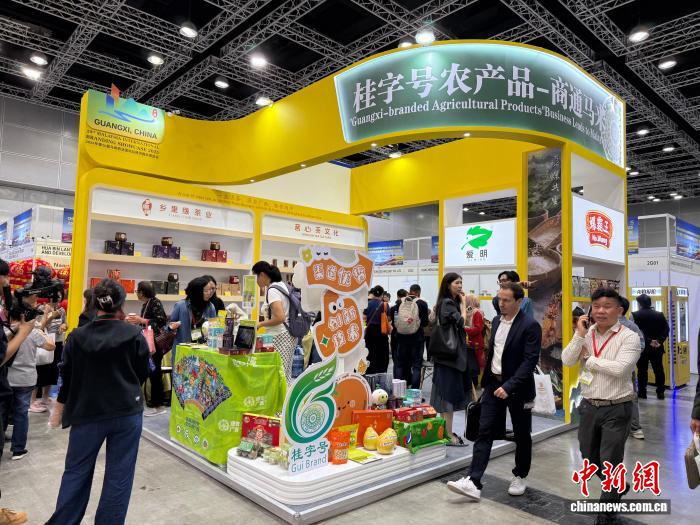
“桂字号”农产品借展会开拓马来西亚市场
Zhong Guo Xin Wen Wang· 2025-12-08 07:00
Core Insights - The "Gui" brand agricultural products are expanding into the Malaysian market through participation in the 2025 Malaysia International Brand Consumer Goods Expo and the China-ASEAN Expo [1][4] - The event showcased over 30 types of "Gui" products, enhancing the brand's visibility and influence in the ASEAN market [1][2] Group 1 - The exhibition attracted significant attention, featuring products like Liupu taro, snail rice noodles, Liu Bao tea, and Luo Han Guo, which engaged local consumers and professional buyers [2][5] - Guangxi Rural Investment Group Co., Ltd. established preliminary cooperation intentions with over 10 local Malaysian chain supermarkets and cross-border distributors during the event [2] - The "Liu Zhou Snail Rice Noodles" successfully entered the mainstream market in Malaysia and received international HALAL certification, targeting the local Muslim consumer base [2] Group 2 - The Guangxi Agricultural and Rural Affairs Department plans to deepen agricultural trade cooperation with Malaysia, organizing industry exchange meetings and promoting specific agricultural cooperation projects [4] - The initiative aims to systematically enhance the competitiveness of "Gui" agricultural products in Malaysia and the ASEAN market, providing sustained momentum for Guangxi agriculture's international expansion [4]
底部支撑渐显,波动中导机遇:豆粕年报
Chang Jiang Qi Huo· 2025-12-08 06:19
1. Report Industry Investment Rating No information provided in the given content. 2. Core Views of the Report - The market currently maintains the expectation of a bumper harvest of South American soybeans in the 2025/26 season. The increase in the global total soybean supply is lower than that of the total demand, and the ending inventory and inventory-to-sales ratio have both declined from high levels, with the supply-demand pattern slightly tightening. However, the supply-demand pattern remains loose [1][3][40]. - In 2026, it is expected that the domestic inventories of hogs and poultry will remain at high levels, supporting feed demand. Although the overall inventory is expected to decline slightly compared to 2025, the proportion of soybean meal added to feed is expected to increase year-on-year due to its improved cost-effectiveness and lower price. High inventories and cost-effectiveness will support the demand for soybean meal, which is expected to remain above 85 million tons in 2026, corresponding to a soybean volume of over 100 million tons [1][40][41]. - The cost of Brazilian soybeans in the 2025/26 season is 950 cents per bushel. The domestic cost of soybean meal from Brazilian soybeans during the supply season (May - August) is calculated to be 2,580 yuan per ton, and it rises to 2,760 yuan per ton from July - September. The planting cost of US soybeans in the second half of the 2025/26 season is 1,000 cents per bushel, and the domestic import cost of US soybeans is calculated to be 3,000 yuan per ton. The overall crushing profit from December - January is maintained between -100 yuan per ton and -200 yuan per ton, while the crushing profit of Brazilian soybeans is around 30 yuan per ton, which is at a relatively good level compared to historical periods [2][41]. - In 2026, the domestic soybean meal market will have strong supply and demand, and inventory accumulation will continue. Before the South American production increase is realized, the downside space for soybean meal is relatively limited, but once the production increase is realized, the risk of price decline will intensify [3][42]. 3. Summary According to the Table of Contents 3.1 Market Review - In 2025, the soybean meal market fluctuated between "weak reality and strong expectation" throughout the year, showing a pattern of "increased volatility in the first half and consolidation in the second half". The annual average price of the main contract fluctuated around 3,020 yuan per ton, with a price difference of 387 yuan per ton between the high and low points [7]. - From January - March, policy disturbances led to a mismatch between supply and demand, pushing up prices. The spot price of soybean meal rose from 2,980 yuan per ton at the beginning of January to 3,050 yuan per ton at the end of the month, and the futures main contract rebounded to 3,030 yuan per ton. In February, due to the Spring Festival holiday, the oil mill operating rate dropped to 58%, and the inventory fell to a low of 650,000 tons. The basis strengthened to 350 yuan per ton, and the spot price soared to 3,120 yuan per ton. In March, the failure of state - owned enterprises to sell reserved soybeans as scheduled and tightened port clearance led to a shortage of spot supply, with the basis once exceeding 800 yuan per ton and the futures main contract reaching a high of 3,240 yuan per ton [7]. - From April - June, the abundant supply suppressed prices. In late April, South American soybeans arrived at ports in large quantities, with the monthly arrival volume reaching 9.2 million tons. The oil mill operating rate rebounded to 78%, and the soybean meal inventory quickly accumulated to 980,000 tons. The price started to decline, with the spot average price dropping from 3,100 yuan per ton to 3,010 yuan per ton. In May, the export progress of Brazilian soybeans exceeded expectations, the crushing profit of domestic oil mills improved, and the operating rate remained high. Coupled with weak demand in the breeding industry due to losses, the soybean meal price continued to decline to 2,950 yuan per ton. In June, the expected increase in the US soybean planting area led the market to trade the logic of a bumper harvest in advance, with the futures main contract reaching a low of 2,860 yuan per ton and the spot average price dropping to 2,900 yuan per ton [8]. - From July - September, there was a game between weather disturbances and high inventory pressure. In July, a temporary drought in North America led to a downward adjustment of the expected yield per unit area of US soybeans, causing the futures main contract to rebound to 3,020 yuan per ton. However, the spot inventory remained as high as 1.1 million tons, and some oil mills stopped production due to full storage. The spot price only rebounded to 2,960 yuan per ton. In August, the export of South American soybeans was coming to an end, and the domestic soybean arrival volume decreased by 15% month - on - month. However, the peak season demand for aquaculture was lower than expected, and the price fluctuated in the range of 2,980 - 3,030 yuan per ton. In September, Argentina's cancellation of the soybean export tax led to an expected decline in import costs, and the double - festival stocking was lower than expected. The spot average price decreased by 0.5% month - on - month to 3,013 yuan per ton, a 2.74% decline compared to the same period last year [8]. - From October - December, the market was in a process of bottom - building and expectation repair. In October, the soybean import volume increased by 17.25% year - on - year to 9.482 million tons, and the supply remained abundant. However, the futures market was driven by the expectation of a US soybean yield reduction, and the main contract rebounded from a low of 2,852 yuan per ton, with a monthly increase of 4.9%. In November, the USDA report lowered the expected yield per unit area of US soybeans to 53 bushels per acre, but the export forecast was also lowered. The market showed a pattern of rising and then回调, with the main contract fluctuating in the range of 3,000 - 3,089 yuan per ton, and the spot average price slightly decreasing to 3,036 yuan per ton. In December, the sowing of South American soybeans was basically completed, and the expectation of a bumper harvest suppressed the upside space of prices. The main contract returned to a consolidation state, and the spot average price at the end of the month was expected to remain around 3,040 yuan per ton [9]. 3.2 Fundamental Analysis 3.2.1 Global Supply - Demand Analysis - **Supply Side**: The global soybean supply pattern in the 2025/2026 season is loose. The USDA estimates the global soybean output to reach 422 million tons, with a stock - to - consumption ratio of 19.9%. South America is the core supply area, with Brazil's soybean output reaching a record high. The CONAB maintains the output forecast for the 2025/2026 season at 177.6 million tons, a year - on - year increase of 3.6%, and the USDA also estimates a bumper harvest of 175 million tons. Although some areas in Mato Grosso had to replant due to drought in October, the overall production situation is stable. Argentina's output is expected to decline year - on - year, with the Rosario Exchange estimating 47 million tons, lower than the previous year's 49.5 million tons, but still at a historically high level. However, affected by the La Nina weather from December - January, the sowing of Argentine soybeans is slow, and the output may be affected to varying degrees. In the North American market, the output of US soybeans in the 2025/2026 season was lowered to 4.253 billion bushels due to insufficient precipitation in the main producing areas in August, with a yield per unit area of 53 bushels per acre. The export performance is weak, with the USDA estimating the export volume at 1.635 billion bushels, a significant decline from the previous year's 1.875 billion bushels. The main reason is that under the 13% tariff, the discount of US soybeans is higher than that of Brazilian soybeans, lacking the advantage of crushing profit, which leads to insufficient enthusiasm for commercial procurement by Chinese enterprises [12]. - **Demand Side**: The total global demand for soybean meal is estimated to be 422 million tons, showing a steady increase compared to the previous year. The global soybean consumption is basically the same as the output. Regionally, China accounts for more than 29% of the consumption and is still the world's largest consumer market. The estimated import volume of Chinese soybeans in the 2025/26 season is 112 million tons, a year - on - year increase of 4 million tons. In Asia, the large - scale development of the breeding industry drives the rigid growth of feed demand, supporting the import demand for soybean meal. In Europe, affected by environmental protection policies, the growth rate of the breeding scale has slowed down, and the demand growth is moderate. In the Americas, the demand for local feed and the biodiesel industry complement each other, and the overall demand is stable. There is significant regional demand differentiation. In emerging markets, due to population growth and the upgrading of meat consumption, the growth rate of soybean meal demand exceeds 5%. In developed countries, due to the improvement of breeding efficiency and the application of alternative raw materials, the demand growth rate is maintained at around 2%. Sino - US trade policies have reshaped the global trade flow, presenting a pattern of "South America supplying Asia, North America supplying itself and neighboring regions". Brazil's soybean export volume is expected to account for more than 50% of the global total, with 74% of its exports going to China. The proportion of US soybean exports to China is only 17.6%, a decrease of more than 30 percentage points compared to before the trade friction, and more US soybeans are flowing to Europe and the South American local market [14][15]. 3.2.2 Domestic Supply - Demand Analysis - **Supply Side**: In 2025, the domestic soybean import volume reached 113 million tons, a year - on - year increase of 6.39%. From January - October, the cumulative import volume was 95.682 million tons. The import structure shows a significant trade policy orientation, with South American soybeans accounting for more than 85% (78% from Brazil and 7% from Argentina) and US soybeans accounting for 10.6%, mainly from state - owned trade procurement under the Sino - US trade agreement, with a very low proportion of commercial imports. The estimated arrival volume in November was 9.685 million tons, and in December it was 7 million tons, with a continuous abundant supply. The soybean inventory remained at a high level. As of the end of November, the national oil mill soybean inventory was 7.6195 million tons, a month - on - month increase of 7.20%, and there was over - storage in some areas. The crushing volume also increased significantly, with the annual crushing volume reaching a record high of 101 million tons. The average operating rate of oil mills was maintained at around 72%. In the first quarter, the operating rate was low due to policy disturbances, and it rebounded to 75% - 80% in the second and third quarters as the soybean arrival volume increased. Affected by Sino - US trade policies, the proportion of US soybeans crushed by coastal oil mills was less than 8%, far lower than 35% in 2017, mainly concentrated in large - scale oil mills with state - owned trade quotas, while small and medium - sized oil mills still mainly used Brazilian soybeans as raw materials. The soybean meal output increased in tandem with the crushing volume, with an annual output of about 83 million tons. The inventory showed the characteristics of "de - stocking in the first half of the year and inventory accumulation in the second half". As of the end of November, the national oil mill soybean meal inventory was 998,600 tons, a year - on - year increase of 23.67%, and it was at a historically high level [18][19]. - **Demand Side**: In 2025, the domestic soybean meal consumption was over 85 million tons, with feed consumption accounting for more than 95%. The demand from the breeding industry is the core support. In the pig - breeding industry, although it was in a loss state for most of the year, the process of reducing production capacity was slow, and the inventory remained at a high level, supporting the demand for soybean meal in pig feed. In the poultry - breeding industry, due to the short cycle and flexible adjustment, there was a reduction in production capacity in some periods, leading to a decrease in demand. In the aquaculture industry, affected by the unfavorable weather in the fourth quarter of 2024, the stock volume decreased year - on - year, and the peak - season demand was lower than expected. In terms of industrial consumption, the deep - processing industry of soybean meal has developed steadily, and the demand in the fields of protein feed and food additives has increased by about 3%, but the proportion is still less than 5%, having a limited impact on the overall demand. The downstream procurement model is significantly affected by the fluctuations in Sino - US trade costs, showing the characteristics of "mainly meeting rigid demand and making long - term arrangements". When the US soybean tariff is high and the import cost is uncertain, feed enterprises mainly purchase soybean meal produced from Brazilian soybeans and replenish inventory on a rolling basis [21]. 3.3 Impact Analysis of Sino - US Trade Cooperation on the Soybean Meal Market - **2025 Sino - US Soybean Trade Review**: In 2025, Sino - US soybean trade was in a state of "low - intensity implementation under the agreement framework". The annual export volume of US soybeans to China was about 12 million tons, a year - on - year decrease of 65%, and only 60% of the annual agreement target was completed. This was mainly restricted by three factors: First, the 13% tariff rate remained unchanged, resulting in the arrival cost of US soybeans being 180 - 220 yuan per ton higher than that of Brazilian soybeans, lacking the advantage of crushing profit. Second, the enthusiasm for commercial procurement was insufficient. Private oil mills were unable to participate in US soybean imports due to losses in import crushing profit. Third, there were issues with logistics and customs clearance efficiency. For some batches of purchases, the arrival cycle was 7 - 10 days longer than that of Brazilian soybeans due to differences in port customs clearance procedures. In terms of the import structure, US soybean imports were mainly concentrated in large - scale state - owned trade enterprises, accounting for more than 90%, and the proportion of private oil mill imports was less than 10%. The import periods were concentrated in March - April and October - November, corresponding to the low domestic soybean inventory and the agreement implementation window period respectively. Trade data shows that in 2025, among China's soybean import sources, the proportion of US soybeans was 10.6%, a significant decrease from 35% in 2017, while the proportion of Brazilian soybeans increased to 78%, forming a pattern of "dominated by Brazil, supplemented by the US" [24]. - **Core Variables of Trade Policy**: The core policy constraint in current Sino - US soybean trade is the tariff rate. US soybeans exported to China are subject to a 13% most - favored - nation tariff rate, while Brazilian soybeans enjoy relevant preferential policies in the South American Free Trade Area, with an actual effective tariff rate of 3%. In the detailed rules for the 2026 grain import tariff quota issued by the National Development and Reform Commission in October 2025, soybeans were not included in the exclusive quota management, and the current tariff policy was continued, indicating that the probability of short - term tariff adjustment is low, but there is still room for marginal policy relaxation. In terms of the quota mechanism, the 2026 grain import tariff quota mainly covers wheat, corn, and rice, and there is no exclusive quota limit for soybean imports. However, state - owned trade enterprises still dominate US soybean imports. Private and foreign - funded oil mills need to purchase through market - based channels. Coupled with the tariff cost, the competitiveness of US soybeans in the domestic market continues to be weaker than that of Brazilian soybeans. The core impact path of trade policy is "tariff rate → import cost → crushing profit → soybean meal supply → price elasticity". In 2025, due to the high - level tariff, the import cost of US soybeans remained high, resulting in the domestic soybean meal market relying more on South American soybeans for supply, and the price fluctuations were highly correlated with the production and export rhythm of South America [25]. - **Transmission Effect of Trade Cooperation on the Market**: In terms of price transmission, changes in Sino - US trade policies affect the import cost of US soybeans, change the domestic soybean supply structure, and then transmit to the soybean meal price. In March and October 2025, two trade negotiation rumors both triggered fluctuations in the soybean meal futures market, with a fluctuation range of 150 - 200 yuan per ton, reflecting the market's sensitivity to marginal changes in trade policies. In terms of cost transmission, for every 1 - percentage - point decrease in the US soybean tariff, the domestic soybean import cost can be reduced by 30 - 40 yuan per ton, and the corresponding soybean meal cost can be reduced by 50 - 60 yuan per ton. If the tariff is reduced to the benchmark rate of 3%, US soybeans will regain the cost advantage, and it is expected that their export proportion to China will rise to over 20% [26
天津市河东区市场监督管理局2025年第6期食品安全监督抽检信息
Zhong Guo Zhi Liang Xin Wen Wang· 2025-12-08 06:16
天津市河东区市场监督管理局2025年第6期食品安全监督抽检信息 根据《中华人民共和国食品安全法》和《食品安全抽样检验管理办法》等规定,现将我局组织开展的区级食品安全监督抽检相关信息予以公布。近期,天津 市河东区市场监督管理局组织开展了对1042批次的食品进行了抽样检验,经过检测,所检批次样品受检项目1031批次合格,11批次不合格。对上述抽检中发 现的不合格样品,我局及时对不合格食品及其经营者依法查处,进一步督促企业履行食品安全主体责任,切实采取下架、召回等措施控制风险。 | 产 | 东 | 品 | 区 | | | | | | | | | | | | | | | | | | | | | --- | --- | --- | --- | --- | --- | --- | --- | --- | --- | --- | --- | --- | --- | --- | --- | --- | --- | --- | --- | --- | --- | --- | | 市 | 场 | | | | | | | | | | | | | | | | | | | | | | | 监 | 督 | | | | | | | | | ...