
债券

Search documents
墙倒众人推?多国狂抛美债,中方又减257亿,特朗普硬气不起来了
Sou Hu Cai Jing· 2025-09-21 11:54
美债的天花板还在抬高,但脚下的地基似乎开始松动,美国财政部最新发布的TIC报告显示,外国投资者持有美债总额达9.16万亿美元,创下历史新高。 这场"你卖我买"的分裂局面,真正击中了一个关键问题:在高利率、高赤字、地缘博弈频发的美国当下,美债还算是"安全资产"吗? 而当中方开始连月减持、黄金不断加仓,特朗普嘴硬也遮不住全球对美国财政失控的集体焦虑。 看似华丽的总量增长,其实水分不少,7月美债价格普遍回落,债券市值缩水,导致部分持仓变化更像是估值浮动,而非市场真金白银的流入。 也就是说,这9.16万亿美元的"历史新高",并不是各国争相买进的结果,而是价格起落带来的"账面繁荣"。 更有意思的是,买债的人变了,私营资本在减仓短期国债,转而观望,而官方机构则在选择性加仓长期债券。 这种背道而驰的操作,反映出投资者对未来美国利率走势和财政稳定性的分歧越来越大。 这说明一个问题:在美联储持续高利率、美国财政支出不设上限的背景下,美债的吸引力正在从"全球最稳"变成"全球最贵"。 价格贵了,风险也大了,各国开始算起自己的"小账"来,谁也不愿意再为美国财政透支买单。 从数据上看,外界对美债的态度正撕裂成两个阵营。 日本依旧是美国 ...

减持美债,既是现实需要,也是战略选择
Sou Hu Cai Jing· 2025-09-21 09:51
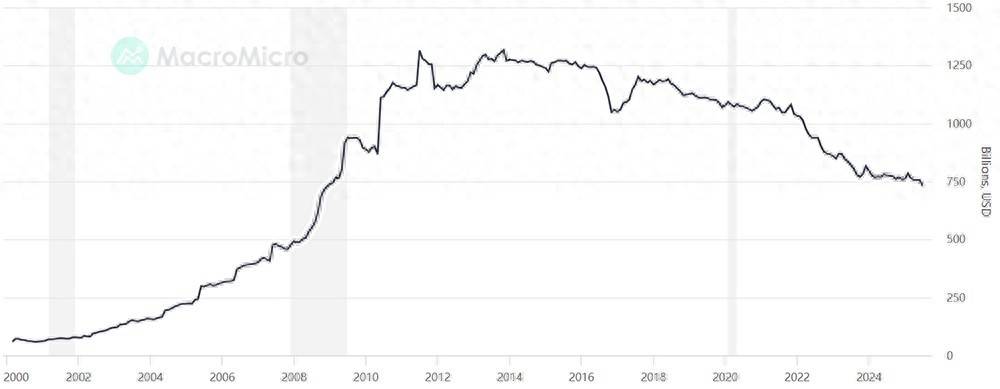
Core Viewpoint - China has significantly reduced its holdings of U.S. Treasury bonds, reaching a record low since 2009, while Japan and the UK have increased their holdings, indicating a shift in global investment strategies towards U.S. debt [1][3]. Group 1: China's Reduction of U.S. Treasury Holdings - In July 2023, China reduced its U.S. Treasury holdings by $25.7 billion to $730.7 billion, marking the fourth reduction this year [1]. - China's current holdings represent a decrease of nearly $600 billion from a peak of $1.32 trillion in November 2013, approaching half of its highest level [3]. Group 2: Reasons for China's Reduction - The continuous rise in U.S. government debt, which has reached $37 trillion, has diminished the safety of U.S. Treasury bonds, making it necessary for China to reduce its holdings to enhance asset security [4]. - The depreciation of the U.S. dollar has reduced its value retention function, prompting China to decrease its exposure to U.S. debt to mitigate asset devaluation risks [6]. - The increasing aggressiveness of U.S. foreign policy and trade practices under the Trump administration has weakened the credibility of U.S. debt, leading China to consider reducing its holdings to avoid potential defaults [8][10]. Group 3: Strategic Implications for China - Continuous reduction of U.S. Treasury holdings is seen as both a practical necessity and a strategic choice for China, with a target to maintain holdings at a reasonable level, ideally below $300 billion [12]. - The expectation is that China will continue to reduce its U.S. Treasury holdings by more than half in the coming years, reflecting a long-term strategy to manage financial risks associated with U.S. debt [12].
美国慌了!中国手里的美债规模跌到7307亿美元!
Sou Hu Cai Jing· 2025-09-21 09:20
Group 1 - China has been reducing its holdings of US Treasury bonds since 2022, with reductions of $173.2 billion in 2022, $50.8 billion in 2023, and $57.3 billion projected for 2024. In July 2025 alone, China reduced its holdings by $25.7 billion [1][3] - In contrast, Japan and the UK have increased their holdings of US Treasury bonds, with Japan purchasing $3.8 billion in July and holding $1,151.4 billion, while the UK bought $41.3 billion, holding $899.3 billion [3] - Experts attribute China's reduction in US Treasury bonds to concerns over US tariff policies and unfavorable fiscal conditions, leading to a decrease in the attractiveness of holding US debt [3] Group 2 - While China is reducing its US Treasury bond holdings, it is simultaneously increasing its gold reserves, having done so for ten consecutive months by August 2025, indicating a shift towards asset diversification for greater security [3] - Despite China's reduction, foreign investors are still buying US Treasury bonds, with total foreign holdings reaching a record high of $9.159 trillion in July, reflecting differing views on the risks and returns associated with US debt [3] - The total US debt has reached $37 trillion, with annual interest payments exceeding $1 trillion, prompting central banks globally to revise their reserve strategies and increase gold purchases, which have exceeded 1,000 tons for three consecutive years [3]
公募债基变革,市场的两大关切
HUAXI Securities· 2025-09-21 08:33
Group 1: Policy Changes and Market Concerns - The Ministry of Finance has reinstated value-added tax on interest income from government bonds, local bonds, and financial bonds since August 8, 2025, with a tax rate of 3%[11] - The China Securities Regulatory Commission has revised public fund sales fee management regulations, imposing punitive redemption fees of at least 1.5%, 1.0%, and 0.5% for different redemption periods[1] Group 2: Impact on Bond Market - As of June 2025, the total scale of bond funds is approximately CNY 11.15 trillion, with individual and institutional investors holding 17% and 81% respectively, translating to CNY 1.88 trillion and CNY 8.99 trillion[2] - If the new redemption fee regulations are implemented, there is a potential for significant capital outflow from public bond funds, which could amplify overall market volatility[1] Group 3: Institutional Responses - Bank wealth management products held CNY 1.38 trillion in public bond funds, accounting for 4.2% of their total holdings as of June 2025[3] - Insurance companies are estimated to hold around CNY 900 billion in public bond funds, maintaining a stable allocation of approximately 2.4%[4] Group 4: Historical Context and Future Projections - Historical cases show that bond fund outflows can be substantial; for instance, from September 2022 to January 2023, bond fund sizes dropped from CNY 5.19 trillion to CNY 4.01 trillion, a decrease of CNY 1.18 trillion[9] - Current market conditions suggest that if bond funds experience significant redemptions, the yield on 10-year government bonds could peak between 1.90% and 1.95%[10]
257亿美元美债被抛出,特朗普突然收到一封信,美议员公开威胁:必须没收中航着陆权
Sou Hu Cai Jing· 2025-09-21 05:00
Group 1 - The core point of the article highlights China's significant reduction of U.S. Treasury holdings, amounting to a decrease of $25.7 billion in a single month, bringing the total to $730.7 billion, the lowest since December 2018, and a cumulative reduction of approximately $500 billion compared to previous years [1][3] - The ongoing reduction reflects China's strategic adjustment of foreign exchange reserves and a cautious assessment of the long-term repayment capacity of the U.S. [1][3] - Moody's recent downgrade of the U.S. sovereign credit rating has intensified concerns regarding the sustainability of U.S. fiscal policies, with the national debt exceeding $34 trillion and interest payments on debt rising as a percentage of GDP [3] Group 2 - The strategic adjustment of China's foreign exchange reserves since 2018 includes increasing gold holdings and other safe-haven assets, aiming to create a more resilient reserve portfolio [3] - The proposal by U.S. House Committee Chairman Mulvaney to link civil aviation operations with resource trade, particularly regarding rare earth supplies, has sparked significant controversy and reflects extreme thinking among some U.S. politicians [5][7] - China's dominance in the rare earth market, controlling about 60% of global production and over 90% of refining capacity, positions it as a critical player in U.S.-China relations [5][7] Group 3 - The potential U.S. sanctions on Chinese airlines could severely impact U.S. airline revenues, estimated to be in the billions, and disrupt the global aviation system, indicating a short-sighted strategy by some U.S. politicians [7] - The interconnectedness of global supply chains suggests that unilateral coercion may not be effective and could lead to unintended consequences, emphasizing the need for constructive dialogue and cooperation [7]
复盘美联储降息周期,比特币、股市、黄金将何去何从?
Sou Hu Cai Jing· 2025-09-21 04:17
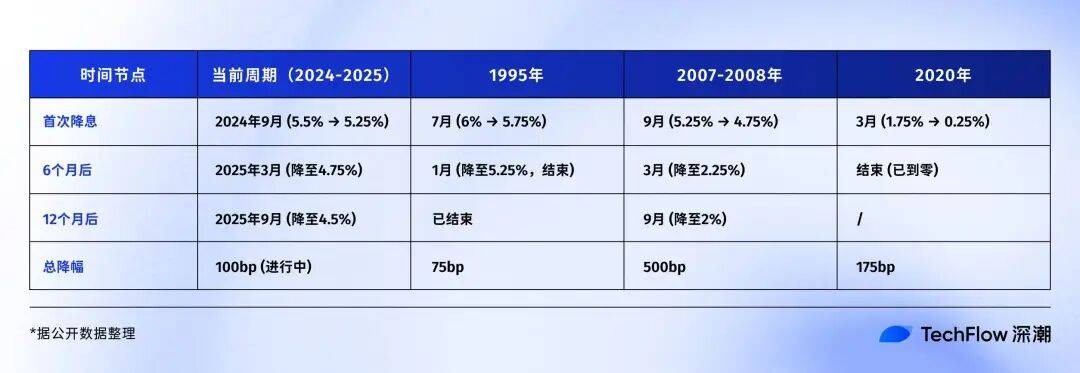
Group 1 - The article discusses the anticipation surrounding the Federal Reserve's interest rate decision, with expectations of a 25 basis point cut from 4.5% to 4.25% [1][2][24] - Historical patterns indicate that once the Federal Reserve enters a rate-cutting cycle, various asset classes often experience significant rallies [2][4] - The current economic indicators suggest that the ongoing rate cut cycle resembles the preventive rate cuts of 1995, with a low unemployment rate of 4.1% and GDP growth [9][10] Group 2 - The article outlines three historical rate-cutting scenarios: preventive (1995), crisis (2007), and panic (2020), each leading to different asset performance outcomes [11][12][19] - In the 1995 scenario, a modest rate cut led to a significant bull market in stocks, while the 2007 cuts preceded a major financial crisis [6][7][10] - The 2020 emergency cuts resulted in unprecedented liquidity, causing Bitcoin to surge from $3,800 to $69,000, highlighting the impact of aggressive monetary policy on asset prices [8][18][19] Group 3 - The article emphasizes the importance of understanding the context of rate cuts, as the reasons behind them can significantly influence market reactions [31][32] - It notes that the current market sentiment is cautious yet optimistic, with Bitcoin trading near historical highs, unlike the previous bear market conditions seen in 2019 [27][49] - The potential for a "rational prosperity" scenario is discussed, where Bitcoin may not see explosive growth but could experience steady increases as liquidity increases [27][49] Group 4 - The performance of traditional assets during rate-cutting cycles is analyzed, showing that not all rate cuts lead to stock market rallies [30][31] - Defensive sectors tend to outperform during economic downturns, while cyclical sectors may do better in stronger economic conditions [32][34] - The article also highlights the stable performance of gold during rate cuts, with an average increase of 32% over two years in past cycles [40][44][45] Group 5 - The article concludes by suggesting that the next 6-12 months could be critical for asset performance as the current rate-cutting cycle progresses [50][51] - It raises the possibility of unexpected events influencing market dynamics, such as geopolitical tensions or technological advancements [51][52] - The changing landscape of the monetary system and the role of cryptocurrencies as a reflection of these changes are emphasized [53][54]
国际货币体系再平衡中的美债地位及其冲击评估|国际
清华金融评论· 2025-09-20 09:54
Core Viewpoint - The article quantitatively assesses the mechanism of U.S. Treasury bond sell-off and rising interest rates, evaluates the medium to long-term debt pressure in the U.S., and analyzes the structural reasons behind the failure of the "negative beta" property of U.S. Treasuries. It also discusses the historical logic and current support for the status of U.S. Treasuries as a global safe asset, and explores the medium to long-term impacts of foreign official reductions in U.S. Treasuries and the decline of the dollar's reserve status, while seeking alternatives for global safe assets to escape the "dollar trap" and accelerate the diversification of the international monetary system [2]. Assessment of Short-term Impact of Treasury Sell-off and U.S. Debt Pressure - The U.S. has historically achieved debt self-circulation through the "dollar circulation mechanism," but the "reciprocal tariff" policy may disrupt this mechanism, raising market concerns. The concentrated sell-off of U.S. Treasuries in early April 2025 reached approximately $40 billion, causing a short-term impact of about 50 basis points on the 10-year Treasury yield, marking the largest single-day increase since the 2008 financial crisis [4][6]. - The sell-off by foreign investors, particularly private investors, has shifted the demand structure for U.S. Treasuries from official dominance to a trend led by high trading activity and risk sensitivity [4][6]. Concerns Over U.S. Government Debt Sustainability - Foreign investors' sell-off behavior is driven by concerns over the sustainability of U.S. government debt. The federal debt-to-GDP ratio has risen from an average of 36% (1975-2005) to 100% in 2025, with projections indicating it could reach 156% by 2055. This increase in debt will lead to net interest payments rising from 3.2% of GDP in 2025 to 5.4% in 2055 [6][7]. - Moody's downgraded the U.S. long-term issuer and senior unsecured bond rating from Aaa to Aa1, reflecting concerns over the growing debt burden and the potential for a vicious cycle of deficit expansion and interest crowding out [7][8]. Long-term Debt and Interest Rate Relationship - The Congressional Budget Office (CBO) predicts a slight increase in interest rates, with the 10-year Treasury yield expected to be 4.1% in 2025 and rise to 3.8% by 2055. However, the CBO warns that if debt growth exceeds expectations or if international demand for U.S. Treasuries declines, interest rates and costs may be higher than currently predicted [7][8]. - Estimates suggest that a 1% increase in the debt-to-GDP ratio could lead to a 3.2 basis point rise in the 5-year Treasury yield, with a more significant impact from deficits [8]. Geopolitical Adjustments and Central Bank Behavior - The geopolitical landscape has prompted central banks to diversify their asset allocations away from a singular reliance on the dollar, with 96% of surveyed central banks viewing U.S. tariff policies as a significant geopolitical risk. This shift reflects a defensive adjustment to geopolitical risks and global economic uncertainties [9]. - Central banks are expected to gradually reduce their dollar holdings while increasing allocations to corporate bonds and equities, indicating a long-term trend away from dollar dependency [9]. Evolution of U.S. Treasury's Safe Asset Status - The U.S. Treasury's status as a safe asset has been reinforced during crises, such as the 2008 financial crisis, where demand for safe assets surged, solidifying the "dollar trap" phenomenon. Historically, U.S. Treasuries have exhibited a negative beta characteristic, with yields declining during periods of market turmoil [10][12]. - The 2008 financial crisis highlighted the deep binding of the international financial system to the dollar and U.S. Treasuries, as investors sought high liquidity and low credit risk during times of instability [12].

【固收】积跬步至千里:中资美元债入门笔记——中资美元债研究笔记之一(张旭/秦方好)
光大证券研究· 2025-09-20 00:06
Core Viewpoint - The article provides an overview of the Chinese dollar bond market, highlighting its structure, investment perspectives, and current market conditions, emphasizing the complexities influenced by the U.S. economic environment and Federal Reserve actions [3][4][5]. Group 1: Overview of Chinese Dollar Bonds - Chinese dollar bonds refer to bonds issued by domestic enterprises or their controlled overseas entities in U.S. dollars, with repayment obligations [3]. - The issuance methods include public offerings (SEC) and private placements (Reg S, 144A), with various issuance structures such as direct issuance and red-chip structures [3]. Group 2: Investment Perspectives on Chinese Dollar Bonds - Domestic financial institutions can invest in Chinese dollar bonds through three main channels: Qualified Domestic Institutional Investor (QDII/QDLP/QDLE) qualifications, cross-border investment financial products (TRS/structured deposits), and the Bond Connect "southbound" channel, which is currently the most mainstream path for overseas bond investment [4]. - Chinese dollar bonds are priced based on U.S. Treasury yields and are influenced by the U.S. economic fundamentals and Federal Reserve actions. The current U.S. economic landscape shows resilience in growth but rising inflation pressures and a weak job market, placing the Federal Reserve in a dilemma between controlling inflation and supporting employment [4]. Group 3: Current Market Conditions of Chinese Dollar Bonds - As of August 2025, the total outstanding Chinese dollar bonds amounted to $758.721 billion (excluding government and policy bank bonds). By issuer type, financial dollar bonds lead at $389.126 billion, accounting for 51.29%; industrial dollar bonds at $174.76 billion, 23.03%; real estate dollar bonds at $134.563 billion, 17.74%; and local government financing vehicle dollar bonds at $60.271 billion, 7.94% [5].


10年期德债收益率本周涨超3个基点,2/10年期德债收益率曲线周四和周五趋陡
Sou Hu Cai Jing· 2025-09-19 18:51
Group 1 - The core viewpoint of the article highlights the recent movements in German government bond yields, indicating a notable increase following a period of decline [1] - The 10-year German bond yield rose by 2.2 basis points to 2.748%, with a cumulative increase of 3.2 basis points for the week [1] - The 2-year German bond yield increased by 1.2 basis points to 2.023%, showing a weekly rise of 0.5 basis points and trading within a range of 1.988%-2.027% [1] - The 30-year German bond yield saw a rise of 2.7 basis points, reaching 3.337% [1] - The yield spread between the 2-year and 10-year German bonds increased by 1.030 basis points to +72.090 basis points, with a cumulative rise of 2.576 basis points for the week [1] - The rebound in yields followed the Federal Reserve's announcement of interest rate cuts on September 17 [1]
全球资产观察月报:中国股票领涨,沪指创十年新高
Sou Hu Cai Jing· 2025-09-19 14:41
Market Overview - In August, the overall market risk appetite improved, with Chinese stocks leading the gains at a return of 7.2% [1] - The Shanghai Composite Index surpassed 3800 points, reaching a nearly ten-year high [1] - Daily trading volume in the Shanghai and Shenzhen markets significantly increased to 22,796 billion yuan [1] - The Federal Reserve's interest rate cut expectations rose, contributing to an increase in gold prices [1] - OPEC+ announced a substantial increase in production, leading to a decline in oil prices by 6.53% [1] Asset Performance - The ranking of asset returns for August is as follows: Chinese stocks > Gold > Global stocks > Global bonds > Agricultural products > Cash > Foreign exchange > Domestic bonds > Real estate > Industrial products > Oil [1] Chinese Stock Market - The Chinese stock market continued to perform well, with major indices rising: the Wind China 500R Index increased by 7.2%, the Wind All A Index rose by 10.9%, and the Hong Kong China Enterprises Index gained 3.3% [10] - The average daily trading volume in the Shanghai and Shenzhen markets reached 22,796 billion yuan, up from 16,101 billion yuan the previous month, indicating increased market activity [10] - The technology sector, particularly in AI, computing power, and semiconductors, showed strong performance with a monthly increase of 16.3% [11] Global Stock Market - The global stock market saw most indices rise, with emerging markets outperforming developed markets [5] - Vietnam and Brazil led the gains with returns of 12.0% and 8.9%, respectively, while Saudi Arabia and India lagged with returns of -2.9% and -2.2% [5] - Developed markets, particularly Japan, performed well with a return of 5.9%, while Germany and France had returns below 1% [5] Bond Market - The bond market faced pressure in August, with rising yield expectations due to inflation concerns [12] - Convertible bonds led the performance with a yield of 4.32%, while interest rate bonds showed the weakest performance with a decline of 0.44% [12] - The yield on 10-year government bonds rose by 13.35 basis points to 1.84% [12] Commodity Market - Gold prices reached new highs, closing at $3,516.0 per ounce, a 4.9% increase from the previous month [17] - Oil prices declined by 4% to $67 per barrel due to increased supply and weakened demand [17] - In the agricultural sector, soybeans showed the best performance with a 6.4% increase [18] Real Estate Market - The real estate market in first-tier cities continued to show a downward trend, with investment indices declining [20] - The transaction area of commercial housing in 30 major cities decreased by 1.6% to 1.786 million square meters [22] - The overall market remains under pressure, indicating that recovery in the industry requires further observation of subsequent data [22] Foreign Exchange Market - The US dollar index fell by 2.20% to 97.85, reflecting a weakening trend [24] - The decline in the dollar has put upward pressure on the renminbi exchange rate [24] Cash Market - The money market fund index rose to 1,706.44 points, a slight increase of 0.09% from the previous month [26] - The annualized yield of the Yu'ebao seven-day fund was 1.06%, showing a slight increase [26]
