
科技

Search documents
美股恐慌指数,飙升
Zhong Guo Ji Jin Bao· 2025-10-17 00:11
Market Overview - US stock indices closed lower, with the Dow Jones down 0.65% at 45,952.24 points, the S&P 500 down 0.63% at 6,629.07 points, and the Nasdaq down 0.47% at 22,562.54 points [2] - The VIX index surged to its highest level since May, indicating increased market volatility [5] Government Funding and Economic Concerns - The US Senate failed to advance a temporary funding bill for the tenth time, with a vote of 51 to 45, as the government shutdown enters its third week [4] - Economic uncertainty has resurfaced, with expectations of a 50 basis point rate cut from the Federal Reserve, though a 25 basis point cut is more likely [4] Banking Sector Performance - Concerns over bad debts in the banking sector led to significant declines in bank stocks, with ZION Bank's stock plummeting 13.1% due to large provisions for bad debts [10] - The S&P Regional Banking Select Industry Index fell 6.3%, marking its largest drop since April [10] - Major banks like JPMorgan, Goldman Sachs, Citigroup, and Bank of America all experienced declines, with JPMorgan down 2.25% and Citigroup down 3.52% [11][12] Commodity Prices - Oil prices fell to a five-month low, with WTI crude down 1.4% to $57.46 per barrel and Brent crude also down 1.4% to $61.06 per barrel, amid expectations of increased Russian oil flow [13] - Gold prices reached a record high, with spot gold rising 2.9% to over $4,331 per ounce, driven by expectations of continued monetary easing from the Federal Reserve [13] Technology Sector Developments - Major tech stocks mostly declined, with Tesla down over 1%, Facebook down 0.76%, and Apple down 0.76%, while Nvidia and Google saw slight gains [7] - Google launched new services aimed at Microsoft 365 users to address service interruptions, enhancing its competitive position in the market [9]

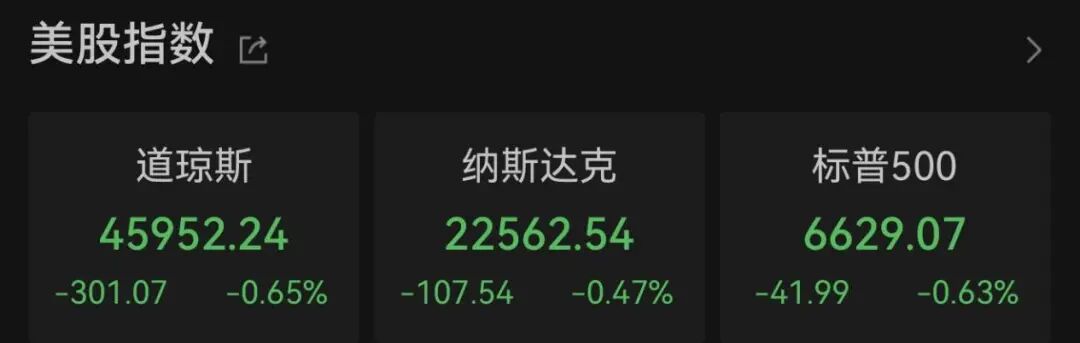
“华尔街恐慌指数”飙升
财联社· 2025-10-16 23:59
Core Viewpoint - The article highlights the recent decline in U.S. stock indices due to concerns over regional bank loan issues and ongoing trade tensions, which have negatively impacted market sentiment [1][2]. Market Dynamics - The Dow Jones Industrial Average fell by 301.07 points, a decrease of 0.65%, closing at 45,952.24 points; the Nasdaq dropped 107.54 points, down 0.47%, ending at 22,562.54 points; and the S&P 500 index decreased by 41.99 points, a decline of 0.63%, closing at 6,629.07 points [6]. - The S&P 500's 11 sectors experienced widespread declines, with the financial sector down 2.75% and the energy sector down 1.12%, while the information technology sector saw a slight increase of 0.13% [7]. Banking Sector Concerns - Zions Bank's stock plummeted by 13% after revealing unexpected loan losses in its California division, raising concerns about potential credit pressures in the banking system amid an uncertain economic outlook and high interest rates [1]. - Western Alliance's shares fell by 10.8% following the announcement of a fraud lawsuit against a borrower, contributing to heightened anxiety regarding commercial loan risks [1]. Investor Sentiment - The VIX index, known as the "Wall Street Fear Index," surged to 25.31, marking the highest closing level since April 24, indicating increased market volatility [3]. - Investors are particularly sensitive to any signs of credit-related losses, leading to declines in most small financial and bank stocks [2]. Trade and Economic Outlook - The uncertainty surrounding global trade is exacerbating market instability, with analysts noting that the potential impacts on the economy and markets are significant [3]. - The ongoing U.S. government shutdown has delayed the release of key economic data, further complicating the economic landscape [5]. Earnings Expectations - Analysts project that S&P 500 companies will see an overall earnings growth of 9.2% year-over-year for the third quarter, an increase from the previous forecast of 8.8% [4].

区域银行信贷“暴雷”引发担忧,美股指数集体收跌,中概股多数下跌
Feng Huang Wang· 2025-10-16 22:34
Market Overview - The three major U.S. stock indices closed lower, with regional bank loan issues causing investor unease and trade tensions adding to market pressure [1] - Zions Bank experienced a significant drop of 13% due to unexpected loan losses in its California division, raising concerns about potential credit stress in the banking system [1] - Western Alliance fell by 10.8% after filing a fraud lawsuit against a borrower, reflecting ongoing market anxiety regarding commercial loan risks [1] - The VIX index, known as the "Wall Street Fear Index," surged to 25.31, marking the highest closing level since April 24 [1] - Investor sentiment is heavily influenced by the uncertainty surrounding global trade, which is exacerbating market instability [1] Earnings Expectations - Analysts predict that S&P 500 companies will see an overall earnings growth of 9.2% year-over-year for Q3, an increase from the previous estimate of 8.8% [2] Sector Performance - The Dow Jones Industrial Average fell by 301.07 points (0.65%) to 45,952.24, while the Nasdaq dropped by 107.54 points (0.47%) to 22,562.54, and the S&P 500 declined by 41.99 points (0.63%) to 6,629.07 [3] - Almost all sectors in the S&P 500 index declined, with the financial sector down 2.75% and the energy sector down 1.12% [3] - Regional bank ETFs fell by 6.20%, while the banking sector ETF dropped by 5.42% [3] Stock Performance - Major tech stocks generally declined, with Tesla down 1.47%, Meta down 0.76%, and Apple down 0.76% [4] - Gold prices surpassed $4,300 per ounce, reaching a new historical high, benefiting precious metal stocks [4] - TSMC provided an optimistic outlook regarding AI-related spending, although many AI-related stocks experienced pullbacks [4] Company News - Apple is reportedly planning to launch its first Mac computer with a touchscreen and M6 chip, marking a significant design shift [6] - Microsoft announced a major upgrade to Windows 11, integrating AI features to enhance user experience [7] - Lyft plans to establish a new technology center in downtown Toronto next year, expanding its presence in the Canadian market [7]
“我还在!”林园硬气回应牛市亏钱,科技股买了“愁得睡不着”
Mei Ri Jing Ji Xin Wen· 2025-10-16 22:34
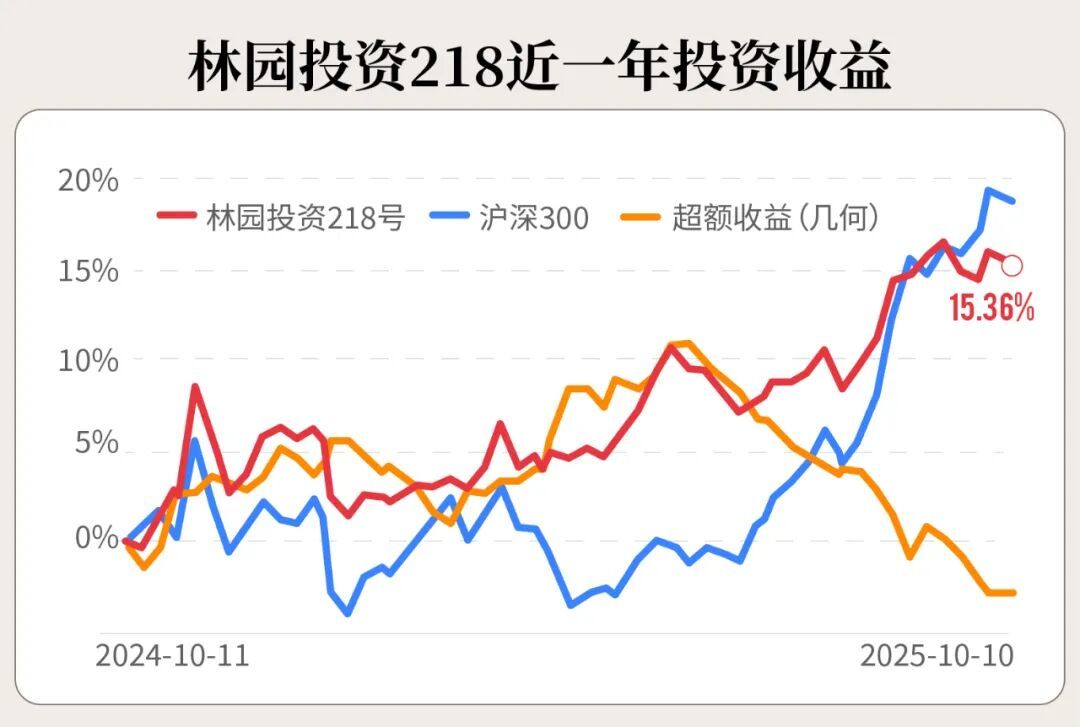
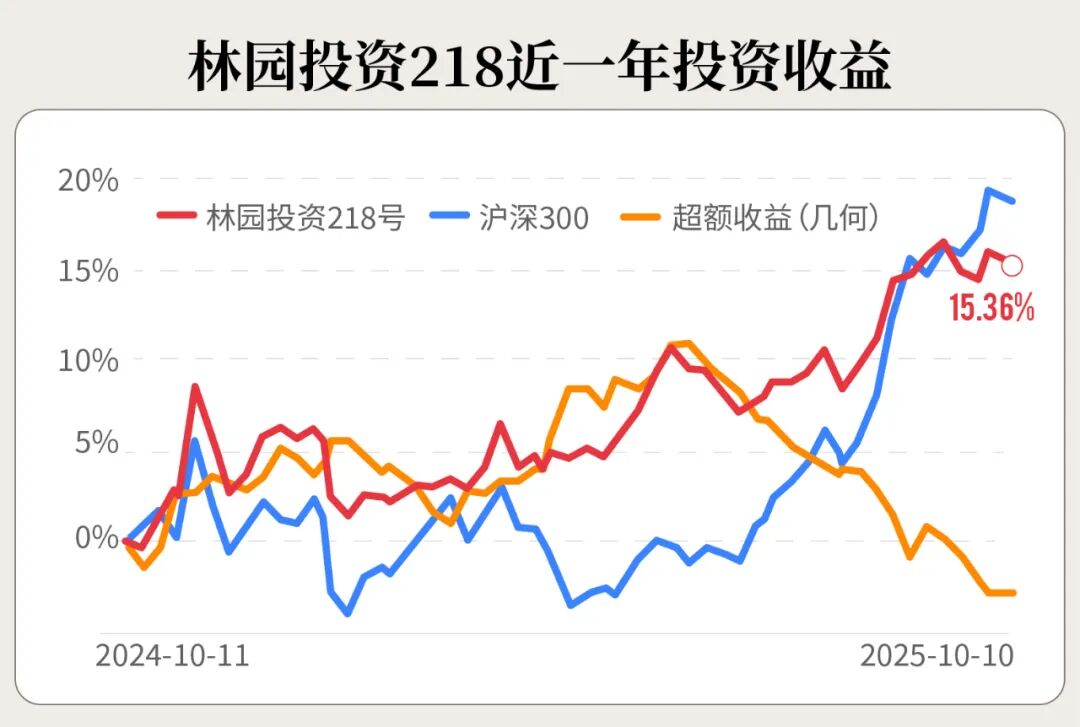
Core Viewpoint - Lin Yuan, chairman of Lin Yuan Investment, has recently faced scrutiny due to underperformance of his funds compared to the CSI 300 index and expressed concerns about his investments in technology stocks, stating they caused him sleepless nights [1][2][19]. Group 1: Performance and Investment Strategy - All 18 funds managed by Lin Yuan that disclosed performance have underperformed the CSI 300 index this year, with the best-performing fund yielding 15.36%, below the index's 18.77% increase [4][6]. - Lin Yuan maintains a long-term investment philosophy, particularly in the liquor industry, asserting that holding investments for 12 years can lead to breakeven through dividends, despite current market challenges [11][17]. - The company has faced questions regarding the risk of fund liquidation, with one fund nearing the liquidation threshold, although Lin Yuan denies any imminent risk [5][8]. Group 2: Views on the Liquor Industry - Lin Yuan believes the liquor industry will not disappear, as it fulfills a "happy demand" and is essential in social contexts, despite recent market downturns [12][14]. - He emphasizes that the liquor market is undergoing structural changes, with leading brands like Moutai and Wuliangye still showing growth, while smaller brands face declines [14][15]. - Lin Yuan's investment strategy remains focused on leading brands in the liquor sector, indicating no plans to adjust his investment structure despite market fluctuations [14][16]. Group 3: Technology Investments - Lin Yuan's foray into technology stocks has been described as a passive investment, leading to significant anxiety due to the unpredictability of these assets [19][20]. - He acknowledges the importance of technology for future growth but insists that investments must be based on clear financial calculations, which he finds challenging in the tech sector [19][20]. - The company adheres to a cautious investment approach, preferring to avoid sectors where the financial outcomes are uncertain [20].
三大指数涨跌互现 保险与银行板块表现亮眼
Shang Hai Zheng Quan Bao· 2025-10-16 19:01
Market Overview - The A-share market exhibited a mixed performance with the Shanghai Composite Index rising by 0.1% to 3916.23 points, while the Shenzhen Component Index fell by 0.25% and the North Star 50 Index dropped by 1.3% [2] - The total trading volume in the Shanghai, Shenzhen, and North exchanges was 19,487 billion yuan, a decrease of 1,417 billion yuan compared to the previous trading day [2] Sector Performance - The technology sector remained the core trading area, with major stocks like Sunshine Power, ZTE, and Luxshare Precision leading in trading volume at 205 billion yuan, 180 billion yuan, and 153 billion yuan respectively [2] - The insurance and banking sectors showed resilience, with the insurance sector benefiting from multiple favorable catalysts, including a projected 45% to 65% year-on-year growth in net profit for New China Life Insurance in the first three quarters [2] - The banking sector attracted funds due to its defensive value, with the China Securities Banking Index rising for six consecutive trading days, accumulating a gain of 5.54% [3] Investment Outlook - Analysts expect the absolute return potential for bank stocks to become evident in the fourth quarter, following a significant pullback of approximately 15% since mid-July [3] - The banking sector's low volatility and high dividend attributes continue to attract long-term funds, supported by passive index expansion [4] - Future market focus is anticipated to shift towards style rotation and the performance of third-quarter reports from listed companies, with potential capital flow towards banks and cyclical industries [4]

股票策略领跑 前三季度私募平均收益达25%
Shang Hai Zheng Quan Bao· 2025-10-16 18:49
Core Insights - The average return of private equity funds has reached 25% as of September 30, with over 90% of products showing positive returns, driven by sectors like innovative pharmaceuticals, technology, and new consumption [1][2] - Stock strategy funds have outperformed, with an average return of 31.19% and a positive return rate of 93.52% among 5,976 funds [2] - Private equity funds have been increasingly proactive in distributing dividends, with a total of 140.85 billion yuan distributed across 1,291 instances, averaging a dividend ratio of 27.59% [3] Performance Analysis - As of September 30, 2023, 9,363 private equity funds reported an average return of 25%, with a positive return rate of 91.48% [2] - Stock strategy funds led the performance with an average return of 31.19%, followed by multi-asset strategy funds at 18.92% and combination funds at 15.93% [2] - Futures and derivatives strategy funds and bond strategy funds reported average returns of 10.72% and 9.26%, respectively, both with positive return rates exceeding 80% [2] Dividend Distribution - A total of 1,038 private equity funds have distributed dividends this year, with stock strategy funds accounting for 76.22% of the total dividend amount, distributing 107.35 billion yuan [3] - The average dividend ratio for stock strategy funds is 31.8%, while multi-asset strategy funds have an average ratio of 23.78% [3] - Futures and derivatives strategy funds and bond strategy funds distributed 9.33 billion yuan and 8.8 billion yuan, respectively, with dividend ratios of 6.63% and 6.25% [3] Market Outlook - Despite short-term market fluctuations, several private equity firms anticipate continued structural opportunities in the fourth quarter, supported by a favorable mid-term outlook for A-shares [4] - External factors such as a new round of interest rate cuts overseas and low domestic rates are expected to encourage investment in Chinese equity assets [4] - The recovery of the Chinese economy and improvements in corporate earnings expectations are projected to drive market stability and growth, particularly in sectors like artificial intelligence [4][5] Investment Opportunities - Focus on undervalued quality companies in sectors such as internet, electronics, and automotive, emphasizing operational quality [5] - Attention to high-growth innovative sectors, particularly those with mature products and business models, such as AI computing, AI applications, and smart driving [5]
Goldman Sachs Earnings Tell: Markets Seem Okay
MarketBeat· 2025-10-16 18:21
Core Insights - The Goldman Sachs Group reported a 42% year-over-year increase in investment banking revenues, which is a significant indicator for retail investors as the financial sector begins to release quarterly earnings [1][2] - The bank's wealth management fees rose by 17% to over $2.9 billion, driven by higher asset prices, reflecting strong business confidence among affluent investors [4][5] - Goldman Sachs' earnings per share (EPS) grew by 30.3%, reaching $37.75, surpassing last year's $28.98, although the stock price declined by approximately 4.3% post-results [11][12] Investment Banking and Wealth Management - Investment banking revenues increased significantly, with debt and equity underwriting fees rising to nearly $2.7 billion, a 42% increase from the previous year, indicating CFOs' confidence in future economic prospects [10] - Wealth management's growth is attributed to a stable number of affluent clients, suggesting a continued risk appetite for holding stocks despite market valuations being perceived as high [5][6] Market Sentiment and Economic Indicators - Goldman Sachs serves as a barometer for economic sentiment, influencing investor behavior across the S&P 500, with its performance reflecting corporate strength [2][3] - The bank's lower credit-loss provision of $339 million compared to $397 million last year indicates healthy credit and liquidity conditions, although it suggests some struggles for the average consumer [8][9] Stock Performance and Future Outlook - The current stock price forecast for Goldman Sachs is $769.40, with a potential downside of 1.45%, based on 19 analyst ratings [8] - The bank has increased its stock buyback program by $2 billion and raised its dividend payout to $4 per share, up from $3, indicating strong financial health and commitment to returning value to shareholders [12][13]

“我还在!”林园硬气回应牛市亏钱 “接下来,我还会在!”坚持白酒是“快乐需求” 科技股买了“愁得睡不着”
Mei Ri Jing Ji Xin Wen· 2025-10-16 15:05
Core Viewpoint - The chairman of Lin Yuan Investment, Lin Yuan, has faced scrutiny due to underperformance of his funds compared to the CSI 300 index and expressed concerns about his investments in technology stocks, while maintaining a bullish outlook on the liquor industry, particularly regarding long-term returns from white wine investments [1][2][4][21]. Investment Performance - Lin Yuan's funds have underperformed the CSI 300 index, with all 18 disclosed products showing lower returns this year. The best-performing fund, Lin Yuan Investment No. 218, achieved a return of 15.36%, which is still below the CSI 300's 18.77% [4][6]. - Some funds, such as Lin Yuan Investment No. 21, have reported losses exceeding 10% in the past year, raising concerns about potential liquidation risks [4][9]. Investment Philosophy - Lin Yuan emphasizes a cautious investment approach, focusing on understanding the value of investment targets and calculating the payback period before making investments. He believes that holding liquor stocks for 12 years can yield returns that cover initial investments through dividends [12][18]. - The liquor industry is viewed as a sector that will not disappear, as it fulfills a "happy demand" that is expected to persist despite market fluctuations [14][19]. Market Outlook - The liquor industry is currently experiencing a downturn, with major brands like Moutai and Wuliangye facing stock price volatility. However, Lin Yuan believes that the industry's structure is stable and that the market will eventually recover [13][15]. - Lin Yuan does not plan to adjust his investment strategy in liquor stocks despite the current market challenges, as he continues to focus on leading brands [14][16]. Technology Investment - Lin Yuan has expressed discomfort with his passive investments in technology stocks, stating that the unpredictability of these investments has caused him significant stress. He maintains that he will not actively pursue technology investments unless he can clearly assess their financial viability [21][22]. - While acknowledging the importance of technology for future growth, Lin Yuan remains cautious due to the inherent uncertainties in the sector compared to more traditional investments like liquor [21][22].
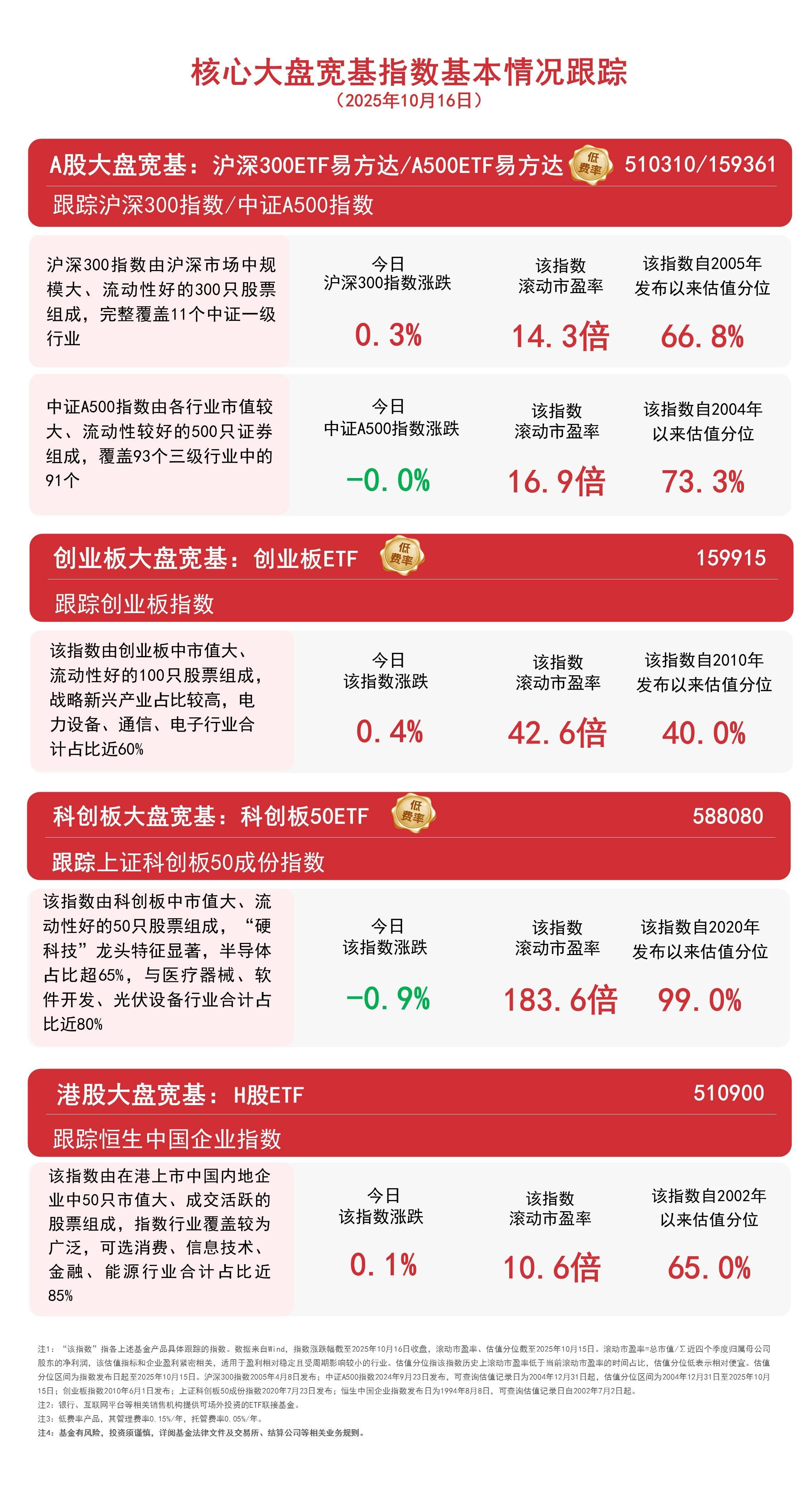
沪指窄幅震荡微涨0.1%,A500ETF易方达(159361)、沪深300ETF易方达(510310)等助力布局核心资产
Sou Hu Cai Jing· 2025-10-16 12:49
Group 1 - The A-share market showed mixed performance with the Shanghai Composite Index slightly up by 0.1%, maintaining above the 3900-point level [1] - Sectors such as insurance, coal mining and processing, port shipping, banking, liquor, and traditional Chinese medicine saw significant gains, while small metals, steel, wind power equipment, rare earth permanent magnets, and PEEK materials concepts experienced declines [1] - The CSI A500 Index fell by 0.04%, the CSI 300 Index rose by 0.3%, the ChiNext Index increased by 0.4%, the STAR Market 50 Index dropped by 0.9%, and the Hang Seng China Enterprises Index rose by 0.1% [1] Group 2 - The ChiNext ETF tracks the ChiNext Index, which consists of 100 stocks with high market capitalization and liquidity, with a significant proportion in strategic emerging industries, particularly in power equipment, telecommunications, and electronics, accounting for nearly 60% [3] - The STAR Market 50 ETF tracks the STAR Market 50 Index, composed of 50 stocks with high market capitalization and liquidity, prominently featuring "hard technology" leaders, with semiconductors making up over 65% and combined with medical devices and software development, accounting for 80% [3]
三季度资管机构调研热情下降,科技和医药医疗股受青睐
2 1 Shi Ji Jing Ji Bao Dao· 2025-10-16 12:41
Group 1 - The enthusiasm of asset management institutions for researching listed companies has decreased in the third quarter, with a 24.8% decline in the number of research activities compared to the previous quarter [1][5] - In the second quarter, during a period of market stagnation, asset management institutions increased their research activities by 49.31% [1] - The focus of asset management institutions remains on technology stocks, with a growing interest in pharmaceutical and medical stocks in the third quarter [2][3] Group 2 - Insurance asset management companies conducted a total of 7,687 research activities on 5,850 individual stocks in the first three quarters, with a significant focus on Shenzhen Main Board and Sci-Tech Innovation Board stocks [2] - The most active insurance asset management company was Taikang Asset, which conducted 860 research activities on 566 stocks, primarily on the Shanghai Main Board [2] - The research frequency of brokerage asset management subsidiaries was slightly lower, with 4,216 research activities on 3,321 stocks, showing a preference for high-growth potential and technology-intensive companies [3] Group 3 - Wealth management companies conducted over 2,100 research activities on more than 1,700 listed companies in the first three quarters, with a notable preference for Shenzhen Main Board and Sci-Tech Innovation Board companies [4] - Trust companies showed less enthusiasm compared to other asset management institutions, with 1,580 research activities on 1,337 stocks [4] - The overall investment ratio of wealth management companies in equities remains low, but their management scale reached 27.48 trillion yuan by the end of June [3] Group 4 - The Sci-Tech 50 index rose by 49.02% in the third quarter, significantly outperforming the broader market, with the CSI 300 index increasing by 17.9% [7] - Insurance asset management companies focused on 600 Sci-Tech Innovation Board companies in the third quarter, which, along with Shenzhen Main Board stocks, accounted for 53.57% of their research activities [7] - The most researched stock in the third quarter was Mindray Medical, with 538 institutions conducting research, followed by Huichuan Technology and Maiwei Biological-U [8]
