
饮料

Search documents
半年狂卖6.7亿!看椰子水的“完美答卷”下,暗藏哪些危机?
Sou Hu Cai Jing· 2025-09-29 09:19
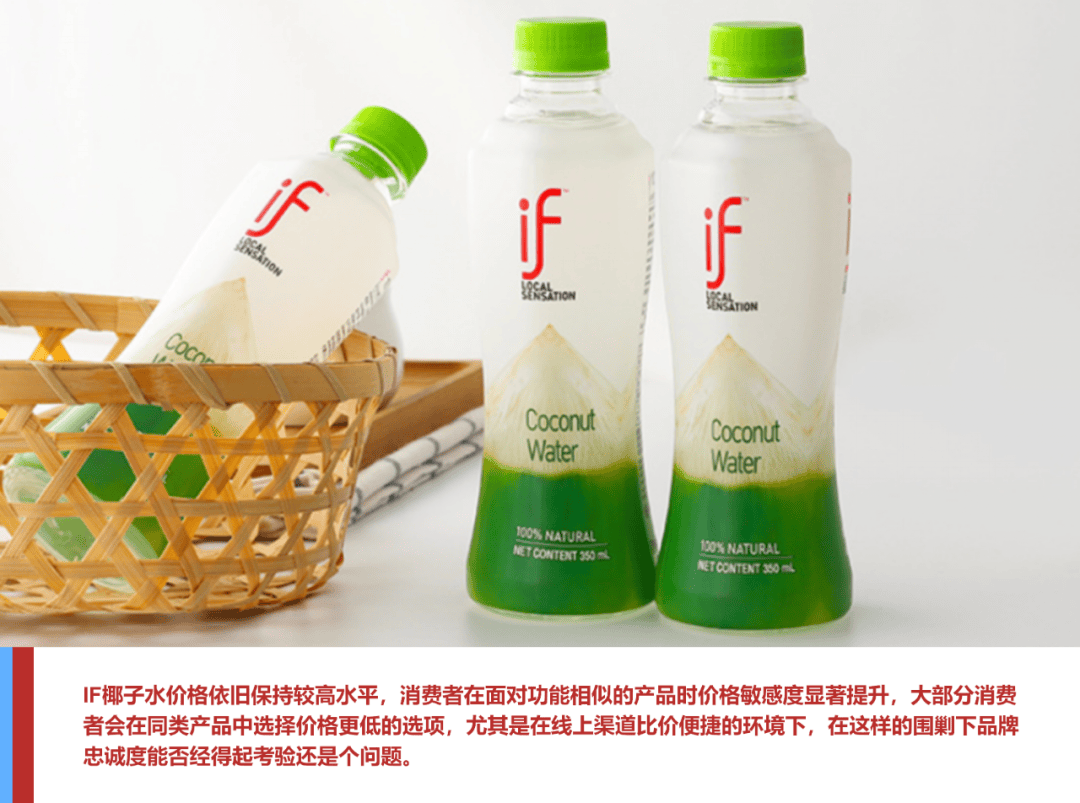
Core Insights - The article highlights the rapid growth of coconut water in the beverage market, driven by health trends, but also points out significant risks and challenges for IFBH as competition intensifies [1][2]. Financial Performance - IFBH reported a revenue of $9,446.4 million for the first half of 2025, a year-on-year increase of 31.5%, with coconut water sales reaching $9,151 million, up 33.3% [2]. - The proportion of coconut water revenue in total income increased from 95.6% to 96.9%, indicating a growing dependency on a single product [2]. - The company's net profit decreased by approximately 5% to $1,497.6 million, with a gross margin decline of 4.7 percentage points to 33.7% [9]. Market Dependency - Over 92% of IFBH's revenue comes from the Chinese mainland market, which poses a risk of growth saturation as competition intensifies [4]. - The coconut water market in China is expected to reach $1.3117 billion by 2025, with over 50 brands competing, leading to price wars that could impact IFBH's market share [4][15]. Supply Chain Risks - IFBH's supply chain is highly concentrated, with the top five suppliers accounting for 96.9% of procurement, and a single Thai factory supplying over 70% of coconut water raw materials [3][9]. - The cost of raw materials has surged, with Thai coconut prices increasing nearly fivefold due to adverse weather conditions, raising raw material costs from 61% to over 75% of total expenses [2][9]. Growth Strategy Challenges - The company faces challenges in expanding beyond its current market, with plans for national and global expansion hindered by high price sensitivity in lower-tier markets and low brand recognition in international markets [5]. - The growth of "other beverages" at a 57% year-on-year increase is not sufficient to offset the reliance on coconut water, as these products have not yet proven to be a significant revenue contributor [6][7]. Competitive Landscape - The coconut water market is becoming increasingly competitive, with established brands and new entrants offering similar products at lower prices, which could erode IFBH's market position [11][15]. - The company's light-asset model, relying on outsourcing production and logistics, may hinder its ability to maintain growth amid rising costs and competitive pressures [12]. Financial Health Concerns - A significant increase in trade receivables from $704 million to $2,074 million raises concerns about potential financial risks, as the growth rate of receivables far exceeds revenue growth [13][14]. - The operating cash flow decreased by 37.5% to $960 million, indicating potential issues with cash flow management despite revenue growth [14].

铭利达:9月29日召开董事会会议
Mei Ri Jing Ji Xin Wen· 2025-09-29 09:02
Group 1 - Minglida (SZ 301268) announced on September 29 that its 40th meeting of the second board of directors was held via communication voting, discussing the proposal for the extension of certain fundraising investment projects [1] - For the year 2024, Minglida's revenue composition is as follows: Automotive accounts for 56.06%, Photovoltaics for 29.22%, Security for 11.53%, Consumer Electronics for 1.78%, and Other businesses for 0.96% [1] - As of the report date, Minglida's market capitalization is 9.2 billion yuan [1] Group 2 - The competition between Nongfu Spring and Yibao has intensified, with Nongfu Spring's green bottle launch leading to a significant decline in Yibao's market share, dropping nearly 5 percentage points [1]
欣贺股份:9月29日召开董事会会议
Mei Ri Jing Ji Xin Wen· 2025-09-29 08:50
Group 1 - The core point of the article is that Xinha shares announced the termination of a factory rental agreement during a board meeting held on September 29, 2025, and the company's revenue composition for the first half of 2025 is heavily reliant on women's clothing, accounting for 99.14% of total revenue [1][1][1] Group 2 - Xinha shares' market capitalization is reported to be 3.3 billion yuan [1] - The company is facing competitive pressure in the beverage industry, particularly from the launch of Farmer's green bottle, which has led to a significant decline in market share for Yibao, dropping nearly 5 percentage points [1][1][1]

中银证券:9月29日召开董事会会议
Mei Ri Jing Ji Xin Wen· 2025-09-29 08:48
Group 1 - The core point of the article is that Zhongyin Securities announced a board meeting to discuss a donation to Shanghai Jiao Tong University and provided a breakdown of its revenue composition for the first half of 2025 [1] - As of the report, Zhongyin Securities has a market capitalization of 40.6 billion yuan [1] - The revenue composition for Zhongyin Securities in the first half of 2025 is as follows: securities brokerage business accounts for 64.12%, asset management business for 16.46%, investment banking business for 6.48%, futures business for 5.6%, and proprietary trading business for 4.3% [1] Group 2 - The article also mentions a competitive situation in the beverage industry, where Nongfu Spring's new green bottle product has led to a significant decline in market share for the competitor, Yi Bao, dropping nearly 5 percentage points [1] - The competitive dynamics indicate that while Nongfu Spring gains market share, Yi Bao faces challenges in maintaining its position [1]

特朗普决定出席美军全球高级将领集会;泽连斯基称乌多地遭大规模空袭
Di Yi Cai Jing Zi Xun· 2025-09-29 01:14
Market Overview - The U.S. stock market experienced slight declines last week, with the Dow Jones down 0.15%, Nasdaq down 0.51%, and S&P 500 down 0.31% [1] - European indices saw gains, with the FTSE 100 up 0.74%, DAX 30 up 0.42%, and CAC 40 up 0.22% [1] Economic Indicators - Investors are closely watching U.S. employment data, particularly the September non-farm payrolls, which may influence Federal Reserve interest rate decisions [3][4] - The probability of a 25 basis point rate cut by the Federal Reserve in October is currently at 86%, with a 70% chance of another cut in December [4] - The Eurozone is set to release preliminary inflation data, which could impact expectations for monetary easing [1][7] Commodity Prices - International oil prices saw significant increases, with WTI crude oil rising 5.32% to $65.02 per barrel and Brent crude oil up 5.17% to $70.13 per barrel [5] - Geopolitical tensions, particularly related to Ukraine, have contributed to supply shortages and increased oil prices [5] - Gold prices rose by 2.83% to $3775.30 per ounce following U.S. inflation data that met expectations [6] Corporate Earnings - Key companies to watch for earnings reports include Nike, Carnival, Jefferies, and Rivian [4] - The upcoming earnings reports will be critical in assessing the health of consumer spending and overall economic growth [4] Regulatory Changes - The Jiangsu provincial government announced the suspension of the automobile replacement subsidy policy effective September 28, 2025 [9] - This policy change may impact the automotive industry and consumer purchasing behavior in the region [9] Stock Market Developments - A total of 36 companies will have their restricted shares released this week, amounting to approximately 48.82 billion shares and a market value of about 400.81 billion yuan [22] - Notable companies with significant share unlocks include Ningbo Port (13.20 billion yuan), Wankai New Materials (4.66 billion yuan), and Jiao Cheng Ultrasonic (4.37 billion yuan) [22][23]

娃小宗VS娃哈哈重现加多宝大战王老吉?高盛深度:农业山泉渔翁得利,上调目标价
Zhi Tong Cai Jing· 2025-09-28 13:14
宗馥莉计划启用娃小宗新品牌的消息在业内引发强烈震动。9月27日,高盛发布深度研究报告,详细分析了娃哈哈商标归属纠纷可能带来的影响。高盛预 测,娃小宗与娃哈哈品牌之争,堪比当年王老吉大战加多宝,这一事件或将重构中国瓶装水格局,农夫山泉有望成为最大受益者,而华润饮料、东鹏饮料 (605499)也将间接受益。在报告中,高盛将农夫山泉12个月目标价从之前的53.2港元上调至60.5港元。 Part.01 娃哈哈换标3000亿瓶装水市场生变 通过分析红牛、王老吉/加多宝等过往品牌纠纷案例,高盛研究发现,涉及商标/所有权纠纷的品牌,通常会受到长期负面影响,这将改变品类竞争格局, 并为主要竞争对手提供市占率提升机会。 2016年红牛(中国)因授权纠纷,全年销售额同比下降中双位数;2017年同比下降10%-20%;2017-2024年红牛(中国)的复合年增长率仅为低个位数。与之对 比,其直接竞争对手东鹏饮料展现出强劲市占率提升能力——市占率从2018年的约15%提升至2024年的超30%。 2016-2017年,加多宝与广州医药集团(王老吉商标所有者)就王老吉商标归属爆发纠纷,期间加多宝即饮茶业务销售额同比下降10%-20% ...

IFBH(06603):首次覆盖报告:椰风乘势千帆竞,龙头领航拓新机
Western Securities· 2025-09-28 13:06
Investment Rating - The report assigns an "Accumulate" rating to IFBH (6603.HK) for its first coverage [6]. Core Insights - The coconut water market in China is expected to grow rapidly, with a projected CAGR of 55% from 2019 to 2025, driven by the natural health consumption trend [2][58]. - IFBH is positioned as a market leader with strong advantages in raw material procurement and brand recognition, maintaining a market share of over 30% in the short term and potentially increasing after the introduction of national standards [3][15]. Summary by Sections Industry Chain - The coconut production is highly concentrated, with Indonesia and the Philippines contributing 51% of global coconut output, while Thailand and Vietnam have higher sweetness levels, making them more suitable for fresh consumption [1][35]. - The supply chain faces challenges due to limited raw material sources and increasing competition in the absence of regulatory standards [1][51]. Market - The coconut water market in China is expected to reach a scale of USD 1.393 billion by 2025, with a year-on-year growth of 27% [58]. - The market is still in its early stages, with significant room for growth in penetration rates, as coconut water's share of the juice beverage market has increased from 6.21% in 2019 to 6.80% in 2023 [58][59]. IFBH Company Analysis - IFBH's raw material procurement and processing are primarily handled by third parties, with a significant portion of its coconut water sourced from General Beverage, which is expected to decrease over time [3][20]. - The company has established a differentiated brand identity by emphasizing "Thai imported" products and leveraging collaborations with influencers and celebrities to enhance product visibility [3][15]. - Financial projections indicate that IFBH's net profit is expected to grow from USD 40 million in 2025 to USD 69 million in 2027, with corresponding P/E ratios of 26, 19, and 15 times [4][15].
当“娃小宗”遭遇“沪小娃”,命运多舛的娃哈哈该何去何从
Mei Ri Jing Ji Xin Wen· 2025-09-28 12:37
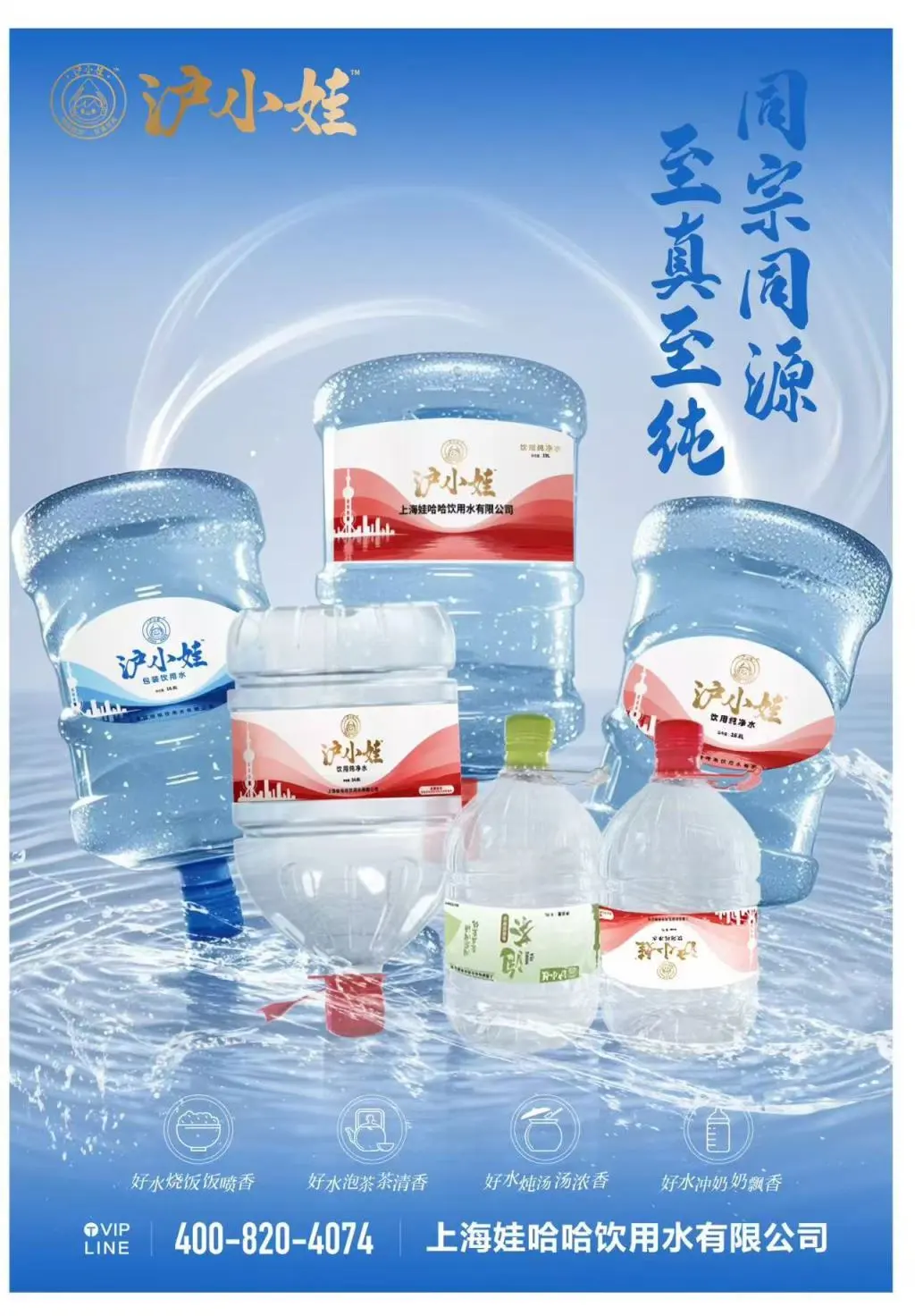
Core Viewpoint - The launch of the "Hu Xiao Wa" brand bottled water by Shanghai Wahaha Drinking Water Co., Ltd. is a response to a trademark usage dispute with Wahaha Group, which has decided not to renew the trademark rights, forcing the company to change its branding while continuing to produce bottled water [1][5]. Group 1: Trademark Dispute - The trademark usage rights for the Wahaha brand by Shanghai Wahaha Drinking Water Co., Ltd. have expired, and Wahaha Group has chosen not to renew them, leading to the rebranding [1][5]. - Wahaha Group has demanded that Shanghai Wahaha transfer the sales rights of bottled water to Honghui Company, which is fully controlled by Zong Fuli, and has also requested the cessation of Wahaha trademark usage [3][4]. - The conflict escalated when Wahaha Group reported Shanghai Wahaha for trademark infringement, resulting in the latter's production being halted and its supply chain disrupted [3][4]. Group 2: Shareholder Dynamics - The current shareholding structure of Wahaha Group requires unanimous consent from all shareholders for trademark usage, creating a situation where any shareholder can veto proposals, leading to a stalemate [5][8]. - Zong Fuli, holding only 29.4% of the shares, faces challenges in exerting control over the group, while the state-owned shareholder from Hangzhou has expressed disapproval of the trademark dispute handling [4][5]. - The conflicting interests between Zong Fuli and the state-owned shareholder have resulted in a "zero-sum game," where both parties are unable to reconcile their goals [5][8]. Group 3: Market Implications - The introduction of "Hu Xiao Wa" signifies Wahaha entering a challenging market environment, with limited space for growth due to market saturation [8]. - Zong Fuli's strategy includes launching a new brand "Wa Xiao Zong" with a sales target of 30 billion yuan by 2026, which is approximately 80% of Wahaha Group's current scale [6][8]. - The ongoing shareholder conflict and aggressive restructuring efforts have negatively impacted Wahaha's market reputation, posing risks for the new brand's acceptance in the market [8][9].
中科创达:接受博时基金等投资者调研
Mei Ri Jing Ji Xin Wen· 2025-09-28 12:24
Group 1 - The core viewpoint of the article highlights that Zhongke Chuangda (SZ 300496) has engaged with investors, including Bosera Fund, during a research meeting held from September 1 to September 28, 2025, with key executives participating in the discussions [1] - For the first half of 2025, Zhongke Chuangda's revenue composition is as follows: Smart IoT accounts for 38.49%, Smart Automotive for 36.03%, and Smart Software for 25.48% [1] - As of the report, Zhongke Chuangda's market capitalization stands at 33.7 billion yuan [1] Group 2 - The article also mentions a competitive scenario in the beverage industry, where Nongfu Spring's new green bottle product has led to a significant decline in market share for Yibao, dropping nearly 5 percentage points [1]

每经热评︱当“娃小宗”遭遇“沪小娃” 命运多舛的娃哈哈该何去何从
Mei Ri Jing Ji Xin Wen· 2025-09-28 11:03
Core Viewpoint - The launch of the "Hu Xiao Wa" brand bottled water by Shanghai Wahaha Drinking Water Co., Ltd. is a response to a trademark usage dispute with Wahaha Group, which has decided not to renew the trademark rights, forcing the Shanghai plant to rebrand while continuing its production and sales [1][2]. Group 1: Trademark Dispute - The trademark usage rights for Wahaha have expired for the Shanghai plant, leading to a rebranding to "Hu Xiao Wa" [1]. - Wahaha Group has demanded the Shanghai plant to transfer the sales rights of bottled water to Honghui Company, which is fully controlled by Zong Fuli, and has also requested the cessation of Wahaha trademark usage [2]. - The conflict escalated with Wahaha Group reporting the Shanghai plant for trademark infringement, resulting in a complete shutdown of the plant and disruption of its supply chain [2]. Group 2: Shareholder Dynamics - The current shareholding structure of Wahaha Group requires unanimous consent from all shareholders for trademark usage, creating a situation where any shareholder can veto decisions [3]. - Zong Fuli, holding only 29.4% of the shares, faces challenges in exerting control over the group, while the state-owned shareholder from Hangzhou has expressed disapproval of the trademark dispute handling [2][3]. - The conflicting interests between Zong Fuli and the state-owned shareholder lead to a scenario where both parties are likely to pursue separate paths, resulting in a "zero-sum game" [3]. Group 3: Strategic Responses - Zong Fuli's strategy involves abandoning the Wahaha trademark and launching a new brand "Wawa Zong," with a sales target of 30 billion yuan by 2026, which is approximately 80% of Wahaha Group's current scale [4]. - The state-owned shareholder is left in a passive position as Zong Fuli controls the sales and production system, while the Wahaha trademark lacks alternative monetization routes [4]. - Despite Zong Fuli's proactive stance, the saturated beverage market poses significant challenges for the new brand, and the ongoing shareholder conflict could negatively impact Wahaha's market reputation [4]. Group 4: Lessons on Control and Ownership - The design of the unanimous veto power among shareholders was intended to ensure brand unity and protect collective interests, but it has led to significant conflicts in a deteriorating market environment [5]. - The case illustrates the importance of aligning ownership rights with control rights to safeguard property interests effectively [5].