
汽车制造业

Search documents
4.5万亿,人民币互换新增5国达32国,贝森特紧急喊话求与中国会谈
Sou Hu Cai Jing· 2025-09-15 17:53
Core Insights - The article discusses the cracks in the U.S. dollar's dominance and the accelerated internationalization of the Chinese yuan, indicating a significant reshaping of the global financial landscape [1][19]. U.S. Economic Challenges - U.S. tariff revenue surged to $30 billion in August, a 296% year-on-year increase, while the fiscal deficit reached $345 billion, highlighting a significant financial gap [3]. - The U.S. Treasury is pressuring the Federal Reserve to lower interest rates to alleviate debt burdens, but long-term U.S. Treasury yields remain high due to market concerns over U.S. debt and dollar credibility [3]. - Currently, 15% of U.S. annual fiscal spending is allocated to interest payments, which are unrelated to economic stimulus plans, increasing pressure on the Treasury if interest rates remain elevated [3]. Internationalization of the Yuan - The People's Bank of China has signed bilateral currency swap agreements with 32 countries, totaling 4.5 trillion yuan, with significant agreements including 540 billion yuan with major European central banks [6]. - In August, foreign capital inflow into Chinese assets reached $39 billion, indicating growing global investor interest [4]. Strategic Developments in Currency Swap Agreements - The yuan's rise is supported by strategic currency swap agreements, such as the 1.5 trillion yuan swap with the Swiss National Bank, reflecting Switzerland's need for risk hedging amid geopolitical tensions [8]. - Hungary's 40 billion yuan swap agreement, although small, signifies the potential of the yuan in Eurasian trade [8]. Gold and Yuan Interconnection - China is promoting yuan-denominated oil and gas trade, with a notable collaboration with Saudi Arabia for yuan loans to support energy projects [9]. - The establishment of a gold delivery warehouse in Saudi Arabia signifies a challenge to the "petrodollar" system, potentially creating a new "gold-yuan-oil" triangle [9]. Offshore Yuan Market Restructuring - Hong Kong remains the largest offshore yuan hub, while new centers in Singapore, Dubai, and South Africa are emerging, enhancing the offshore yuan network [10]. - The issuance of panda bonds by foreign institutions exceeded 250 billion yuan, marking a historic high and indicating strong demand for yuan-denominated financing [12]. Capital Market Opening and Digital Yuan - The foreign ownership ratio in A-shares reached 5.2%, with net inflows exceeding 500 billion yuan, reflecting increased foreign interest in Chinese markets [13]. - The digital yuan is being tested for cross-border payments, significantly improving transaction efficiency and reducing costs [13]. Regional Cooperation and Growth of Yuan Business - Cooperation with BRICS and ASEAN countries is deepening, with the BRICS payment system piloting yuan settlements [14]. - Over 50% of ASEAN enterprises reported an increase in yuan settlement ratios, indicating a growing preference for the yuan in regional trade [15]. Global Position of the Yuan - The yuan's share in global foreign exchange reserves is projected to reach 2.2% by 2025, making it the fourth-largest reserve currency [16]. - The yuan has become the third-largest payment currency and trade financing currency globally, surpassing the euro in trade financing [16]. Cross-Border Payment System (CIPS) Development - CIPS processed 48 trillion yuan in cross-border transactions in the first half of 2025, marking a 23% year-on-year increase [18]. - The establishment of payment channels in ASEAN countries, such as Malaysia, enhances the yuan's role in cross-border tourism and trade [18].

中汽协发布《汽车整车企业供应商账款支付规范倡议》 多家车企积极落实“60天账期”承诺
Zheng Quan Ri Bao· 2025-09-15 16:00
9月15日,中国汽车工业协会正式发布《汽车整车企业供应商账款支付规范倡议》(以下简称《支付规范 倡议》),旨在推动汽车行业落实《保障中小企业款项支付条例》,破解行业内长期存在的付款周期 长、验收效率低等痛点问题,规范整车企业与供应商的账款支付流程。 车企纷纷表态 往前回溯,今年6月1日,《保障中小企业款项支付条例》正式施行,为解决汽车产业链账期顽疾提供了 政策依据。此后,17家重点车企公开承诺"支付账期不超过60天",但因账款支付涉及环节多、流程复 杂,且各车企供应链管理体系存在差异,实际执行尺度不一。在此背景下,中国汽车工业协会广泛调 研、征求意见,最终形成《支付规范倡议》,从订单确认、交付与验收、支付与结算、合同期限四大关 键环节给出明确指引。 四大关键环节发力 《支付规范倡议》从汽车产业链账款支付的全流程出发,在四大关键环节制定了详细且具操作性的规 范,为整车企业与供应商的合作搭建了清晰的框架。 在订单确认环节,《支付规范倡议》明确要求,整车企业(甲方)与供应商企业(乙方)需通过采购订单确 认订货日期、零部件名称及规格、数量、交货周期等核心事项,已生效的采购订单若需更改或撤销,必 须经双方协商一致。同时 ...
德国的世界第一,正在批量阵亡
Hu Xiu· 2025-09-15 13:50
Core Insights - The article discusses the concept of "invisible champions," which are companies that dominate niche markets but remain relatively unknown to the general public. These companies do not seek to increase their exposure or go public, yet they achieve significant success in their specialized fields [1][5][6]. Group 1: Invisible Champions in Germany - Germany has a significant number of invisible champions, with nearly half of the global total located there, while China has fewer than 100 [7][8]. - The characteristics of these invisible champions include being rooted in small towns, having low employee turnover, and focusing on highly specialized products that are difficult to replicate [8][24]. - Examples of successful invisible champions include Wanzl, which dominates the global market for shopping carts, and Körber, a leader in high-speed cigarette manufacturing [11][15]. Group 2: Challenges Facing German Invisible Champions - Recently, many German invisible champions, particularly in the automotive sector, have faced bankruptcy, with notable companies like Gerhardi going under [34][38]. - Contributing factors to this trend include rising costs due to geopolitical issues, such as the energy crisis following the Russia-Ukraine conflict, and a looming labor shortage as the workforce ages [39][44]. - The decline in demand for German products is also attributed to the rise of Chinese automotive supply chain companies, which offer competitive pricing and quality [43][45]. Group 3: Economic Impact of Invisible Champions - German small and medium-sized enterprises (SMEs), which include many invisible champions, account for over 99% of all companies and contribute 55% to the GDP [24]. - These SMEs play a crucial role in job creation, employing over 70% of the workforce and providing around 80% of vocational training positions [24][46]. - The article emphasizes the need for attention and protection for these less visible but vital companies, as they form the backbone of the German economy [46].


崔东树:1-8月汽车生产同比增11% 新能源汽车生产同比增31% 渗透率45%
Zhi Tong Cai Jing· 2025-09-15 12:46
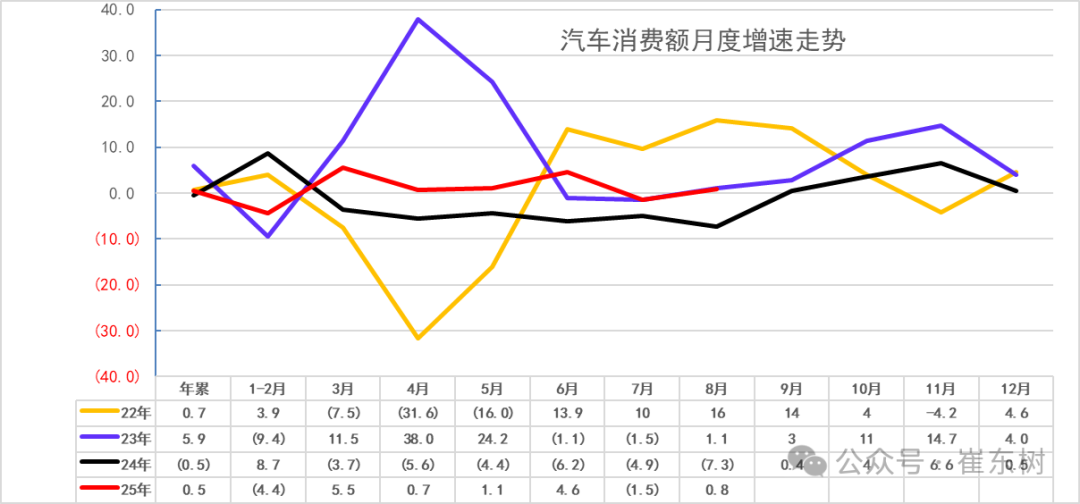
Core Insights - The automotive industry in China is experiencing significant growth, particularly in the production and sales of new energy vehicles (NEVs), driven by government policies and changing consumer preferences [1][2][20]. Group 1: Automotive Production and Sales - In August 2025, automotive production reached 2.75 million units, an 11% year-on-year increase, with NEVs accounting for 1.33 million units produced, up 23% [1][18]. - For the first eight months of 2025, total automotive production was 20.83 million units, also reflecting an 11% increase year-on-year, with NEVs at 938,000 units, a 31% increase [1][18]. - The penetration rate of NEVs in the automotive market reached 48% in August 2025, indicating a strong shift towards electric vehicles [1][18]. Group 2: Consumer Spending and Economic Impact - The total retail sales of consumer goods in August 2025 amounted to 39,668 billion yuan, with automotive consumption contributing 4,093 billion yuan, a 1% increase year-on-year [1][27]. - The overall retail sales for the first eight months of 2025 were 323,906 billion yuan, growing by 4.6%, with automotive consumption at 31,263 billion yuan, reflecting a modest 0.5% increase [1][27]. - The decline in the real estate market since 2021 has positively impacted automotive consumption, which rose from 3.94 trillion yuan in 2020 to an expected 5.03 trillion yuan in 2024 [4][22]. Group 3: Investment Trends - Fixed asset investment in the automotive sector grew by 20.2% in the first eight months of 2025, significantly outpacing overall manufacturing investment [20][21]. - The automotive investment growth is attributed to the rising demand for NEVs, indicating a recovery in the sector after previous downturns [20][21]. Group 4: Industry Challenges and Future Outlook - The automotive industry faces challenges from a complex external environment, including unilateralism and protectionism, which threaten supply chain stability [2]. - Despite a strong performance in the first half of 2025, the industry anticipates a slowdown in growth rates in the latter half of the year, necessitating supportive policies to sustain consumer demand [2][8].
(经济观察)8月中国经济数据折射政策效应释放
Zhong Guo Xin Wen Wang· 2025-09-15 11:02
Group 1 - China's economic policies this year focus on boosting consumption and improving investment efficiency, with recent data indicating positive effects from these policies [1] - The third batch of funds for replacing old consumer goods has stimulated demand, leading to double-digit growth in retail sales of home appliances, furniture, and cultural office supplies in August [1] - Service consumption is also on the rise, with a 5.1% year-on-year increase in service retail sales over the first eight months, outpacing goods retail growth [1] Group 2 - The expansion of domestic demand policies is positively impacting production, with significant year-on-year increases in manufacturing sectors such as boiler and motor manufacturing, at 11.9% and 14.8% respectively in August [2] - High-tech manufacturing and equipment manufacturing sectors are experiencing growth rates of 9.3% and 8.1%, respectively, indicating a structural upgrade in the manufacturing industry [2] - The Producer Price Index (PPI) remained stable in August, reflecting improved production factor circulation and a better supply-demand relationship in various industries [2] Group 3 - In September, new policies are being introduced to enhance market efficiency and promote private investment, including pilot reforms in ten regions [3] - The current macroeconomic policy is characterized by a gradual and supportive approach, with expectations for increased policy intensity in response to last year's economic data base [3]
1—8月 制造业超半数行业民间投资保持两位数增长
Sou Hu Cai Jing· 2025-09-15 11:00
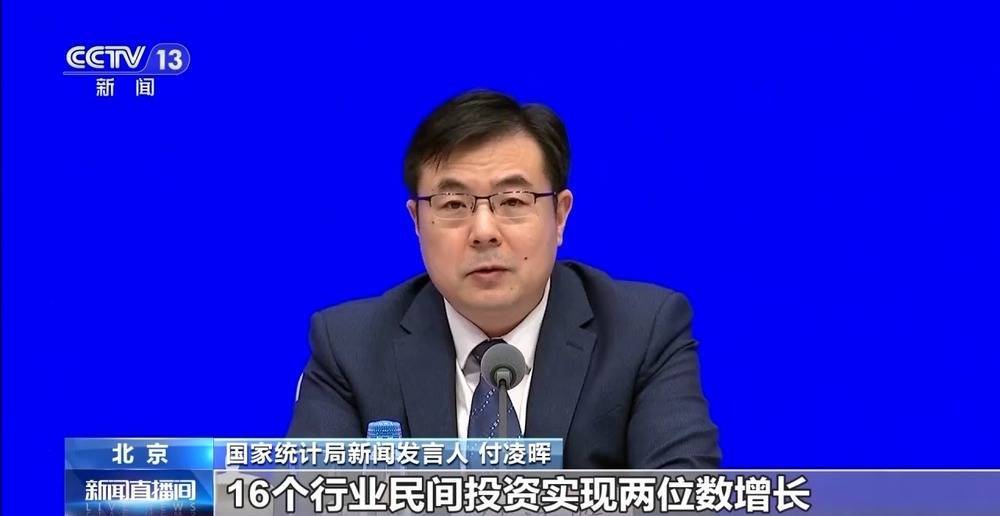
Group 1 - The core viewpoint is that the environment for the development of the private economy in China has been continuously optimized, leading to a rapid growth in private investment in the manufacturing sector [1] - From January to August, private investment in the manufacturing sector increased by 4.2% year-on-year, which is 1.2 percentage points higher than the growth rate of private project investment, accounting for 40.6% of total private investment [1] - Among 31 major manufacturing industries, 16 industries achieved double-digit growth in private investment, with notable increases in the automotive manufacturing sector (22.6%) and the railway, shipbuilding, aerospace, and other transportation equipment manufacturing sectors (16.2%) [3] Group 2 - There has been a significant increase in innovation investment, with private investment in the information service industry growing by 26.7% and in the professional technical service industry by 17.6% from January to August [5] - Private capital participation in major national infrastructure projects in sectors such as railways, energy, and water conservancy is steadily advancing, with private investment in infrastructure growing by 7.5%, which is 5.5 percentage points higher than the overall infrastructure investment growth rate [7] - In the electricity, gas, and water production and supply industry, private investment increased by 23.5% [7]
新铝时代:接受国泰海通等投资者调研
Mei Ri Jing Ji Xin Wen· 2025-09-15 10:37
Group 1 - The core viewpoint of the news is that New Aluminum Era (新铝时代) is actively engaging with investors and has reported its revenue composition for 2024, which is entirely from the automotive manufacturing sector [1][2] - New Aluminum Era's market capitalization is currently valued at 8 billion yuan [2] Group 2 - The company will be receiving investor research on September 15, 2025, with participation from its chairman, He Feng, who will address investor inquiries [1] - For the year 2024, the company's revenue is solely derived from the automotive manufacturing industry, indicating a focused business strategy [1]

瑞鹄模具(002997) - 002997瑞鹄模具投资者关系管理信息20250915
2025-09-15 09:52
Group 1: Company Performance and Growth - The company has achieved a total order backlog of 4.38 billion yuan in the automotive manufacturing equipment business as of the end of June, with additional orders in the third quarter [6] - The company is focused on the development and application of intelligent robots in the industrial sector, with products including collaborative mobile robots and NC vertical three-axis robots [2][3] - The company aims to enhance its core capabilities and overall competitiveness to improve profitability and create long-term investment value for shareholders [2] Group 2: Financial Instruments and Shareholder Actions - The company has issued convertible bonds worth 880 million yuan for expansion projects, including 200,000 sets of die-casting parts and 400,000 sets of assembly parts [3][4] - Shareholders, including major stakeholders, have been reducing their holdings based on their own business needs and financial arrangements, which does not directly impact the company's operations [5] - The company is committed to improving market value through effective business strategies and governance practices [6] Group 3: Production Capacity and Market Strategy - The first phase of the new factory for lightweight vehicle bodies and key precision forming equipment has been completed and is gradually releasing production capacity [3][4] - The company is planning capacity expansion based on industry demand and customer order situations [3] - The company is exploring opportunities in the humanoid robot sector while maintaining a focus on its core automotive manufacturing equipment business [4][5]

经济数据点评:总量降温结构优化,关注政策加码可能
Huafu Securities· 2025-09-15 09:23
Consumption Data - In August, the total retail sales of consumer goods increased by 3.4% year-on-year, marking a slight decline of 0.3 percentage points from July, the lowest monthly growth rate this year[3] - Retail sales of goods and catering services showed a divergence, with growth rates of 3.6% and 2.1% respectively, indicating a decline in catering services compared to July[3] - The retail sales of durable goods saw a year-on-year decline of 0.5 percentage points to 2.6%, the lowest since December 2024[3] Investment Trends - Fixed asset investment in August fell by 7.1% year-on-year, deepening by 1.8 percentage points, with all three major sectors showing weakness[4] - Real estate development investment saw a year-on-year decline of 19.5%, worsening by 2.5 percentage points[4] - Infrastructure investment also declined by 4.6% year-on-year, with significant drops in the electricity, heat, gas, and water supply sectors[4] Real Estate Market - Residential sales area decreased by 9.7% year-on-year, worsening by 2.6 percentage points, while new construction area fell by 18.3%, a decline of 9.1 percentage points[5] - The completion area saw a slight narrowing of the decline to 28.8% year-on-year[5] - National new and second-hand residential prices fell by 0.3% and 0.6% month-on-month respectively, with first-tier cities experiencing a 1.0% drop in second-hand housing prices[5] Industrial Output - The industrial added value growth rate fell by 0.5 percentage points to 5.2% year-on-year, with mining, utilities, and manufacturing sectors showing varied performance[6] - The manufacturing sector remains in a high growth range despite the impact of "anti-involution" on upstream industrial products[6] Economic Outlook - The report highlights a continued cooling in consumption, investment, and the real estate market, with potential policy measures expected to stimulate the economy[6] - There is a focus on the possibility of increased fiscal expansion to boost consumption and effective investment, alongside potential monetary policy easing to stabilize real estate market expectations[6]
新股发行跟踪(20250915)
Dongguan Securities· 2025-09-15 08:55
Weekly New Stock Performance - Two new stocks were listed from September 8 to September 12, with an average first-day price increase of 477.82%[2] - Both new stocks, Aifenda and Sanxie Electric, had first-day gains exceeding 100%[2] Weekly New Stock Listing Trends - The number of new stocks listed increased by 1 compared to the previous week, while the total fundraising amount decreased by 0.55 billion yuan[3] - No new stocks experienced a first-day price drop in the week prior[3] Monthly New Stock Listing Overview - From September 1 to September 15, 3 new stocks were listed, raising a total of 15.72 billion yuan, with an average first-day price increase of 409.41%[10] - The previous month (August) saw 8 new stocks listed, raising 39.34 billion yuan, with an average first-day price increase of 266.43%[10] Upcoming New Stock Subscriptions - Five new stocks are available for online subscription this week, including one on the main board and three on the ChiNext board[15] - The expected fundraising amounts for these stocks range from 5.69 billion yuan to 49.30 billion yuan[17][19] Risk Considerations - New stock performance is influenced by market sentiment; poor market conditions may negatively impact new stock listings[19] - Newly listed stocks may experience significant price volatility due to limited liquidity and lower circulating shares[19]