
专业技术服务

Search documents
苏试试验: 2025年半年度报告
Zheng Quan Zhi Xing· 2025-07-29 16:32
Core Viewpoint - The report highlights the financial performance and strategic direction of Suzhou Sushitest Group Co., Ltd., emphasizing its growth in revenue and net profit, alongside its commitment to innovation and market expansion in the environmental and reliability testing industry. Company Overview and Financial Indicators - Suzhou Sushitest Group Co., Ltd. operates in the environmental and reliability testing sector, focusing on high-end equipment manufacturing and comprehensive testing services [2][3] - The company reported a revenue of approximately 990.85 million yuan, an increase of 8.09% compared to the previous year [4] - The net profit attributable to shareholders was approximately 114.25 million yuan, reflecting a growth of 20.72% year-on-year [4] - Basic earnings per share increased by 14.16% to 0.2306 yuan [4] Industry Development - The instrument manufacturing industry is crucial for China's economic growth, yet it faces challenges such as reliance on imports for high-end instruments and core components [6][9] - The demand for high-precision and reliable testing equipment is increasing, driven by advancements in sectors like new energy vehicles and aerospace [6][9] - The testing and certification market is expanding, with a notable shift towards high-tech and specialized services [5][6] Business Operations - The company provides a full range of environmental and reliability testing services, covering various industries including automotive, aerospace, and electronics [12][13] - The main business segments include testing equipment manufacturing and testing services, with a focus on mechanical, climatic, and comprehensive environmental testing [13][14] - The company has expanded its capabilities in integrated circuit testing through acquisitions, enhancing its service offerings [12][13] Performance Drivers - The company’s revenue growth is attributed to its focus on core business areas, innovation in testing technologies, and expansion into emerging markets [19][20] - The strategic emphasis on digital transformation and integrated testing solutions has strengthened the company's market position [19][20] - Collaborations with academic institutions have fostered innovation and enhanced technical capabilities [20][21] Competitive Advantages - The company holds a significant position in the industry, being involved in the formulation of national and industry standards [23][24] - Its comprehensive service model allows for efficient integration of testing services across the product lifecycle, enhancing customer satisfaction and loyalty [24][25] - The strong brand recognition and reputation for quality have established a competitive edge in the market [26][27]

苏试试验(300416.SZ):上半年净利润1.17亿元 同比增长14.18%
Ge Long Hui A P P· 2025-07-29 12:38
格隆汇7月29日丨苏试试验(300416.SZ)公布2025年半年度报告,上半年公司实现营业收入9.91亿元,同 比增长8.09%;归属于上市公司股东的净利润1.17亿元,同比增长14.18%;归属于上市公司股东的扣除 非经常性损益的净利润1.14亿元,同比增长20.72%;基本每股收益0.2306元。 ...
小米申请声浪控制方法相关专利,实现目标音源组件的自由配置
Jin Rong Jie· 2025-07-11 10:20
Group 1 - Xiaomi Auto Technology Co., Ltd. and its subsidiaries have applied for a patent related to "sound wave control methods, devices, systems, and vehicles," indicating a focus on enhancing user experience through customizable sound features in vehicles [1] - The patent aims to allow users to configure sound sources according to their preferences and dynamically modulate audio signals based on driving parameters, enhancing driving enjoyment [1] - The patent application was filed on April 2025, with the publication number CN120287975A, showcasing Xiaomi's ongoing innovation in the automotive sector [1] Group 2 - Xiaomi Auto Technology Co., Ltd. was established in 2021 with a registered capital of 1 billion RMB and has engaged in various investment and patent activities [2] - Xiaomi Technology (Wuhan) Co., Ltd., founded in 2017, has a registered capital of 210 million RMB and has invested in five companies, indicating a strong presence in the technology service sector [2] - Beijing Xiaomi Mobile Software Co., Ltd., established in 2012, has a registered capital of 1.488 billion RMB and is heavily involved in internet services, with a significant number of patents and bidding projects [2][3] - Beijing Xiaomi Songguo Electronics Co., Ltd., founded in 2014, has a registered capital of 250 million RMB and focuses on retail, holding numerous patents and trademarks [3]

华源证券-北交所消费服务产业跟踪第二十期:魔芋及其制品需求旺盛,北交所公司一致魔芋不断探索新应用-250630-去水印
Hua Yuan Zheng Quan· 2025-06-30 11:20
Group 1: Market Trends - The demand for konjac and its products is steadily increasing, driving price growth due to strong downstream demand[2] - China's konjac planting area peaked at 2.87 million mu in 2020 but has declined to 2.42 million mu by 2024[2] - The consumption of konjac in China has grown from 14.8 thousand tons in 2011 to 54.84 thousand tons in 2024, with a compound annual growth rate (CAGR) of 10.6%[2] Group 2: Price Trends - The price of fresh konjac has risen from 1.3 yuan per jin in 2004 to 8.8 yuan per jin in 2024[2] - Konjac powder prices increased from 38,000 yuan per ton in 2002 to 105,000 yuan per ton in 2024, while flower konjac powder rose from 26,000 yuan per ton to 94,000 yuan per ton[2] - The gross profit margin for konjac powder in 2024 is reported at 25.15%, an increase of 3.8 percentage points year-on-year[41] Group 3: Company Performance - Yichang Konjac's revenue reached 617 million yuan in 2024, a year-on-year increase of 28.76%, with a net profit of 86.72 million yuan, up 64.41%[46] - In Q1 2025, Yichang Konjac reported revenue of 152 million yuan, a 35.03% year-on-year increase, and a net profit of 22.70 million yuan, up 36.95%[46] Group 4: Industry Overview - The overall market concentration in China's konjac industry is low, with a high degree of marketization[22] - The median price-to-earnings (P/E) ratio for the North Exchange's consumer service sector increased from 50.5X to 52.4X[53] - The total market capitalization of the North Exchange's consumer service sector rose from 116.7 billion yuan to 121.7 billion yuan[58]
北交所消费服务产业跟踪第二十期:魔芋及其制品需求旺盛,北交所公司一致魔芋不断探索新应用
Hua Yuan Zheng Quan· 2025-06-30 06:37
Market Overview - The demand for konjac and its products is steadily increasing, driven by strong downstream demand, leading to price rises[2] - China's konjac planting area peaked at 2.87 million mu in 2020 but has declined to 2.42 million mu by 2024[2] - The consumption of konjac in China has grown from 14.8 thousand tons in 2011 to 54.84 thousand tons in 2024, with a compound annual growth rate (CAGR) of 10.6%[2] Price Trends - The price of fresh konjac has risen from 1.3 RMB per jin in 2004 to 8.8 RMB per jin in 2024, indicating a long-term upward trend[2] - The price of white konjac powder increased from 38,000 RMB per ton in 2002 to 105,000 RMB per ton in 2024, while the price of flower konjac powder rose from 26,000 RMB per ton to 94,000 RMB per ton during the same period[2] Company Performance - Yicheng Konjac reported revenue of 617 million RMB in 2024, a year-on-year increase of 28.76%, and a net profit of 86.72 million RMB, up 64.41% year-on-year[2] - In Q1 2025, Yicheng Konjac's revenue reached 152 million RMB, growing 35.03% year-on-year, with a net profit of 22.70 million RMB, up 36.95% year-on-year[2] Stock Market Insights - The median price change for companies in the North Exchange's consumer services sector was +4.90% from June 23 to June 27, 2025, with 34 companies (92%) experiencing gains[2] - The total market capitalization of the North Exchange's consumer services sector increased from 116.7 billion RMB to 121.7 billion RMB during the same period[2] Industry Valuation - The median TTM price-to-earnings (P/E) ratio for the broader consumer sector rose from 70.3X to 73.7X[2] - The median TTM P/E ratio for the food and agriculture sector increased from 43.2X to 47.3X, with notable gains from companies like Knight Dairy (+12.52%) and Yicheng Konjac (+9.60%)[2] Risk Factors - Potential risks include macroeconomic fluctuations, market competition, and statistical data inaccuracies[57]
杉数科技申请基于大数据量计算的测试框架实现方法和装置专利,支持跨场景复用
Sou Hu Cai Jing· 2025-06-25 10:03
Group 1 - The core viewpoint of the news is the application for a patent by multiple subsidiaries of Shanshu Technology, focusing on a method and device for implementing a testing framework based on large data volume calculations [1] - The patent application was filed on March 2025, with the publication number CN120196546A, indicating a structured approach to testing data that enhances efficiency and reduces communication costs between testers and developers [1] - The modular directory structure proposed in the patent supports cross-scenario reuse, aiming to lower technical barriers and improve testing efficiency [1] Group 2 - Shanshu Technology (Beijing) Co., Ltd. was established in 2016 with a registered capital of approximately 13 million RMB, involved in technology promotion and application services, and has invested in 11 companies [2] - Shanghai Shanshu Network Technology Co., Ltd., also founded in 2016, has a registered capital of 10 million RMB and has participated in 8 bidding projects [2] - Guangzhou Shanshu Technology Co., Ltd. and Nanjing Shanshu Technology Co., Ltd. were both established in 2023, with registered capitals of 1 million RMB and 3 million RMB respectively, focusing on software and professional technical services [2][3] - Fifth Paradigm (Shenzhen) Technology Co., Ltd., founded in 2018, has a registered capital of 1 million RMB and holds 267 patents [3] - Shanshu Technology (Suzhou) Co., Ltd., established in 2016, has a registered capital of 1 million RMB and holds 262 patents [3]
三峡集团等取得海上风能资源探测装置专利
Sou Hu Cai Jing· 2025-06-20 05:14
Group 1 - The State Intellectual Property Office of China has granted a patent for a "marine wind energy resource detection device" to China Three Gorges Corporation, Shanghai Survey and Design Research Institute, Qingdao Huahang Environmental Technology, and Shanghai Leitan Technology [1][2] - China Three Gorges Corporation, established in 1993, is primarily engaged in electricity and heat production and supply, with a registered capital of 21.15 billion RMB [1] - The company has invested in 43 enterprises, participated in 5,000 bidding projects, holds 96 trademark registrations, and has 4,874 patents [1] - Shanghai Survey and Design Research Institute, founded in 1997, focuses on professional technical services with a registered capital of 960.13 million RMB [1] - This institute has invested in 27 enterprises, participated in 5,000 bidding projects, holds 26 trademarks, and has 2,616 patents [1] Group 2 - Qingdao Huahang Environmental Technology, established in 2014, specializes in instrument manufacturing with a registered capital of 22.15 million RMB [2] - The company has invested in 1 enterprise, participated in 151 bidding projects, holds 3 trademarks, and has 26 patents [2] - Shanghai Leitan Technology, founded in 2017, focuses on technology promotion and application services with a registered capital of 5 million RMB [2] - This company has participated in 48 bidding projects, holds 3 trademarks, and has 33 patents [2]

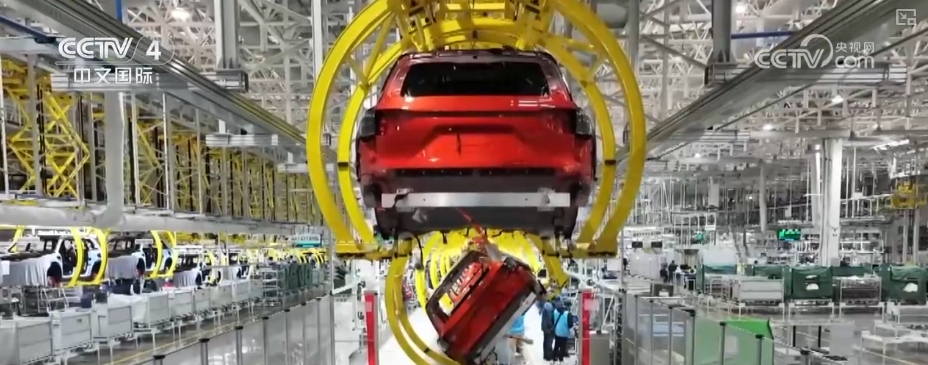
8.6%、9.1%、11.6%,融合创新!多维度“数”看经济发展有“质”又有“智”
Yang Shi Wang· 2025-06-17 03:10
Economic Performance - In May, the national economy maintained stable operation under pressure, with a focus on high-quality development [1] - The industrial production showed steady growth, with the added value of industrial enterprises above designated size increasing by 5.8% year-on-year [3][5] - The added value of the equipment manufacturing industry grew by 9.0%, and high-tech manufacturing increased by 8.6%, both exceeding the overall industrial growth rate [5][17] Service Sector - The service industry production index rose by 6.2% year-on-year in May, accelerating by 0.2 percentage points compared to the previous month [7] - Key sectors such as information transmission, software and IT services, leasing and business services, and wholesale and retail all outpaced the overall service industry growth [7] Consumer Market - The total retail sales of consumer goods reached 41,326 billion yuan in May, marking a year-on-year increase of 6.4%, which is 1.3 percentage points higher than the previous month [10] - The sales of basic living goods and certain upgraded products showed strong growth, supported by the "trade-in" policy [10] Investment Trends - Fixed asset investment continued to expand, with a total of 191,947 billion yuan from January to May, reflecting a year-on-year growth of 3.7% [14] - Rapid growth was observed in investments in information services, aerospace, and computer equipment manufacturing [14] Employment and Economic Policies - The employment situation remained generally stable, with a decrease in the urban survey unemployment rate [15] - Since 2025, more proactive macro policies have been implemented to enhance consumption vitality and promote production growth [15] Technological Advancements - The added value of high-tech manufacturing increased by 8.6%, with digital product manufacturing growing by 9.1%, significantly outpacing overall industrial growth [17][19] - Breakthroughs in cutting-edge technology fields such as artificial intelligence and robotics have positively impacted industrial upgrades [19] Postal and Logistics Sector - The postal industry in China handled over 861 billion items in the first five months, with a year-on-year growth of 17.6% [20] - The number of charging infrastructure units reached 14.4 million, a 45.1% increase year-on-year, supporting the rapid development of new energy vehicles [22][23] New Infrastructure Developments - The Wuhan Hancheng Low-altitude Port officially commenced operations, enhancing short-distance delivery efficiency for high-demand goods [26]

消费回升能持续吗?——5月经济数据解读【陈兴团队·财通宏观】
陈兴宏观研究· 2025-06-16 09:16
Core Viewpoint - The economic data for May indicates a slight decline in industrial production, a rebound in consumption, and a comprehensive drop in investment, with real estate continuing to decline [1][15]. Demand Side Analysis - External demand is significantly impacted by tariff fluctuations, leading to a continued decline in exports to the U.S., while transshipment trade and European recovery support exports in a mid-high range [1][2]. - Domestic investment is broadly declining, influenced by weak real estate and infrastructure investments, while consumption is showing signs of recovery due to trade-in programs and consumption festivals [1][2]. Production Side Analysis - Industrial production growth rate fell to 5.8% year-on-year in May, primarily due to tariff disruptions affecting export strength [3]. - The service production index increased by 0.2 percentage points to 6.2% year-on-year, benefiting from the recovery in consumption [3]. Investment Trends - Fixed asset investment growth rate decreased by 0.8 percentage points to 2.7% year-on-year, with real estate investment continuing to decline significantly [5][14]. - High-tech industry investments performed well, with information services and aerospace manufacturing seeing substantial year-on-year growth [9]. Consumption Trends - Retail sales growth rose to 6.4% in May, indicating enhanced consumption momentum, with significant contributions from home appliance and communication sectors benefiting from trade-in programs [10]. - Service consumption also showed recovery, with tourism-related growth accelerating and restaurant income increasing [10]. Real Estate Market - Real estate sales area growth rate fell to -3.3% year-on-year, with new housing sales declining while prices continue to rise [14]. - The construction area growth rate rebounded significantly, although new construction area growth remains negative [14]. Employment and Future Outlook - The urban unemployment rate remained stable at 5.0%, indicating a stable employment situation despite external disruptions [15]. - There is cautious optimism regarding external demand, with potential benefits from future tariff negotiations and European recovery efforts [15].

国家统计局:前五月宏观政策效应持续显现,投资延续平稳增长态势
news flash· 2025-06-16 07:09
Investment Overview - In the first five months of 2025, total fixed asset investment (excluding rural households) reached 191,947 billion yuan, showing a year-on-year growth of 3.7% [2] Group 1: Equipment Investment - Equipment and tool purchase investment experienced significant growth, increasing by 17.3% year-on-year, which is 13.6 percentage points higher than the overall investment growth rate; it contributed 63.6% to the total investment growth, adding 2.3 percentage points [3] Group 2: Infrastructure Investment - Infrastructure investment maintained steady growth, rising by 5.6% year-on-year, which is 1.9 percentage points higher than the overall investment growth rate; it contributed 34.5% to the total investment growth, an increase of 1.9 percentage points compared to the previous four months [4] Group 3: Manufacturing Investment - Manufacturing investment continued to grow rapidly, with an 8.5% year-on-year increase, 4.8 percentage points higher than the overall investment growth rate; it contributed 56.5% to the total investment growth, improving by 1.9 percentage points from the previous four months [5] Group 4: High-tech Service Investment - High-tech service investment showed a positive trend, growing by 11.6% year-on-year, with a 0.3 percentage point acceleration compared to the previous four months; information service investment surged by 41.4% [6] Group 5: Private Investment - Private project investment remained stable, with a year-on-year growth of 5.8% when excluding real estate development; notable growth was seen in the accommodation and catering industry at 25.3% and in cultural, sports, and entertainment sectors at 10.0% [7] Group 6: Green Energy Investment - Green energy investment grew rapidly, with a year-on-year increase of 25.4% in the electricity, heat, gas, and water production and supply sectors; this contributed 43.8% to the total investment growth, adding 1.6 percentage points [8] Group 7: Large Project Investment - Investment in projects with planned total investments of 1 billion yuan or more increased by 6.5% year-on-year, which is 2.8 percentage points higher than the overall investment growth rate, contributing 3.6 percentage points to total investment growth [9]