
金融

Search documents
AI冲击波:美股物流巨头股价暴跌,小公司市值两天增3倍
Mei Ri Jing Ji Xin Wen· 2026-02-14 10:37
Core Insights - Algorhythm, an AI logistics company, announced a significant reduction in freight empty miles to below 10% and a tripling of labor productivity through its AI-driven automation platform [1] - The announcement caused a major impact on the U.S. logistics sector, with Robinson Global Logistics experiencing a nearly 15% drop in stock price, resulting in a market value loss of approximately 23.3 billion [1] - In contrast, Algorhythm's stock price surged, leading to a market value increase of about three times within two days [1] Industry Analysis - The logistics industry is witnessing a shift towards AI-driven solutions, as highlighted by Algorhythm's achievements in reducing operational inefficiencies [1] - The traditional logic of software development, which correlates labor expansion with output, is being challenged by AI technologies that enable exponential productivity leaps [1]
中国持续抛售美债后,美财长喊话要管中国经济,背后藏三重阴谋
Sou Hu Cai Jing· 2026-02-14 07:09
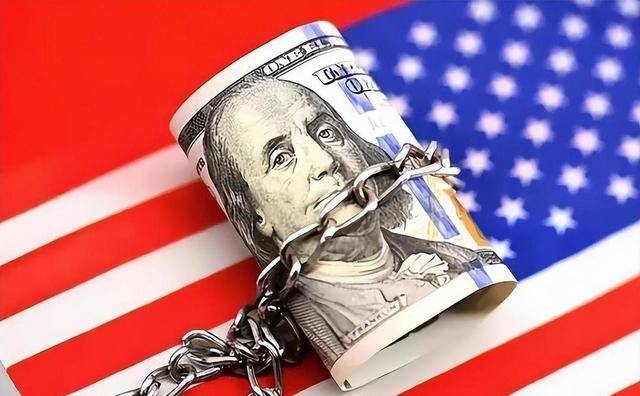
Group 1 - China is steadily selling US Treasury bonds and increasing its gold reserves to strengthen its economic security [1][5][11] - The US Treasury Secretary's comments on China's economy are seen as an attempt to pressure China into adjusting its economic structure and addressing the trade surplus with the US [3][17][21] - China's actions of selling US debt and accumulating gold are viewed as rational risk management rather than confrontation with the US [9][13][15] Group 2 - The US has been increasing its debt and printing money, leading to a decline in the credibility of the dollar, which poses risks for countries holding US debt [7][9] - China's gold reserves reached 74.19 million ounces by January 2026, with a monthly increase of 40,000 ounces, as gold is considered a stable asset amid global economic fluctuations [11][13] - The US perceives China's actions as a threat, as the selling of US debt reduces its attractiveness and puts pressure on the US financial system [15][17] Group 3 - The US Treasury Secretary's remarks are interpreted as an attempt to shift domestic blame for economic issues onto China, amidst rising unemployment and inflation in the US [35][38] - The narrative of "China's trade surplus" is used to justify potential tariffs and export controls against China, aiming to protect US economic interests [40][42] - The US is concerned about China's advancements in high-tech industries and is attempting to disrupt China's "14th Five-Year Plan" to prevent it from moving up the value chain [44][46][49] Group 4 - The US's double standards in trade practices are highlighted, as it criticizes China for subsidies while employing similar tactics domestically [27][29] - The article argues that the trade surplus between China and the US is a result of global supply chain dynamics and not an unfair advantage [51] - China is committed to advancing its economic development and industry upgrades while maintaining its sovereignty against US pressures [53]

央行等四部门联合发布!
Xin Lang Cai Jing· 2026-02-14 05:06
Core Viewpoint - The People's Bank of China, along with financial regulatory bodies, has issued guidelines to establish a normalized financial support mechanism aimed at preventing poverty and promoting rural revitalization, emphasizing the need for targeted financial assistance and resource allocation to underdeveloped areas [1][3][17]. Group 1: Financial Support Mechanism - The guidelines propose a long-term financial support mechanism for key populations, optimizing microcredit policies for impoverished individuals and ensuring continuous support for those at risk of falling back into poverty [1][3][5]. - Financial institutions are encouraged to develop loans for specialized industries and increase the upper limit for entrepreneurial guarantee loans in suitable regions [1][2][4]. Group 2: Investment in Key Areas - The guidelines stress the importance of enhancing financial resources in critical sectors, particularly in agricultural production and rural infrastructure, to improve overall productivity and quality [2][8][11]. - There is a focus on expanding financial supply for county-level industries and supporting the integration of agriculture, culture, and tourism [2][10][12]. Group 3: Financial Service Capacity Building - The guidelines call for the establishment of a robust financial organization system, with state-owned banks and rural financial institutions playing a pivotal role in supporting rural revitalization [12][13]. - Financial institutions are urged to innovate and diversify their product offerings to meet the specific needs of agricultural enterprises and rural communities [12][14]. Group 4: Multi-Industry Financial Collaboration - The guidelines encourage the issuance of special financial bonds by local financial institutions to raise stable, low-cost funds for rural development [15][16]. - There is an emphasis on creating a comprehensive capital market support system to facilitate financing for rural enterprises and agricultural projects [15][16]. Group 5: Policy Implementation and Monitoring - The guidelines highlight the need for effective monitoring and evaluation of financial support policies, ensuring that resources are allocated efficiently and effectively to prevent poverty [17][18]. - Financial institutions are encouraged to share successful practices and experiences in rural financial services to promote a positive social environment for ongoing support initiatives [17][18].
隔夜美股 | 三大指数本周收跌 比特币概念股大幅反弹
智通财经网· 2026-02-13 23:28
Market Overview - US stock indices experienced declines, with the Dow Jones down 1.23%, Nasdaq down 2.1%, and S&P 500 down 1.39% [1] - The January Consumer Price Index (CPI) showed a year-on-year increase of 2.4%, down 0.3 percentage points from the previous month, indicating a potential easing of inflation concerns [1][3] - Bitcoin-related stocks saw significant gains, with Coinbase up over 16% and other related companies also experiencing increases [1] European Market - The German DAX30 index rose by 78.91 points (0.32%), while the UK FTSE 100 increased by 39.01 points (0.38%) [2] - The French CAC40 index fell by 28.82 points (0.35%), and the Spanish IBEX35 dropped by 236.58 points (1.32%) [2] Commodities - Gold prices increased by 2.45% to $5043.08, and silver prices rose by 2.83% to $77.37 per ounce, driven by ongoing demand for safe-haven assets [2] - WTI crude oil futures settled at $62.89 per barrel, while Brent crude oil futures closed at $67.75 per barrel, both showing slight increases [2] Macroeconomic Insights - The January CPI rose by 0.2% month-on-month, slightly below expectations, while core CPI increased by 0.3% [3] - Economists suggest that the stabilization of the labor market may lead the Federal Reserve to maintain interest rates for a period [3] Regulatory Developments - The US Supreme Court is set to release opinions on the Trump tariff case on February 20, which could significantly impact the current tariff policies [4] - The Federal Reserve is expected to appoint Randall Guynn as the new Director of Regulatory Affairs, marking a significant personnel change [5] Industry News - The US Department of Commerce is preliminarily supporting a 133% anti-dumping duty on palladium imports from Russia, with a final decision expected later this year [6] - Amazon-backed X-Energy Reactor Co. received federal approval to produce uranium fuel for advanced reactors, marking a significant development in the nuclear energy sector [7] Company-Specific Developments - SpaceX is considering a dual-class share structure for its upcoming IPO, which would enhance CEO Elon Musk's control over the company [8] - Nvidia's leased data center successfully issued $3.8 billion in bonds, reflecting strong demand for AI infrastructure financing [9] - Apple and Google lost a court challenge regarding US patent review policies, which could affect their ability to contest patent validity [10][11] - The FTC is intensifying its antitrust investigation into Microsoft, focusing on its cloud and AI business practices [11]
最不发达国家服务业转型乏力
Xin Lang Cai Jing· 2026-02-13 22:46
Group 1 - The core viewpoint of the report is that while the service sector is growing in least developed countries (LDCs), it has not yet become a strong engine for broad development and structural transformation [1] - In 2023, the service sector accounted for an average of 48.9% of GDP in LDCs and provided 38.4% of employment, but this growth is primarily in low-productivity, informal traditional service areas like retail [1] - Labor productivity growth in LDCs is slow, with only a few knowledge-intensive sectors like financial and business services showing productivity increases, while trade services, which employ most workers, have stagnated [1] Group 2 - The report highlights the vulnerability of service trade patterns in LDCs, with tourism and transport accounting for nearly 70% of service exports, making them susceptible to external shocks [2] - LDCs are missing out on digital opportunities, with their participation in the dynamic global digital delivery services sector at only about 0.16%, the lowest recorded share [2] - In 2024, LDCs' trade deficit in digital delivery services accounted for 41.1% of their total trade deficit, indicating significant trade capacity limitations [2] Group 3 - The report suggests a comprehensive transformation path, emphasizing that the relationship between services and industrialization is complementary rather than substitutive [3] - It recommends that LDCs and their development partners adopt integrated development strategies that include service sector development within broader structural transformation agendas [3] - Key recommendations include investing in infrastructure and human capital, upgrading traditional service sectors, and deepening regional and international cooperation to enhance service trade [3]
恒生指数重磅调整!宁德时代、洛阳钼业、老铺黄金被纳入
Mei Ri Jing Ji Xin Wen· 2026-02-13 14:19
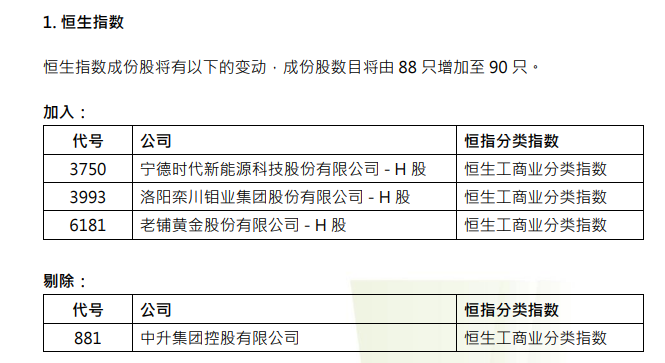
Group 1 - The Hang Seng Index Company announced the quarterly review results for the Hang Seng Index series, effective from March 9, 2026, after market close on March 6, 2026 [1] - The Hang Seng Index will add three stocks: Contemporary Amperex Technology Co., Limited (03750), Luoyang Molybdenum Co., Ltd. (03993), and Laopuhuang Co., Ltd. (06181), while removing Zhongsheng Group Holdings Limited (00881), increasing the number of constituent stocks from 88 to 90 [1] - Laopuhuang has seen a significant price increase, with a cumulative rise of nearly 20% since the beginning of 2026 [1] Group 2 - The Hang Seng China Enterprises Index will maintain 50 constituent stocks, adding Beike-W (02423) and Horizon Robotics-W (09660), while removing China Resources Beer (00291) and Mengniu Dairy (02319) [2] - The Hang Seng Composite Index will add 53 stocks, including Bank of East Asia (00023), and remove 28 stocks, including Shui On Land (00272), increasing the number of constituent stocks from 507 to 532 [5] - The Hang Seng Technology Index will not change, maintaining 30 constituent stocks [6] Group 3 - The total assets under management for products tracking the Hang Seng Index series is approximately $117.7 billion as of December 2025 [6] - The adjustments in index constituents may trigger passive fund rebalancing, potentially leading to increased trading volume for related stocks as the effective date approaches [6] - The inclusion of new economy enterprises in sectors like renewable energy, new consumption, and biotechnology is expected to enhance the growth potential and investment attractiveness of the indices, reducing the weight of traditional industries [6]


重磅信号,2024年10月以来最高水平
Zhong Guo Ji Jin Bao· 2026-02-13 13:55
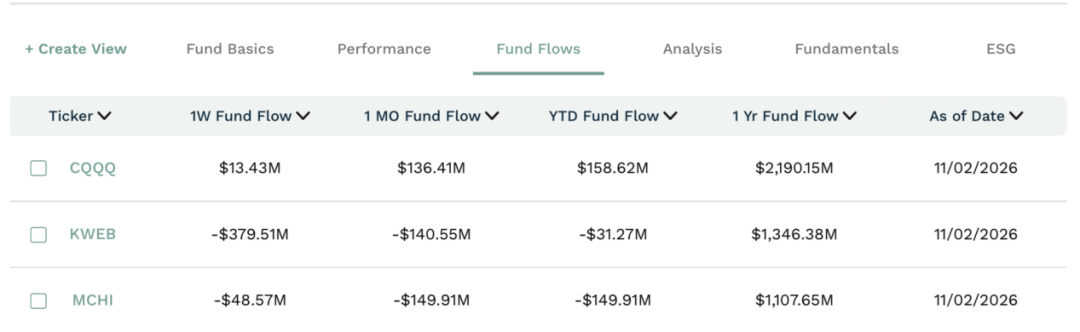
Group 1 - In January, public funds from the US and EU saw a net inflow of $9 billion into the Chinese market, marking the highest level since October 2024, with active management funds turning to net inflows for the first time since early 2023 [1] - Over the past year, overseas ETFs focused on Chinese technology indices have significantly attracted capital, with the largest five ETFs in the US having total assets of $79 billion, $78.2 billion, $65.9 billion, $30.8 billion, and $18.2 billion respectively [2] - Three US-listed Chinese stock ETFs attracted over $1 billion in capital over the past year, with CQQQ leading at $2.19 billion, followed by KWEB at $1.35 billion and MCHI at $1.11 billion [2] Group 2 - In 2025, net inflows of overseas funds into China were primarily driven by passive funds, but there are signs that active management funds may accelerate their inflows, particularly in the technology sector [3] - Beeneet Kothari, founder of Tekne Capital Management, stated that China's investment attractiveness in AI is stronger than that of the US, highlighting China's advantages in construction and infrastructure for AI development [4] - The MSCI China Index had a total return of approximately 31% in 2025, leading to increased interest from investors, with Qube Research & Technologies' China long-only fund growing over tenfold to exceed $2 billion [5]
鼎龙科技:关于使用部分闲置募集资金进行现金管理到期赎回的公告
Zheng Quan Ri Bao· 2026-02-13 12:09
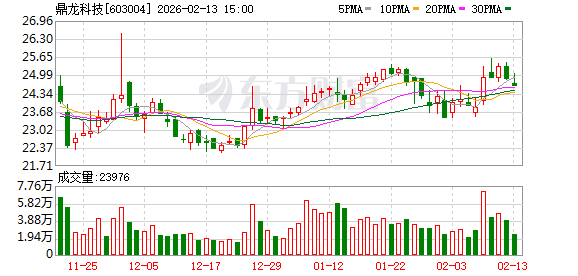
Group 1 - The company, Dinglong Technology, announced the redemption of structured deposits amounting to 50 million yuan from China Merchants Bank, which matured on February 12, 2026, returning the principal and an interest of 200,100 yuan [2] - As of the announcement date, the total balance of idle fundraising used for cash management products by the company is 278 million yuan, which is within the authorized limit [2]

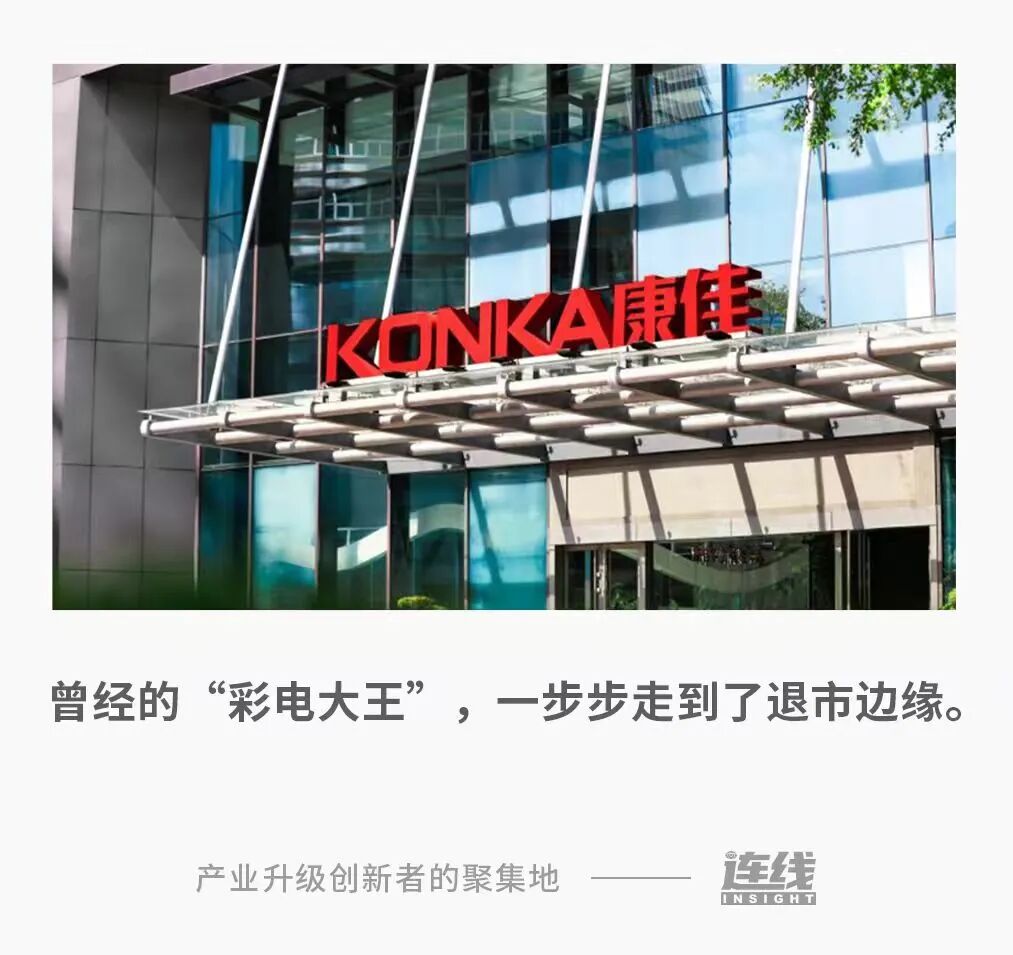
巨亏百亿、节节败退,康佳究竟犯了什么错?
Xin Lang Cai Jing· 2026-02-13 11:07
Core Viewpoint - The article discusses the decline of Konka, a once-prominent player in the Chinese television market, highlighting its significant financial losses and strategic missteps that have led to its current precarious position in the industry [5][11]. Financial Performance - Konka is expected to report a net profit loss of between 12.581 billion to 15.573 billion yuan for 2025, a staggering increase from a loss of 3.296 billion yuan the previous year, marking a year-on-year increase of 3.8 to 4.7 times [5][6]. - The company's revenue for 2025 is projected to be between 9 billion to 10.5 billion yuan, reflecting a decline of 5.53% to 19% compared to the previous year [5][6]. - As of the end of 2025, Konka's net assets are expected to turn negative, ranging from -5.334 billion to -8.001 billion yuan, which could trigger delisting risks under stock exchange regulations [10][11]. Business Strategy and Challenges - Konka's diversification strategy has led to a lack of focus on its core consumer electronics business, resulting in diminished market presence and competitiveness [5][17]. - The company has ventured into various sectors such as real estate, semiconductors, and environmental protection, but these efforts have not yielded profitable results and have instead strained its resources [17][18]. - The consumer electronics segment, which accounts for approximately 90% of Konka's revenue, has been underperforming, with a gross margin of only 3.23% and significant losses in its core television business [7][8]. Market Position - Once a leading brand in the television market, Konka has fallen to a position outside the top tier, with its brand recognition declining among younger consumers [8][11]. - The company's market share has diminished significantly, with its television shipments ranking it outside the top four in the industry [8][11]. Management Changes and Future Outlook - Following a change in control to China Resources Group, Konka's management has undergone significant restructuring, with hopes that the new leadership will stabilize the company and guide it through its financial difficulties [19][20]. - China Resources has provided financial support, including a low-interest loan of 3.97 billion yuan, aimed at alleviating Konka's cash flow issues and supporting its operational needs [22][24]. - The path to recovery for Konka involves focusing on its core consumer electronics business while also developing its semiconductor and PCB sectors, requiring time and strategic effort to regain market position [24].

特朗普“豪言”与地缘迷雾下 COMEX银陷技术困局多空悬殊
Jin Tou Wang· 2026-02-13 08:25
Group 1 - Silver prices are experiencing slight weakness during the Asian trading session, influenced by the upcoming U.S. non-farm payroll report and inflation data, leading to a consolidation phase in the silver market [1] - Geopolitical tensions remain high but have not escalated further, providing limited selling pressure on precious metals due to safe-haven demand [1] Group 2 - Trump has nominated Kevin Walsh as the Federal Reserve Chair, claiming he could drive U.S. economic growth to 15%, significantly exceeding market expectations of 2.4% and the historical average of 2.8%, indicating potential pressure on Walsh if appointed [3] - Chinese regulators are tightening control over financial institutions' exposure to U.S. Treasury bonds, pushing the offshore RMB to a 34-month high against the dollar at 6.9, reflecting a global trend of reducing dollar assets [3] - An Estonian intelligence report suggests that Russia is using ceasefire negotiations as a manipulation tool, indicating no genuine intent to end military actions, which poses ongoing threats to neighboring countries [3] Group 3 - The next upward target for March silver futures is to break the key resistance level of $92.015, while the short-term downward target for bears is to fall below the important support level of $60 [4] - The first resistance level for silver futures is the overnight high of $83.745, with further resistance at $85; the first support level is this week's low of $83.76, with additional support at $82 [4]