投资银行

Search documents
多位保代分享!投行项目常用的问题解决方法
梧桐树下V· 2025-06-27 08:56
Core Viewpoint - The article highlights the availability of over 400 premium courses for members, focusing on various aspects of investment banking, mergers and acquisitions, and legal practices related to corporate governance and IPOs [1][2][3]. Group 1: Course Offerings - The article lists various courses available under the "学霸会员" program, including topics such as mergers and acquisitions, corporate compliance, and overseas investment strategies, with significant discounts on original prices [1][2]. - Specific courses include "上市公司并购重组实务解析" priced at 611.32 (originally 899), "企业合规实务解析" at 611.32 (originally 899), and "私募基金实务解析" at 543.32 (originally 799) [1]. - Other notable courses include "境外投资并购法律实务" at 339.32 (originally 499) and "A股IPO筹备关键4环节" at 543.32 (originally 799) [2]. Group 2: Target Audience and Feedback - The program is designed for professionals in investment banking, finance, and legal sectors, providing them with essential knowledge and practical skills [6][8]. - Feedback from users indicates that the courses are comprehensive and well-structured, allowing for efficient learning and application in their respective fields [6][8]. - Users appreciate the flexibility of the learning format, which accommodates busy schedules and promotes learning during fragmented time [8].


华兴资本控股(01911.HK):港股数字资产狂潮的新捕手
Ge Long Hui· 2025-06-27 07:41
Core Viewpoint - The surge in digital assets has become a central theme in the Hong Kong stock market, with significant price increases in companies like ZhongAn Online and Huatai International, indicating a transformative moment driven by supportive policies and capital enthusiasm [1] Group 1: Strategic Decisions - Huaxing Capital's strategic move into the Web3.0 and cryptocurrency sectors is a response to the global fintech wave and a continuation of its focus on the new economy [3] - The Hong Kong government has established a clear regulatory framework for digital assets, providing a conducive environment for innovation and reducing policy risks for financial institutions like Huaxing Capital [4] Group 2: Huaxing Capital's Position - Huaxing Capital is well-positioned in the digital asset market with significant cash reserves of 1.3 billion RMB, 3 billion RMB in trading financial assets, and zero long-term debt, allowing it to navigate the digital asset wave without historical burdens [2] - The current market valuation of less than 3 billion HKD does not reflect the quality of Huaxing's assets, which are undervalued due to the industry's recent downturn, suggesting potential for recovery and growth [2] Group 3: Competitive Advantages - Huaxing Capital has a competitive edge in compliance, having previously provided regulatory solutions for digital asset firms, which aligns with the Hong Kong government's licensing processes [6] - The company has a history of strategic investments in the digital asset space, including early investments in stablecoin issuer Circle, which has yielded significant returns and validated its foresight in the sector [7] Group 4: Ecosystem Development - Huaxing has built a comprehensive ecosystem in Web3.0, having facilitated the NASDAQ listing of mining leader Canaan and invested in various digital asset platforms, creating a dual-driven model of investment banking services and strategic investments [8] - The appointment of Frank Fu Kan as an independent director enhances Huaxing's capabilities in the digital asset space, bringing extensive experience in compliance and operational management [9] Group 5: Future Outlook - The current market valuation of Huaxing Capital, at 0.4 times its book value, reflects a lag in recognizing the potential of its new digital asset business, which could lead to significant valuation adjustments as it begins to generate revenue [10] - The anticipated growth in Web3.0 business could trigger a substantial re-evaluation of Huaxing's overall value, especially as traditional financial operations recover alongside new business contributions [10]
中东局势可能会使未来的降息复杂化;特朗普暗示美联储新任主席提振英镑;未来十年,伦敦人口将达到1000万
Sou Hu Cai Jing· 2025-06-27 03:40
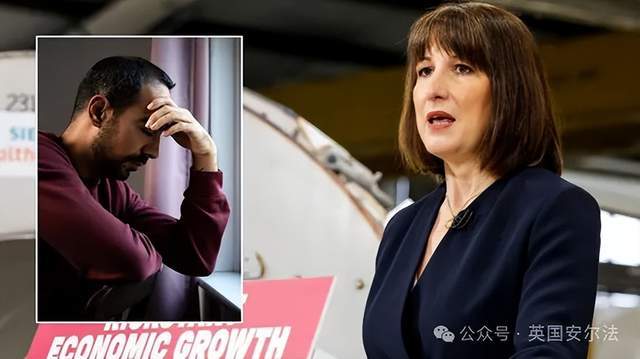
Group 1 - The Bank of England's Governor Andrew Bailey warns that the volatility in oil prices and developments in the Middle East complicate interest rate decisions [2][4] - Bailey emphasizes the unpredictability of the current situation, noting that oil prices surged above $80 per barrel before dropping below $70 following a ceasefire announcement [2][4] - The central bank faces challenges as higher energy costs could exacerbate inflation, making rate cuts more problematic [4][6] Group 2 - Monetary Policy Committee member Megan Greene indicates that risks are two-sided, leaning towards downside growth and upside inflation [6] - Greene expresses concern over the prospect of stagflation, where economic stagnation occurs alongside high inflation [6][8] - The need for a cautious and gradual approach to monetary policy is highlighted due to ongoing uncertainties in the UK economy [8] Group 3 - Investment banks report that oil prices have increased by at least 75% year-on-year, potentially raising market risks significantly [9] - The Bank of England's analysis suggests that sustained disruptions in the Strait of Hormuz could lead to further complications in oil supply [9] - Historical data indicates that surges in oil prices during late business cycles have often resulted in economic recessions [9] Group 4 - Bailey notes that the UK job market is weakening, with companies responding to increased national insurance contributions by cutting wages and jobs [11][30] - Concerns are raised about entrenched inflation expectations, with the risk that households and businesses may adjust their expectations in response to rising costs [11][30] - The overall economic landscape has seen a reduction of approximately 250,000 jobs over the past year, with the unemployment rate reaching a four-year high of 4.6% [32] Group 5 - The Bank of England plans to reassess price growth in August, with service sector inflation being a key indicator for future inflation trends [34] - Current consumer price inflation stands at 3.4%, primarily driven by energy and utility prices, with service price inflation remaining high at 4.7% [34] - The central bank's approach to interest rates is more conservative compared to the European Central Bank, which has a rate of 2% [34]
高盛交易员:最明智的投资不是确定性(债券),而是塑造未来的力量
Hua Er Jie Jian Wen· 2025-06-27 02:02
Group 1 - The core viewpoint is that the market has shifted from a crisis phase to a response phase, driven by the Federal Reserve's anticipated interest rate cuts, leading to a significant upward revaluation of risk assets [1][2] - Systematic macro strategies are losing dominance, with asset management capital declining by approximately one-third from peak levels, indicating a shift towards subjective judgment and position allocation rather than automated trend-following [1][6] - The current macro environment is characterized by a transition from a focus on liquidity to an emphasis on fiscal policy, geopolitical factors, and the Federal Reserve's response mechanisms, necessitating real-time interpretation of macroeconomic turning points [4][6] Group 2 - Financial conditions have significantly eased, evidenced by declining long-term yields, tightening credit spreads, a weaker dollar, and improving real wage dynamics, which support the upward revaluation of risk assets [2][3] - The definition of bull and bear markets is evolving, with a focus on market response functions rather than traditional price movements, indicating a need for traders to adapt to event-driven macro markets [4][6] - Investment opportunities are emerging in sectors such as artificial intelligence, biotechnology, and cryptocurrencies, with a notable emphasis on Bitcoin as a representation of the new era [6][7]

亚投行年会聚焦区域互联互通 电网等能源基础设施建设受关注
Bei Ke Cai Jing· 2025-06-26 13:57
Core Viewpoint - The focus of the discussions at the Asian Infrastructure Investment Bank (AIIB) annual meeting was on enhancing regional connectivity, which is seen as crucial for sustainable economic development and social stability in the region [1][2]. Group 1: Regional Connectivity and Infrastructure - Enhancing regional connectivity can effectively leverage resource complementarity, which is vital for sustainable and efficient economic development [1]. - AIIB has prioritized cross-border connectivity and regional cooperation as one of its four main business directions, aiming for cross-border projects to account for 25%-30% of its portfolio by 2030, with an early achievement of 33% by 2024 [1]. - The ASEAN power grid is being actively developed to promote electricity connectivity in the region, which is expected to drive economic growth [3]. Group 2: Energy Security and Cooperation - Energy security has become a critical issue, with recent power outages highlighting its importance for economic development [3]. - The integration of energy arrangements among ASEAN member states is expected to enhance regional energy security and economic effectiveness [3]. - The demand for energy is projected to triple in some regions by 2050, indicating a significant need for energy network construction [4]. Group 3: Challenges in Implementation - Political risks and the need for consistent policy frameworks among countries are major challenges in advancing regional connectivity projects [8]. - Achieving regional consistency and cooperation is essential for the successful implementation of cross-border infrastructure projects [9]. - Financing remains a significant challenge, with a projected global infrastructure investment gap of $15 trillion by 2040 [9]. Group 4: Financial Support and Multilateral Cooperation - Multilateral cooperation is deemed essential for the success of connectivity projects, with financial institutions playing a crucial role in providing guarantees and risk investments [9]. - AIIB and other multilateral institutions can offer various financial tools to attract private sector investment and mitigate project risks [9][10]. - The Islamic Development Bank emphasizes the importance of leveraging investment value and resources for large, complex, and high-risk infrastructure projects [10].
从虚拟到可行:首席财务官如何重新规划人工智能的应用
3 6 Ke· 2025-06-26 08:02
Core Insights - Many AI projects fail to deliver expected results, prompting CFOs to refocus on three core elements: business value, data foundation, and employee engagement [2][3][4] Group 1: Business Value - Companies must clearly define the business value they expect to achieve through AI, focusing on solving quantifiable business challenges rather than pursuing technology for its own sake [5] - Successful companies prioritize practical, actionable business problems, leading to measurable outcomes, such as increasing annual revenue from $1 million to $1.3 million through targeted AI-driven marketing strategies [5] - A focused and pragmatic approach allows companies to accumulate incremental successes, fostering internal momentum for larger initiatives while minimizing high-cost trial-and-error risks [5] Group 2: Data Foundation - The second key dimension for successful AI implementation is data quality and accessibility, as the effectiveness of AI models is highly dependent on the quality of input data [8] - Companies often face challenges in data volume, diversity, and structure, which can hinder AI training [8] - Data collaboration platforms enable organizations to train AI models while ensuring privacy, allowing for the analysis of data without transferring it, thus addressing the critical issue of high-quality training data scarcity [9] Group 3: Employee Engagement - The third dimension, personnel, is crucial for the success of AI projects, as public concerns about job displacement by AI can lead to resistance [12] - Companies must communicate the core message that AI is meant to enhance human capabilities, not replace them, to alleviate fears and build trust among employees [12] - Successful AI initiatives emphasize communication and change management, requiring CFOs and executives to engage stakeholders early and maintain ongoing dialogue to ensure smooth transitions [12][13]

重返美国?欧洲资产遭获利了结,美股能否开启新行情
Di Yi Cai Jing Zi Xun· 2025-06-25 23:32
Group 1 - The core viewpoint of the articles indicates a significant shift of funds from European assets to the US market, driven by easing recession fears and a lack of short-term catalysts in Europe [1][3][2] - Goldman Sachs reports that short-selling in European stocks has reached its highest level in nearly a year, with hedge funds establishing new short positions [2][3] - European stock performance has been notably strong recently, with the DAX 30 index rising nearly 19% year-to-date, but concerns over growth and valuation have led to net selling of European defense stocks [2][3] Group 2 - Barclays analyst Emmanuel Cau notes that the cautious sentiment among investors is leading to a preference for US stocks, as European performance weakens and geopolitical uncertainties persist [3][2] - Nomura Securities predicts that over $100 billion may flow into the US market next month, marking the largest expected inflow for volatility-control funds since 2004 [3][4] - The recent decline in realized volatility is driving this predicted influx, as volatility-control funds may soon increase their risk exposure [4][5]


90天38亿:光源资本王巍揭秘“产业并购新时代”的操盘逻辑|并购解码
Tai Mei Ti A P P· 2025-06-25 13:50
Core Insights - The article discusses the complexities and challenges of mergers and acquisitions (M&A), emphasizing the need for expertise and strategic planning in executing successful deals [2][3][8] - It highlights a recent successful acquisition by Guangyuan Capital, which completed a transaction worth approximately 3.8 billion RMB in just 90 days, showcasing the firm's efficiency and expertise in the mid-market M&A space [2][4][5] M&A Process and Challenges - M&A transactions typically take 1-2 years to complete, with various factors such as market conditions and stakeholder interests influencing the process [2][3] - The increase in cross-industry mergers has made negotiations more complex, as differing management philosophies and governance structures must be reconciled [3][9] - The phenomenon of "announce and then terminate" has become common, indicating rising operational difficulties and market uncertainties [8][9] Recent M&A Case Study - The acquisition of Zhejiang Panshin by Fuchuang Precision involved a competitive bidding process due to the asset's high quality and the urgency of the seller [4][5] - A consortium was formed to facilitate the acquisition, which included six equity investment institutions and a 1 billion RMB bank loan, highlighting the innovative financing strategies employed [5][6] Strategic Considerations - Post-acquisition, the focus is on creating synergies between the acquiring and target companies, with a dual-brand strategy planned for market penetration [6][7] - Ensuring alignment of interests between the listed company and co-investors is crucial, requiring careful structuring of the deal [7][8] Market Trends - The article notes a shift towards more active industrial mergers, with leading companies seeking to consolidate and strengthen their market positions [9][10] - The rise of cross-industry mergers and control transfers indicates a changing landscape in the M&A market, with companies looking for new growth avenues [9][10] Buyer and Seller Dynamics - Two main types of sellers are identified: those under financial distress and those seeking to liquidate assets due to market pressures [10][11] - Many sellers lack clarity on their objectives, necessitating guidance from professional intermediaries to navigate the complexities of M&A [11][12] Comparative Market Analysis - The Chinese M&A market is less active compared to the more mature and liquid markets in Europe and the U.S., where a larger number of active funds and buyers exist [12][13] - The disparity in the number of active M&A funds between China and the West highlights the potential for growth in the domestic market [13][14] Guangyuan Capital's Positioning - Guangyuan Capital has positioned itself as a key player in the M&A space by integrating various financial services to meet the complex needs of industrial clients [14][15] - The firm leverages its deep industry knowledge and extensive network to facilitate successful transactions, focusing on both strategic acquisitions and partnerships [15][16] Future Outlook - The firm aims to continue expanding its focus on listed companies, particularly those with ongoing acquisition needs or transformation requirements [17][18] - The evolving landscape of M&A in China presents opportunities for firms that can effectively match buyers and sellers while navigating regulatory and market challenges [18][19]

别为中东停火高兴太早!下一个引爆市场的“靴子”又将落下
Sou Hu Cai Jing· 2025-06-25 10:26
有三大主要原因可能让关税问题重新咆哮着回到投资者的视野中。 第一便是地缘政治近期盖过了贸易战的风头。近几周的以色列-伊朗冲突占据了投资者的大量注意力, 但该事件的风险似乎正在减弱。就波动性而言,下一只落地的靴子很可能就是特朗普贸易战的"新篇 章"。 其次,关税对通胀的影响可能存在滞后性。经济学家警告说,近几个月显示通胀降温的数据可能不会持 久。摩根士丹利表示,这是因为关税对价格的影响可能需要一段时间才能显现,并补充说,他们认为通 胀可能在今年夏末有所回升。美联储主席鲍威尔也表示,在6月、7月和8月将会看到关税对通胀产生显 著影响。 最后,美联储的政策可能因关税的滞后影响而变得复杂。市场,以及特朗普本人一直在呼吁美联储降低 利率,但如果通胀抬头,那将成为美联储和鲍威尔维持利率不变的又一个理由。 近期,关于关税的大部分焦点都集中在美联储维持利率不变的决定上,而特朗普对此一直持高度批评态 度。 摩根士丹利发出警告:注意7月9日!届时一场新的风暴将重新席卷全球市场…… 尽管市场因周二以色列与伊朗达成停火而松了一口气,但投资者很快就要重新思量另一个曾在今年早些 时候引爆市场波动的问题。 摩根士丹利在近期发表的一份报告中 ...


ETO Markets 出入金:摩根士丹利押注美联储将在2026年大幅降息?
Sou Hu Cai Jing· 2025-06-25 09:59
Core Viewpoint - Morgan Stanley predicts that the Federal Reserve will begin a series of seven interest rate cuts starting in March 2026, ultimately lowering the federal funds rate to a range of 2.5% to 2.75%, which is significantly lower than the current policy rate and earlier than most institutions expect [1][3]. Economic Growth and Inflation Trends - The prediction is based on the assessment of a downward trend in economic growth and a decline in inflation. Over the past two years, the Fed has maintained interest rates above 5% to combat persistent inflation, but with a cooling labor market and weakening core price increases, the monetary environment has tightened [3]. - Morgan Stanley anticipates that by 2026, the U.S. economy will experience a cyclical slowdown, leading to a decrease in potential output growth and a structural slowdown in investment, necessitating a swift shift to accommodative monetary policy to prevent a hard landing [3]. Inflation Cycle and Monetary Policy - The end of the inflation cycle may arrive sooner than the market expects. Despite Fed Chair Powell's emphasis on a temporary rise in inflation during the summer, trends in rent, healthcare, and commodity prices indicate that most price structures are entering a downward trajectory [3]. - If energy prices remain stable and labor supply improves, inflation expectations may stabilize over the next two years, providing the Fed with ample room to implement easing measures [3]. Neutral Interest Rate and Policy Adjustment - Morgan Stanley's forecast of a final interest rate midpoint of 2.5%-2.75% suggests that the U.S. neutral interest rate has not been permanently elevated due to temporary factors such as the pandemic or geopolitical issues. If this assessment holds, the Fed will need to gradually "return to normal" in the coming years, aligning policy rates with inflation targets [3]. Uncertainties and Market Reactions - The proposed path is not without uncertainties, including high U.S. fiscal deficits, ongoing global supply chain restructuring, and potential geopolitical tensions. If inflation becomes sticky in services and wages, or if financial markets react excessively to premature easing, the Fed may have to delay its adjustment pace [4]. - Morgan Stanley's expectations represent a "baseline scenario" rather than a rigid policy blueprint, indicating a shift in market sentiment from "higher for longer" to "lower and faster," which will directly impact bond markets, the U.S. dollar, and growth assets, becoming a core variable in financial markets over the next two years [4].