
外卖

Search documents
三家《财富》世界500强的新战事
财富FORTUNE· 2025-07-31 13:05
Core Viewpoint - The article highlights the continuous revenue growth and rising rankings of five Chinese internet giants—JD.com, Alibaba, Tencent, Pinduoduo, and Meituan—in the competitive landscape of the Fortune Global 500 list, indicating the ongoing penetration of the internet and e-commerce in China's vast market [1][2]. Group 1: JD.com - JD.com ranked 44th in the Fortune Global 500, rising three places and becoming the highest-ranked private company in China [4]. - The company officially entered the food delivery market in March, challenging Meituan's monopoly, which presents new opportunities for merchants, riders, consumers, and competitors like Alibaba [5][6]. - JD.com aims to leverage its existing instant delivery network, mature app, and technology to enhance user engagement and drive consumption across various product categories [7][9]. - The company has signed labor contracts with full-time riders, ensuring social security benefits, and has over 150,000 full-time riders as of June 2025 [9]. - JD.com’s core advantage lies in its supply chain capabilities, which have been optimized for efficiency and cost reduction, allowing it to outperform competitors like Gome and Suning [10][15]. Group 2: Alibaba - Alibaba rose seven places to rank 63rd in the Fortune Global 500 [18]. - The company is integrating its services by unifying Taobao's "hourly delivery," Ele.me's local retail, and Hema's instant delivery into a single platform called "Taobao Flash Purchase," enhancing its operational efficiency [17]. Group 3: Meituan - Meituan reported a revenue of 337.6 billion yuan for the year, ranking 327th on the Fortune list, with its core local business growing by 20.9% to 250.2 billion yuan [19]. - The company has built a robust instant delivery network with nearly 4 million riders, maintaining high net profits despite competitive pressures [20]. - Meituan faces challenges in quality control due to the diverse range of products and merchants involved in instant retail, which can affect consumer trust [20]. Group 4: Competitive Landscape - JD.com employs a supply chain model that emphasizes control over procurement, warehousing, and logistics, while Alibaba and Meituan utilize a platform model that connects supply and demand through digital technology [21][22]. - The article notes that both models have distinct operational logics, with the supply chain model focusing on strict quality control and the platform model allowing for rapid expansion of product categories [22][23]. - All three companies are navigating a new competitive environment, leveraging their unique strengths to explore new markets: JD.com extends its supply chain capabilities into instant retail and food delivery; Alibaba maximizes its platform effects and capital strength; and Meituan seeks higher profit margins through its extensive rider network [23].





从流量到存量,留下客户是三大巨头下一道难题
Tai Mei Ti A P P· 2025-07-31 10:53
Core Viewpoint - The ongoing battle in the food delivery market continues with significant subsidies and promotions despite regulatory interventions, indicating a shift towards a long-term competitive strategy among major players like Meituan, Alibaba, and JD.com [1][2][3] Group 1: Market Dynamics - The food delivery market has seen daily orders exceed 90 million, with a notable increase from last year's average of under 100 million [1] - Major players are reportedly spending around 20 billion RMB monthly on subsidies, raising concerns about profitability among merchants who face high platform fees [1][2] - The competition has evolved from a simple price war to a broader battle encompassing supply chains and non-food categories, with platforms like Meituan and Alibaba expanding their offerings [12][15] Group 2: Strategic Moves - JD.com has entered the market with aggressive recruitment of delivery personnel and a focus on high-quality delivery services, while Meituan has launched its own instant retail brand [2][3] - Alibaba has intensified its efforts with the launch of Taobao Flash Sale, offering significant discounts and promotions to capture market share [3][6] - The competition has led to a decline in Meituan's market share from 70% to around 60%, indicating a shift in the competitive landscape [3][4] Group 3: Consumer Impact - Consumers are benefiting from substantial discounts and promotions, leading to increased spending and a shift in purchasing habits towards instant retail [8][9] - The battle has also created new opportunities for small and medium-sized businesses, with many reporting significant increases in orders and revenue [9][10] - Delivery personnel have seen income growth, with reports of over 20% increases in earnings, reflecting the positive impact of the competitive environment on employment [10] Group 4: Future Outlook - The ongoing competition is expected to continue, with all three platforms preparing for the next phase of the battle, focusing on retaining customers and enhancing service efficiency [13][18] - The ultimate success in this market will depend on the ability to convert order density into supply chain efficiency and establish ecological barriers [18] - A healthy market structure is anticipated, with multiple platforms coexisting and fostering differentiated competition, which is beneficial for consumers [18]
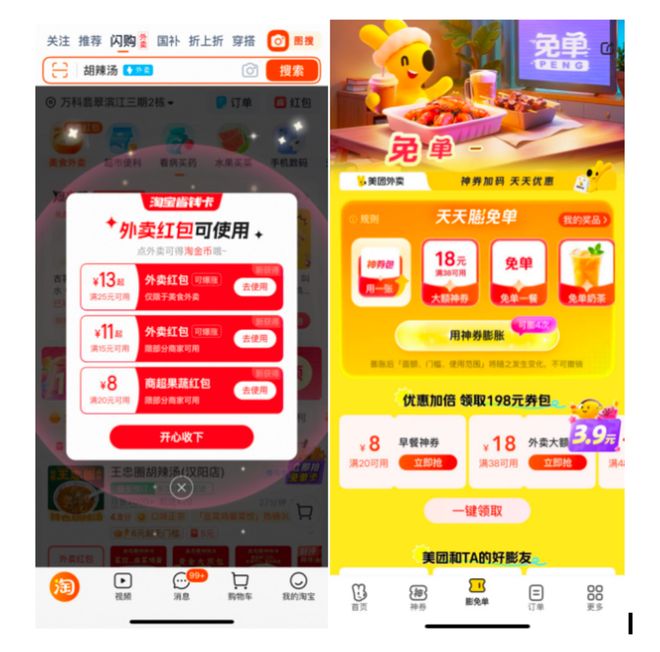
外卖大战步入下半场:平衡品质与规模,撬动增量市场
Nan Fang Du Shi Bao· 2025-07-31 09:52
Core Viewpoint - The competition among food delivery platforms is shifting from subsidy wars to enhancing kitchen transparency and food safety, as companies like Meituan and JD.com focus on quality and consumer trust in response to rising demands for food safety and brand recognition [1][3][11] Group 1: Subsidy Wars and Market Dynamics - The recent "subsidy war" in the food delivery industry has led to inflated order numbers, but Meituan's CEO acknowledged that most of these numbers are "bubble" and lack long-term significance [2][3] - Merchants are caught in a dilemma during the subsidy wars, with reports indicating that high subsidies temporarily boost order volumes but lead to a drop in average order value and customer retention once subsidies cease [2][3] - A survey revealed that 93.3% of consumers prefer to order from restaurants with dine-in options, indicating a shift towards quality and safety over mere convenience [2][3] Group 2: Transition to Quality-Oriented Models - Platforms are recognizing the need to transition from a rough operating model to one that prioritizes quality over price, with Meituan's "Raccoon Kitchen" initiative exemplifying this shift [3][4] - The "Raccoon Kitchen" operates as a centralized delivery kitchen, ensuring transparency in food preparation through live streaming of the cooking process, which helps build consumer trust [3][4] - Meituan's infrastructure development aims to support merchants by providing a standardized management system, which simplifies compliance with food safety regulations [5][6] Group 3: JD.com's Supply Chain Strategy - JD.com has adopted a different approach by emphasizing supply chain control, requiring all partnered restaurants to have dine-in capabilities to address consumer concerns about "ghost kitchens" [7][9] - The launch of "Seven Fresh Kitchen" allows JD.com to directly manage the supply chain, focusing on quality and affordability while ensuring food safety through strict ingredient sourcing [7][9] - JD.com aims to create a competitive market for affordable meals priced between 10-20 yuan, targeting the segment previously dominated by higher-priced restaurants [10][11] Group 4: Industry Trends and Future Outlook - The shift towards quality food delivery reflects a broader trend in the industry, moving from price competition to a focus on service quality and product differentiation [11] - Major players are investing in enhancing service quality, with Alibaba's CFO highlighting the potential for digital transformation in the service industry, including food delivery [11] - The future success of food delivery platforms will depend on their ability to balance quality, scale, and inclusivity, as they navigate the evolving market landscape [11]
“小券”撬动“大市场”?基于外卖闪购优惠券的消费提振、经营拉动与行业启示
Feng Huang Wang· 2025-07-31 09:22
Core Insights - The competition among instant retail and food delivery platforms, represented by Meituan, Taobao Flash Purchase, and JD, has intensified since 2025 due to large-scale subsidy strategies aimed at boosting consumer spending [1][7][27] - Research indicates that Taobao Flash Purchase coupons significantly stimulate additional spending on the Ele.me platform, with every 1 yuan of effective subsidy generating approximately 1.65 yuan in extra consumption [1][13][14] - The study highlights a notable spillover effect, where each 1 yuan of effective subsidy leads to an additional 6.76 yuan in overall consumer spending through Alipay, with 3.11 yuan attributed to e-commerce purchases [1][20] Group 1: Market Dynamics - Instant retail has seen rapid growth, with online retail sales reaching 74,295 billion yuan in the first half of the year, a year-on-year increase of 8.5% [5][6] - The Ministry of Commerce and other departments have initiated plans to promote online and offline integration in instant retail, emphasizing its role in expanding consumption and creating jobs [6][7] - The competitive landscape has led to daily peak subsidies exceeding 2 billion yuan, significantly increasing order volumes from 100 million to 250 million [7][27] Group 2: Consumer Behavior - The study found that the average additional spending per consumer who used the coupons was 24.55 yuan per week, indicating a strong consumer response to the subsidies [14][18] - The effectiveness of the coupons varies by category, with retail orders showing a higher multiplier effect compared to food orders [14][16] - The research also indicates that the use of flash purchase coupons does not cannibalize dine-in sales, as there is no statistical evidence of a negative impact on traditional restaurant revenues [21][22] Group 3: Merchant Impact - Participating merchants experienced an average weekly revenue increase of 1,744.69 yuan, representing a growth rate of approximately 101.5% [21][22] - The positive impact of the flash purchase coupons is more pronounced for small and medium-sized merchants, highlighting the platform's role in empowering these businesses [23][24] - The study suggests that the integration of online and offline sales through flash purchase initiatives has led to increased visibility and sales for smaller merchants [24][25] Group 4: Regulatory Considerations - Regulatory bodies are advised to monitor potential unfair competition practices among platforms, ensuring that merchants are not coerced into participating in subsidy programs [28][29] - The industry is encouraged to self-regulate to prevent issues such as food waste and ensure fair competition [29][30] - Platforms are urged to leverage their capabilities to foster new service-oriented e-commerce scenarios, enhancing consumer experiences and market sustainability [30][31]
美团盘中一度跌超5%
Xin Lang Cai Jing· 2025-07-31 07:24
Group 1 - Meituan's stock price fell over 4% on July 31, reaching a new low of 121 HKD, with a total market capitalization of 740.5 billion HKD, primarily influenced by shareholder Prosus's recent divestment actions [1] - Prosus has quietly sold approximately 250 million USD worth of Meituan shares in the past two weeks and may continue to reduce its stake, currently holding less than 5% of Meituan's total shares [1] - Prosus, a subsidiary of South African media giant Naspers, is one of the largest tech investment firms globally, known for its significant stake in Tencent and investments in various companies including Ctrip and Delivery Hero [1] Group 2 - Meituan's entry into the Brazilian food delivery market, with a planned investment of 1 billion USD, is expected to intensify competition, directly impacting Prosus's core asset, iFood, which has a projected adjusted EBIT margin of 27% for FY2025 [2] - Meituan's international expansion also includes the launch of its food delivery brand Keeta in the Middle East, which captured about 10% of the Saudi market within four months, employing strategies similar to those in Hong Kong [2] - The Gulf Cooperation Council (GCC) food delivery market is projected to reach 30 billion USD by 2028, with a compound annual growth rate of 15% from 2024 to 2028, as Meituan aims to capture 20% of this market, potentially generating an additional 1.5 billion USD in revenue [2] Group 3 - Meituan's expansion into the Middle East poses a threat to another Prosus asset, the UAE-based food delivery platform Talabat, which is part of Delivery Hero SE, highlighting the need for Meituan to balance interests with its shareholders [3]
浣熊餐厅、七鲜小厨,餐饮行业的“鲶鱼”来了?
Sou Hu Cai Jing· 2025-07-31 05:27
Group 1 - The core viewpoint of the article highlights the ongoing fierce competition in the food delivery industry, with major players like Meituan and JD.com being drawn into a price war that raises concerns about long-term sustainability and consumer safety [2][3][5][7]. - Meituan's CEO expressed that the company was reluctantly pulled into the competition due to aggressive subsidies from competitors, indicating that the battle may not yield significant growth for the industry [3][4][5]. - The article discusses the potential negative impacts of the price war, such as the diversion of resources away from improving food safety and delivery efficiency, which could ultimately harm the industry [7][8]. Group 2 - Meituan launched the "Raccoon Restaurant" concept to address consumer concerns about food safety and hygiene, with plans to open 1,200 locations over the next three years [10][11][12]. - The Raccoon Restaurant model allows for a shared kitchen space where multiple brands can operate, promoting transparency in food preparation and delivery [12][13]. - JD.com introduced "Seven Fresh Kitchen," a new business model aimed at enhancing food safety and quality, while leveraging its supply chain capabilities to support restaurant partners [15][16][18]. Group 3 - The article notes that both Meituan and JD.com are exploring innovative models to differentiate themselves in a crowded market, with the potential to reshape the food delivery landscape [20][22]. - JD.com's approach emphasizes collaboration with existing restaurants rather than direct competition, aiming to reclaim market share from lower-quality delivery services [20][21]. - The emergence of these new business models, such as Raccoon Restaurant and Seven Fresh Kitchen, signifies a shift towards more sustainable practices in the food delivery industry, focusing on quality and safety [22].
Grab (GRAB) - 2025 Q2 - Earnings Call Transcript
2025-07-31 01:00
Financial Data and Key Metrics Changes - Grab reported a year-on-year growth of 21% in on-demand GMV in U.S. Dollars, or 18% on a constant currency basis [5][6] - Adjusted EBITDA growth was sustained for the fourteenth consecutive quarter, with trailing twelve months adjusted free cash flow expanding to $229 million [6] - The company achieved an all-time high in monthly transacting users (MTUs) [6] Business Line Data and Key Metrics Changes - Mobility transactions grew by 23% year-on-year, with GMV increasing by 19% year-on-year [14][15] - Delivery GMV accelerated to 19% year-on-year on a constant currency basis, driven by product-led initiatives [21] - Financial Services business saw total loan disposals reaching close to $3 billion on an annualized run rate basis [6] Market Data and Key Metrics Changes - The company is focusing on affordability to attract more price-sensitive users, which has been critical in the current macroeconomic environment [10][11] - In Indonesia, Grab participated in a government initiative to deliver nutritious meals, enhancing brand loyalty and user engagement [12] - In Thailand, Grab is collaborating with the government to support the tourism sector [13] Company Strategy and Development Direction - Grab aims to maintain growth momentum and accelerate on-demand GMV growth rates relative to 2024 levels while maintaining cost discipline [6][11] - The company is investing in product-led innovations to enhance user engagement and retention [10][11] - Grab is leaning into the autonomous vehicle (AV) opportunity, planning pilots and partnerships to support the transition [28][30] Management's Comments on Operating Environment and Future Outlook - Management expressed confidence in navigating macroeconomic uncertainties through product-led investments and partnerships with governments [10][11] - The outlook for on-demand GMV growth in 2025 is expected to accelerate compared to 2024 levels, with adjusted EBITDA in the second half anticipated to be stronger than the first half [13] - Management emphasized the importance of balancing growth and profitability, particularly in the delivery segment [79][85] Other Important Information - The advertising revenue run rate reached $236 million, growing at 45%, with expectations for continued growth due to increased penetration among merchants [67][70] - The company completed a $500 million buyback and has no immediate plans for new buyback programs [41] Q&A Session Summary Question: Outlook for Grab in the macro environment - Management is focused on affordability and has launched products to enhance user engagement, positioning the company well despite macro uncertainties [10][11] Question: Strategies driving increase in mobility transaction frequency - The growth in mobility transactions is attributed to reinvestment in scale economies and product-led growth strategies [14][15] Question: Delivery segment margin outlook - Despite the growth of affordable products, delivery segment margins have expanded, and management expects continued improvement [25][49] Question: Capital allocation post convertible bond raise - The company maintains a prudent approach to capital allocation, prioritizing organic growth while remaining open to M&A opportunities [39][41] Question: Competition in food delivery in Vietnam - Management noted that the AOV drop in mobility is a strategic decision to drive volume rather than a response to competitive pressures [35][36] Question: Long-term outlook for GrabMart - GrabMart is expected to grow faster than traditional food delivery, with significant potential in the online grocery market [60][62]

无堂食外卖如何让消费者吃得放心? 多地进行探索
Ren Min Ri Bao Hai Wai Ban· 2025-07-31 00:53
Core Viewpoint - The rapid growth of no-dine-in delivery restaurants has raised concerns about food safety and regulation, prompting local governments to implement standardized management practices to ensure consumer trust and safety [1]. Group 1: Zhejiang Province Initiatives - Zhejiang Province has established the first upgraded no-dine-in delivery gathering area, "Shan Xiaochu," which spans nearly 500 square meters and houses seven merchants, all operating under improved hygiene and organization standards [2]. - The area features shared processing and storage spaces, leading to a significant reduction in complaints, achieving zero complaints since the renovation [2]. - The local market supervision bureau has initiated a "group-style" management model to help merchants overcome space and management challenges, resulting in the establishment of 20 no-dine-in delivery gathering areas [4]. Group 2: Shanxi Province Innovations - In Taiyuan, Shanxi Province, a smart regulatory platform has been developed to monitor no-dine-in delivery restaurants in real-time, allowing for immediate feedback on hygiene practices [6]. - The platform integrates data from various sources to create a comprehensive profile for each merchant, enhancing regulatory efficiency [7]. - As of now, 72 out of 240 no-dine-in delivery units in the district have joined the video monitoring platform, with plans to expand AI functionalities for better compliance [8]. Group 3: Heilongjiang Province Developments - In Harbin, Heilongjiang Province, the market supervision bureau has launched a "transparent kitchen" initiative, allowing customers to view live feeds of food preparation in no-dine-in delivery restaurants [10]. - The initiative aims to create standardized "model kitchens" that are low-cost and replicable, focusing on minimal investment for maximum safety [11]. - The city has established a set of strict standards for no-dine-in delivery operations, including unified information disclosure and waste management practices [12].
无堂食外卖,怎样吃得放心?
Ren Min Ri Bao Hai Wai Ban· 2025-07-30 22:41
Core Viewpoint - The rapid growth of takeout-only restaurants has raised concerns about food safety and regulation, prompting local governments to implement innovative management and oversight strategies to ensure consumer safety and compliance [4][5][8]. Group 1: Regulatory Innovations in Zhejiang Province - Zhejiang Province has introduced a "group-style" management model to standardize operations of takeout-only restaurants, helping merchants address issues related to space, equipment, and management capabilities [5][8]. - The Hangzhou district has transformed a previously problematic takeout area into a well-organized space with shared processing and storage facilities, resulting in zero complaints since the improvements [6][7]. - The province has identified 161 takeout-only restaurant clusters, involving 3,040 businesses, and aims to complete the standardization of 20 clusters by the end of the year [8]. Group 2: Smart Regulation in Shanxi Province - Shanxi Province has developed a "Food Safety Smart Management" platform that allows real-time monitoring of takeout restaurant operations, integrating data from various regulatory sources [9][10]. - The platform has enabled a shift from reactive to proactive regulation, allowing consumers to view the food preparation process via their mobile devices, enhancing transparency and trust [10][11]. - The local government plans to expand the use of AI technology to further improve regulatory efficiency and compliance among takeout restaurants [11]. Group 3: Standardization Efforts in Heilongjiang Province - Heilongjiang Province has initiated the creation of standardized "model kitchens" for takeout restaurants, featuring live streaming of kitchen operations to enhance transparency and consumer confidence [13][15]. - The province employs a low-cost modification strategy to ensure compliance with food safety standards, focusing on minimal investment for maximum safety outcomes [15][16]. - The regulatory body has established a framework of strict standards and unified procedures to guide takeout restaurant operations, aiming to replicate successful models across other districts [16].
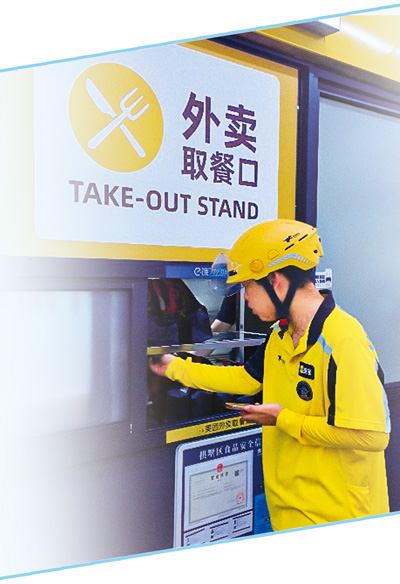
美团“浣熊食堂”商家7月以来订单量上涨60%
Bei Ke Cai Jing· 2025-07-30 14:19
此前,美团表示未来三年将向餐饮行业整体投入1000亿元,包括投入更多硬件补贴和流量扶持,对线上 接入透明厨房、阳光厨房的商家进行支持等,今年内预计将在全国范围内拓展至20万家门店开通"明厨 亮灶"直播。 另据美团官方微信在相关声明中指出,"浣熊食堂"将坚持向全行业的所有类型商家开放,为商家继续提 供专项补贴和助力金;坚持做好"行业小帮手"的角色,只做基础设施建设;运营经验、科技能力、供应 链资源、食安标准等无偿向全行业共享。 新京报讯(记者秦胜南) 在美团"浣熊食堂"上半年优秀商家运营交流会上公布的数据显示,自7月1日 正式推出"浣熊食堂"品牌以来,相关关键词搜索量环比6月已上涨超40倍;同时,浣熊食堂商家整体曝 光量上涨164%,订单量上涨60%。此外,交流会上还发布了"浣熊食堂2025上半年度食安优质品牌 奖"。 据悉,"浣熊食堂"是美团为餐饮行业探索建设的放心外卖基础设施,以线下投资建设的集中式外卖厨房 为基础,以"全程可视可追溯"为运营原则,相当于向处于不同阶段的商家提供一个餐饮创业的孵化器。 浣熊食堂负责人初征表示,美团做浣熊食堂的出发点是希望能激发餐饮经营主体更多活力,把浣熊食堂 当做食品安全里的 ...