
石化化工

Search documents
2025石化化工行业数字化转型大会:以数字化转型重塑行业核心竞争力
Zhong Guo Hua Gong Bao· 2025-11-07 02:10
Core Viewpoint - The petrochemical industry is undergoing a digital transformation driven by new generation information technologies such as artificial intelligence, which is essential for enhancing productivity and reshaping core competitiveness [1][2]. Group 1: Digital Transformation Progress - As of September 2025, the digitalization rates of key processes, supply chain management, and production equipment connectivity in the petrochemical industry are significantly higher than the industrial average [2]. - Leading companies like Zhenhai Refining & Chemical and CNOOC Hainan Branch are playing a pivotal role in this transformation [2]. - Despite initial achievements, the industry faces challenges such as insufficient transformation motivation and a lack of low-cost, replicable solutions tailored to the petrochemical sector [2]. Group 2: Future Opportunities and Challenges - The digital business in the petrochemical sector is projected to create an additional market space of approximately 10 trillion yuan over the next five years [2]. - Key challenges include poor data flow, insufficient industrial software development, and the need for deeper integration of AI with petrochemical technologies [2]. - The focus for future AI applications in the industry should be on enhancing efficiency, complex decision-making, personalized demands, and new user experiences [2]. Group 3: Policy and Support Initiatives - The Ministry of Industry and Information Technology plans to strengthen planning and policy frameworks for digital transformation in the "14th Five-Year Plan" [3]. - Goals include improving overall productivity, enhancing safety, and promoting clean production through the establishment of application benchmarks and accelerated demonstration of AI technologies [3]. - Collaboration between academia and industry is emphasized to cultivate interdisciplinary talent necessary for supporting the digital transformation [3].

石化化工行业高质量数据集建设倡议发布
Zhong Guo Hua Gong Bao· 2025-11-07 02:10
Core Viewpoint - The initiative aims to establish a high-quality data set for the petrochemical industry to support the application of artificial intelligence and promote the industry's transformation towards high-end, green, and intelligent development [1] Group 1: Initiative Details - The initiative was launched at the 2025 Petrochemical Industry Digital Transformation Conference in Dalian, Liaoning, by 36 organizations including the Dalian Institute of Chemical Physics and the Petrochemical Industry Digital Transformation Promotion Center [1] - It emphasizes that data quality is crucial for the level of intelligent development, and key data within industry scenarios is the most vital resource [1] - The initiative calls for collaboration among enterprises, universities, and research institutions in the petrochemical sector to build a national-level data asset system that covers the entire industry chain and integrates all production factors [1] Group 2: Goals and Vision - The initiative aims to break down "data silos" and construct a complete industrial ecosystem through full-chain collaboration [1] - It advocates for a shared development approach to consolidate efforts, supporting the implementation of new industrialization tasks and contributing to the construction of a manufacturing powerhouse and the realization of Chinese-style modernization [1]
30强城市三季报出炉,这3个城市今年将冲击万亿GDP
第一财经· 2025-11-06 14:26
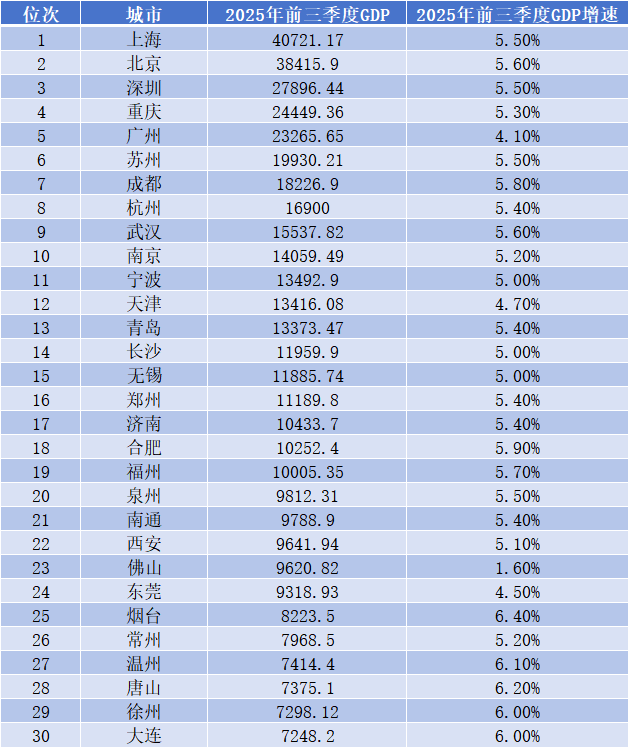
Core Insights - The article discusses the economic performance of the top 30 cities in China for the first three quarters of 2025, highlighting the GDP figures and growth rates of these cities, with a focus on the emergence of "quasi-trillion" cities that are on the verge of surpassing a trillion yuan in GDP [3][5]. Group 1: Economic Performance of Major Cities - Shanghai leads with a GDP of 40,721.17 billion yuan, growing at 5.5% [4] - Beijing follows with a GDP of 38,415.9 billion yuan and a growth rate of 5.6% [4] - Shenzhen, Chongqing, and Guangzhou also show significant GDP figures and growth rates, with Shenzhen at 27,896.44 billion yuan (5.5% growth) and Guangzhou at 23,265.65 billion yuan (4.1% growth) [4] Group 2: Trillion Yuan Cities - As of 2024, there are 27 cities with a GDP exceeding one trillion yuan, accounting for over 40.9% of the national economic total, an increase of 1.5 percentage points from 2023 [5] - Among these, 19 cities have growth rates equal to or above the national average of 5.2%, indicating a strong overall performance [5] Group 3: Emerging Quasi-Trillion Cities - Three cities, Wenzhou, Xuzhou, and Dalian, are projected to surpass the trillion yuan mark, with GDPs of 97,188.5 million, 95,371.2 million, and 95,169 million yuan respectively [8] - These cities have shown impressive growth rates of 6.1%, 6.0%, and 6.0%, positioning them favorably among the top 30 cities [9] Group 4: Industrial Growth as a Key Driver - Yantai's industrial sector has been a significant contributor to its economic growth, with a 13.9% increase in industrial output [6] - Hefei also reported a remarkable 15.2% growth in industrial output, driven by the computer and automotive manufacturing sectors [7] - Conversely, Foshan's industrial performance has lagged, with a mere 1.6% GDP growth, primarily due to underperformance in its industrial sector [7] Group 5: Sector-Specific Insights - In Wenzhou, the industrial output increased by 10%, with key sectors like computer communication and automotive manufacturing showing robust growth [10] - Dalian's industrial output grew by 12.8%, with significant contributions from the petrochemical and equipment manufacturing industries [9]

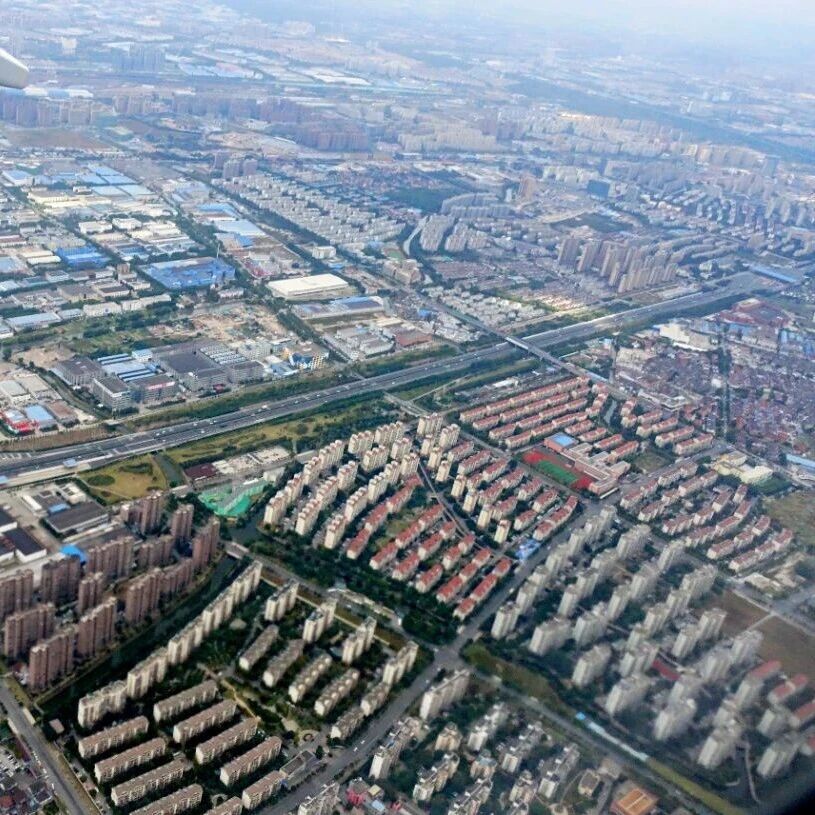
30强城市三季报出炉 这3个城市今年将冲击万亿GDP
Di Yi Cai Jing· 2025-11-06 11:21
Economic Performance Overview - The GDP of Wuxi reached 1,188.57 billion yuan in the first three quarters, with a year-on-year growth of 5.0% [1] - A total of 27 cities have surpassed a GDP of 1 trillion yuan, accounting for 40.9% of the national economic total, an increase of 1.5 percentage points from 2023 [3] City Rankings and Growth Rates - Shanghai, Beijing, and Shenzhen are the top three cities by GDP, with respective figures of 4,072.12 billion yuan, 3,841.59 billion yuan, and 2,789.64 billion yuan, all showing growth rates around 5.5% [2] - Among the 27 trillion-yuan cities, 19 cities have growth rates higher than or equal to the national average of 5.2%, with Yantai, Tangshan, and Hefei leading at 6.4%, 6.2%, and 5.9% respectively [3] Industrial Contributions - Yantai's industrial output value increased by 13.9%, with significant contributions from the chemical manufacturing sector, which grew by 44.5% [4] - Hefei's industrial output value rose by 15.2%, driven by the computer and automotive manufacturing sectors, contributing 69.8% and 10.9% to the growth respectively [5] Emerging Trillion-Yuan Cities - Three cities, Wenzhou, Xuzhou, and Dalian, are on track to surpass the 1 trillion yuan GDP mark, with respective GDPs of 741.44 billion yuan, 729.81 billion yuan, and 724.82 billion yuan in the first three quarters [6] - These cities have shown higher growth rates compared to established trillion-yuan cities, with Wenzhou, Xuzhou, and Dalian achieving growth rates of 6.1%, 6.0%, and 6.0% respectively [6] Sector-Specific Growth - Dalian's industrial output increased by 12.8%, with the equipment manufacturing sector growing by 17.5%, particularly in the railway and automotive industries [7] - Wenzhou's industrial output rose by 10.0%, with significant growth in the computer, automotive, and electrical machinery sectors, all exceeding 10% [8]
30强城市三季报出炉,这3个城市今年将冲击万亿GDP
Di Yi Cai Jing· 2025-11-06 11:10
Core Insights - Three cities, Wenzhou, Xuzhou, and Dalian, are expected to surpass a GDP of 1 trillion yuan this year, joining the ranks of 27 existing trillion-yuan cities [1][6] Economic Performance of Major Cities - As of the first three quarters of 2025, Shanghai leads with a GDP of 40,721.17 billion yuan, followed by Beijing at 38,415.9 billion yuan and Shenzhen at 27,896.44 billion yuan, with growth rates of 5.50%, 5.60%, and 5.50% respectively [2] - The overall economic output of the 27 trillion-yuan cities accounts for over 40.9% of the national total, marking a 1.5 percentage point increase from 2023 [3] Industrial Growth and Contributions - Yantai's industrial output increased by 13.9% in the first three quarters, with significant contributions from the chemical manufacturing sector, which grew by 44.5% [4] - Hefei's industrial output reached a record high with a 15.2% increase, driven by the computer and automotive manufacturing sectors, contributing 69.8% and 10.9% to the growth respectively [5] Emerging Trillion-Yuan Cities - Wenzhou, Xuzhou, and Dalian are on track to become trillion-yuan cities, with GDPs of 971.88 billion yuan, 953.71 billion yuan, and 951.69 billion yuan respectively [6] - These cities have shown strong industrial growth, with Wenzhou, Xuzhou, and Dalian experiencing industrial growth rates of 10%, 7%, and 12.8% respectively [6][7][8] Sector-Specific Insights - Dalian's industrial sectors, particularly petrochemicals and equipment manufacturing, have shown robust growth, with the equipment manufacturing sector growing by 17.5% [7] - Wenzhou's industrial output increased by 10.0%, with 27 out of 33 major industries reporting positive growth, particularly in computer communication electronics and automotive sectors [8]
塑料PP每日早盘观察-20251106
Yin He Qi Huo· 2025-11-06 06:29
1. Report Industry Investment Rating No relevant content provided. 2. Core Viewpoints of the Report - The market for plastics L and PP has been showing a weak trend recently, with both futures and spot prices experiencing declines. The report provides daily market observations, important news, logical analyses, and trading strategies for these two products [2][3][4]. - Various factors, including domestic and international economic data, industry policies, and corporate news, influence the prices of plastics L and PP. These factors can be either positive or negative, and the report assesses their impact on the market [3][5][9]. 3. Summary by Relevant Catalogs Market Situation - **L Plastic**: The L2601 contract generally shows a downward trend, and the LLDPE market price is mostly weak, with prices in different regions fluctuating and some falling. Trade sentiment is often affected by futures trends, and downstream procurement is cautious [2][4][8]. - **PP Polypropylene**: The PP2601 contract also generally trends downward, and the domestic PP market is weak, with prices falling in parts. The futures trend impacts the spot market, and downstream procurement is limited [2][4][8]. Important News - **Industry - related Policies**: The government has introduced policies to support the development of the petrochemical and chemical industries, such as the "Work Plan for Stabilizing Growth in the Petrochemical and Chemical Industry (2025 - 2026)" [29]. - **Corporate News**: Many companies have made progress, such as Guangxi Petrochemical's successful commissioning of a new ethylene plant, and Liaoyang Petrochemical's successful start - up of a nylon 66 project [4][46]. - **Economic and Trade News**: Global economic and trade policies, such as US tariff policies and China's export control policies for rare earths, have an impact on the market [34][40][63]. Logical Analysis - **Positive Factors**: Some factors are favorable for the polyolefin market, such as an increase in domestic vehicle production, a rise in the US manufacturing PMI, and an increase in the profit - to - loss ratio of the domestic rubber and plastics industry [9][51]. - **Negative Factors**: Other factors are unfavorable, including a decline in the domestic manufacturing PMI, an increase in inventory, and a decrease in the international shipping freight index ratio [3][5][41]. Trading Strategies - **Single - side Trading**: For the most part, it is recommended to hold short positions in the L and PP main 01 contracts, with appropriate stop - loss settings. In some cases, there are suggestions to try short positions or hold long positions [3][5][9]. - **Arbitrage**: Generally, it is recommended to wait and see [3][5][9]. - **Options**: Usually, it is recommended to wait and see [3][5][9].
增速定调“稳健”,资金借道石化ETF(159731)低位布局,连续8日资金净流入
Sou Hu Cai Jing· 2025-11-05 05:50
Core Insights - The petrochemical ETF (159731) has seen a narrowing decline of 0.13% as of November 5, with notable gains from stocks like Xingfa Group and Sanmei Co. [1] - The ETF has experienced continuous net inflows totaling 102 million yuan over the past eight days, reaching a new high of 188 million shares, marking significant growth in scale [1] - A recent plan from the Ministry of Industry and Information Technology aims for an annual growth rate of over 5% in the petrochemical industry, addressing issues of overcapacity and signaling a shift towards quality improvement [1] - The petrochemical sector is crucial for economic stability, with its value added expected to account for 14.9% of industrial output in 2024, growing at a rate of 6.6%, which is higher than the industrial average [1] Industry Overview - The petrochemical ETF closely tracks the CSI Petrochemical Industry Index, with the top three sectors being refining and trading (25.60%), chemical products (23.72%), and agricultural chemicals (19.91%), which are expected to benefit from policies aimed at structural adjustment and the elimination of outdated capacity [2]
广西2028年建成面向东盟工业数据产业生态体系
Zhong Guo Xin Wen Wang· 2025-11-04 14:28
Core Viewpoint - Guangxi aims to establish a high-quality industrial data ecosystem by 2028, focusing on competitive industries and enhancing collaboration with ASEAN countries [1][2]. Group 1: Industrial Data Development - Guangxi plans to build 100 high-quality industrial data sets and over 100 benchmark application scenarios by 2028 [1]. - The initiative will prioritize industries such as sugar, non-ferrous metals, automotive, machinery, and petrochemicals [1]. - The region will compile a directory of key industrial data labeling enterprises to attract leading data companies from both domestic and international markets [1]. Group 2: Data Resource Sharing and Collaboration - Support will be provided for state-owned enterprises, large industrial firms, and industrial internet platform companies to open data resources and technical capabilities [1]. - Local universities will collaborate with domestic data labeling companies and research institutions to establish multilingual industrial data labeling bases [1]. Group 3: ASEAN Cooperation - Guangxi will strengthen cooperation with ASEAN countries, focusing on industrial data standards, privacy protection rules, and cross-border data flow security certification [1]. - The region will support local data service companies in developing AI models and solutions based on local data sets for the ASEAN market [1]. Group 4: Infrastructure Development - The construction of the Nanning International Communication Business Entry and Exit Bureau will serve as a catalyst for exploring cross-border industrial data circulation [2]. - Guangxi aims to create a China-ASEAN industrial data cooperation hub [2].
破解结构性矛盾 石化化工行业向高端化转型
Zheng Quan Shi Bao· 2025-10-31 18:18
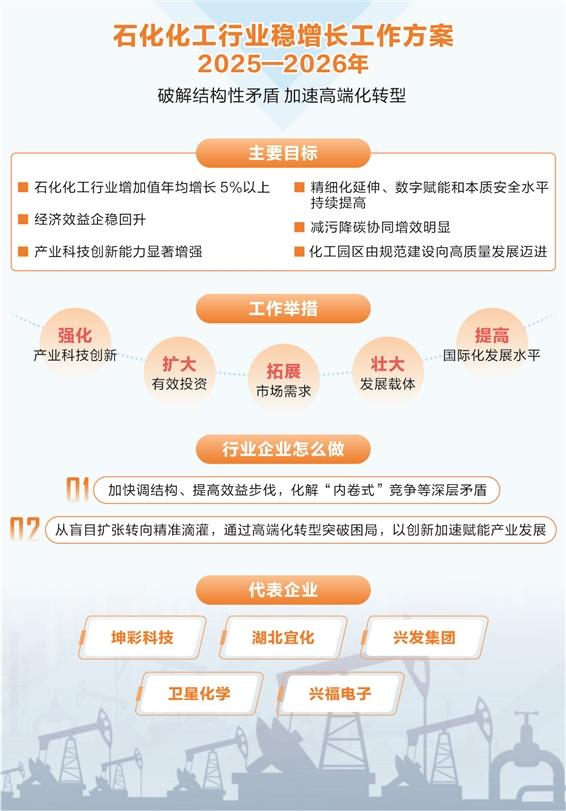
Core Viewpoint - The petrochemical industry in China is at a turning point, transitioning from blind expansion to precise investment, with a focus on structural adjustment and efficiency improvement to address deep-seated competitive issues [2][3]. Group 1: Industry Overview - China is the largest producer and consumer of petrochemical products globally, with a significant economic scale and high industry correlation, impacting industrial stability and economic operation [2]. - The Ministry of Industry and Information Technology and six other departments have issued a work plan aiming for an average annual growth of over 5% in the petrochemical industry's added value from 2025 to 2026, with a focus on stabilizing economic benefits and enhancing technological innovation capabilities [2]. Group 2: Current Industry Challenges - The petrochemical industry is experiencing overall revenue growth but with slowing growth rates and pressured profitability, highlighted by a revenue of 5.95 trillion yuan (approximately 0.9% year-on-year growth) and a profit margin of 4.14%, the lowest in history [3]. - There is a notable structural contradiction in the industry, with overcapacity in basic chemical products and insufficient supply of high-end products, necessitating a shift from blind expansion to targeted investment [3]. Group 3: Company Responses and Strategies - Companies like Hubei Yihua are responding to the work plan by advancing industrial transformation towards green, low-carbon, circular, and intelligent directions, while also restructuring assets to reduce raw material costs [4]. - KunCai Technology is focusing on technological innovation to reshape investment value, with a new titanium dioxide production process that reduces costs and increases product purity to 99.9% [4][5]. - Companies are adjusting their strategic focus towards high-value products, with Xinfeng Group expanding into specialty chemicals and high-end phosphorous products, which are expected to become new profit growth points [6]. Group 4: Innovation and Development - The work plan emphasizes enhancing technological innovation capabilities as a core goal, addressing challenges in the pilot project management that hinder the commercialization of new technologies [9]. - Companies are investing heavily in R&D, with Satellite Chemical reporting R&D expenses of 1.244 billion yuan in the first three quarters, and plans to invest 10 billion yuan in R&D over the coming years [10]. - The industry is witnessing a significant structural differentiation, with emerging materials like rare earth permanent magnets and PEEK performing strongly due to new demand in sectors like semiconductors and robotics [6][8].

光大证券:化工板块周期底部蓄势 成长动能延续
智通财经网· 2025-10-29 06:00
Group 1 - The core viewpoint is that the chemical industry is expected to experience a recovery in profitability due to macroeconomic improvements and supply-side policy advancements, with a focus on sectors like phosphate chemicals, potassium fertilizers, pesticides, MDI, titanium dioxide, and lithium battery materials [1] - The macroeconomic environment has shown steady recovery since 2025, with expectations for CPI to return to positive territory by Q4 2025 and a gradual narrowing of PPI's year-on-year decline, indicating a bottoming out phase for the chemical industry [1] - The chemical industry's capital expenditure is currently contracting, and the pace of new capacity additions is slowing, which is beneficial for improving supply-demand relationships [1] Group 2 - The chemical industry's PB valuation is at historical lows, suggesting significant upside potential, while PE valuation reflects market pricing in future recovery [2] - The agricultural chemicals sector is performing relatively well, with high prices for phosphate and potassium fertilizers, and the pesticide industry entering a recovery phase [2] - The lithium battery materials sector is seeing improved profitability trends due to strong end-demand and orderly expansion by leading companies [2] Group 3 - Emerging applications in AI, OLED, and robotics are driving strong growth in the chemical new materials sector, with significant demand for key materials like photoresists and electronic chemicals [3] - The OLED market is experiencing rapid growth, with domestic panel manufacturers increasing their market share and the scale of organic materials expanding [3] - The robotics industry is creating new demand for high-performance materials such as PEEK and MXD6, which are characterized by lightweight, high strength, and high-temperature resistance [3]
