
能源

Search documents
浙江嘉化能源化工股份有限公司
Shang Hai Zheng Quan Bao· 2025-08-05 17:53
Group 1 - The company will hold its second extraordinary general meeting of shareholders in 2025 on August 22, 2025, at 1:00 PM [4][3] - The meeting will be conducted using a combination of on-site and online voting methods [4][5] - The company has proposed amendments to its articles of association, which will be submitted for approval at the shareholders' meeting [1][20] Group 2 - The company plans to distribute a cash dividend of 2 yuan (including tax) for every 10 shares, totaling approximately 265,070,684.40 yuan (including tax) [17][19] - The proposed profit distribution plan is based on the total share capital after deducting shares held in the repurchase account [18][19] - The profit distribution plan requires approval from the extraordinary general meeting of shareholders [20][21] Group 3 - The company has reported a net profit attributable to shareholders of 580,592,815.78 yuan for the first half of 2025 [18] - The company has implemented a share repurchase plan, repurchasing 25,849,343 shares, which is 1.86% of the total share capital [33] - The company emphasizes enhancing investor returns and maintaining a stable profit distribution policy [32][33] Group 4 - The company is actively working on key projects such as the second phase of fatty alcohol and PVC, which are expected to enter trial production in the second half of the year [29] - The company is focusing on clean energy investments and has established a hydrogen energy innovation center to promote technological advancements [30] - The company aims to improve its governance and compliance levels while ensuring timely and accurate information disclosure [27][28]

宝丰能源: 宁夏宝丰能源集团股份有限公司关于与专业投资机构共同设立投资基金及相关进展的公告
Zheng Quan Zhi Xing· 2025-08-05 16:10
Investment Overview - The company has established two investment funds: Beijing Beijiao United Lingyue No. 3 Equity Investment Center (Limited Partnership) and Beijing Beijiao United Lingyue No. 4 Equity Investment Center (Limited Partnership) [1][2] - The total investment amount for Lingyue No. 3 is RMB 71 million, with the company contributing RMB 70 million, accounting for 98.59% [1][2] - The total investment amount for Lingyue No. 4 is RMB 101 million, with the company contributing RMB 100 million [1][2] Investment Purpose - Lingyue No. 3 is primarily focused on investing in aerospace technology projects [2] - Lingyue No. 4 is aimed at investing in artificial intelligence projects [2] Partner Information - The investment partner is Beijiao United Investment Fund Management Co., Ltd., established on April 21, 2009, with a registered capital of RMB 50 million [4][5] - The company has no related party transactions or major asset restructuring involved in this investment [2][3] Fund Structure and Management - The funds are structured as limited partnership private equity venture capital funds [5] - The general partner is responsible for managing the funds, while the limited partners, including the company, contribute capital [5][6] Compliance and Regulatory Status - The investment funds have completed the necessary business registration and have been filed with the China Securities Investment Fund Industry Association [8] - The investment complies with relevant laws, regulations, and the company's articles of association, ensuring no impact on the company's normal operations [9]

指数涨超1%,恒生红利低波ETF(159545)今日获3300万份净申购
Sou Hu Cai Jing· 2025-08-05 11:41
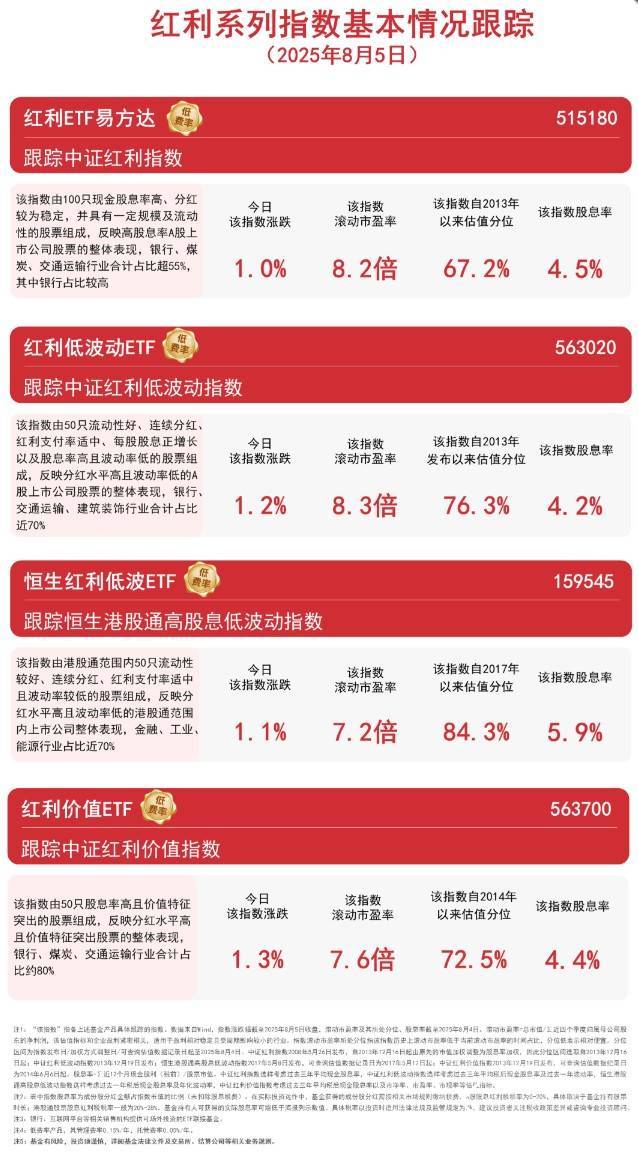
Group 1 - The core viewpoint of the news is that dividend-focused indices have collectively risen over 1%, indicating strong investor interest in dividend assets in a low-interest-rate environment [1] - The CSI Dividend Value Index increased by 1.3%, while the CSI Dividend Low Volatility Index rose by 1.2%, and the Hang Seng High Dividend Low Volatility Index gained 1.1% [1] - The Hang Seng Dividend Low Volatility ETF (159545) saw a net subscription of 33 million units today, with nearly 1.5 billion yuan raised in the past month, bringing its total size to nearly 4 billion yuan [1] Group 2 - According to招商证券, in the current low-interest-rate environment, dividend assets offer relatively high and stable returns, making them a focal point for investors [1] - Policy guidance is encouraging long-term capital to enter the market, further increasing the demand for long-term allocation in dividend assets [1] Group 3 - The CSI Dividend Index consists of 100 stocks with high cash dividend yields, primarily from the banking, coal, and transportation sectors, which together account for over 55% of the index [3] - The CSI Dividend Low Volatility Index is composed of 50 stocks with good liquidity and stable dividend payments, with the banking, transportation, and construction sectors making up nearly 70% of the index [3] - The Hang Seng Dividend Low Volatility Index includes 50 stocks from the Hong Kong Stock Connect that have good liquidity and moderate dividend payout ratios, with the financial, industrial, and energy sectors accounting for nearly 70% of the index [3]

7月中国大宗商品价格指数环比上涨0.5%
Zhong Guo Xin Wen Wang· 2025-08-05 09:21
Core Insights - In July, China's bulk commodity price index reached 111.4 points, reflecting a month-on-month increase of 0.5%, indicating optimistic enterprise expectations and a stable market recovery [1] Industry Analysis - The black metal price index rebounded, while the non-ferrous price index continued to rise. Conversely, the agricultural product price index declined, energy prices slightly decreased, chemical prices experienced a pullback, and mineral prices continued to fall [1] Commodity Performance - Among the 50 monitored bulk commodities, 32 saw price increases while 18 experienced declines. The top three commodities with the highest price increases were lithium carbonate (up 10.2%), industrial silicon (up 9.8%), and coking coal (up 9.6%). The largest declines were observed in methanol (down 5%), cement (down 4.8%), and PTA (down 3.9%) [1] Market Outlook - The overall bulk commodity market is expected to continue its stable improvement due to the implementation of national policies aimed at reducing competition and enhancing macroeconomic counter-cyclical adjustments. However, global price volatility and external uncertainties remain significant challenges [1]
中国王牌果然有效,美欧爆发四大争吵,欧洲女王这回不好当了
Sou Hu Cai Jing· 2025-08-05 08:16
Core Viewpoint - The article discusses the geopolitical dynamics between China, the United States, and the European Union, highlighting how China's control over rare earth resources has shifted negotiation power and created internal conflicts within the EU, particularly regarding the leadership of Ursula von der Leyen [1][2][10]. Group 1: China and Rare Earth Resources - China's rare earth resources serve as a significant leverage point in negotiations, impacting U.S. strategies and leading to a 90-day grace period in tariff discussions [2][9]. - The importance of rare earth elements in high-tech industries, such as electric vehicles and aerospace, underscores China's critical role in the global supply chain [9][10]. Group 2: U.S.-EU Relations - The U.S. has made several demands on the EU, including the removal of trade barriers for pork and dairy, which are vital to the European economy, leading to strong resistance from EU officials [5]. - The U.S. seeks to abolish two digital laws in Europe, which are designed to protect consumer rights and ensure fair competition, highlighting a clash over regulatory sovereignty [7]. - A financial request from the U.S. for the EU to invest $600 billion and acquire $750 billion in U.S. energy raises concerns about economic burdens and internal discord within the EU [7][9]. - The U.S. aims to impose high tariffs on European steel and aluminum, which could severely impact the European economy, prompting strong opposition from EU leaders [7][9]. Group 3: Internal EU Dynamics - The EU is experiencing significant internal conflict as member states criticize von der Leyen for perceived capitulation to U.S. interests, questioning her leadership and decision-making [4][10]. - The lack of a legally binding agreement between von der Leyen and Trump has led to further scrutiny and dissatisfaction within the EU, complicating the political landscape [4][10]. - The article suggests that the EU's initial approach of compromise with the U.S. has backfired, leading to increased pressure on von der Leyen and calls for a more unified and assertive stance against U.S. demands [12].

举牌21次!入市热情仍在高涨!
Jin Rong Shi Bao· 2025-08-05 08:00
Group 1 - The core viewpoint of the articles highlights a continuing trend of insurance funds actively participating in the capital market through share acquisitions, with a total of 21 instances reported this year, surpassing the 20 instances recorded for the entirety of 2024 [1][2] - The surge in insurance companies' share acquisitions is attributed to adjustments in asset allocation strategies, driven by supportive policies aimed at encouraging long-term capital market investments [1][2] - In July alone, four insurance companies, including Lianan Life and Taikang Life, engaged in share acquisitions, indicating sustained enthusiasm among insurers [1] Group 2 - The companies targeted for acquisitions include major banks and various sectors such as public utilities, energy, transportation, and technology, with bank stocks being the most frequently acquired [2] - Ping An Life has notably acquired bank stocks seven times this year, with multiple instances of re-acquisition for Postal Savings Bank and Agricultural Bank [2] - The regulatory environment has significantly boosted insurance funds' market participation, with a reported fund utilization balance of 34.93 trillion yuan as of the end of Q1, reflecting a 5.03% increase from the end of 2024 [3] Group 3 - Recent policy adjustments by the Ministry of Finance aim to enhance the assessment of insurance fund performance, promoting a longer-term investment approach and increasing equity investment ratios [3] - The outlook for the second half of the year suggests that the trend of insurance funds acquiring shares will continue, supported by ongoing policy initiatives that facilitate long-term investments [3]





港股通红利低波ETF(520890)涨1.19%,成交额755.56万元
Xin Lang Cai Jing· 2025-08-05 07:12
Group 1 - The core viewpoint of the news is the performance and characteristics of the Hong Kong Dividend Low Volatility ETF (520890), which has seen a significant decrease in both shares and scale in 2024 [1][2] - As of August 4, 2024, the fund's latest shares were 56.508 million, with a scale of 80.0775 million yuan, reflecting a 54.06% decrease in shares and a 45.28% decrease in scale compared to December 31, 2024 [1] - The fund's management fee is 0.50% annually, and the custody fee is 0.10% annually, with a performance benchmark based on the Hang Seng Hong Kong Stock Connect High Dividend Low Volatility Index [1] Group 2 - The current fund manager, Li Qian, has managed the fund since its inception on September 4, 2024, achieving a return of 41.71% during her tenure [1] - The ETF's recent trading activity shows a cumulative transaction amount of 140 million yuan over the last 20 trading days, with an average daily transaction amount of 7.0048 million yuan [1] - The top holdings of the ETF include Shougang Resources (3.83%), Far East Horizon (3.69%), and Chongqing Rural Commercial Bank (3.27%), among others, with detailed holdings and market values provided [2]


荣順资本:黑天鹅突发降落!8月5日,今日凌晨的四大消息冲击股市!
Sou Hu Cai Jing· 2025-08-05 06:45
Group 1: U.S. Labor Market Data - The U.S. non-farm payroll data for July showed an increase of only 73,000 jobs, significantly below the market expectation of 110,000, marking the lowest level since October of the previous year [1] - The revisions for May and June indicated a downward adjustment of a total of 258,000 jobs, suggesting a weaker recovery in the U.S. labor market than previously thought [1] Group 2: Market Reactions - Following the release of the non-farm payroll data, the U.S. dollar index fell sharply, dropping below the 99 mark and closing down 1.363% at 98.67, the largest single-day decline in over four months [3] - U.S. Treasury yields also dropped, with the 10-year Treasury yield closing at 4.225% and the 2-year yield at 3.698% [3] - Market expectations for a Federal Reserve rate cut surged, with futures indicating a 89.1% probability of a 25 basis point cut in September [3] Group 3: Political Implications - The release of the labor data led to political ramifications, with President Trump accusing the Labor Bureau of manipulating the data and announcing the dismissal of its director [3] - Trump's comments raised questions about the independence of the Federal Reserve, as he called for Chairman Powell to resign if interest rates were not cut [4] Group 4: Federal Reserve Developments - Federal Reserve Governor Adriana Kugler announced her resignation effective August 8, adding to the uncertainty regarding the Fed's policy direction [4] Group 5: Trade Policy Developments - The U.S. Trade Representative confirmed that President Trump’s new round of tariffs on 22 countries is "basically set," with significant tariffs imposed on imports from Canada (35%), Brazil (50%), India (25%), and Switzerland (39%) [5] - The tariff measures, which began in July, have led to a notable decline in major stock indices, with the Dow Jones down 4.2% and the Nasdaq down 5.8% from July 7 to July 31 [6] Group 6: Global Market Impact - The Brazilian real fell 2.9% against the dollar in response to the tariffs, while other currencies like the South African rand and Indian rupee also depreciated by over 3% [6] - U.S. 10-year Treasury yields rose to 4.8%, the highest in 2023, amid concerns that tariffs could increase inflation and prompt the Fed to raise rates sooner [6] Group 7: OPEC+ Production Decisions - OPEC+ agreed to significantly increase production by 548,000 barrels per day starting in September, reversing previous production cuts [7] Group 8: Chinese Market Response - The Chinese stock market opened lower, with the Shanghai Composite Index down 0.37%, reflecting the global market turmoil [8] - The People's Bank of China indicated a commitment to maintaining a moderately loose monetary policy, including lowering reserve requirements [8] Group 9: Investment Strategies - Investors are advised to diversify their portfolios by increasing allocations to defensive assets such as gold and government bonds, as gold prices surged following the labor data release [9] - Close attention to the Federal Reserve's policy direction is crucial, especially with the upcoming FOMC meeting in September [9] - The impact of tariff policies on global supply chains and inflation should be assessed, particularly for companies reliant on imports and exports [10] - Despite external uncertainties, there are structural opportunities in sectors like robotics and AI in the Chinese market, with significant events like the International Robotics Conference scheduled [11]

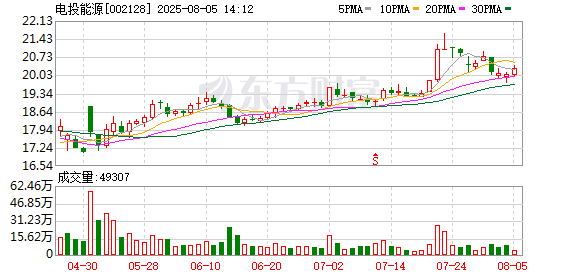
电投能源:公司半年度报告预约披露时间为8月28日
Mei Ri Jing Ji Xin Wen· 2025-08-05 06:11
Group 1 - The company is considering the release of a semi-annual performance report [2] - The scheduled disclosure date for the semi-annual report is August 28 [2] - Investors are advised to pay attention to subsequent announcements from the company [2]

国投期货综合晨报-20250805
Guo Tou Qi Huo· 2025-08-05 03:17
Report Industry Investment Ratings No specific industry investment ratings are provided in the content. Core Views of the Report - The oil market in the fourth quarter faces greater supply - demand easing pressure due to OPEC+ production increase, but is supported by sanctions risks and peak - season demand. The price of precious metals maintains a buy - on - dips strategy in the shock trend. For most industrial metals, there are short - term supply and demand pressures, and the prices are expected to be volatile. The shipping index is expected to decline, and most agricultural products' prices are affected by factors such as weather and trade policies, showing a volatile pattern [1][2] Summary by Category Energy - **Crude Oil**: OPEC+ plans to increase production by 547,000 barrels per day in September, which brings supply - demand pressure to the oil market in the fourth quarter. After the price correction this week, there is still upward risk due to secondary sanctions on Russian oil. Also, pay attention to the extension of Sino - US reciprocal tariffs by August 12 [1] - **Fuel Oil & Low - Sulfur Fuel Oil**: Crude oil leads the decline of oil - related futures. The fundamentals of the high - and low - sulfur fuel oil markets are weak, and the FU - LU crack spread is expected to remain weak [20] - **Asphalt**: Venezuelan crude oil inflows to China increased by 3.8% in July. The August production plan is lower than that in July, but some refineries may over - produce. Demand in South China recovers slowly, and the overall commercial inventory increases slightly. The price follows the direction of crude oil with limited fluctuations [21] - **Liquefied Petroleum Gas**: The Middle East CP is significantly reduced, but the spot discount narrows. The supply is relatively loose, and the domestic demand has bottom - line support. The spot price has limited room to decline further [22] Metals - **Precious Metals**: Precious metals maintain a strong shock. The market is worried about the authenticity of US data and economic prospects, and the interest - rate market expects the Fed to restart rate cuts in September. Adopt a buy - on - dips strategy [2] - **Base Metals** - **Copper**: The supply loss rate in the second half of the year is expected to increase. The social inventory increased to 135,900 tons on Monday. Hold short positions [3] - **Aluminum**: The social inventory of aluminum ingots continues to increase, and the demand feedback is negative. The price may be under pressure to fluctuate in the short term, and pay attention to the support around 20,200 yuan. It is expected to fluctuate in the range of 16,600 - 17,500 yuan/ton in August [4][8] - **Zinc**: The zinc market returns to the fundamental logic of increasing supply and weak demand. The supply of zinc ingots is expected to increase, and the demand is in the off - season. Pay attention to policy changes during the "Golden September and Silver October". Wait for opportunities to short at high positions [7] - **Nickel & Stainless Steel**: The nickel market returns to fundamentals. The upstream price support weakens, and the overall inventory is still high. Actively intervene in short positions as the rebound is in the middle - to - late stage [9] - **Tin**: The tin price declined overnight. Pay attention to the support of the MA60 moving average. Hold short positions at high levels [10] - **Manganese Silicon**: The iron - water output remains high, the production increase rate of silicon - manganese is lower than expected, and the manganese ore price increases slightly. The price bottom gradually rises, but the upside is limited [17] - **Silicon Iron**: The iron - water output is slightly down, the demand is fair, the supply is slightly up, and the inventory is slightly increased. The price is under increasing pressure [18] - **Rare Metals** - **Lithium Carbonate**: The futures price fluctuates. The downstream replenishes goods as the price drops. The production of smelters decreases week - on - week. Adopt a short - term low - buying strategy [11] - **Cobalt**: The report does not mention cobalt - related content Chemicals - **Industrial Silicon**: The futures price continues to decline with reduced positions. The supply in major production areas increases marginally, and the demand growth in August is uncertain. The price is expected to fluctuate and decline in the short term [12] - **Polysilicon**: The futures price slightly declines. The supply continues to put pressure, and the spot processing margin needs to be repaired. Pay attention to the cost and demand in the short and medium terms respectively [26] - **Ethylene Glycol**: The price continues to decline due to weak supply - demand and oil - price drag. The supply increases, and the port inventory rises [27] - **Short - Fiber & Bottle - Chip**: The prices follow the raw materials. The short - fiber industry may be boosted in the peak season, and the bottle - chip processing margin is limited by over - capacity [28] Agricultural Products - **Soybean & Soybean Meal**: The US soybean may have an early - harvest expectation. The domestic oil - mill soybean - meal inventory increases. The soybean - meal market is expected to fluctuate before the tariff issue is clear [32] - **Soybean Oil & Palm Oil**: The US soybean may have a good harvest. The Chinese soybean oil may strengthen in the medium term. The Malaysian palm oil has weak short - term supply - demand. Adopt a low - buying strategy [33] - **Rapeseed & Rapeseed Oil**: The focus is on Sino - Canadian economic and trade relations. The rapeseed - related futures prices are expected to fluctuate [34] - **Corn**: The continuous release of imported corn affects market expectations. The Dalian corn futures may continue to fluctuate weakly at the bottom [36] - **Cotton**: The US cotton has normal weather, and the Chinese cotton has slow inventory digestion and weak downstream demand. The 9 - 1 spread may rebound. Adopt a wait - and - see or intraday - trading strategy [39] - **Sugar**: The US sugar is under pressure, and the uncertainty of China's 25/26 sugar - production season increases. The sugar price is expected to fluctuate [40] - **Apple**: The price of early - maturing apples starts to decline. The market focuses on the new - season output estimate. Adopt a wait - and - see strategy [41] Others - **Shipping**: The SCFIS European route index declines slightly. The shipping companies' cargo - collection pressure increases, and the short - term view is bearish [19] - **Building Materials** - **Glass**: The glass market is weak with inventory accumulation. The market returns to real - situation trading [29] - **Timber**: The timber demand and supply improve, and the futures price is expected to rise [42] - **Paper Pulp**: The paper - pulp price declines. The supply is relatively loose, and the demand is weak. The price may return to low - level fluctuations [43] - **Financial Products** - **Stock Index**: The stock market rises, and the futures - index contracts all close up. The market sentiment is relatively positive in the medium term. Increase the allocation of technology - growth sectors and pay attention to low - level consumption sectors [44] - **Treasury Bond**: The treasury - bond futures fluctuate. The price spread between near - and far - month contracts widens. The yield curve is expected to steepen [45]