
互联网

Search documents
腾讯内部信回应元宝“春节红包”分享质疑:无门槛领取与平台旨在打击的恶意营销存在本质不同
Xin Lang Cai Jing· 2026-02-02 08:48
值得注意的是,依据微信平台长期执行的《外部链接内容管理规范》,此类通过利益诱导用户进行分 享、传播的行为,通常被定义为"诱导分享"并予以严厉打击。 2月2日,智通财经记者获悉,腾讯内部已有讨论并回应此事,据腾讯内部信中称:今天收到很多元宝春 节红包活动与微信外链管理规范之间的讨论与反馈,我们团队正在密切跟进,并与法务,公关及相关业 务团队保持紧密沟通,进行综合研判。感谢大家对此的关注和思考,这有助于我们更周全地评估此类活 动的合规边界与用户体验。 元宝"春节红包"在多个社交平台上刷屏。 在元宝红包的活动规则设置中,用户若想获得更多的抽奖机会,最高效的路径便是"分享红包"。根据任 务列表显示,每有1人领取,分享者即可增加1次抽奖机会,该项任务的上限高达30次,这也导致元宝红 包迅速得到裂变式传播。 "借此机会,我们也向大家同步一下目前的思考与基本立场:元宝春节红包活动在设计上,其基础逻辑 是'无门槛领取'。用户无需完成诸如助力,集卡等任务,即可直接领取基础红包。与平台一贯反对的'诱 导分享'模式有区别。基于目前该活动的机制设计,我们的初步判断是:其与平台旨在打击的恶意营销 活动存在本质不同。平台始终对真正惠及用 ...

国际油价显著下跌
新华网财经· 2026-02-02 08:44
往期推荐 腾讯"元宝分10亿"活动2月1日0点正式开启,用户最高可领万元现金红 包,官方攻略发布 亚马逊官宣裁撤1.6万个职位 当天,纽约商品交易所3月交货的轻质原油期货价格一度跌至每桶62.30美元,4月交货的伦敦布伦特原油期货价格一度跌至每桶66.30美元,与前一交易日 收盘价相比跌幅均超过3%。 分析人士认为,随着市场对美国可能对伊朗发动军事打击的预期减弱,投资者卖出多头头寸,油价随之回调 来源:新华社 记者:刘亚南 关注" 新华网财经 "视频号 更多财经资讯等你来看 受地缘政治因素影响,纽约原油期货价格2月1日开始新一周交易后出现显著下跌行情。 ...


港股黄金、科网股,集体大跌
第一财经· 2026-02-02 08:41
Market Overview - The Hang Seng Index closed at 26,775.57, down by 611.54 points or 2.23% [1] - The Hang Seng Technology Index fell to 5,526.31, a decrease of 191.87 points or 3.36% [1] - The Hang Seng Biotech Index dropped to 14,849.89, down by 570.18 points or 3.70% [1] Sector Performance - The precious metals sector experienced significant declines, with Shandong Gold and Chifeng Jilong Gold both falling over 12% [1] - Other notable declines included Lingbao Gold and Tongguan Gold, which dropped over 8% [1] - China Gold International and Zijin Mining International also saw declines exceeding 7% [1] Technology Sector - The tech sector faced collective downturns, with Huahong Semiconductor dropping over 11% [3] - BYD saw a decline of nearly 7%, while Xpeng Motors fell over 6% [3] - Other companies like SMIC, NIO, and Bilibili experienced declines exceeding 4% [3] Automotive Sector - The automotive sector also faced losses, with Agricultural Unlisted Entities down by 11.24% [4] - BYD shares decreased by 6.91%, and Xpeng Motors fell by 6.77% [4] - Other companies such as Leap Motor and NIO also reported declines, with NIO down by 4.51% [4]

红包“大战”又来了!阿里千问狂撒30亿元红包请客
2 1 Shi Ji Jing Ji Bao Dao· 2026-02-02 08:03
上一次互联网巨头在春节集体"发钱",还要追溯到2015年移动支付的跑马圈地期。从过往来看,春节活 动能有效帮助互联网大厂为to C应用吸引大量关注。花旗预计,在一系列新春推广活动后,中国AI助手 应用采用将快速推进。 (文章来源:21世纪经济报道) 红包"大战"又来了!阿里旗下千问APP宣布投入30亿启动"春节请客计划",于2月6日正式上线。联合淘 宝闪购、飞猪、大麦、盒马、天猫超市、支付宝等阿里生态业务,以免单形式请全国人民在春节期间吃 喝玩乐。 此前,1月26日,百度旗下AI应用文心助手上线春节红包活动,用户可以分5亿元现金红包,最高可获1 万元。2月1日,腾讯旗下"元宝"也启动春节红包活动,用户上线参加活动就可分10亿元现金红包,单个 红包金额可达万元。 ...


恒生科技ETF,2026年1月复盘及2026年2月展望
Soochow Securities· 2026-02-02 07:14
Market Performance - The Hang Seng Tech Index increased by 3.67% from December 31, 2025, to January 31, 2026, with a total trading volume of approximately 16,088 billion CNY[10] - The index's price pattern showed two upward movements followed by a pullback, indicating a higher price center compared to the end of December[10] Valuation Analysis - As of January 31, 2026, the price-to-earnings ratio (PE-TTM) of the Hang Seng Tech Index was 24.38, positioned at the 39.10% historical percentile since its inception on July 27, 2020, indicating relatively low historical valuation[15] - The PE-TTM fluctuated between 23.38 and 24.56 during January, reflecting a restrained valuation center[15] Technical Analysis - The risk degree (TR) of the Hang Seng Tech Index was 35.69 as of January 30, 2026, indicating a sufficient release of market risk and an attractive risk-reward ratio[19] - The index is in a local bottom phase, with a potential for upward movement if trading volume supports a breakout above the main chip peak[19] Macro Factors - External interest rates dominated the macro landscape in January, with geopolitical and policy uncertainties increasing risk premiums and affecting tech valuations[23] - The macro narrative indicated a balance between expectations of domestic easing and external rate pressures, impacting the Hang Seng Tech Index's performance[35] Policy Environment - The main policy theme in January was the expectation of easing measures from the mainland, which supported the Hang Seng Tech Index's valuation and reduced risk premiums[35] - The People's Bank of China signaled potential adjustments to reserve requirements and interest rates, enhancing market confidence in growth support[36] Industry Dynamics - The AI sector saw marginal easing of computational constraints, improving risk preferences and mid-term growth narratives for tech companies[39] - Regulatory clarity regarding platform compliance, particularly for TikTok, helped alleviate uncertainties in overseas markets, positively impacting tech valuations[39] Future Outlook - The Hang Seng Tech Index is expected to experience a sideways trading pattern in February 2026, with potential for recovery contingent on trading volume and capital inflows[44] - Key macroeconomic data, policy decisions, and earnings reports will drive the index's performance, with a focus on U.S. inflation and employment data influencing market sentiment[46]
港股明星科网股震荡走低,哔哩哔哩、百度、阿里健康等多股跌超5%
Mei Ri Jing Ji Xin Wen· 2026-02-02 07:09
Group 1 - The core viewpoint of the article highlights a decline in Hong Kong's tech stocks, with several major companies experiencing significant drops in their stock prices [1] Group 2 - Bilibili, Baidu, and Alibaba Health saw declines exceeding 5% in their stock prices [1] - Other notable companies such as NetEase-S, Alibaba, Tencent Holdings, and JD.com also experienced downward movement in their stock prices [1]

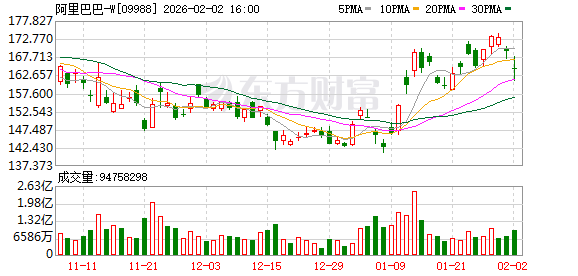
阿里巴巴-W午后跌超4% 千问APP宣布投入30亿启动“春节请客计划”
Zhi Tong Cai Jing· 2026-02-02 07:03
消息面上,2月2日,阿里旗下千问APP宣布投入30亿启动"春节请客计划",将于2月6日正式上线。春节 期间,千问App将联合淘宝闪购、飞猪、大麦、盒马、天猫超市、支付宝等阿里生态业务,以免单形式 请全国人民在春节期间吃喝玩乐。据悉,此次千问30亿春节请客计划,在阿里历史上的春节活动中投入 最大,以目前公布的金额来看,在今年春节大厂AI大战中投入金额也最高。 阿里巴巴-W(09988)午后跌超4%,截至发稿,跌4.2%,报162.1港元,成交额86.76亿港元。 ...
美元指数走高,有色金属、新兴市场股票大跌!低位关注三大超跌修复机会
Sou Hu Cai Jing· 2026-02-02 07:01
Group 1 - The US dollar index has risen for two consecutive days, while commodities and emerging market stocks have experienced significant declines [1] - Precious metals, particularly gold, have shown extreme volatility, with prices dropping from nearly $5,600 to $4,600 within 48 hours, marking a 16% decline and the highest volatility since the pandemic began in 2023 [1] - Major overseas companies reported earnings that fell short of market expectations, contributing to market sentiment shifts [1] Group 2 - Citic Securities indicates that the recent sell-off in broad-based ETFs and the sharp fluctuations in international gold and silver prices have cooled market sentiment, suggesting short-term market correction pressure, although the overall A-share index is expected to stabilize before the Spring Festival [1] - Huajin Securities believes that the A-share market is entering a traditional bullish window, with expectations for policy measures to boost consumption and economic growth to accelerate before the Spring Festival [2] - Historical data shows that February has a 76% probability of index gains, with an average increase of 3.4% and a median increase of 3.0%, making it a favorable month for the A-share market [1]
港股科技ETF(513020)回调超4%,AI需求指引持续好转利好港股科技板块,回调或可布局
Mei Ri Jing Ji Xin Wen· 2026-02-02 06:57
Group 1 - The core viewpoint of the article highlights that the Hong Kong technology ETF (513020) has experienced a pullback of over 4%, but the ongoing improvement in AI demand guidance is favorable for the Hong Kong technology sector, suggesting that this pullback may present a buying opportunity [1] - According to Zhongtai Securities, AI concept stocks are performing actively due to advancements in chips, indicating the sustained attractiveness of AI as a long-term driving force [1] - The Hong Kong technology ETF tracks the Hong Kong Stock Connect Technology Index (931573), which encompasses core assets in sectors such as internet, semiconductors, innovative pharmaceuticals, and new energy vehicles, reflecting the diversified characteristics of the technology industry and the overall performance of core technology companies in the Hong Kong market [1] Group 2 - The Hong Kong Stock Connect Technology Index has a higher allocation in new energy vehicles, innovative pharmaceuticals, and semiconductors compared to the Hang Seng Technology Index, and from the base date at the end of 2014 to the end of 2025, it has achieved a cumulative return of 224.25%, outperforming the Hang Seng Technology Index (83.87%) by over 140% [1] - The long-term performance of the Hong Kong Stock Connect Technology Index has surpassed that of similar indices, including the Hang Seng Technology Index, the Shanghai-Hong Kong-Shenzhen Internet Index, and the Hang Seng Healthcare Index [1]
千问App砸30亿元启动春节攻势,互联网大厂集体推出AI红包活动,借春节流量红利培养用户AI使用习惯
Mei Ri Jing Ji Xin Wen· 2026-02-02 06:11
公开资料显示,港股通互联网ETF基金(520910)今日重磅上市,跟踪中证港股通互联网指数,定位鲜明 聚焦港股互联网龙头,成分股中涵盖有望在后续AI加速渗透中持续受益的阿里巴巴、腾讯控股、美 团、快手等港股互联网龙头。截至发稿,该ETF成交额逼近1200万元;成分股中,心动公司、金山云、 东方甄选等涨幅领先。 春节档,腾讯、阿里等大厂集体推出AI红包活动,旨在借助春节流量红利,共同培养用户的AI使用习 惯,以元宝活动为代表应用入口争夺战,预计将沿产业链自上而下传导利好,用户与使用频率形成壁垒 后,催生多元化商业变现模式。 2月2日,千问App正式对外宣布启动春节请客计划,将投入30亿元资金开启春节市场攻势,该计划定于 2月6日正式上线。此次活动中,千问App全面打通阿里生态体系,深度接入淘宝闪购、大麦、飞猪、盒 马等核心业务板块,覆盖消费、文旅、餐饮、票务等春节主流消费场景,用户可通过AI交互完成一站 式服务体验,以免单、红包等形式释放消费福利。作为春节期间AI应用赛道的重磅布局,该动作既加 速AI工具向生活化、场景化落地,也联动生态伙伴激活节前消费市场,同时与行业内同类春节营销活 动形成呼应,进一步推高AI ...