
航空航天

Search documents
韩股今年来飙升70%冠绝全球,小摩上调目标:未来一年再涨至少20%
Feng Huang Wang· 2025-10-29 06:24
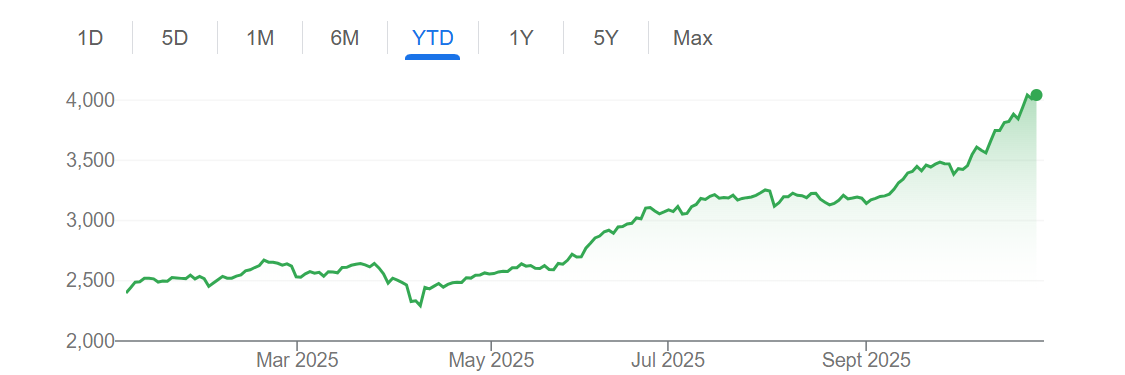
Group 1 - The South Korean KOSPI index has seen a remarkable increase of nearly 70% year-to-date, making it one of the best-performing markets globally [1] - Morgan Stanley has raised its 12-month target for the KOSPI index to 5,000 points, with an optimistic scenario suggesting it could reach 6,000 points [2] - Morgan Stanley anticipates at least a 20% upside for the KOSPI index in the next 12 months, viewing short-term pullbacks as buying opportunities [4] Group 2 - The primary drivers of the KOSPI index's rise are the strong performances of major tech companies, Samsung Electronics and SK Hynix, which have benefited from surging demand for memory chips amid the AI boom [4] - SK Hynix's stock has surged by 218.63% and Samsung's stock has increased by 86.52% year-to-date, significantly contributing to the KOSPI index's overall performance [4] - Optimizations in shareholder return policies, including stock buybacks, are also enhancing the overall valuation of the South Korean stock market [4] Group 3 - Morgan Stanley has identified key companies for investment, including Samsung Electronics, SK Hynix, Hanwha Aerospace, Hyundai Motor, Naver, Shinhan Financial Group, Samsung C&T, Samsung Life Insurance, and Korea Shipbuilding & Offshore Engineering [4] - The investment strategy focuses on increasing exposure to the KOSPI market, particularly in semiconductors, finance, and select industrial stocks [4]

“十五五”规划建议稿解读:乘势而上,因势利导
Yin He Zheng Quan· 2025-10-29 05:44
Group 1: Economic Development - The "15th Five-Year Plan" is a critical period for achieving socialist modernization by 2035, with a target GDP growth rate of around 5% during this period[2] - The plan emphasizes high-quality development as the primary task, aiming for significant achievements in this area[2] - By 2035, the goal is to reach a per capita GDP level comparable to that of moderately developed countries, which is projected to be approximately 21,000 USD[25] Group 2: Industrial and Technological Advancement - The plan focuses on building a modern industrial system, highlighting advanced manufacturing as a leading sector[3] - Key areas for technological self-reliance include new energy, quantum technology, and artificial intelligence, aiming for international leadership in these fields[3] - Strengthening the integration of technological innovation with industrial innovation is a priority[3] Group 3: Domestic Market and Consumption - Enhancing domestic demand is crucial, with a strong emphasis on boosting consumer spending as a top priority[3] - The plan outlines strategies for effective investment expansion to stimulate economic growth[3] Group 4: Financial and Open Economy - The "15th Five-Year Plan" aims to accelerate the construction of a financial powerhouse and promote the internationalization of the Renminbi[3] - It emphasizes a cooperative and win-win approach to expand autonomous openness in the economy[3] Group 5: Agricultural and Cultural Development - Accelerating agricultural modernization and leveraging regional strategic advantages are key components of the plan[3] - The plan also stresses the importance of cultural confidence and the value of the cultural industry, aiming to stimulate cultural innovation and creativity[3]
国内首次“一箭36星”试验成功,航空航天ETF(159227)8日狂揽2.69亿,规模创历史新高
Mei Ri Jing Ji Xin Wen· 2025-10-29 05:37
Group 1 - The aerospace ETF (159227) has seen a slight decline of 0.26% as of 11:12 AM on October 29, with a trading volume of 121 million yuan, maintaining its position as the largest in its category [1] - The ETF has attracted significant capital attention, with a total net inflow of over 282 million yuan in the past eight trading days [1] - The latest scale of the aerospace ETF has exceeded 1.6 billion yuan, marking a historical high and making it the largest aerospace ETF in the market [1] Group 2 - Tianbing Technology, a leading company in commercial aerospace, successfully completed the separation test of the Tianlong-3 large liquid launch vehicle, achieving a record of 36 satellites separating simultaneously, marking a significant breakthrough in China's commercial aerospace sector [1] - According to estimates from Founder Securities, the demand for rocket launches will significantly increase as the GW constellation aims to achieve the "100 rockets, 1000 satellites" plan by 2028, with nearly 2500 satellites expected to be launched annually by 2035 [1] - The commercial aerospace sector in China is entering a recovery phase, with an acceleration in the industry expected due to breakthroughs in satellite networking and manufacturing [1][2]
美国连签3份协议,东南亚3国同意出口稀土,中方不要掉以轻心
Sou Hu Cai Jing· 2025-10-29 04:48
Core Points - The article discusses the recent signing of three rare earth trade agreements by U.S. President Trump at the ASEAN summit, aimed at reducing reliance on China [1][3] - Despite these agreements, China's "0.1% principle" and technological barriers render them largely ineffective, as Southeast Asian countries cannot bypass China's regulatory and technical networks [1][8] Group 1: Agreements and Responses - Trump signed agreements with Malaysia, Thailand, and Cambodia, focusing on rare earth trade, with Malaysia promising not to ban exports of key minerals, Thailand aiming to diversify supply chains, and Cambodia collaborating with Boeing [3][5] - In exchange, these countries received tariff reductions on U.S. agricultural and industrial products, with Thailand agreeing to eliminate tariffs on 99% of U.S. goods [3][5] Group 2: Challenges Faced by Southeast Asian Countries - Malaysia, while having significant rare earth reserves, has previously banned exports to protect its domestic industry, thus leaving room for negotiation without committing to specific export volumes [5] - Thailand's automotive industry relies on both U.S. and Chinese markets, leading to a pragmatic approach in the agreements, while Cambodia, heavily dependent on Chinese investment, made limited concessions to avoid sanctions [6] Group 3: China's Barriers - China maintains a dominant position in rare earth processing, being the only country capable of separating all 17 rare earth elements, which complicates Southeast Asian countries' efforts to process their own resources [8] - The "0.1% principle" requires any product containing more than 0.1% of Chinese rare earth elements to be declared and approved by China, creating a significant regulatory hurdle for exports [8] Group 4: U.S. Industry Shortcomings - The U.S. is heavily reliant on imports for rare earths, with 80% of its consumption depending on foreign sources, 77% of which come from China [10] - Despite investments in domestic rare earth production, U.S. companies face higher production costs compared to Chinese counterparts, leading to challenges in rebuilding the supply chain [10] Group 5: Future Strategies - Southeast Asian countries are attempting to balance relations between the U.S. and China, with Malaysia pursuing both U.S. agreements and Chinese technological partnerships for local processing [12] - This dual strategy reflects a desire for industrial upgrading, as countries like Thailand seek to maintain their market positions through cooperation with China [12]

申银万国期货早间策略-20251029
Shen Yin Wan Guo Qi Huo· 2025-10-29 03:42
Group 1: Report Industry Investment Rating - No information provided Group 2: Core View of the Report - After the high - level oscillation in September, the stock index is expected to enter a direction - selection stage again. The domestic liquidity environment is expected to remain loose, and residents may increase their allocation of equity assets. With the Fed's interest rate cut and RMB appreciation, external funds are also expected to flow into the domestic market. In the fourth quarter, the market style may return to value and be more balanced compared to the third quarter [2] Group 3: Summary by Relevant Catalogs 1. Stock Index Futures Market - **IF Contracts**: The previous day's closing prices for IF contracts (current month, next month, next quarter, and far - quarter) were 4648.40, 4634.80, 4604.00, and 4567.40 respectively, with increases of 68.60, 68.00, 62.40, and 66.80 and increases of 1.50%, 1.49%, 1.37%, and 1.48% respectively. The trading volumes were 24392.00, 74172.00, 14177.00, and 3440.00, and the open interest changes were - 2317.00, - 6793.00, - 1216.00, and 1074.00 [1] - **IH Contracts**: The previous day's closing prices for IH contracts (current month, next month, next quarter, and far - quarter) were 3051.20, 3051.60, 3053.00, and 3049.20 respectively, with decreases of - 17.00, - 16.20, - 16.00, and - 18.80 and decreases of - 0.55%, - 0.53%, - 0.52%, and - 0.61% respectively. The trading volumes were 10401.00, 34831.00, 4435.00, and 1454.00, and the open interest changes were - 808.00, - 1601.00, 52.00, and - 68.00 [1] - **IC Contracts**: The previous day's closing prices for IC contracts (current month, next month, next quarter, and far - quarter) were 7287.40, 7231.00, 7068.20, and 6886.60 respectively, with decreases of - 25.60, - 28.40, - 25.40, and - 20.20 and decreases of - 0.35%, - 0.39%, - 0.36%, and - 0.29% respectively. The trading volumes were 24174.00, 82049.00, 15658.00, and 4523.00, and the open interest changes were - 2679.00, - 6265.00, - 377.00, and - 112.00 [1] - **IM Contracts**: The previous day's closing prices for IM contracts (current month, next month, next quarter, and far - quarter) were 7410.00, 7335.60, 7122.60, and 6907.20 respectively, with increases of 2.60, 3.00, 4.20, and 3.00 and increases of 0.04%, 0.04%, 0.06%, and 0.04% respectively. The trading volumes were 38819.00, 141946.00, 22315.00, and 8213.00, and the open interest changes were - 3501.00, - 1434.00, - 1256.00, and 1365.00 [1] - **Inter - month Spreads**: The current values of inter - month spreads for IF (next month - current month), IH (next month - current month), IC (next month - current month), and IM (next month - current month) were - 13.60, 0.40, - 56.40, and - 74.40 respectively, compared to previous values of - 12.80, - 0.60, - 56.00, and - 76.80 [1] 2. Stock Index Spot Market - **CSI 300 Index**: The previous value of the CSI 300 index was 4691.97, with a trading volume of 220.91 billion shares and a total trading value of 5715.63 billion yuan. The previous two - day value was 4716.02, with a trading volume of 262.20 billion shares and a total trading value of 6726.70 billion yuan. The decline was - 0.51% [1] - **SSE 50 Index**: The previous value of the SSE 50 index was 3050.42, with a trading volume of 54.63 billion shares and a total trading value of 1487.20 billion yuan. The previous two - day value was 3069.53, with a trading volume of 70.41 billion shares and a total trading value of 1852.95 billion yuan. The decline was - 0.62% [1] - **CSI 500 Index**: The previous value of the CSI 500 index was 7341.03, with a trading volume of 202.12 billion shares and a total trading value of 4220.69 billion yuan. The previous two - day value was 7379.39, with a trading volume of 232.05 billion shares and a total trading value of 4717.62 billion yuan. The decline was - 0.52% [1] - **CSI 1000 Index**: The previous value of the CSI 1000 index was 7479.22, with a trading volume of 251.80 billion shares and a total trading value of 4310.16 billion yuan. The previous two - day value was 7495.38, with a trading volume of 265.34 billion shares and a total trading value of 4581.70 billion yuan [1] - **Industry Performance**: The declines in energy, raw materials, industry, and optional consumption were - 0.86%, - 2.97%, - 0.31%, and - 0.06% respectively. For other industries like major consumption, medicine and health, real - estate finance, and information technology, the changes were 0.01%, - 1.61%, etc. [1] 3. Futures - Spot Basis - The previous values of the basis for CSI 300, SSE 50, and CSI 1000 futures contracts were provided, showing differences compared to the previous two - day values [1] 4. Other Domestic and Overseas Indexes - Information on the previous values and changes of domestic indexes such as the Shanghai Composite Index, Shenzhen Component Index, Small and Medium - Cap Board Index, and ChiNext Index, as well as overseas indexes like the Hang Seng Index, Nikkei 225, S&P Index, and DAX Index were presented [1] 5. Macroeconomic Information - The "15th Five - Year Plan" proposal was released, with goals including economic growth in a reasonable range, increased total factor productivity, and higher resident consumption rates. It also proposed developing strategic emerging industries and key technology breakthroughs in certain fields. China and ASEAN signed the FTA 3.0 upgrade protocol. There are talks about a China - EU meeting on rare - earth issues. China is committed to opening up its financial sector [2] 6. Industry Information - The 11th batch of national drug procurement was successfully bid. The soybean area in China is expected to remain above 150 million mu for four consecutive years, and the number of breeding sows has decreased. A special campaign against live - streaming reward chaos was launched. The added value of the wholesale and retail industry increased by 5.6% in the first three quarters, and rural road construction progress and investment were reported [2] 7. Stock Index Views - U.S. stock indexes continued to rise, while the domestic stock index adjusted downward the previous day. The market turnover was 2.17 trillion yuan, and the margin trading balance increased. After the high - level oscillation in September, the stock index is expected to enter a direction - selection stage. The market style may return to value in the fourth quarter [2]
小米智能家电工厂正式投产;“人造太阳”关键核心材料实现国产工业化制备丨智能制造日报
创业邦· 2025-10-29 03:27
Group 1 - The second domestically produced MS-21 aircraft successfully completed its test flight in Irkutsk, focusing on testing the new Russian flight control system and PD-14 engine [2] - A research team from the Chinese Academy of Sciences has achieved industrial-scale production of high-purity Hastelloy C276 metal substrate for second-generation high-temperature superconducting tapes, crucial for controlled nuclear fusion, also known as "artificial sun" [2] - Foxconn has approved an investment plan of up to $1.37 billion for the procurement of equipment for an artificial intelligence computing cluster and supercomputing center, to be funded from its own resources between December 2025 and December 2026 [2] - Xiaomi's smart home appliance factory has officially commenced production, with an investment of 2.5 billion yuan and an expected annual output value of 14 billion yuan, aiming for large-scale air conditioning production next year [2] - The world's highest pumped storage power station, located in Jiangsu, has commenced full operation with a total installed capacity of 1.35 million kilowatts and a designed annual power generation of 1.35 billion kilowatt-hours [2] Group 2 - SK Hynix has begun installing production equipment at its new M15X factory in Cheongju, South Korea, which is expected to start operations next year and will serve as a major production center for high bandwidth memory (HBM) products [9]

文字早评2025/10/29:宏观金融类-20251029
Wu Kuang Qi Huo· 2025-10-29 02:38
Report Industry Investment Ratings No relevant content provided. Core Views of the Report - In the stock index market, recent Sino-US economic and trade talks have had a positive outcome. Technology remains the main market trend, and the policy supports the capital market. The medium - to - long - term strategy is to go long on dips [2][4]. - In the bond market, the central bank's restart of bond trading is positive for the bond market in the short term. In the fourth quarter, the bond market is affected by fundamentals, fund fee regulations, and institutional allocation. It is expected to oscillate and recover [7]. - In the precious metals market, the decline in precious metal prices is a "correction in the upward trend." It is recommended to maintain a long - term view and allocate long positions on dips [9]. - In the non - ferrous metals market, most non - ferrous metals are expected to oscillate strongly due to factors such as supply disruptions and positive market sentiment [12][14][17][19]. - In the black building materials market, the long - term upward logic of steel prices remains intact, but the short - term demand is weak. For black building materials, it is recommended to look for opportunities to rebound on dips [35][46]. - In the energy and chemical market, different products have different trends. For example, rubber is recommended to be temporarily observed, and oil is recommended to be low - bought and high - sold in a range [56][58]. - In the agricultural products market, different agricultural products have different trends. For example, the short - term pig price may rebound, but the medium - term is still under pressure [81]. Summary by Related Catalogs Macro - financial Category Stock Index - **Market Information**: The 14th Five - Year Plan proposes measures for key technology research, strategic investment plans in the US and Japan are announced, and some companies have good profit growth [2]. - **Strategy**: Pay attention to the Sino - US leaders' meeting at the end of the month. The technology sector is the main trend, and the medium - to - long - term strategy is to go long on dips [4]. Treasury Bonds - **Market Information**: Treasury bond futures prices change, the 14th Five - Year Plan focuses on boosting consumption, the Fed's interest - rate meeting is held, and the central bank conducts reverse repurchase operations [5][6]. - **Strategy**: The central bank's operation is positive for the bond market in the short term. The bond market is expected to oscillate and recover in the fourth quarter [7]. Precious Metals - **Market Information**: Gold and silver prices fluctuate, the Fed's interest - rate meeting is approaching, and there are discussions about gold reserves in the Philippines and South Korea [8][9]. - **Strategy**: The decline in precious metal prices is a correction. It is recommended to allocate long positions on dips [9]. Non - ferrous Metals Category Copper - **Market Information**: Copper prices first decline and then rise, LME and domestic inventories change, and the downstream procurement sentiment improves slightly [11]. - **Strategy**: Due to the expected interest - rate cut and tight supply, copper prices are expected to oscillate strongly [12]. Aluminum - **Market Information**: Aluminum prices rise, inventory and trading volume change, and the downstream procurement willingness is weak [13]. - **Strategy**: Supply disruptions and positive market sentiment are expected to drive aluminum prices to oscillate strongly [14]. Zinc - **Market Information**: Zinc prices decline slightly, inventory and basis change [15][16]. - **Strategy**: Due to factors such as inventory accumulation and structural risks, zinc prices are expected to oscillate strongly in the short term [17]. Lead - **Market Information**: Lead prices decline, inventory and basis change [18]. - **Strategy**: Due to factors such as inventory reduction and positive market sentiment, lead prices are expected to run strongly in the short term [19]. Nickel - **Market Information**: Nickel prices decline sharply, and the cost and supply - demand situation of nickel - related products change [20]. - **Strategy**: Short - term observation is recommended. If the price drops enough, long positions can be considered [22]. Tin - **Market Information**: Tin prices decline, inventory and supply - demand situation change [23]. - **Strategy**: Tin prices are expected to maintain high - level oscillations in the short term. It is recommended to observe [23]. Carbonate Lithium - **Market Information**: Carbonate lithium prices change, and the futures price declines slightly [24]. - **Strategy**: After continuous rises, the price is under pressure. Pay attention to supply elasticity and hedging pressure [25]. Alumina - **Market Information**: Alumina prices decline, inventory and basis change [26]. - **Strategy**: It is recommended to observe in the short term, paying attention to supply - side policies and the Fed's monetary policy [28]. Stainless Steel - **Market Information**: Stainless steel prices decline, inventory and raw material prices change [29]. - **Strategy**: It is recommended to observe due to weak demand and falling raw material prices [30]. Cast Aluminum Alloy - **Market Information**: Cast aluminum alloy prices decline, inventory and trading volume change [31]. - **Strategy**: Positive factors such as cost support and supply tightening are expected to support prices [32]. Black Building Materials Category Steel - **Market Information**: Steel prices change, and inventory and trading volume change [34]. - **Strategy**: The long - term upward logic of steel prices remains, but the short - term demand is weak. Pay attention to Sino - US talks [35]. Iron Ore - **Market Information**: Iron ore prices rise, and inventory and basis change [36]. - **Strategy**: The demand for iron ore weakens, and the price is under pressure. It is expected to oscillate [37][38]. Glass and Soda Ash - **Market Information**: Glass and soda ash prices change, and inventory and trading volume change [39][41]. - **Strategy**: Glass prices are expected to oscillate widely, and soda ash prices are expected to consolidate narrowly [40][41]. Manganese Silicon and Ferrosilicon - **Market Information**: Manganese silicon and ferrosilicon prices change, and the market is in an oscillating range [42]. - **Strategy**: They are likely to follow the black market. Pay attention to potential supply constraints [44][46]. Industrial Silicon and Polysilicon - **Market Information**: Industrial silicon and polysilicon prices change, and inventory and supply - demand situation change [47][49]. - **Strategy**: Industrial silicon is expected to oscillate in the short term, and polysilicon's supply - demand pattern may improve [48][50]. Energy and Chemical Category Rubber - **Market Information**: Rubber prices oscillate, and there are different views on supply and demand [52][53]. - **Strategy**: It is recommended to close short - term long positions and observe. Partial hedging positions can be established [56]. Crude Oil - **Market Information**: Crude oil and refined oil prices rise, and inventory changes [57]. - **Strategy**: It is recommended to observe in the short term and test OPEC's export - price support willingness [58]. Methanol - **Market Information**: Methanol prices change, and inventory and basis change [59]. - **Strategy**: It is recommended to observe due to factors such as slow import unloading and high inventory [60]. Urea - **Market Information**: Urea prices change, and inventory and basis change [61]. - **Strategy**: It is recommended to observe or consider long positions at low prices due to slow inventory accumulation and potential demand [63]. Pure Benzene and Styrene - **Market Information**: Pure benzene and styrene prices decline, and inventory and basis change [64]. - **Strategy**: Benzene prices may stop falling due to factors such as cost and inventory [65]. PVC - **Market Information**: PVC prices decline, and inventory and supply - demand situation change [66]. - **Strategy**: It is recommended to short on rallies due to over - supply and weak demand [68]. Ethylene Glycol - **Market Information**: Ethylene glycol prices decline, and inventory and supply - demand situation change [69]. - **Strategy**: It is recommended to short on rallies due to expected inventory accumulation [70]. PTA - **Market Information**: PTA prices change, and inventory and supply - demand situation change [71]. - **Strategy**: Pay attention to potential production - cut signals and their impact on processing fees and prices [72]. p - Xylene - **Market Information**: p - Xylene prices decline, and inventory and supply - demand situation change [73]. - **Strategy**: It mainly follows the oil price and is affected by PTA's production - cut expectations [74]. Polyethylene (PE) - **Market Information**: PE prices decline, and inventory and demand change [75]. - **Strategy**: It is expected to maintain low - level oscillations due to factors such as high inventory and cost support [76]. Polypropylene (PP) - **Market Information**: PP prices decline, and inventory and demand change [77]. - **Strategy**: Under the background of weak supply and demand, the price is under pressure due to high inventory [78]. Agricultural Products Category Live Pigs - **Market Information**: Pig prices rise, and there are differences in price trends in different regions [80]. - **Strategy**: Short - term rebound, medium - term short positions can be established on rallies [81]. Eggs - **Market Information**: Egg prices are mostly stable, and the market supply and demand are balanced [82]. - **Strategy**: It is recommended to observe as the spot price has limited upward space [83]. Soybean and Rapeseed Meal - **Market Information**: CBOT soybean prices rise, and domestic soybean and meal inventories are high [84][85]. - **Strategy**: It is recommended to short on rallies due to high inventory and loose supply [86]. Oils and Fats - **Market Information**: Oil prices decline, and palm oil production and export data change [87]. - **Strategy**: It is recommended to observe and wait for clear production signals [88]. Sugar - **Market Information**: Sugar prices rebound, and import control policies change [89][90]. - **Strategy**: It is recommended to short after the rebound weakens due to factors such as supply and import profit [91]. Cotton - **Market Information**: Cotton prices oscillate, and the downstream demand is weak [92]. - **Strategy**: The upward space of cotton prices is limited due to weak fundamentals [93].




成飞、卫星Q3营收翻倍!含航量最高的航空航天ETF天弘(159241)助力把握板块机遇
Sou Hu Cai Jing· 2025-10-29 02:37
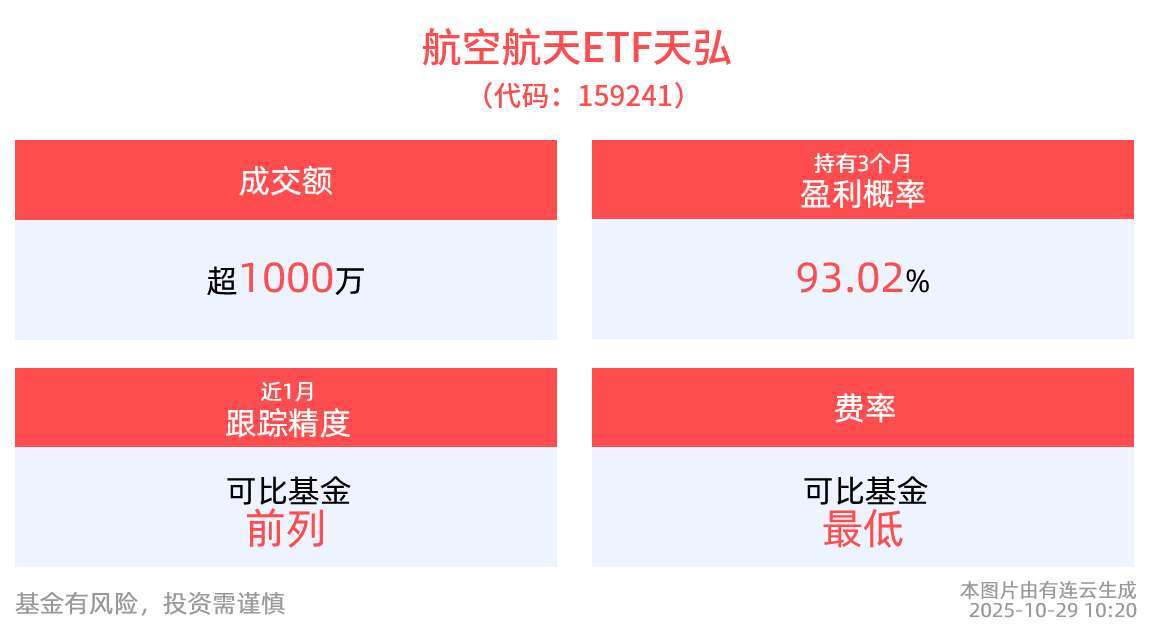
Core Viewpoint - The aerospace industry is experiencing significant growth, with a notable increase in revenue and net profit for key companies, indicating a favorable investment environment in the sector [4][5]. Group 1: Industry Performance - The aerospace ETF Tianhong (159241) is showing strong momentum, with a turnover of 4% and a transaction volume of 18.36 million yuan [3]. - The aerospace industry is expected to maintain high activity levels in the capital market, with explosive growth in revenue and net profit in the third quarter [4]. Group 2: Company Highlights - AVIC Chengfei reported a net profit of 1.256 billion yuan in the third quarter, a year-on-year increase of 170%, with revenue of 27.584 billion yuan, up 139.04% [4]. - China Satellite's third-quarter revenue reached 1.782 billion yuan, a year-on-year increase of 177.31%, with a net profit of 45.3029 million yuan, marking a turnaround from losses [5]. - The growth in China Satellite's performance is attributed to the completion of satellite system projects and increased orders in various business segments [5]. Group 3: Institutional Insights - Dongfang Securities highlighted the strong policy signal from the 20th Central Committee's Fourth Plenary Session to accelerate the construction of a strong aerospace nation [5]. - The successful static ignition test of the Zhuque-3 rocket is expected to lower launch costs and enhance the efficiency of low-orbit satellite networks, benefiting the commercial aerospace sector [5].

开盘:三大指数集体高开 创指高开1.07% 高压氧舱板块涨幅居前
Xin Lang Cai Jing· 2025-10-29 02:12
Market Overview - The three major indices opened higher, with the Shanghai Composite Index at 3990.27 points, up 0.05%, the Shenzhen Component Index at 13484.01 points, up 0.40%, and the ChiNext Index at 3263.98 points, up 1.07% [1] Policy and Economic Development - The Central Committee of the Communist Party of China published suggestions for the 15th Five-Year Plan, emphasizing the cultivation of emerging industries and strategic sectors such as new energy, new materials, aerospace, and quantum technology [1] - The People's Bank of China reported on financial work, highlighting the need to prevent systemic financial risks and to strengthen the capital market [1] Industry Performance - The 11th batch of national drug centralized procurement included 55 commonly used drugs across various fields, indicating ongoing efforts in healthcare cost management [2] - Ganfeng Lithium reported a 364% year-on-year increase in net profit for Q3, driven by expanded sales [2] - Zhonghang Chengfei announced a net profit of 1.256 billion yuan for Q3, up 169.53% year-on-year [2] - Zhaoyi Innovation reported a net profit of 508 million yuan for Q3, a 61.13% increase year-on-year [2] - Huasheng Tiancai's Q3 net profit surged by 563.58% to 219 million yuan [2] - China Film's Q3 net profit reached 177 million yuan, up 1,463.17% year-on-year [2] - Shengyi Technology reported a net profit of 1.115 billion yuan for the first three quarters, a 498% increase [2] - Sungrow Power reported a net profit of 4.147 billion yuan for the first three quarters, up 57.04% year-on-year [2] - Huitian Technology announced a net profit of 2.718 billion yuan for the first three quarters, a 47.03% increase, benefiting from structural demand in AI [2] Corporate Developments - Lianqi Technology announced that its shareholders' combined stake fell below 5% [3] - Delong Huineng announced a change in its controlling shareholder and actual controller, leading to stock resumption [3] - Dahua Intelligent stated that it currently has no business related to quantum technology [4] International Market Trends - The U.S. Senate rejected a temporary funding bill, leading to a continued government shutdown [5] - U.S. stock indices collectively rose, with the Nasdaq up 0.8%, Dow Jones up 0.34%, and S&P 500 up 0.23% [5] - Nvidia's stock rose approximately 5%, nearing a market capitalization of $5 trillion [5] Technological Advancements - Eli Lilly announced the deployment of the world's largest and most powerful AI pharmaceutical factory, utilizing Nvidia's DGX supercluster [6] - Nvidia plans to ship 20 million Blackwell and Rubin GPUs, expecting a business scale of $500 billion over the next six quarters [7] - OpenAI reported a total investment of approximately $1.4 trillion for AI infrastructure construction [8] - Microsoft and OpenAI signed a new agreement to support OpenAI's capital restructuring, with Microsoft acquiring about 27% equity in OpenAI [8] - The U.S. Department of Energy announced collaborations with Nvidia and Oracle to build seven new AI supercomputers [9]


\十五五\规划《建议》之解读
Bao Cheng Qi Huo· 2025-10-29 02:06
1. Report Industry Investment Rating No relevant content provided. 2. Core View of the Report The "15th Five-Year Plan" period is of great significance in the process of basically realizing socialist modernization. Boosting consumption and technological innovation will be the main drivers on the demand and supply sides respectively during the "15th Five-Year Plan" period. Policies conducive to expanding domestic demand and supporting technological innovation will continue to be promoted, and the relevant industries are expected to benefit from the policy advantages [3][4][20]. 3. Summary According to the Directory 3.1 "15th Five-Year Plan" 《Suggestions》 Main Content - The "15th Five-Year Plan" 《Suggestions》 has 15 parts and 61 articles, divided into three major sections. It positions the "15th Five-Year Plan" period as an important stage with a connecting role in the process of basically realizing socialist modernization [7]. - The development environment is characterized by both strategic opportunities and risks, with many uncertain and unpredictable factors. Internationally, the relationship between China and the United States is complex, but China has many favorable factors for shaping the external environment. Domestically, China has advantages such as a stable economic foundation, but also faces challenges such as unbalanced and insufficient development [7][8]. - The main goals include achieving significant results in high - quality development, greatly improving the level of technological self - reliance, and continuously improving people's living standards [9]. 3.2 Industry Construction - Prioritize optimizing and upgrading traditional industries to maintain the competitiveness of industries such as mining, metallurgy, and chemical engineering in the global division of labor. Cultivate and strengthen 4 strategic emerging industry clusters and 6 future industries [11]. - Expand the opening - up of the service industry to attract international capital and advanced business models, and moderately and ahead of time build new infrastructure to reserve development space [11]. 3.3 Technological Innovation - Strengthen original innovation and key core technology research in fields such as integrated circuits and industrial mother machines. Increase the proportion of basic research investment to achieve technological self - control [12]. - Promote the in - depth integration of technological innovation and industrial innovation, accelerate the transformation of scientific and technological achievements into productivity, and create new industries [12]. - Implement the "Artificial Intelligence +" action to lead the transformation of scientific research paradigms and empower various industries [12]. 3.4 Domestic Market - Adhere to the strategic basis of expanding domestic demand, combine improving people's livelihood and promoting consumption, and investment in objects and people. Promote the positive interaction between consumption and investment, supply and demand [13]. - Specific measures include boosting consumption (improving consumption scenarios and promoting residents' consumption ability), expanding effective investment (optimizing government investment and stimulating private investment), and removing obstacles to the construction of a unified national market [13][14]. 3.5 Macroeconomic Governance - Strengthen the coordination of fiscal and monetary policies, and maintain the continuity, effectiveness, and consistency of policies. Promote an economic development model driven by domestic demand and consumption [15]. - In fiscal and tax reform, improve the local tax and direct tax systems, and adjust the central - local fiscal relationship [15]. 3.6 Livelihood Security - Solve structural employment problems by strengthening the coordination between industry and employment, and promoting the healthy development of flexible employment [16]. - Improve the income distribution system to increase the income of low - income groups, expand the middle - income group, and form an olive - shaped distribution pattern [17]. - Improve the social security system, including pension and medical insurance, and focus on reducing the high - cost expenditures of residents in education, housing, etc. [17]. 3.7 Green Transformation - With the goal of achieving carbon peak by 2030, accelerate the construction of a new energy system and implement energy - saving and carbon - reduction reforms. The construction of the electricity market and carbon emission trading market is expected to accelerate [18]. - Reduce pollution emissions, strengthen pollution control, and promote the formation of a green production and lifestyle [18]. 3.8 Summary The "15th Five-Year Plan" 《Suggestions》 deploys strategic tasks and major measures in multiple fields. Boosting consumption and technological innovation will be the main focuses, and relevant industries are expected to benefit from policy support [19][20].