软件

Search documents
高盛:HALO效应股票获追捧 美五大科技巨头2023至2026年资本支出将达1.5万亿 重资产组合自2025年以来跑赢轻资产35%
Jin Rong Jie· 2026-02-25 06:52
Group 1 - The core viewpoint of the report is that the current stock market pricing logic is shifting from a "scalable light asset narrative" to "buildable, irreplaceable physical capacity and networks," summarized as "scarcity repricing" [1] - Goldman Sachs defines HALO as a combination of "heavy assets" and "low obsolescence," where heavy assets are based on substantial physical capital with multi-dimensional replication barriers, and low obsolescence refers to assets that maintain economic value across technological cycles [1] - The report highlights that the past decade of zero interest rates and abundant liquidity has led to high valuations for light asset business models, but this balance is now disrupted by the rise of AI, which increases uncertainty in profitability and terminal value for light asset industries [1] Group 2 - Since 2025, Goldman Sachs' heavy asset portfolio has outperformed the light asset portfolio by 35%, indicating that asset intensity has become a core driver of valuation and returns [2] - The valuation gap between heavy and light assets has significantly narrowed, primarily driven by the revaluation of heavy asset companies, reflecting that market funds are willing to pay a premium for the strategic value of physical assets [2]
大摩交易员:“AI恐惧”可能已到达顶峰,如果没有,那么买HALO吧
Hua Er Jie Jian Wen· 2026-02-25 06:52
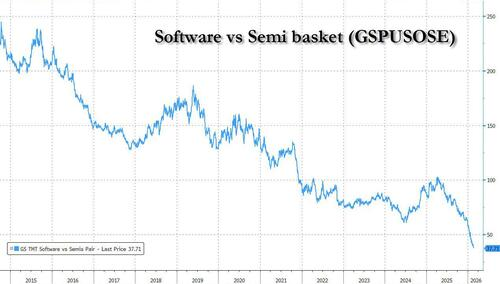
Core Insights - The market's fear regarding AI disrupting traditional industries may have peaked, with "HALO" trades (heavy assets, low obsolescence) being the best hedge for investors still concerned about AI impacts [1][8] Group 1: Market Sentiment and AI Impact - The recent briefing by AI company Anthropic indicated a preference for "cooperation" between AI and existing software providers, contrasting previous fears of complete replacement, leading to a rebound in previously shorted software stocks [1][7] - Despite the S&P 500 index remaining stable since late October last year, extreme fund flows have caused unprecedented internal market divergence, with significant capital inflows into AI beneficiaries and semiconductor sectors while indiscriminately selling software assets [1][4] Group 2: Stock Market Dynamics - The divergence in stock performance has been extreme, with growth and value stocks experiencing a 24% return difference, and the S&P 500's technology and consumer discretionary sectors facing an 11% decline [4] - Defensive and cyclical sectors have seen significant gains, with industrials up 13%, consumer staples up 16%, materials up 22%, and energy up 25% during the same period [4] Group 3: Fund Flows and Positioning - Hedge funds have significantly increased their exposure to semiconductor and AI-related stocks, reaching the highest levels since 2020, while infrastructure software has been the most sold theme, dropping to the 0th percentile since 2020 [7] - Following the Anthropic briefing, there was a reassessment of extreme positions, with software stocks previously labeled as "at risk from AI" rebounding approximately 5% [7] Group 4: HALO Strategy - For investors who believe the "AI fear" has not peaked, Morgan Stanley recommends investing in HALO assets, which are characterized by high production capacity and low obsolescence [8][10] - The HALO basket has risen 28% over the past year, while stocks affected by AI disruption have fallen 43%, indicating a significant attractiveness of this strategy [10]


杭州六小龙「群核科技」,递交IPO招股书,拟赴香港上市,摩根大通、建银国际联席保荐
Sou Hu Cai Jing· 2026-02-25 06:09
Core Viewpoint - Manycore Tech Inc. (群核科技) is seeking to list on the Hong Kong Stock Exchange, having previously submitted applications that expired in 2025. The company aims to issue up to 314.432 million shares and has received approval from the China Securities Regulatory Commission for overseas listing [2][4]. Company Overview - Founded in 2011, Manycore Tech is a leading provider of cloud-native space design software, utilizing AI technology and GPU clusters to enhance design experiences across various business scenarios, including residential, office, and commercial projects [4]. - The company's software allows for the creation of production-ready designs, supporting automated production processes, and offers seamless data interoperability and scalability across various industries [4]. Market Position - According to Frost & Sullivan, Manycore Tech holds approximately 23.2% market share in China's space design software industry as of 2024, making it the largest player in this sector [5]. - The company has generated around 2.5 billion images using AI capabilities by 2025, with an average of 2.5 million monthly active users on its platform [5]. Product Offerings - The main product, Coohom, is a space design software tailored for the Chinese market, allowing users to create designs using drag-and-drop 3D models and providing realistic rendering in real-time [8]. - Coohom has an extensive database of over 480 million 3D models and design elements as of December 31, 2025, and features enhanced Building Information Modeling (BIM) capabilities for generating engineering drawings and material lists [8]. Financial Performance - Manycore Tech's revenue for the years 2023, 2024, and 2025 is projected to be RMB 664 million, RMB 755 million, and RMB 820 million, respectively, with corresponding net losses of RMB 646 million, RMB 513 million, and RMB 428 million [13][14]. - The adjusted net profit is expected to improve from a loss of RMB 241 million in 2023 to a profit of RMB 57 million in 2025 [15]. Shareholder Structure - Prior to the IPO, the major shareholders include co-founders Huang Xiaohuang (15.46%), Chen Hang (11.04%), and Zhu Hao (4.22%), along with various institutional investors such as IDG Venture and Hillhouse Investment [10][11]. Board Composition - The board of directors consists of nine members, including four executive directors and three independent non-executive directors, with key figures being Huang Xiaohuang as Chairman and Chen Hang as CEO [12].

资源周期板块依然亮眼
Xin Lang Cai Jing· 2026-02-25 05:38
Core Viewpoint - The A-share market is experiencing a high-level fluctuation with a clear trend of structural differentiation, indicating a "structure is king" theme for the Year of the Horse [1] Group 1: Market Trends - The market is shifting from "expectation-driven" to "performance verification," with a focus on earnings and policy as the main drivers [2] - The spring market is expected to continue, but with significant structural differentiation, particularly favoring hardware segments capable of commercializing AI applications [2] - The market logic is anticipated to transition from "policy expectations" to "earnings realization" after March, with annual and quarterly reports serving as key anchors for market movements [2] Group 2: Sector Performance - Resource cyclical stocks are performing strongly, driven by high international oil prices and geopolitical factors, with oil and gas, precious metals, and non-ferrous metals showing active performance [3] - The resource sector's performance is supported by rising commodity prices, with precious metals and oil prices influenced by geopolitical factors and fluctuations in U.S. dollar credit [3] Group 3: Market Sentiment - There is a stark contrast in market sentiment, with previously popular AI concept stocks facing significant declines, indicating a return to rationality regarding AI's commercial viability [4] - The market is characterized by a "broad rise masking differentiation," where funds are flowing into cyclical and hardware sectors with earnings support, while overvalued speculative stocks are being sold off [4] - Future investments in the Year of the Horse are expected to test investors' abilities to select stocks accurately between technology and resources, as well as value and growth [4]
未知机构:春节后首个交易日市场普涨机构赎回含权资产202602224春-20260225
未知机构· 2026-02-25 03:45
Summary of Conference Call Notes Industry Overview - The conference call discusses the performance of the A-share market post-Spring Festival, highlighting a general upward trend with a 1.06% increase in the market on the first trading day after the holiday, outperforming the Hang Seng Tech and Nasdaq indices during the same period [1][1]. Key Points and Arguments Market Performance - The A-share market showed strong performance compared to overseas markets, with significant gains in cyclical sectors such as oil and gas, which rose by 5.53%, and other sectors like building materials, chemicals, non-ferrous metals, coal, and steel leading the gains [1][1]. - Specific sub-sectors like fiberglass and phosphorus saw increases exceeding 8% [1][1]. - In contrast, the AI software sector experienced a downturn, with notable declines in stocks like Adobe, CRM, and Autodesk, which saw maximum drawdowns of up to 30% due to the release of multiple large models [3][3]. AI Sector Insights - The hardware segment of AI remains robust despite the software downturn, with technologies like CPO (Co-Packaged Optics) expected to achieve mass production by year-end, benefiting various components such as optical engines and silicon photonics [3][3]. - The market is currently awaiting a "killer product" in AI, with uncertainty surrounding its arrival and impact on the sector [3][3]. Consumer Sector Dynamics - The decline in box office revenue during the Spring Festival period has negatively impacted film stocks, with companies like China Duty Free Group facing significant losses after losing operational rights at key airports [4][4]. - However, there was a noticeable increase in offline consumer activity during the extended holiday, with growth in foot traffic, shipping, and tourism-related spending, indicating potential for recovery despite low consumer confidence [4][4]. Additional Important Content Institutional Behavior - On the first trading day post-holiday, institutions exhibited a net redemption trend, with a subscription to redemption ratio of 45% to 55% [5][5]. - There was a net redemption in rights-embedded assets, while bond funds saw net subscriptions, indicating a shift in investment strategy among institutions [6][6]. - Active equity funds experienced a net redemption of 0.15%, primarily driven by sales from wealth management and insurance sectors, while sectors like electric new energy, chemicals, and non-ferrous metals saw increased allocations [6][6]. Debt and Bond Market - The convertible bond market faced a net redemption of 1.37%, with significant selling from brokers and trusts [7][7]. - Short-term bonds also saw a net redemption of 1.24%, reflecting a cautious approach among investors [8][8]. Overall Market Sentiment - The overall sentiment in the market appears cautious, with institutions adjusting their portfolios in response to recent market dynamics and sector performances [5][5][6][6].
Anthropic不再带崩美股?香橼做空SNDK三大逻辑
3 6 Ke· 2026-02-25 03:32
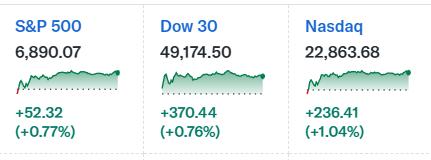
Group 1 - Anthropic has become a central variable in the volatility of the US SaaS sector, causing software stocks to drop significantly in response to its product developments [1] - Following a recent live event, market sentiment improved as Anthropic clarified that its Claude Cowork AI tool is designed to enhance existing enterprise software rather than replace traditional software vendors [2][4] - The S&P 500, Dow 30, and Nasdaq all saw gains, with the Nasdaq rising over 1%, indicating a recovery in technology stocks, particularly those that had heavy short positions [3][6] Group 2 - The market narrative shifted from concerns about AI tools undermining traditional SaaS revenues to viewing AI as a means to enhance customer engagement and pricing [4][5] - Anthropic's partnerships with companies like FactSet, LSEG, Salesforce, and Thomson Reuters suggest that AI will augment rather than replace existing business models, leading to significant stock price increases for these firms [4] - The recent rally was driven by a short squeeze, with heavily shorted stocks rising nearly 4%, indicating that prior risk hedging had reached high levels [6][8] Group 3 - The semiconductor sector also contributed to the market's recovery, with AMD's stock rising approximately 9% due to a large AI chip procurement agreement with Meta, potentially exceeding $10 billion [9][10] - Overall, improving consumer confidence and stable real estate prices have alleviated recession fears, contributing to a recovery in risk appetite [10] Group 4 - Despite the short-term recovery, concerns remain about the long-term structural impacts of AI on the SaaS industry, particularly regarding efficiency gains and job displacement [13][14] - Anthropic's valuation has reached approximately $380 billion, indicating that its product launches will continue to influence market perceptions of software companies [14] Group 5 - The market is now focused on Nvidia's upcoming earnings report and any policy statements that may impact the sector [12] - The current situation reflects a temporary easing of risks rather than a resolution of long-term structural issues within the industry [13]
每日投资策略-20260225
Zhao Yin Guo Ji· 2026-02-25 02:35
2026 年 2 月 25 日 招银国际环球市场 | 市场策略 | 招财日报 每日投资策略 全球市场观察 全球市场观察 招银国际研究部 邮件:research@cmbi.com.hk | 环球主要股市上日表现 | | | | | --- | --- | --- | --- | | | 收市价 | | 升跌(%) | | | | 单日 | 年内 | | 恒生指数 | 26,590 | -1.82 | 3.74 | | 恒生国企 | 9,008 | -2.06 | 1.06 | | 恒生科技 | 5,271 | -2.13 | -4.45 | | 上证综指 | 4,117 | 0.87 | 3.74 | | 深证综指 | 2,713 | 1.23 | 7.21 | | 深圳创业板 | 3,308 | 0.99 | 3.28 | | 美国道琼斯 | 49,175 | 0.76 | 2.31 | | 美国标普 500 | 6,890 | 0.77 | 0.65 | | 美国纳斯达克 | 22,864 | 1.04 | -1.63 | | 德国 DAX | 24,986 | -0.02 | 2.02 | | 法国 CA ...
平安证券(香港)港股晨报-20260225
Ping An Securities Hongkong· 2026-02-25 02:33
Market Overview - The Hong Kong stock market experienced a decline, with the Hang Seng Index closing at 23,831 points, down 145 points or 0.61% [1] - The market turnover decreased to 82.799 billion HKD, with net inflows of 484 million HKD recorded in the Hong Kong Stock Connect [1] - The US stock market saw all three major indices rise, with the Dow Jones up 0.76%, S&P 500 up 0.77%, and Nasdaq up 1.04% [2] Sector Performance - In the Hong Kong market, local real estate, software, and 5G concept sectors faced significant declines, while gold stocks performed well [1] - The Hang Seng Technology Index fell by 2.13%, with notable declines in companies like Kingdee International and SenseTime [1] - In the US, semiconductor stocks generally rose, with AMD increasing by over 8% and Intel by over 5% [2] Investment Outlook - The report emphasizes the importance of technology self-reliance and AI applications as key themes for future performance in the Hong Kong stock market, with leading companies in these sectors expected to benefit from long-term growth opportunities [3] - The report suggests focusing on sectors supported by policies aimed at expanding domestic consumption, such as sports apparel and non-essential services [3] - It highlights the continued value of investing in Hong Kong stocks centered around Chinese assets, particularly state-owned enterprises with low valuations and high dividends [3] Key Company Updates - Meta has signed a multi-year agreement with AMD to deploy up to 6 GW of AMD Instinct GPUs for AI infrastructure, which is expected to boost demand for AI semiconductors [9] - The report recommends monitoring companies like Huahong Semiconductor and ASMPT, which are likely to benefit from increased investments in computing power and infrastructure [9] - The People's Bank of China announced a 600 billion CNY MLF operation, indicating ongoing liquidity support, which may benefit state-owned enterprises like China Tower and China Unicom [10]
AI时代的“稀缺资产”?高盛:HALO--重资产、不过时
Hua Er Jie Jian Wen· 2026-02-25 02:24
Core Viewpoint - The market is shifting its pricing logic from "expandable light asset narratives" to "buildable, irreplaceable physical capacities and networks" due to higher real interest rates, geopolitical fragmentation, supply chain restructuring, and a wave of AI capital expenditure [2][3] Group 1: Market Dynamics - Goldman Sachs describes this shift as "scarcity repricing," where the market rewards capacity, infrastructure, and engineering complexity, which are costly to replicate and less likely to be technologically obsolete [3][4] - The report highlights that companies are decisively returning to tangible assets, with unprecedented value appreciation for capacity, infrastructure, and long-cycle assets [4][5] Group 2: Impact of AI on Asset Valuation - The rapid rise of AI is challenging the profitability and terminal value of previously dominant "new economy" models, particularly in software and IT services [6][7] - AI is reshaping capital expenditure patterns, with major tech companies expected to invest approximately $1.5 trillion in capital expenditures from 2023 to 2026, significantly surpassing their historical investments [9][10] Group 3: Performance of Heavy vs. Light Assets - The performance of Goldman Sachs' "heavy asset portfolio" has outperformed the "light asset portfolio" by 35% since 2025, indicating a market preference for tangible assets [10] - The valuation gap between heavy and light assets has narrowed significantly, with heavy asset companies driving the convergence rather than a broad devaluation of light asset companies [10][11] Group 4: Defining Heavy Assets - Heavy assets are characterized by high physical capital requirements and low obsolescence rates, with industries like utilities, energy, and telecommunications firmly in this category [11][12] - In contrast, software and IT services are categorized as light assets, heavily reliant on human capital rather than physical capital [12] Group 5: Macroeconomic Factors - Heavy asset stocks tend to perform well in high-interest rate environments, benefiting from stronger nominal economic activity and government spending [13][14] - The profitability outlook for heavy asset companies is improving, with expected EPS compound annual growth rates of 14%, compared to 10% for light asset companies [15] Group 6: Investment Trends - Despite recent performance, the rotation towards heavy assets is still in its early stages, with significant underallocation in value stocks compared to growth stocks [16][17] - The physical assets' "bulletproof" characteristics are becoming increasingly valuable in an AI-accelerated market, highlighting a potential long-term shift in market leadership [17]

纳斯达克市场定位、特征及上市标准
Sou Hu Cai Jing· 2026-02-25 02:10
纳斯达克的市场定位主要体现在以下几个方面: (一)从企业规模与发展阶段角度 纳斯达克全球精选市场:定位为全球范围内的大盘蓝筹企业,是纳斯达克最高层次的市场。主要吸引已经发展成熟、具有强大实力和优秀业绩的大型企业, 如苹果、微软等科技巨头。其上市标准是三个层次中最高的,对公司的财务状况、市值、流动性等方面都有较高要求,旨在挑选出具有优秀业绩和强大实力 的公司。 纳斯达克市场以其独特的市场定位、鲜明的特征和多层次的上市标准,成为全球资本市场中璀璨的明珠。为科技创新企业提供了广阔的发展空间,为投资者 创造了丰富的投资机遇,也为全球经济的创新发展注入了强大动力。无论是对于寻求融资发展的企业,还是渴望获取高回报的投资者,纳斯达克市场都具有 不可抗拒的吸引力。在未来,随着科技的不断进步和全球经济的深入发展,纳斯达克有望继续发挥其独特优势,引领全球资本市场的创新与变革。本文将从 市场定位、特征以及上市标准等方面进行剖析。 ▍纳斯达克市场定位 纳斯达克以科技股为主导,是全球科技企业的主要融资平台之一,吸引了众多科技、互联网、生物医药等新兴行业的企业上市。这些行业具有高成长性、高 创新性和高风险性等特点,与纳斯达克市场对成长型 ...