飞机制造

Search documents
冲击之下,上半年外贸数据结构性分化加剧
Jing Ji Guan Cha Wang· 2025-08-06 02:39
Overall Trade Performance - In the first half of 2025, China's total import and export volume showed a slight increase, with a total of approximately $30,321 billion, representing a year-on-year growth of 1.8% [3] - Exports reached $18,090 billion, growing by 5.9%, while imports decreased by 3.8% to $12,231 billion, resulting in a trade surplus of $5,859 billion, which is a 34.7% increase [3][4] - Private enterprises contributed significantly to foreign trade, accounting for 65.7% of total exports and 108.2% of the trade surplus in the first half of the year [3][4] Private Enterprises - Private enterprises have shown resilience in the face of challenges, minimizing the overall impact of the US-China trade war [5] - Exports to Africa and ASEAN increased by 21.6% and 9.6%, respectively, indicating successful market diversification efforts [5] - Despite maintaining a high export share of over 66%, private enterprises experienced a slowdown in growth rates in May and June compared to national averages, highlighting emerging challenges [6] Export Structure Changes - The export structure has shifted towards high-tech and high-value-added products, with mechanical and electrical products accounting for 60% of total exports, growing by 8.2% [6][7] - High-tech product exports increased by 6.4%, with integrated circuits seeing an 18.9% growth, reflecting advancements in China's manufacturing capabilities [7] - Traditional industries, particularly light manufacturing, faced significant declines, with apparel exports down by 0.2% and footwear exports down by 7.2% [8] Challenges in Traditional Industries - The light industry, heavily reliant on the US market, is particularly sensitive to tariff impacts, with significant declines in exports of toys, furniture, and other products [8] - The energy and raw materials sectors also saw declines, with steel exports down by 2% and coal exports down by 9.9%, attributed to global economic weakness and overcapacity in China [9] Outlook for the Second Half of 2025 - Despite a more favorable tariff environment, uncertainties in the global economy and geopolitical tensions pose significant challenges for foreign trade [11] - The focus will need to be on enhancing the quality and structure of exports while maintaining stable growth in volume [11] - Monitoring the operational status of private enterprises and optimizing the business environment will be crucial for sustaining high-tech industry advantages [11]

39%关税逼急了,瑞士总统不请自来急飞美国,专家建议送块金表
Hua Er Jie Jian Wen· 2025-08-05 22:35
Group 1 - Swiss President Karin Keller-Sutter urgently traveled to Washington to negotiate with the Trump administration to lower the recently announced 39% tariff rate [1] - The U.S. President Trump signed an executive order imposing a 39% tariff on Switzerland, which caused significant concern in Switzerland [1][3] - Trump highlighted the substantial trade deficit between the U.S. and Switzerland, particularly criticizing the wealth generated by the Swiss pharmaceutical industry [3] Group 2 - Keller-Sutter and the Swiss Federal Council are facing political pressure regarding potential concessions in trade negotiations, particularly in agriculture and pharmaceuticals [4] - Any concessions in agricultural tariffs could provoke backlash from Swiss farmers, who have previously committed to opposing changes to the current system [4] - The trade deficit with the U.S. is significantly influenced by gold trade, with two-thirds of the deficit in the first quarter attributed to gold bar transportation [4] Group 3 - Former Swiss diplomat Thomas Borer suggested that Switzerland could make concessions in oil, weapons, and liquefied natural gas, while also pressuring Swiss pharmaceutical companies to lower prices [5] - Switzerland is currently negotiating the purchase of 36 F-35 fighter jets from Lockheed Martin, but there are disagreements over the contract price [5] Group 4 - Trade policy researcher Stefan Legge emphasized the need for Switzerland to be creative in negotiations, suggesting symbolic gestures could be effective [6]
因商用飞机订单暴跌 美国6月工厂订单环比下降4.8%
智通财经网· 2025-08-04 15:57
Core Insights - The U.S. manufacturing new orders saw a significant month-on-month decline of 4.8% in June, reversing the strong rebound from May driven by a surge in aircraft orders [1] - Despite the June drop, overall orders increased by 3.8% compared to the same period last year [1] - The decline in orders was primarily attributed to a sharp decrease in commercial aircraft orders, which are high-value capital goods that significantly impact overall manufacturing data [1] Manufacturing Sector Performance - Manufacturing accounts for 10.2% of the U.S. GDP, but it has been facing multiple constraints leading to a weakening development trend [1] - The aggressive trade policies implemented during the Trump administration, including high tariffs on various imports, have posed greater challenges for the manufacturing sector [1] - The tariffs aimed to protect domestic industries and increase fiscal revenue, but they have also resulted in higher production costs and supply chain limitations [1] Economic Outlook - Economists generally believe that Trump's tariff strategy to "revive" manufacturing is unlikely to succeed in the short term due to labor shortages and the lengthy process of infrastructure adjustments and supply chain restructuring [2]
【微特稿·投资与消费】美国波音军机组装业务面临停工
Xin Hua She· 2025-08-04 10:39
Core Points - Boeing's defense division is preparing for a shutdown due to a strike by assembly workers in Missouri and Illinois, affecting the production of military aircraft and missile systems [1][1][1] - The strike is primarily a result of failed negotiations between workers and Boeing regarding compensation [1][1][1] - Boeing's recent financial report indicated an improvement in revenue for Q2, but the company still reported a loss of $612 million, which is an improvement from a loss of $1.439 billion in the same period last year [1][1][1] Summary by Category Labor Issues - Workers in Missouri and Illinois have initiated a strike, prompting Boeing to implement emergency plans using non-human employees [1][1][1] - The strike is linked to unresolved discussions over worker compensation [1][1][1] Production Impact - The strike affects the assembly of F-15 and F/A-18 fighter jets, T-7 trainers, and MQ-25 carrier-based drones, as well as missile systems [1][1][1] - Boeing was in the process of expanding production facilities in the St. Louis area following a contract win for the F-47A fighter jet [1][1][1] Financial Performance - Boeing reported a revenue improvement in Q2, but still faced a significant loss of $612 million, which is less than the $1.439 billion loss reported in the same quarter last year [1][1][1]

马来西亚林吉特兑美元短线波动不大,马来西亚在关税协议中承诺超过2400亿美元的对美采购与投资
news flash· 2025-08-04 08:27
Group 1 - The Malaysian government is committed to purchasing goods from the United States and investing in the U.S. to reduce its trade surplus with the country [1] - Malaysia Aviation Group plans to procure Boeing aircraft worth $19 billion [1] - Multinational companies are expected to purchase goods worth $150 billion in the semiconductor, aerospace, and data center sectors over the next five years [1] Group 2 - Petronas will procure liquefied natural gas (LNG) worth $3.4 billion annually [1] - Telekom Malaysia is set to purchase telecommunications products valued at $119 million [1] - Tenaga Nasional Berhad will procure coal worth $42.6 million annually [1] - Malaysia plans to invest $70 billion in cross-border investments in the U.S. over the next ten years [1]
低空飞机协同造、花样飞(科技瞭望)
Ren Min Ri Bao Hai Wai Ban· 2025-08-03 22:41
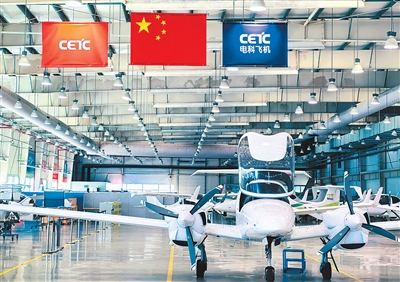
Core Insights - The article highlights the rapid development of the low-altitude economy and general aviation industry in Wuhu, Anhui Province, showcasing the establishment of a comprehensive industrial chain that includes manufacturing, operation, training, logistics, and maintenance of aircraft [8][10][19]. Industry Overview - The Wuhu Aviation Industrial Park has evolved from a barren land to a thriving hub with an annual output value of hundreds of billions, focusing on the full-process manufacturing of general aviation aircraft and drones [8][10]. - The park is home to over 200 aviation-related enterprises, with a complete industrial chain covering core component research and development, aircraft manufacturing, and operational services [9][10]. Company Highlights - China Electronics Technology Group's Wuhu Diamond Aircraft Manufacturing Co., Ltd. has delivered over 100 manned and 300 unmanned aircraft since 2018, achieving a local supply rate of 100% for core components [11]. - The company has developed the CA40 aircraft, which features fully domestic avionics and engine systems, setting new standards for piston engine flight testing in China [10][11]. Market Growth - The low-altitude economy in Wuhu is projected to generate revenues of 46.38 billion yuan in 2024, reflecting a nearly 16% year-on-year growth [11]. - The industry is expected to become a trillion-yuan market, driven by policy support and technological innovation [10]. Technological Advancements - The TD550 coaxial unmanned helicopter, known as the "Sky Heavyweight," is widely used across various sectors including emergency response, logistics, and firefighting [6][16]. - The development of eVTOL (electric vertical takeoff and landing) aircraft is anticipated to revolutionize logistics and transportation, with the R6000 tilt-rotor aircraft being a notable example [19]. Educational Initiatives - The Oriental Flying Valley Aviation Camp offers innovative educational programs, engaging over 100,000 students and families through hands-on experiences in aviation [12][14]. - The curriculum includes various themes such as flight experience, model aircraft making, and drone operation, catering to different age groups [13][15]. Future Prospects - The low-altitude economy is expected to continue expanding, connecting production and daily life more closely, thereby enhancing efficiency and driving growth [19].
空客上半年民机交付量下降,供应链问题仍在困扰航司和制造商
Di Yi Cai Jing· 2025-07-31 12:00
Core Viewpoint - The global aviation industry is significantly impacted by delivery delays from aircraft and engine manufacturers, leading to reduced aircraft deliveries and increased operational challenges for airlines [1][3]. Group 1: Airbus Financial Performance - Airbus delivered 306 commercial aircraft in the first half of 2025, a decrease from 323 in the same period of 2024, due to engine supply issues [1]. - The company's consolidated revenue increased by 3% year-on-year to €29.6 billion, while revenue from the commercial aircraft segment decreased by 2% to €20.8 billion [1]. - Adjusted EBIT for the first half of 2025 was €2.204 billion, up from €1.391 billion in the same period of 2024, but adjusted EBIT related to commercial aircraft fell to €1.714 billion from €1.954 billion [1]. Group 2: Production Capacity and Supply Chain Challenges - Airbus aims to increase A320 production to 75 aircraft per month by 2027, with A330 production currently stable at 4 per month and a target of 5 by 2029 [2]. - Supply chain challenges have been exacerbated post-pandemic, affecting production capacity for A350 and A220 projects, with targets set for 12 A350s per month by 2028 and 14 A220s by 2026 [2]. - The pandemic led to significant layoffs in both aircraft manufacturers and parts suppliers, complicating the recovery process and causing delivery delays [2]. Group 3: Industry-Wide Impacts - The global backlog of undelivered aircraft exceeds 17,000, significantly higher than pre-pandemic levels, indicating potential delivery times of up to 14 years [3]. - Airlines are increasingly turning to the second-hand market or leasing aircraft due to delays in new deliveries, resulting in a 20-30% increase in narrow-body aircraft rental rates compared to 2019 [3]. - The supply chain issues have led to increased costs for airlines, including higher leasing costs and maintenance expenses due to aging fleets [4].
特朗普对巴西大部分商品加征50%关税 对部分关键行业作出豁免
Zhi Tong Cai Jing· 2025-07-30 22:25
Group 1 - The U.S. has imposed tariffs of up to 50% on most Brazilian goods in response to political persecution of former President Bolsonaro, but key industries like aviation, energy, and orange juice are exempted, alleviating worst fears in Brazil's business community [1] - Brazilian Finance Minister Seron stated that the outcome is milder than expected, indicating that the worst-case scenario has not materialized [1] - The tariffs are directly linked to Bolsonaro's trial regarding allegations of attempting to overturn the 2022 presidential election results, with additional sanctions imposed on the Brazilian Supreme Court judge overseeing the case [1] Group 2 - The exemption from tariffs includes critical export categories such as civilian aircraft, pig iron, precious metals, pulp, energy, and fertilizers, which is particularly important for Embraer, as 45% of its commercial aircraft and 70% of its executive jets are exported to the U.S. [1] - Analysts have warned that the tariffs could severely impact Suzano, one of the world's largest pulp producers, but market sentiment improved following the exemption announcement [1] - The former Brazilian Trade Minister Bahar cautioned that while some products are exempt, Brazil exports approximately 3,000 items to the U.S., and the remaining products will still face actual impacts [1] Group 3 - Notably, the executive order does not exempt beef and coffee exports, which are significant agricultural products for Brazil, with the Brazilian beef export organization Abiec previously indicating that tariffs would make exports to the U.S. "unsustainable" [2] - Despite the exemption for "energy and related products," several energy companies operating in Brazil have paused crude oil shipments to the U.S. due to policy uncertainty, with the Brazilian Petroleum Association stating that the industry is monitoring the situation [2]
Boeing(BA) - 2025 Q2 - Earnings Call Transcript
2025-07-29 15:32
Financial Performance - The company reported revenue of $22.7 billion, a 35% increase primarily driven by higher commercial delivery volume [28] - Core loss per share improved to $1.24 compared to the previous year, attributed to higher commercial deliveries and improved operational performance [28] - Free cash flow usage was $200 million in the quarter, reflecting better performance than expectations [28] Business Segment Performance Boeing Commercial Airplanes (BCA) - BCA delivered 150 airplanes in the quarter, with revenue of $10.9 billion and an operating margin of -5.1% [29] - The backlog increased to $522 billion, up more than $60 billion sequentially, including over 5,900 airplanes [30] - The 737 program delivered 104 airplanes, with production ramping up to 38 per month [30][31] Boeing Defense, Space & Security (BDS) - BDS booked $19 billion in orders, with revenue of $6.6 billion, up 10% [35] - Operating margin improved to 1.7%, reflecting better operational performance [35] - The demand for defense products remains strong due to the global threat environment [37] Boeing Global Services (BGS) - BGS reported revenue of $5.3 billion, an 8% increase year-over-year [38] - Operating margin was 19.9%, up 210 basis points compared to last year [38] - The business received $5 billion in orders, with a backlog of $22 billion [38] Market and Strategic Insights - The company is focused on stabilizing production and improving program execution as part of its recovery plan [7][23] - Recent trade agreements are expected to positively impact Boeing's order momentum and pricing strategies [51][56] - The company is monitoring supply chain dynamics closely, with 80% of commercial supply chain spending going to U.S. suppliers [20][21] Management Commentary - Management expressed optimism about the recovery plan's progress and the strong market demand across business segments [7][8] - The company is preparing for potential rate increases in production, with a focus on maintaining stability and quality [12][63] - Management acknowledged the challenges in the operating environment but remains confident in the company's long-term prospects [41][42] Other Important Information - The company is transitioning to a new CFO, Jay Malavi, as Brian West moves to a senior advisory role [26] - The company is committed to managing its balance sheet prudently, with a focus on maintaining an investment-grade rating [40] Q&A Session Summary Question: Free cash flow performance - Management indicated that a free cash flow target of around $3 billion for the year is reasonable, with expectations for positive cash flow in the fourth quarter [45][48] Question: Tariff impacts and order momentum - Management discussed the positive effects of recent trade agreements on order momentum and pricing strategies, particularly regarding input tariffs [51][56] Question: Delivery guidance for MAX and 777 - Management confirmed that deliveries for the 737 MAX are tracking ahead of the 400 target for the year, with expectations for continued strong performance [72] Question: Engine anti-icing issue - Management explained that delays in the engine anti-icing solution for the 737 MAX are due to design challenges that require additional work [76][77] Question: BDS margin improvement - Management expressed confidence in returning BDS to mid to high single-digit margins, emphasizing the importance of entering appropriate contract types [96][98]
拉美观察丨美关税大棒砸向巴西 50%税率撕裂美巴贸易互补性
Sou Hu Cai Jing· 2025-07-29 08:52
Group 1: Tariff Impact on Brazilian Industries - The U.S. has raised tariffs on Brazilian goods from 10% to 50%, affecting major exports such as orange juice, coffee, and aircraft manufacturing [1][4] - The Brazilian National Confederation of Industry estimates that this tariff increase will lead to a GDP decline of 0.37% in the U.S. and 0.16% in Brazil, with exports dropping by 52 billion Brazilian Reais and 100,000 job losses [4] - The most impacted sectors include aircraft, shipbuilding, and transportation equipment (22.3% export decline), tractors and agricultural machinery (11.31% decline), and poultry (11.3% decline) [4] Group 2: Specific Industry Concerns - The Brazilian Orange Juice Exporters Association warns that the new tariffs could lead to an "unsustainable state" for the industry, potentially causing harvest interruptions and factory chaos [5] - The Brazilian Coffee Exporters Association highlights that the new tariff will significantly increase the end price for American consumers, affecting over 300,000 coffee farming families in Brazil and 2.2 million coffee workers in the U.S. [6][8] - The Brazilian Aircraft Manufacturing Company estimates that each exported aircraft to the U.S. will incur an additional cost of approximately $9 million due to the tariffs, with potential total losses reaching 2 billion Reais [9] Group 3: Furniture and Other Industries - The Brazilian Furniture Industry Association reports that the U.S. market accounts for 30% of Brazil's finished furniture and mattress exports, with nearly 40% of related materials exported to the U.S. [10] - The furniture sector is experiencing order reductions, shipment pauses, and contract cancellations due to the impending tariff increase [10] Group 4: Broader Economic Implications - The tariff conflict is expected to exacerbate Brazil's economic challenges, including inflation and public debt, especially as the central bank has raised interest rates to 15% [17] - The ongoing trade dispute has led to public protests in Brazil, with citizens demanding respect for national sovereignty [17] Group 5: Diplomatic and Trade Relations - Brazil's government is actively seeking to mitigate the impact of the tariffs and has proposed credit support for affected businesses while exploring new export markets [18] - Analysts suggest that the tariff conflict reflects deeper political tensions, with the U.S. using tariffs as a tool to exert pressure on Brazil's domestic politics [19][20]