
商业航天

Search documents
我国卫星星座规划出炉 申请数量超20万颗
Zhong Guo Jing Ying Bao· 2026-01-16 19:36
Core Insights - China's commercial space industry has set ambitious goals for 2026, with over 200,000 satellites planned for deployment, marking a record number of applications to the International Telecommunication Union (ITU) [2][3] - The majority of applications, over 94%, come from the newly established "Radio Spectrum Development and Technology Innovation Research Institute," indicating a strategic push for resource allocation in low Earth orbit [3][4] Group 1: Satellite Deployment Plans - China has submitted applications for more than 200,000 satellites, significantly surpassing the 42,000 satellites deployed by SpaceX's Starlink [2] - The two largest applications, CHN2025-79441 and CHN2025-79398, each include 96,714 satellites, showcasing the scale of China's ambitions [2] - The applications are still subject to ITU review and must meet specific deployment timelines to secure rights to the frequency and orbital resources [4] Group 2: Strategic Importance - The strategic significance of this application extends beyond mere deployment, as low Earth orbit resources are becoming increasingly valuable [4] - Analysts suggest that without early applications, Chinese companies may face challenges in securing critical frequency resources in the future [4] - The ITU's rules dictate that satellite deployment must occur within strict timelines, emphasizing the urgency of these applications [4] Group 3: Industry Growth and Support - The commercial space industry in China is projected to reach a scale of 2.5 to 2.8 trillion yuan by 2025, with a financing total of 18.6 billion yuan, reflecting a 32% year-on-year growth [5] - The establishment of a 2 billion yuan industry fund by the National Space Administration in 2025 supports the development of reusable rockets and smart satellites [5] - The satellite internet market in China is expected to reach 44.7 billion yuan by 2025, with a compound annual growth rate of 11% over the next five years [5] Group 4: Technological Advancements - China's satellite manufacturing capabilities are advancing, with production cycles for low Earth orbit satellites reduced from years to months, and costs decreasing significantly [5][6] - The "Qianfan Constellation" and "National Grid Constellation" are accelerating their deployment, with the former already achieving multiple satellite launches [6] - Breakthroughs in low-power laser link technology and direct mobile connections to satellites are enhancing service capabilities, with major smartphone brands integrating satellite broadband features [6]

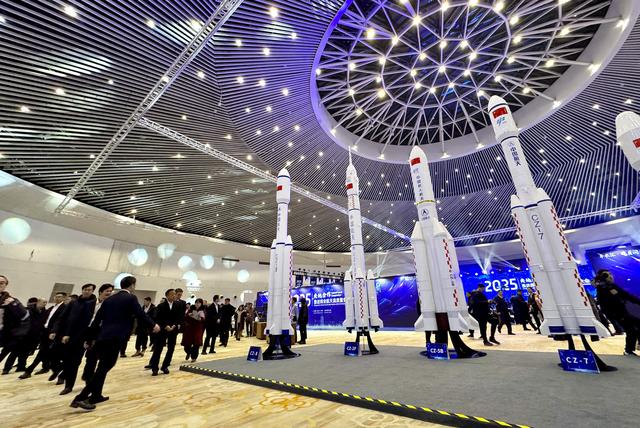
城市24小时 | 新年首发,“北方第一省”踩中爆发期
Mei Ri Jing Ji Xin Wen· 2026-01-16 16:49
Group 1 - The successful launch of the Ceres-1 sea-launched rocket marks a significant achievement for the Haiyang Dongfang Spaceport, indicating a strong start for commercial space launches in 2026 [1] - Since 2019, the Haiyang aerospace industry has attracted 32 projects with investments exceeding 32.2 billion yuan, establishing itself as a strategic emerging industry cluster in Shandong Province [1][2] - The Haiyang Dongfang Spaceport is the only commercial sea launch mother port in China, having successfully completed 22 sea launch missions, sending a total of 137 satellites into orbit [1] Group 2 - In 2025, China completed 87 space launch missions, with private commercial rocket companies executing 23 of them, highlighting the growing importance of the commercial space sector alongside new energy vehicles and integrated circuits [2] - Shandong's geographical advantage, particularly its coastal location, allows for favorable weather conditions and flexibility in launch site selection, reducing transportation costs and time by nearly 30% [2] - The launch events in Rizhao have become a significant attraction for tourism, drawing thousands of visitors and boosting local consumption in sectors like dining and accommodation [2] Group 3 - Shandong plans to establish a comprehensive aerospace industry chain by 2027, aiming for an annual production capacity of 100 launch vehicles and 150 commercial satellites, with the industry scale reaching 50 billion yuan [5]

权益类基金2025年四季报透视:短期业绩出现分化
Zheng Quan Ri Bao· 2026-01-16 16:46
Core Insights - The public fund reports for Q4 2025 are being disclosed, showing a divergence in performance among equity funds, with several fund managers optimistic about investment directions such as AI infrastructure and commercial aerospace [1][2]. Group 1: Market Performance - The equity market experienced a volatile adjustment in Q4 2025, with 33 out of 56 disclosed equity funds reporting net value growth, while others faced varying degrees of decline [2]. - Notable funds like Qianhai Kaiyuan Hong Kong-Shenzhen Enjoy Life and Qianhai Kaiyuan Ocean Mixed achieved over 30% net value growth in Q4 2025, with significant increases in fund shares [2]. - The Qianhai Kaiyuan Hong Kong-Shenzhen Enjoy Life fund focused on global AI infrastructure, adjusting its holdings to emphasize optical communication and liquid cooling sectors [2]. Group 2: Sector Focus - Funds such as Ping An CSI Satellite Industry Index and Tongtai New Energy reported net value growth rates above 20% in Q4 2025, focusing on satellite manufacturing and controllable nuclear fusion sectors [3]. - Despite some funds experiencing net value declines of up to 15% in Q4 2025, most funds still achieved net value growth over the entire year [3]. Group 3: Investment Strategies - Fund managers are optimistic about the technology sector for 2026, with AI being highlighted as a key investment direction due to its ongoing nonlinear technological advancements [4]. - The investment strategy suggested by fund managers includes a focus on "hard" technologies over "soft" ones, with an emphasis on sectors like optical communication and liquid cooling, which are expected to yield higher excess returns [4]. - The commercial aerospace sector is anticipated to transition from exploration to growth, with increased launch frequencies and a focus on reusable rockets and satellite payloads [4]. Group 4: Long-term Outlook - Fund managers believe that adjustments in holdings are based on long-term industry trends, with potential for significant recovery in fund net values following favorable policy releases or industry advancements [5]. - The volatility of equity funds is more pronounced compared to fixed-income products, emphasizing the importance of clear investment frameworks and in-depth industry research by fund managers [5].
2026年民营商业航天火箭发射首战告捷
Zheng Quan Ri Bao Zhi Sheng· 2026-01-16 16:40
Core Insights - The successful launch of the "Vesta-1" sea-launched rocket by Beijing Xinghe Power Aerospace Technology Co., Ltd. marks the first commercial space mission of 2026 in China, successfully placing four satellites into orbit [1] - The advancement in reusable rocket technology is expected to lead to more frequent and cost-effective launches, accelerating satellite constellation deployment [1][4] Group 1: Launch Achievements - The "Wanghai Tide" mission is the 21st successful launch for Xinghe Power and the 7th launch of the Vesta series for the "Tiankong Constellation" [2] - A total of 89 commercial satellites have been accurately delivered to their designated orbits through these launches [2] Group 2: Upcoming Launches and Innovations - Xinghe Power plans to execute the first flight of the Vesta-2 rocket, which is designed to efficiently launch small satellites weighing between 300 kg and 500 kg [2] - The company’s reusable rocket, Zhishen-1, is expected to have its maiden flight in the first half of 2026 [2] Group 3: Infrastructure and Technological Developments - The Long March 12B rocket successfully completed a static ignition test, aimed at meeting commercial launch demands for low-orbit satellite constellations [3] - Beijing Arrow Yuan Technology Co., Ltd. is developing a comprehensive industrial base for large liquid rockets, covering production, assembly, testing, recovery, and reuse [3] Group 4: Market Dynamics and Strategic Moves - The commercial space launch market in China is expected to be robust in 2026, with significant breakthroughs in reusable rocket technology anticipated to lower launch costs and accelerate satellite deployment [4] - China has submitted an application for an additional 203,000 satellites, indicating a strategic shift in satellite resource competition [4][5] Group 5: Industry Participation - Major telecommunications companies, including China Mobile and China Telecom, are actively involved in satellite constellation projects, with plans to launch thousands of satellites [5] - The three major telecom operators have already obtained licenses for satellite mobile communication services, enhancing their capabilities in emergency communication and remote area connectivity [5]
星河动力:谷神星一号海上发射圆满成功
Bei Jing Shang Bao· 2026-01-16 13:28
Core Viewpoint - The commercial aerospace company Xinghe Power successfully completed its 21st launch mission, deploying four satellites into orbit as part of the Tianqi constellation, marking a significant milestone in its operational capabilities [1] Group 1: Launch Details - On January 16, 2026, at 04:10 Beijing time, Xinghe Power executed the launch of the "Tianqi Constellation" satellites (06 group) from the Taiyuan Satellite Launch Center, successfully placing four satellites into a near-Earth orbit at an altitude of 850 km and an inclination of 45° [1] - This mission was named "Wanghai Tide" and is the seventh launch of the Gushenxing series rockets for the Tianqi constellation [1] Group 2: Company Achievements - To date, Xinghe Power has successfully conducted 21 commercial launch deliveries, accurately placing a total of 89 satellites with various functionalities into their designated orbits [1]
深交所出手!商业航天大牛股部分投资者被暂停交易
Sou Hu Cai Jing· 2026-01-16 12:45
【大河财立方消息】1月16日,深交所发布本周市场交易监管动态。 1月12日至1月16日,深交所共对387起证券异常交易行为采取了自律监管措施,涉及盘中拉抬打压、虚 假申报等异常交易情形;共对15起上市公司重大事项进行核查,并上报证监会5起涉嫌违法违规案件线 索。 责编:李文玉 | 审核:李震 | 监审:古筝 近期"*ST铖昌"股价出现严重异常波动,公司停牌核查并发布风险提示公告,1月16日复牌后股价继续 涨停,部分投资者在交易该股过程中存在影响股票交易正常秩序的异常交易行为,深交所依规对相关投 资者采取了暂停交易等自律监管措施。 *ST铖昌是近期商业航天板块的"大牛股",公司股价自去年12月1日起开始拉升,在近12个交易日更是 收获11个涨停板。 1月15日,*ST铖昌公布停牌核查结果。*ST铖昌核查后称,公司前期披露的信息不存在需要更正、补充 之处;公司目前经营情况正常,内外部经营环境未发生重大变化;公司控股股东和实际控制人不存在关 于本公司应披露而未披露的重大事项,或处于筹划阶段的重大事项;公司控股股东和实际控制人不存在 关于本公司应披露而未披露的重大事项,或处于筹划阶段的重大事项等一系列情形。 *ST铖 ...
聚焦北京各区两会|2026年北京丰台将推动26个街镇科技成果孵化机构基本覆盖
Bei Jing Shang Bao· 2026-01-16 12:09
Group 1 - The core objective for the Fengtai District is to achieve high-quality economic development by focusing on key tasks such as industry indicators, technological innovation, and industrial cultivation by 2026 [1] - The district aims to enhance economic contributions by improving services for key enterprises in industries such as manufacturing, software, and technology services, focusing on revenue, fixed investment, and R&D input [1] - The district plans to promote technological innovation and industrial integration, targeting an R&D investment intensity of 3% and fostering collaboration with educational institutions to support the establishment of industry-education integration bases [1] Group 2 - The district is committed to cultivating key and advantageous industries, particularly in the technology service sector, by implementing specialized policies and building a strong technology service area [2] - There is a focus on enhancing the artificial intelligence industry and developing an industrial intelligence cultivation system, alongside the construction of technology parks [2] - The district aims to improve the supply of industrial elements and establish a comprehensive service system for innovation resources, technology enterprise management, and enterprise financing [2]
3D打印行业研究:商业航天3D打印浪潮将至
SINOLINK SECURITIES· 2026-01-16 11:51
Investment Rating - The report suggests to pay attention to companies involved in commercial aerospace 3D printing due to the increasing maturity of 3D printing technology and its potential as a final processing solution in the aerospace sector [4]. Core Insights - 3D printing is transitioning from concept to mass production, supported by seven major technological routes that cater to various industry needs. The technology has shown significant cost advantages over traditional manufacturing methods, particularly in the consumer electronics sector [2][19]. - The aerospace industry is poised to benefit from 3D printing due to its ability to facilitate innovative product designs, reduce part counts, and optimize structures for weight reduction, which is critical in aerospace applications [2][4]. - The report highlights the growing application of 3D printing in rocket and satellite manufacturing, with domestic companies increasing their penetration rates in these areas [3][4]. Summary by Sections 1. Transition to Mass Production - 3D printing has evolved through various manufacturing stages, with significant advancements in technology leading to its current state where it can produce high-quality metal parts [13][14]. - The technology's cost advantages are realized not through scale alone but through innovations that lower unit production costs, making it competitive even at larger production volumes [19][21]. 2. 3D Printing as a Solution for Aerospace - The design philosophy has shifted from manufacturing-led to design-led, allowing for significant reductions in the number of parts and enhanced functionality through integrated designs [2][56]. - 3D printing reduces the supply chain complexity and lowers the costs associated with product lifecycle management, making it a viable alternative to traditional manufacturing methods [2][62]. - The technology enables lightweight designs through various structural optimizations, which is essential for aerospace applications [2][68]. 3. Rocket and Satellite Applications - The report notes that 3D printing is being increasingly utilized in the manufacturing of rocket thrust chambers, with domestic companies showing potential for growth in this area [3][4]. - In satellite manufacturing, 3D printing supports lightweight structures and functional integration, with ongoing investments from both domestic and international companies [3][4]. 4. Investment Recommendations - Companies such as Huazhu High-Tech, Yibang Co., and Feiwo Technology are highlighted for their involvement in the aerospace 3D printing sector, indicating strong growth prospects [4].
机器人暴涨220%,芯片却降17%:2025投资市场的"冰火两重天"
Sou Hu Cai Jing· 2026-01-16 11:27
Core Insights - The investment landscape in China is experiencing significant changes, with stark contrasts in funding across different sectors, particularly in hard technology [2][12] Investment Trends - In 2025, the most active sectors by the number of financing events are artificial intelligence (AI) with 1,579 events and healthcare with 1,506 events [2] - The robotics sector shows the highest growth rate in event numbers, increasing from 331 in 2024 to 717 in 2025, a growth of 116.6% [4] - The funding amount in the robotics sector reached 69.93 billion yuan, leading the hard technology field, while the energy storage sector attracted 47.98 billion yuan [6] Growth Rates - Energy storage emerged as the biggest surprise with a funding increase of 315.5%, rising from 11.55 billion yuan to 47.98 billion yuan [6] - Robotics funding also saw a significant increase of 220.1%, from 21.85 billion yuan to 69.93 billion yuan [6] - High-end equipment and new materials also experienced rapid growth, with increases of 165.0% and 74.1% respectively [6][8] Sector Analysis - The robotics sector is transitioning from concept to mass production, with companies like UBTECH and Fourier Intelligence leading the commercialization of humanoid robots [8] - Energy storage is becoming a core infrastructure in energy systems, driven by dual goals of carbon neutrality and increased renewable energy installations [7] - High-end equipment and new materials are crucial for the transformation of China's manufacturing industry, requiring substantial investment for technological upgrades and capacity building [8] Market Dynamics - There is a notable divergence in sectors like integrated circuits, renewable energy, and commercial aerospace, where the number of financing events increased but the funding amounts decreased by 17.5%, 24.0%, and 22.8% respectively [10][11] - This shift indicates a change in capital strategies, focusing more on technological advancements rather than mere scale expansion [11][12] Future Outlook - The investment market is moving away from the "track is king" logic, emphasizing the importance of commercialization potential and actual value creation [12] - For entrepreneurs, success in financing will increasingly depend on technological barriers, business models, and team execution [13] - Investors are shifting from chasing trends to seeking value, marking a sign of market maturity and a necessary choice for navigating economic cycles [14] - The contrasting trends in 2025 may signify the beginning of a high-quality development phase for China's venture capital market [15]


商业航天产业加速,关注3D打印服务商、关键结构件、太空光伏产业链
Guotou Securities· 2026-01-16 10:52
Investment Rating - The industry investment rating is "Leading the Market - B" [4] Core Insights - The commercial aerospace industry is accelerating, with a global aerospace economy projected to reach $612 billion by 2024, of which commercial aerospace revenue will be $480 billion, accounting for 78%. The annual compound growth rate for global commercial aerospace from 2015 to 2024 is 7.7%, while China's is 22.5% [1] - The technology route for reusable liquid oxygen-methane fuel has been established, and 3D printing is widely applied in the industry. Liquid rockets are more suitable for aerospace due to their stronger carrying capacity, and the trend is towards reusable large-thrust liquid oxygen-methane rocket engines [1][2] - The solar wing technology is expected to empower space computing, with flexible solar wings becoming a core infrastructure for high-power satellites. The main battery materials include silicon-based, flexible thin-film gallium arsenide, and perovskite, with perovskite showing significant future application potential due to its low cost and high efficiency [3][8] Summary by Sections Commercial Aerospace - The commercial aerospace sector is dominated by the US and China, with both countries completing the majority of global rocket launches. The number of launches is on the rise, with China applying for frequency resources for over 200,000 satellites by December 2025 [1] 3D Printing Applications - Leading 3D printing companies like Platinum and Huazhu High-Tech have successfully implemented solutions in the commercial aerospace sector, providing comprehensive metal additive manufacturing technology support for key components of rockets [2] Solar Power in Space - The solar wing technology, featuring high-efficiency solar cells, is crucial for providing reliable energy to satellites. Flexible solar wings are identified as essential for the high-power satellite era, with various materials being explored for their efficiency and cost-effectiveness [3][8] Investment Recommendations - It is suggested to focus on core components and 3D printing companies such as Jiangshun Technology, Huazhu High-Tech, Shaoyang Hydraulic, Chaojie Co., and Platinum. Additionally, attention should be given to perovskite and crystalline silicon photovoltaic equipment suppliers [9]