电动汽车

Search documents
黄仁勋交流会15000字实录:谈中美芯片、H20、CUDA兼容
海豚投研· 2025-07-19 02:57
Core Viewpoints - Huang Renxun's visit to China highlights the importance of the country's advanced supply chain and technological ecosystem, which are crucial for global AI hardware and smart factory development [2][3][5] - The CEO emphasizes the significance of collaboration and mutual learning between global competitors, particularly in the AI field, where openness and shared knowledge are essential for progress [16][24][49] Supply Chain and Technological Ecosystem - The complexity and efficiency of China's supply chain, along with its advanced infrastructure and manufacturing capabilities, leave a strong impression on Huang Renxun [3][5] - The global interdependence of supply chains is evident, with many multinational companies participating in events like the China International Supply Chain Expo [5][6] AI Development and Competitiveness - China is recognized as a leader in AI models, engineering talent, and industrial applications, with approximately 50% of the world's AI researchers based in the country [3][23] - Companies like Xiaomi, NIO, and XPeng are praised for their contributions to the electric vehicle market, reshaping global competition [3][31] Product Development and Market Strategy - The H20 chip has been reapproved for sale in China, which is expected to drive the introduction of more Blackwell architecture products [3][41] - The company is committed to continuous investment in China to maintain growth and competitiveness in a rapidly evolving market [7][25] AI Tools and Research - Huang Renxun utilizes multiple AI tools, including OpenAI and Gemini Pro, to enhance information accuracy through cross-validation [3][21] - The development of AI is seen as a multi-stage process, with a focus on reasoning AI as the next frontier [38][40] Collaboration and Competition - The company values collaboration with innovative partners in China, recognizing the unique strengths of local firms like Huawei and Xiaomi [49][50] - The competitive landscape is acknowledged, with respect for all competitors and a focus on continuous improvement and innovation [54][56] Future Outlook - The potential for AI to transform traditional manufacturing and supply chains is highlighted, with AI factories expected to enhance agility and production efficiency [41][55] - The company remains optimistic about the future of the Chinese market, viewing it as a vital area for growth and innovation [25][26]



“十四五”数字彰显中国优势
Sou Hu Cai Jing· 2025-07-19 02:32
Group 1 - China's consumer market remains the second largest globally, with a projected retail sales total of over 50 trillion RMB in 2023, reflecting an average annual growth of 5.5% over the past four years [3][4] - The contribution of consumption to China's economic growth has reached approximately 60%, highlighting the shift towards a domestic demand-driven growth model [3][4] - China's foreign trade has shown resilience, with goods trade expected to reach 6.16 trillion USD by 2024, marking a 32.4% increase from the end of the 13th Five-Year Plan in 2020 [4][5] Group 2 - The structure of China's exports has shifted, with high-tech products accounting for 18.2% of total goods trade by 2024, indicating an upgrade in technological capabilities [5] - The trade relationship with the US remains stable despite challenges, with bilateral trade expected to reach 688.3 billion USD in goods and 155.8 billion USD in services by 2024, reflecting growth since 2017 [6] - China's trade partnerships have diversified, with ASEAN remaining the largest trading partner for five consecutive years, and trade with Belt and Road Initiative countries exceeding 50% [5][6] Group 3 - The recent approval of NVIDIA's H20 chip sales to China marks a shift in US export control strategy, indicating a potential thaw in technology-related tensions [7] - Chinese officials emphasize the importance of foreign investment and the attractiveness of the Chinese market for multinational companies, particularly in the AI sector [7] - The resilience of China's economy against tariffs has exceeded many analysts' expectations, although challenges in imports and domestic demand persist [8][9]

冲击电动汽车,引发多国担忧,美将对中国石墨征重税让美企叫苦
Huan Qiu Shi Bao· 2025-07-18 22:46
Core Viewpoint - The U.S. Department of Commerce has determined that imports of graphite from China are unfairly subsidized, imposing a preliminary anti-dumping duty of 93.5% on anode-grade graphite imports, with a final decision expected by December 5 [1][2]. Group 1: Impact on the Industry - The new tariffs will exacerbate the global electric vehicle supply chain tensions, with the average cost of electric vehicle batteries potentially increasing by $7 per kilowatt-hour, which could negate a significant portion of the tax credits outlined in the Inflation Reduction Act [2]. - China supplies over 90% of the world's graphite, which constitutes about 95% of the anode materials for electric vehicles, leading to a potential increase of approximately $1,000 in battery prices for U.S. manufacturers [2][3]. - The U.S. imported nearly 180,000 tons of graphite products last year, with about two-thirds sourced from China, highlighting China's dominance in graphite processing capabilities [3]. Group 2: Strategic Responses - Tesla and its key battery supplier, Panasonic, have attempted to block the new tariffs, citing their reliance on Chinese graphite due to the underdevelopment of the domestic U.S. graphite industry [3]. - The U.S. government's primary aim appears to be the development of a domestic graphite manufacturing industry, as graphite is predominantly used in the aluminum electrolysis and steelmaking sectors, which consume the majority of graphite [3]. - The imposition of tariffs may lead to significant adjustments for Chinese companies, necessitating the exploration of alternative export markets, while U.S. companies may face supply chain disruptions and increased upstream costs [4].
消息人士:英国和印度可能在下周公布贸易协议,包括威士忌、电动汽车和纺织品。
news flash· 2025-07-18 13:27
Group 1 - The UK and India are expected to announce a trade agreement next week, which will include sectors such as whisky, electric vehicles, and textiles [1]
每日速递 | 追觅科技入局充电宝,目前处于前期规划阶段
高工锂电· 2025-07-18 10:08
Battery - Chasing Technology is entering the power bank market, utilizing solid-state battery technology [2] - The company is currently in the early planning stage for its power bank business and aims to provide safe and efficient charging solutions if the product meets market demand [2] Tesla - Tesla has officially launched the Model Y L, targeting the six-seat vehicle market, with a price expected around 400,000 yuan [4] - The Model Y L features dual motors with maximum power outputs of 142 kW and 198 kW, and is equipped with a lithium-ion battery produced by LG Energy [4] Sichuan Saike Power - Sichuan Saike Power's Yibin base has made significant progress with the installation of production equipment, aiming for production by October 2025 [6] - The base's core products have high energy density (>300 Wh/kg) and are certified for supply to leading electric aviation companies, with plans for applications in robotics and new energy vehicles [8] Materials - An international standard for silicon-based anode materials for lithium-ion batteries has been officially released, marking a significant milestone in the industry [10] - Safian has established a project in Hunan for high-safety coated separators, expected to be operational by Q4 this year, focusing on solid-state electrolyte applications [12] - Wanrun New Energy has terminated a 5 billion yuan investment project due to market conditions and internal resource optimization [14][15] Overseas - The U.S. Department of Commerce has preliminarily ruled to impose a 93.5% anti-dumping duty on high-purity graphite from China, potentially increasing battery prices significantly [16][17] - CATL has secured a framework supply agreement with Vanda RE for up to 2.2 GWh of battery storage systems in Indonesia, contributing to one of Southeast Asia's largest solar-storage projects [19]



资讯日报-20250718
Guoxin Securities Hongkong· 2025-07-18 09:47
Market Overview - The Hang Seng Index closed at 24,518, down 0.08% for the day but up 22.13% year-to-date[3] - The Hang Seng China Enterprises Index ended at 8,861, decreasing by 0.09% daily and up 21.44% year-to-date[3] - The Hang Seng Tech Index rose by 0.56% to 5,418, with a year-to-date increase of 21.95%[3] Sector Performance - Biopharmaceutical stocks surged, with Kanghua rising 14.5% and other companies like Kangfang Bio and Baiji Shenzhou increasing over 10%[9] - Major tech stocks showed mixed results, with Meituan up over 1% while Baidu fell over 3%[9] - Li Auto's stock increased by over 9% following the announcement of pre-orders for its new model priced between 350,000 to 400,000 RMB[9] U.S. Market Highlights - The Nasdaq Composite rose by 0.74%, the S&P 500 increased by 0.54%, and the Dow Jones Industrial Average gained 0.52%, all reaching new closing highs[9] - Nvidia's stock rose by 0.95%, while Microsoft increased by 1.20%, both achieving historical closing highs[9] - Netflix reported a net profit of $3.125 billion for Q2 2025, a 45.6% year-on-year increase, and raised its revenue and profit margin guidance for the year[9] Economic Indicators - U.S. retail sales rose by 0.6% in June, exceeding expectations, primarily driven by a rebound in auto sales[12] - The U.S. unemployment claims fell to 221,000, indicating a resilient job market despite a slowdown in hiring[12] - U.S. tariff revenues surged to $87.2 billion in the first half of the year, with June alone accounting for $26.6 billion, four times the usual level[12]
中国已经换了打法,美国却还在抱残守缺!
Sou Hu Cai Jing· 2025-07-18 09:46
Group 1 - The strategic approach of established powers, particularly the U.S., is perceived as overly conservative and lagging behind the times, indicating a long-standing narrative since the unexpected war in the 1950s between the U.S. and China, where the U.S. has remained in a defensive posture [1] - Since 2018, the U.S. has been losing significant strategic positions, with a sense of complacency leading to a more passive stance, as the trade war evolves into a critical challenge for the U.S., which is unable to engage in a comprehensive trade war with China [3] - The U.S. strategies have been thoroughly understood by China, which is gradually gaining the upper hand and executing its strategic plans, while the U.S. continues to rely on outdated tactics, such as attempting to penetrate the Chinese AI chip market with modified products [5] Group 2 - China's recent decision to include the preparation technology of cathode materials in its export control list is not merely aimed at the electric vehicle industry but reflects a broader strategy to target U.S. technology and high-end manufacturing, indicating China's determination to not provide the West with sufficient reaction time [6] - The historical context shows that from 1999 to 2007, China had a disruptive impact on the U.S. economy, resulting in the loss of nearly a quarter of manufacturing jobs in the U.S., highlighting the significant economic influence China has had [7]
黄仁勋北京交流会实录
投资界· 2025-07-18 07:19
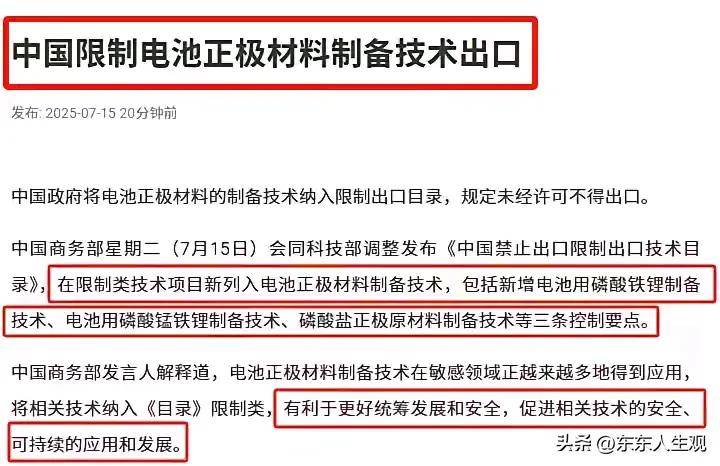
Core Viewpoints - The visit of NVIDIA CEO Jensen Huang to China highlights the importance of the Chinese supply chain in the global AI hardware and smart factory construction landscape [4][15]. - Huang emphasizes the advanced state of China's supply chain, including its infrastructure, ecosystem, and manufacturing scale, which are crucial for AI development [4][15]. - The global interdependence of supply chains is underscored by the diverse participation of companies at the event Huang attended [4][16]. Group 1: Observations on China's Technology and Industry - China's supply chain system is complex, efficient, and has significant manufacturing advantages, forming a critical foundation for global AI hardware and smart factory development [4]. - The H20 chip has been reapproved for sale, which will facilitate the introduction of more Blackwell architecture products in China [5]. - China leads globally in AI models, engineering talent, and industrial applications [6]. - Huang praises Chinese electric vehicle manufacturers like Xiaomi, NIO, and Xpeng, noting that they are reshaping the global competitive landscape [7]. - Huawei's breakthroughs in chips, network solutions, and photonics technology are recognized as exemplary [8]. - Approximately 50% of the world's AI researchers are based in China, highlighting the country's strong educational system [9]. Group 2: Huang's Views on AI and Technology - Huang encourages young people to maintain their passion for technology and emphasizes that AI is rapidly evolving [11]. - He believes that AGI (Artificial General Intelligence) may be achieved soon based on current evaluation standards, without requiring fundamental technological breakthroughs [12]. - Huang utilizes multiple AI tools for cross-validation to enhance information accuracy and comprehensiveness [10]. Group 3: NVIDIA's Strategy and Market Position - Continuous investment is essential for maintaining growth in a rapidly evolving market [18]. - Huang acknowledges the long supply chain cycle of NVIDIA, which currently takes nine months from wafer ordering to AI supercomputer delivery [19]. - The company is preparing to meet customer demand for the H20 chip, which is currently facing a licensing approval process [32]. Group 4: Insights on Competition and Collaboration - Huang respects all competitors and believes in learning from them, emphasizing the importance of adaptability in the face of external factors like trade policies [26][33]. - The unique strengths of Chinese companies, particularly in AI and robotics, are acknowledged, with a focus on the potential for collaboration [72]. - Huang expresses optimism about the future of AI in China, citing the country's robust manufacturing base and technological advancements [41][72]. Group 5: Future of AI and Industry Transformation - AI factories will enhance agility and reconfigurability in production, leading to higher efficiency and lower costs [64]. - The demand for computational power is expected to remain high, with engineers facing "computational anxiety" due to insufficient resources [57]. - Huang outlines the evolution of AI through various stages, emphasizing the importance of reasoning capabilities in future AI developments [58][59]. Group 6: NVIDIA's Technological Ecosystem - NVIDIA's comprehensive technological stack, encompassing algorithms, systems, software, and hardware, is highlighted as a unique advantage [75]. - The company aims to support the entire AI lifecycle, from pre-training to inference, ensuring usability and performance across various applications [77].
特斯拉和比亚迪要主导日本EV转型
日经中文网· 2025-07-18 06:30
Core Viewpoint - Tesla and BYD are significantly expanding their presence in Japan's electric vehicle (EV) market, aiming to capitalize on the low EV adoption rate in the country, which is currently lagging behind other developed nations [1][4]. Group 1: Tesla's Expansion Plans - Tesla plans to double its store count in Japan from 23 to 50 by the end of 2026, with an initial increase to 30 stores by the end of this year [1][3]. - All Tesla stores in Japan will be company-owned and primarily located in large commercial facilities to attract customers [3]. - Tesla is also building its own charging network in Japan, expanding its current 130 fast-charging stations and providing adapters for compatibility with Japan's CHAdeMO standard [3]. Group 2: Market Context and Challenges - Tesla's global sales have been declining, with a 13% year-over-year decrease in Q2 2023, particularly in the European market where sales dropped by 34% [4]. - Despite challenges in other markets, Tesla's sales in Japan are reportedly strong, with an estimated 70% increase in sales in the first half of 2023, reaching approximately 4,600 units [5]. - The overall EV market in Japan is stagnant, with sales of only 27,321 units in the first half of 2023, a 7% decline year-over-year, indicating a lack of momentum in EV adoption [6]. Group 3: Competitive Landscape - BYD is also expanding in Japan, planning to increase its store count from 63 to 100 by 2025, and has introduced several models, including a compact EV priced lower than Tesla's offerings [5]. - The Japanese automotive market is facing challenges as local manufacturers like Toyota, Honda, and Nissan are not expected to release competitive EV models until around 2026, potentially allowing foreign companies to capture more market share [6].


无人驾驶赛道升温,Uber联手Lucid挑战特斯拉Robotaxi
Hua Er Jie Jian Wen· 2025-07-17 17:32
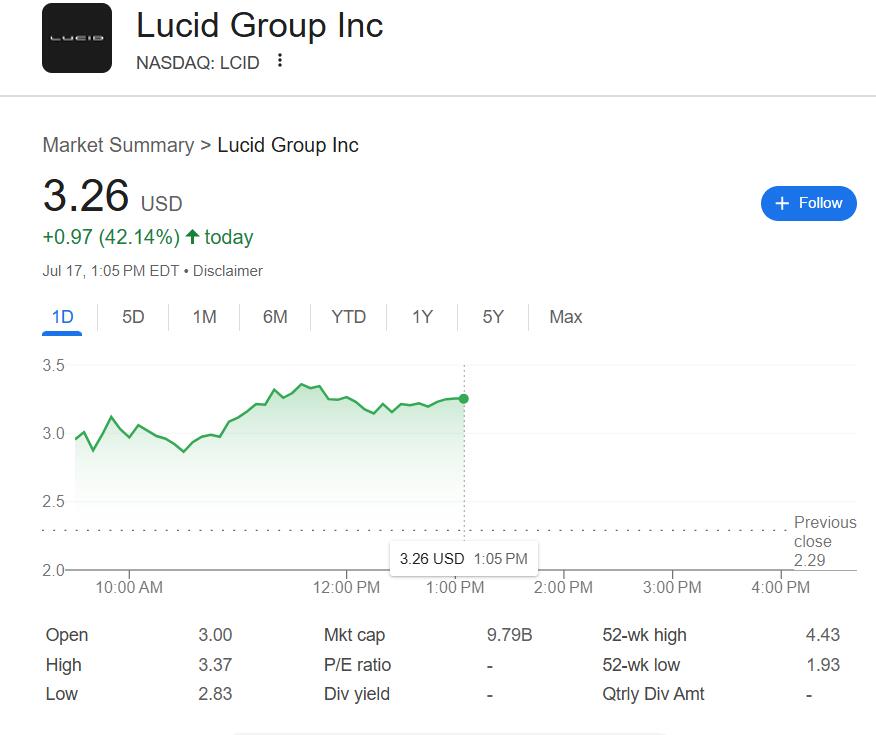
Core Insights - Uber has announced a strategic alliance with Lucid Group and Nuro to develop a high-end robotaxi service, planning to launch it in the second half of 2026 [1][4] - Uber will invest several hundred million dollars in this partnership, including a $300 million investment in Lucid, aimed at integrating Nuro's autonomous driving technology into Lucid's Gravity SUV [1][5] - Following the announcement, Lucid's stock surged, reflecting market optimism about the robotaxi market's potential [2][8] Group 1: Partnership Details - Uber plans to purchase at least 20,000 Lucid Gravity SUVs equipped with Nuro's autonomous driving technology over the next six years [1][5] - The first vehicles are expected to be deployed in an undisclosed major U.S. city in late 2026 [5][6] - Lucid's temporary CEO stated that the choice of Lucid's SUV was due to the ability to integrate necessary hardware directly at the factory [6] Group 2: Strategic Shift - This partnership signifies a shift in Uber's strategy from developing autonomous driving technology in-house to collaborating with specialized companies [4][7] - Uber has established partnerships with over ten autonomous technology developers and automakers, including Waymo and Volkswagen [7] - The current CEO has indicated that Uber is leveraging its investments in companies like Aurora Innovation to fund future autonomous ecosystem investments [7] Group 3: Market Context - The robotaxi market is becoming increasingly competitive, with Tesla and Waymo expanding their services [8] - Lucid aims to increase production and delivery of its vehicles, targeting a production of 20,000 units by 2025, more than double the previous year's output [8] - Lucid's stock has seen a significant decline of 95% since its peak during the pandemic, facing challenges from price wars and weak demand in the electric vehicle sector [8]