
核电

Search documents
时隔十年国际组织再评估,中国核电安全监管何以能获好评
Nan Fang Du Shi Bao· 2025-07-11 15:22
Core Points - The international assessment of China's nuclear safety regulatory system concluded that the Ministry of Ecology and Environment and the National Nuclear Safety Administration are solid, capable, and reliable regulatory bodies [1][6][10] - The assessment highlighted China's leadership in global nuclear safety, particularly in innovative practices such as the application of big data and artificial intelligence in regulatory processes [1][6][7] - The assessment was part of a comprehensive review process, with China voluntarily inviting the International Atomic Energy Agency (IAEA) for the evaluation, marking the fifth such assessment since 1994 [2][3][10] Group 1: Assessment Overview - The IAEA assessment took place from June 29 to July 11, 2023, and involved a thorough review of China's nuclear and radiation safety regulatory framework [2][3] - China currently operates 59 nuclear power units, ranking second globally, with an additional 32 units under construction and 21 planned [2][11] - The assessment included a self-evaluation by China based on IAEA safety standards, with a focus on transparency and cooperation during the evaluation process [3][4] Group 2: Key Findings and Recommendations - The assessment team identified several good practices in China's regulatory approach, including the use of artificial intelligence tools and regular high-level industry communication mechanisms [6][7][9] - The IAEA provided nine key recommendations, focusing on funding for decommissioned nuclear facilities and improving emergency preparedness standards [7][8][9] - The assessment emphasized the need for a systematic approach to resource evaluation in light of the dynamic development of nuclear projects in China [9][12] Group 3: Future Directions - China plans to analyze the recommendations from the IAEA assessment and continue enhancing its modern nuclear safety regulatory system [10][12] - The IAEA will conduct a follow-up assessment in five years to evaluate the implementation of the recommendations and ongoing improvements [11][12] - China expressed its commitment to international cooperation in nuclear safety and aims to share its regulatory experiences with other countries [12]


沪深300公用事业(二级行业)指数报2645.95点,前十大权重包含长江电力等
Jin Rong Jie· 2025-07-11 07:37
Core Points - The Shanghai Composite Index opened high and fluctuated, with the CSI 300 Utilities (secondary industry) index reported at 2645.95 points [1] - The CSI 300 Utilities index has decreased by 0.31% over the past month, increased by 1.48% over the past three months, and has declined by 2.24% year-to-date [1] Industry Classification - The CSI 300 index is categorized into 11 primary industries, 35 secondary industries, over 90 tertiary industries, and more than 200 quaternary industries, providing a comprehensive analysis tool for investors [1] - The index is based on a sample of 300 stocks from the CSI 300 index, with a base date of December 31, 2004, and a base point of 1000.0 [1] Index Holdings - The top ten weights in the CSI 300 Utilities index are: - Changjiang Electric Power (48.55%) - China Nuclear Power (10.28%) - Three Gorges Energy (8.2%) - Guodian Power (5.62%) - State Power Investment Corporation (4.72%) - Sichuan Investment Energy (4.17%) - Huaneng International (4.15%) - China General Nuclear Power (3.86%) - Zhejiang Energy (2.77%) - Huadian International (2.72%) [1] Market Distribution - The market distribution of the CSI 300 Utilities index shows that the Shanghai Stock Exchange accounts for 95.80%, while the Shenzhen Stock Exchange accounts for 4.20% [2] - In terms of industry composition within the index, hydropower constitutes 59.70%, thermal power 15.26%, nuclear power 14.14%, wind power 8.54%, and gas power 2.36% [2] Sample Adjustment - The index samples are adjusted biannually, with adjustments implemented on the next trading day following the second Friday of June and December each year [2] - Weight factors are generally fixed until the next scheduled adjustment, with temporary adjustments made in response to changes in the CSI 300 index samples [2]


时报访谈丨张立群:促进供需在更高水平上实现动态平衡
Sou Hu Cai Jing· 2025-07-11 00:43
Group 1 - The Consumer Price Index (CPI) in June increased by 0.1% year-on-year, ending a four-month decline, while the Producer Price Index (PPI) decreased by 3.6% year-on-year, indicating a mixed price trend in the economy [3][4][16] - The core CPI, excluding food and energy, rose by 0.7% year-on-year, marking a 0.1 percentage point increase from the previous month and reaching a 14-month high, reflecting improvements in supply-demand structures in certain industries [3][17] - The persistent low prices in the market are attributed to an oversupply situation, which could lead to a negative cycle affecting corporate expectations and investment, potentially dragging the economy into a "low inflation trap" [5][18] Group 2 - The decline in PPI is primarily driven by seasonal factors and the construction progress of infrastructure projects, along with an oversupply of raw materials like steel and cement, which has negatively impacted production material prices [4][17] - Key factors contributing to the current supply-demand imbalance include a decline in real estate investment, high tariff barriers affecting exports, and weak consumer income expectations leading to insufficient consumption willingness [4][18] - The overall economic recovery is influenced by a combination of supportive incremental policies and complex external environments, with expectations for CPI to show a trend of low-to-high throughout the year [8][10]

中金2025下半年展望 | 电力设备+工控:传统赛道有韧性,关注新质生产力、核能、出海方向
中金点睛· 2025-07-10 23:31
Core Viewpoint - The resilience of the power grid and industrial control sectors is expected to continue in the first half of 2025, with potential opportunities for performance and valuation recovery in the second half of the year [1] Power Grid Sector - Domestic power grid investment showed strong growth in the first five months of 2025, with a total investment of 204 billion yuan, a year-on-year increase of 19.8% [5] - The approval pace for ultra-high voltage projects is expected to accelerate in the second half of the year, with significant projects already approved [7] - The demand for ultra-high voltage equipment remains strong, with a projected annual growth rate of around 10% for power grid investment from 2024 to 2026 [10] - The first half of 2025 saw a robust demand for primary network investments, with a notable increase in bidding amounts for key equipment [10] Industrial Control Sector - The industrial control market has shown signs of recovery, with the OEM market experiencing a 3.3% year-on-year growth in the first quarter of 2025, marking the first positive growth in three years [24] - The demand for new technologies, particularly in automation and robotics, is expected to enhance profitability and valuation flexibility for industrial control companies [3] - The overall capital expenditure momentum remains slightly subdued, but a narrow fluctuation in the new cycle is anticipated [18] Investment Themes - Focus on new productive forces, including AIDC and humanoid robots, which are expected to bring significant valuation elasticity [3] - The revival of nuclear energy is highlighted, with a focus on nuclear power equipment and small modular reactors (SMR) as key investment areas [48] - The overseas market for power grid investment is projected to maintain high growth, driven by energy transition and grid upgrades, with a 14.4% year-on-year increase expected in 2024 [4] Nuclear Energy Sector - The global nuclear power industry is experiencing a strategic revival, with significant investments and approvals in various countries, including China and the U.S. [49] - The demand for nuclear energy is increasing due to the need for stable, low-carbon baseload power, with a focus on SMR and controlled nuclear fusion technologies [62] - The nuclear power sector is expected to see a re-evaluation of its investment value as countries prioritize energy security and decarbonization [61]
东吴证券晨会纪要-20250711
Soochow Securities· 2025-07-10 23:30
Macro Strategy - The report indicates that the US non-farm payroll data for June exceeded expectations, leading to a delay in interest rate cuts to September, with the 10-year US Treasury yield rising by 6.89 basis points to 4.346% [1][8] - The ISM services PMI returned above the expansion line, reflecting strong economic data, while the unemployment rate decreased, contributing to a positive market sentiment [1][8] - The signing of Trump's "One Big Beautiful Bill" (OBBB) increased the debt ceiling by $5 trillion to $41 trillion, which may shift market dynamics from "buy the rumor, sell the news" [1][8] Industry Analysis - The insurance sector is expected to benefit from the expansion of the Bond Connect southbound scheme, allowing more non-bank institutions to invest in Hong Kong's bond market, which could alleviate asset pressure on insurance companies [6][18] - The report notes that the demand for savings remains strong, and with regulatory guidance and proactive transformation by insurance companies, liability costs are expected to gradually decrease, easing pressure from interest rate spreads [6][18] - The valuation of the insurance sector is currently at historical lows, with estimates for 2025 ranging from 0.61 to 0.95 times PEV and 0.99 to 2.15 times PB, indicating significant upside potential [6][18] Company Analysis - Zorui Pharmaceutical is projected to achieve a revenue growth of approximately 12% in H1 2025, with net profit expected to increase by 24.3% to 31.06% year-on-year, indicating strong performance [7] - The company is focusing on strategic expansion in the "Wuling Mushroom+" segment, which is anticipated to drive growth in the medium term [7] - The forecasted net profit for Zorui Pharmaceutical for 2025-2027 is estimated at 6.55 billion, 8.41 billion, and 10.41 billion respectively, with corresponding PE valuations of 20, 16, and 13 times [7]
国际工业+能源周报-20250710
Haitong Securities International· 2025-07-10 15:09
Investment Rating - The report suggests a focus on companies involved in nuclear power, semiconductor manufacturing, and energy infrastructure, indicating a positive investment outlook for these sectors [5][20]. Core Insights - The "One Big Beautiful Bill" enhances incentives for domestic semiconductor manufacturing, which is expected to accelerate the construction and operation of local wafer fabs, benefiting data center development [15]. - The U.S. Energy Department warns that by 2030, power outages could increase by 100 times due to load growth and plant retirements if new capacity is not added [20]. - The European Commission has issued guidelines to reduce overall grid operating costs, while the UK's energy regulator has approved a £24 billion budget to upgrade the high-voltage grid [20]. - The report highlights a strong demand for industrial robots, with global installations expected to remain stable at 541,302 units in 2024 [41]. Summary by Sections Global Infrastructure and Construction Equipment - Data Centers: The "One Big Beautiful Bill" is expected to boost domestic semiconductor manufacturing, leading to increased data center construction, particularly before the anticipated AI load peak in 2025-2027 [15]. - Energy Construction: The FERC has rejected plans to expand regional transmission planning, which may impact future energy infrastructure projects [18]. The UK has allocated a budget to enhance its energy transmission capabilities [20]. Global Electrical and Intelligent Equipment - The report notes a stable price index for electrical and special transformers, with a slight year-on-year increase of 2.95% [28]. - The U.S. anticipates a significant increase in electricity demand, with projections showing a rise of 15.8% by 2029 [22]. Global Energy Industry - The average retail electricity price in the U.S. was reported at $0.13/kWh, reflecting a 1.1% decrease [3]. - The report indicates a balanced supply-demand scenario in the natural gas market, suggesting stability in pricing [5]. Global New Materials - The report tracks the price movements of uranium and rare earth materials, noting a 9.9% increase in uranium prices [4]. Global Defense and Aerospace - The aerospace sector is recovering steadily, with increased defense spending and modernization needs driving demand for high-performance structural components [6]. Investment Recommendations - The report recommends focusing on companies like Entergy, Talen Energy, and Constellation Energy in the nuclear sector, as well as GE Vernova and Siemens Energy in the energy infrastructure space [5][6].
国家能源局发布一批重点行业标准
国家能源局· 2025-07-10 07:43
Group 1: Development of New Energy Technologies, Industries, and Business Models - The National Energy Administration has released key industry standards to ensure energy security and promote green low-carbon transformation, focusing on the development of new technologies, industries, and business models [1] - The "Distributed Phase Shifting Device Grid Connection Technical Specifications" standardizes the grid connection design and testing for distributed phase shifting devices, supporting the development and safe operation of large-scale renewable energy bases [2] - The "Multi-Energy Complementary Project Economic Evaluation Specification" provides a unified economic evaluation framework for multi-energy complementary projects, enhancing decision-making and improving consistency and accuracy in economic evaluations [2] - The "Electrochemical Energy Storage Station Grid Connection Acceptance Technical Specifications" standardizes the acceptance procedures for electrochemical energy storage stations, improving safety and stability during operation [3] - The "Compressed Air Energy Storage Station Underground Gas Storage Design Specification" fills a gap in domestic standards for underground gas storage in compressed air energy storage stations, ensuring proper design and construction [3] - The "Compressed Air Energy Storage Station Design Specification" enhances the standardization of design and equipment compatibility for compressed air energy storage stations, reducing investment risks [3] Group 2: Promotion of Major Energy Equipment Research and Application - The "General Technical Conditions for Small Wind Turbine Generating Units" standardizes technical requirements for small wind turbines, improving product quality [6] - The "Direct Current Output Wind Turbine Generating Units" specification enhances the quality and reliability of direct current wind turbine generators by setting comprehensive technical requirements [6] - The "Technical Specifications for 1000kV Boost Transformers for Power Plants" improves transformer technology levels and promotes reliable operation by incorporating engineering application experiences [7] - The "Technical Conditions for High Mining Hydraulic Supports" provides technical support and guidance for the design and inspection of hydraulic supports used in coal mining [7] Group 3: Standardization of Energy Engineering Technical Management Requirements - The "Quality Evaluation Specification for Household Photovoltaic Power Generation Systems" establishes a basis for quality evaluation of household photovoltaic systems, promoting quality improvement [8] - The "Heating Technology Specification for Pressurized Water Reactor Nuclear Power Units" fills a gap in technical specifications for heating design in nuclear power units [8] - The "General Requirements for Port Shore Power System Construction" standardizes the construction and operation of port shore power systems, facilitating implementation and maintenance [8] - The "General Technical Conditions for Hydraulic Drilling Rigs in Coal Mines" enhances safety and efficiency in coal mining operations by standardizing the design and inspection of hydraulic drilling rigs [9] - The "General Technical Conditions for Pneumatic Drilling Machines in Coal Mines" improves safety performance and standardizes product classifications for pneumatic drilling machines [10] - The "Energy Efficiency Limits and Levels for Explosion-Proof Three-Phase Asynchronous Motors in Coal Mines" promotes technological innovation and supports energy-saving goals in the coal mining industry [10] - The "Design and Construction Specifications for Hydraulic Fracturing in Coal Seam" provides guidelines for the design and construction of hydraulic fracturing, enhancing gas extraction efficiency and safety [10]

新突破、新变化竞相迸发积蓄澎湃动能 “数”看中国经济增长“成色”↓
Yang Shi Wang· 2025-07-10 05:00
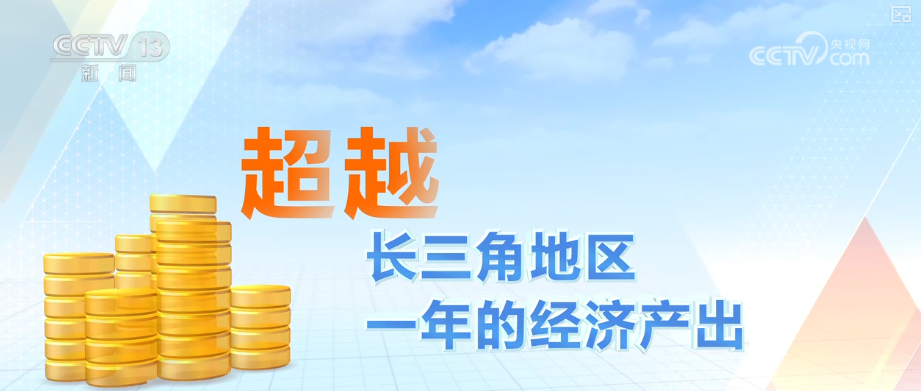
Economic Growth - During the "14th Five-Year Plan" period, China's economy is expected to reach approximately 140 trillion yuan by 2025, with an economic increment exceeding 35 trillion yuan, surpassing the annual economic output of the entire Yangtze River Delta region and exceeding the GDP of the world's third-largest economy [1] - The manufacturing industry's added value has consistently remained above 30 trillion yuan annually, maintaining China's position as the world's leading manufacturing power for 15 consecutive years [2] New Industries and Market Reforms - The "new economy" added value has surpassed 24 trillion yuan in 2024, equivalent to the combined GDP of Beijing, Shanghai, and Guangdong [4] - The government has cleared 4,218 regulations that hinder the establishment of a unified national market, reducing the market access negative list from 151 to 106 items [4] Investment and Infrastructure - By 2024, the proportion of market-oriented electricity transactions in total electricity consumption reached 63%, indicating a robust investment climate for private capital in nuclear power and industrial equipment [6] - A total of 102 major projects are expected to meet their planning goals by the end of 2025, with significant progress made on key infrastructure projects [6] Technological Advancements - In 2024, total R&D expenditure is projected to reach 3.6 trillion yuan, accounting for 2.68% of GDP, positioning China as the second-largest in the world for R&D investment [11] - The added value of high-tech manufacturing increased by 42% compared to the end of the "13th Five-Year Plan," while the core industries of the digital economy grew by 73.8%, contributing 10.4% to GDP [13] Innovation Ecosystem - China is forming a unique innovation ecosystem, with a focus on integrating technological and industrial innovation, and promoting a supportive environment for comprehensive innovation [14]
十组数据,见证“十四五”能源发展非凡成就!
Zhong Guo Dian Li Bao· 2025-07-10 01:38
Core Insights - The "14th Five-Year Plan" has achieved remarkable progress in energy development, with eight key indicators exceeding expectations [1] - The establishment of a national unified electricity market system marks a significant milestone in China's economic reform [3] - The comprehensive energy production capacity and efficiency have been optimized, contributing to the overall economic stability and growth [4] Energy Development Achievements - The national market-oriented electricity trading volume is projected to account for 63% of total electricity consumption by 2024 [2][4] - China's power generation capacity accounts for one-third of the global total, with energy self-sufficiency maintained above 80% [5][6] - Renewable energy generation capacity has more than doubled since the end of the "13th Five-Year Plan," reaching 2.09 billion kilowatts [10][11] Green Energy Transition - Each unit of electricity consumed now includes one-third from renewable sources, reflecting a significant shift towards cleaner energy [8][9] - The total number of electric vehicles in China is expected to reach 31.4 million by 2024, a fivefold increase from the end of the "13th Five-Year Plan" [21][22] - The energy consumption per unit of GDP has decreased by 11.6% over the past four years, equivalent to a reduction of 1.1 billion tons of carbon dioxide emissions [23][24] Infrastructure and Regional Development - China has built 44 ultra-high voltage transmission channels, enhancing energy distribution capabilities [16] - The northeastern region's crude oil production is projected to account for 21% of the national total by 2024, supporting energy security [14][15] - The economic output of the three major regions (Beijing-Tianjin-Hebei, Yangtze River Delta, Guangdong-Hong Kong-Macau Greater Bay Area) is expected to exceed 40% of the national total by 2024 [15]
我国持续推动创新势能向经济动能转化
Ke Ji Ri Bao· 2025-07-10 01:30
Core Viewpoint - China's economic strength has significantly increased over the past five years, with an average economic growth rate of 5.5% and an expected total economic volume of approximately 140 trillion yuan in 2023, reflecting a remarkable resilience amid various risks and challenges [1] Group 1: Economic Growth and Innovation - The "14th Five-Year Plan" emphasizes innovation as a crucial driver for economic development, with R&D expenditure increasing by nearly 50% compared to the end of the "13th Five-Year Plan," reaching 1.2 trillion yuan [1] - The number of global top 100 technology innovation clusters in China has reached 26, accounting for the highest share globally, with over 460,000 high-tech enterprises [1] Group 2: R&D Investment and Technological Breakthroughs - R&D investment is accelerating, with a projected 2024 R&D expenditure of 3.6 trillion yuan, representing 2.68% of GDP, and enterprises contributing over 77% of this investment [2] - Key core technologies are experiencing breakthroughs, such as a 72.6% increase in integrated circuit production in 2024, adding approximately 190 billion units [2] Group 3: Emerging Industries and Talent Development - Emerging industries are rapidly growing, with high-tech manufacturing value added expected to increase by 42% and the digital economy's core industries growing by 73.8%, reaching 10.4% of GDP [2] - China has the largest pool of human resources and R&D personnel globally, with over 5 million graduates in STEM fields annually, providing a solid foundation for technological breakthroughs [3] Group 4: Innovation Ecosystem - A unique Chinese innovation ecosystem is forming, with companies actively engaging in open-source ecosystems to promote technological innovation and application development [3] - The National Development and Reform Commission aims to implement an innovation-driven development strategy, integrating technology and industry innovation while fostering a supportive environment for comprehensive innovation [3]