
生猪养殖

Search documents
神农集团拟投5.5亿加速扩产 降本增效冲刺年产能350万头
Chang Jiang Shang Bao· 2025-06-23 23:30
Core Viewpoint - The company, Shennong Group, is accelerating its capacity expansion in response to the recovering pig market, with a planned investment of 550 million yuan to build three piglet breeding projects, aiming to increase annual output capacity by 870,000 piglets by 2026 [1][2]. Group 1: Investment and Capacity Expansion - Shennong Group announced an investment of 550 million yuan for three piglet breeding projects, which will add an annual output of 870,000 piglets [1][2]. - The projects include a 280 million yuan investment for a breeding base in Wenshan with an output of 450,000 piglets, a 150 million yuan investment for another base in Wenshan with an output of 240,000 piglets, and a 120 million yuan investment for a breeding base in Guangxi with an output of 180,000 piglets [2]. - The investment aligns with the company's strategic focus on the "Yunnan + Guangxi" dual-line strategy, enhancing its competitive advantage in the southwest region [2][3]. Group 2: Financial Performance - In Q1 2025, the company achieved revenue of 1.472 billion yuan, a year-on-year increase of 35.97%, and a net profit of 229 million yuan, a staggering increase of 6510.85% [1][5]. - The company’s revenue for 2024 was 5.584 billion yuan, reflecting a growth of 43.51%, with a net profit of 687 million yuan, up 271.16% [5]. - The increase in performance is attributed to both rising pig prices and effective cost control, with the average selling price of pigs increasing from 14.01 yuan/kg in March 2023 to 14.83 yuan/kg in March 2024 [5][6]. Group 3: Cost Control and Efficiency - The company has successfully reduced its breeding costs, with the total cost per kilogram dropping from 16.2 yuan in 2023 to below 14 yuan in 2024, and further down to 12.3 yuan in Q1 2025 [6]. - The company aims to achieve a target cost of 12 yuan/kg by 2025 through various strategies, including optimizing breeding genetics and enhancing herd health [6]. - Shennong Group's operational efficiency is supported by a complete industry chain, including feed processing, pig breeding, slaughtering, and food processing [2][3].

新希望:已走出低谷期 围绕降本增效做文章
Zhong Guo Zheng Quan Bao· 2025-06-23 20:25
Core Viewpoint - The company has returned to profitability in the first quarter after three years, focusing on its core businesses of feed and pig farming, and is optimistic about its overall development [1] Cost Reduction Efforts - The company is continuously optimizing pig farming costs, aiming for a cost of 12.5 yuan/kg by Q1 2025 and 12 yuan/kg by the end of 2024 for its top 25% production lines [1] - The company is shifting its focus from merely raising pigs to improving pig quality through genetic enhancements and has increased investments in breeding systems [1][2] Quality and Market Strategy - The company is exploring a full industry chain development model, establishing a meat quality laboratory to analyze consumer demand and optimize breeding and feeding strategies accordingly [2] - The company remains cautious about future pig prices, emphasizing cost management to maintain stable profits regardless of market fluctuations [2] Technological Advancements - The company is actively exploring the application of AI and digital technologies in pig farming to enhance efficiency and reduce costs [3] - Various digital tools, such as autonomous robots and handheld weight estimation devices, are being implemented to improve operational efficiency [3][4] International Feed Business Expansion - The feed business is a key growth driver, with overseas feed operations expected to become a significant growth segment, targeting a net profit of 9.7 billion yuan in 2024 [5] - The company plans to increase overseas feed production capacity by 3-4 million tons over the next 3-5 years, focusing on high-margin products and expanding in key international markets [5]

2025年生猪期货半年度行情展望:库存周期轮动,估值重置
Guo Tai Jun An Qi Huo· 2025-06-23 13:27
Report Industry Investment Rating No relevant content provided. Core Viewpoints of the Report - In 2025, the new industrial pattern is basically formed. Group companies continue the incremental trend, breeding port profits expand, some large - scale farms and individual farmers switch to the professional fattening mode, and flexibility is enhanced again. The dual - drive of raw materials and management leads to a further downward shift of the cost center. The supply increment in the first half of the year is not fully realized, and the social inventory is at a low level, in the inventory accumulation stage. In the second half of the year, the supply increment is gradually released, but the demand seasonally rebounds in the fourth quarter, in a stage of both supply and demand increase. The monthly supply change is relatively stable, and the inventory cycle rotation determines the price direction [2][40]. - The futures market has over - traded the multi - round inventory cycle in the distant future. As time approaches, both the supply data and the spot price center may falsify this expectation, and there may be an opportunity for re - evaluating the valuation. The industry is still in the profit stage, and the industry arranges hedging for the distant loss cycle according to the expected profit [3]. Summary by Relevant Catalogs 2025 H1 Review of Live Pig Futures and Spot Trends - The live pig futures and spot market in H1 2025 showed a reality repair after the expected over - reaction. The high profits in H2 2024 led to the expectation of large capacity increment in 2025, and each contract was anchored to the cost in advance. However, the low social inventory in Q1 and continuous high profits led to strong inventory accumulation space and willingness, and the supply increment was not effectively released [6]. - **Phase 1 (January - February)**: Weak expectation over - reaction, anchoring to cost. The market expected the industry to enter the production - increasing cycle in advance, and the January contract was once at a discount of nearly 3,000 yuan/ton to the spot. All contracts were priced based on the low - level cost [7]. - **Phase 2 (March - May)**: Reality was stronger, and the futures price recovered. After the Spring Festival, the social inventory and weight decreased. From February, the industry entered the stage of replenishing and accumulating inventory. The feed cost was low, and the group started the active weight - increasing trend. The low frozen - product inventory supported the off - season demand, and the futures price recovered [8]. - **Phase 3 (June)**: Policy influence increased volatility. The low - inventory and high - profit pattern in H1 led to strong inventory - accumulation persistence. The back structure of near - month contracts continued. The announcements of leading enterprises to reduce weight and ban secondary fattening intensified short - term volatility [9]. 2025 H2 Live Pig Operation Logic: Inventory Rotation, Valuation Reset Supply Side - **Supply Increment Trend in H2 is Certain**: The industry has been in continuous profit, and the production - increasing trend is hard to change. The increase in the number of fertile sows in 2024 indicates an increase in the supply of standard pigs in H2 2025. The expansion of the stocking group in H1 2025 also needs attention for the supply in H2 [13]. - **Monthly Standard Pig Supply is Relatively Stable**: The change in the industrial structure and the division of labor mode based on group advantages make the slaughter rhythm smoother. The proportion of small - scale farmers has been decreasing, while the proportion of large - scale enterprises has been increasing. Different groups have different advantages in breeding and fattening, and the division of labor is more refined [19]. - **Inventory Cycle Rotation has a Greater Impact on Quarterly Supply**: The speculation behavior of professional stocking and secondary fattening groups will have a more obvious impact on the supply rhythm. The inventory level is relatively high in H1 2025. The third quarter is expected to be in the de - stocking stage, and it is necessary to pay attention to whether the fat - to - standard price difference can drive the re - stocking in the fourth quarter [25]. Demand Side - **Total Pork Demand Increases Year - on - Year, and Demand Elasticity Strengthens**: The consumption of frozen products has shifted to fresh products, and the demand elasticity has increased. The slaughter volume in H1 2025 is significantly higher than that of the same period in 2024, and the consumption capacity has increased. The low frozen - product inventory stimulates the shift from frozen to fresh consumption, and the demand will still be supported in H2 [31]. - **The Seasonal Influence of Demand will Strengthen**: The consumption of live pigs still follows the seasonal law. The new industrial pattern makes the monthly supply rhythm smoother, and the influence of cross - month demand fluctuations on price will increase. The consumption in the peak season before the Spring Festival in 2026 is expected to increase by more than 30% compared with the third quarter [35]. - **The Cost Center Further Declines, and Bottom - Level Consumption is Supported**: The feed cost is low, and the management cost is optimized. The average cost of the live pig industry in H1 2025 is expected to decline to the range of 13 yuan/kg. If the pig price falls below the cost line, it may stimulate short - term consumption [39]. Conclusion and Investment Outlook Conclusion - Pay attention to the rotation rhythm of the inventory cycle. The supply increment in H1 2025 is not fully realized, and the industry is in the inventory accumulation stage. In H2, the supply increment is gradually released, and the demand seasonally rebounds in the fourth quarter. The inventory cycle rotation determines the price direction [40]. - **Supply Side**: The industry is in the profit stage in H1 2025, and there is no driving force for active capacity reduction. The supply in H2 is relatively excessive, and there is pressure in the centralized de - stocking stage. The supply of standard pigs from August to October 2025 is expected to be under greater pressure [41]. - **Demand Side**: The slaughter volume in H1 2025 is higher than that of the same period in 2024, and the real pork consumption is strong. In addition to regular demand, the speculative demand is also strong in 2025. The cost center further declines in H2, and there is still seasonal demand increment in the peak season, giving price elasticity [42]. Investment Outlook - The supply in H2 2025 will increase marginally, but the price center will be significantly lower than that of the same period in 2024. The core fluctuation range of the spot price in H2 is expected to be 12,000 - 17,000 yuan/ton. In the third quarter, the supply is relatively loose, and the core fluctuation range is expected to be 12,000 - 15,000 yuan/ton, with the futures index fluctuating between 12,000 - 14,500 yuan/ton. In the fourth quarter, if de - stocking is achieved in the third quarter, the peak price in the peak season can be expected, with the core fluctuation range of 14,000 - 17,000 yuan/ton and the futures index between 13,000 - 16,000 yuan/ton. The main trading logic in H2 2025 is the inventory cycle, and there may be an opportunity for re - evaluating the valuation. The industry should arrange hedging according to the expected profit [43].
政策引导下,猪价偏强震荡
Zheng Xin Qi Huo· 2025-06-23 11:41
1. Report Industry Investment Rating - Supply: Bullish [3] - Demand: Neutral [3] - Profit: Neutral [3] - Price and Volume: Neutral [3] - Strategy: Bullish [3] 2. Core View of the Report - In the short - term, the average weight of commercial pigs sold by sample breeding enterprises has decreased for two consecutive weeks, the standard - fat price difference is basically flat, and the proportion of large pigs sold has increased slightly [3] - After relevant meetings in May and June, the national policy aims to reduce the number of fertile sows by 1 million to 3.95 billion, optimize pig production, and guide the reduction of slaughter weight. The policy is a regulation for the entire pig - breeding industry, and leading enterprises have taken the lead in reducing the inventory of fertile sows and lowering weight [3] - In early June, there was the first real - sense domestic frozen pork purchase in the central reserve this year. Policy regulation has a short - term positive impact on market sentiment, but long - term effects depend on policy implementation [3] - Self - breeding and self - raising profits are near the break - even point, and the pig - grain ratio is at the average level of the same period in the past four years. The downward space of futures is limited due to the small premium of the basis [3] - The near - far spread of live hog futures is in a narrow - range shock, and the net short position of institutional investors in the main contract of live hog futures is in a shock state [3] - Under policy guidance, it is more likely that live hog prices will remain stable in the next 2 - 3 months. Operators should dynamically construct a bull spread for the September contract of live hogs [3] 3. Summary by Relevant Catalogs Price and Volume Analysis - It includes analysis of live hog spot price, basis, spread, and futures institutional net position. Data sources are Wind and the research institute of Zhengxin Futures [4][7][10][13] Supply Analysis - It covers the inventory of fertile sows, piglet supply, live hog slaughter, and standard - fat price difference. Data sources are the Ministry of Agriculture and Rural Affairs, Wind, and Mysteel [16][19][23][27] Demand Analysis - It involves live hog slaughter, frozen product inventory, and substitutes. Data sources are Mysteel and the Ministry of Agriculture and Rural Affairs [29][32][36] Profit Analysis - It includes breeding profit and pig - grain ratio. Data source is Mysteel [39][42]
“养猪成本10元/公斤时代不会太远” 对话牧原股份董秘秦军,猪企“出海”为何选择技术输出
Mei Ri Jing Ji Xin Wen· 2025-06-23 08:49
Group 1: Core Views - The core focus of Muyuan Foods is on internationalization, with plans for an IPO in Hong Kong and collaborations with Vietnamese companies [1][2] - The purpose of the Hong Kong IPO is to enhance the company's credibility in the global market rather than to raise funds due to a lack of capital [1][3][7] - The company aims to leverage its experience from the African swine fever crisis to achieve excess returns in overseas markets [1][8] Group 2: IPO Strategy - Muyuan Foods submitted its H-share application to the Hong Kong Stock Exchange on May 27, with the IPO expected to occur in the fourth quarter of this year [2][3] - The company emphasizes that completing the IPO is more important than the amount of funds raised, as it will facilitate international business development [5][7] - The IPO proceeds will be used for international sourcing, talent acquisition, and partnerships with leading overseas companies [7] Group 3: Industry Insights - The current characteristics of the pig cycle are described as "weak cycle, narrow fluctuations, and slow changes," indicating a shift in market dynamics [17][18] - The company believes that the cost of pig farming can be reduced to around 10 yuan per kilogram, with current costs at 12.2 yuan per kilogram [20] - The focus on cost reduction is primarily driven by disease prevention, with smart technology playing a crucial role in this effort [20] Group 4: Technological Advancements - Muyuan Foods is investing in artificial intelligence and digitalization to enhance operational efficiency, aiming for a future of 24-hour unmanned operations [14][16] - The company is exploring overseas markets by exporting advanced equipment and technology, with Vietnam being the first target [8][11] - The revenue from smart equipment is currently low but is expected to grow significantly as the company expands its technological capabilities [10]



5月份以来全国生猪市场供应充裕 价格波动幅度收窄
Yang Shi Wang· 2025-06-23 06:36
Core Insights - The overall supply of pigs in the market is sufficient, leading to a slight decline in pig prices since May, with the average price at 15 yuan per kilogram, down 1.3% month-on-month and 3.7% year-on-year [3] - The Agricultural and Rural Affairs Department has successfully narrowed the price fluctuations of pigs since implementing counter-cyclical production capacity adjustments in 2021, with the maximum price difference decreasing significantly from previous years [3] - As of the end of May, the number of breeding sows in the country was 40.42 million, a decrease of 380,000 from the peak at the end of last year [3] Industry Analysis - The pig farming industry is currently operating at a marginal profit level, with farmers employing strategies such as differentiated breeding and cost management to cope with market fluctuations [5][7] - In May, the average profit per pig sold was 76 yuan, marking a continuous profit streak for 13 months, which is an unprecedented long profit period in the industry [7] - The Agricultural and Rural Affairs Department plans to enhance market warning information dissemination and guide farmers to adjust their production in response to market conditions [5]
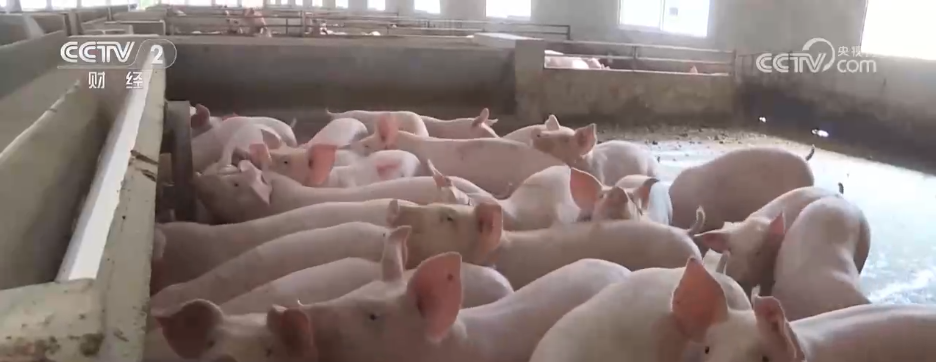
市场需求疲软猪价6月先跌后涨 三季度养殖盈利有望环比增加
Zheng Quan Shi Bao Wang· 2025-06-23 04:47
Core Viewpoint - The domestic pig market is experiencing fluctuations, with prices showing a recent rebound after a period of decline, but overall demand remains weak, leading to concerns about future price stability [1][3][5] Group 1: Market Trends - As of June 23, the main contract for live pig futures reached 13,975 yuan/ton, up nearly 5% from the low of 13,350 yuan/ton at the beginning of the month [1] - The overall price of live pigs has been on a downward trend since the third quarter of 2024, currently at relatively low levels [1] - The average price of live pigs nationwide rose to 14.22 yuan/kg by June 20, following a drop to 13.94 yuan/kg on June 9 [1] Group 2: Supply and Demand Dynamics - The demand for live pigs has weakened, leading to an oversupply situation that has caused prices to drop significantly [1][3] - The average trading price for 7 kg piglets in Hunan fell to 460 yuan/head by June 19, a decrease of 85 yuan/head or 15.6% since early May [2] - The increase in feed costs, particularly for corn and soybean meal, has further pressured the profitability of pig farming [3] Group 3: Profitability and Cost Analysis - As of June 19, the average profit for self-breeding pigs was 137.93 yuan/head, down 66.12 yuan/head from early April, while the profit for piglets was 153.42 yuan/head, down 151.05 yuan/head [3] - The average feed cost for self-breeding pigs was 934.88 yuan, and for piglet fattening, it was 889.94 yuan, both showing increases from early April [3] Group 4: Slaughtering Trends - The daily slaughter volume for sample enterprises remained stable, with a range between 165,000 to 186,000 heads, influenced by increased supply and the profitability of fresh meat segmentation [4] - The average gross profit per head for slaughtering was 28.56 yuan, up 222.38% compared to the same period last year [4] Group 5: Future Outlook - The market is expected to face continued downward pressure on prices due to increased slaughtering rates and weak demand, although there are signs of improved market sentiment [5] - The third quarter may see a seasonal decline in pig stocks, potentially supporting higher average prices compared to the second quarter [4]
国联民生证券:把握生猪产能优化与新消费背景下的结构性机会
智通财经网· 2025-06-23 04:01
Group 1: Swine Industry - The swine industry is expected to maintain growth in hog output until at least September 2025, but overall hog prices are projected to remain under pressure, leading to a potential decline in profitability for the industry [1] - The number of breeding sows has started to decline since December 2024, with a slight increase in February 2025, and a 1.03% decrease in April 2025 compared to the peak in 2024, indicating a low overall capacity reduction in the industry [1] - The price of piglets has begun to decline since May 2025, which may prompt breeding farms to actively cull sows, leading to an expected simultaneous drop in hog and piglet prices in the second half of the year [1] Group 2: Feed Industry - China's feed production reached 10.3 million tons from January to April 2025, a year-on-year increase of 11%, driven by the recovery in hog stocks, increased aquaculture, and stable poultry stocks [2] - Vietnam's animal feed production also saw growth, with a total output of 4.72 million tons (up 7.69% year-on-year) and aquaculture feed production of 2.84 million tons (up 8.37% year-on-year), indicating a robust demand for feed [2] - The growth in livestock and aquaculture stocks, along with increased feed penetration rates, suggests that Chinese feed companies are likely to experience good growth opportunities abroad [2] Group 3: Pet Industry - The export of pet food from China has been growing, with a total export volume of 110,200 tons from January to April 2025, representing a year-on-year increase of 16%, and an export value of 3.22 billion yuan, up 6% [3] - Domestic consumption of pet food remains strong, with online sales of cat and dog food reaching 9.05 billion yuan from January to April 2025, reflecting a year-on-year increase of 17% [3] - The chain rate of pet hospitals in China is still relatively low compared to developed countries, indicating potential for improvement in this area [3]
农林牧渔行业周报第19期:情绪支撑,猪价重心上移-20250623
HUAXI Securities· 2025-06-23 03:28
Investment Rating - The industry rating is "Recommended" [3] Core Insights - The report highlights that the sentiment in the pork market is supporting an upward shift in pork prices, with the average price for external three-line pigs at 14.20 CNY/kg, reflecting a week-on-week increase of 1.43% [2][12] - The report emphasizes the importance of increasing soybean and oilseed production, with a focus on enhancing yield through advanced agricultural practices and the promotion of genetically modified varieties [1][11] - The report suggests that while short-term consumer demand is recovering, supply remains relatively loose, but medium to long-term projections indicate that pork prices may exceed expectations in the second half of 2025 due to slow recovery in production capacity [2][12] Summary by Sections Planting Industry Chain - The Ministry of Agriculture and Rural Affairs held a meeting to discuss the production and demand situation for soybeans and oilseeds, emphasizing the need to enhance production capacity and implement key measures for yield improvement [1][11] - The report identifies potential beneficiaries in the planting sector, including Beidahuang and Suqian Agricultural Development, and recommends companies with a strong first-mover advantage in the seed industry such as Dabeinong and Longping High-Tech [1][11] Swine Farming - The average price of external three-line pigs is reported at 14.20 CNY/kg, with a significant increase in slaughter volume and consumer demand noted [2][12] - The report indicates that the number of breeding sows has decreased slightly, and the profitability of self-breeding operations has turned positive, suggesting a potential for recovery in the swine sector [2][12] - Recommended stocks in the swine farming sector include companies like Muyuan Foods, Wens Foodstuff Group, and DeKang Agriculture [2][12] Key Agricultural Product Data Tracking - Corn: The average price is 2412.94 CNY/ton, with a week-on-week increase of 0.54% [26] - Wheat: The average price is 2440.61 CNY/ton, with a week-on-week increase of 0.46% [29] - Soybeans: The average price is 3946.32 CNY/ton, with a week-on-week increase of 0.21% [40] - Cotton: The average price is 14760.00 CNY/ton, with a week-on-week increase of 0.15% [45] Feed and Vitamin Prices - The average price of pig feed is reported at 2.69 CNY/kg, with a week-on-week increase of 0.75% [51] - Vitamin E prices have decreased by 10.02% to 80.80 CNY/kg [51][59]


重申持续推荐宠物和生猪板块
2025-06-23 02:09
Summary of Conference Call Records Industry Overview - The conference call discusses the **pet food** and **swine** industries, focusing on market dynamics, policy impacts, and investment strategies related to these sectors [1][2][3]. Key Points on the Swine Industry - The **National Development and Reform Commission** and the **Ministry of Agriculture and Rural Affairs** have introduced policies aimed at reducing production capacity to boost pig prices and stimulate consumption, similar to the environmental policies of 2015-2016 [1][4]. - Current valuations in the swine sector are low, with recommendations to focus on companies with low costs, low debt ratios, and high growth rates, such as **Muyuan Foods** and **Wens Foodstuff Group** as leading targets, along with **Shennong Group** and **Juxing Agriculture** as secondary targets [1][5]. - The swine sector is at a turning point in both fundamentals and policies, with expectations of increased market pressure from the scale of pig output and secondary fattening practices [2]. - Historical context shows that the swine industry experienced a 25% reduction in production capacity during the 2015-2016 environmental policy period, and current policies are shifting back to capacity constraints to enhance consumption [3]. Key Points on the Pet Food Industry - By 2025, the pet food market is expected to see a rise in domestic brands, with **Xianlang** and **Mafudi** leading the market, while foreign brands like **Royal Canin** and **Natural Balance** still hold significant market shares [1][7]. - High-end product lines in the pet food market, such as baked and dehydrated foods, are growing rapidly, with **Fleegat** showing exceptional performance [1][9]. - Consumer preferences are shifting towards precise feeding functions, allowing domestic brands to compete effectively against foreign brands due to better cost-performance ratios [1][9]. - Data from **JD.com** indicates that **Royal Canin** and **Mafudi** lead in both cat and dog food markets, with other brands like **Netease Yanxuan** and **Fleegat** also performing well [1][9]. - The market is witnessing a trend towards high-end products, with significant growth in premium offerings compared to traditional puffed foods [9]. Additional Insights - Companies attempting to enter the pet food market, such as **Three Squirrels** and **Yili**, have struggled due to a lack of understanding of consumer needs and the inherent differences between human and pet food [3][11]. - Consumer behavior during the **618 shopping festival** showed a shift towards rational consumption, with increased focus on precise feeding and higher expectations for product formulations [12]. - The overall performance of leading companies in the pet food sector is expected to remain strong, with high-end products contributing significantly to revenue growth [10][12].