
光伏设备及元器件制造

Search documents
最新公布!核心CPI温和上涨
Zhong Guo Zheng Quan Bao· 2026-02-11 05:40
服务价格上涨0.1%,影响CPI同比上涨约0.05个百分点,对CPI同比的上拉影响比上月减少约0.2个百分点。服务中,飞机票、旅行社收费和家政服务价格 分别下降14.3%、7.7%和3.5%,三项合计影响CPI同比下降约0.16个百分点,而上月其对CPI同比影响为上拉约0.04个百分点。 国家统计局2月11日发布的数据显示,1月份,居民消费需求持续恢复,居民消费价格指数(CPI)环比上涨0.2%,同比上涨0.2%,扣除食品和能源价格的 核心CPI同比上涨0.8%;工业生产者出厂价格指数(PPI)环比上涨0.4%,同比下降1.4%。 核心CPI保持温和上涨 1月CPI同比上涨0.2%,涨幅有所回落。对此,国家统计局城市司首席统计师董莉娟认为,主要受春节错月影响。上年1月份为春节月份,食品和部分服务 价格上涨较多,导致上年同期对比基数较高,带动1月同比涨幅回落较多。 图片来源:国家统计局 分类别看,食品价格下降0.7%,影响CPI同比下降约0.11个百分点,而上月对CPI的影响为上拉约0.21个百分点。食品中,鲜菜价格上涨6.9%,涨幅比上月 回落11.3个百分点,对CPI同比的上拉影响比上月回落约0.27个百分 ...

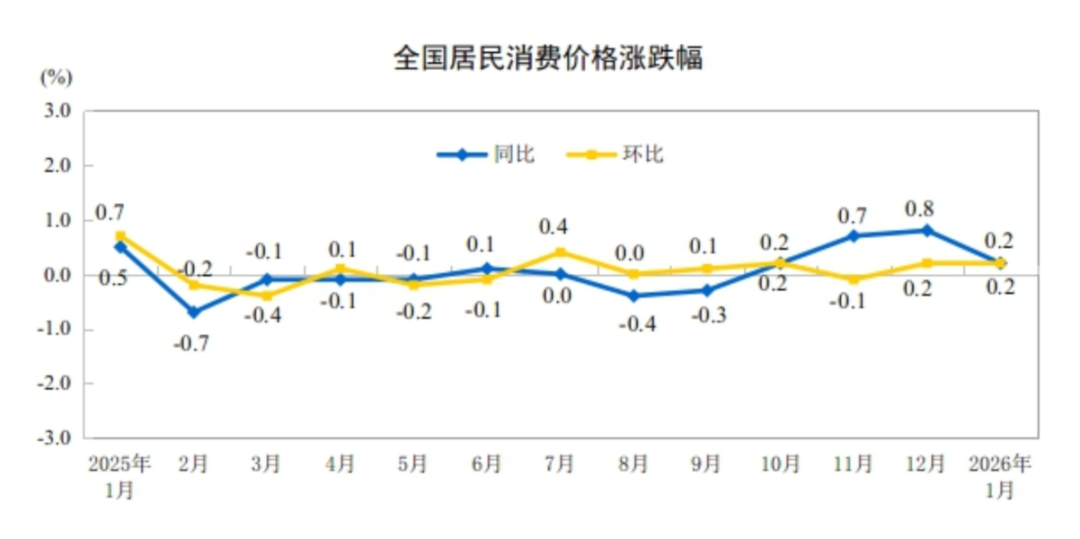
国家统计局:1月CPI同比上涨0.2%,PPI环比上涨0.4%,涨幅比上月扩大0.2个百分点
Jin Rong Jie· 2026-02-11 02:38
据国家统计局,1月份,居民消费需求持续恢复,居民消费价格指数(CPI)环比上涨0.2%,同比上涨0.2%,扣除食品和能源价格的核心CPI同比上涨0.8%。 受全国统一大市场建设持续推进、部分行业需求增加及国际大宗商品价格传导等因素影响,工业生产者出厂价格指数(PPI)环比上涨0.4%,同比下降 1.4%。 一、CPI同比涨幅回落主要受春节错月影响,核心CPI保持温和上涨 CPI同比涨幅有所回落,主要有以下两方面原因:一是春节错月影响。上年1月份为春节月份,食品和部分服务价格上涨较多,导致上年同期对比基数较 高,带动本月同比涨幅回落较多。分类别看,食品价格下降0.7%,影响CPI同比下降约0.11个百分点,而上月对CPI的影响为上拉约0.21个百分点。食品中, 鲜菜价格上涨6.9%,涨幅比上月回落11.3个百分点,对CPI同比的上拉影响比上月回落约0.27个百分点;鲜果价格上涨3.2%,涨幅比上月回落1.2个百分点; 猪肉和鸡蛋价格分别下降13.7%和10.6%。服务价格上涨0.1%,影响CPI同比上涨约0.05个百分点,对CPI同比的上拉影响比上月减少约0.20个百分点。服务 中,飞机票、旅行社收费和家政服务 ...
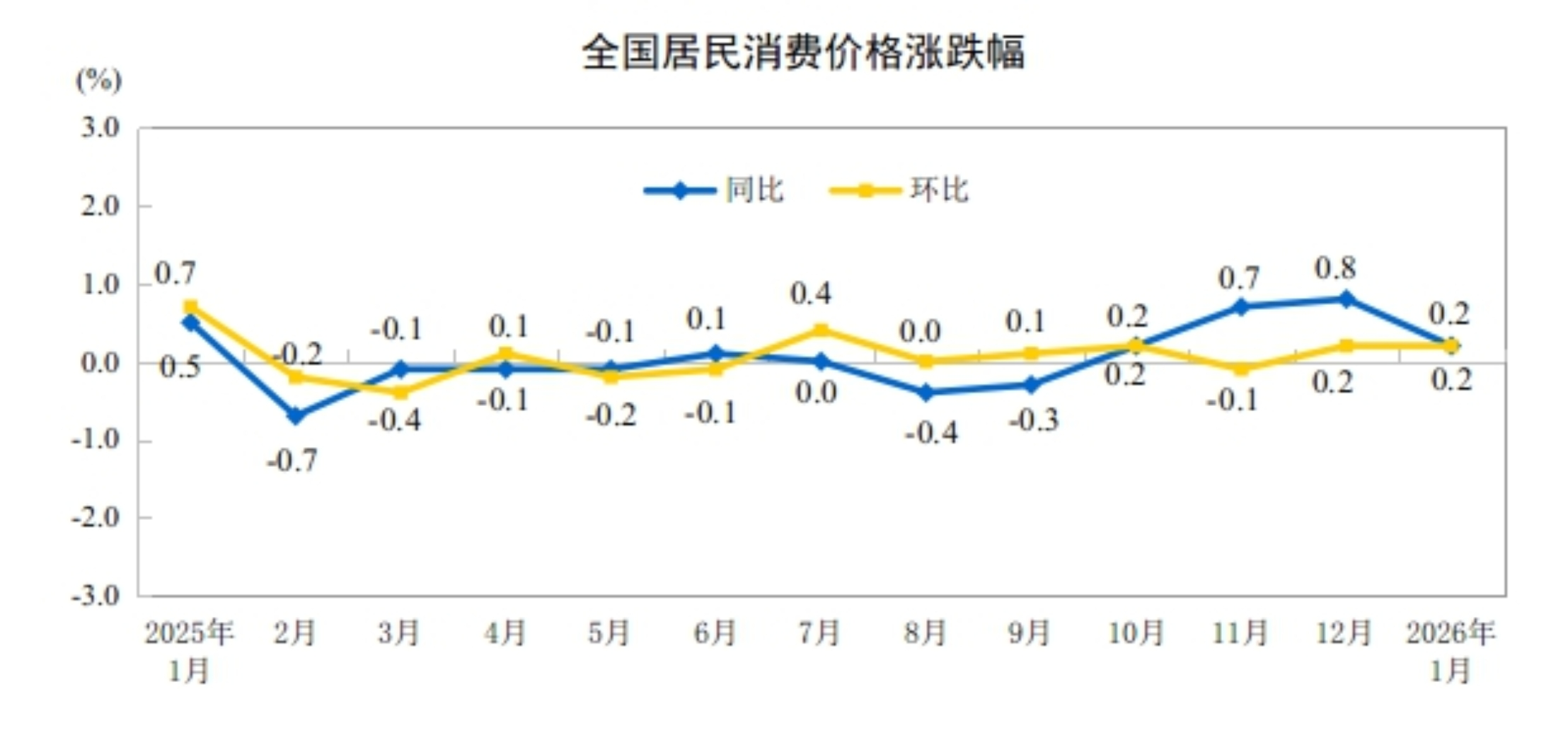
CPI同比涨幅回落主要受春节错月影响,核心CPI保持温和上涨
Sou Hu Cai Jing· 2026-02-11 02:12
一、CPI同比涨幅回落主要受春节错月影响,核心CPI保持温和上涨 CPI同比涨幅有所回落,主要有以下两方面原因:一是春节错月影响。上年1月份为春节月份,食品和 部分服务价格上涨较多,导致上年同期对比基数较高,带动本月同比涨幅回落较多。分类别看,食品价 格下降0.7%,影响CPI同比下降约0.11个百分点,而上月对CPI的影响为上拉约0.21个百分点。食品中, 鲜菜价格上涨6.9%,涨幅比上月回落11.3个百分点,对CPI同比的上拉影响比上月回落约0.27个百分 点;鲜果价格上涨3.2%,涨幅比上月回落1.2个百分点;猪肉和鸡蛋价格分别下降13.7%和10.6%。服务 价格上涨0.1%,影响CPI同比上涨约0.05个百分点,对CPI同比的上拉影响比上月减少约0.20个百分点。 服务中,飞机票、旅行社收费和家政服务价格分别下降14.3%、7.7%和3.5%,三项合计影响CPI同比下 降约0.16个百分点,而上月其对CPI同比影响为上拉约0.04个百分点。二是国际油价变动导致能源价格 降幅扩大。1月份能源价格下降5.0%,影响CPI同比下降约0.34个百分点,对CPI同比的下拉影响比上月 增加约0.06个百分点,其 ...
国家统计局解读2026年1月份CPI和PPI数据
Guo Jia Tong Ji Ju· 2026-02-11 01:43
Group 1 - The Consumer Price Index (CPI) increased by 0.2% month-on-month and year-on-year, while the core CPI, excluding food and energy, rose by 0.8% year-on-year [1][2] - The decline in food prices, particularly fresh vegetables and pork, contributed to a decrease in the CPI's year-on-year growth rate, with fresh vegetable prices rising by 6.9% and pork prices falling by 13.7% [1][2] - Energy prices decreased by 5.0% in January, impacting the CPI negatively by approximately 0.34 percentage points, with gasoline prices down by 11.4% year-on-year [1][2] Group 2 - The Producer Price Index (PPI) rose by 0.4% month-on-month, marking the fourth consecutive month of increase, with a narrowing year-on-year decline of 1.4% [2][3] - The increase in PPI was driven by the ongoing development of a unified national market, leading to price rises in sectors such as cement manufacturing and lithium-ion battery production [2][3] - Input factors influenced the price trends in domestic non-ferrous metals and petroleum-related industries, with non-ferrous metal mining prices increasing by 22.7% year-on-year [3][4]
国家统计局城市司首席统计师董莉娟解读2026年1月份CPI和PPI数据
Guo Jia Tong Ji Ju· 2026-02-11 01:39
2026年1月份CPI同比上涨 PPI同比降幅收窄 1月份,居民消费需求持续恢复,居民消费价格指数(CPI)环比上涨0.2%,同比上涨0.2%,扣除 食品和能源价格的核心CPI同比上涨0.8%。受全国统一大市场建设持续推进、部分行业需求增加及国际 大宗商品价格传导等因素影响,工业生产者出厂价格指数(PPI)环比上涨0.4%,同比下降1.4%。 一、CPI同比涨幅回落主要受春节错月影响,核心CPI保持温和上涨 CPI同比涨幅有所回落,主要有以下两方面原因:一是春节错月影响。上年1月份为春节月份,食 品和部分服务价格上涨较多,导致上年同期对比基数较高,带动本月同比涨幅回落较多。分类别看,食 品价格下降0.7%,影响CPI同比下降约0.11个百分点,而上月对CPI的影响为上拉约0.21个百分点。食品 中,鲜菜价格上涨6.9%,涨幅比上月回落11.3个百分点,对CPI同比的上拉影响比上月回落约0.27个百 分点;鲜果价格上涨3.2%,涨幅比上月回落1.2个百分点;猪肉和鸡蛋价格分别下降13.7%和10.6%。服 务价格上涨0.1%,影响CPI同比上涨约0.05个百分点,对CPI同比的上拉影响比上月减少约0.20个百分 ...
国家税务总局:“十四五”新能源整车制造销售收入年增30%
Cai Jing Wang· 2026-02-10 03:34
Group 1 - The core viewpoint of the article highlights the continuous optimization of industrial and energy structures in China during the "14th Five-Year Plan" period, with significant growth in green product manufacturing and technology services [1] Group 2 - The sales revenue of key green product manufacturing industries, including new energy vehicles, photovoltaic equipment and components, lithium-ion batteries, and solar appliances, has an average annual growth rate exceeding 30% [1] - The sales revenue of green technology service industries, such as new energy, energy-saving, and environmental protection, has average annual growth rates of 51.1%, 28.5%, and 18.2% respectively [1]
浙江棒杰控股集团股份有限公司关于法院裁定受理申请人对子公司重整申请的公告
Shang Hai Zheng Quan Bao· 2026-02-02 19:14
Core Viewpoint - Zhejiang Bangjie Holdings Group Co., Ltd. and its subsidiary, Yangzhou Bangjie New Energy Technology Co., Ltd., are undergoing a pre-restructuring process due to financial difficulties, initiated by a creditor's application for bankruptcy restructuring [2][6]. Group 1: Bankruptcy Restructuring Process - On September 4, 2025, the company disclosed that Yangzhou Bangjie received a notice from the court regarding a creditor's application for pre-restructuring due to its inability to repay debts [2]. - The court accepted the pre-restructuring application on September 16, 2025, and appointed a management team for the restructuring process on November 18, 2025 [2][3]. - The court officially accepted the restructuring application on January 30, 2026, but has not yet appointed a manager for the process [3][6]. Group 2: Financial Obligations and Risks - Yangzhou Bangjie has a financial liability exposure of approximately 630 million yuan, with all financial liabilities guaranteed by the company, posing a risk of fulfilling these obligations [10]. - The company has invested 505 million yuan directly and indirectly in Yangzhou Bangjie, which may lead to risks of unrecoverable investments due to the restructuring [10]. - The company is also a significant creditor, having provided around 650 million yuan in financial support to Yangzhou Bangjie, which may result in risks of uncollectible receivables [11]. Group 3: Impact on Business Operations - Yangzhou Bangjie is a core subsidiary and an important operational platform for the company's photovoltaic business; successful restructuring could improve the company's financial structure [10]. - The ongoing restructuring process may negatively impact the company's seamless clothing business, which has historically generated significant revenue [14]. - The company is closely monitoring the restructuring developments and will disclose relevant information as required [14].

五年跃升41.4% 全市电力消费“量质齐升”
Hang Zhou Ri Bao· 2026-02-02 03:27
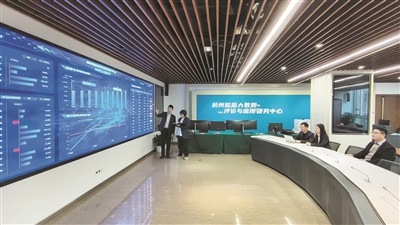
Core Insights - Hangzhou's total electricity consumption is projected to reach 114.25 billion kWh by 2025, marking a 6.5% year-on-year increase and a 41.4% increase compared to 2020, positioning it as the second provincial capital city in China to exceed 100 billion kWh in electricity consumption [3][4] Group 1: Electricity Consumption Trends - The electricity consumption structure in Hangzhou is undergoing significant transformation during the 14th Five-Year Plan period, with emerging manufacturing and service industries becoming the main growth drivers [3] - By 2025, the electricity consumption shares of the primary, secondary, and tertiary industries, as well as residential use, are expected to be 0.5%, 42.7%, 35.8%, and 21% respectively, with the tertiary industry's share increasing by 7.8 percentage points since 2020 [3][4] - The secondary industry's electricity consumption remains the highest, but its growth is shifting from high energy consumption to high-tech driven [3] Group 2: Manufacturing and Service Sector Developments - The high-end, intelligent, and green transformation in the manufacturing sector is particularly notable, with manufacturing electricity consumption expected to account for 36.7% of total electricity by 2025, reflecting a 3.1% year-on-year increase [4] - High-end manufacturing sectors such as computer communication, pharmaceutical manufacturing, and aerospace are experiencing double-digit growth in electricity consumption, while the electric vehicle manufacturing sector is projected to grow by 17.1% [4] - The productive service sector's electricity consumption is expected to account for 18.6% of total consumption, with a year-on-year growth of 10.4% and a 78.6% increase since 2020 [4] Group 3: Emerging Sectors and Innovations - The internet data service sector, driven by artificial intelligence, is witnessing explosive growth, with electricity consumption increasing by 159.6% year-on-year and 25.5 times since 2020 [4] - The consumption of electricity in the consumer service sector is projected to account for 17% of total consumption, with a year-on-year increase of 9.8% and an 84.2% increase since 2020 [4] - The charging and swapping service sector for electric vehicles is expected to see a 41.5% year-on-year increase in electricity consumption by 2025, with a staggering 650% increase since 2020 [5] Group 4: Infrastructure and Future Outlook - By 2025, Hangzhou is expected to have built 5,011 charging stations, with total charging volume reaching 2.077 billion kWh, a 49.7% year-on-year increase [5] - The changes in electricity consumption patterns will provide robust data support and practical guidance for Hangzhou's new energy system construction and the development of advanced manufacturing clusters during the 15th Five-Year Plan period [5]
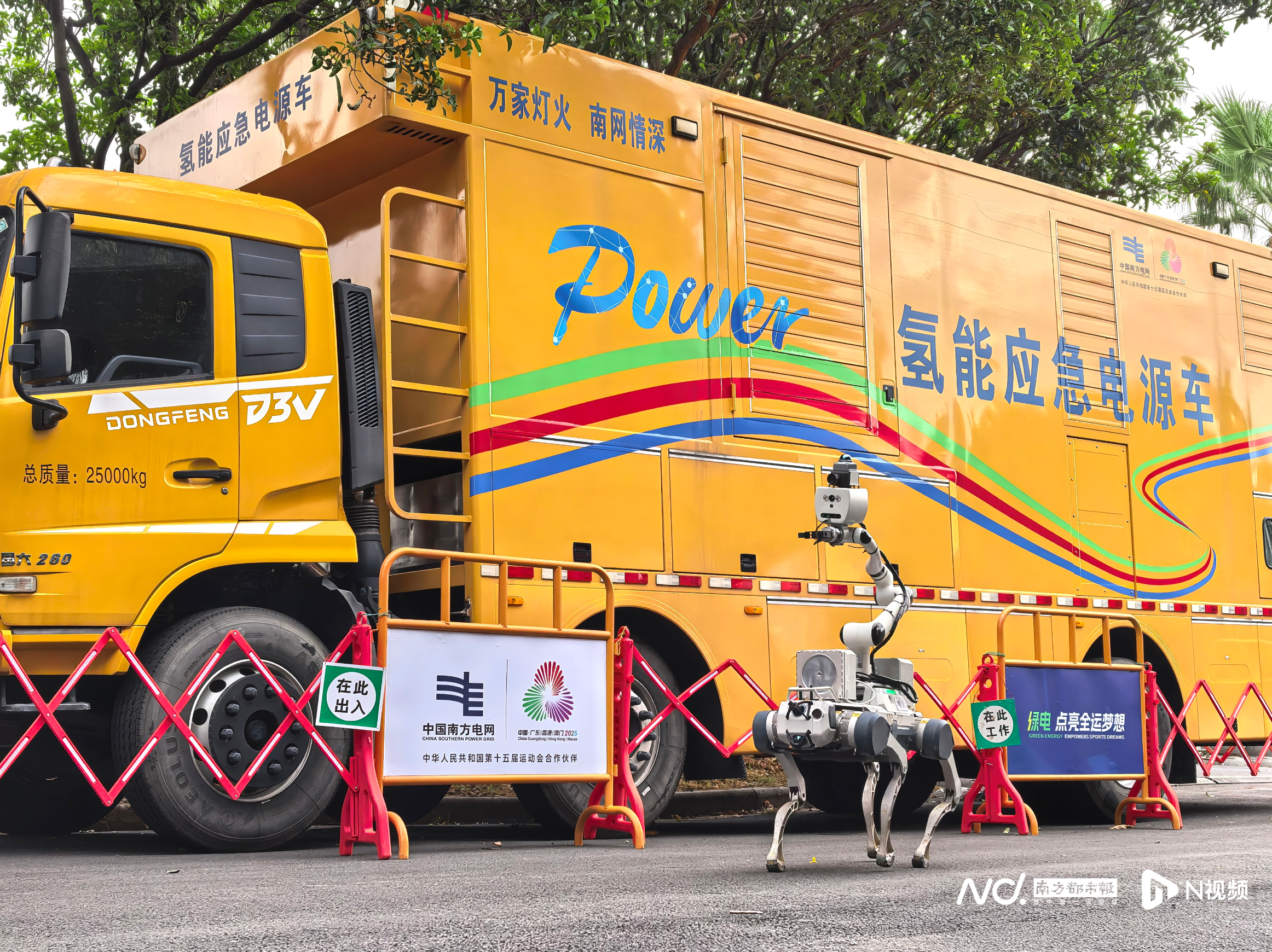
2025年广州新能源车整车制造业用电量增速超70%
Nan Fang Du Shi Bao· 2026-01-21 05:48
Group 1 - The total electricity consumption in the Southern Power Grid region is projected to reach 1.7994 trillion kilowatt-hours by 2025, marking a year-on-year growth of 5.4% and a 37.8% increase compared to the end of the 13th Five-Year Plan in 2020 [1] - Green electricity is becoming a significant aspect, with one out of every two kilowatt-hours consumed being green electricity, and the carbon emissions per kilowatt-hour decreasing from 0.36 kg in 2020 to 0.33 kg [1] - The electricity consumption growth in Guangdong's high-tech and equipment manufacturing industry is notable, with a year-on-year increase of 6.65%, particularly in the automotive manufacturing and electronics sectors, which saw growth rates of 12.66% and 8.57% respectively [1] Group 2 - The modern service industry in the Southern Power Grid region is experiencing a recovery, with electricity consumption increasing by 6.2% year-on-year, and production and life service sectors growing by 8.3% and 8.7% respectively [4] - The emerging digital economy is showing strong growth, with the information transmission, software, and IT services sector's electricity consumption rising by 14.1%, and internet data services soaring by 55.2% [4] - The "East Data West Computing" strategy is advancing, with Guangdong's 307 data centers consuming over 10.9 billion kilowatt-hours in 2025, a year-on-year increase of 28.58%, and the Guizhou internet data service consumption skyrocketing by 95.01% [4]
从“10万亿千瓦时”感受动能之变
Xin Hua Ri Bao· 2026-01-20 22:11
Group 1 - The core viewpoint of the articles highlights that China's total electricity consumption is projected to exceed 10 trillion kilowatt-hours by 2025, marking a significant milestone in the country's power development and reflecting the new momentum of high-quality economic growth [1][2][3] - The rapid increase in electricity consumption from 5 trillion to 10 trillion kilowatt-hours in just 10 years is unprecedented among major global economies, showcasing China's unique advantages in its vast market [1] - The structure of electricity consumption is shifting, with a notable increase in demand from high-value-added and technology-intensive industries, while traditional high-energy-consuming sectors are experiencing slower growth [1][2] Group 2 - Emerging green industries such as electric vehicles and photovoltaic equipment manufacturing are driving substantial growth in electricity consumption, leading to an optimization of both electricity consumption and economic structure [2] - The growth in electricity consumption is also being fueled by the rise of high-tech manufacturing and new service industries, indicating a significant acceleration in the transformation of economic drivers [2] - The increasing electrification in daily life, including the rise of smart appliances and renewable energy applications, reflects the ongoing improvement in electricity services and the enhancement of quality of life [3]