
高端制造

Search documents
外资看好中国资产:A股步入“慢牛”新阶段
Jiang Nan Shi Bao· 2026-02-25 02:46
2026年是"十五五"开局之年,中国经济步入新发展阶段。 展望2026年,权益市场整体走向如何?A股突破关键点位后动能是否充足?外资何时回流超配?还有哪 些方向值得投资者去挖掘? 2026年伊始,6家外资机构做客智通财经"春水向东流——《首席连线》2026年市场展望"专题把脉马年 投资,多家外资机构人士普遍认为,A股已进入"慢牛"阶段,投资逻辑正从"估值修复"转向"盈利主 导",人工智能成为一致看好的核心赛道。 A股从估值修复转向盈利主导 对于2026年A股市场的整体判断,接受采访的外资机构普遍持乐观态度,认为A股已进入"慢牛"新阶 段,市场驱动逻辑正在发生深刻转变。 摩根士丹利预计2026年沪深300指数盈利增长率将达6%-7%,支撑这一判断的关键因素包括:上市公司 持续加大研发创新与资本开支投入,在 人工智能、高端制造等领域保持全球竞争优势;房地产市场企稳与消费增长加速的拐点有望出现,带动 相关行业盈利改善;财政政策与货币政策的多重支持,将进一步助力盈利增速攀升等。 富达基金股票部负责人周文群则预判,2026年下半年可能出现风格切换,"宏观基本面在经历了过去两 到三年的消化之后,我们可能会看到一些传统板块 ...


去年江苏发明专利授权量居全国第二
Xin Hua Ri Bao· 2026-02-24 21:20
分析授权发明专利技术领域,可发现我省"科技创新赋能产业发展"的鲜明特点。计算机技术、电机、电 气装置、电能等六大领域的专利占比合计超50%,这些领域既是2025年全国发明专利授权的重点领域, 也是江苏高端制造、绿色低碳等产业的核心赛道。其中,计算机技术领域的专利布局,助力人工智能、 大数据等技术与实体经济深度融合;电机、电气装置等领域的专利积累,支撑新能源、高端装备等产业 突破;化学工程领域的专利则为生物医药、新材料等产业提供了技术保障,进一步夯实了全省产业核心 竞争力。 本报讯(记者蔡姝雯)记者近日从省知识产权保护中心获悉,2025年,江苏发明专利授权量11.69万件,居 全国第二,占全国总量的12.95%。其中,企业发明专利授权量达8.63万件,占全省总量的73.79%,充分 发挥了企业的创新主体作用;大专院校和科研机构分别贡献2.53万件和0.33万件授权专利,占全省总量 的21.66%和2.83%,是基础研究、前沿技术探索的重要力量。 ...
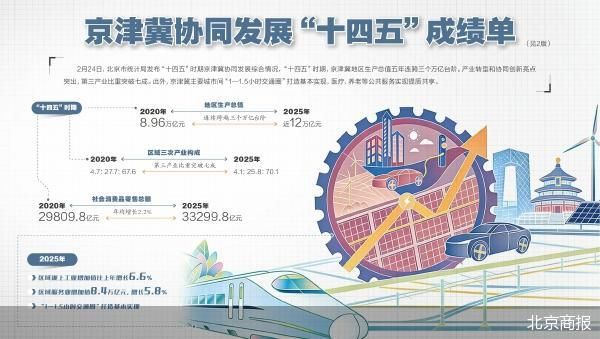
解构京津冀协同发展的“十四五”答卷
Bei Jing Shang Bao· 2026-02-24 16:56
Economic Growth - The GDP of the Beijing-Tianjin-Hebei region is projected to increase from 8.96 trillion yuan in 2020 to nearly 12 trillion yuan by 2025, crossing three trillion yuan milestones [1][3] - The average annual growth rates for the three areas during the "14th Five-Year Plan" period are expected to be 5.2% for Beijing, 4.4% for Tianjin, and 5.4% for Hebei [3] Industrial Transformation - The proportion of the tertiary industry in the region has surpassed 70%, with the three industries' structure changing from 4.7:27.7:67.6 in 2020 to 4.1:25.8:70.1 by 2025 [6] - The added value of high-tech manufacturing in Beijing and Tianjin is expected to account for 32.1% and 16.6% of the industrial output, respectively, by 2025 [6] Investment and Consumption - Fixed asset investments in the three regions are projected to grow by 5.5% in Beijing, 1.6% in Tianjin, and 6.1% in Hebei by 2025 [7] - The total retail sales of consumer goods in the region are expected to rise from 29,809.8 billion yuan in 2020 to 33,299.8 billion yuan by 2025, with an average annual growth rate of 2.2% [7] Innovation and Technology - The total value of technology contracts in the region is expected to reach 1.4 trillion yuan by 2025, which is 1.8 times that of 2020 [9] - The number of invention patents in the region is projected to reach 141,000 by 2025, which is 1.9 times that of 2020 [10] Infrastructure and Public Services - The construction of a "1-1.5 hour traffic circle" among major cities in the region has been largely achieved, with significant improvements in public transportation [11] - Collaborative projects in healthcare and elderly care have been established, enhancing the quality of public services across the region [12]

贵州首列返岗专列抵杭 春节后“一站式”就业服务即将启动
Mei Ri Shang Bao· 2026-02-24 14:03
商报讯(记者 张宇帆 通讯员 王雅秋)一趟专列,连接着两地的期盼;百场招聘,承载着新一年的希 望。2月22日(农历正月初六),贵州首列返岗专列满载550余名务工人员驶向杭州,拉开了2026年春节 后跨省务工的序幕。与此同时,杭州也已备好超百场招聘活动,以"一站式"服务迎接每一位奋斗者的到 来。 从"家门口"到"厂门口" 助力务工人员舒心返岗、安心上岗 2月22日上午9时23分,一声长鸣响彻凯里高铁南站,全省首列免费返岗专列G2334次载着黔东南籍务工 人员准点出发,驶往杭州南站。黔东南州以"全省第一列"的实干担当,把外出务工人员从"家门口"送 到"厂门口"。 "一站式"就业创业服务将启 春节前后,杭州紧抓劳动力流动"窗口期",提前规划开辟多条赴外招聘线路,覆盖四川、贵州、湖南、 湖北、河南、云南、江西、吉林、安徽等9个劳动力资源丰富省份。 据统计,一季度市本级协同区、县(市)预计组织200家用工企业组团外出开展30余场招聘会,提供就 业岗位近两万个,涵盖高端制造、计算机通信、生物医药、商务服务等多个行业。其中,仅制造业就涵 盖15个小类,一线普工、生产技术工等需求量较大,格力电器(000651)、科百特、威星 ...
雄安综合保税区全域封关运营
Sou Hu Cai Jing· 2026-02-24 13:33
Core Viewpoint - The approval of the Xiong'an Comprehensive Bonded Zone (Phase II) by the General Administration of Customs marks a significant step in promoting high-level opening-up in Xiong'an, enhancing its capacity to support the coordinated development of Beijing-Tianjin-Hebei and the relocation of non-capital functions from Beijing [2][3]. Group 1 - The Xiong'an Comprehensive Bonded Zone has a planned area of 0.63 square kilometers and has achieved "full closure and overall operation" [2]. - The Phase I project, covering 0.42 square kilometers, is set to commence operations in January 2024, demonstrating significant results in customs facilitation reforms and the nurturing of new bonded business models [3][4]. - The total import and export value of the Xiong'an Bonded Zone is projected to reach 60.008 billion yuan by 2025 [3]. Group 2 - The Phase II project, covering 0.21 square kilometers, will focus on high-end manufacturing, smart logistics, research and design, and testing and maintenance, aiming for seamless integration with Phase I [4]. - The Xiong'an Comprehensive Bonded Zone is positioned as the highest level of openness, with optimal policies and flexible operations, serving the coordinated development of the Beijing-Tianjin-Hebei region [4][5]. - The Xiong'an Free Trade Zone Management Committee plans to leverage policy advantages to create a dual-driven open structure of "Bonded Zone + Free Trade Zone," enhancing the development of "bonded +" new business models [4].
新年“开门红”!总投资超600亿元,泉州签约30个重大招商项目!
Xin Lang Cai Jing· 2026-02-24 11:11
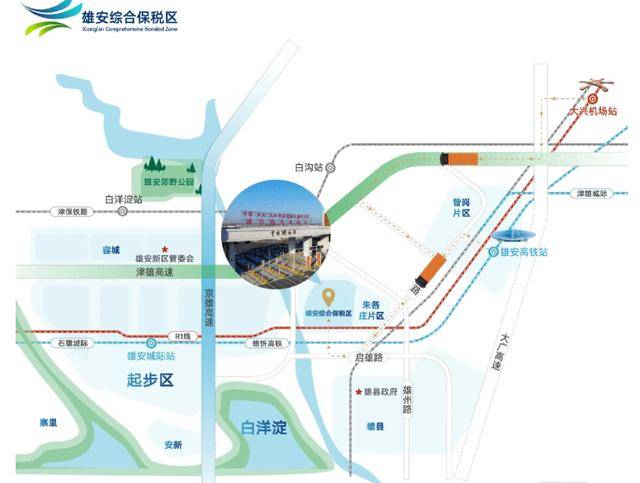
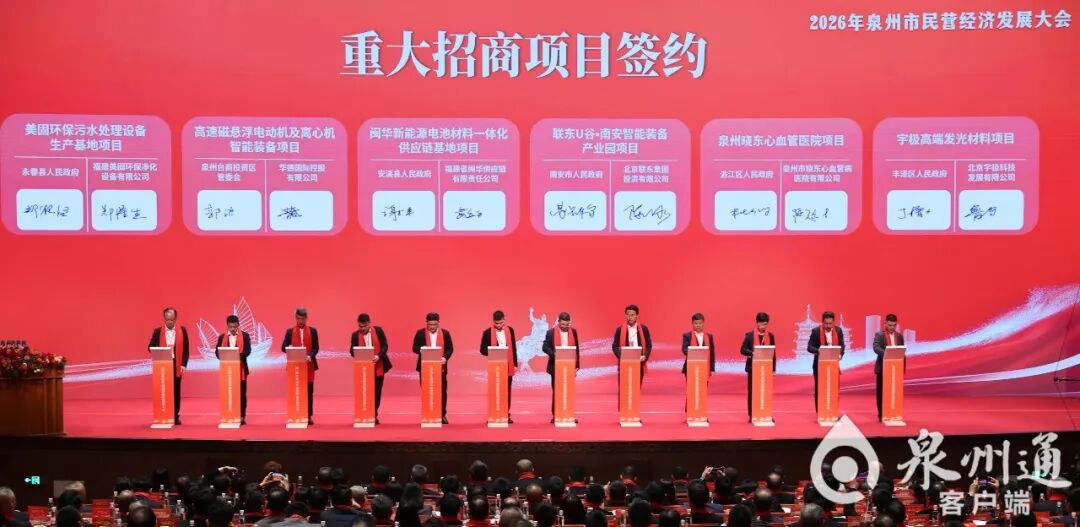
"马"上发力 招商引资迎来"开门红" 我市30个重大招商项目签约 总投资超600亿元 马年新春启新程,招商签约谱新篇。在2026年泉州市民营经济发展大会上,30个重大招商项目现场集中签约,总投资超600亿元,涵盖数字经济、新材 料、高端制造、新能源、海洋经济、文商旅产业等多个领域。 "数智"引领高端制造提速增效。总投资32亿元的全新智能化卫生用品生产基地项目选址惠安,拟建设生产车间、智慧仓库等,全面引入AI视觉检测系统、 5G物联网数字孪生等前沿装备,项目建成达产后预计年产能达50亿片,创造1000余个就业岗位;总投资20亿元的美的小家电智能基地项目拟选址德化, 建设数字智能自动化组装基地,引进数控中心和智能自动生产线,助力现代化小家电智能制造产业发展;位于泉州台商投资区的高速悬浮电动机及高速磁 悬浮离心机智能装备项目,总投资21亿元,项目投产后预计年生产5000台以上设备,产值超40亿元。 新能源与新材料聚势赋能。总投资26.8亿元中科睿升新能源材料项目,将在泉港建设高性能橡胶生产和相关配套设施;闽华新能源电池材料一体化供应链 基地选址安溪,将建设电池材料智慧仓储与配送中心以及综合配套等;中核绿色能源产业项 ...
十大券商一周策略:A股将迎“春季躁动”胜率最高阶段,涨价仍是核心配置线索,重视关税税率下降后出口链修复机会
Jin Rong Jie· 2026-02-24 00:10
Group 1 - The core investment theme post-Spring Festival revolves around "price increases" and "revaluation of physical assets," particularly in resource, chemical, and midstream manufacturing sectors, leveraging China's pricing power amid global uncertainties [1][2] - The technology sector, particularly driven by AI, remains a key focus, with sub-sectors like computing power, applications, and robotics expected to remain active due to industrial catalysts [1][2] - The recovery of export chains, non-bank financials, and certain consumer and real estate chains are seen as important supplements to market trends under the backdrop of internal and external demand recovery [1] Group 2 - CITIC Securities emphasizes that price increases are a core configuration clue for Q1, with a focus on sectors like chemicals, non-ferrous metals, power equipment, and new energy, while also increasing exposure to undervalued insurance and brokerage stocks [2] - Historical data indicates that February and the period around the Spring Festival are strong for market movements, with small-cap stocks showing a 100% probability of rising from the Spring Festival to the Two Sessions [3] - Guojin Securities highlights the importance of balancing global physical assets against Chinese assets, recommending commodities like copper, aluminum, and oil, as well as sectors with global comparative advantages like equipment exports and domestic manufacturing [4] Group 3 - Industrial sectors experiencing structural price increases due to supply-demand gaps are primarily in midstream materials and manufacturing, with a focus on chemicals, steel, and high-end manufacturing [5] - The potential for recovery in the export chain is noted, particularly in industries with significant exposure to the U.S. market that will benefit from reduced tariffs [5] - The policy uncertainty surrounding tariffs and trade is expected to favor gold as a risk hedge, with market participants anticipating potential shifts in U.S. trade policy [6] Group 4 - Attention is drawn to the post-holiday inventory replenishment in commodities, with a continued positive outlook on technology applications, particularly in semiconductors and AI [7] - Quantum technology is highlighted as a sector receiving dual catalysts from policy and technological advancements, with significant developments in quantum key distribution networks [8] - The AI industry revolution is identified as a key investment theme, focusing on computing power, storage, and applications, with a strong emphasis on the performance of high-growth sectors [9] Group 5 - Localized opportunities are expected in AI applications linked to overseas trends and robotics associated with the Spring Festival, with a cautious approach to market movements anticipated [10] - The current bull market logic remains intact, with a recommendation for investors to maintain confidence despite short-term volatility, focusing on sectors with high securities ratios [11]
积极因素提振A股开市信心 两大主线配置价值获看好
Zhong Guo Zheng Quan Bao· 2026-02-23 20:18
Group 1 - The A-share market is expected to continue its spring rally in 2026, driven by policy guidance and industry trends, with a focus on technology and resource sectors [1][3] - The market sentiment is currently strong, with limited adjustment pressure, and the potential for a rebound in market indices post-Spring Festival [2][3] - The AI sector is highlighted as a key investment opportunity, with expectations for significant advancements and commercialization in 2026 [3][4] Group 2 - Resource sectors, including chemicals and precious metals, are gaining attention from institutions, particularly due to rising international prices for gold and oil [4][5] - The geopolitical situation may provide a short-term boost to oil prices, while precious metals are seen as a safe haven for investors [5][6] - The upcoming peak season for industrial production and construction in March and April is expected to validate price increases and influence market trends [6]
中国拯救世界?美媒感慨:要不是中国反抗特朗普,全球已经大萧条
Sou Hu Cai Jing· 2026-02-23 02:44
Core Viewpoint - The U.S. Supreme Court ruled that the large-scale tariff policy implemented by the Trump administration was illegal, effectively pausing the ongoing trade war. This decision has led to significant market reactions and fears among U.S. farmers and investors regarding the future of U.S. agricultural exports, particularly soybeans, to China [1][3]. Group 1: Impact on U.S. Agriculture - The U.S. soybean industry is heavily affected, with exports to China previously accounting for up to 60% of total production. Following the Supreme Court ruling, fears arose that China would shift to purchasing cheaper soybeans from Brazil, which has established a stable supply chain [1][3]. - U.S. farmers are struggling with low profits and high costs for imported agricultural machinery and fertilizers due to tariffs, leading to a cycle of increased production but greater losses [3]. - The agricultural sector is facing its fourth consecutive year of low profits, despite high production levels, exacerbated by the tariff-induced price increases of essential farming inputs [3]. Group 2: Consumer Impact - U.S. consumers are beginning to realize that they are bearing the costs of the tariffs, with prices for everyday goods, appliances, and vehicles rising significantly. Research indicates that the costs of tariffs are primarily shouldered by U.S. importers and consumers rather than foreign suppliers [6]. - The dissatisfaction among consumers and farmers could translate into political consequences in the upcoming midterm elections, particularly in the Midwest, where soybean farmers have traditionally supported the Republican Party [8]. Group 3: International Relations and Responses - The unilateral tariff policies have strained relationships between the U.S. and its allies, with many countries reconsidering their economic ties with the U.S. and seeking closer cooperation with China [10]. - Japan has shown a submissive stance, continuing to pursue investment in the U.S. despite the Supreme Court ruling against the tariff agreement, indicating a willingness to compromise for potential tariff relief [12]. - The EU has publicly criticized Trump's unilateralism but has not taken substantial retaliatory actions, instead opting to appease the U.S. for tariff exemptions due to its deep economic reliance on the U.S. market [14][20]. Group 4: Responses from Developing Countries - Developing countries, particularly in Southeast Asia and Latin America, have shown a tendency to acquiesce to U.S. tariff demands due to their economic vulnerabilities and reliance on the U.S. dollar for trade [18][21]. - India initially adopted a strong stance but ultimately succumbed to U.S. pressure, reflecting the broader trend of developing nations lacking the capacity to resist U.S. tariffs [22]. Group 5: China's Countermeasures - In contrast to other nations, China has taken a firm stand against U.S. tariffs, implementing retaliatory measures that directly target U.S. interests, including imposing equivalent tariffs on U.S. imports and controlling rare earth exports critical to U.S. military applications [24][26]. - China's strategy includes diversifying its export markets away from the U.S., resulting in a significant reduction in the trade deficit with the U.S. and record-high overall exports [28][35]. - The comprehensive industrial system in China allows it to maintain stability and independence from U.S. pressures, making it less vulnerable to tariff impacts compared to countries heavily reliant on the U.S. market [37][38].
康曼德资本董事长丁楹:马年新程,在不确定中把握确定性
Zhong Guo Ji Jin Bao· 2026-02-21 12:57
Group 1 - The core viewpoint of the article emphasizes the transition of China's capital market from liquidity recovery to structural pricing, highlighting a year of stabilization and differentiation in 2025 [2] - The macro environment in 2025 saw marginal improvements in global liquidity, with the Federal Reserve's multiple interest rate cuts providing external support for risk assets, while domestic policies continued to stabilize the market [2] - The market structure in 2025 was characterized by a focus on a few sectors with medium to long-term logic, such as AI computing power, self-controllable technologies, and high-end manufacturing, while traditional real estate and some cyclical industries were still in a clearing and bottoming phase [2] Group 2 - In 2026, the Chinese economy is expected to experience a weak recovery with structural upward trends, driven by a new round of technological and industrial cycles [3] - The focus on new technologies, renewable energy, digital economy, and biomedicine is reshaping production relationships and capital return structures, while traditional economic sectors are gradually declining [3] - The economic growth model is shifting from total expansion to quality enhancement, with stable growth policies expected to continue [3] Group 3 - The capital market in 2026 will shift its core variable from liquidity recovery to profitability, with a focus on fundamental performance rather than speculative narratives [4] - High-quality companies, particularly in the Hong Kong stock market and technology manufacturing sectors, are anticipated to reach profitability turning points between 2025 and 2026 [4] - The investment logic will increasingly return to fundamentals, leading to a more rational pricing system [4] Group 4 - The capital market is expected to exhibit three main characteristics: a higher probability of structural bull markets over broad bull markets, a balance between growth and value investments, and continued volatility with an upward shift in market stability [5] - Investors will prioritize company quality and industry dynamics, with high-growth sectors requiring caution regarding valuations, while traditional value assets regain significance [5] Group 5 - The investment strategy for 2026 is termed "Double Horses Running Together," focusing on both growth and stable assets [6] - Growth sectors, particularly those related to AI and new productive forces, are seen as long-term investment themes, while stable assets in finance, resources, and consumption are being revalued as quasi-debt equities [6] - The investment approach will involve a dynamic adjustment of asset allocation, favoring growth in the first half of the year and gradually shifting towards value in the second half [7]