
油脂油料

Search documents
油脂油料产业日报-20250801
Dong Ya Qi Huo· 2025-08-01 10:22
Report Summary 1. Core Views - **Palm Oil**: Internationally, Malaysian BMD crude palm oil futures are oscillating between 4,200 - 4,250 ringgit, facing potential downward pressure due to increased production and decreased exports. A break below 4,200 ringgit may open a new downward space towards 4,000 ringgit. Domestically, Dalian palm oil futures are strongly oscillating at high levels between 8,800 - 8,900 yuan. Affected by the potential decline of Malaysian palm oil and rising domestic port inventories, there is downward pressure. Support levels are at around 8,600 and 8,500 yuan. The long - term upward trend remains unchanged, currently in a phased adjustment [3]. - **Soybean Oil**: Market demand has improved recently. Based on export news, the market anticipates a price increase, leading some traders to show purchasing interest. Factory sales exceeded 30,000 tons yesterday. Some regions have relatively low inventory pressure with rising basis quotes, while regions like Guangxi still face inventory issues affecting basis quotes. In the short - term, basis quotes will fluctuate slightly and may rise as domestic demand increases [3]. - **Bean Meal**: China is accelerating the purchase of South American soybeans to ensure Q4 supply. Brazilian premiums are rising, supporting import costs. Near delivery, institutions are accelerating position transfers, with the short - term 09 contract oscillating around 3,000 yuan. Spot prices at oil mills have increased by 10 - 40 yuan/ton. In August, due to Sino - US tariff concerns, terminal point - pricing risk - aversion has increased, improving trading volume. Mid - August may see a peak in oil mill bean meal inventories, and the market is brewing bullish sentiment, with many looking to buy far - month contracts at low prices [16]. 2. Price and Spread Information Oils - **Palm Oil**: Palm oil 01 is at 8,968 yuan/ton with a 0.4% increase; 05 is at 8,772 yuan/ton with a 0.76% increase; 09 is at 8,970 yuan/ton with a 0.27% increase. BMD palm oil主力 is at 4,249 ringgit/ton with a 0.45% increase. The Guangzhou 24 - degree palm oil price is 8,930 yuan/ton, down 10 yuan. The Guangzhou 24 - degree basis is 40 yuan/ton, up 22 yuan [6]. - **Soybean Oil**: Soybean oil 01 is at 8,226 yuan/ton with a 0.03% increase; 05 is at 7,848 yuan/ton with a 0.11% increase; 09 is at 8,274 yuan/ton with a 0.33% increase. CBOT soybean oil主力 is at 54.75 cents/pound, down 2.42%. Shandong first - grade soybean oil spot is at 8,240 yuan/ton, up 30 yuan. The Shandong first - grade soybean oil basis is 18 yuan/ton, up 8 yuan [12]. - **Oil Spreads**: Various oil spreads such as P 1 - 5, P 5 - 9, Y - P 01, etc. are provided, showing different price changes [4]. Oilseeds - **Bean Meal**: Bean meal 01 is at 3,037 with a 0.03% increase; 05 is at 2,738 with a 0.11% increase; 09 is at 3,010 with a 0.33% increase. - **Rapeseed Meal**: Rapeseed meal 01 is at 2,409, down 0.08%; 05 is at 2,375 with a 0.04% increase; 09 is at 2,675, down 0.89%. - **Spreads**: Spreads like M01 - 05, RM01 - 05, etc. are presented with their respective price changes [17][18][20].
2025年8月油脂油料市场展望:政策、关税发力,油脂走势分化
Hua An Qi Huo· 2025-07-31 03:01
Report Summary 1. Report Industry Investment Rating No information provided. 2. Core Views - The U.S. biodiesel policy is favorable for the vegetable oil market, which may support the prices of CBOT soybeans and U.S. soybean oil. Due to the continued additional tariffs on U.S. soybeans and the rising premium of Brazilian soybeans, the import of soybeans in China is expected to be tight in the fourth quarter, and soybean oil has upward potential [2][13][23]. - The current situation of palm oil is that Malaysia has a high inventory while Indonesia has a decreasing inventory. The implementation of Indonesia's B40 plan is expected to increase industrial consumption, but the export data of Malaysian palm oil shows weak demand. The pattern of high inventory and high production of palm oil is difficult to change, lacking upward momentum [3][16][24]. - Affected by the current situation of weak supply and demand, rapeseed oil is expected to continue its wide - range oscillation pattern [3][22][24]. 3. Summary by Directory 3.1 Market Review In July, the trends of oils and fats were divergent. Palm oil continued to rise, soybean oil first declined and then rose, and rapeseed oil maintained a wide - range oscillation. The U.S. biodiesel policy and Indonesia's B40 plan boosted the prices of palm oil and international oils, while the improvement of China - Australia trade relations put pressure on rapeseed oil prices [9]. 3.2 Supply - Demand Analysis - **U.S. Biodiesel Policy Benefits**: The U.S. Environmental Protection Agency's proposed biofuel blending rules for 2026 - 2027 are favorable for the industrial demand of domestic oils. The demand for soybean oil in biofuels is increasing, and the future domestic crushing demand for U.S. soybeans is expected to grow. The export tax cuts in Argentina may stimulate soybean exports, and the high premium of Brazilian soybeans and the continued additional tariffs on U.S. soybeans support the price of soybean oil. Although the soybean oil inventory is currently high, the seasonal inventory inflection point is approaching in August, which also supports the price [10][13][15]. - **Palm Oil Supply - Demand Pattern is Loose**: In June, Malaysian palm oil continued to accumulate inventory, and the export data in July was not ideal. It is expected to maintain a pattern of high inventory and high production in the third quarter. In Indonesia, the implementation of the B40 plan is expected to increase industrial consumption, but overall, the upward momentum of palm oil is weak [16][17][24]. - **Rapeseed Oil Continues the Oscillation Pattern**: The new rapeseed production in Canada is expected to decrease, and the export demand is strong, making ICE rapeseed prices strong. The improvement of China - Australia trade relations may lead to an increase in the import of Australian rapeseed, which is negative for the domestic rapeseed market. The anti - dumping investigation on Canadian rapeseed has not ended, and the trend of reducing rapeseed imports and increasing rapeseed oil imports is expected to continue. Rapeseed oil is expected to continue its wide - range oscillation [20][22][24]. 3.3 Market Outlook and Investment Strategy - Due to the continued additional tariffs on U.S. soybeans and the rising premium of Brazilian soybeans, the import of soybeans in China is expected to be tight in the fourth quarter, and soybean oil has upward potential [2][13][23]. - The high - inventory and high - production pattern of palm oil is difficult to change, lacking upward momentum [3][16][24]. - Rapeseed oil is expected to continue its wide - range oscillation pattern [3][22][24].
2025年7月油脂油料市场展望:政策、关税发力,油脂走势分化
Hua An Qi Huo· 2025-07-31 02:04
1. Report Industry Investment Rating - Not provided in the given content 2. Core Viewpoints of the Report - The soybean import in China is expected to be tight in the fourth quarter, and the cost of imported soybeans is increasing, so there is an upward space for soybean oil [2][3][12] - The pattern of high inventory and high production of palm oil is difficult to change, and it lacks upward momentum [3][16][24] - Rapeseed oil is expected to continue the wide - range shock pattern due to the current situation of weak supply and demand [3][20][24] 3. Summary According to the Directory 3.1. Market Review - In July, the trends of oils and fats were differentiated. Palm oil continued to rise, soybean oil first declined and then rose, and rapeseed oil maintained a wide - range shock [9] - The U.S. biodiesel policy is beneficial to the consumption of vegetable oils, and the increase in U.S. soybean oil drives up the international oil prices. The implementation of Indonesia's B40 plan boosts the palm oil price, while the improvement of China - Australia trade relations puts pressure on the rapeseed oil price [9] 3.2. Supply and Demand Analysis 3.2.1. U.S. Biodiesel Policy Benefits - The U.S. biodiesel policy is beneficial to the industrial demand of domestic oils and fats. The demand for domestic soybean crushing in the U.S. is expected to increase, which supports the CBOT soybean and U.S. soybean oil prices [10][12] - Argentina's reduction of export withholding tax on soybeans and their by - products may stimulate exports. The high premium of Brazilian soybeans and the continued levy of tariffs on U.S. soybeans in China increase the cost of imported soybeans in China and support the soybean oil price [12] - As of July 25, the commercial inventory of soybean oil in key regions in China decreased slightly compared with the previous week and the same period last year. With the arrival of August, the seasonal inventory inflection point is coming, which strongly supports the soybean oil price [15] 3.2.2. Loose Supply - Demand Pattern of Palm Oil - In June, Malaysian palm oil continued to accumulate inventory, and the export data in July were not ideal. It is expected that the pattern of high inventory and high production will continue in the third quarter, and the supply - demand pattern will become looser [16] - Indonesia's B40 plan is being implemented as scheduled, and the new industrial consumption demand of palm oil is expected to be strong, which supports the price. However, overall, the upward momentum of palm oil is weak [17][23][24] 3.2.3. Rapeseed Oil Continues the Shock Pattern - The new rapeseed production in Canada is expected to decrease, and the export demand is strong, so the ICE rapeseed has been running strongly recently [18][20] - The improvement of China - Australia trade relations may lead to an increase in the import of Australian rapeseed, which is negative for the domestic rapeseed market [20] - The anti - dumping investigation on Canadian rapeseed has not concluded, and the trend of reducing rapeseed import and increasing rapeseed oil import is expected to continue. The rapeseed oil inventory in coastal oil mills has increased slightly, but the de - stocking process is expected to continue, and rapeseed oil is expected to continue the wide - range shock pattern [22] 3.3. Market Outlook and Investment Strategy - Due to the tight supply expectation of imported soybeans in the fourth quarter and the increase in import costs, there is an upward space for soybean oil [2][3][23] - The pattern of high inventory and high production of palm oil is difficult to change, and it lacks upward momentum [3][16][24] - Rapeseed oil is expected to continue the wide - range shock pattern due to the current weak supply and demand situation [3][20][24]
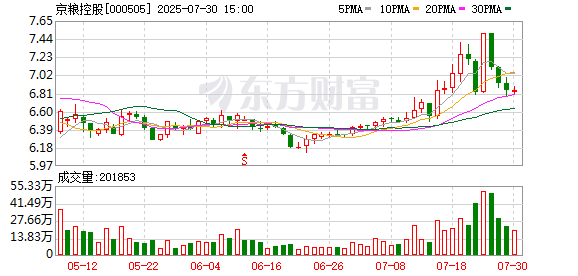
京粮控股:7月30日召开董事会会议
Mei Ri Jing Ji Xin Wen· 2025-07-30 09:10
Group 1 - The core point of the article is that Jingliang Holdings announced the convening of its 20th meeting of the 10th board of directors on July 30, 2025, to review the proposal regarding the re-evaluation and extension of fundraising investment projects [2] - For the year 2024, the revenue composition of Jingliang Holdings is as follows: oil and fat accounted for 91.71%, food manufacturing accounted for 7.42%, and other businesses accounted for 0.87% [2]


油脂油料产业日报-20250730
Dong Ya Qi Huo· 2025-07-30 01:10
油脂油料产业日报 2025/07/28 咨询业务资格:沪证监许可【2012】1515号 研报作者:许亮 Z0002220 审核:唐韵 Z0002422 【免责声明】 本报告基于本公司认为可靠的、已公开的信息编制,但本公司对该等信息的准确性及完整性不作任何保证。本报告所载的意见、结论及预测仅反映报告发布时的观点、结论 和建议。在不同时期,本公司可能会发出与本报告所载意见、评估及预测不一致的研究报告。本公司不保证本报告所含信息保持在最新状态。本公司对本报告所含信息可在不发出通知的情 形下做出修改, 交易者(您)应当自行关注相应的更新或修改。本公司力求报告内容客观、公正,但本报告所载的观点、结论和建议仅供参考,交易者(您)并不能依靠本报告以取代行 使独立判断。对交易者(您)依据或者使用本报告所造成的一切后果,本公司及作者均不承担任何法律责任。本报告版权仅为本公司所有。未经本公司书面许可,任何机构或个人不得以翻 版、复制、发表、引用或再次分发他人等任何形式侵犯本公司版权。如征得本公司同意进行引用、刊发的,需在允许的范围内使用,并注明出处为"东亚期货",且不得对本报告进行任何有 悖原意的引用、删节和修改。本公司保留追究 ...
内蒙古百企聚首探讨风险管理能力提升
Qi Huo Ri Bao· 2025-07-28 16:49
Core Insights - The training program aims to enhance risk management capabilities of enterprises in Inner Mongolia, particularly in coal chemical and soft commodity industries, by utilizing the futures market [1] - The participation rate of listed companies in hedging activities has steadily increased, with 1,503 companies announcing hedging plans in 2024, representing a participation rate of 28.6% [1][2] - The volatility in commodity prices and intense industry competition are driving companies to improve their risk management strategies [2] Group 1: Training and Participation - The training session was attended by nearly a hundred representatives from state-owned enterprises and listed companies in Inner Mongolia, focusing on practical paths for utilizing the futures market for risk management [1] - Companies like Huayou Cobalt, Yuntianhua, and COFCO have integrated futures tools into their overall development strategies, establishing mature risk management models [1][2] - The number of industry clients participating in trading specific commodities, such as soybean meal and glass, has increased by over 20% in 2024 [1] Group 2: Industry Challenges and Solutions - Companies in sectors like chemicals, grain and oil, and livestock often operate near breakeven points, making raw material cost management critical for survival [2] - Sichuan Agricultural Fertilizer Co. has successfully implemented hedging strategies, achieving a profit of 50 yuan per ton through futures contracts [2] - The "five-in-one" methodology for integrating business and finance in hedging practices was proposed to address challenges in applying hedge accounting [3] Group 3: Market and Regulatory Environment - The futures market is recognized as a professional platform for risk management, with a comprehensive system of commodity futures and options covering key sectors of the economy [4] - Inner Mongolia has 29 listed companies with a total market capitalization of 786.88 billion yuan, but only 6 companies, or 20.69%, are engaged in hedging activities, which is below the national average [4] - Local regulatory bodies are working with exchanges to enhance the utilization of futures tools among enterprises to promote high-quality development of the capital market [4] Group 4: Feedback and Future Directions - Attendees expressed that the training deepened their understanding of the futures market's functions and they plan to explore hedging models tailored to their business needs [5]


油脂周报:高频出口走弱,短空-20250726
Wu Kuang Qi Huo· 2025-07-26 12:25
1. Report Industry Investment Rating - The report gives a short - term bearish rating on high - frequency exports of the oil and fat industry, indicating "short - term bearish" [1] 2. Core Viewpoints of the Report - Fundamentally, factors such as the unexpected U.S. biodiesel policy draft, limited potential for palm oil production increase in Southeast Asia, low inventories of vegetable oils in India for rigid demand, and the expected B50 policy in Indonesia support the price center of oils and fats. From July to September, if demand countries maintain normal imports and palm oil production in producing areas remains at a neutral level, the inventory in producing areas may remain stable, supporting a strong and volatile price quotation. There may be an upward price expectation in the fourth quarter due to the Indonesian B50 policy. However, the current valuation is relatively high, and the upward space is restricted by factors such as the annual - level expectation of increased oil and fat production, relatively high palm oil production in producing areas, the undetermined RVO rules, macro - factors, and demand adjustments in major importing countries. The market is expected to be volatile [11][12][13] 3. Summaries According to the Directory 3.1 Week - on - Week Assessment and Strategy Recommendation - **Market Review**: Palm oil rose slightly at the beginning of the week following the optimistic sentiment in commodities, but it was difficult to continue the upward trend due to the record - high net long positions of foreign capital in the three major oils and fats and the bearish high - frequency export and production data. It fell at the end of the week following the overall decline in commodities. Malaysian palm oil exports in the first 25 days were expected to decline by 9.2% - 15.22% month - on - month, and the production in the first 20 days of July increased by 6.19% month - on - month. The lower - than - expected exports may imply increased production in Indonesia or weak demand in consuming areas. The narrative of increased palm oil production and weak demand still suppresses the market. Although there are medium - term positive factors such as the expected B50 policy in Indonesia and limited potential for palm oil production increase in Southeast Asia, short - term data deviations bring correction pressure to the market. The price of foreign - traded rapeseed entered a volatile phase after falling from a high level, and the contact between China and Australia on rapeseed purchases suppressed the high valuation of rapeseed oil [11] - **International Oils and Fats**: The USDA July monthly report estimated that the U.S. will increase about 1.5 million tons of industrial demand for soybean oil in the 2025/2026 season, which will be supplemented by a decline in soybean oil exports and increased压榨 output. The estimated import of rapeseed oil is only expected to increase by 200,000 tons year - on - year. The shipment volume of Canadian rapeseed is still high, and exports are at a seasonally high level, with signs of inventory accumulation in commercial inventories. The contact between China and Australia on rapeseed trade also suppresses the rapeseed price. The foreign - traded rapeseed price has been mainly volatile this week. The AAFC significantly increased the production of old - crop rapeseed based on large export data, but the new - crop rapeseed is facing a production decline, which supports the rapeseed price. India purchased a large amount of vegetable oils in June, possibly starting a replenishment process, which will support the subsequent export demand for palm oil [11] - **Domestic Oils and Fats**: The trading volume of soybean oil and palm oil was weak this week, and the spot basis was at a low level. The total domestic inventory of oils and fats is about 400,000 tons higher than last year, indicating sufficient supply. Among them, the rapeseed oil inventory is 300,000 tons higher than last year, the palm oil inventory is about 100,000 tons higher than last year, and the soybean oil inventory is the same as last year. In the next two months, the soybean crushing volume will increase with the arrival of soybeans, and the export willingness of palm oil will also increase after production rises. The rapeseed oil inventory is at a high level, but the high price difference and weak consumption lead to slow inventory reduction. It is difficult to see a downward trend in the total domestic inventory of oils and fats for now [11] - **Trading Strategy Recommendation**: For unilateral trading, the market is expected to be volatile. The core driving logic is the same as the core viewpoints mentioned above. There is no specific recommendation for arbitrage trading [13] 3.2 Futures and Spot Market - The report presents multiple charts related to the basis of palm oil, soybean oil, and rapeseed oil, including the FOB - futures price difference of Malaysian palm oil, the seasonal basis of Malaysian palm oil futures, and the basis of 09 contracts of domestic palm oil, soybean oil, and rapeseed oil, which are used to analyze the relationship between futures and spot prices [18][21][23][25] 3.3 Supply Side - **Production and Export of Malaysian Palm Oil**: The report shows charts of the monthly production and export of Malaysian palm oil, as well as the monthly production and export of palm oil and palm kernel oil in Indonesia. It also includes charts of the weekly arrival of soybeans, soybean port inventory, monthly import of rapeseed, and monthly import of rapeseed oil, which are used to analyze the supply situation of different oils and fats [28][29][30][31] - **Weather in Palm - Producing Areas**: The report presents charts of weighted precipitation in Indonesian and Malaysian palm - producing areas, as well as the NINO 3.4 index and the impact of La Nina on global climate, which are used to analyze the impact of weather on palm oil production [33][35] 3.4 Profit and Inventory - **Inventory Situation**: The report shows charts of the total inventory of domestic three major oils and fats, the inventory of imported vegetable oils in India, the import profit and commercial inventory of palm oil, the spot crushing profit of imported soybeans in Guangdong and the inventory of major soybean oil mills, the average spot crushing profit of rapeseed along the coast and the commercial inventory of rapeseed oil in East China, and the inventory of palm oil in Malaysia and Indonesia, which are used to analyze the profit and inventory situation of different oils and fats [41][44][46][47][49] 3.5 Cost Side - **Cost of Malaysian Palm Oil**: The report shows charts of the reference price of Malaysian palm fresh fruit bunches and the import cost price of Malaysian palm oil, which are used to analyze the cost of Malaysian palm oil [51][52] - **Cost of Rapeseed Oil and Rapeseed**: The report shows charts of the CNF import price of rapeseed oil and the import cost price of imported rapeseed in China, which are used to analyze the cost of rapeseed oil and rapeseed [55] 3.6 Demand Side - **Oils and Fats Trading Volume**: The report shows charts of the cumulative trading volume of palm oil and soybean oil in the crop year, which are used to analyze the trading demand for different oils and fats [58] - **Biodiesel Profit**: The report shows charts of the POGO spread (Malaysian palm oil - Singapore low - sulfur diesel) and the BOHO spread (soybean oil - heating oil), which are used to analyze the profit situation of biodiesel [60]
菜籽类市场周报:中澳贸易有望恢复,菜油表现弱于豆棕-20250725
Rui Da Qi Huo· 2025-07-25 12:19
1. Report Industry Investment Rating - No relevant content provided. 2. Core Views of the Report - For rapeseed oil, short - term participation is recommended, and it has shown weaker performance than soybean and palm oil recently due to the potential resumption of China - Australia trade. The current growth of Canadian rapeseed is in the "weather - dominated" stage, and factors such as weather, trade, and domestic supply and demand affect its price [8][9]. - For rapeseed meal, short - term participation is also recommended, and attention should be paid to China - US and China - Canada economic and trade relations. The price of rapeseed meal fluctuates greatly in the short term, influenced by factors like US soybean conditions, domestic supply and demand, and trade agreements [11][12]. 3. Summary by Relevant Catalogs 3.1. Weekly Key Points Summary Rapeseed Oil - Strategy: Short - term participation [8] - Market Review: This week, rapeseed oil futures fluctuated and closed down. The closing price of the 09 contract was 9457 yuan/ton, a decrease of 129 yuan/ton from the previous week [9] - Market Outlook: Canadian rapeseed growth is weather - sensitive. The potential resumption of China - Australia rapeseed trade, the situation of palm oil, and domestic supply - demand conditions all impact the price. Although there are some bearish factors, the reduction in supply pressure and oil mill output also provide support [9] Rapeseed Meal - Strategy: Short - term participation, focus on China - US and China - Canada economic and trade relations [11] - Market Review: This week, rapeseed meal futures rose first and then fell. The closing price of the 09 contract was 2675 yuan/ton, a decrease of 47 yuan/ton from the previous week [12] - Market Outlook: US soybean conditions, domestic supply - demand, and trade agreements affect the price. Although there are bearish factors, the reduction in short - term supply and seasonal demand increase provide support, while also facing substitution pressure [12] 3.2. Futures and Spot Market Futures Market - Rapeseed oil futures fluctuated and closed down this week, with a total position of 210,783 lots, a decrease of 36,060 lots from last week. Rapeseed meal futures rose first and then fell, with a total position of 483,508 lots, a decrease of 54,942 lots from the previous week [17] - The net long positions of the top 20 in rapeseed oil and rapeseed meal futures both decreased this week [23] Spot Market - The spot price of rapeseed oil in Jiangsu was 9540 yuan/ton, showing a decline from last week. The basis between the active contract futures price and the Jiangsu spot price was + 83 yuan/ton [38] - The spot price of rapeseed meal in Nantong, Jiangsu was 2520 yuan/ton, slightly lower than last week. The basis between the Jiangsu spot price and the active contract futures price was - 155 yuan/ton [44] Spread and Ratio - The 9 - 1 spread of rapeseed oil was + 56 yuan/ton, and that of rapeseed meal was + 270 yuan/ton, both at medium levels in recent years [50] - The ratio of the 09 contract of rapeseed oil to rapeseed meal was 3.535, and the ratio of the average spot prices was 3.786 [53] - The 09 contract spread of rapeseed - soybean oil was 1313 yuan/ton, and that of rapeseed - palm oil was 521 yuan/ton, both narrowing this week [62] - The 09 contract spread of soybean - rapeseed meal was 346 yuan/ton, and the spot spread as of Thursday was 290 yuan/ton [68] 3.3. Industry Chain Situation Rapeseed - Supply: As of July 18, 2025, the total rapeseed inventory of oil mills was 200,000 tons. The estimated arrival volumes of rapeseed in June, July, and August 2025 were 260,000, 130,000, and 485,000 tons respectively. The import rapeseed spot crushing profit was + 384 yuan/ton as of July 24. The crushing volume of rapeseed in coastal main oil mills in the 29th week of 2025 was 53,000 tons, an increase of 10,000 tons from last week, with an operating rate of 12.96%. In June 2025, China's rapeseed import volume was 184,500 tons, a significant year - on - year and month - on - month decrease [74][78][82][86] Rapeseed Oil - Supply: As of the end of the 29th week of 2025, the inventory of domestic imported and crushed rapeseed oil was 812,000 tons, a decrease of 19,000 tons from last week. In June 2025, the import volume of rapeseed oil was 150,300 tons, a year - on - year and month - on - month increase [90] - Demand: As of March 31, 2025, the monthly output of edible vegetable oil was 4.404 million tons, and as of May 31, the catering revenue was 457.82 billion yuan. As of the end of the 29th week of 2025, the contract volume of domestic imported and crushed rapeseed oil was 128,000 tons, a decrease of 7000 tons from last week [94][98] Rapeseed Meal - Supply: As of the end of the 29th week of 2025, the inventory of domestic imported and crushed rapeseed meal was 11,000 tons, an increase of 7000 tons from last week. In June 2025, the import volume of rapeseed meal was 270,300 tons, a year - on - year and month - on - month increase [102][106] - Demand: As of May 31, 2025, the monthly output of feed was 2.7621 million tons [110] 3.4. Options Market Analysis - As of July 25, the implied volatility of rapeseed meal options was 23.32%, a 2.63% increase from last week, at a slightly high level compared to the 20 - day, 40 - day, and 60 - day historical volatility of the underlying [113]

油脂油料产业日报-20250725
Dong Ya Qi Huo· 2025-07-25 10:51
油脂油料产业日报 2025/07/25 咨询业务资格:沪证监许可【2012】1515号 研报作者:许亮 Z0002220 审核:唐韵 Z0002422 【免责声明】 本报告基于本公司认为可靠的、已公开的信息编制,但本公司对该等信息的准确性及完整性不作任何保证。本报告所载的意见、结论及预测仅反映报告发布时的观点、结论 和建议。在不同时期,本公司可能会发出与本报告所载意见、评估及预测不一致的研究报告。本公司不保证本报告所含信息保持在最新状态。本公司对本报告所含信息可在不发出通知的情 形下做出修改, 交易者(您)应当自行关注相应的更新或修改。本公司力求报告内容客观、公正,但本报告所载的观点、结论和建议仅供参考,交易者(您)并不能依靠本报告以取代行 使独立判断。对交易者(您)依据或者使用本报告所造成的一切后果,本公司及作者均不承担任何法律责任。本报告版权仅为本公司所有。未经本公司书面许可,任何机构或个人不得以翻 版、复制、发表、引用或再次分发他人等任何形式侵犯本公司版权。如征得本公司同意进行引用、刊发的,需在允许的范围内使用,并注明出处为"东亚期货",且不得对本报告进行任何有 悖原意的引用、删节和修改。本公司保留追究 ...
油脂油料早报-20250725
Yong An Qi Huo· 2025-07-25 09:27
| 日期 | 豆粕江苏 | 菜粕广东 | 豆油江苏 | 棕榈油广州 | 菜油江苏 | | --- | --- | --- | --- | --- | --- | | 2025/07/18 | 2880 | 2600 | 8290 | 8980 | 9670 | | 2025/07/21 | 2890 | 2610 | 8260 | 8920 | 9690 | | 2025/07/22 | 2890 | 2620 | 8230 | 8940 | 9600 | | 2025/07/23 | 2900 | 2630 | 8250 | 9000 | 9580 | | 2025/07/24 | 2830 | 2560 | 8270 | 9110 | 9540 | 蛋 白 粕 基 差 : 油 脂 基 差 : 油脂油料早报 研究中心农产品团队 2025/07/25 隔 夜 市 场 信 息 : USDA:7月17日止当周美国大豆出口销售合计净增39.97万吨,符合预期 美国衣业部(USDA)周四公布的出口销售报告显示,7月17日止当周,美国当前市场年度大豆出口销售净增16.09万 吨,较之前一周减少41%,较前四周均值减少5 ...