服务消费

Search documents
7月政治局会议点评:立足长远,稳中求进
HTSC· 2025-07-31 02:08
Core Views - The meeting of the Political Bureau on July 30 emphasized maintaining policy continuity and stability while enhancing flexibility and foresight, aligning with investor expectations [2][3] - Key areas of focus include expanding domestic demand, prioritizing service consumption, and fostering international competitiveness in technology innovation [2][4][5] Focus Area 1: Expanding Domestic Demand - The meeting highlighted the importance of expanding service consumption as a new growth point while ensuring the improvement of people's livelihoods [4] - Policies may increasingly focus on stimulating service consumption, with potential measures including issuing consumption vouchers and upgrading cultural tourism [4] Focus Area 2: Technology Innovation - Technology innovation remains a focal point, with a shift from specific sectors to nurturing emerging industries with international competitiveness, particularly in the domestic computing power chain [5] - The "anti-involution" narrative has been refined to emphasize lawful governance of chaotic competition and capacity management in key industries [5] Focus Area 3: Capital Market Policies - The meeting stressed enhancing the attractiveness and inclusiveness of the domestic capital market, aiming to support enterprises at different development stages [6] - There was no separate discussion on real estate policies, indicating that future policy directions need further observation [6]
全年50万亿“社零”底气何来?增长动能何在
Zhong Guo Chan Ye Jing Ji Xin Xi Wang· 2025-07-28 01:04
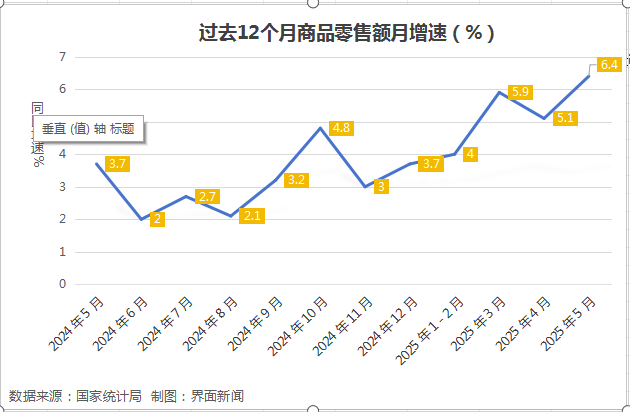
Group 1 - The primary task for economic work this year is to boost consumption, with the total retail sales of consumer goods reaching 24.5458 trillion yuan in the first half of the year, showing a steady increase in consumption growth [1] - The Ministry of Commerce forecasts that the total retail sales for the year will exceed 50 trillion yuan, indicating that the second half will see higher sales than the first half, driven by factors such as innovative consumption scenarios and stabilized consumer willingness [1][3] - The introduction of new categories and business models, such as AI products and IP derivatives, has invigorated the market, with online retail sales accounting for 24.9% of total retail sales in the first half, an increase of 0.9 percentage points from the first quarter [2] Group 2 - The consumption structure is accelerating its transformation as the per capita GDP is between 10,000 and 20,000 USD, with younger consumers like Generation Z becoming the main consumption force, favoring new consumption formats such as cycling and camping [3] - The "holiday effect" has significantly boosted consumption, with key retail and catering enterprises seeing a 6.3% year-on-year increase in sales during the May Day holiday [3] - Policies aimed at expanding consumption have been implemented, including the "old for new" program for consumer goods, which has driven sales of 2.9 trillion yuan in the first half of the year [4] Group 3 - The "old for new" program has led to a significant increase in the market for related consumer goods, with new energy vehicle sales exceeding 5 million units in the first half, a year-on-year increase of 33.3% [4] - The central government has allocated 3 trillion yuan in bonds for the "old for new" program, with 1.62 trillion yuan disbursed in the first half and an additional 1.38 trillion yuan planned for the second half [4] - Service consumption has seen a 5.3% year-on-year growth in the first half, supported by policies from the central bank and the Ministry of Commerce aimed at enhancing service sectors [4] Group 4 - The optimization of inbound policies has led to a 53.9% year-on-year increase in foreign visitors, with major cities like Beijing and Shanghai seeing significant growth in inbound tourism [6] - The growth in inbound tourism is expected to convert into increased consumer spending, with the potential for "China tours" to drive "China purchases" [7] - Experts suggest improving the consumption environment and increasing residents' income to further stimulate consumption growth, addressing issues such as outdated regulations and enhancing consumer experience [8]

下一阶段轮动到哪些行业?
Soochow Securities· 2025-07-27 14:33
Funding Sources - Incremental funds since late April have been driven by margin financing and insurance contributions, with significant structural inflows observed since late June[1] - Northbound funds have fluctuated around a market value of CNY 2.3 trillion, with trading activity declining to approximately 6% recently, close to levels seen in early April[1] - Margin financing balance has accelerated since late June, reaching CNY 1.94 trillion by July 24, nearing the historical high of CNY 1.95 trillion from March 2025[1] Market Trends - Market style has shifted from a "barbell" structure to a broader sector expansion, with small-cap stocks showing a steeper upward trend compared to mid and large-cap stocks since mid-July[2] - The average repeat rate of leading concepts from April 7 to July 25 has remained around 16%, indicating a lack of sustained momentum in market hotspots, with rapid rotation of themes occurring every 2 to 3 trading days[2] - Overall market sentiment has improved, with increased trading volume and a more optimistic outlook for the third quarter, despite potential limitations in economic growth compared to the second quarter[2] Sector Selection Strategy - Recommended sectors for investment include those likely to benefit from upcoming policies, such as photovoltaic, coal, and chemical industries, as well as technology sectors like robotics that have shown weaker prior performance[2] - Sectors that have not yet experienced significant upward movement, such as alcoholic beverages, service consumption, and real estate development, are also suggested for balanced investment strategies[2] Risk Considerations - Potential risks include delays in policy implementation, crowded funding risks as margin financing approaches previous highs, and discrepancies between estimated and actual fund positions[2]
商务部:从实际购买力看,中国社零总额已超美国
中国基金报· 2025-07-18 16:11
Group 1 - The core viewpoint of the article highlights the significant growth and transformation of China's consumption market during the "14th Five-Year Plan" period, emphasizing the expansion, quality improvement, innovation, and openness of the market [1][2][4] Group 2 - The consumption market in China is expected to grow from 39.1 trillion yuan in 2020 to 48.3 trillion yuan in 2024, with an average annual growth rate of 5.5%. By the end of this year, the total retail sales are projected to exceed 50 trillion yuan [1] - The retail sales of home appliances have maintained double-digit growth since September last year, and the penetration rate of new energy vehicles reached 50.2% in the first half of this year, with a 5.4-fold increase in ownership compared to 2020 [2] - The service consumption expenditure is expected to grow at an average annual rate of 9.6% from 2020 to 2024, outpacing goods consumption, indicating a shift towards higher quality service offerings [2] - New consumption trends are emerging, with innovative retail experiences being developed, such as integrating museums and entertainment into shopping environments, and the rise of digital consumption and AI-driven retail [3] - The import of consumer goods from 2021 to 2024 is projected to reach 7.4 trillion yuan, showcasing China's role as a significant player in the global market [3][4] - The tourism and shopping experience for international visitors is expected to generate a total expenditure of 94.2 billion USD in 2024, reflecting a 77.8% increase, thus converting tourism traffic into shopping growth [4]


消费时评丨服务消费“上新” 提振内需再发力
Xiao Fei Ri Bao Wang· 2025-07-18 02:27
Group 1 - The core viewpoint emphasizes that service consumption is becoming a key driver for economic growth in China, with various regions implementing targeted action plans to boost service consumption [1][2][3] - The action plans from cities like Beijing, Shanxi, and Guangxi focus on enhancing service consumption across six major areas, including culture, tourism, sports, education, health, and domestic services, indicating a strategic shift towards service-oriented economic policies [1][2] - Service consumption is characterized by its stickiness, extensibility, and locality, which not only stimulates employment and innovation but also addresses public concerns and improves quality of life [1][2] Group 2 - The aging population and declining birth rates are increasing the caregiving burden on families, prompting the government to expand services in elderly care, childcare, and domestic services as a means to stimulate consumption and promote social equity [2] - The key to boosting service consumption lies in the coordinated efforts on both supply and demand sides, requiring measures to enhance consumer willingness and improve service quality [2] - Current initiatives reflect a systemic transformation from focusing on total consumption to structural improvements, emphasizing experience upgrades and innovative consumption scenarios [2][3] Group 3 - Service consumption is positioned as a bridge between macroeconomic policies and micro-level living standards, moving from the periphery to the center of economic strategies [3] - The recent local consumption plans are not merely aimed at short-term rebounds but are exploring long-term pathways through supply optimization, experience enhancement, and confidence stimulation [3] - In the context of global consumption slowdown and weak external demand, leveraging service consumption is seen as essential for sustainable economic growth and high-quality development [3]
国常会重磅!关注促居民消费与车企反“内卷”!
券商中国· 2025-07-16 14:05
Group 1: Domestic Circulation and Consumption - Strengthening domestic circulation is a strategic move to ensure stable economic growth, focusing on key areas such as boosting consumption and removing unreasonable restrictions on consumer spending [2][4] - The government aims to implement special actions to stimulate consumption, optimize policies for replacing old consumer goods, and diversify supply to meet increasing consumer demand [4][5] - In 2023, there has been a significant increase in sales of consumer goods due to large-scale equipment updates and policies promoting the replacement of old consumer goods, although there are concerns about the effectiveness of these policies [5] Group 2: New Energy Vehicle Industry - The meeting emphasized the need to regulate the competitive order in the new energy vehicle (NEV) industry, addressing irrational competition and promoting high-quality development [3][8] - Measures will include strengthening cost investigations, price monitoring, and ensuring compliance with payment commitments by key automotive enterprises [8][9] - The industry is facing challenges such as extended payment terms for suppliers, which could hinder technological innovation and sustainable development [9] Group 3: Service Consumption - Service consumption is identified as a key area for boosting overall consumption and expanding domestic demand, with a focus on upgrading sectors like education, healthcare, and entertainment [6][5] - The People's Bank of China has allocated 500 billion yuan for service consumption and elderly care loans to support high-quality supply in these sectors [5] - Experts suggest that removing restrictions such as car purchase limits could significantly enhance consumer spending potential [7]

内需对经济增长贡献率超八成,102项重大工程年底完成|“十四五”规划收官
Di Yi Cai Jing· 2025-07-13 12:07
Group 1 - The core viewpoint is that domestic demand remains the primary engine for China's economic growth, with a projected GDP of approximately 140 trillion yuan by 2025, contributing around 30% to global economic growth [1][2] - Over the past four years, China's economic growth averaged 5.5%, with domestic demand contributing an average of 86.4% to this growth [1][2] - The "14th Five-Year Plan" emphasizes the implementation of strategies to expand domestic demand, enhance consumption, and improve investment efficiency [1][2] Group 2 - Investment and consumption are mutually reinforcing, with domestic demand being the main driver of China's economic development [2][3] - In the past four years, final consumption contributed an average of 56.2% to economic growth, an increase of 8.6 percentage points compared to the "13th Five-Year Plan" period [2] - Investment capital formation contributed an average of 30.2% to economic growth, focusing on addressing key issues in modernization and enhancing long-term development [3] Group 3 - Service consumption has emerged as a new highlight, with service retail sales growing by 6.2% year-on-year in 2024, outpacing goods retail sales by 3 percentage points [4] - Per capita spending on services increased by 7.4% year-on-year, contributing 63% to the growth of per capita consumption expenditure [4] - The share of per capita service consumption in total consumption reached 46.1%, indicating significant growth potential compared to developed countries [4][5] Group 4 - The development of service consumption is expected to create more job opportunities and improve income growth, with a focus on new consumption trends such as the "silver economy" and "ice and snow economy" [7][8] - Policies to promote service consumption have been implemented, including financial support for key service sectors [8] - The "14th Five-Year Plan" includes 102 major infrastructure projects aimed at enhancing economic circulation and improving living standards [9][10] Group 5 - The government aims to address structural issues in consumption, such as the low proportion of consumption in GDP and the high share of state-owned capital in national assets [13][14] - Recommendations include reforms to improve consumer spending, such as adjusting consumption tax structures and enhancing public services for rural populations [13][14] - The focus on "investing in people" through structural reforms is seen as essential for expanding domestic demand and improving income distribution [14]

提振消费再发力 服务消费潜力足
Zhong Guo Qing Nian Bao· 2025-07-07 20:45
Core Insights - The article emphasizes the significant potential for service consumption growth in China, contrasting it with the limitations of durable goods consumption due to their longer lifespan and lower replacement frequency [1][3][4]. Group 1: Service Consumption Growth - The Chinese economy is witnessing a shift towards service consumption, driven by policy support and the release of pent-up demand, particularly in sectors like elderly care and healthcare due to an aging population [2][4]. - From January to May this year, service retail sales increased by 5.2% year-on-year, outpacing the growth of goods retail sales by 0.1 percentage points [2]. - The report highlights that service consumption is expected to continue to support economic growth, especially with more holidays this year compared to last [2]. Group 2: Employment and Economic Impact - Service consumption is crucial for job creation, with nearly 70 million people employed in service sectors like dining, entertainment, and tourism, surpassing the 60 million in manufacturing [3]. - The increase in service consumption frequency can significantly boost economic activity, as consumers may shift from dining out once a month to weekly, tripling their spending frequency [3]. - The positive cycle of increased service consumption leading to more jobs and higher consumer spending capacity is emphasized as a key economic driver [3]. Group 3: Policy Support and Financial Initiatives - Recent government policies, including the issuance of consumption vouchers and financial support for service sectors, aim to stimulate service consumption [2][6]. - The central bank and six departments have prioritized service consumption in their financial support initiatives, encouraging loans to various service sectors [6]. - A total of 500 billion yuan is allocated for service consumption loans, with a focus on enhancing the quality and efficiency of service supply [6].

政策催生消费新业态新模式 服务消费“+”出满满烟火气
Shang Hai Zheng Quan Bao· 2025-07-03 19:02
Core Insights - The rapid development of new consumption formats and models, such as "camping + food" and "AI + consumption," is creating new growth points in the service consumption sector [2][3] - Various regions are focusing on enhancing service consumption by implementing policies and hosting events to increase the supply of quality products, which is expected to drive consumption growth and economic recovery [2][3] Expansion of Consumption Scenarios - Ice cream consumption has seen significant growth, with a 4-fold increase in the number of national restaurant merchants offering "Guizhou ice slurry" packages in June [3] - Activities like "camping + food" and "beer + food + folk songs" have been organized to enhance dining experiences and attract crowds [3] - Hotel bookings in suitable summer vacation areas, such as Xinjiang's Bortala region, have increased by 300% year-on-year, indicating strong demand for travel [3] - From January to May, service retail sales grew by 5.2% year-on-year, showcasing the ongoing vitality of service consumption [3] Expansion of Service Supply - New plans and facilities in the elderly care sector, such as "15-minute elderly care service circles," are being implemented across various regions [5] - The People's Bank of China has established a 500 billion yuan service consumption and elderly care relending quota to support key areas in service consumption [5] - There is a significant investment potential in service infrastructure, particularly in healthcare and elderly care, with a noted gap compared to developed countries [5] - Recent policies in Shandong, Hunan, and Guangdong aim to enhance the quality of service supply in areas like home care and elderly services [5] Release of Growth Momentum - As China's GDP per capita exceeds $13,000, the shift from goods consumption to service consumption is accelerating [6] - By 2024, service consumption is projected to account for 46.1% of per capita consumption expenditure, indicating substantial growth potential compared to developed nations [6] - Experts suggest that addressing supply and demand bottlenecks is crucial for unlocking service consumption potential and sustaining economic momentum [6] - The next decade is expected to see rapid growth in demand for diverse and personalized services, necessitating a focus on optimizing the service consumption environment [6][7]
促消费进入新阶段,18万亿服务消费潜能如何进一步释放?
Sou Hu Cai Jing· 2025-07-03 08:20
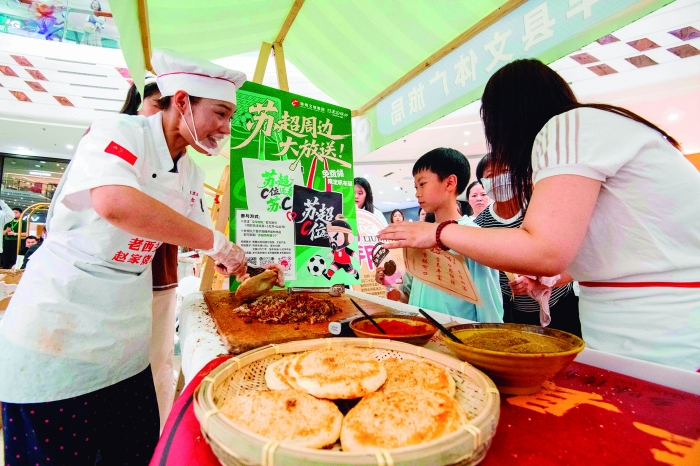
Core Viewpoint - The Chinese government is focusing on boosting consumption, particularly in the service sector, as a key economic strategy to adapt to changing consumer behavior and external uncertainties [1][3][5]. Group 1: Government Initiatives - In June, the People's Bank of China and other ministries issued guidelines to support consumption, emphasizing service consumption in areas like home services, elderly care, and cultural tourism [1]. - A new policy was introduced to provide 500 billion yuan in loans aimed at enhancing service consumption and supporting the elderly care sector, effective until the end of 2027 [9]. Group 2: Consumption Trends - In the first five months of 2024, retail sales of goods grew by 5.1% year-on-year, while service retail sales showed a slower growth of 5.2%, indicating a shift in consumer spending patterns [1][3]. - The average per capita service consumption expenditure in China is projected to reach 13,000 yuan in 2024, translating to a total service consumption expenditure of 18.3 trillion yuan nationwide [1]. Group 3: Economic Context - Analysts suggest that as the effectiveness of the "old-for-new" consumption subsidy policy diminishes, service consumption will become the primary driver for consumption growth in the latter half of the year [3]. - China's per capita GDP has surpassed 13,000 USD, indicating a transition towards a service-oriented consumption structure, similar to trends observed in developed countries [5][6]. Group 4: Challenges and Opportunities - Despite the growth in service consumption, there remains a significant gap compared to developed nations, with service consumption accounting for only 45.2% of total consumption in China, compared to 54.3% in the US and South Korea [6]. - Factors limiting service consumption include disposable income levels and social security systems, suggesting that improvements in these areas could enhance consumer confidence and spending [7][8]. Group 5: Recommendations for Growth - Analysts recommend increasing disposable income through job creation and enhancing social security, such as raising pension benefits, to stimulate service consumption [7]. - There is a call for targeted policies, such as consumption vouchers and subsidies, to specifically encourage service consumption, which is currently lagging behind goods consumption [8].