航天

Search documents
大国重器彰显创新底气——我国加快绘就高水平科技自立自强新图景
Xin Hua She· 2026-02-08 07:10
Core Viewpoint - The article emphasizes China's commitment to technological self-reliance and innovation, showcasing significant advancements in various fields as a reflection of the country's strength in scientific research and development [1]. Group 1: Major Technological Achievements - The 300 MW F-class heavy-duty gas turbine, the largest and highest technology level turbine independently developed in China, consists of over 50,000 precision components and represents a significant leap from "following" to "independent research" [2][3]. - The successful operation of the first prototype of the gas turbine has generated 196 million kWh of electricity, validating its stability in real grid environments [3]. - China's space program is set to achieve a record 92 launches by 2025, with the Tianwen-2 mission and the deployment of 265 scientific projects on the Chinese space station [4]. Group 2: Innovations in Research and Development - The "Fendouzhe" submersible has completed the world's first continuous manned deep dive in the Arctic, marking a significant advancement in China's deep-sea exploration capabilities [4]. - The "China Sky Eye" telescope has made breakthroughs in radio astronomy, including uncovering the origins of fast radio bursts, showcasing China's leading position in this field [6][10]. - The establishment of various scientific facilities across China, such as the 37 technology platforms in Huairou Science City and the protein facilities in Shanghai, highlights the country's commitment to fostering innovation through collaboration [7]. Group 3: Policy and Institutional Support - Reforms in funding mechanisms, such as the "package system" for research funding, have empowered research teams to focus on innovative projects without bureaucratic constraints [6][7]. - The continuous improvement of the talent cultivation and evaluation system aims to eliminate rigid criteria that hinder scientific progress, allowing for a more dynamic research environment [10]. - The article underscores the importance of a supportive institutional framework in driving innovation and maintaining China's position as a global leader in scientific research [7][10].
追觅CEO称每天研发投入4000万;泡泡玛特王宁:LABUBU去年全球销量超1亿只;OpenAI首款硬件命名曝光丨邦早报
创业邦· 2026-02-08 01:08
Group 1 - OpenAI's first hardware product is named Dime, resembling Apple's AirPods, and is expected to be released this year. The company has shifted its strategy from developing a high-end device to focusing on a simpler AI audio headset due to high hardware costs and component price increases caused by a shortage of storage chips [2] - Bubble Mart's founder Wang Ning announced that LABUBU's global sales exceeded 100 million units last year, with plans for the company to have over 10,000 employees and 100 million registered members by 2025 [3] - Tesla plans to increase investments in AI hardware and software, as well as energy sectors in China, with a projected capital expenditure exceeding $20 billion globally in 2026 [8] Group 2 - Amazon will change its policy on sharing reviews among product variants starting February 12, 2026, to improve customer trust and reduce return rates [8] - The German industrial output declined by 1.1% in 2025, marking the fourth consecutive year of decline, primarily due to weak automotive production [14] - The second-hand car market in China is projected to see a cumulative transaction volume of 20.11 million units in 2025, with a year-on-year increase of 2.5% [14]






商业航天,利好!
Zhong Guo Zheng Quan Bao· 2026-02-08 00:28
Group 1 - China successfully launched a reusable experimental spacecraft on February 7, using the Long March 2F rocket, aimed at validating reusable spacecraft technology for peaceful space utilization [1] - Shanghai aims to enhance its industrial economy by focusing on advanced manufacturing and developing six emerging pillar industries, targeting new sectors such as smart terminals, commercial aerospace, and low-altitude economy, with a goal of creating a trillion-level industry increment [2] - As of January 2026, China's foreign exchange reserves reached $339.91 billion, an increase of $4.12 billion from December 2025, marking a 1.23% rise [2] - China's gold reserves increased by 40,000 ounces to 74.19 million ounces by the end of January, representing the 15th consecutive month of gold accumulation by the central bank [2] Group 2 - The International Energy Agency (IEA) predicts that global electricity demand will grow at an average annual rate exceeding 3.5% until 2030, with renewable energy and nuclear power expected to account for 50% of the global electricity mix by that year [3] - The IEA reports that renewable energy generation is on track to surpass coal generation by 2025, driven by record deployments of solar power facilities [3] - The National Bureau of Statistics, along with other governmental bodies, has released guidelines to cultivate data circulation service institutions, including data exchanges and service platforms, to promote the marketization of data elements [5][6] - The guidelines propose targeted policies to support the development of high-quality datasets for artificial intelligence and encourage diverse trading models for data exchange [4]
商业航天传来利好消息;中国黄金调整回购规则|21早新闻
2 1 Shi Ji Jing Ji Bao Dao· 2026-02-07 23:20
Company Developments - Qianwen extended the validity period of its Spring Festival free card from February 23 to February 28, allowing purchases not only for milk tea but also for meals, eggs, vegetables, and snacks, with integration into Hema stores nationwide [5] - Xiaoma Zhixing and Moer Thread reached a strategic cooperation, marking the large-scale application of domestic AI computing power in key training and simulation processes, indicating the entry of Moer Thread's full-function GPU into the core field of autonomous driving [5] - Major A-share listed pig companies, including Muyuan, New Hope, and Wens, reported January sales figures, showing year-on-year growth in pig product sales, although Wens and New Hope experienced a month-on-month decline while Muyuan saw a slight increase [5] Industry News - In January, the futures market in China saw a significant increase in total funds, exceeding 400 billion yuan, reaching a historical high of 2.57 trillion yuan, with client equity rising to approximately 2.39 trillion yuan, a 19% increase from the end of 2025 [3] - Jinglin Hong Kong Company significantly reduced its holdings in Nvidia in Q4 2025, elevating Alphabet to its largest position and initiating a new purchase of Broadcom, while maintaining a positive outlook on China's consumer and e-commerce sectors by increasing its stake in Pinduoduo by 61,130 shares [3] - As technology and software stocks faced heavy selling, short sellers gained floating profits of up to 24 billion USD (approximately 166 billion yuan), with hedge funds increasing their short positions in large tech stocks despite significant price corrections [3]

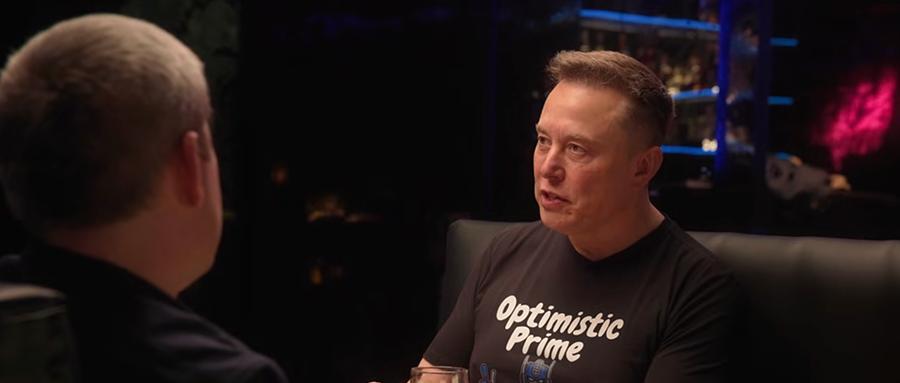
马斯克最新访谈,信息量爆炸!
Sou Hu Cai Jing· 2026-02-07 15:20
Core Insights - The conversation highlights the intersection of AI advancements, global competition, and energy constraints, emphasizing the need for a navigational roadmap for the future [2][5] Group 1: AI and Space - The future of AI deployment is predicted to be in space within the next 36 months, as it will become the cheapest location for AI operations due to energy availability [4][14] - Energy costs on Earth are a significant barrier, with only 10-15% of data center costs attributed to energy, while the majority is tied to GPU expenses [7][8] - Space solar panels are five times more efficient than those on Earth, eliminating the need for battery storage, making space a more viable option for energy generation [10][12][13] Group 2: US-China Competition - China is positioned as a manufacturing powerhouse, with its mineral refining capabilities being double that of the rest of the world combined, particularly in critical areas like gallium refining [19][20][21] - The labor force in China is four times larger than that of the US, providing a significant advantage in skilled labor for manufacturing, especially in robotics [23][24][28] - China's electricity output is projected to exceed that of the US by three times, indicating a substantial industrial capacity that could dominate AI and electric vehicle manufacturing unless the US achieves breakthrough innovations [28][33] Group 3: xAI and Digital Economy - xAI's revenue is currently around $1 billion, with potential to reach tens of billions by tapping into the digital human market, which could unlock trillions in revenue opportunities [35][38] - The digital output of leading companies like OpenAI and Nvidia illustrates the high value of digital products, suggesting that a human simulator could create a highly valuable company overnight [37][39] Group 4: Management Philosophy - The company focuses on identifying and addressing bottlenecks, with the CEO prioritizing time on issues that slow progress, ensuring efficient operations [41][42] - Open meeting styles are encouraged to prevent information from being "sugar-coated," allowing for transparent discussions on challenges faced by the company [43]
马斯克重磅发声:三年内部署AI成本最低的地方在太空,Optimus是“无限印钞机”
华尔街见闻· 2026-02-07 12:35
Core Insights - Elon Musk predicts that within 30 to 36 months, space will become the most cost-effective location for deploying AI due to Earth's electrical power constraints [6][30][17] - Musk envisions launching 100 gigawatts (GW) of AI computing power annually into space, aiming to exceed the total AI computing power on Earth within five years [9][50][55] - The xAI business model targets a trillion-dollar market by creating "digital humans" capable of performing various tasks, which Musk believes could generate significant revenue [11][18] - The Optimus robot is described as an "infinite money printer," with its production expected to scale significantly, enhancing the competitiveness of U.S. manufacturing [14][18] Group 1: Space AI Computing - Musk emphasizes that the efficiency of solar panels in space is five times greater than on Earth, eliminating the need for expensive battery storage systems [8][27] - He warns of an impending surplus of chips that cannot be powered due to stagnant electrical output outside of China [7][82] - The plan involves launching approximately 10,000 Starship missions annually to achieve the necessary power and computing capacity in orbit [9][52] Group 2: xAI and Digital Humans - Musk's xAI aims to emulate human tasks digitally, potentially unlocking trillions in revenue as it competes with existing tech giants [11][18] - He anticipates that by the end of the year, significant advancements in digital human simulation will be achieved [12] - The strategy relies on rapid hardware iteration and vertical integration capabilities from Tesla and SpaceX [12] Group 3: Optimus and Manufacturing - The Optimus robot is positioned as a critical factor for U.S. manufacturing competitiveness, with Musk highlighting the need for innovation to counter China's manufacturing dominance [14][15] - Musk proposes building a "TeraFab" chip factory to overcome current supply chain limitations and meet the growing demand for chips [15][69] Group 4: Energy and Supply Chain - Musk discusses the necessity of self-manufacturing energy equipment to support the ambitious AI and robotics plans [15][46] - He notes that the current supply chain for energy components is insufficient to meet the rapid expansion required for his projects [15][46] - The company aims to produce solar panels domestically, targeting an annual output of 100 GW [38][50]

抢抓“太空算力”产业发展窗口
Xin Lang Cai Jing· 2026-02-07 07:22
Core Insights - The recent news about Musk's application to launch 1 million satellites to build an orbital data center has sparked significant discussion, particularly regarding the emerging industry of space computing, which is expected to have immense potential in the future [1] Group 1: Industry Potential - Space computing has been recognized as one of the three emerging business areas in commercial aerospace by the National Space Administration of China, with expectations to establish a space computing center within three to five years [1] - Shanghai is highlighted as having a unique first-mover advantage in the space computing industry due to its solid industrial foundation and strong demand for application scenarios [1] Group 2: Recommendations for Development - A proposal has been made to focus on core technology breakthroughs by establishing a "Shanghai Space Computing Technology Breakthrough Special Fund" and creating a cross-disciplinary innovation consortium [2] - The establishment of a "National Key Laboratory for Space Computing (Shanghai)" and an in-orbit technology verification platform is recommended to advance research and testing in space edge computing, cloud computing, and distributed computing [2] Group 3: Industry Ecosystem and Collaboration - The proposal emphasizes optimizing the industrial spatial layout by nurturing leading enterprises and industry clusters, particularly supporting local aerospace companies to extend into the space computing field [2] - It suggests forming a space computing industry alliance to integrate various segments such as chips, satellites, launches, operations, and applications, thereby creating a self-controlled industrial ecosystem [2] - There is a call for deepening collaborative efforts with neighboring provinces to build a cross-regional industrial chain cluster and to actively engage with national satellite projects to secure more core tasks and resources for Shanghai [2]
iPhone,获批“上天”
财联社· 2026-02-07 05:50
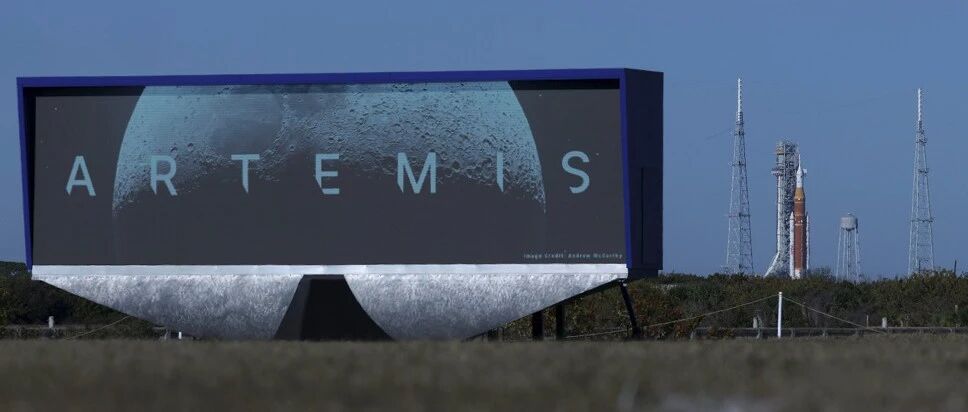
允许宇航员"带手机"这件事,还有更深层次的意味。艾萨克曼表示,借此挑战了长期沿用的工作流程,并在压缩的时间表内完成了现代硬件 的航天飞行认证。 NASA透露,在任务中配发的手机为iPhone,未来也有可能会认证其他设备。 根据日程,Crew-12任务定于2月11日起飞,4名宇航员将搭乘SpaceX的龙飞船,带着iPhone前往国际空间站,展开为期6个月的驻站工作。 作为NASA时隔半个世纪的首次载人月球任务,"阿耳忒弥斯2号"则因燃料泄漏问题至少延期至3月,4名宇航员将在为期10天的旅程中绕月飞 行,测试后续登月任务所需的硬件和系统。虽然航天器不会着陆,但此行将挑战把人类带到距离地球前所未有的深空—— 目前的纪录是"阿 波罗13号"在1970年创下的400,171公里 。 消费电子产品"上天"不易 由于太空中的环境复杂,针对地球环境设计的消费电子产品要进入太空,需要经过复杂且缓慢的测试和审批流程。 即将挑战人类最远深空航行的NASA宇航员,将随身携带苹果公司的智能手机一起前往月球,解锁商用消费电子产品的全新使用场景。 NASA局长贾里德·艾萨克曼在一则社交媒体帖子中表示, 从前往国际空间站的Crew-12任务 ...

马斯克的太阳能,不是给地球用的?
Sou Hu Cai Jing· 2026-02-07 03:05
Core Insights - Tesla is urgently recruiting personnel for solar projects, aiming to establish 200GW of solar capacity in the U.S. within three years, which is ten times the current solar capacity in the U.S. and half of China's annual new installations [1][3] Group 1: Strategic Overview - Musk's solar plan is a comprehensive strategy termed "energy leap," which includes three phases: establishing ground-based production, deploying solar panels in space, and creating a self-sustaining ecosystem with AI [3][4] - The goal is to reduce solar component costs to below $0.1 per watt, facilitating mass production for space deployment [3][6] Group 2: Industry Dynamics - The push for solar energy is driven by the ongoing competition between the U.S. and China in the solar industry, with China currently holding 80% of global solar production capacity [5][6] - Tesla aims to bypass Chinese production by leveraging technological advancements, focusing on HJT and perovskite technologies to significantly reduce costs [6] Group 3: Energy Trends - The underlying logic of Musk's solar strategy is the explosive demand for AI computing power, which is in stark contrast to Earth's resource limitations [7] - Training advanced AI models consumes electricity equivalent to that of a medium-sized city over several months, while global AI energy demand could exceed 100 terawatts in the next decade [7] Group 4: Public Perception - There are misconceptions about the commercialization of space solar power, with expectations of a significant demand surge for low-orbit satellite solar power by 2025 [8][9] - Technological advancements in HJT and perovskite materials have already been validated for space applications, countering claims of immaturity [9] Group 5: Future Implications - Musk's solar strategy highlights a shift in competitive dimensions from cost control to ecosystem integration, with Tesla creating a unique barrier through vertical integration [10] - Investment opportunities are shifting towards critical equipment and materials rather than component manufacturing, indicating a need for strategic focus in the industry [10] - The recruitment drive signals a growing demand for energy engineers, space system architects, and AI operations experts in the coming decade [10]

马斯克3小时对话,猛料不断:机器人将成“造钱永动机”
3 6 Ke· 2026-02-07 01:43
Core Insights - Elon Musk revealed ambitious plans for SpaceX and Tesla, including the potential for SpaceX to conduct 10,000 to 30,000 launches annually and for its space computing power to exceed the global total in five years [2][5][6] - The acquisition of xAI by SpaceX has raised its valuation to $1.25 trillion [2][4] - Tesla's AI5 chip is expected to enter mass production in Q2 of next year, with the AI6 chip to follow within a year [2][7] Group 1: SpaceX and AI Computing - SpaceX plans to launch up to 1 million low Earth orbit satellites to create an orbital data center for AI computing [5] - Musk predicts that in 30 to 36 months, space will become the cheapest place for AI computing deployment, with solar panel efficiency in space being five times that on Earth [5][6] - The cost of solar panels in space could be one-tenth of their cost on Earth, with a target of producing 100 GW of solar cells within a year [5][7] Group 2: Tesla's Chip Manufacturing - Tesla is working on the TeraFab concept to increase chip production capacity, as current foundries are insufficient [7] - The AI5 chip is set for mass production in Q2 next year, while the AI6 chip will follow shortly after [7] - Musk emphasized that the main limitation for computing power in space will be chips, while energy will be the primary constraint until then [7] Group 3: Optimus Robot Development - The production capacity for the Optimus robot is projected to reach 1 million units in three years and potentially 10 million in four years [2][12] - Musk refers to Optimus as a "money-making perpetual motion machine," highlighting its potential for exponential growth in capabilities [12] - The development of humanoid robots relies on advancements in digital intelligence, AI chips, and mechanical dexterity [12][13] Group 4: Competitive Landscape and Innovation - Musk warned that without breakthrough innovations in the U.S., China could dominate AI, electric vehicle manufacturing, and humanoid robot production [4][14] - China currently leads in mineral refining capabilities, producing about twice as much as the rest of the world combined [14] - Tesla is establishing more refining plants in the U.S. to compete with China's dominance in battery materials [14] Group 5: Talent Acquisition and Management - Musk shared insights on his hiring philosophy, emphasizing the importance of assessing candidates based on their unique capabilities rather than just resumes [15][16] - During Apple's push into electric vehicles, they aggressively recruited Tesla engineers, offering double their salaries without interviews [15] - Musk's management style includes detailed engineering reviews and a preference for open communication across all levels of the organization [16]