厨电

Search documents
家电行业2025年中报业绩前瞻:内销政策拉动延续,关税扰动出口不改长期趋势
Shenwan Hongyuan Securities· 2025-07-09 08:42
Investment Rating - The report maintains a "Positive" outlook on the home appliance industry for the mid-2025 performance forecast [3] Core Insights - The home appliance sector is expected to benefit from domestic sales policies and the "old-for-new" program, which is driving demand for major appliances and kitchen appliances [4][5] - The air conditioning industry saw a cumulative production of 101.54 million units from January to May 2025, representing an 8% year-on-year increase, while sales reached 103.49 million units, up 9% year-on-year [4][17] - The report identifies three main investment themes: 1. **White Goods**: The reversal of real estate policies and the "old-for-new" program are expected to catalyze growth in the white goods sector, which is characterized by low valuations, high dividends, and stable growth [5][6] 2. **Exports**: Companies like Ousheng Electric are recommended due to stable income growth driven by large customer orders, while Dechang shares are highlighted for their expanding automotive parts business [6] 3. **Core Components**: The report suggests that the demand for core components will exceed expectations due to the strong performance of white goods, recommending companies like Huaxiang and Shun'an Environment for their competitive advantages [6] Summary by Sections 1. Air Conditioning and Major Appliances - The air conditioning sector is experiencing high growth in exports, with a 11% year-on-year increase in external sales from January to May 2025 [4][17] - The "old-for-new" policy is expected to enhance the average price of white goods, with major companies like Midea and Gree projected to see revenue growth of 8% and 5% respectively in Q2 2025 [4][29] 2. Kitchen Appliances - The kitchen appliance market is recovering due to real estate policies and the "old-for-new" program, with online sales of range hoods and gas stoves increasing by 17.5% and 16.5% respectively [40] - Companies like Boss Appliances are maintaining strong market shares in the kitchen appliance sector, with expected revenue growth of 5% in Q2 2025 [41] 3. Small Appliances - The small appliance sector is benefiting from high growth in domestic sales and exports, with companies like Supor and Joyoung expected to see revenue increases of 5% and 120% respectively in Q2 2025 [4][41] - The "old-for-new" policy is set to include small appliances, which is anticipated to significantly boost sales [5][20] 4. New Displays and Lighting - The emerging display market is at a turning point, with companies like Hisense and Jimi Technology expected to see revenue growth of 5% in Q2 2025 [4][5] 5. Investment Highlights - The report emphasizes the potential for a rebound in the home appliance sector driven by favorable policies and market conditions, recommending a combination of leading companies such as Midea, Haier, and Gree for investment [5][6]





亿田转债盘中上涨2.05%报206.747元/张,成交额2.42亿元,转股溢价率1.09%
Jin Rong Jie· 2025-07-09 06:05
Company Overview - Zhejiang Yitian Intelligent Kitchen Appliances Co., Ltd. was founded in 2003 and is located in Shengzhou, Zhejiang, known as the capital of kitchenware in China [2] - The company specializes in high-end kitchen appliances and integrated kitchen solutions, aiming to create a healthy, open, and intelligent kitchen for millions of families [2] - Yitian is recognized as the first publicly listed company in the integrated stove industry on the Shenzhen Stock Exchange (stock code: 300911) and has received the Zhejiang Provincial Government Quality Award [2] Financial Performance - For the period from January to March 2025, Yitian reported operating revenue of 57.58 million yuan, a year-on-year decline of 54.59% [2] - The net profit attributable to shareholders was -42.6 million yuan, representing a year-on-year decrease of 1042.01% [2] - The non-recurring net profit was -45.8 million yuan, showing a year-on-year drop of 4533.1% [2] Convertible Bond Details - Yitian's convertible bond rose by 2.05% to 206.747 yuan per bond, with a trading volume of 242 million yuan and a conversion premium of 1.09% [1] - The bond has a credit rating of "AA-" and a maturity of 6 years, with interest rates increasing from 0.30% in the first year to 2.50% in the sixth year [1] - The conversion price for the bond is set at 21.31 yuan, with the conversion period starting on June 27, 2024 [1]
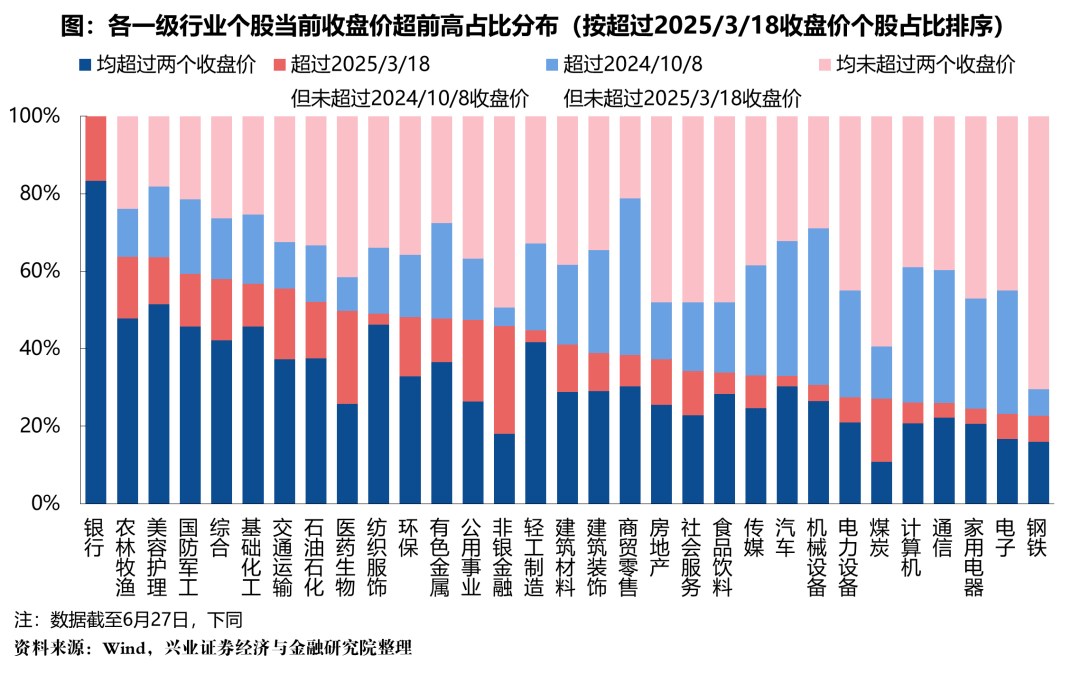
兴证策略:指数新高后,当前各行业股价分布如何?
Sou Hu Cai Jing· 2025-06-27 14:23
Group 1 - The Shanghai Composite Index has recently surpassed the annual high set on March 18, 2025, and is approaching the high from October 8, 2024, indicating a significant market movement [1] - There is a noticeable divergence among various sectors, with banking, agriculture, personal care, military, chemical, transportation, and petrochemical industries showing a higher proportion of stocks exceeding their March 18, 2025 closing prices [1] - Conversely, sectors such as steel, electronics, home appliances, telecommunications, computers, and electrical equipment have a lower proportion of stocks exceeding their March 18, 2025 levels [1] Group 2 - In the secondary industry analysis, financial (banking, insurance, diversified finance), military (naval equipment, ground weaponry), agriculture (animal health, agricultural products, planting, feed), precious metals, personal care products, and chemical pharmaceuticals show a higher proportion of stocks exceeding their March 18, 2025 closing prices [4] - Sectors like home appliances, electrical equipment, TMT (television broadcasting, communication services, consumer electronics, semiconductors, optical electronics), general steel, and machinery (engineering machinery, automation equipment) have a lower proportion of stocks exceeding their March 18, 2025 levels [4] - Comparing to the October 8, 2024 closing prices, banking, motorcycles, military (ground weaponry, aerospace equipment), chemicals (plastics, non-metallic materials), and new consumption (entertainment products, personal care products, retail, accessories) show a higher proportion of stocks exceeding their previous levels [4]

亿田智能20250625
2025-06-26 14:09
Summary of Yitian Intelligent Conference Call Company Overview - **Company**: Yitian Intelligent - **Industry**: AI and Smart Home Appliances Key Points and Arguments Strategic Partnerships and Collaborations - Yitian Intelligent is collaborating with Yuanxu Technology to expand its industrial chain and promote the development of domestic computing power, particularly through a strategic partnership with the government of Qingyang to build a 100,000-card computing power cluster and a new productivity ecosystem [2][3] Product Development and Market Expansion - The company plans to launch a smart wristband chip by 2028, with a framework agreement valued at 5.5 billion yuan, contingent on the progress of Huiyuan Technology [2][5] - Yitian Intelligent is focusing on integrating kitchen appliances into the smart home ecosystem through AI voice control and smart home system integration, while also expanding its market in the split kitchen appliance sector [4][9] Financial Developments - The company has increased its comprehensive credit line by 4 billion yuan, bringing the total to 6 billion yuan to meet operational and financing needs [2][7] AI Solutions and Revenue Growth - Yitian Intelligent's wholly-owned subsidiary, Shuyun Zhili, specializes in AI solutions across various sectors, with Q1 2025 revenue exceeding the total for 2024, indicating strong market opportunities and improved operational capabilities [2][8] Domestic vs. Overseas Chip Comparison - Domestic computing power chips have advantages in cost control, customization, and autonomy, particularly in edge computing and intelligent cockpit applications. In contrast, overseas chips lead in performance, ecosystem maturity, and established technology [2][6] Market Dynamics and Future Outlook - The company is actively seeking international market opportunities while considering cultural differences and policy dynamics. It aims to optimize its operational strategies to ensure sustainable growth amid market fluctuations [4][11][12] - Despite pressures in the integrated stove industry, Yitian Intelligent remains committed to its traditional business while exploring new business avenues [16][17] Business Segmentation and Future Plans - The company has segmented its business into traditional integrated stoves, main feeders, computing hardware, and AI applications, with a focus on long-term growth despite current uncertainties [13][16] Considerations for Convertible Bonds - Yitian Intelligent is monitoring the potential for strong redemption conditions for its convertible bonds, with future decisions to be based on board resolutions and investor feedback [10] Additional Important Information - The company is committed to maintaining its traditional business while adapting to new market demands and technological advancements, ensuring a balanced approach to growth and stability [12][17]
老板电器(002508) - 2025年6月20日投资者关系活动记录表
2025-06-23 09:18
Group 1: Core Competitiveness and Market Adaptation - The company's core competitiveness lies in its dynamic adaptability to market changes, emphasizing a "healthy operation over scale expansion" philosophy [2] - The organization fosters a culture of empowerment to stimulate team autonomy, transitioning from a focus on product specialization to a multi-brand strategy to address market segmentation [2][3] - Management's primary responsibility is to keenly sense environmental changes and unify strategic direction [2] Group 2: Channel Strategy Transformation - The company is shifting from a channel-driven approach to a dual-driven strategy focusing on products and brands [3] - Previously reliant on real estate dividends for deep channel coverage, the company is now enhancing product innovation and brand building to stimulate demand [3] Group 3: Resource Allocation between R&D and Marketing - Product development is essential for consumer communication, requiring balanced investment in both R&D and marketing [4] - Effective marketing is crucial for converting high-quality products into sales, while a strong product foundation supports brand sentiment [4] Group 4: Internationalization Strategy - The company identifies three key opportunities for globalization: scale support for resource investment, supply chain optimization to reduce manufacturing costs, and a shift from recruiting distributors to establishing direct subsidiaries [5] - A dual approach of "self-built + acquisition" is being pursued to establish direct operations in Southeast Asia and North America while seeking acquisitions that complement the main business [5] Group 5: Multi-Brand Strategy and High-End Positioning - The "Boss" and "Mingqi" brands are distinctly positioned, with "Boss" focusing on high-end specialty stores and "Mingqi" targeting lower-tier market distribution [6] - Differentiated product design and channel strategies are employed to prevent cognitive conflicts between the two brands [6] Group 6: Competitive Advantages Against Comprehensive Appliance Brands - The company maintains three competitive advantages: comprehensive coverage of kitchen appliance product lines, cost advantages from self-built supply chains, and a deep understanding of cooking scenarios [7] - The company’s terminal stores enhance consumer recognition through "professional experience zones," reinforcing its image as a technology leader [7] Group 7: Balancing Growth and Profitability - The company emphasizes dynamic adjustments in operations, focusing on scale growth during transformation phases and optimizing profit quality during stabilization [7] - Current efforts are directed towards creating new demand in existing markets, moving away from reliance on real estate dividends and adopting user operation models from fast-moving consumer goods companies [7]

2025年家电行业中期策略报告:聚焦"以旧换新"政策红利与新兴市场出口机遇:内需焕新增势,外需多元拓疆-20250620
Shenwan Hongyuan Securities· 2025-06-20 10:13
Group 1 - The report highlights the significant improvement in demand and the rebound in valuation for the white goods sector, with a notable increase in air conditioning sales driven by the "trade-in" policy [6][19][34] - In 2024, the cumulative domestic sales volume of household air conditioners reached 104.45 million units, a year-on-year increase of 5%, with Q4 showing a remarkable 24% growth compared to Q3 [19][20] - The report emphasizes the strong performance of the kitchen appliance sector, which was included in the subsidy list for the first time in 2024, leading to high retail growth [34][35] Group 2 - The white goods sector is characterized by low valuation, high dividends, and stable growth, making it an attractive investment opportunity [2][9] - The report identifies three main investment themes: the stability of the white goods sector, the growth potential of new consumer categories like clean appliances, and the second growth curve for upstream core component manufacturers [9][10] - The report notes that the export demand remains robust, particularly in emerging markets such as Southeast Asia, South America, and Africa, which are expected to significantly boost appliance sales [2][9] Group 3 - The report indicates that the overall valuation of the white goods sector is at a near-bottom level, providing a high cost-performance ratio for investors [8][39] - Institutional holdings in the sector are strong, with public funds maintaining a high allocation to white goods stocks, reflecting continued optimism in the sector's performance [43][44] - The report forecasts a favorable outlook for 2025, driven by domestic policy support and strong demand from emerging markets [50]

2025年第23周:数码家电行业周度市场观察
艾瑞咨询· 2025-06-20 09:08
Group 1: Kitchen Appliances and AI Integration - The kitchen appliance industry is facing challenges due to changing consumer preferences, with a focus on attracting younger users through AI-integrated smart products like the "Food God" model [1] - Companies are exploring diversification, optimizing designs, and accelerating international expansion to adapt to market conditions, including real estate downturns and overseas competition [1] - Future opportunities lie in expanding the food industry chain and leveraging AI to lower cooking barriers, reshaping market dynamics [1] Group 2: AI Glasses Market - The global sales of AI glasses are projected to reach 600,000 units in Q1 2024, marking a 216% year-on-year increase, significantly outpacing VR and AR products [2] - Despite the promising growth, challenges such as design balance, insufficient SKUs, and production capacity issues remain, with the upcoming 618 shopping festival being a critical test for domestic AI glasses [2] - The next two to three years are deemed crucial for competition in the AI glasses market, necessitating Chinese brands to enhance their efforts in rule-making and technological breakthroughs [2] Group 3: Space Computing - INAIR's new AI space computer emphasizes lightweight design and efficient multi-window operations, while Apple’s Vision Pro integrates digital and physical worlds but faces high pricing and limited battery life [4] - Meizu's StarV Air2 offers lightweight daily assistance but lacks capabilities for complex tasks, representing different approaches to space computing [4] - Success in this field will depend on meeting user needs and adapting to practical scenarios [4] Group 4: Bathroom Industry Trends - The bathroom industry is evolving from functional spaces to comfort-oriented environments, with trends focusing on scene-based, intelligent, and age-friendly designs [5] - Brands are showcasing comprehensive solutions and customized offerings at industry exhibitions, enhancing user experiences [5] - The shift from scale competition to value competition emphasizes technological depth and humanistic care to meet diverse consumer demands [5] Group 5: AI Glasses Market Challenges - The AI glasses market is experiencing rapid growth, with ten new products launched in May, and hardware performance aligning with high-end smartphones [6] - Despite advancements, the industry faces challenges such as the lack of "killer" features and insufficient user experience, with AR glasses dominating the market [6] - By Q1 2025, sales are expected to grow by 45%, but AI features are not the core selling point, indicating a need for practical optimization and scenario expansion [6] Group 6: AI Model Market Dynamics - The domestic AI model market is transitioning from a "hundred models war" to a consolidation phase, with major players like ByteDance, Alibaba, and Tencent competing through various strategies [7] - Emerging companies are rapidly gaining traction, while some established players are shifting focus towards application scenarios [7] - Future competition will prioritize technological implementation and productization capabilities, with resources and innovation being key determinants of success [7] Group 7: Automotive Industry and Humanoid Robots - The automotive sector is increasingly showcasing humanoid robots, with 19 major car manufacturers entering the field, driven by advancements in generative AI [8] - Despite having supply chain advantages, the industry faces challenges in supply chain management, commercial orders, and technical bottlenecks [8] - Overall, humanoid robots are still in the early stages, with technology and market acceptance being critical hurdles [8] Group 8: Data Industry and Economic Value - The global trend of restricting data flow is highlighted by the U.S. NIH's ban on Chinese access to key databases, prompting China to accelerate its digital economy initiatives [9] - By 2025, the goal is for the core digital economy sectors to account for over 10% of GDP, with the data industry projected to reach 7.5 trillion yuan by 2030 [9] - The establishment of high-quality data sets supports domestic model development, but challenges in data quality and utilization efficiency persist [9] Group 9: Refrigerator Market Innovations - The refrigerator market is expected to see growth in Q1 2025, driven by fiscal subsidies and technological innovations, with mid-to-high-end products leading the way [10] - Major brands like Haier and Bosch are focusing on differentiation through preservation, health management, and design [10] - Meeting the demands of younger consumers through preservation upgrades and AI applications is crucial for future growth [10] Group 10: Strategic Collaborations and Investments - Meitu and Alibaba have entered a strategic cooperation involving a $250 million convertible bond, focusing on e-commerce, AI technology, and cloud computing [14][15] - This partnership aims to enhance Meitu's capital structure and broaden its shareholder base while driving breakthroughs in respective fields [15] - Hong Kong Investment Management Company, known as "Hong Kong's Temasek," is actively investing in AI computing and hard technology, managing over HKD 62 billion [18] - Honor is entering the robotics sector with significant investments planned for AI research and hardware development, showcasing its technological capabilities [19]





国漫+短剧+快闪……华帝美肌浴热水器树立整合营销新标杆
Zheng Quan Zhi Xing· 2025-06-20 03:38
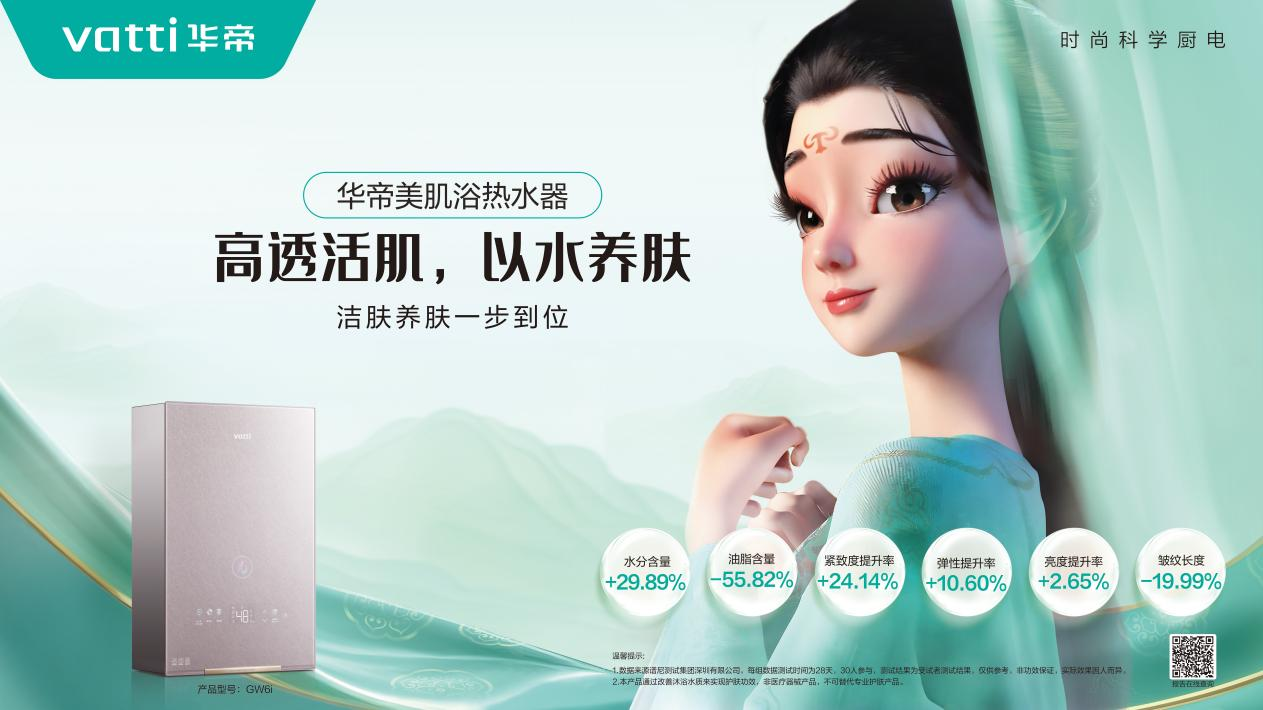
Core Insights - The article highlights how Vatti has innovatively integrated cultural elements and modern technology in its marketing strategy for the "Beauty Bath" water heater, utilizing the digital persona of Yang Guifei to connect with consumers in a unique way [1][2][4] Group 1: Marketing Strategy - Vatti has successfully blended online and offline channels to create a comprehensive marketing campaign, featuring the Yang Guifei digital persona and a custom short drama that intertwines ancient stories with modern aesthetics [1][2] - The short drama "The Contract of the Two Souls" launched on Douyin has garnered significant attention, achieving a total view count of 16.76 million and over 40,000 interactions by June 11 [4] - The marketing campaign includes immersive pop-up events in major cities, where consumers can experience the product firsthand and engage in skincare consultations [6][8] Group 2: Cultural Integration - The Yang Guifei digital persona serves as a bridge between ancient culture and modern skincare, effectively aligning the product's benefits with traditional beauty ideals [2][4] - The narrative of the short drama creatively incorporates the product into the storyline, allowing for a seamless introduction of the water heater's features without overt commercialization [4][6] Group 3: Consumer Engagement - Vatti's marketing approach emphasizes emotional connections with consumers, focusing on the philosophy of "valuing oneself" in daily bathing rituals [8] - The integration of various marketing elements, such as digital personas, short dramas, pop-up events, and music festivals, creates a multi-faceted engagement strategy that resonates with a younger audience [8]

从技术引领到标准输出,华帝站稳厨电行业“制高点”
Zhong Jin Zai Xian· 2025-06-18 09:02
Core Viewpoint - The recent establishment of the industry standard T/CITS 406 - 2025 for embedded steam and baking machines, led by Vatti and the China Household Electrical Appliances Research Institute, signifies a shift towards technology innovation and user experience in the high-end kitchen appliance sector, moving away from price competition [1][7] Group 1: Industry Standards and Innovations - The implementation of the new standard is expected to curb the phenomenon of "price internal competition" in the industry, guiding companies to focus on technological innovation and enhancing user experience [1][7] - Vatti's microcrystalline flat baking technology represents a significant advancement, allowing for precise temperature control with a temperature difference of ≤6℃ within the same layer and ≤15℃ across the entire space, while reducing preheating time by 40% [3][5] - The FA50P embedded steam and baking machine, utilizing this technology, addresses common user pain points such as uneven cooking and cleaning difficulties, thereby enhancing the overall cooking experience [4][5] Group 2: Market Trends and Consumer Preferences - The household appliance market (excluding 3C) reached a retail scale of 179.8 billion yuan in Q1 2025, showing a year-on-year growth of 2.1%, with embedded appliances emerging as a new growth point [3] - Consumers are increasingly prioritizing quality of life, leading to higher demands for the performance and user experience of steam and baking machines, focusing on cleanliness, health, and multifunctionality [3][5] - Vatti's strategic positioning as a "world health steam and baking master" reflects its commitment to addressing industry pain points through innovative technologies, thereby reshaping the high-end value standards of the steam and baking category [9]

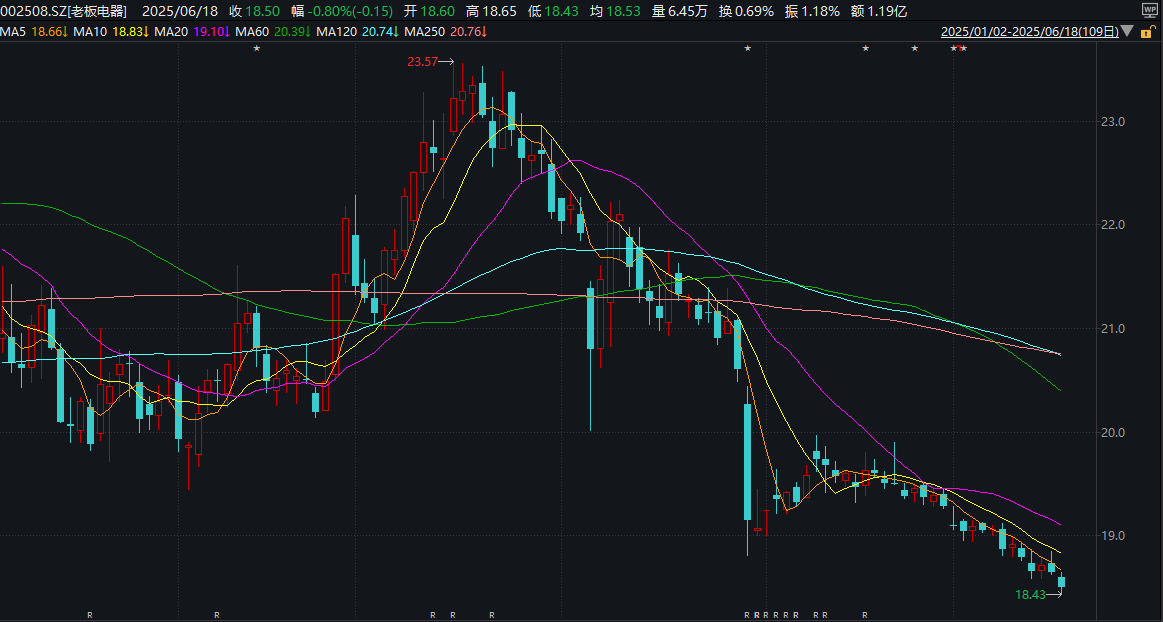
老板电器一季度营收净利双降 深陷“纸面富贵”却沉迷分钱
Xin Lang Zheng Quan· 2025-06-18 08:54
Core Viewpoint - The "trade-in" policy has boosted retail sales in the home appliance sector, yet the company Boss Electric has reported disappointing first-quarter results for 2025, indicating a decline in revenue and profit despite a slight increase in gross margin [1][3]. Financial Performance - In Q1 2025, Boss Electric achieved total revenue of 2.076 billion yuan, a year-on-year decrease of 7.2% [1]. - The net profit attributable to shareholders was approximately 340 million yuan, down nearly 15% year-on-year [1]. - The company experienced a cash outflow of about 187 million yuan from operating activities, contrasting with a cash inflow of 54.89 million yuan in the same period of 2024 [1]. - The gross margin increased by 2.08 percentage points to 52.7%, but the net profit margin fell by 1.49 percentage points compared to Q1 2024 [1]. Market Dynamics - The sales of core products, particularly range hoods and gas stoves, have not met expectations, contributing to the negative growth in Q1 2025 [7]. - Despite the overall market for range hoods and gas stoves showing growth rates of 12.1% and 11.7% respectively from January to April 2025, Boss Electric's performance diverged from these trends [7]. - The company has heavily relied on the real estate sector for its sales, with a significant portion of revenue coming from engineering channels [8]. Product Structure - Boss Electric's product structure is heavily skewed towards a few key categories, with range hoods and gas stoves accounting for 73.4% of total revenue in 2024 [3]. - The revenue from other products like dishwashers and integrated stoves is significantly lower, indicating a lack of diversification [3]. Cash Flow and Receivables - The company's accounts receivable have been increasing, reaching 1.782 billion yuan in Q1 2025, which is 5.3 times the net profit for the same period [9]. - The accounts receivable turnover days exceeded 80 days, marking a 34% increase compared to the end of 2024 [9]. Corporate Governance and Incentives - Despite financial struggles, the company has maintained high dividend payouts, distributing a total of 1.416 billion yuan in cash dividends in 2024, which accounted for 103.9% of net profit [12]. - Executive compensation has been rising, with significant increases in salaries for top management, raising concerns about alignment with company performance [12][13]. - The stock option exercise price has been lowered, indicating a potential dilution of shareholder value [13].