
餐饮

Search documents
3G资本管理合伙人谈PE并购消费品牌:优选标的、长期持有、深度运营
IPO早知道· 2026-03-07 02:06
Core Insights - 3G Capital employs a unique acquisition investment model, focusing on deep operational involvement and management ownership, differing from traditional private equity funds [4][6] - The firm emphasizes the importance of talent over experience, believing that younger leaders can drive success [4][6] - 3G Capital's successful investment in Restaurant Brands International (RBI) has yielded approximately 30 times return on investment, highlighting the effectiveness of their strategy [4][6] Investment Strategy - Each fund of 3G Capital invests in only one company, allowing for deep analysis and commitment to that investment [11][12] - The firm prioritizes finding great companies that can be empowered by technology rather than disrupted by it, focusing on simple business models [6][41] - 3G Capital's approach includes a long-term perspective, often taking years to build relationships before making investments, as seen in their acquisition of Hunter Douglas [18][19] Operational Philosophy - The management philosophy at 3G Capital stresses that leaders must think like owners, fostering a culture of accountability and high standards [25][26] - The firm encourages decentralized decision-making, allowing teams the freedom to determine how to achieve set goals while maintaining alignment on objectives [26][27] - 3G Capital's team consists of individuals with both investment and operational experience, enhancing their ability to drive value in acquired companies [17][34] Lessons Learned - The experience with Kraft Heinz taught 3G Capital the importance of thoroughly assessing company quality and understanding market dynamics, leading to refined investment processes [37][38] - The firm recognizes the risks associated with customer concentration and the need for a diversified customer base to mitigate potential disruptions [39][40] Future Outlook - 3G Capital aims to be a preferred partner for family-owned businesses seeking long-term stewardship, aligning with their investment philosophy [43][44] - The firm is committed to maintaining a culture that attracts top talent by offering significant responsibilities and opportunities for growth [34][46]


A 股长牛真的来了吗?银发消费如何掘金?长白山之巅这场盛会,大咖共话破局之路
凤凰网财经· 2026-03-06 13:15
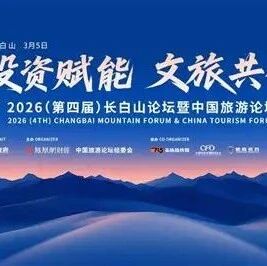
Core Viewpoint - The article discusses the integration of cultural tourism and capital investment, highlighting the opportunities for development amidst global geopolitical changes and economic uncertainties. The Fourth Changbai Mountain Forum emphasizes the importance of sustainable development and high-quality economic growth in the tourism sector [1]. Group 1: Forum Overview - The Fourth Changbai Mountain Forum, held on March 5, 2026, focuses on the theme of investment empowerment and the symbiosis of cultural tourism [1]. - The forum is guided by the Jilin Province Baishan City government and co-hosted by various organizations, aiming to explore new paths for high-quality regional economic development [1]. Group 2: Key Insights from Officials - Baishan City Vice Mayor Li Yan emphasized the city's strategy to broaden the transformation of its natural resources into economic benefits, focusing on sectors like cultural tourism, health, and clean energy [1]. - Phoenix Media CFO Lv Jing highlighted the role of media in promoting Chinese values and connecting investment resources to support the high-quality development of the real economy [3]. Group 3: Tourism Industry Analysis - The tourism industry in China is entering a phase of mass and normalized development, with projections indicating 6.522 billion domestic trips and expenditures of 6.3 trillion yuan by 2025 [8]. - Despite having rich tourism resources, many areas like Zhangjiajie and Huangshan are struggling financially, indicating a need for significant improvements in the tourism sector [9]. Group 4: Emerging Trends and Innovations - The entry of cross-industry players into the tourism market is noted, with figures like Yu Minhong and Dong Yuhui gaining attention, although their understanding of the core tourism industry is questioned [10]. - Companies like MOGOBUS are innovating by integrating autonomous driving technology into tourism, proposing that self-driving buses can enhance the visitor experience [11]. Group 5: Consumer Behavior and Market Dynamics - Data from the recent Spring Festival indicates a 6% increase in travel and spending, but there are concerns about declining per capita consumption [13]. - Consumers are increasingly willing to pay for unique experiences rather than just scenic views, indicating a shift in spending behavior [14]. Group 6: Recommendations for Industry Upgrades - Suggestions for upgrading the tourism industry include empowering younger individuals to lead innovation, promoting local IP development, and creating consumption clusters through regional cooperation [16]. Group 7: Financial and Economic Insights - The financial landscape is undergoing significant changes, with a historical low net interest margin of 1.42% for commercial banks, which poses challenges for traditional banking models [35]. - Predictions suggest a structural bull market for A-shares from 2025 to 2026, with a shift in asset allocation towards equity markets as residents optimize their wealth distribution [42][44].
消费组行业深度研究报告:服务消费迎来黄金十年
Huachuang Securities· 2026-03-06 12:08
Investment Rating - The report maintains a "Recommendation" rating for the consumer services sector, indicating a positive outlook for investment opportunities in this industry [4]. Core Insights - The report identifies that service consumption in China is entering a "golden decade," transitioning from basic survival needs to higher-level life experiences and values [2][15]. - It emphasizes the evolution of consumer demand, highlighting a shift from physical goods to service-oriented experiences, which are becoming the core of consumption growth [18][21]. - The analysis framework includes "demand progression," "supply upgrade," and "policy empowerment," suggesting a systematic approach to understanding the future of service consumption in China [7]. Summary by Sections 1. Service Consumption Enters a Golden Decade - Consumer demand is evolving from basic survival needs to life enjoyment and value, with significant improvements in living standards driving this change [15]. - The past two decades have seen saturation in basic physical consumption, leading to a focus on quality and service experiences [2][15]. 2. New Engines of Consumption - The report identifies two new engines driving consumption: the standardization and industrialization of service demands, and the shift from services supporting physical goods to services being the primary offering [5][21]. - The younger generations (Y and Z) are becoming the main consumer force, emphasizing emotional and experiential consumption [22][25]. 3. Supply-Side Dynamics - The report discusses the collaborative evolution of industry, technology, and talent, which is driving the upgrade of service consumption [5][18]. - The rise of AI and technology is expected to enhance service efficiency and consumer experience significantly [5][18]. 4. Policy Support - The report notes that both demand and supply sides are being supported by government policies aimed at boosting service consumption, with various initiatives being rolled out since 2025 [5][18]. 5. Investment Opportunities in Sub-Sectors - **Dining**: The report highlights the trend of chain restaurants focusing on supply chain integration and service experience as key competitive advantages, recommending companies like Gu Ming and Hai Di Lao [5][8]. - **Retail**: It discusses the transformation of retail formats to enhance shopping experiences, recommending companies like Yonghui Supermarket [5][8]. - **Cultural Tourism**: The shift from sightseeing to experiential tourism is noted, with recommendations for companies like Shoulv Hotel and Jinjiang Hotel [5][8]. - **Education**: AI is reshaping educational experiences, with a focus on vocational education, recommending companies like Fenbi and China Oriental Education [5][8]. - **IP Toys**: The transition from toys to emotional assets is highlighted, with recommendations for companies like Pop Mart and Chuangyuan [5][8]. - **Pet Healthcare**: The report notes the growth in demand for specialized pet healthcare services, recommending companies like Ruipai Pet Hospital [5][8]. - **Gaming**: Opportunities in overseas markets and new user demographics are emphasized, with recommendations for companies like Century Huatong and Perfect World [5][8]. - **Health and Wellness**: The report discusses the transformation of insurance models to include health services, recommending companies like China Ping An and China Life [5][8]. - **Physical Consumption**: The shift from selling products to selling lifestyles is noted, with recommendations for companies like Midea and Kweichow Moutai [5][8].
武汉发出“赏樱请柬”,316项文旅体商活动陆续登场
第一财经· 2026-03-06 11:59
Core Viewpoint - Wuhan is set to launch a series of activities for the 2026 "Cherry Blossom Viewing" season, aiming to attract both domestic and international tourists through a diverse range of events and experiences [3][5]. Group 1: Event Overview - The theme for this year's cherry blossom activities is "Romantic Wuhan, Blossoming All the Way," featuring a total of 316 events across five categories: culture and tourism, sports, business, investment promotion, and gardening [3]. - In the cultural and tourism sector, Wuhan has organized 130 activities, including various "Cherry Blossom+" experiences at major scenic spots and neighborhoods [3][4]. Group 2: Economic Impact - Last year's cherry blossom season saw the East Lake Cherry Blossom Garden receive 1.0636 million visitors, with 77.33% being from outside the city, making it the top destination for flower viewing in the country [5]. - Hotel bookings in Wuhan increased by 180% during the cherry blossom season, with a 550% surge in bookings linked to specific events like the performance by Dao Lang [5]. - The introduction of the new cherry blossom marathon attracted 70,000 participants, generating a total consumption effect of nearly 300 million yuan, a year-on-year increase of 40.2% [5]. Group 3: Investment and Business Activities - The cherry blossom season serves as a significant economic lever for Wuhan, facilitating over 2.7 billion yuan in signed agreements during three economic and trade events [5]. - Wuhan is implementing a combination of promotional strategies, including consumer vouchers and incentives for various sectors, to stimulate local economic activity [4].

还需多久,阿里能让美团从地图上消失
水皮More· 2026-03-06 11:09
Core Viewpoint - The article emphasizes the importance of cash flow over accounting profits when evaluating a company's financial health, using McDonald's and Meituan as case studies to illustrate the differences between cash flow and reported losses [5][6]. Group 1: Company Analysis - McDonald's has a total asset of $59.5 billion and total liabilities of $61.3 billion, yet it maintains a strong cash flow with operating cash flow of $10.6 billion after capital expenditures and interest payments, indicating financial stability despite negative net assets [5]. - Meituan reported a significant operating cash outflow of 22.2 billion yuan in Q3 2025, despite a reported loss of 18.6 billion yuan, highlighting a discrepancy between accounting losses and cash flow realities [6]. - The increase in Meituan's prepaid items by 7.4 billion yuan suggests a substantial amount of cash is tied up in loans that have not yet been recovered, further complicating its cash flow situation [6]. Group 2: Financial Projections - As of September 30, 2025, Meituan has 99.2 billion yuan in cash and 42.1 billion yuan in short-term investments, indicating a total liquidity of approximately 140 billion yuan available for operations [6][7]. - Meituan's projected cash outflow for Q4 is estimated at 15 billion yuan, with expectations of reduced losses compared to Q3, suggesting a potential improvement in cash flow management [7]. - The company has options to raise additional funds through asset sales and debt issuance, with a recent issuance of 7.1 billion yuan in bonds indicating confidence from the debt market [7][8]. Group 3: Market Sentiment - The bond market's strong demand for Meituan's recent debt issuance, with a subscription rate of over 3.7 times, reflects a positive outlook on the company's financial health despite its current challenges [7]. - Internal confidence is further demonstrated by the company's leadership's decision to invest in acquisitions, such as the purchase of Dingdong, indicating a belief in the company's long-term viability [8].

餐饮行业热门赛道盘点:背后的爆款逻辑是什么?
虎嗅APP· 2026-03-06 09:59
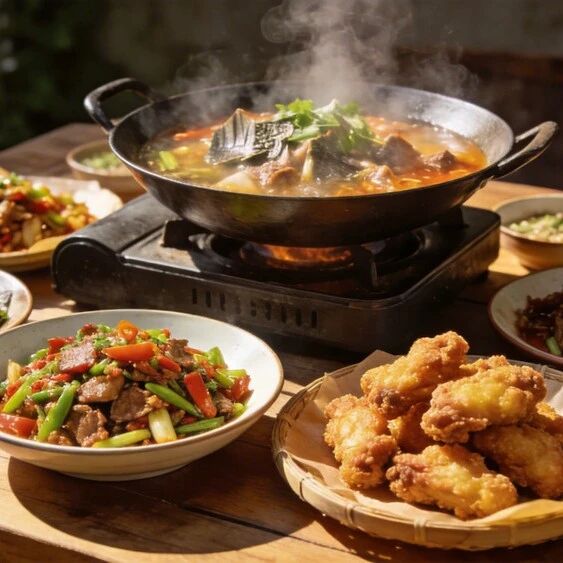
Core Insights - The article discusses the trends and dynamics of the Chinese restaurant industry as it enters a phase of stock competition, with a focus on innovation in products and business models to adapt to changing consumer demands and market conditions [4][6]. Group 1: Industry Growth and Trends - In 2025, China's restaurant industry is projected to achieve a revenue of 5.8 trillion yuan, reflecting a year-on-year growth of 3.2%, with the revenue from large-scale dining units reaching 1.63 trillion yuan, up by 2.0% [6]. - The overall market size continues to expand, but the growth rate is slowing, indicating a shift from expansion-driven growth to a focus on efficiency and quality [6][11]. - The number of restaurant outlets in China is expected to exceed 7.7 million by the end of 2025, marking a 3.1% increase from the previous year [8]. Group 2: Popular Product Trends - In 2025, several popular food items are emerging, including butter rice cakes and milk skin sugar-coated hawthorn, which gained significant traction on social media platforms [16][17]. - The popularity of these products is rooted in their familiarity to consumers, allowing for quick understanding and acceptance, while brands enhance them through innovative ingredient combinations and presentation [17][21]. Group 3: Innovative Business Models - The rise of "beautiful meals" and "mountain wild" dining concepts reflects a growing consumer demand for visually appealing and health-oriented dining experiences [23][24]. - Self-service models are gaining traction, with brands expanding their offerings to include semi-self-service options, catering to consumer desires for diverse experiences and budget control [35]. - Large store formats are becoming a strategic focus for brands, shifting from merely selling products to offering immersive dining experiences that enhance brand value [32]. Group 4: Regional and Niche Market Growth - Jiangxi stir-fry is rapidly gaining popularity, with a 287.5% increase in related business registrations in 2025, and over 20,000 outlets nationwide [39][40]. - The fried chicken market is projected to reach 113 billion yuan by 2026, with a year-on-year growth of 20.2%, driven by a surge in brand expansion and consumer interest [42]. - Freshly made ice cream is experiencing significant growth, with brands leveraging local ingredients and high visual appeal to attract consumers [44]. - The "Benbang" noodle segment is also gaining traction, characterized by its fresh cooking methods and diverse toppings, with several brands achieving chain development [46]. Conclusion - The restaurant industry is evolving towards a more innovative and diversified landscape, where the ability to adapt to consumer preferences and enhance product offerings will be crucial for sustained competitiveness [49].
西贝命悬一线:贾国龙卸任CEO、大幅关店裁员丨36氪独家
36氪· 2026-03-06 09:56
Core Viewpoint - The article discusses the significant challenges faced by Xibei, a Chinese restaurant chain, including leadership changes, layoffs, and store closures, as well as the need for strategic adjustments to survive in a competitive market [7][12][24]. Group 1: Leadership Changes - Before the Spring Festival, Jia Guolong stepped down as CEO of Xibei, with former CEO Dong Junyi returning to the position, indicating a shift back to experienced leadership [7][8]. - Dong Junyi is perceived as more in touch with frontline operations, which may stabilize the company during turbulent times [7]. Group 2: Layoffs and Store Closures - Xibei announced significant layoffs due to a sharp decline in business volume, with plans to reduce the number of headquarters employees from over 500 to around 200 [9][10]. - The company has closed approximately 150 out of 350 stores, with discussions ongoing about further closures to ensure survival [11][12]. Group 3: Financial Strategies - Xibei is implementing cost-cutting measures, including reducing employee salaries and downsizing office space, as part of a broader effort to stabilize finances [14][19]. - The company is seeking to raise funds from investors, offering more favorable valuations than in the past, and has initiated internal fundraising among employees with profit-sharing incentives [19][22]. Group 4: Operational Adjustments - Xibei is shifting its operational focus, reducing the average customer spending by 20% and moving food preparation from central kitchens to individual stores to enhance service quality [23]. - The company is also adjusting its menu and marketing strategies to better align with consumer preferences, although challenges remain in achieving positive results [23][24]. Group 5: Market Position and Consumer Perception - Xibei's pricing strategy has come under scrutiny, with consumers perceiving the brand as expensive compared to competitors, which has affected customer satisfaction [34][45]. - The company has historically maintained high-quality ingredients, but this has not translated into consumer loyalty, highlighting a disconnect between cost and perceived value [39][46]. Group 6: Future Outlook - Investors express cautious optimism about Xibei's potential for recovery, noting the need for the company to focus on core business operations and improve cost management [63][64]. - The company faces a critical juncture where it must adapt to changing consumer demands and market conditions to ensure long-term viability [65][66].

“联名混战”时代,麻六记为什么能持续出圈?
新浪财经· 2026-03-06 09:29
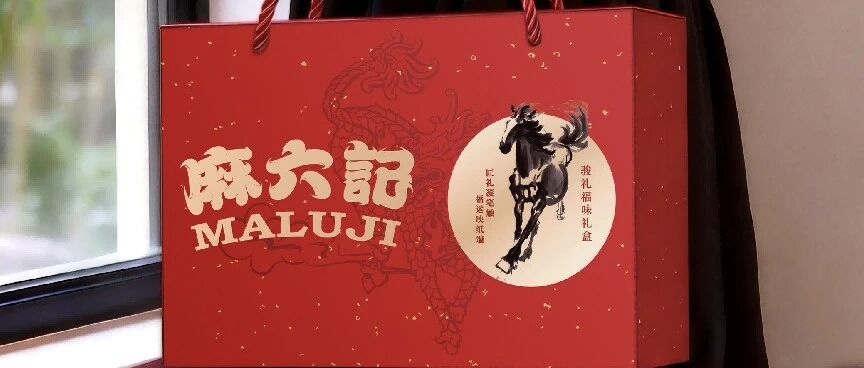
Core Insights - The restaurant industry is facing a significant challenge characterized by "difficulties in dish innovation and brand homogenization," leading to a fierce competition where brands struggle to establish differentiated advantages [2] - Data indicates that nearly three million restaurant outlets are expected to close in 2024, with the trend continuing into 2025, highlighting a severe industry shakeout [2] - The closure rates for small restaurants (fewer than 10 outlets) have increased from 27% to 34% within three months, with about 50% closing within six months, while larger chain brands see a closure rate of nearly 40% within six months [2] Differentiation Strategies - Malu Ji has successfully navigated the competitive landscape by adopting a differentiated approach through high-frequency and high-quality IP collaborations, transforming from a mere food provider to a cultural lifestyle symbol [2][12] - Collaborations with notable IPs such as Beibingyang and Zhu Bingren have allowed Malu Ji to create unique consumer experiences that resonate with cultural heritage and emotional value [12][15] - The partnership with Capybara "It It" has proven particularly effective, selling over 30,000 joint meal sets and generating significant online sales, demonstrating the potential of local IPs in driving consumer engagement [4][12] Cultural and Emotional Engagement - Malu Ji's strategy emphasizes the integration of cultural elements and emotional connections, as seen in their limited edition Spring Festival gift boxes in collaboration with the Xu Beihong Art Museum, which sold out quickly and showcased the conversion of cultural value into commercial success [8][12] - The brand's focus on local culture and intangible heritage has led to the establishment of a closed-loop growth model that enhances revenue through cultural empowerment and scene-breaking strategies [12][15] Brand Positioning and Market Trends - The rise of the "collaboration economy" in the consumer market is evident, with the market size expected to reach 300 billion yuan by 2025, indicating a growing trend in brand collaborations [27] - Malu Ji's approach to collaborations is not merely a marketing tactic but a strategic integration of various business operations, enhancing brand relevance across multiple consumer scenarios [30] - The brand prioritizes partnerships that align with its values, focusing on heritage and craftsmanship, which elevates both product quality and brand perception [30][31] Long-term Value Creation - The shift from attracting traffic to retaining customer loyalty is crucial, as consumers increasingly seek cultural experiences and lifestyle expressions rather than just dining [24] - Malu Ji's evolution reflects a broader industry trend where brands that prioritize value and long-term relationships with consumers are more likely to thrive amid market challenges [31]
西贝命悬一线:贾国龙卸任CEO、大幅关店裁员|独家
36氪未来消费· 2026-03-06 08:51
Core Viewpoint - The article discusses the challenges faced by Xibei, a Chinese restaurant chain, highlighting its significant operational struggles, management changes, and the need for strategic adjustments to survive in a competitive market [5][11][29]. Group 1: Management Changes - CEO Jia Guolong stepped down, and former CEO Dong Junyi returned to stabilize the company, indicating a shift towards experienced leadership [5][6]. - Xibei announced layoffs and a reduction in headquarters staff from over 500 to approximately 200, reflecting the company's dire financial situation [7][9]. - The company is closing stores aggressively, with reports indicating that 150 out of 350 stores have already shut down, and further closures are anticipated [10][11]. Group 2: Cost-Cutting Measures - Xibei is implementing cost-saving strategies, including reducing employee salaries and downsizing office space, as part of its efforts to manage expenses [12][13]. - The company is also seeking to raise funds from investors, offering more favorable terms than in previous rounds, indicating a desperate need for capital [20][21]. - Xibei's operational adjustments include a focus on reducing menu prices by 20% and shifting food preparation from central kitchens to individual stores to cut costs [28]. Group 3: Financial Struggles - The company has faced significant cash flow issues, with expenditures such as a 300 million yuan consumer voucher program exacerbating its financial strain [26]. - Xibei's net profit margin is reported to be between 3% and 5%, which is considerably lower than competitors like Haidilao and Yum China, indicating challenges in cost management [44][45]. - The company has been criticized for high operational costs, including expensive ingredients and employee wages, which have not translated into higher customer satisfaction or sales [46][56]. Group 4: Market Position and Consumer Perception - Xibei's pricing strategy has come under scrutiny, with consumers perceiving the brand as expensive without corresponding value, leading to declining customer traffic [52][59]. - The company has struggled to adapt to changing consumer preferences, particularly in a market increasingly focused on value and affordability [78][79]. - Despite past successes, Xibei's inability to align its offerings with current market demands has led to a significant decline in its competitive position [36][38].
社服视角学习2026年《政府工作报告》心得体会
Bank of China Securities· 2026-03-06 06:30
Investment Rating - The industry investment rating is "Outperform the Market" [12] Core Insights - The government work report emphasizes stabilizing growth and expanding domestic demand, which is expected to boost consumption across various sectors, particularly in social services [1][3] - The report sets a GDP growth target of 4.5%-5% for 2026, indicating a focus on enhancing consumer confidence and spending capacity through various policy measures [1][3] - The service consumption sector is anticipated to maintain strong growth due to policy incentives and structural reforms, with a notable emphasis on high-quality development in cultural tourism and related industries [1][3] Summary by Relevant Sections Government Work Report Highlights - The report outlines specific actions to stimulate consumption, including the implementation of a rural resident income increase plan and the promotion of consumer loans [6] - It mentions a special fund of 250 billion yuan to support consumption upgrades and the establishment of a 100 billion yuan financial collaboration fund to promote domestic demand [6] - The report also highlights the importance of enhancing public services and consumer rights protection to foster consumer confidence [6] Service Consumption Sector - The report indicates that the service sector's contribution to economic growth was 52.0% in 2025, with service retail sales growing by 5.5% year-on-year, outpacing goods retail sales [3][6] - The cultural tourism sector is expected to benefit from policies aimed at enhancing the quality of tourism services and expanding inbound tourism [3][6] - The report emphasizes the need for high-quality development in cultural tourism, sports events, and outdoor activities, which are projected to drive further growth in the sector [3][6] Investment Recommendations - The report suggests focusing on travel-related companies such as Tongcheng Travel, China Duty Free Group, and various hotel brands that are likely to benefit from the recovery in business travel and increased market share [3] - It also recommends leading companies in the human resources sector, such as Beijing Renhe and Foreign Service Holdings, as beneficiaries of employment-promoting policies [3] - Additionally, it highlights opportunities in the cross-border e-commerce sector and companies benefiting from the recovery of the exhibition economy [3]