储能

Search documents
2.1GW+7.75GWh!中国电建签约阿联酋全球最大光储项目之一
中关村储能产业技术联盟· 2026-03-13 05:10
Group 1 - The core viewpoint of the article highlights that China Electric Power Construction (China Electric) has signed a significant EPC contract for the 2.1GW + 7.75GWh solar-storage project in Abu Dhabi, amounting to approximately 13.962 billion RMB, marking it as one of the largest integrated solar-storage projects globally [2] - The project is expected to enter full implementation and is scheduled to be operational by 2027, reflecting the accelerating global energy transition and the growing demand for solar-storage solutions [2] - China Electric's overseas business has shown strong performance this year, with overseas contracts amounting to 40.888 billion RMB, a year-on-year increase of 19.92%, raising the share of overseas business in new contracts from about 21% to approximately 27% [2]


【掘金行业龙头】储能+核聚变+数据中心,解决方案为BEST项目提供关键支撑,公司在国内储能产品连续四年出货量第二
财联社· 2026-03-13 04:53
Core Viewpoint - The article emphasizes the investment value of key events, industry chain companies, and significant policy interpretations, highlighting the importance of timely and professional insights in the market [1] Group 1: Industry Insights - The company has been a leader in the energy storage sector, ranking second in domestic shipment volume for four consecutive years [1] - The company has extensive operational experience with successful projects in North America, Europe, and the Middle East [1] Group 2: Project Support - The BEST project is supported by solutions in energy storage, nuclear fusion, and data centers, indicating a comprehensive approach to technological integration [1] - The company has established benchmark cases with multiple supercomputing and intelligent computing centers, showcasing its capabilities in data center development [1]

储能-战略地位升级-投资主线梳理及重点标的更新
2026-03-13 04:46
Summary of Key Points from the Conference Call Industry Overview - The global energy storage capacity is expected to grow by 70% to over 470 GWh by 2026, with a further growth rate of approximately 40% in 2027 [1][11] - The energy storage industry is generally valued at under 20 times earnings, indicating significant potential for valuation recovery compared to other sectors like transformers and gas turbines [1][2] Core Insights and Arguments - **AI Data Centers (AIDC) Demand**: AIDC is driving new demand for large-scale energy storage, with a 1 GW data center requiring 5 GW/20 GWh of storage [1][3] - **Policy Upgrades**: The Chinese government has classified new energy storage as one of six emerging pillar industries, enhancing its strategic importance [5] - **Investment Drivers**: The capacity pricing policy ensures project IRR exceeds 6%, prompting large-scale investments from state-owned enterprises by 2026 [5] - **European Market Dynamics**: The European market is entering a growth phase due to frequent negative electricity prices and policies mandating energy storage [1][7] - **Supply Chain Tightness**: The supply of battery cells for household storage is tight, dominated by three companies (瑞浦, 亿纬, and 鹏辉) with no new capacity, leading to increased profit margins [1][16] Market Dynamics - **Valuation Comparison**: Energy storage companies are valued significantly lower than transformer and gas companies, prompting a shift in investment [2] - **Regional Growth**: The Australian subsidy policy is expected to drive growth in household storage, while European subsidies are anticipated to support market expansion [2][4] - **Large-Scale Storage Growth**: The growth in large-scale storage is driven by the integration of renewable energy sources in China, Europe, and the U.S. [3][11] Emerging Trends - **Technological Advancements**: The transition to 1,500V systems is seen as a core advantage for leading companies like 阳光电源 in the AIDC sector [12] - **Market Opportunities**: The demand for energy storage is expected to rise due to energy security concerns exacerbated by geopolitical tensions [2][6] Company-Specific Insights - **阳光电源**: Expected to grow from 40 GWh in 2025 to over 70 GWh in 2026, with a projected net profit of 19 billion yuan, currently undervalued at under 20 times earnings [12] - **海博思创**: Anticipated to develop 50 GWh in the domestic market and 10 GWh for state-owned enterprises in 2026, with a profit forecast of 2.3 billion yuan [13] - **正泰电源**: Actively expanding in the U.S. market with a strong sales team and partnerships, aiming for significant growth in both storage and solar markets [14] - **艾罗能源**: Positioned for a profit rebound with a projected revenue increase to 7.5-8 billion yuan in 2026, benefiting from a large R&D team [15] - **鹏辉能源**: Expected to achieve a profit of 1.6 billion yuan in 2026, benefiting from tight supply in the household storage battery market [16] - **德业股份**: Projected to achieve over 5 billion yuan in profit in 2026, driven by diverse market presence and strong demand in Europe and Asia [17] Risks and Challenges - **Lithium Price Volatility**: The impact of lithium price fluctuations on the supply chain is diminishing, with recent price corrections observed [8] - **Regulatory Risks**: The U.S. MADE Act's implications are manageable for Chinese manufacturers through strategic sourcing [8] Conclusion - The energy storage sector is poised for significant growth driven by technological advancements, favorable policies, and increasing demand from various applications, particularly in the context of AI and renewable energy integration. The market presents substantial investment opportunities, especially for leading companies with strong positioning and innovative capabilities.




特斯拉(TSLA):AI赋能的产业颠覆者(智联汽车系列深度之47)
Shenwan Hongyuan Securities· 2026-03-13 02:58
Investment Rating - The report initiates coverage with a "Buy" rating for Tesla (TSLA) [2] Core Insights - Tesla is positioned as a leader in the electric vehicle industry, leveraging technology and innovation to drive transformation across its three main business segments: automotive, energy storage, and services [6][41] - The company is expected to see revenue growth supported by the expanding markets for electric vehicles and energy storage, with projected total sales reaching 1.7 million, 1.96 million, and 2.29 million units from 2026 to 2028 [6] - The Robotaxi business is anticipated to become a core revenue driver, with the global market projected to grow significantly, potentially reaching $66.6 billion by 2030 [6] - Tesla's humanoid robot, Optimus, is expected to open new growth avenues, with production plans aiming for a scale of 10 million units in the mid-term [6] Financial Data and Profit Forecast - Revenue projections for Tesla are as follows: - 2024: 702.24 billion RMB - 2025: 666.52 billion RMB - 2026: 714.43 billion RMB - 2027: 828.62 billion RMB - 2028: 1,003.93 billion RMB - Net profit forecasts are: - 2024: 50.97 billion RMB - 2025: 26.67 billion RMB - 2026: 20.78 billion RMB - 2027: 45.84 billion RMB - 2028: 71.42 billion RMB - The projected PE ratios for 2026 to 2028 are 502, 228, and 146 respectively [6][8][9] Business Overview - Tesla's automotive segment remains the core revenue driver, with a projected revenue of 506.7 billion RMB in 2026, 574.9 billion RMB in 2027, and 682.5 billion RMB in 2028 [8] - The energy storage segment is expected to see significant growth, with revenues projected to reach 725 billion RMB in 2024, driven by strong sales of Powerwall and Megapack products [54] - The services segment is also on a growth trajectory, with revenues expected to increase from 155.3 billion RMB in 2019 to 880.7 billion RMB by 2025 [57] Market Dynamics - The competitive landscape in the electric vehicle market is intensifying, particularly in China, where Tesla faces increasing competition from local manufacturers [6][10] - Despite market challenges, Tesla's focus on Full Self-Driving (FSD) technology and its manufacturing capabilities are expected to provide a long-term competitive advantage [6][10]

国泰海通|公用事业:调节电源的长期价值——火电VS储能
国泰海通证券研究· 2026-03-12 14:03
Core Insights - The article emphasizes the constraints on wind and solar power installations due to consumption limits, highlighting the clear profitability threshold for energy storage and the long-term value of thermal power as a foundational adjustment energy source [1]. Group 1: Renewable Energy Installations - The increasing installation of renewable energy sources is noted, with an expectation that national electricity consumption will double by 2060 based on a compound growth rate of around 1.7%. To achieve carbon neutrality by 2060, the share of thermal power must decrease to below 20%, with new installations primarily in wind and solar [2]. - Many regions are already struggling to achieve profitability from wind and solar power, with a consumption limit estimated at 30-40% of generated electricity. If installations exceed 50%, external transmission or internal energy storage is necessary [2]. Group 2: Energy Storage Demand - The demand for energy storage is projected to increase significantly, from 270 million kilowatts in 2026 to 920 million and 4.5 billion kilowatts by 2030 and 2060, respectively, based on the 1:1 storage rule for wind and solar energy [2]. - If grid dispatch capabilities are optimal, provinces that have not yet reached their consumption limits will eventually do so, suggesting that the peak demand for energy storage may be delayed until 2027-2029 [2]. Group 3: Economic Viability of Energy Storage - The economic feasibility of energy storage is contingent on charging costs between 0.1-0.2 yuan per kilowatt-hour, requiring a price differential of 0.4-0.5 yuan per kilowatt-hour to achieve profitability. Northern provinces with stable electricity loads and surplus wind and solar installations show a more optimistic price differential compared to southern provinces [3]. Group 4: Thermal Power Valuation - Thermal power is not considered to have excessively high return on equity (ROE), and maintaining current levels is not seen as unreasonable. However, its valuation is significantly lower than other industries, suggesting potential for revaluation once dividend yields are realized in 2026 [4].

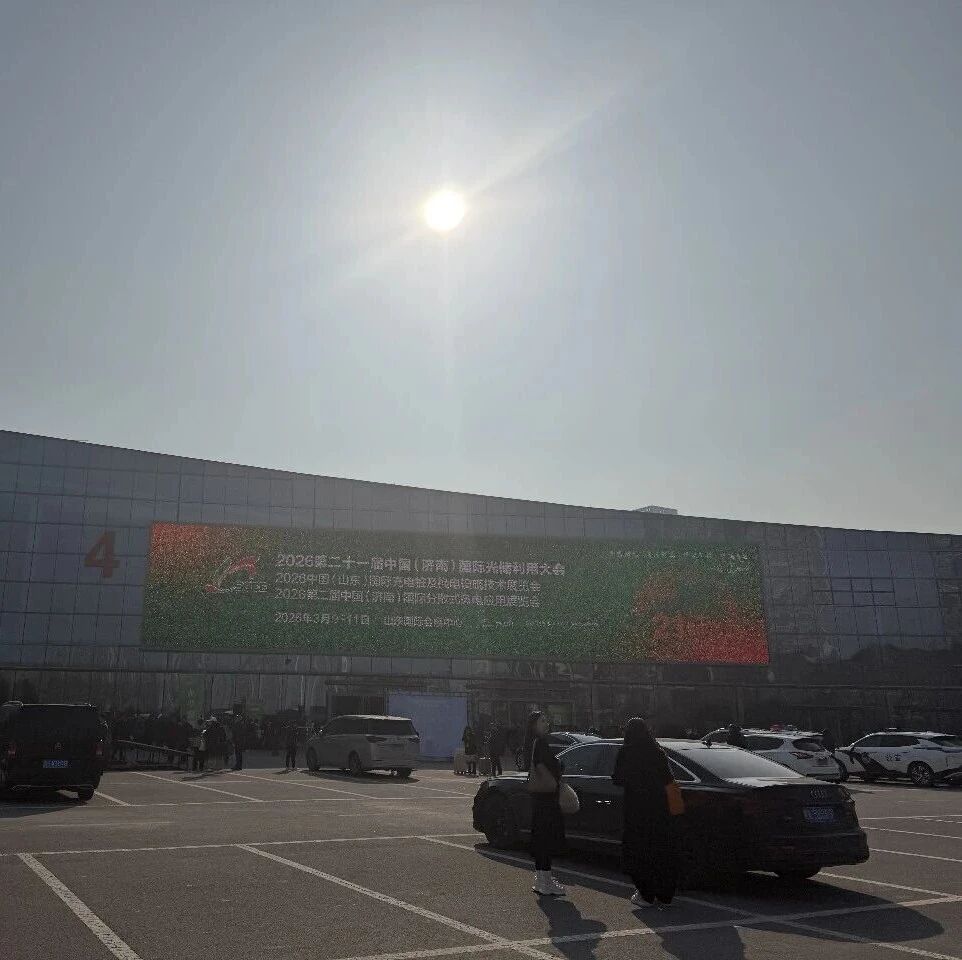
实探“新年光伏第一展”:规模收缩、光伏巨头集体缺位,还有哪些新看点
第一财经· 2026-03-12 13:01
Core Viewpoint - The 2026 Jinan International Photovoltaic and Energy Storage Utilization Conference reflects a shift from a focus solely on photovoltaic technology to an integration of photovoltaic and energy storage solutions, indicating a changing landscape in the industry [3][4]. Group 1: Exhibition Overview - The conference, held in Jinan, is recognized as a significant regional event in the distributed photovoltaic sector since its inception in 2007 [3]. - This year, the exhibition was renamed to emphasize the integration of energy storage with photovoltaic technology, marking a notable industry transition [4]. - The number of exhibitors, particularly major component manufacturers, has significantly decreased, with only a few large companies like Longi Green Energy and Jinko Solar participating [4]. Group 2: Market Sentiment and Pricing - Market sentiment appears more rational as the industry approaches a critical policy change regarding the cancellation of a 9% export tax rebate for photovoltaic products [8]. - Despite the impending policy change, there was no significant rush to secure shipments, indicating a cautious approach among industry players [8]. - The current market shows a disparity between high quoted prices and low actual transaction prices, with many companies experiencing pressure to lower prices due to reduced demand [10]. Group 3: Industry Trends - The exhibition highlighted a shift in exhibitor composition, with an increased presence of energy storage companies, reflecting the growing importance of energy storage in the industry [12]. - Longi Green Energy's recent acquisition of a storage company signifies its commitment to integrating energy storage solutions into its offerings, aligning with the industry's trend towards "photovoltaic + energy storage" [14]. - The integration of photovoltaic and energy storage solutions is seen as essential for adapting to the volatility of market electricity prices, suggesting a strategic pivot in how companies approach energy management [14].

抄中国作业了
债券笔记· 2026-03-12 10:47
Group 1 - The Shanghai Composite Index experienced a slight increase, with the chemical sector showing strength due to price increase expectations influenced by the conflict in Iran, particularly in methanol [2] - The demand for electric equipment and energy storage remains strong, supported by global electricity shortages, with companies in this sector receiving significant orders [2] - The establishment of the "Grid Utilization Alliance" by Google and Tesla aims to address peak and off-peak electricity issues, indicating a lag in their understanding compared to China's earlier initiatives [3] Group 2 - The International Energy Agency (IEA) members agreed to release 400 million barrels of emergency oil reserves, marking the largest coordinated release in history to stabilize the oil market amid Middle East conflicts [7] - The U.S. reported a CPI that met expectations, but it does not reflect the recent surge in energy prices, which could impact future economic conditions [8] - China's export data for January and February showed a significant increase, with exports rising 21.8% year-on-year, driven by factors such as the timing of the Lunar New Year and a low base from the previous year [8][9] Group 3 - Exports to non-U.S. regions, including Africa, ASEAN, and the EU, saw substantial growth rates of 49.9%, 29.4%, and 27.8% respectively, indicating strong demand despite high base figures [9] - The AI wave has led to a surge in related product exports, with integrated circuit exports increasing by 72.6% [10] - The upcoming cancellation of export tax rebates for photovoltaic products has prompted companies to expedite exports before the policy takes effect [10]
400GWh增量在即,AIDC储能红利谁来收割?
行家说储能· 2026-03-12 10:36
Core Viewpoint - The article discusses the emerging market for AIDC (AI Data Center) energy storage, highlighting the technological advancements and the competitive landscape as companies prepare for a significant shift in energy demands driven by AI and data centers [2][3][4]. Group 1: Market Trends and Developments - By 2026, AIDC energy storage is transitioning from technology validation to project trials, marking the beginning of large-scale development [3]. - The demand for energy storage in AIDC is projected to create a new trillion-dollar market, with estimates suggesting that 100GW of new AI data centers could require 200-400GWh of storage [2]. - Major technology companies are committing to self-sufficient power for AI data centers, indicating a trend towards decoupling AIDC from traditional power grids [2]. Group 2: Key Technological Directions - Four main trends are identified for AIDC energy storage: 1. Full architecture compatibility, requiring adaptation to both existing AC and next-generation high-voltage DC systems [5]. 2. Long-duration energy storage becoming a necessity, with requirements for sustained power supply exceeding 4 hours [5]. 3. Multi-technology collaboration, with sodium and lithium batteries being the current mainstream solution [5]. 4. Intelligent scheduling as a core capability, utilizing AI and big data for dynamic optimization of energy storage systems [5]. Group 3: Competitive Landscape - AIDC energy storage players are categorized into three types: native energy storage companies, technology and power equipment giants, and cross-industry participants [4]. - Companies like CATL and BYD are leading with specialized energy storage solutions tailored for AIDC applications, with BYD's blade battery application exceeding 30% in AIDC [6]. - New entrants and established players are rapidly developing solutions, such as Hicharge's lithium-sodium collaborative energy storage solution and Ronghe Yuan's green electricity direct connection system [6][7]. Group 4: Industry Collaboration and Events - Industry forums are being organized to facilitate collaboration and knowledge sharing among stakeholders, with events scheduled to discuss the synergy between AIDC and third-generation semiconductors [8]. - These forums aim to break down information silos and support companies in transitioning from planning to monetization of AIDC energy storage solutions [8].


超10GWh!又2企,这一地储能爆单
行家说储能· 2026-03-12 10:36
Core Insights - The article highlights the significant progress of two companies, Haibo Si Chuang and Trina Storage, in securing energy storage orders in Europe, indicating a robust growth trajectory in the European energy storage market [2][8]. Group 1: Company Performance - Haibo Si Chuang has secured over 4 GWh of energy storage orders across 15 countries in Europe, emphasizing its strong technical capabilities and full-stack service offerings [4][6]. - Trina Storage has reported over 6 GWh of signed orders in Europe, with a notable increase in expected shipments for 2026, reflecting a growing market presence [8][10]. Group 2: Market Trends - The European energy storage market is projected to add 27.1 GWh of new installations in 2025, representing a 45% year-on-year growth, marking the 12th consecutive year of growth [2]. - The article notes that Europe has become the fastest-growing region for energy storage globally, driven by increasing renewable energy penetration and policy support for system flexibility [10]. Group 3: Strategic Focus - Haibo Si Chuang focuses on large-scale projects and has established a presence in key markets such as Germany, the Baltic states, and Central Eastern Europe, with significant contracts in various segments [6][4]. - Trina Storage is expanding its product offerings, including the launch of new energy storage systems tailored to meet the evolving demands of the European market [8][10].
隆基佘海峰:超越光伏,构建韧性与协同的零碳能源体系
中国能源报· 2026-03-12 10:33
Core Viewpoint - The article emphasizes the importance of energy transition and the development of renewable energy as a crucial path for addressing global climate change, highlighting China's commitment to green and low-carbon development as a significant contributor to global climate governance [1]. Group 1: Energy Transition and Climate Governance - Liu Zhenmin stated that energy transition is key to addressing global climate change, and the development of renewable energy is essential for this transition [1]. - The article underscores the resilience of global climate governance and the need to accelerate energy transition and renewable energy development to contribute to modernization and sustainable development [1]. Group 2: Photovoltaic Industry Development - She Haifeng highlighted that the continuous improvement in photovoltaic (PV) conversion efficiency and cost reduction provides significant support for combating climate change [3]. - The cost of photovoltaic power generation has decreased by over 90% in the past decade, making it the most economical power source in most countries, thus laying a solid foundation for a just global energy transition [4]. - Technological innovation is crucial for the PV industry, with Longi Green Energy leading advancements in battery efficiency and product development [4]. Group 3: Technological Innovations and Future Directions - Longi's BC battery technology has significantly improved PV reliability and efficiency, with the Hi-MO 6 module achieving a maximum efficiency of 22.8% and the upcoming Hi-MO 9 module expected to reach 24.43% [5]. - The article emphasizes the need for continuous innovation in next-generation technologies, such as monocrystalline silicon batteries and perovskite-silicon tandem batteries, to enhance PV as a primary energy source [7]. Group 4: Challenges and Solutions in the PV Sector - The PV industry faces challenges such as industry cycles and the "duck curve" phenomenon, which creates operational pressures on the power grid as PV penetration increases [8]. - To build a resilient energy system, the integration of solar, storage, and hydrogen technologies is essential, with Longi entering the hydrogen sector in 2021 and planning to expand into energy storage by 2025 [8]. - The vision is to transition PV from a "cheap power source" to a more stable energy form, enhancing its reliability and integration into the energy system [8]. Group 5: Vision for a Green Energy Ecosystem - Longi aims to go beyond single PV generation to create a deeply integrated green energy ecosystem that covers the entire clean energy chain from generation to storage and usage [9]. - The "Global Energy Interconnection High-end Dialogue" event serves as a platform for innovative exchanges and practical cooperation in the energy sector, promoting forward-thinking and collaboration [9].