外卖

Search documents
外卖行业监管部门对外卖行业开展调查,即时零售监管动态回顾
First Shanghai Securities· 2026-01-15 09:52
Investment Rating - The report does not explicitly provide an investment rating for the industry Core Insights - The report highlights the initiation of an antitrust investigation by the State Council against the food delivery industry, focusing on issues such as "subsidy wars, price competition, and traffic control" [2] - The investigation is expected to accelerate industry reshuffling, shifting platforms from "traffic competition" to "value creation," ultimately benefiting consumers, merchants, delivery personnel, and platforms [2] - Future trends in the food delivery market are identified as technology-driven efficiency, supply chain optimization, and regulatory evolution aimed at balancing consumer rights, merchant profits, and delivery personnel welfare [4] Summary by Sections Regulatory Developments - The report outlines a timeline of regulatory actions against food delivery platforms, including multiple rounds of discussions and the signing of a self-regulatory food safety management agreement by eight platforms [3] Market Dynamics - The report notes that high-value orders are becoming a key competitive focus, with Meituan capturing over 66% of orders above 15 yuan and 70% of those above 30 yuan [4] - The increase in high-value order proportions indicates that acquiring and retaining high-quality users will be crucial for sustainable platform development [4] Technological Advancements - Platforms are expected to invest in AI algorithms and smart scheduling to enhance fulfillment efficiency, indicating a shift towards technology-driven operations [4] Company Highlights - Alibaba's Gaode Map launched a new feature that attracted over 600,000 merchant reservations within five days, showcasing the demand for digital tools among offline businesses [5][6] - Tencent continues to lead the global mobile gaming market, with its flagship game "Honor of Kings" generating over $2 billion in revenue, contributing to its strong market position [7] - ByteDance is increasing its option grant prices to enhance talent retention and competitiveness, reflecting its commitment to maintaining a strong workforce amid global talent competition [8][9]
2026外卖行业有了新风向标!千问APP全面接入淘宝闪购
Di Yi Cai Jing Zi Xun· 2026-01-15 09:45
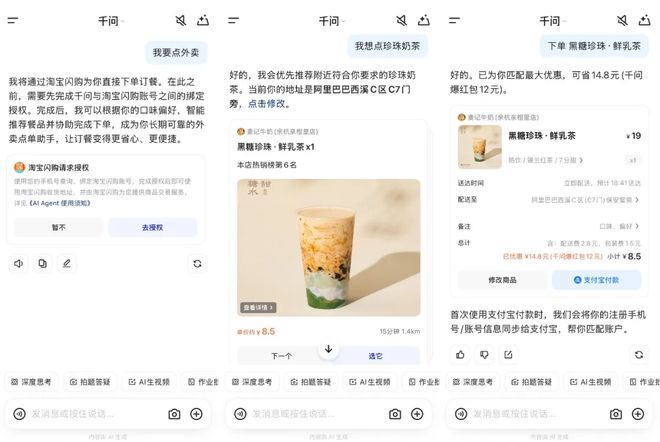
Core Insights - Alibaba's Taobao Flash Purchase has transitioned to a new competitive strategy by integrating AI capabilities, allowing users to place orders through natural language commands, marking a shift from traditional competition to an "intelligent race" in the local service industry [1][2][10] Group 1: AI Integration and User Experience - The integration of the Qianwen App with Taobao Flash Purchase enables a seamless ordering experience, where users can simply state their requests, and the system handles the entire process from merchant matching to payment [1][2] - This development signifies the emergence of a true consumer-grade AI agent, transforming the user experience by providing personalized recommendations and making digital services accessible to special groups like the elderly and visually impaired [2][4] Group 2: Industry Transformation and Competitive Landscape - The integration of AI into local services represents a fundamental shift in service models, moving from "users seeking services" to "services proactively responding," thus unlocking previously dormant demand [2][4] - Taobao Flash Purchase has optimized its order structure, with a focus on high-value users and non-food categories, leading to a reduction in expected losses to 20 billion yuan, indicating a strategic shift from scale to value innovation [4][5] Group 3: Ecosystem Synergy and Competitive Advantage - The collaboration of various Alibaba services, including Taobao, Gaode, and Fliggy, supports over 400 task capabilities, enhancing the overall service ecosystem [3][5] - The "AI + ecosystem" model creates a competitive moat for Taobao Flash Purchase, emphasizing understanding consumer needs and efficiently meeting complex demands rather than merely competing on delivery speed or subsidies [5][6] Group 4: Future Outlook and Industry Direction - The shift towards AI-driven services indicates that future competition in the local consumption sector will focus on intelligent service depth, ecosystem integration, and user value enhancement rather than traditional promotional tactics [9][10] - Alibaba's strategic move to embed AI deeply into core consumer scenarios suggests that true growth in the current market will stem from redefining efficiency, experience, and ecosystem value rather than relying on subsidies [10][11]


2026外卖行业有了新风向标!千问APP全面接入淘宝闪购
第一财经· 2026-01-15 09:22
Core Viewpoint - Alibaba's Taobao Flash Purchase has transitioned to a new competitive strategy by integrating AI capabilities, allowing users to place food orders through natural language commands, marking a shift from traditional competition to an "intelligent race" in the local life service industry [1][2][10]. Group 1: AI Integration and User Experience - The integration of the Qianwen App with Taobao Flash Purchase enables a seamless ordering experience, where users can simply state their requests, and the system handles the entire process from merchant matching to payment [1][2]. - This development signifies the emergence of a true consumer-grade AI agent, which can execute tasks rather than just respond to queries, fundamentally changing the user interaction model in local services [2][4]. - The AI's ability to provide personalized recommendations and streamline the ordering process enhances convenience for all users, including those with special needs [3][4]. Group 2: Business Model Evolution - Taobao Flash Purchase has shifted its focus from scale to structural optimization and unit economics improvement, with a notable increase in GMV share and a stable daily order volume exceeding 10 million [6][7]. - The integration of AI allows for proactive service delivery, transforming the business model from reactive to one that anticipates user needs, thus creating a self-reinforcing cycle of user engagement and data enrichment [7][10]. - The collaboration of various Alibaba services, such as Taobao, Alipay, and Gaode, enhances the overall service capability, allowing for over 400 task execution functions [4][8]. Group 3: Competitive Landscape and Future Outlook - The competitive landscape is shifting towards understanding consumer intent and executing tasks efficiently, rather than merely competing on delivery speed or promotional offers [9][10]. - Alibaba's commitment to a value-driven approach, focusing on user experience and ecosystem synergy, positions it favorably against competitors who rely on traditional methods [10][12]. - The integration of AI into local life services is expected to redefine the industry, emphasizing the importance of a comprehensive ecosystem that combines products, payment systems, and logistics [10][12].
申万宏源:阿里闪购战略升级注入强劲需求动力 即时配送规模效益有望进一步凸显
智通财经网· 2026-01-15 09:09
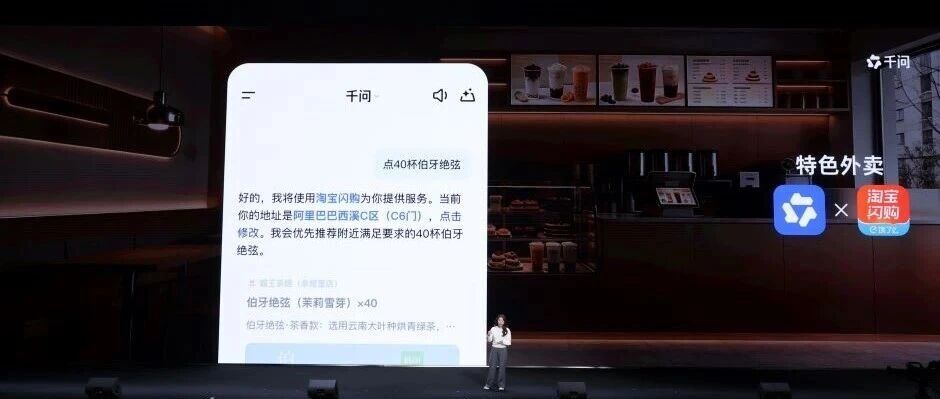
Group 1 - Alibaba's strategic upgrade for Taobao Flash Purchase aims to secure a dominant position in the instant delivery market, which is expected to inject strong demand into the industry [1] - The competition in the instant retail sector is becoming more compliant under antitrust regulations, potentially driving a shift from low-priced categories like food and beverages to higher-priced categories, thus creating more growth opportunities for logistics [1] - Increased investment in high-frequency subsidies is likely to boost consumer habits and directly drive the growth of instant delivery order volumes, becoming a key source of industry demand [1] Group 2 - Instant delivery is becoming an essential channel for merchants, leading to a new round of competition among brands and businesses, which may disrupt traditional high-efficiency business models [2] - The expansion of subsidies beyond food and beverages into general merchandise is expected to accelerate the scale effects on the logistics side, creating a positive feedback loop [2] Group 3 - Third-party logistics service providers, such as SF Express, are benefiting from the competitive landscape, with significant growth in business and profit expectations [3] - During the "Double Eleven" shopping festival, SF Express saw a more than 50% year-on-year increase in daily same-city delivery orders, with beverage orders up over 160% and fast food orders up over 110% [3] - As a neutral third-party platform, SF Express experienced notable growth in orders from various channels, including Douyin, Meituan-W, Taobao Flash Purchase, and JD Instant Delivery, with positive growth and profit expectations for the delivery business in 2026 [3]

红色观影暖“新”同行 新疆乌苏市外卖党支部凝聚新就业群体奋进力量
Zhong Guo Shi Pin Wang· 2026-01-15 06:03
前期,该党支部结合骑手作息,避开配送高峰,确定观影时间。"平时忙着跑单没机会进影院,这次活 动让我感受到被关注,影片里的拼搏精神特别鼓舞我,干活更有干劲了。"外卖小哥杜莆有感而发。 近年来,乌苏市外卖党支部坚持党建引领,深化关怀服务举措,探索"党建+服务+治理"新模式。同时 通过多样活动引导骑手以"随手拍"等形式参与城市精细化管理,形成"党组织服务新群体、新群体反哺 治理"的双向奔赴格局。 为推动党的二十届四中全会精神在新就业群体落地生根,开花结果。1月14日下午,新疆维吾尔自治区 乌苏市外卖党支部结合主题党日活动,组织外卖骑手开展"红色观影 暖'新'同行"活动,以红色故事传递 榜样力量,为一线外卖小哥送上精神滋养与前行动力。 外卖骑手作为穿梭街巷的"城市奔跑者",是城市运转的重要力量,因工作节奏快、流动性强,需精准暖 心的服务关怀。此次观影活动是该党支部深化新就业群体关爱服务的具体实践,通过搭建线下交流平台 传递组织温暖。 乌苏市外卖党支部书记张建辉说:"下一步,我们外卖党支部将认真贯彻二十届四中全会精神,聚焦骑 手急难愁盼,策划贴近需求的活动,强化党建引领,织密组织覆盖网络,提升骑手归属感、获得感、幸 福 ...
使用美团红包商家会少赚钱吗:深度解析外卖优惠背后的商业逻辑
Sou Hu Cai Jing· 2026-01-15 01:16
Core Insights - The article discusses the impact of discount coupons, particularly from platforms like Meituan, on restaurant profits and the broader implications for the food delivery industry [4][6][7] Group 1: Mechanism of Discount Coupons - There are two main types of discount coupons: platform-subsidized coupons funded by Meituan to attract users, and merchant-funded coupons that directly reduce the merchant's revenue [4] - A real case example shows that a restaurant received only 70.22 yuan from a total order of 101 yuan after various discounts, highlighting the financial strain on merchants [4] Group 2: Pricing Strategies and Merchant Challenges - Many merchants adopt a "high price, big discount" strategy to align with platform discount systems, leading to a situation where they may earn less than their offline sales [5] - Merchants face additional costs beyond discounts, including platform service fees typically ranging from 6% to 8% and delivery fees that can account for about 15% of the order total [5] Group 3: Future Directions and Industry Dynamics - Platforms like Meituan and Ele.me are beginning to recognize the challenges faced by merchants and have committed to regulating promotional activities to foster a fairer industry environment [6] - The article suggests that the sustainability of the current discount model is in question, as excessive pressure on merchant profits could lead to declines in product quality or market exits [6][7] - Future strategies may involve more refined and transparent discount mechanisms, with a focus on balancing costs among platforms, merchants, and consumers to achieve a healthier ecosystem [7]


威海市总工会积极探索新就业形态劳动者工作新路径
Qi Lu Wan Bao· 2026-01-14 13:00
Core Viewpoint - The article emphasizes the importance of organizing and supporting new employment form workers in the digital and platform economy, highlighting the efforts of the Weihai Municipal Federation of Trade Unions in addressing their unique challenges and enhancing their rights and benefits [1][8]. Group 1: Organizational Coverage - The Weihai Municipal Federation of Trade Unions has launched the "Organizational Coverage Gathering 'New' Action" to address the challenges of organizing new employment form workers, focusing on major platform companies and their local partners [2]. - As of now, 99 new employment form enterprise unions have been established in Weihai, with 7,103 new members added, bringing the total membership to 36,271 [2]. - The Federation has innovatively created regional and industry-specific unions, such as the Korean Le Fang takeaway restaurant union and the city express industry union, achieving comprehensive organizational coverage [2]. Group 2: Service and Support - The Federation has implemented the "Service Care Warm 'New' Action," creating a comprehensive care system for new employment form workers through various services [4]. - Upgrades to 253 union stations and the establishment of five "shared worker homes" provide essential services, with daily attendance exceeding 1,500 people [4]. - Online services through the "Qilu Gonghui" and "Worker's Home" apps have reached over 16,000 new employment form workers, offering membership, policy inquiries, and legal consultations [4]. Group 3: Rights Protection and Value Recognition - The Federation has initiated the "Leading Protection Safe 'New' Action," focusing on rights protection, legal support, and democratic consultation for new employment form workers [6][7]. - Legal service stations have been established, resolving 116 cases and recovering over 100,000 yuan for workers [7]. - The introduction of a collective wage negotiation in the express delivery industry has increased the minimum monthly wage by 340 yuan, setting a new standard [7]. Group 4: Health and Skill Development - The Federation has launched the "Health Escort Warm New Journey" initiative, providing health services to over 11,000 workers, including mobile health checks and psychological counseling [6]. - Skill enhancement programs have been developed, including competitions and training sessions, benefiting over 6,000 workers and supporting 31 individuals in further education [6]. Group 5: Future Directions - The Weihai Municipal Federation of Trade Unions aims to continue focusing on the pressing issues faced by new employment form workers, enhancing the integration of party-building and union work, and exploring replicable models for broader application [8].
首批160套“小哥公寓” 助力外卖员等新就业群体安居
Yang Shi Xin Wen· 2026-01-14 06:08
Core Insights - Jiangsu Province's Changzhou City has launched the first batch of 160 "Brother Apartments" to provide convenience for new employment groups such as delivery workers and couriers [1][3] - The initiative aims to address housing difficulties while also offering support in employment and social security, allowing flexible workers to focus on their jobs [1] Group 1: Apartment Features - The "Brother Apartments" are equipped with free Wi-Fi, washing machines, range hoods, refrigerators, and other essential appliances, allowing for a "move-in ready" experience [3] - The maximum monthly rent for a single room is capped at 800 yuan, and the apartments also provide leisure spaces, night school training, skill training, and health consultations as value-added services [5] Group 2: Cost Comparison and Community Support - A delivery worker noted that previously renting a shared room cost around 600 to 700 yuan, while now, in a four-person room, the cost is only 200 yuan per person [7] - Community support has been extended to new employment groups, including assistance in finding business premises and handling social security contributions for flexible workers [9] - The local government plans to continuously upgrade the support mechanisms for new employment groups during the 14th Five-Year Plan period, ensuring stable income and living conditions for flexible workers [9]

黄峥的新战场
Sou Hu Cai Jing· 2026-01-13 03:22
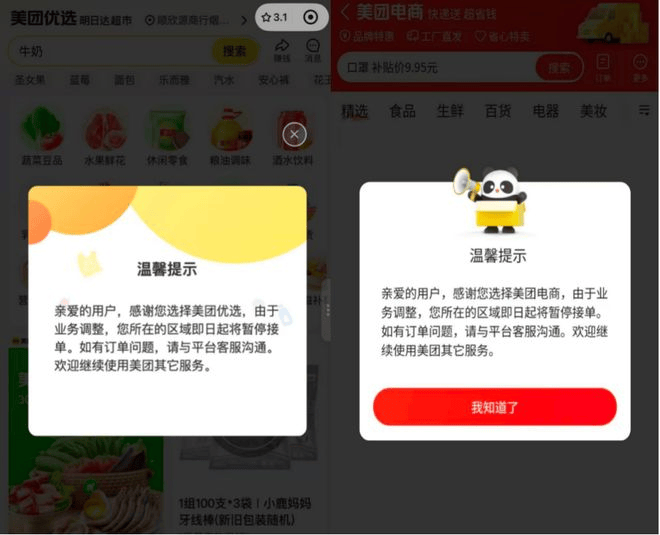
Core Insights - Pinduoduo is reportedly preparing to enter the instant retail market, with plans to establish urban warehouses in major cities, potentially launching in Q1 or by Q3 at the latest [1] - The competitive landscape for instant retail has shifted, creating a more favorable environment for Pinduoduo to enter this space [6][7] Group 1: Changes in Business Environment - The closure of Meituan's preferred services has allowed Pinduoduo to dominate the community group buying market, providing it with the resources to explore new business opportunities [13][17] - The increase in the supply of delivery riders due to competition among major players has made it easier for Pinduoduo to procure delivery services [24][25][32] Group 2: Strategic Focus - Pinduoduo's approach to instant retail will focus on non-food delivery, particularly fresh produce and competitively priced private label products, rather than entering the food delivery market [9][12][19] - The company aims to leverage its existing agricultural supply chain capabilities to enhance its instant retail offerings, particularly in fresh produce, which is a high-frequency necessity [44][53] Group 3: Market Position and Financials - Pinduoduo's market capitalization has decreased to half that of Alibaba, but its cash reserves have increased, providing it with financial flexibility to invest in new ventures [48][50] - The competitive landscape in e-commerce is intensifying, with other platforms like Douyin and Temu gaining traction, making Pinduoduo's entry into instant retail a strategic move to maintain user engagement [51][52]

花旗:料AI云服务需求仍强劲 互联网板块首选腾讯控股(00700)
智通财经网· 2026-01-13 02:37
Group 1 - The tightening of regulations and the introduction of e-commerce value-added tax are impacting the profitability of small and medium-sized merchants, which will exert pressure on the monetization capabilities and profit margins of e-commerce platforms [1] - Demand for AI cloud services remains strong, and with domestic chip supply gradually catching up and some high-end foreign chips being approved, supply constraints are expected to ease [1] - The competitive landscape in the fields of food delivery, instant retail, and AI chatbots remains intense, with companies investing in promotional expenses to capture market share and enhance new user penetration and adoption rates, potentially further pressuring profitability and profit margins [1] Group 2 - The overseas market is becoming a new focus for Robotaxi, AI applications, and internet data center construction [1] - The preferred companies in the industry include Tencent Holdings (00700), Alibaba (BABA.US), Trip.com (TCOM.US), NetEase (NTES.US), and Century Huatong (002602.SZ) [1]